
Poetry beneath the fells
Grasmere
A compact Lakeland village where Wordsworth history, a secret gingerbread recipe and steep paths into the hills meet.
- Best for
- Literary history and fell walks
- Give it
- A full day, or longer for the high fells
- Don't miss
- Dove Cottage and the climb towards Helm Crag
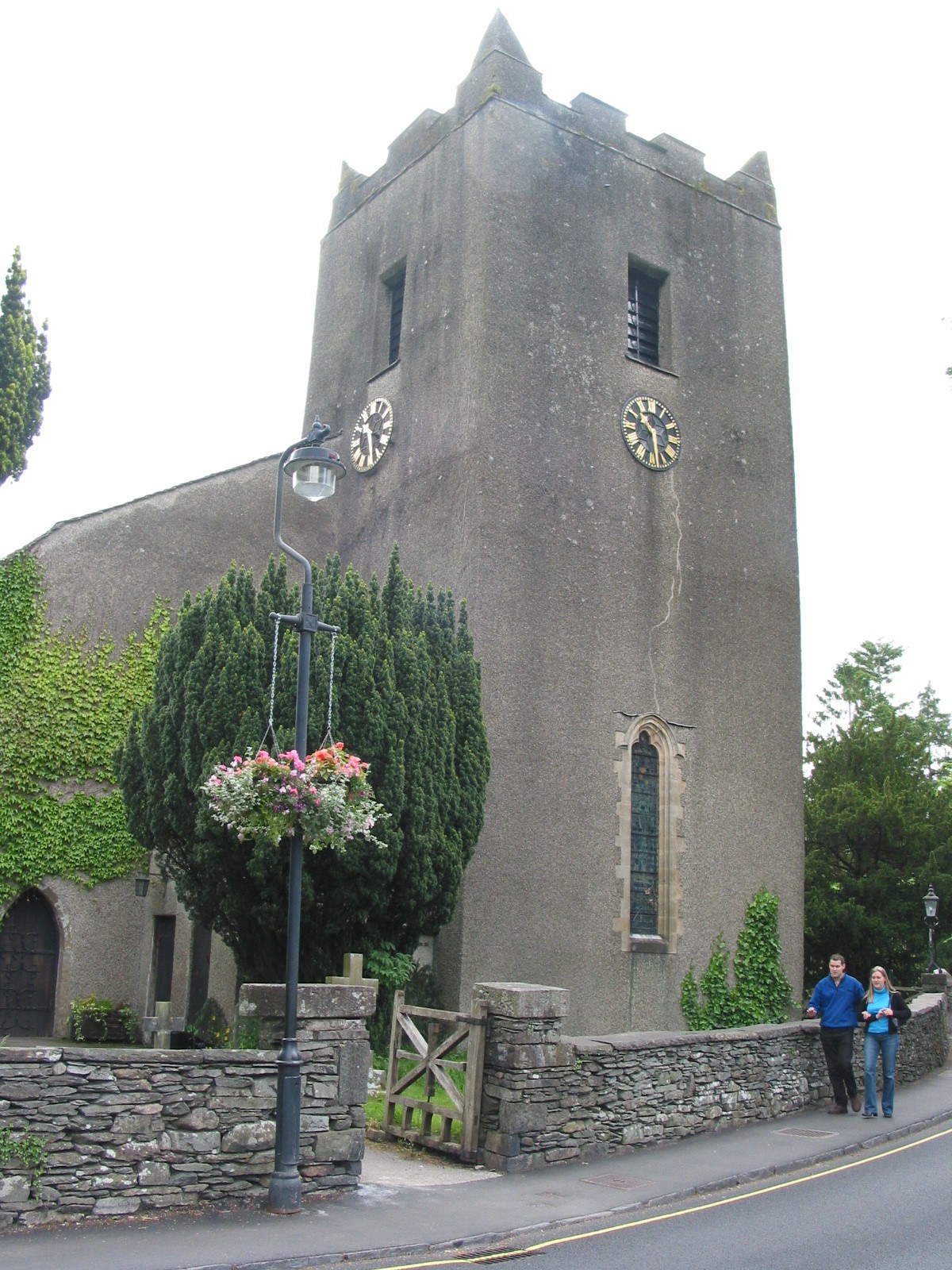
Photo: Peter Turner · CC BY-SA 2.0 · cropped
The Fox verdict
Small village, unusually rich day
Grasmere puts literary history, old inns, a singular food tradition and paths into the fells within one compact base.
Come for Dove Cottage and the gingerbread shop, then choose between the village's church and inns or a short but steep climb above the rooftops. Helm Crag and Easedale Tarn make the surrounding landscape part of the visit rather than a distant backdrop.
Where to go
Places in Grasmere
Every place below is checked against a published source, listed with what it is and how long to give it.
Local signatures
3 placesGrasmere Gingerbread Shop
The former 1630 village schoolroom where Sarah Nelson began selling her secret-recipe gingerbread in 1854.
- Visit length
- Editorial estimate: Allow around 25 minutes
- Locality
- Grasmere village
- Access
- Long queues are normal.
Dove Cottage and Wordsworth Museum
Wordsworth's home from 1799 to 1808, paired with a museum collection of Romantic manuscripts, paintings and memorabilia.
- Visit length
- Editorial estimate: Allow around 90 minutes
- Locality
- Grasmere
1769 at The Inn at Grasmere
A traditional village-centre inn dating to 1769, serving pub food and welcoming dogs throughout.
- Visit length
- Editorial estimate: Allow around 75 minutes
- Locality
- village centre
Food & drink
1 placeThe Traveller's Rest
A sixteenth-century coaching inn on the edge of the village, with a dog-friendly bar and food.
- Visit length
- Editorial estimate: Allow around 75 minutes
- Locality
- edge of Grasmere
Walks & outdoors
2 placesHelm Crag
A distinctive Wainwright fell above Grasmere, recognised by the summit rocks known as the Lion and the Lamb.
- Visit length
- Editorial estimate: Allow around 3 hours
- Locality
- above Grasmere
- Access
- This is a short but steep fell climb.
Easedale Tarn
A moderate walk up Sourmilk Gill to a remote mountain tarn above the village.
- Visit length
- Editorial estimate: Allow around 3 hours
- Locality
- above Grasmere
- Access
- This is a moderate fell walk rather than a level village stroll.
History & heritage
1 place
St Oswald's Church
A medieval parish church whose churchyard contains the graves of William Wordsworth, his wife Mary and his sister Dorothy.
- Visit length
- Editorial estimate: Allow around 40 minutes
- Locality
- Grasmere village
No places match this filter. Choose All places to reset the list.
Three ways to explore Grasmere
Signature outings
The Lion and the Lamb
Take the short but steep climb towards Helm Crag's distinctive summit rocks above the village.
Wordsworth at home
Explore Dove Cottage, where Wordsworth lived through his productive Grasmere years from 1799 to 1808.
The Wordsworth graves
Visit St Oswald's churchyard, where William, Mary and Dorothy Wordsworth are buried.
The village story
Grasmere: appetite, poetry and the fells
The untouched Travel Fox story moves from a queue for gingerbread through village tables and mountain paths to the writers and traditions that shaped Grasmere.
Gingerbread, Stone and Village Inns
The queue outside the Grasmere Gingerbread Shop starts forming before the door opens. It has been doing this, more or less, since 1854, when Sarah Nelson perfected her recipe in what was then a tiny schoolhouse next to St Oswald's churchyard. The building dates from 1630, built by public subscription as a village school — Wordsworth taught here for a time — and it is barely large enough to hold the counter, the staff in their Victorian pinafores and mobcaps, and whatever they're wrapping in the distinctive parchment-lined packaging. The original recipe, handwritten on parchment, is kept in a bank vault somewhere in the Lake District. One person alive knows it. The gingerbread itself is somewhere between a biscuit and a cake, spiced and crumbly and unlike anything else you'll buy in a paper bag.
This sets the tone for Grasmere. It is a small village — perhaps a thousand residents — that has been attracting visitors for over two centuries and has learned, without particular fuss, how to feed them.
The main street is a short run of slate-roofed stone buildings, compact enough that you can walk end to end in a few minutes. The River Rothay passes through the heart of the village, flowing south into Grasmere lake about half a mile away. There's a village green, Broadgate Meadow car park, and benches overlooking the water. The fells rise on all sides. Helm Crag, with its distinctive summit rocks — the "Lion and the Lamb," visible from the village — sits directly to the north. The overall effect is of a village in a bowl, surrounded by high ground in every direction, which is more or less what it is.
Start with the pubs. The Traveller's Rest is a Grade II listed sixteenth-century coaching inn on the northern edge of the village, on the road toward Dunmail Raise. It is dog-friendly in the bar area — muddy boots and paws equally tolerated — serves food from noon until nine, and the menu runs from sandwiches and jacket potatoes at lunch to lamb shank, steak and kidney pudding, and the occasional saddle of rabbit in the evening. The Sunday roasts get consistently good reviews. It keeps four Jennings ales and a rotating guest on the handpumps.
Tweedies Bar, closer to the centre, occupies a refurbished Georgian building with flagstone floors and Herdwick tweed furnishings. It takes its beer seriously — ten handpumps, eight for real ale, two for cider, most sourced from local breweries, and over thirty bottled options behind the bar. The food runs from halloumi fries and lamb koftas to braised ox cheek with triple-cooked chips, and there's a pizza oven in the garden. The cheese menu — pick three, served with biscuits and chutney — is not something every Lake District pub attempts. Dogs are welcome throughout the bar.
Tables, Paintings and Books
The Swan Hotel was built as a coaching inn in 1650 and carries itself accordingly. Wordsworth mentioned it by name in *The Waggoner* — "Who does not know the famous SWAN?" — and Walter Scott was a regular guest.
For something at the other end of the scale, Forest Side holds one Michelin star and a Michelin green star for sustainability in the 2026 guide. Chef Paul Leonard runs four- and eight-course tasting menus at dinner, built around ingredients grown, foraged, and sourced within the surrounding landscape. A dish of lightly cured hand-dived scallop with tomatoes from their polytunnel was named among the Michelin inspectors' dishes of the year. A four-course lunch starts at £65. It is serious cooking in a serious setting, and it would be a serious restaurant in any city, let alone a village of this size.
Baldry's Tea Room occupies a building with its own history. William Baldry arrived in Grasmere in 1855 and set up a photography studio here. He became the first official photographer of Grasmere Sports and died in 1918 at the age of ninety. The studio is now a tearoom — home baking since 1982 — serving loose-leaf teas (they stock over thirty, including Jasmine Phoenix Dragon Pearls), homemade soup, and an improbable quantity of cake. The Cumberland sausage sandwich with Baldry's own chutney is the lunch to order. Lemon meringue pie if there's any left.
Mathilde's Café sits inside the Heaton Cooper Studio, which deserves a paragraph of its own. Alfred Heaton Cooper, a landscape painter, established the studio in 1905. His son William built the present gallery in 1938, funded by the success of his book *Hills of Lakeland*. Four generations of the family have painted the surrounding fells. The gallery still shows and sells their work alongside other artists, and it is one of the finest landscape art collections in the north of England. The café is named after Alfred's Norwegian wife and still carries a Scandinavian streak — the kottbullar, served with creamy mash, lingonberry compote and gravy, would not be out of place in Stockholm.
Sam Read's bookshop has been selling books in Grasmere since 1887 and moved to its current spot in 1895. It may be the oldest bookshop in the north of England. Sam himself came from Suffolk and had previously worked as a bookseller's assistant at Baldry's. The shop won Best UK Independent Bookshop in 2006 and is now in its seventh generation of ownership, having passed most recently to Will Smith and Polly Atkin. The shelves are strong on local interest, walking guides, and the Romantics, as you'd expect, but it's a proper bookshop — the kind where you go in for one thing and come out twenty minutes later with three.
From Lakeshore to Fellside
The walks from Grasmere are the reason many people come, and they range from lakeside strolls to proper fell days. The circuit of Grasmere lake follows mostly low-level paths. You pass Allan Bank, woodland paths, and the River Rothay entering the lake in a quiet fan of shallows. There is a single island in the lake, and it played a small part in a larger story: when a solicitor from Hartlepool bought it in 1893 and put a flagpole on it, Canon Hardwicke Rawnsley was sufficiently angered to accelerate his campaign for a national conservation body. The National Trust was formally established two years later.
You can extend the lake walk by continuing south to Rydal Water on the old coffin route — the path along which the dead of Rydal and Ambleside were once carried to St Oswald's for burial, before Ambleside got its own consecrated church. Stone coffin rests survive along the way, where bearers would set down their load. The walk can be extended into a longer loop around both lakes.
Helm Crag is the walk that pulls your eye from the village. At 405 metres it's not tall, but it is steep, and Wainwright was direct about its appeal: "The virtues of Helm Crag have not been lauded enough. It gives an exhilarating little climb, a brief essay in real mountaineering." The summit has two clusters of rock formations — the Lion and the Lamb at the southern end, and the Howitzer at the north, which is the true summit. Getting to the very top of the Howitzer requires a scramble. Wainwright, notably, never managed it.
Easedale Tarn makes a longer half-day. You walk west out of the village, through farmland, then up alongside Sourmilk Gill — named for the white, foaming appearance of the water as it tumbles down a series of falls — to reach the tarn at about 280 metres, sitting in a glacial hollow between Tarn Crag and Blea Rigg. The route is a substantial uphill walk from Grasmere. It feels remote despite being within walking reach of the village.
For something gentler, Loughrigg Terrace is a path along the lower slopes of Loughrigg Fell. The views across Grasmere to Helm Crag and the Fairfield range are among the best in the district, and the terrace path is comparatively gentle, with climbing on the approach. It is the walk to do if you want the panorama without the leg-burn.
High Fells and Wordsworth Country
For those who do want the leg-burn, the Fairfield Horseshoe — a circuit of the high ridges above Grasmere taking in eight Wainwright summits — is one of the classic Lake District ridge walks. Allow most of a day.
Allan Bank, a short uphill walk from the village centre, is a National Trust property with an unusually informal approach. Wordsworth called it a "temple of abomination" when it was being built — he could see it from Dove Cottage and thought it ruined the valley. He moved in two years later, when his growing family needed the space. The chimneys smoked terribly. Rawnsley — the same Rawnsley who was incensed by the island flagpole — bought the house in 1915 and left it to the Trust when he died in 1920. A fire in 2011 caused serious damage; after restoration it reopened in 2012 as one of the Trust's most deliberately informal properties, more open space than curated museum.
Dove Cottage, on the road toward Ambleside, is the main literary draw. It was an inn called the Dove and Olive Bough until it closed in 1793. Wordsworth and his sister Dorothy moved in on 20 December 1799. He lived here until 1808, and this is where he wrote *Ode: Intimations of Immortality*, composed "I Wandered Lonely as a Cloud" — though the daffodils that inspired it grew ten miles away, along the shore of Ullswater — and worked on much of *The Prelude*. Dorothy kept her Grasmere journals here. Coleridge visited constantly. When the Wordsworths left, Thomas De Quincey moved in — the same De Quincey who would later write *Confessions of an English Opium-Eater*. He married a local farmer's daughter and stayed until 1820. The cottage didn't actually acquire the name Dove Cottage until 1891, when the Wordsworth Trust bought it and opened it to the public. The adjacent museum, built in 1981, holds one of the finest collections of Romantic-era manuscripts and paintings in the country.
St Oswald's Church stands at the centre, as it has since the fourteenth century. An earlier church on the site is traditionally dated to 642 AD, founded by Oswald, King of Northumbria — the legend says he found locals worshipping by an oak tree, cut it down, and made it into an altar. The present building, Grade I listed, was doubled in size around 1490 with the addition of a parallel north nave, giving it an unusual double-nave plan with a two-tier arcade between them. The rushbearing ceremony, held on the Saturday nearest St Oswald's Day in early August, dates from when the earthen floor was covered with fresh rushes for warmth. The floor was flagged in 1841, but the ceremony continues — a procession led by a brass band, with children carrying flower-adorned rush crosses to the church, where they receive a piece of Grasmere gingerbread. Wordsworth is buried in the churchyard beneath a yew tree he planted, alongside his wife Mary, his sister Dorothy, and three of his children. Hartley Coleridge, eldest son of Samuel Taylor, is buried nearby.
Old Names, Living Traditions
Grasmere predates the Domesday Book, though it doesn't appear in it — Westmorland was held by the King of Scots until 1092 and was never surveyed. The name comes from the Old Norse *gres-sær*, meaning grass lake — the earliest recorded spelling is Ceresmere, from 1203.
Grasmere Sports has been held annually since 1868, barring the wars. It grew out of wrestling bouts at the old sheep fair into a programme of fell racing, Cumberland and Westmorland wrestling, and hound trails. The Guides Race sends runners up Butter Crags and back — the men's record of 12 minutes 21 seconds, set by Fred Reeves in 1978, has stood for over forty years. William Baldry was the first official photographer. It takes place on August Bank Holiday Sunday and fills the village entirely.
The nearest railway station is Windermere, about 7.4 miles southeast of Grasmere in a straight line; the road journey is longer. The 555 bus between Keswick and Kendal has been running through Grasmere for over a century — it marked its hundredth anniversary in 2025. Parking is limited and contested in summer. Arriving early is not optional advice.
On a Tuesday morning in term time, the village is quiet enough to hear the Rothay running over its stones. A heron stands in the shallows where the river enters the lake. The gingerbread shop is open. The queue is four people long, and growing.
Stay around Lake District
Make a longer stay of it
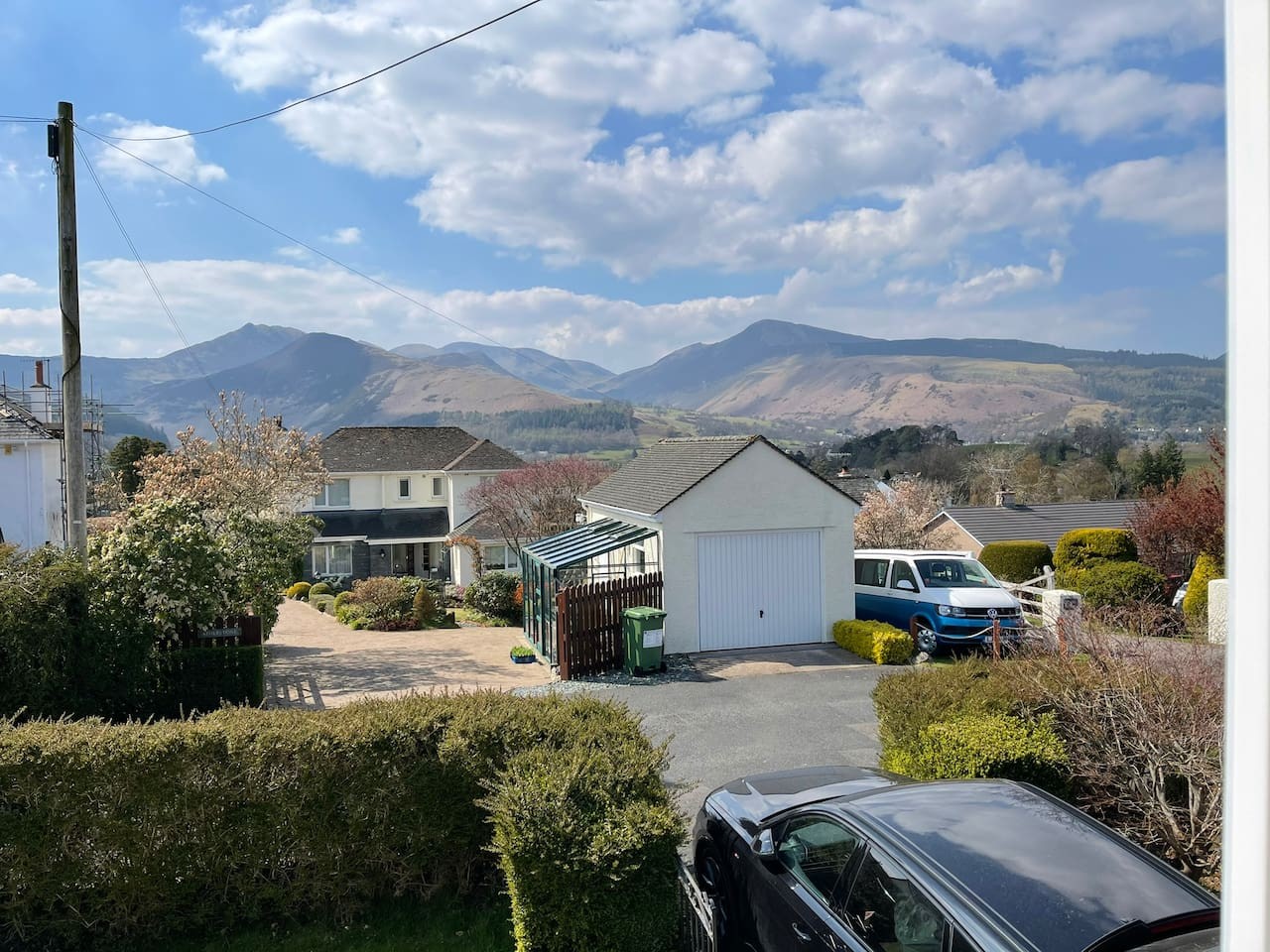
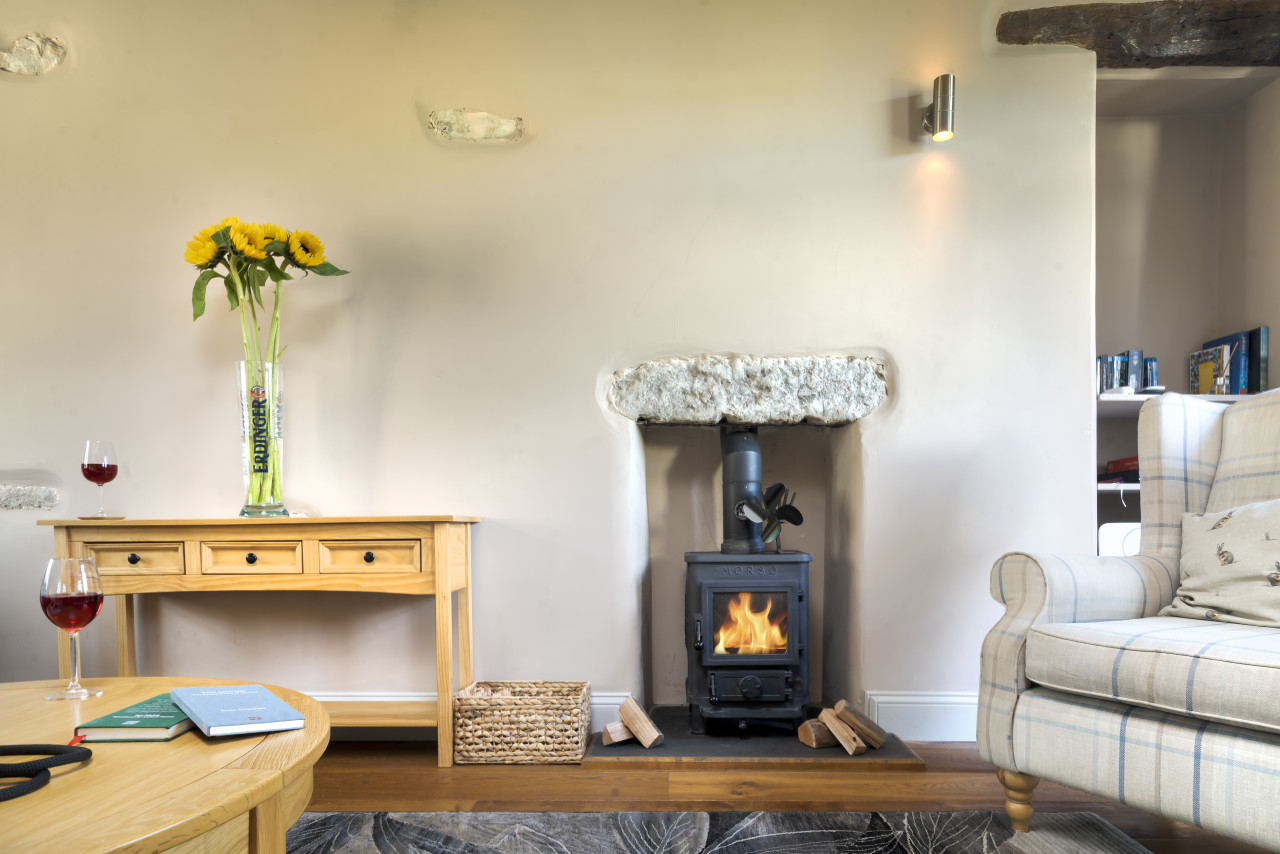
Travel Fox holiday homes around Lake District, linked directly to their property pages.
For homeowners
Own a holiday home near Grasmere?
We manage holiday lets across the Lake District from 12% commission, charged after cleaning costs, with no lock-in. A co-founder visits before you decide.
Holiday let management in the Lake District →
A guide with a point of view
Written from research. Edited for real journeys.
Use the Official site links for live practical details, then use this guide for context, ideas and room to explore.
Photography credits & licences
Third-party photographs are credited to their named creators and reused under the linked Creative Commons licence or public-domain dedication. Travel Fox stores an optimised local copy; the file-specific changes and any browser-applied display crop are disclosed below. Reused photographs link both to the Wikimedia Commons source record and to the declared source image; Travel Fox's own photographs carry no such record and are marked as ours. These image licences do not cover Travel Fox text, branding or page design.
- File:St Oswald's Church Grasmere - geograph.org.uk - 2714528.jpg — photograph by Peter Turner; St Oswald's Church Grasmere by Peter Turner. Source record on Wikimedia Commons. Declared source image. Licence: CC BY-SA 2.0. File changes: Downloaded from Wikimedia Commons, resized to a maximum 1920px edge and encoded as an optimised JPEG. Display changes: Displayed with responsive CSS cropping.
Sources
Every place on this page is checked against a published source. Each entry links the record we used and names who publishes it.
- Grasmere Gingerbread Shop — grasmeregingerbread.co.uk operator, sector body or destination organisation
- St Oswald's Church — achurchnearyou.com national body or asset manager
- Dove Cottage and Wordsworth Museum — wordsworth.org.uk operator, sector body or destination organisation
- The Traveller's Rest — lakedistrictinns.co.uk other published source
- 1769 at The Inn at Grasmere — theinnatgrasmere.co.uk operator, sector body or destination organisation
- Helm Crag — nationaltrust.org.uk national body or asset manager
- Easedale Tarn — nationaltrust.org.uk national body or asset manager