
Between water and wooded fells
Hawkshead
A car-free village of whitewashed cottages and cobbled alleys, set between Esthwaite Water and the wooded hills above Windermere.
- Best for
- Village history and nearby woodland walks
- At its heart
- A preserved medieval street plan
- Don't miss
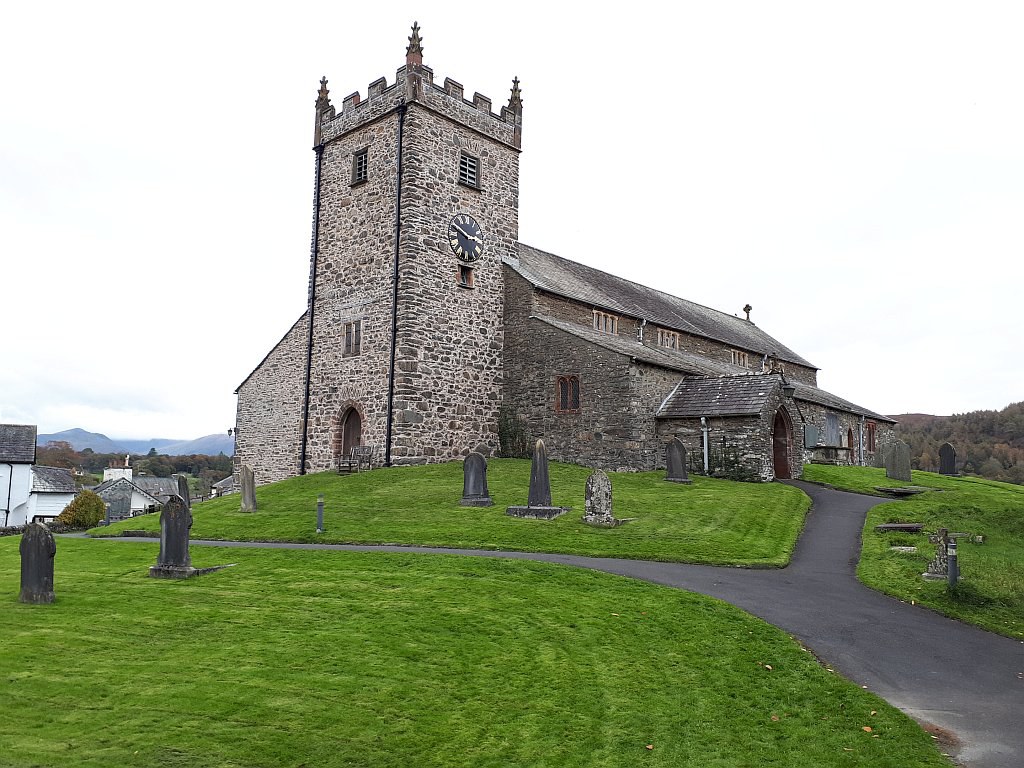
- St Michael and All Angels above the village
Photo: Stephen Craven · CC BY-SA 2.0 · cropped
The Fox verdict
Small lanes, deep history, open country
Hawkshead brings traditional inns, a historic school and a hilltop church into an unusually compact, car-free centre.
The village rewards an unhurried wander through cobbled alleys and whitewashed cottages, while Tarn Hows, Claife Heights and Grizedale Forest add contrasting ways to spend time outdoors nearby.
Your picks, your pace
Make Hawkshead yours
Choose a mood or build your own list. Your saved stops are an ordering aid, with a direct map route when you are ready.
Local signatures
3 placesKing's Arms
A historic village-centre inn serving pub classics, slow-cooked comfort dishes and seasonal specials made with local ingredients, with a dog-friendly bar.
- Visit length
- Editorial estimate: allow around 75 minutes
- Locality
- village centre
Queens Head
A 17th-century country pub with rooms and a dog-friendly welcome.
- Visit length
- Editorial estimate: allow around 75 minutes
- Locality
- Main Street, Hawkshead
Grizedale Forest
Start at Grizedale Forest Visitor Centre car park for walking trails and mountain-bike routes through the forest.
- Visit length
- Editorial estimate: allow around 180 minutes
- Locality
- Grizedale Forest, south of Hawkshead
Food & drink
1 placeRed Lion Inn
A traditional pub with rooms, home-cooked food and real ales, with an especially dog-friendly welcome and a dedicated dog menu.
- Visit length
- Editorial estimate: allow around 75 minutes
- Locality
- Hawkshead village
Walks & outdoors
2 placesTarn Hows
Start at Tarn Hows Car Park for a circular walk around this much-photographed Lake District tarn.
- Visit length
- Editorial estimate: allow around 75 minutes
- Locality
- Tarn Hows, west of Hawkshead
Claife Heights
A moderate walk through ancient woodland above Windermere's western shore, with views across the lake.
- Visit length
- Editorial estimate: allow around 150 minutes
- Locality
- Claife Heights, above Windermere's western shore
History & heritage
2 places
St Michael and All Angels
A Grade I listed late-medieval Lake District church with a whitewashed interior, standing on a hill above the village on a site used for worship for more than 800 years.
- Visit length
- Editorial estimate: allow around 45 minutes
- Locality
- on the hill above Hawkshead
Hawkshead Grammar School Museum
The school built in 1585 by Archbishop Edwin Sandys, now a museum, where William Wordsworth's carved name survives on a desk in the old schoolroom.
- Visit length
- Editorial estimate: allow around 60 minutes
- Locality
- Hawkshead village
- Access
- Check the Official site before travel for current museum access.
No places match this filter. Choose All places to reset the list.
On the map
Hawkshead at a glance
Tap a marker to jump to its guide card.
Three ways to explore Hawkshead
Signature outings
The church on the hill
Walk up to St Michael and All Angels for its hilltop setting, whitewashed interior and more than eight centuries of worship on the site.
A Tarn Hows loop
Follow the circular walk around one of the Lake District's most photographed tarns.
Wordsworth's carved name
Visit the old schoolroom where William Wordsworth studied and look for his carved name on a surviving desk.
The village story
Hawkshead: inns, lanes and the Furness fells
The unchanged Travel Fox article moves from village inns and shops to nearby walks, Hawkshead's long history and practical ways into the car-free centre.
Car-free lanes and village inns
The King's Arms, in the Square, was named the best pub in Cumbria at this year's National Pub & Bar Awards. The building has been taking in travellers since the reign of Elizabeth I, and there is an old well at the back door. It reopened in August 2025 after a renovation by Cumbrian tradespeople who kept the oak beams, the stone fireplaces and the slate floors, and the head chef, Ross Bowman, cooks beef brisket pie with an Eden Sunset Cheddar crust, Cumberland scotch egg with homemade brown sauce, king scallops in a Kashmiri sauce, and, for pudding, Cranachan cheesecake or an Arctic roll. The regular beer is Loweswater Gold, a past CAMRA Champion Golden Ale of Britain. The eight bedrooms upstairs are each named after a king. Breakfast is residents-only — the owner, Jo McGowan, decided not to compete with the village cafés, which tells you a fair amount about how Hawkshead operates.
The village itself has been car-free for more than fifty years. You leave the car at the pay-and-display on the edge (minimum £2.80) and walk in, at which point the medieval street plan takes over: whitewashed cottages, cobbled alleys, overhanging gables, and a sequence of small squares that seem less planned than agreed upon. The population at the last count was 519. Hawkshead sits on a low ridge with Esthwaite Water nearby and wooded hills rising towards Windermere in the east, and nothing in the village is more than a short walk from anything else.
That includes two other village pubs, both a short stroll from the King's Arms. The Red Lion on Main Street is the oldest — billed as a fifteenth-century coaching inn, refaced in the nineteenth century, with two carved corbels up in the eaves: one a man with a pig, the other a man playing bagpipes. Nobody seems to know why. Inside there is a real fire, darts, dominoes, a pool table, a surprising quantity of Liverpool FC memorabilia, and a dedicated dog menu, so your dog dines with you rather than under you. Lunch runs to a soup-and-sandwich deal for £10; evenings bring steak and ale pie, lasagne, and sausage and mash. Four handpulls rotate, usually Bowland and Bowness Bay breweries.
More village inns and local food
The Queen's Head, a few doors along, is early seventeenth century and a Robinsons house. Sixteen bedrooms, all recently refurbished with Hypnos beds, six of them dog-friendly — and the whole downstairs is open to dogs, with real fires to steam them dry. The kitchen holds an AA Four Star award and does fresh steamed mussels, Cumbrian rib-eye, and a cheese and onion pie that regulars order on repeat.
Village shops and Beatrix Potter
Poppi Red on Main Street was founded by Kim, who converted a former art gallery after years of travelling; it does breakfast and cakes by day and stone-baked pizzas in the evenings.
For a village this size the food shopping is faintly ridiculous. The Honeypot, a deli in a seventeenth-century building that has sold food for over a hundred years, is run by Fiona Wilson and family and stocks fifty types of honey and forty cheeses, with a takeaway hatch for sausage rolls and coffee.
Grasmere Gingerbread opened its second-ever shop here in June 2023, in the Grade II listed Corner Shop on Main Street, selling over a hundred ginger-themed things, including an exclusive gingerbread ice cream and, from November to March, hot ginger wine. Stewardsons has sold Barbour jackets and Hunter wellies for over forty years. Even the beer has form: Hawkshead Brewery was founded in a barn here in 2002 by Alex Brodie, who had just finished thirty years as a BBC foreign correspondent, though it outgrew the village and nothing is brewed in Hawkshead today.
The Beatrix Potter connection is handled with unusual restraint. The seventeenth-century building on Main Street that was the office of William Heelis — the solicitor who handled Potter's purchase of Hill Top in 1905 and married her in 1913 — spent decades as the National Trust's Beatrix Potter Gallery. The gallery closed for good in 2022, and in 2025 the Trust reopened the building as Tabitha Twitchit's, a second-hand bookshop named after Potter's cat character, who keeps a shop in Hawkshead in the tales. Hill Top itself is about 1.7 miles from Hawkshead in a straight line at Near Sawrey, open daily with timed-entry tickets released every Thursday, two weeks ahead — book if you're coming in season. Next door to it, the Tower Bank Arms appears in the illustrations of The Tale of Jemima Puddle-Duck and now pours up to five handpumps of Cumbrian ale. At Far Sawrey, the Cuckoo Brow Inn's house policy welcomes muddy boots, wet dogs and children, in that order.
Walks through the fells and village history
The walking starts at the door. Latterbarrow, the village's own summit at 245 metres, is topped by a tall stone obelisk visible from the streets below; Wainwright gave the hill its own chapter and declined to speculate on what the obelisk is for. A circuit from the village car park is about four and a half miles, steep and stone-pitched near the top. Tarn Hows, two and a quarter miles away, is the easy family classic: a level 1.8-mile gravel circuit around the tarn, fine for pushchairs and wheelchairs, with all-terrain Tramper scooters lent by the National Trust if you book two days ahead. A footpath from the church reaches the shore of Esthwaite Water, a private trout fishery without a shoreline circuit. Above the Windermere ferry, the ruined 1790s Claife Viewing Station once glazed its windows in coloured panes so Georgian tourists could see the lake in yellow for summer, light blue for winter and lilac for a thunderstorm; the restored platform has the coloured panels back. Claife Heights is also home to the Claife Crier, a wailing monk said to be the only ghost named on an Ordnance Survey map. Grizedale Forest, about 2.5 miles from Hawkshead in a straight line, has been a sculpture forest since 1977, with ten waymarked walking trails, nine cycle routes and a Gruffalo trail. The Old Man of Coniston is about 5.1 miles from Hawkshead in a straight line when you want a proper mountain; the road journey is longer.
The history you can mostly read off the buildings. The name is Norse — Haukr's sætr, the summer pasture of a settler called Haukr — and has nothing to do with birds of prey. The village missed the Domesday Book entirely; the surveyors swept these fells into one composite manor and did not itemise them. From around 1200 until 1537 the monks of Furness Abbey ran the place, and their Herdwick wool made it a market town — James I granted the charter in 1606. When machinery killed the wool market, the village simply stopped growing, which is why the seventeenth century is still standing. Wordsworth Street was once nicknamed Leather, Rag and Putty Street, after the tanners, weavers and carpenters who worked it. Wordsworth himself was a pupil at the grammar school from 1779 to 1787, boarding with Ann Tyson, whose cottage still stands; the school closed in 1909 with six pupils and is now a museum, where his name, carved into a desk, sits under glass, and children can dress up and write with quill pens in the old schoolroom. Above it all is St Michael and All Angels, Grade I listed, with massive round arcade piers that have no capitals and no bases, and painted scripture sentences from 1680 on the walls. Wordsworth remembered it in The Prelude: "I saw the snow-white church upon her hill / Sit like a thronèd Lady." The whitewash was stripped in the 1875 restoration, so the grey church you will see is not the one he did.
Ways in and the medieval courthouse
There is no railway and never was. The 505 bus — the Coniston Rambler — runs to Ambleside and Coniston in about twenty minutes each way, frequently from Easter to November, and the classic approach is still the Windermere ferry (ten minutes, £8 a car, every twenty minutes or so) and the road through the Sawreys, exactly as the Victorians did it.
At Easter the village bakes Hawkshead Whigs, its own caraway-seed bread. And the fifteenth-century courthouse on the edge of the village — the last surviving piece of Furness Abbey's manor — is free to visit, but the door is kept locked. Check current National Trust access instructions before visiting.
Stay around Lake District
Make a longer stay of it
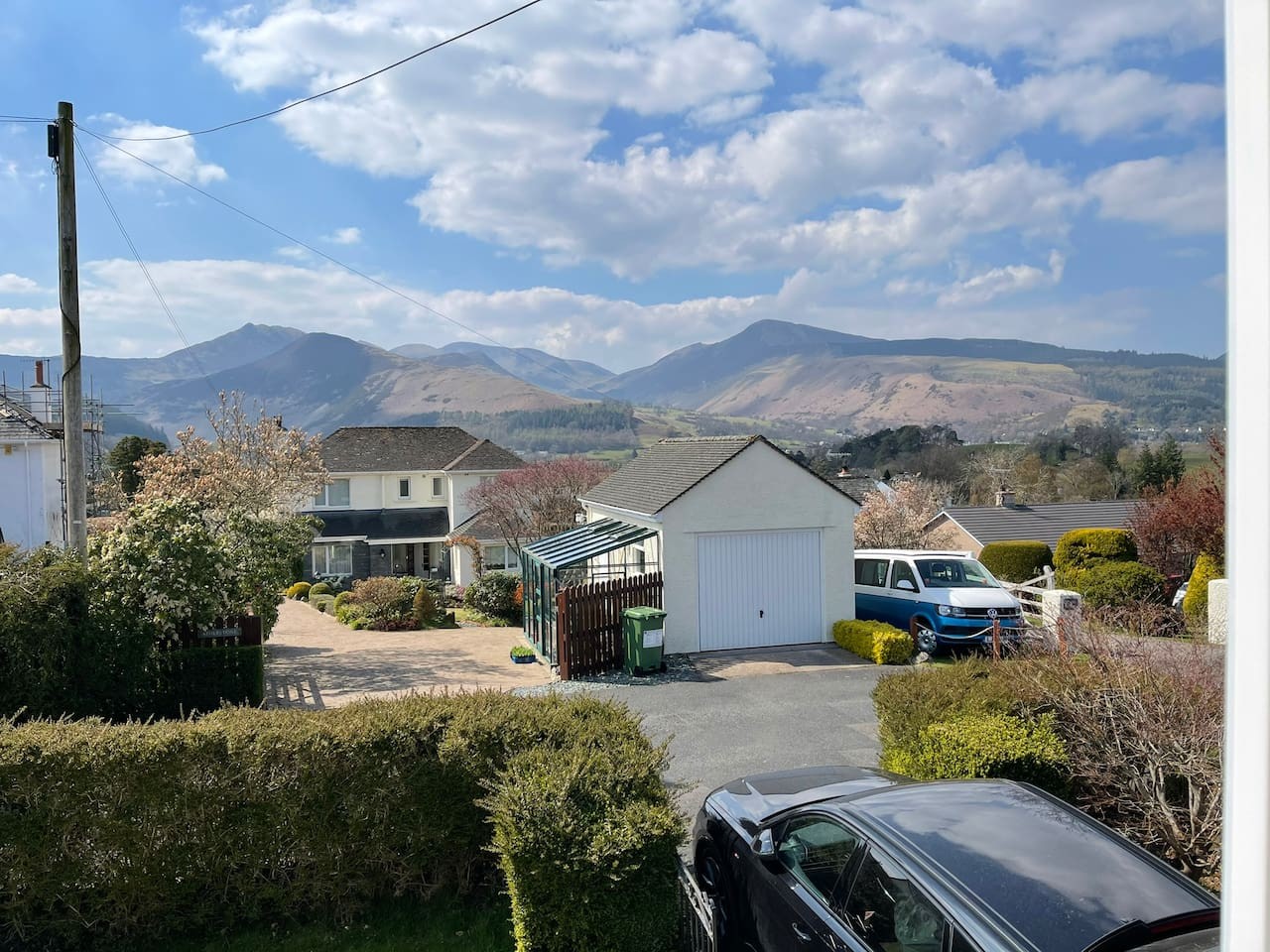
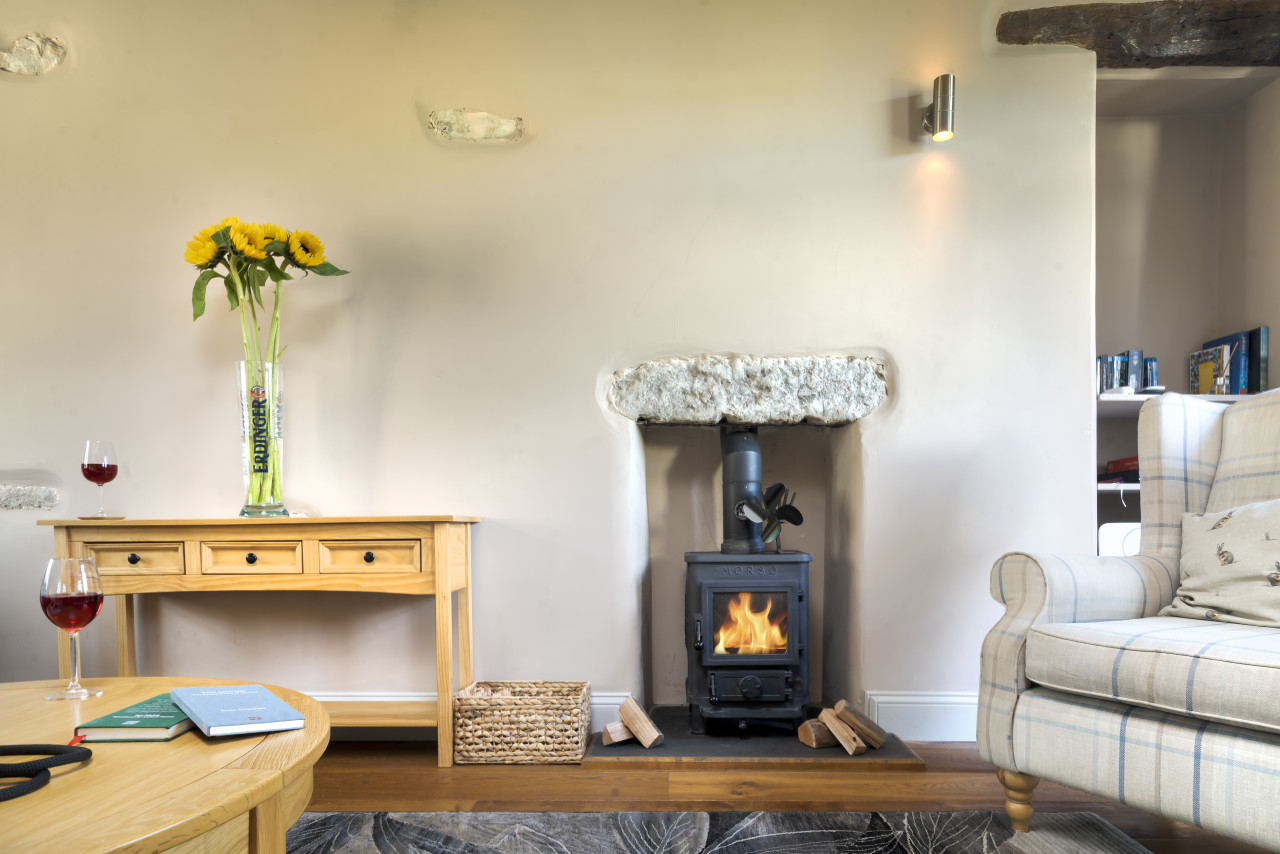
Travel Fox holiday homes around Lake District, linked directly to their property pages.
For homeowners
Own a holiday home near Hawkshead?
We manage holiday lets across the Lake District from 12% commission, charged after cleaning costs, with no lock-in. A co-founder visits before you decide.
Holiday let management in the Lake District →
A guide with a point of view
Written from research. Edited for real journeys.
Use the Official site links for live practical details, then use this guide for context, ideas and room to explore.
Photography credits & licences
Third-party photographs are credited to their named creators and reused under the linked Creative Commons licence or public-domain dedication. Travel Fox stores an optimised local copy; the file-specific changes and any browser-applied display crop are disclosed below. Reused photographs link both to the Wikimedia Commons source record and to the declared source image; Travel Fox's own photographs carry no such record and are marked as ours. These image licences do not cover Travel Fox text, branding or page design.
- File:St Michael and All Angels, Hawkshead - geograph.org.uk - 6670127.jpg — photograph by Stephen Craven; St Michael and All Angels, Hawkshead by Stephen Craven. Source record on Wikimedia Commons. Declared source image. Licence: CC BY-SA 2.0. File changes: Downloaded from Wikimedia Commons, resized to a maximum 1920px edge and encoded as an optimised JPEG. Display changes: Displayed with responsive CSS cropping.
Sources
Every place on this page is checked against a published source. Each entry links the record we used and names who publishes it.
- King's Arms — kingsarmshawkshead.com operator, sector body or destination organisation
- Red Lion Inn — redlioninnhawkshead.co.uk operator, sector body or destination organisation
- Queens Head — queensheadhawkshead.co.uk operator, sector body or destination organisation
- St Michael and All Angels — hawksheadbenefice.co.uk other published source
- Hawkshead Grammar School Museum — hawksheadgrammar.org.uk operator, sector body or destination organisation
- Tarn Hows — nationaltrust.org.uk national body or asset manager
- Claife Heights — lakedistrict.gov.uk statutory register or public authority
- Grizedale Forest — forestryengland.uk national body or asset manager