
Ullswater's fell-side village
Patterdale
At Ullswater's southern end, Patterdale pairs a valley base with high fells, a celebrated shore walk and an inn made for walkers.
- Best for
- Fell walks and Ullswater shore days
- Give it
- A half day or a full walking day
- Don't miss
- Striding Edge in suitable conditions
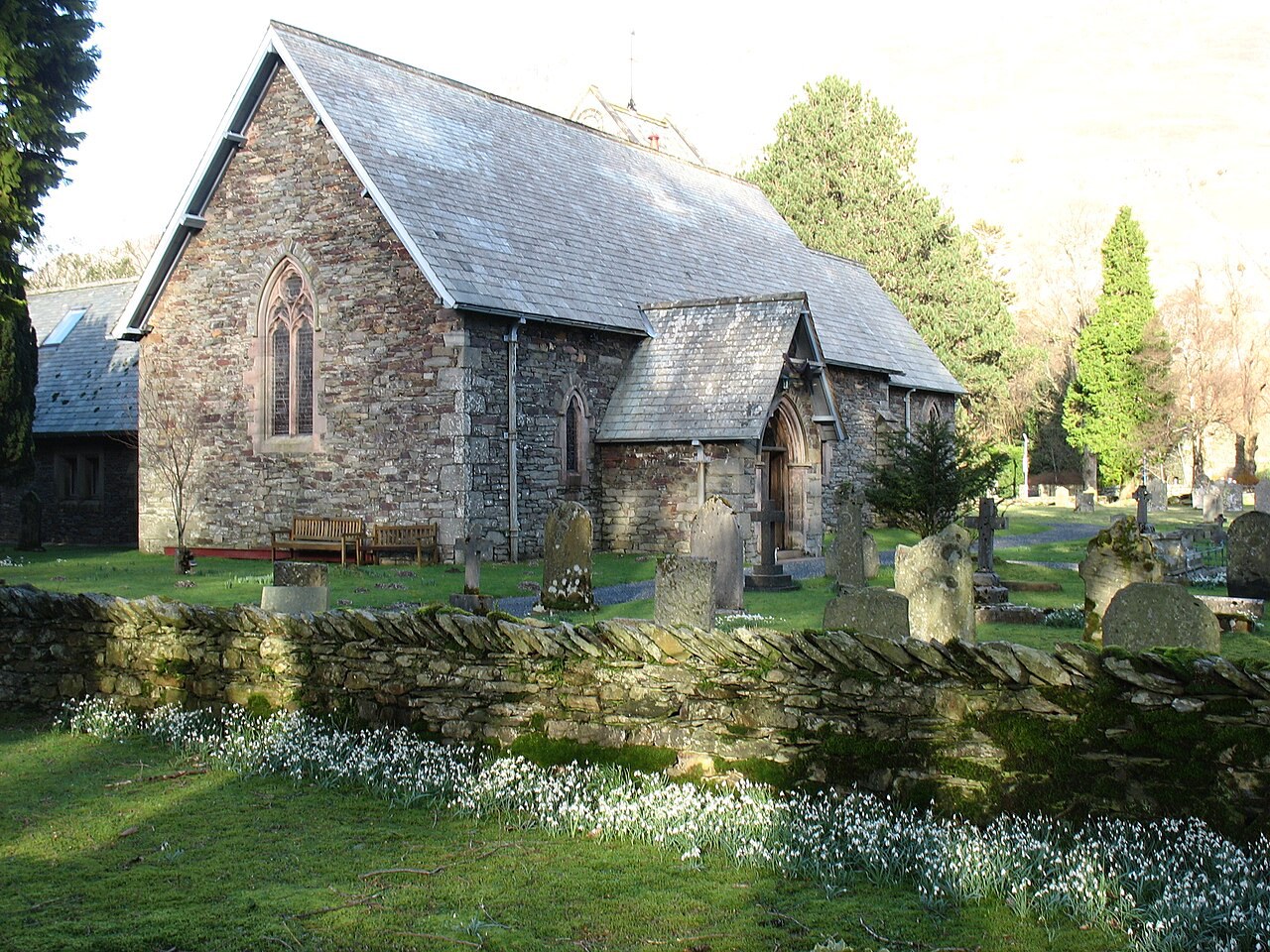
Photo: David Purchase · CC BY-SA 2.0 · cropped
The Fox verdict
A compact base for serious fell days and gentler shore walks
Come for a choice between exposed Helvellyn terrain, a moderate tarn walk and a boat-backed return beside Ullswater.
The landscape does most of the work: Helvellyn, High Street and Place Fell surround a village at Ullswater's southern end, while the White Lion and St Patrick's Church give the valley day a grounded finish.
Where to go
Places in Patterdale
Every place below is checked against a published source, listed with what it is and how long to give it.
Local signatures
3 places
Start here
St Patrick's Church, Patterdale
An 1853 church designed by Anthony Salvin, with an Ann Macbeth Good Shepherd embroidery and the only pre-Victorian element in its font basin.
- Visit length
- Editorial estimate: Allow around 30 minutes
- Locality
- Patterdale village
Side Farm Tea Room
A farm shop and café in Patterdale.
- Visit length
- Editorial estimate: Allow around 30 minutes
- Locality
- Patterdale
Angle Tarn Walk
A moderate four-mile return to a dramatic mountain tarn on the Coast to Coast route.
- Visit length
- Editorial estimate: Allow around two and a half hours
- Locality
- above Patterdale
Food & drink
1 placeThe White Lion Inn
A historic walkers' inn serving filling pub classics and welcoming dogs throughout, including in rooms.
- Visit length
- Editorial estimate: Allow around one hour
- Locality
- at the heart of Patterdale
Walks & outdoors
2 placesHelvellyn via Striding Edge
A classic narrow rocky arête leading to Helvellyn's 950-metre summit.
- Visit length
- Editorial estimate: Allow around five hours
- Locality
- from Patterdale or Glenridding
- Access
- Striding Edge is serious and exposed in winter conditions.
Glenridding to Howtown
Take the Ullswater 'Steamer' to Howtown, then walk six miles back to Patterdale along Ullswater's shore.
- Visit length
- Editorial estimate: Allow around three and a half hours
- Locality
- Howtown to Patterdale beside Ullswater
- Access
- The Ullswater 'Steamer' service is seasonal; check the current service before travel.
No places match this filter. Choose All places to reset the list.
Three ways to explore Patterdale
Signature outings
Striding Edge to Helvellyn
Follow the narrow rocky arête towards Helvellyn's 950-metre summit, with winter exposure taken seriously.
St Patrick's Church
Look for Ann Macbeth's 1938 Good Shepherd embroidery inside the church designed by Anthony Salvin.
The White Lion Inn
Settle in for filling pub food at the historic inn in the heart of Patterdale.
The village story
Patterdale: a valley of walkers and stories
The untouched guide moves from village essentials and local hospitality to the fells, Ullswater and the traditions that keep Patterdale distinctive.
Inn life and valley essentials
A well-behaved dog at the White Lion Inn can expect a towel at the door, biscuits at the bar, a bed in the room, and — if it keeps this up — a sausage or two at breakfast. The humans do reasonably well too. The White Lion has been feeding travellers since the early 1800s, and a photograph from around 1900 shows a fully loaded horse-drawn coach squeezing past the narrow pinch in the road directly outside, because this inn has always been the choke-point of the valley. Inside there is a stone-flagged bar, a real fire, and two handpumps that rotate through Lakeland beers, typically Hawkshead Bitter and Wainwright. The menu is steak and ale pie, Cumberland sausage, mac and cheese, belly pork, fish and chips — filling and wholesome, deliberately not gastro. It changed hands and had a refurbishment around 2023, and it fills up nightly with Coast to Coast walkers, because Patterdale is where Wainwright's route comes down off the fells at the end of day three. The story goes that Wordsworth was in this bar when news arrived that Nelson had died at Trafalgar. Nobody can prove it, but he was documented in Patterdale in early November 1805, which is exactly when the news reached Cumbria, so the story at least keeps honest time.
Patterdale sits at the southern end of Ullswater, where the A592 threads between Place Fell on one side and the Helvellyn range on the other, and Goldrill Beck runs along the valley floor. The parish counts around five hundred people, taking in Glenridding and Hartsop as well. There is no railway, and never was — the Victorian schemes to bring one were fought off, which is why the nearest station is Penrith North Lakes, about thirty minutes' drive. Wainwright made this his favourite valley precisely because it stayed relatively undisturbed. He had a point, and the practical consequence is that you should plan your shopping.
Because Patterdale no longer has a shop. The village store and post office closed when its owners, Gillian and Tom, retired after fifteen-odd years, and no buyer came forward. This matters more than most shop closures, and there is a slate plaque on the building to say why: in 1955 Alfred Wainwright walked in with copies of his newly printed *The Eastern Fells* and asked the owner, Mr Dawson, to stock them — making it the first shop ever to sell a Wainwright guide. The order for six was repeated within a week, to the relief of a man who owed his printer £900. The series went on to sell over two million copies. The nearest shop now is R&R The Corner Shop in Glenridding, about 0.6 miles from the village centre in a straight line, with a longer trip by road. Run by Rob and Ruth, it opens from 7am and sells everything from newspapers to dog food.
Valley hospitality and local stories
The village's other eating and drinking arrangements hold up well. The Patterdale Hotel is the big one — the building dates back to 1626 — and its public bar, the Place Fell Inn, takes walk-ins with no booking. There is all-day food, live music on Wednesday and Saturday nights, and a beer garden at the front with fell views where the soup of the day comes with a crusty roll for £3.75. Dogs are welcome; the hotel keeps both dog-friendly and dog-free lounges, which is a level of diplomacy most establishments never attempt. In April 2026 the hotel was sold to Lake District Hotels, the Graves family group, who have owned the Inn on the Lake at Glenridding since 2000 — so both ends of the valley's hotel bar scene now answer to the same family. They have announced extensive upgrade plans, so expect fresh paint.
Old Water View, the B&B on the banks of Goldrill Beck, has been taking guests since 1904 and has the best claim on the Wainwright trade: he stayed here repeatedly while devising the Coast to Coast, and the room he used is kept as the Place Fell room. Its Wainwright C2C Bar and riverside garden bar are open to non-residents, and pour Patterdale Ales — a house range brewed exclusively for them by Tirril Brewery — alongside more than twenty malt whiskies. The long-time host, Ian, has plaques on the wall for completing the Coast to Coast in both directions and Land's End to John o'Groats, so he can answer route questions with some authority.
Tirril, the local brewery connection, named one of its first beers Charles Gough's Old Faithful, and the story behind it belongs to this valley. In April 1805 Charles Gough, a young artist, set out from Patterdale to cross Striding Edge with his terrier, Foxie, and fell to his death. Three months later a shepherd heard barking near Red Tarn and found Foxie still guarding her master's body. Wordsworth wrote a poem about it. So did Walter Scott, independently. Landseer painted it. A memorial to Gough stands near Helvellyn's summit, and the beer commemorating him was the brewery's best-seller for eighteen years.
Farm stops and nearby choices
For daytime supplies there is the Side Farm Tea Room, at the working farm at the foot of Place Fell, serving coffee, homemade cakes and flapjack right on the lakeshore path — though its opening hours are best described as agricultural, and recent visitors have found it shut for spells, so treat it as a bonus rather than a plan. And between Patterdale and Hartsop, Crookabeck Farm Shop sells mohair socks, scarves, rugs and hand-dyed yarns. It is run by Mary, who bred Angora goats here for around thirty years; the goats have moved on, but the farm keeps Herdwick and Red Fox sheep, and the shop does a sock called the Patterdale Everyday.
Glenridding widens the options: Fellbites does breakfasts and evening meals — the ribeye and the sticky toffee pudding get named in reviews — and Helvellyn Country Kitchen, run by James and Abby, two chefs with Michelin-recognised kitchen backgrounds, sits at the top of the local Tripadvisor rankings. Both places were founded by former Patterdale valley hotel chefs, which tells you where the talent goes when it wants its own name over the door. Catstycam, the family outdoor shop established in 1985, will sort your boots.
A pub guards the southern approach. The Brotherswater Inn at the foot of the Kirkstone Pass opens every day of the year except Christmas Day and does takeaway breakfast baps from 8am for campers and walkers.
Fells, lake and church
The walking is the reason most people come, and Patterdale's front-door options are about as good as England offers. Helvellyn via Striding Edge is the famous one: roughly seven and a half miles for the full horseshoe, up the Grisedale lane to the Hole in the Wall, along the narrow rocky arête to the 950-metre summit, and down Swirral Edge past Red Tarn. Both edges are exposed scrambling, frequently underestimated, and serious in winter — the local mountain rescue team, founded in 1964 by the village GP, Dr James Ogilvie, now averages sixty call-outs a year, and Helvellyn is its patch. If you would rather keep your hands in your pockets, the alternative route up Grisedale past Grisedale Tarn climbs the same mountain by zig-zags instead of ridges. On the gentler end: Angle Tarn via Boredale Hause is a four-mile return to a tarn with islets, a red-deer and wild-camping favourite; the Place Fell circuit is eight and a half miles with a notoriously boggy summit; and Silver Point, an easy out-and-back along the shore from Side Farm, ends at a shingle beach where families swim and picnic.
The best low-level walk requires a boat. Take the Ullswater Steamer from Glenridding pier to Howtown, then walk the six miles back to Patterdale along the lakeshore. Wainwright's verdict, in *The Far Eastern Fells*, was that this "is the most beautiful and rewarding walk in Lakeland." The steamers run 363 days a year, and the *Lady of the Lake*, launched in 1877 and shipped to the lake by rail in three sections, is believed to be the oldest working passenger vessel in the world. She has sunk twice and caught fire once, and still sails. Children paddle in Goldrill Beck. About 3.0 miles from Patterdale in a straight line, Aira Force drops sixty-five feet through National Trust woodland that remains one of England's last strongholds of red squirrels.
The history here runs deep and mostly without paperwork. Patterdale has no Domesday entry — in 1086 this end of the future Westmorland was effectively under Scottish control and never surveyed — so the village first appears in writing in a charter of 1348, as the Chapel of Patricksdale. The name is the point: this is St Patrick's dale, and by tradition the saint preached and baptised at the lake shore around 450 AD. An eighteenth-century well-house still stands beside the road at St Patrick's Well. The present church, Grade II listed and built in 1853 to Anthony Salvin's design for £1,485, holds an embroidered panel of the Good Shepherd stitched in 1938 by Ann Macbeth of the Glasgow School of Art, who lived here and worked the surrounding fells into the background. Its west altar came from St Martin-in-the-Fields in London and commemorates more than five hundred people killed in aircraft crashes on the Lakeland fells. Patterdale also once had kings: the Mounsey family held the hereditary title King of Patterdale after one of them led the dalesmen to Stybarrow Crag to repel Scottish raiders. The most memorable, John Mounsey, had £300 a year and dressed in rags and iron-shod clogs.
A valley shaped by tradition
The twentieth century kept things lively. In 1926 two aviators landed a biplane on Helvellyn's snowy summit and press-ganged a passing professor of Greek into witnessing the feat. In 1955 Donald Campbell drove Bluebird K7 to 202 mph on Ullswater, his first water speed record. And in 1962 Manchester tried to turn the lake into a reservoir; Lord Birkett talked the House of Lords out of it, died days later, and had a fell above the eastern shore renamed after him.
If you can, come on the Saturday of August Bank Holiday weekend, when Patterdale Dog Day takes over the King George V field — sheepdog trials against the Helvellyn backdrop, hound and terrier shows, shepherds' sticks, a fell race. It was founded in 1901 by three men who met at Grisedale Bridge, and the first year's £20 gate money was celebrated with whisky from the White Lion. One of the three was Joe Bowman, huntsman of the Ullswater Foxhounds for some forty-two years, who is credited with first breeding the Patterdale Terrier — the small black dog that carries this village's name around the world. Bowman died in 1940, aged ninety, and is buried in St Patrick's churchyard, a short walk from the bar where his terriers' descendants still get a sausage in the morning for behaving themselves.
Stay around Lake District
Make a longer stay of it
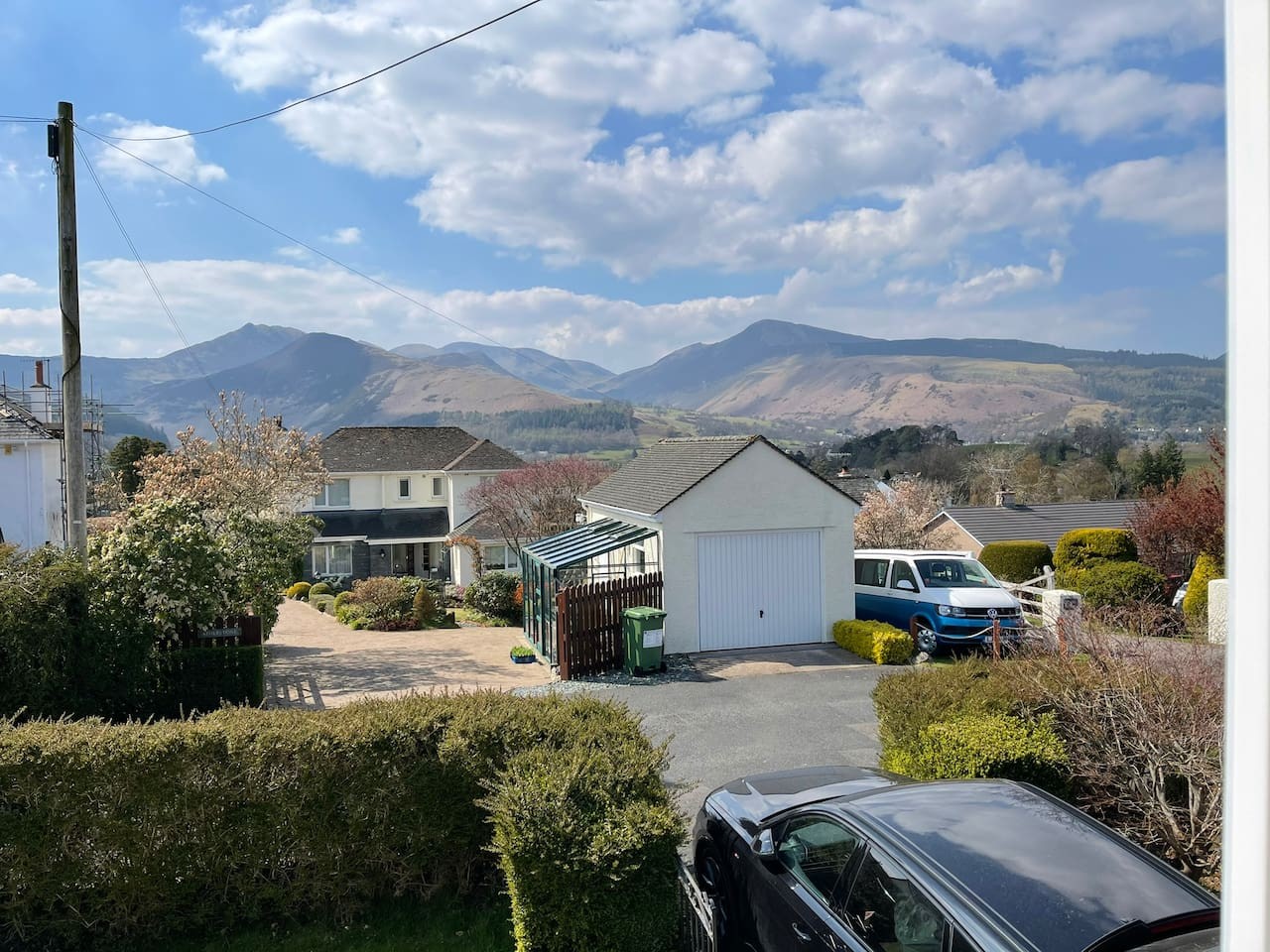
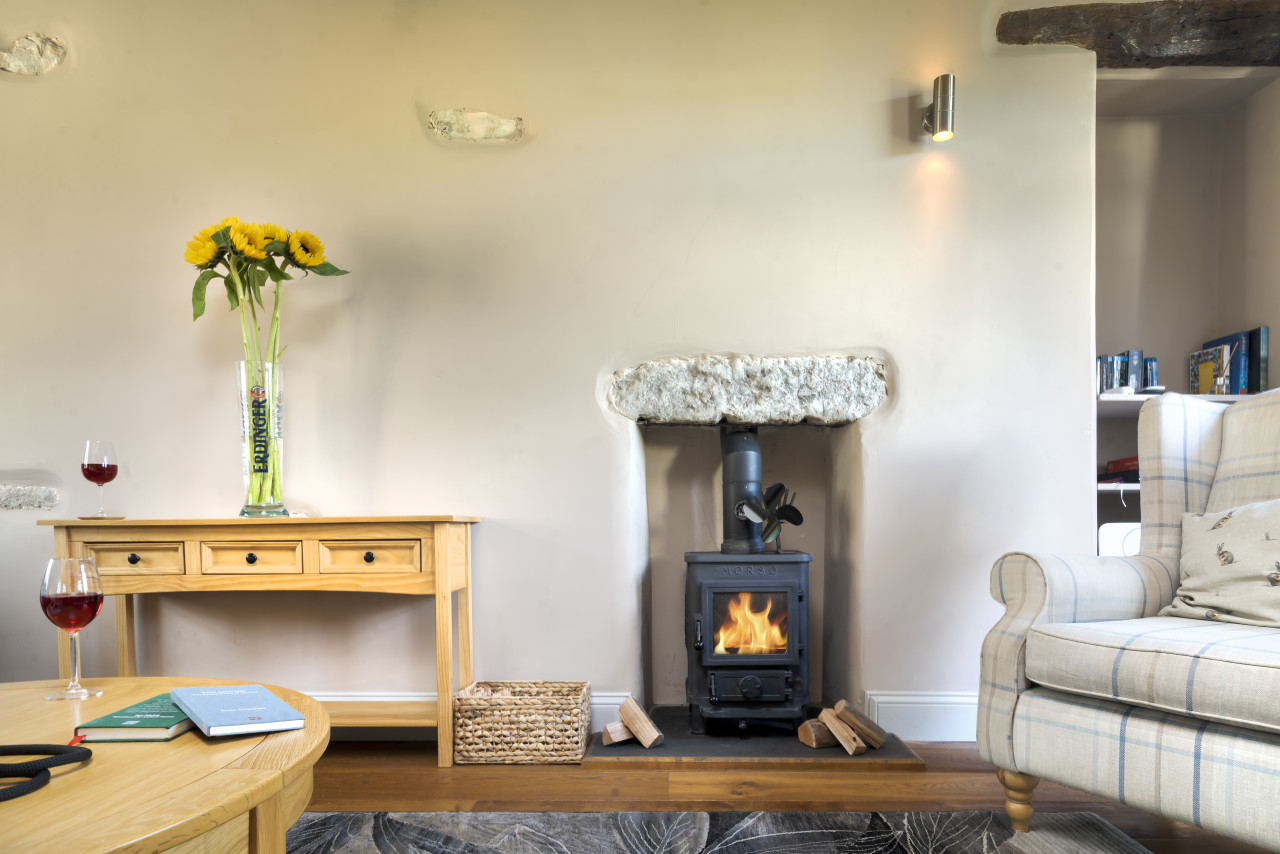
Travel Fox holiday homes around Lake District, linked directly to their property pages.
For homeowners
Own a holiday home near Patterdale?
We manage holiday lets across the Lake District from 12% commission, charged after cleaning costs, with no lock-in. A co-founder visits before you decide.
Holiday let management in the Lake District →
A guide with a point of view
Written from research. Edited for real journeys.
Use the Official site links for live practical details, then use this guide for context, ideas and room to explore.
Photography credits & licences
Third-party photographs are credited to their named creators and reused under the linked Creative Commons licence or public-domain dedication. Travel Fox stores an optimised local copy; the file-specific changes and any browser-applied display crop are disclosed below. Reused photographs link both to the Wikimedia Commons source record and to the declared source image; Travel Fox's own photographs carry no such record and are marked as ours. These image licences do not cover Travel Fox text, branding or page design.
- File:St Patrick's church, Patterdale - geograph.org.uk - 3937320.jpg — photograph by David Purchase; St Patrick's church, Patterdale by David Purchase. Source record on Wikimedia Commons. Declared source image. Licence: CC BY-SA 2.0. File changes: Downloaded from Wikimedia Commons, resized to a maximum 1920px edge and encoded as an optimised JPEG. Display changes: Displayed with responsive CSS cropping.
Sources
Every place on this page is checked against a published source. Each entry links the record we used and names who publishes it.
- The White Lion Inn — thewhitelioninn-patterdale.foodanddrinksites.co.uk other published source
- St Patrick's Church, Patterdale — stpatrickschurchpatterdale.org operator, sector body or destination organisation record not machine-readable; publisher restricts automated access
- Side Farm Tea Room — ratings.food.gov.uk statutory register or public authority
- Helvellyn via Striding Edge — visitlakedistrict.com operator, sector body or destination organisation
- Angle Tarn Walk — gov.uk statutory register or public authority
- Glenridding to Howtown — ullswater.org other published source