
Marsh, stone and wide skies
Cockerham
A low-lying Lancashire village where estuary light, medieval remains and weekend parachutes share the horizon.
- Best for
- Flat estuary walking and layered local history
- Give it
- A long half-day between village and coast
- Don't miss
- The Church in the Fields and Plover Scar Lighthouse
The Fox verdict
A village written across the marsh
Cockerham pairs an isolated old church and a traditional inn with the broad light and unusual landmarks of the Lune estuary.
The appeal is in the contrasts: flat flood-bank country leads towards a surviving abbey chapter house and a whitewashed offshore lighthouse, while parachutes appear over the marsh on most weekends. Glasson Dock adds a historic harbour and canal basin nearby.
Where to go
Places in Cockerham
Every place below is checked against a published source, listed with what it is and how long to give it.
Local signatures
3 placesThe Manor Inn
An old village inn with four rooms, a real fire, pool and darts, home-made cooking, dog treats at the bar and a large rear beer garden.
- Visit length
- Editorial estimate: Allow around 90 minutes
- Locality
- 1 Main Street, LA2 0EF
- Access
- Opening hours are worth checking before you set out.
Cockersand Abbey Chapter House
The abbey is reduced to its octagonal thirteenth-century chapter house, later used by the Daltons of Thurnham Hall as a family mausoleum.
- Visit length
- Editorial estimate: Allow around 45 minutes
- Locality
- On the marsh at the river's mouth
Black Knights Parachute Centre
Billed as the longest-running parachute centre in the UK, with more than fifty years in operation and tandem and charity skydives from Cockerham airfield.
- Visit length
- Editorial estimate: Allow around 2 hours
- Locality
- Hillam Lane at Cockerham airfield
History & heritage
3 placesSt Michael's Church
The Church in the Fields has a tower dating from 1586 and a Morris & Co. chancel window using designs by Ford Madox Brown, Edward Burne-Jones and William Morris.
- Visit length
- Editorial estimate: Allow around 45 minutes
- Locality
- In the fields
Plover Scar Lighthouse
An eight-metre white conical stone tower built in 1847 as the low light of a leading pair for ships entering the Lune estuary and Glasson Dock.
- Visit length
- Editorial estimate: Allow around 30 minutes
- Locality
- Offshore on a rock ledge uncovered at low tide
Glasson Dock
A historic harbour opened in 1787, with a canal basin, cafés and the Glasson Branch of the Lancaster Canal.
- Visit length
- Editorial estimate: Allow around 90 minutes
- Locality
- Glasson Dock
No places match this filter. Choose All places to reset the list.
Three ways to explore Cockerham
Signature outings
Cockersand's surviving chapter house
Find the octagonal chapter house that survived the abbey and later became the Dalton family's mausoleum.
Plover Scar at low tide
Look across to the white conical lighthouse on its rock ledge, visible above a scar uncovered at low tide.
Glasson's waterside history
Pair the harbour opened in 1787 with the canal basin and the Glasson Branch of the Lancaster Canal.
The village story
Cockerham Village Guide
An inn, a displaced church, estuary landmarks and a surrealist childhood give this flat Lancashire village an unexpectedly vivid story.
The village inn and marsh-born flavour
At the bar of the Manor Inn, on Main Street, there are water bowls and dog treats alongside a large selection of whiskies. The pub has four separate rooms of differing character, a real fire, a pool table and a dartboard, and CAMRA describes it, not unkindly, as "an old village inn, largely still functioning as such." The cooking is home-made by the chef, and reviewers reserve their warmest words for the Sunday roasts. There is a large beer garden and barbecue area at the rear, and seats out front for anyone who prefers to watch the street. It was rebuilt in 1871, though the back may be older — possibly a former blacksmith's, with a stone over the fire dated 1716. Opening hours are worth checking before you set out; the pub went quiet for a stretch and has since been trading again.
There is no butcher or farm shop in the village, but the salt marshes running out to the Lune produce prized salt-marsh lamb, which is the sort of thing worth asking after locally.
Estuary paths and the Church in the Fields
The village sits on flat, low-lying ground where the River Cocker meets the estuary, six miles south of Lancaster. This is a landscape of wide skies, sea-bank paths and estuary light, with views across Morecambe Bay to the Lakeland fells. Because it is flat, the walking is easy underfoot — flood banks and towpaths rather than hills. The Cockersand Abbey and Plover Scar loop, about 5.6 miles from Glasson, follows the marsh to a ruined abbey chapter house and a whitewashed lighthouse standing offshore on a rock ledge that only shows at low tide. Longer legs can be added out to the airfield and the Glasson Branch of the Lancaster Canal.
St Michael's is known locally as the Church in the Fields, because the village it once served moved to higher ground after repeated flooding and left it stranded. The tower dates from 1586; the rest was rebuilt in 1814 and again in 1910. Inside there is a chancel window of the four evangelists designed by Ford Madox Brown, Edward Burne-Jones and William Morris. A Black Death plague pit is believed to lie in the churchyard, possibly beneath a garden shed.
Waste, an arrow and a surrealist childhood
The Domesday surveyors recorded no population here at all. The estate was listed as waste in 1086; its value, meadow and plough teams all go unrecorded. In 1350 a vicar named John was wounded by an arrow shot by Adam the Archer on the Sunday after Pentecost, which the record notes without further comment.
The odder detail is that Crookhey Hall, a Gothic-revival mansion designed by the architect of London's Natural History Museum, was the childhood home of the surrealist painter Leonora Carrington. She grew up here among horses and fairytales before running off to Paris with Max Ernst, and the house recurs, unsettled, throughout her paintings.
Arriving beneath the parachutes
Stagecoach buses 88 and 89 run roughly hourly Monday to Saturday, linking the village to Lancaster and Glasson Dock. The village sits on the A588, the Lancaster-to-Pilling road; the A6 and M6 Junction 33 are about ten minutes east.
Overhead, most weekends, there are parachutes. Black Knights on Hillam Lane, billed as the longest-running parachute centre in the country, has been putting people out of a Cessna over the marsh for more than fifty years.
Stay around Lancashire
Make a longer stay of it
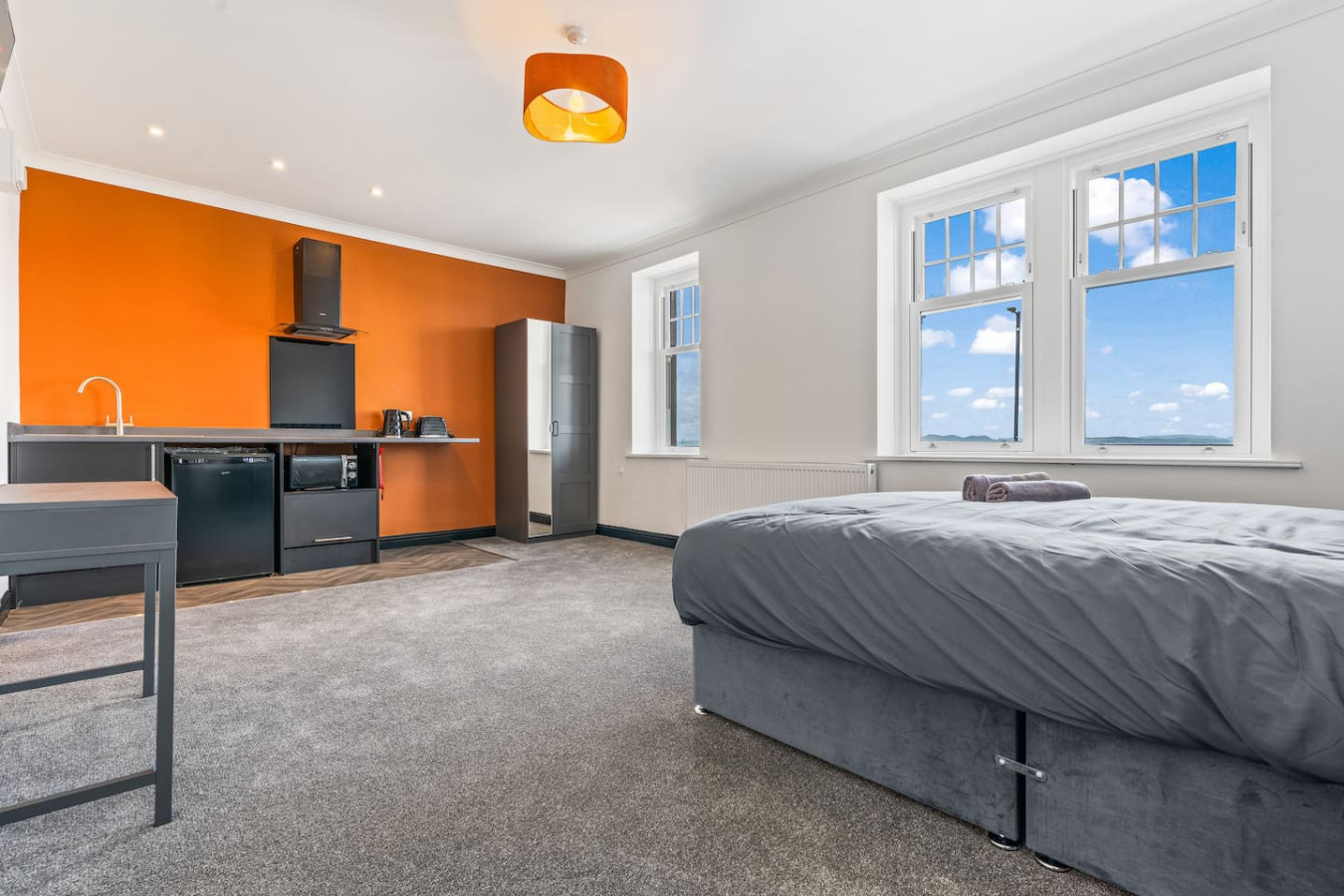
Travel Fox holiday homes around Lancashire, linked directly to their property pages.
A guide with a point of view
Written from research. Edited for real journeys.
Use the Official site links for live practical details, then use this guide for context, ideas and room to explore.
Sources
Every place on this page is checked against a published source. Each entry links the record we used and names who publishes it.
- The Manor Inn — licensing.lancaster.gov.uk statutory register or public authority
- St Michael's Church — achurchnearyou.com national body or asset manager
- Cockersand Abbey Chapter House — historicengland.org.uk statutory register or public authority record not machine-readable; publisher restricts automated access
- Plover Scar Lighthouse — redrosecollections.lancashire.gov.uk statutory register or public authority
- Glasson Dock — canalrivertrust.org.uk national body or asset manager
- Black Knights Parachute Centre — find-and-update.company-information.service.gov.uk statutory register or public authority