
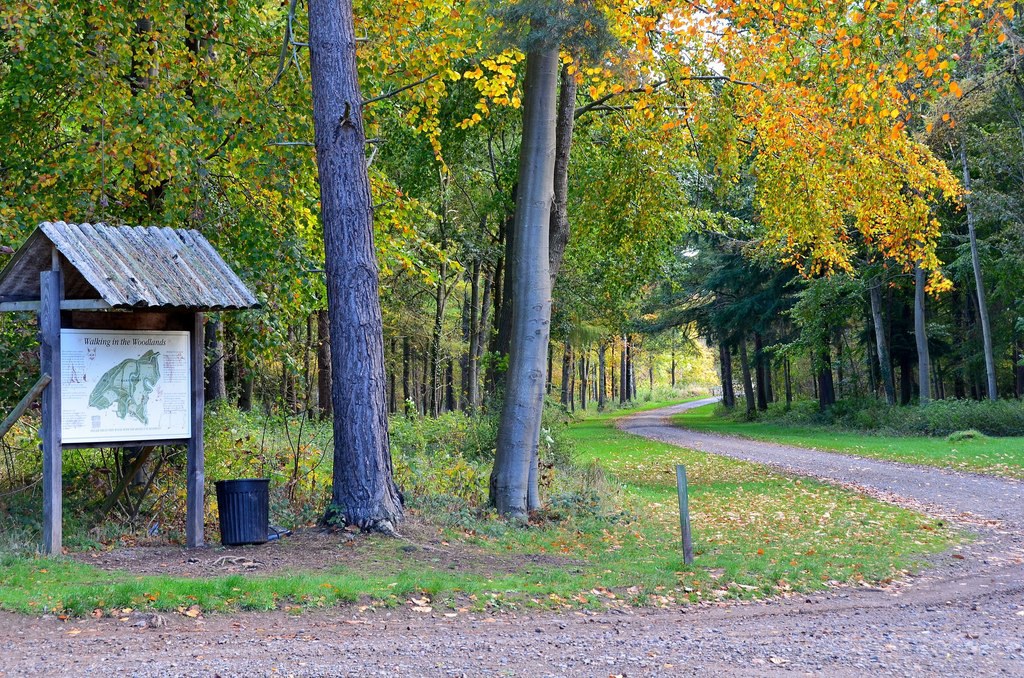
Town, park and Esk
Dalkeith
A historic Midlothian town where a long market tradition meets wooded parkland, river walks and traditional pubs.
- Best for
- Country-park walks, local history and traditional pubs
- Give it
- A day between the town and Dalkeith Country Park
- Don't miss
- The ruined medieval choir at St Nicholas Buccleuch
Photo: Jim Barton · CC BY-SA 2.0 · cropped
The Fox verdict
Market-town history beside wooded parkland
Dalkeith combines a long-established High Street market tradition with the grounds, woodlands and rivers of Dalkeith Country Park.
Come for the fifteenth-century core and ruined medieval choir of St Nicholas Buccleuch, then choose between waymarked park walks, family adventures and the town's traditional pubs.
Where to go
Places in Dalkeith
Every place below is checked against a published source, listed with what it is and how long to give it.
Local signatures
3 placesThe Black Bull
A traditional pub whose ornate exterior and striking bar are popular with Dalkeith locals and visitors.
- Visit length
- Editorial estimate: allow around 75 minutes
- Locality
- in the town itself
Fort Douglas Adventure Playground
An adventure playground opened in 2016 within Dalkeith Country Park.
- Visit length
- Editorial estimate: allow around 90 minutes
- Locality
- in Dalkeith Country Park
Go Ape Dalkeith
A treetop adventure course within Dalkeith Country Park.
- Visit length
- Editorial estimate: allow around 120 minutes
- Locality
- in Dalkeith Country Park
Food & drink
1 placeThe Sun Inn
An award-winning gastropub with rooms serving Scottish produce, with Loch Fyne oysters, Borders lamb, haddock and fish and chips among the researched menu highlights.
- Visit length
- Editorial estimate: allow around 90 minutes
- Locality
- on Lothian Bridge, just south of the town by Newbattle
- Access
- It can be very busy.
Walks & outdoors
2 places
Dalkeith Country Park
Waymarked walking routes cross the historic grounds and woodlands laid out around Dalkeith Palace, with the River Esk running through the park.
- Visit length
- Editorial estimate: allow around 90 minutes
- Locality
- immediately north of the historic High Street
Penicuik–Dalkeith Walkway
A walking and cycling route following a former railway line between Dalkeith and Penicuik through the Esk valley.
- Visit length
- Editorial estimate: allow around 90 minutes
- Locality
- linking Dalkeith with Penicuik through the Esk valley
History & heritage
1 placeSt Nicholas Buccleuch Parish Church
A Category A listed church with a fifteenth-century Late Gothic core; its ruined medieval choir contains the tomb and effigies of James Douglas and Princess Joanna Stewart.
- Visit length
- Editorial estimate: allow around 45 minutes
- Locality
- Dalkeith
No places match this filter. Choose All places to reset the list.
Three ways to explore Dalkeith
Signature outings
Woodlands and the Esk
Follow waymarked routes through the historic grounds and woodlands around Dalkeith Palace, with the River Esk running through the park.
The Ruined Choir
See the ruined medieval choir and the tomb and effigies of James Douglas and Princess Joanna Stewart.
The Sun Inn
Choose from Loch Fyne oysters, Borders lamb, haddock and fish and chips at this award-winning gastropub with rooms.
The town story
Dalkeith Town Guide
Pubs, market heritage, medieval church fabric and wooded walks beside the Esk shape a visit to Dalkeith.
Gastropubs and Traditional Drinking
Just south of the town, where the road crosses the Esk at Lothian Bridge, the Sun Inn puts Loch Fyne oysters on the same menu as haddock and chips. It is a gastropub with rooms that has previously been named AA Pub of the Year and Scottish Gastropub of the Year, and it builds its cooking around Scottish produce: Borders lamb rump with a boxty potato pancake, celeriac puree and Hornig's haggis; mussels; a tomato soup people come back for; sticky toffee pudding. It can be very busy. There is high tea as well as lunch and dinner, and the vegetarian, vegan and gluten-free options are worked through properly rather than tacked on.
In the town itself the drinking is more traditional. The Black Bull has an ornate exterior and a bar to match, and is busy with locals and visitors both. The Ship Inn sits at 92 High Street. The Buccleuch, in the centre, runs live music, sport and DJs. There is also the Harrow Hotel, the Justinlees carvery, and Maysons, which one drinker called a "great wee pub" and "the only real pub left in Dalkeith."
Market Heritage and the Country Park
The High Street has been a market street for a very long time. The Corn Exchange of 1853, designed by David Cousin, was in its day the largest indoor grain market in Scotland, back when the weekly grain market here served much of the Lothians. A few doors along, the Old Meal Market Inn on St Andrew Street is a survival of the same trade.
North of the High Street the town gives way almost immediately to trees. Dalkeith Country Park is the old estate of the Dukes of Buccleuch, laid out around Dalkeith Palace, with the two branches of the Esk meeting inside it. The ancient oakwoods on the river terraces make good walking, and the park now also holds the Fort Douglas adventure playground, Go Ape, the Restoration Yard and a campsite. If you want a longer line, the Penicuik–Dalkeith Walkway follows a former railway up the Esk valley.
Church, Castle and Court
St Nicholas Buccleuch, the parish church, is Category A listed and dates in its core to the fifteenth century. Its medieval choir was walled off in 1590 and left to become a ruin, and it holds the tombs of James Douglas, 1st Earl of Morton, and Princess Joanna Stewart, daughter of James I, who died in 1493. Her effigy is thought to be possibly the oldest depiction of a hearing-impaired person in the world; a wooden canopy was put up over it in 2005.
The castle that preceded the palace stood here from the twelfth century. Margaret Tudor stayed before her entry into Edinburgh in 1503; Mary, Queen of Scots came in 1565; Cromwell's General Monck ran the government of Scotland from it in the 1650s.
Edinburgh and Eskbank Connections
Edinburgh is about seven miles northwest, twenty minutes or so by road. Trains run from Eskbank on the Borders Railway, which reopened in 2015 after more than forty years without a line.
Beetty Dick, Dalkeith's Town Crier
Dalkeith once had a female town crier, Beetty Dick, who held the post through the middle of the eighteenth century.
Stay around Midlothian
Make a longer stay of it
Travel Fox holiday homes around Midlothian, linked directly to their property pages.
For homeowners
Own a holiday home near Dalkeith?
We manage holiday lets across the UK from 12% commission, charged after cleaning costs, with no lock-in. A co-founder visits before you decide.
How our holiday let management works →
A guide with a point of view
Written from research. Edited for real journeys.
Use the Official site links for live practical details, then use this guide for context, ideas and room to explore.
Photography credits & licences
Third-party photographs are credited to their named creators and reused under the linked Creative Commons licence or public-domain dedication. Travel Fox stores an optimised local copy; the file-specific changes and any browser-applied display crop are disclosed below. Reused photographs link both to the Wikimedia Commons source record and to the declared source image; Travel Fox's own photographs carry no such record and are marked as ours. These image licences do not cover Travel Fox text, branding or page design.
- File:Dalkeith Country Park - geograph.org.uk - 3720843.jpg — photograph by Jim Barton; Dalkeith Country Park by Jim Barton. Source record on Wikimedia Commons. Declared source image. Licence: CC BY-SA 2.0. File changes: Downloaded from Wikimedia Commons, resized to a maximum 1920px edge and encoded as an optimised JPEG. Display changes: Displayed with responsive CSS cropping.
Sources
Every place on this page is checked against a published source. Each entry links the record we used and names who publishes it.
- Dalkeith Country Park — dalkeithcountrypark.co.uk operator, sector body or destination organisation
- St Nicholas Buccleuch Parish Church — scotlandschurchestrust.org.uk other published source
- The Sun Inn — thesuninnedinburgh.co.uk other published source
- The Black Bull — blackbulldalkeith.co.uk operator, sector body or destination organisation
- Penicuik–Dalkeith Walkway — midlothian.gov.uk statutory register or public authority
- Fort Douglas Adventure Playground — visitmidlothian.co.uk operator, sector body or destination organisation
- Go Ape Dalkeith — visitmidlothian.co.uk operator, sector body or destination organisation