
Downs, river and working history
Amberley
A ridge-top village where medieval stonework, a former chalk quarry and the Arun floodplain sit within one rewarding day.
- Best for
- Industrial heritage, medieval detail and wetland walks
- Give it
- A full day, or a focused afternoon
- Don't miss
- The museum railway and St Michael's Norman chancel arch
Photo: Simon Burchell · CC BY-SA 4.0 · cropped
The Fox verdict
A village with more than one kind of history
Amberley joins a former limeworks, a Norman church, riverside paths and food worth building into the day.
The strongest visit starts around Houghton Bridge and the old quarry, then climbs into the historic village before opening onto the Wild Brooks. Amberley Museum gives families and industrial-history enthusiasts a substantial anchor, while St Michael's, the short circular walk and the riverside businesses make the settlement work equally well at a slower pace.
Where to go
Places in Amberley
Every place below is checked against a published source, listed with what it is and how long to give it.
Local signatures
3 places
Start here
Amberley Museum
A 36-acre former chalk quarry with more than 40 exhibit areas, including a narrow-gauge railway, working historic buses, crafts and communications displays.
- Visit length
- Editorial estimate: around 2 hours 30 minutes
- Locality
- former chalk quarry near Amberley station
- Access
- Exhibit and vehicle operation varies; check the Official site before travel.
Amberley Circular Walk
An easy circuit following the Arun opposite Bury, crossing low fields, skirting the castle walls and returning through the village.
- Visit length
- Editorial estimate: Allow around 2 hours
- Locality
- station, Arun floodplain and historic village
- Access
- The route has stiles and can be muddy in winter.
The Black Horse
A food-led village inn with log fires, a dining room, bedrooms and a secluded patio garden, supplied in part by the family's Sussex farm and vineyard.
- Visit length
- Editorial estimate: around 1 hour 30 minutes
- Locality
- High Street
- Access
- Food, garden use and dog-friendly areas can vary; check when booking.
Food & drink
3 placesThe Bridge Inn
A traditional riverside country inn with log fires, home-cooked food, real ales and a garden and patio beside the Arun.
- Visit length
- Editorial estimate: around 1 hour 15 minutes
- Locality
- Houghton Bridge
- Access
- Dogs are welcome in the bar but not the dining room; check current dining arrangements before travel.
Amberley Tea Room
A family-run traditional tea room serving homemade cakes, simple lunches, scones and afternoon tea.
- Visit length
- Editorial estimate: around 1 hour
- Locality
- the historic village
- Access
- Check current service arrangements before travel.
Amberley Castle Restaurant
Fine dining for residents and booked non-residents in the castle hotel's Queen's Room and Great Room.
- Visit length
- Editorial estimate: around 2 hours
- Locality
- Amberley Castle
- Access
- Non-residents may book; reserve and confirm current dining arrangements before travel.
Walks & outdoors
1 place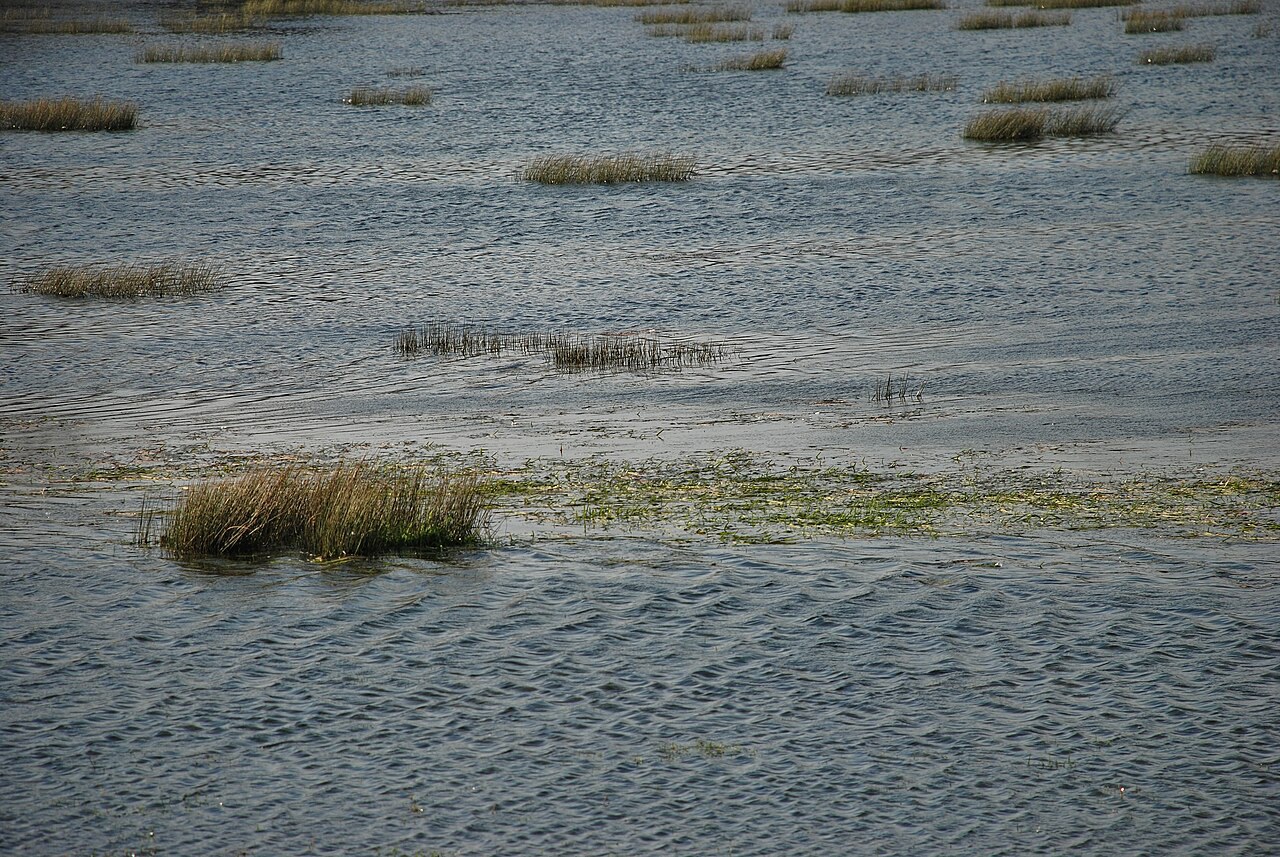
Amberley Wild Brooks
An 80-hectare mosaic of wet grassland and ditches, especially associated with wintering wigeon and teal.
- Visit length
- Editorial estimate: around 1 hour 30 minutes
- Locality
- public footpath from Hog Lane
- Access
- No parking or visitor facilities; stay on the public footpath and expect very boggy ground.
History & heritage
1 place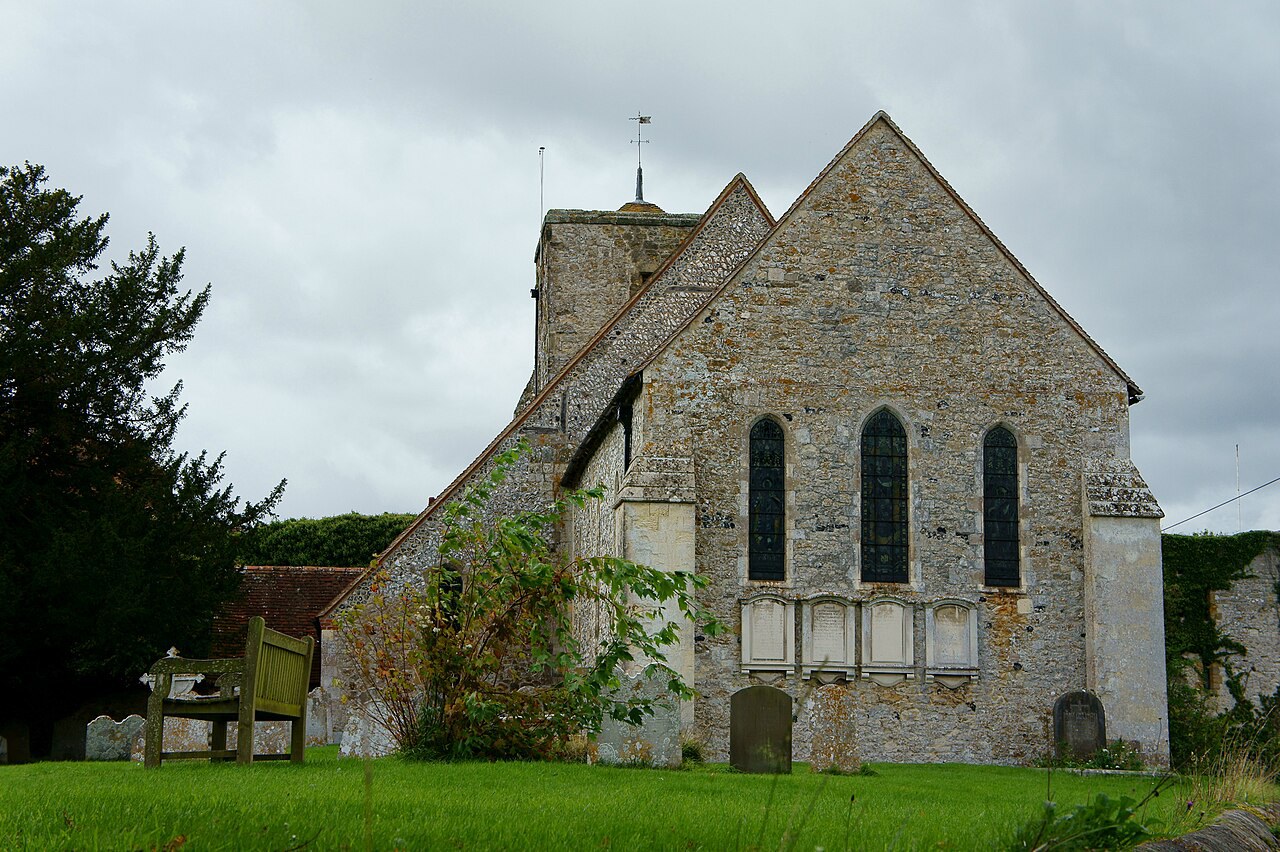
St Michael's Church
A Grade I church with a chevroned Norman chancel arch, medieval wall paintings, artistic memorials and a signed biodiversity trail in the churchyard.
- Visit length
- Editorial estimate: around 45 minutes
- Locality
- the historic village
- Access
- Check visitor access and services before travel.
Things to do
1 placeRiverside South Downs
A riverside café and activity base with two terrace gardens over the Arun, serving breakfast, light food and cakes alongside boat and e-bike activities.
- Visit length
- Editorial estimate: around 1 hour
- Locality
- Houghton Bridge
- Access
- Check current café and activity arrangements before travel.
No places match this filter. Choose All places to reset the list.
Three ways to explore Amberley
Signature outings
Working transport history
Explore the former limeworks among a narrow-gauge railway, operational interwar buses and more than 40 exhibit areas.
Norman stone and Passion paintings
Look closely at St Michael's chevroned chancel arch and the fourteenth-century Passion paintings that survive around it.
The Wild Brooks on foot
Follow the public footpath from Hog Lane into wet grassland associated with wintering wigeon and teal.
The village story
Amberley Village Guide
From river meadows and rescued pubs to medieval paintings and glowing lime kilns, Amberley's story rises with the land.
Lanes, local produce and riverside pubs
The lanes through Amberley are often kerbless, with open drains running along their edges, winding between houses of greensand, brick, flint and timber frame. The roofs are steep thatch and clay tile, with eyebrow dormers curving over the upstairs windows, and most of the houses behind them are sixteenth- or seventeenth-century in origin. From outside, trees hide much of the village; the greensand ridge it sits on runs under the chalk escarpment of the South Downs, and the ground falls away to the north across the River Arun and its water meadows. You come up onto it rather than into it. That arrival, from the station and Houghton Bridge, past the old chalk quarry at the foot of the Downs and then up the wooded rise, is a good introduction to the village.
There are currently three pubs, which is one more than some older accounts will tell you, and each has arrived at its present state by a different route. The Black Horse, on the corner where the coaching road once bent toward Rackham, reopened in April 2026 after the Gladwin brothers' Local & Wild group refurbished it. It has twelve bedrooms, log fires, a dining room and a patio garden, and the kitchen cooks close to the ground: vegetables from Chefs Farms, fruit from Brambletye, honey, eggs and beef from Gregory Gladwin's Nutbourne farm, flowers and wine from the family vineyard, and crockery from the village pottery down the road. The menu changes with what comes in, but it has run to Maldon oysters with rhubarb mignonette, a mushroom Marmite éclair, potato-and-onion rösti with beef tartare, South Coast scallops with peas, elderflower and smoked bacon, Worthing barbecued squid with black-ink rice, and pig cheeks with spinach, nutmeg and pickled mushrooms. Sunday brings roast sirloin, half chicken, Tamworth pork belly, Gregory's lamb and a lion's-mane mushroom for anyone avoiding the meat. Dogs are allowed in designated areas and in some of the bedrooms, and there are barbecues in the garden at weekends. The travel writer Phoebe Taplin, arriving by train, called it "a cracking pub."
Down at Houghton Bridge, beside the Arun, the Bridge Inn is the riverside one, run by Natasha and Dave Challis. It keeps a bar, log fires and a garden and patio at the water's edge, and cooks home food: sandwiches, a Ploughman's, Sunday roasts, and, on the days people have written home about them, salmon with vegetables, roast beef with cauliflower cheese, sea-bass risotto and steak-and-kidney pudding. The real ales are well kept. There is a resident pub dog, Bridget, who is allowed in the bar; the dining room she is not. The bridge the inn takes its name from was put up in 1875 in what the builders called the medieval tradition, four low arches over one branch of the Arun and one over the other.
Community tables and village makers
The third pub is the one the village nearly lost. The Sportsman, up on Rackham Road, closed in 2023, and rather than let it go, some of the regulars formed a community-benefit society, raised the money and reopened it at Easter 2024. "Some of us regulars believed it could be a proper village pub again," said Roger Agate, who led the rescue. It has a central bar, three rooms, a conservatory and a deck; the conservatory and deck look out across Amberley Wild Brooks, and binoculars are left out for the view. The food is straightforward: South Downs pork sausages with mash and gravy, beer-battered fish with crushed peas, wholetail scampi, ham, egg and chips, a Ploughman's with Brighton Blue, a crispy halloumi burger and a Trenchmore Farm Sussex Wagyu beef burger. Three changing local cask ales are on, usually one of them dark, from breweries such as Firebird and Lakeside, with Silly Moo cider and Nutbourne wines alongside. Water and biscuits appear for dogs. There are coffee mornings, quizzes, open-mic nights, a bridge group, a book club and classic-car gatherings, which is the actual point of the place.
For everything short of a pint, the village keeps a genuine shop. Amberley Village Stores and Post Office sits in The Barn, run by Colin Woods since 2001 and by Lee Stace as his partner since 2024. It carries the ordinary groceries plus fruit, vegetables, milk and wine from nearby villages, frozen COOK meals, and its own pickles, jams, marmalades and biscuits, and it has been named the best village shop and Post Office in south-east England. It also sells the work of Amberley Village Pottery, a working country pottery whose dinnerware, tea services and one-off pieces come off Stoke-on-Trent and Staffordshire clays, glazed with cobalt, copper and iron oxides and finished oven- and dishwasher-safe. The same shop hangs Brian Murray's watercolours of the village. The Black Horse lists this pottery among its crockery suppliers.
The Amberley Tea Room does croissants with homemade raspberry jam, egg-mayonnaise and coronation-chicken sandwiches, sourdough toasties of mozzarella, sun-dried tomato and pesto, quiche, soup, fruit scones with clotted cream, and a proper afternoon tea. Down at the bridge, Riverside South Downs runs a café with two terrace gardens over the Arun, a full English, cream teas and cakes, and names its suppliers with a directness other places would tidy up: the ham and sausages come from "Mr Farncombe," the eggs from "Nick the Egg Man," the cakes from "Sue the Cake Lady." It also hires out boats and e-bikes, which makes the station end of the village a fair place to start a day without a car. Grander than any of them, Amberley Castle keeps a restaurant in its hotel that non-residents can book, running to peppered venison carpaccio, monkfish with curry and nori, and a baked Alaska with mango, ginger and passion fruit.
Bishops, battlements and medieval stonework
The castle is the reason people first picture Amberley, and it is not a ruin dressed up but a fortified house the bishops of Chichester built to live in. Bishop William Rede took his licence to crenellate in 1377, and the curtain walls, gatehouse and garderobe tower went up between then and 1382; the walls stand around forty-two feet, the gate towers nearer fifty-eight, above a dry moat. Historic England calls it a rare surviving example of a fortified episcopal residence. Inside, the sixteenth-century Queen's Room still holds paintings of Cassandra and Tomyris. The castle passed out of the bishops' hands during the Civil War in the 1640s — accounts differ on exactly how — and settled afterwards into private life.
St Michael's, the parish church, is older still, and Grade I. Its nave and chancel arch are Norman, probably mid-twelfth century, and the chancel arch is the thing to see: chevroned, with three attached shafts and volute and scallop capitals. Around it survive fourteenth-century Passion paintings — the Scourging, the Carrying of the Cross, the Crucifixion — with haloed heads read as the three Maries and Joseph of Arimathea. There is a late-twelfth-century Purbeck-marble font, reassembled from twelve pieces in 1864, a sixteenth-century iron hourglass stand, and the brass of John Wantele, who died in 1424, shown in armour with traces of enamel still on it. The building also quietly gathers up the village's artists: an Eric Gill tablet, a Francis Derwent Wood tomb for the painter Edward Stott, an Edwin Lutyens memorial with a bronze Pietà, and a tablet to the illustrator Arthur Rackham, who lived at nearby Houghton House through the 1920s. The churchyard has a marked biodiversity trail and more than 150 recorded species.
Artists, kilns and industrial memory
That gathering of artists was no accident. The railway reached Amberley in 1863 and made the village accessible; Stott led an early rural art colony that had its heyday in the 1920s, with four of the ten village studios standing along Church Street. The composer John Ireland took the marshes for his 1921 piano piece Amberley Wild Brooks, and Arnold Bennett, staying eight weeks in 1926, wrote the last two-thirds of a novel in forty-four days and noted in his journal, "I have never worked more easily than in the last six weeks." Long before any of them, Open Domesday's survey recorded seventy-five households here — villagers and smallholders, not a full population count — twenty-four plough teams and thirty acres of meadow and woodland, and valued the whole holding, held under the Bishop of Chichester, at twenty-one pounds a year in 1086.
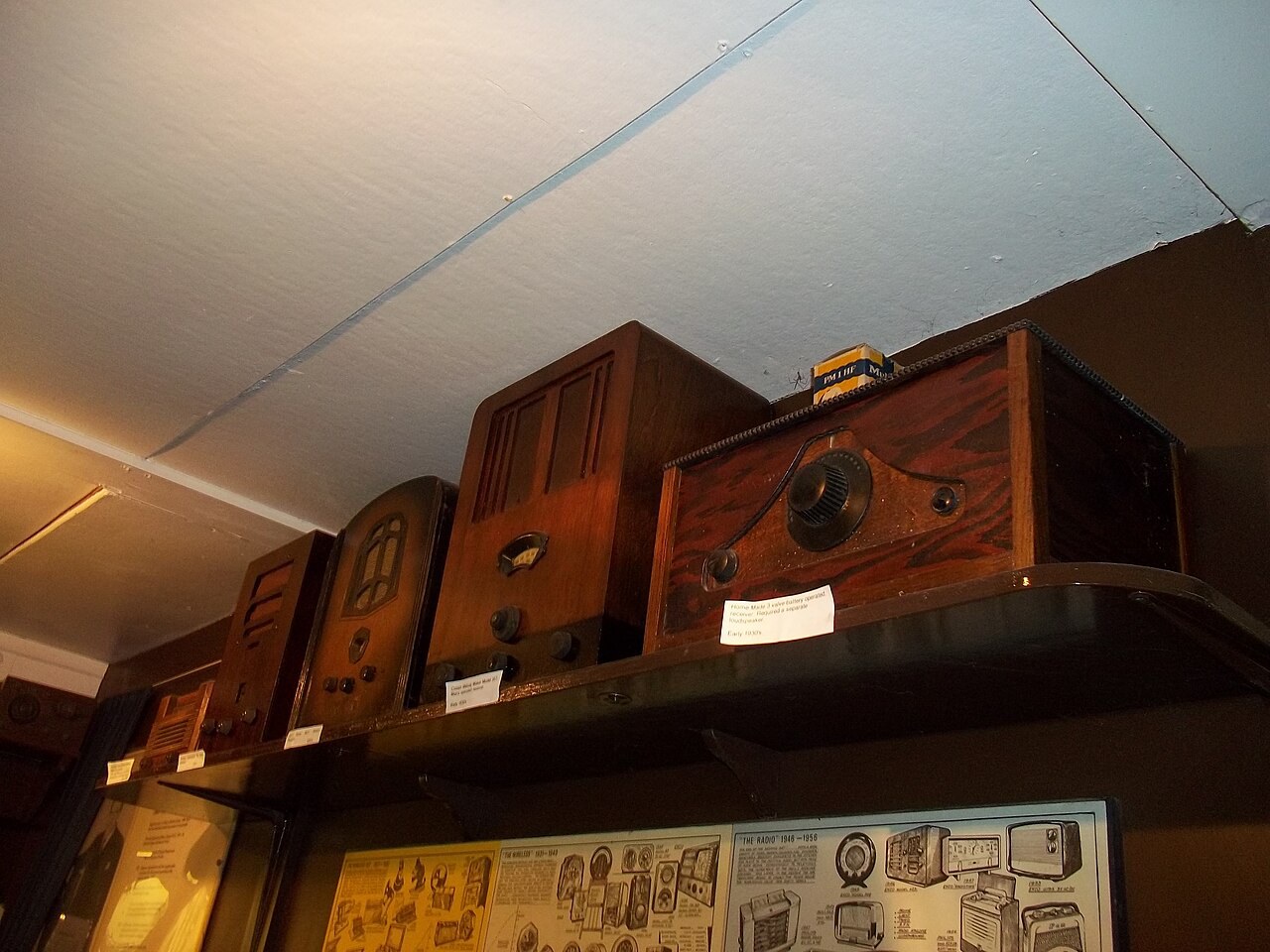
The chalk quarry you pass on the way up has its own second life. Lime was burned here from the 1840s to the 1960s, at one of West Sussex's largest works, and one resident remembered the pits at night as "the glowing rings of dull red ... showing the tops of the burning kilns." A trust took the thirty-six-acre site in 1974 and opened Amberley Museum in 1979; it now runs more than forty exhibit areas, a working 1930s telephone exchange, a fleet of interwar Southdown buses that still carry passengers, a narrow-gauge railway, and Limeburners Café, which sells the usual pasties and cakes alongside dog sausages and doggie ice cream. In 1984 the quarry tunnel spent about a week as Main Strike Mine in the Bond film A View to a Kill, complete with a villain-branded locomotive.
Paths across the Brooks and Downs
For walking, the 2.5-mile circular from the station is the manageable one, following the Arun opposite Bury, crossing low fields and skirting the castle walls, though it has stiles and turns to mud in winter. The longer loop through Burpham and North Stoke climbs High Titten onto Amberley Mount and the South Downs Way, which crosses the village at the Arun; the Wey-South Path arrives here too, tracing the corridor of the lost canal. Amberley Wild Brooks itself, eighty hectares of wet grassland loud with wigeon and teal in winter, is reached only by the footpath from Hog Lane, and the reserve keeps no parking or facilities — it is a place to walk into, not to park at. Trains on the Arun Valley line link the station to London Victoria, Arundel and Chichester, though not every one stops; the B2139 runs past the bridge, and there is a free car park on School Road, though it is worth checking the signage before you rely on it. The volunteer village bus runs a limited published pattern to Storrington, Chichester and Worthing on set days, and it is worth checking the current timetable before planning around it.
Amberley people are called Yellow Bellies, a name the parish keeps without quite explaining, the story being that women once warmed their skirts at the fire until the smoke stained them yellow. The village football side took the colour for its shirts. It is the sort of detail that surfaces on the deck of the Sportsman, with the binoculars out and the light going down over the Wild Brooks.
Stay around South Downs
Make a longer stay of it
Travel Fox holiday homes around South Downs, linked directly to their property pages.
For homeowners
Own a holiday home near Amberley?
We manage holiday lets across the UK from 12% commission, charged after cleaning costs, with no lock-in. A co-founder visits before you decide.
How our holiday let management works →
A guide with a point of view
Written from research. Edited for real journeys.
Use the Official site links for live practical details, then use this guide for context, ideas and room to explore.
Photography credits & licences
Third-party photographs are credited to their named creators and reused under the linked Creative Commons licence or public-domain dedication. Travel Fox stores an optimised local copy; the file-specific changes and any browser-applied display crop are disclosed below. Reused photographs link both to the Wikimedia Commons source record and to the declared source image; Travel Fox's own photographs carry no such record and are marked as ours. These image licences do not cover Travel Fox text, branding or page design.
- File:Amberley Museum 01.jpg — photograph by Simon Burchell; Own work. Source record on Wikimedia Commons. Declared source image. Licence: CC BY-SA 4.0. File changes: Downloaded from Wikimedia Commons, resized to a maximum 1920px edge and encoded as an optimised JPEG. Display changes: Displayed with responsive CSS cropping.
- File:St.Michael's Church, Amberley, Sussex - geograph.org.uk - 2608848.jpg — photograph by Peter Trimming; St.Michael's Church, Amberley, Sussex by Peter Trimming. Source record on Wikimedia Commons. Declared source image. Licence: CC BY-SA 2.0. File changes: Downloaded from Wikimedia Commons, resized to a maximum 1920px edge and encoded as an optimised JPEG. Display changes: Displayed with responsive CSS cropping.
- File:Amberley Wild Brooks - geograph.org.uk - 4815548.jpg — photograph by Michael Garlick; Amberley Wild Brooks by Michael Garlick. Source record on Wikimedia Commons. Declared source image. Licence: CC BY-SA 2.0. File changes: Downloaded from Wikimedia Commons, resized to a maximum 1920px edge and encoded as an optimised JPEG. Display changes: Displayed with responsive CSS cropping.
Sources
Every place on this page is checked against a published source. Each entry links the record we used and names who publishes it.
- Amberley Museum — amberleymuseum.co.uk operator, sector body or destination organisation
- St Michael's Church — wildbrookschurches.org.uk other published source
- Amberley Circular Walk — southdowns.gov.uk statutory register or public authority
- Amberley Wild Brooks — sussexwildlifetrust.org.uk national body or asset manager
- The Black Horse — blackhorse-pub.com operator, sector body or destination organisation
- The Bridge Inn — bridgeinnamberley.com operator, sector body or destination organisation
- Amberley Tea Room — amberleytearoom.co.uk operator, sector body or destination organisation
- Riverside South Downs — riversidesouthdowns.com operator, sector body or destination organisation
- Amberley Castle Restaurant — amberleycastle.co.uk operator, sector body or destination organisation