
Craft beneath the chalk ridge
Ditchling
A historic Sussex crossroads where village makers, old pubs and tearooms sit in the shadow of Ditchling Beacon.
- Best for
- Beacon walks, village craft and Sussex food
- Give it
- A full day, with live travel times checked first
- Don't miss
- The 248m Beacon and its Weald-to-sea views
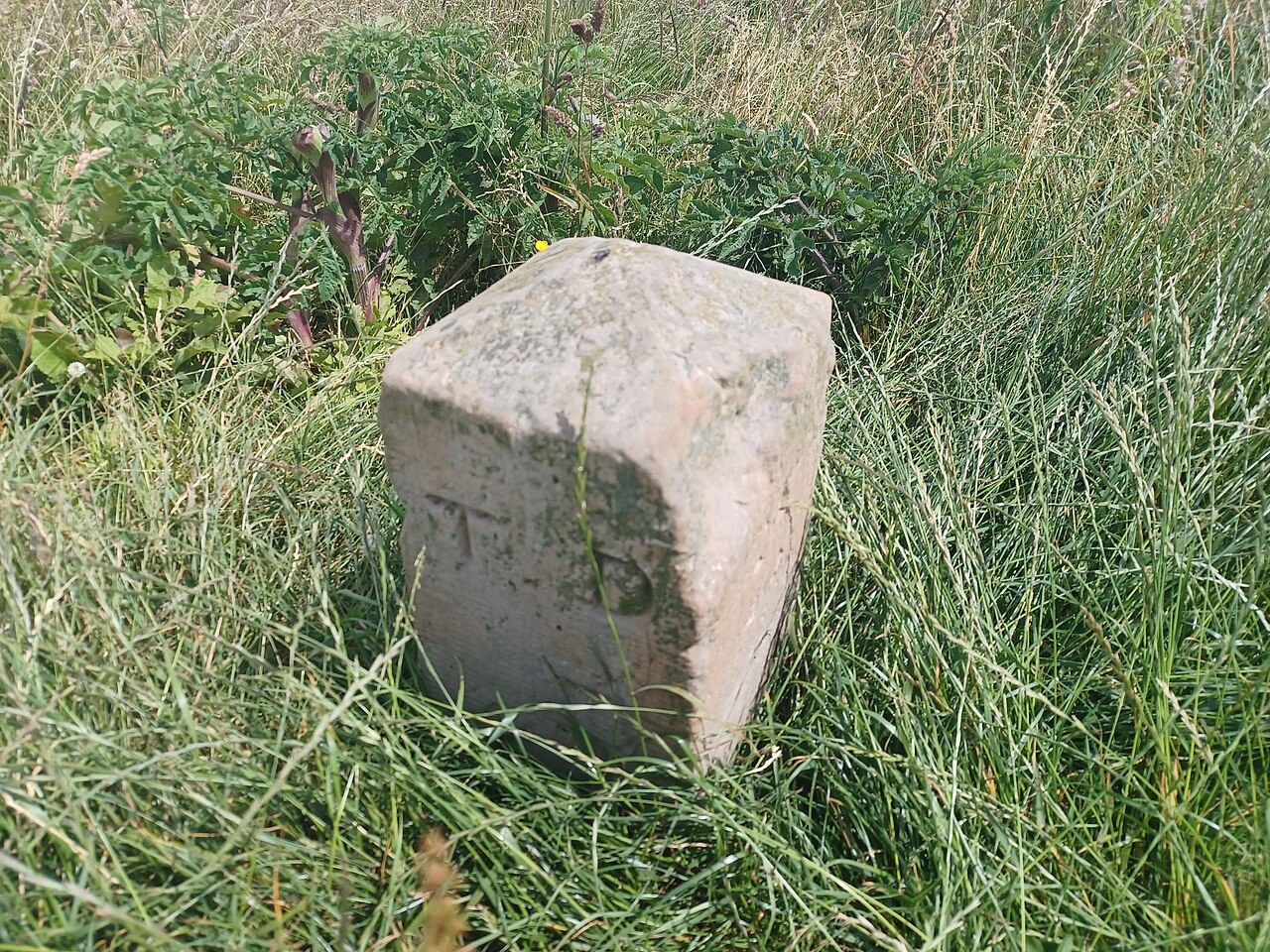
Photo: Simon Burchell · CC BY-SA 4.0 · cropped
The Fox verdict
A small village with an unusually strong sense of place
Come for the abrupt chalk ridge, then slow down for medieval fabric, modern craft history and local food.
Ditchling combines a serious South Downs walk with a compact historic centre, two surviving pubs, characterful daytime stops and a craft story written into its church and memorial. Book vineyard experiences before travelling and treat the village as a base for a deliberate day rather than a checklist.
Where to go
Places in Ditchling
Every place below is checked against a published source, listed with what it is and how long to give it.
Local signatures
3 places
Start here
Ditchling Beacon
At 248 metres, the highest point in East Sussex combines Weald-to-sea views with Iron Age hillfort earthworks, Anglo-Saxon burial mounds and South Downs Way access.
- Visit length
- Editorial estimate: around 2 hours 30 minutes for the documented 2.7-mile history circuit
- Locality
- immediately south of Ditchling
- Access
- The documented circuit crosses steep, rough ground and is not suitable for wheelchairs or pushchairs; dogs are welcome on leads.
Court Garden Vineyard & Winery
A family-run 17-acre single-estate vineyard producing traditional-method sparkling wine, Ditchling still wines and vermouth on a south-facing slope.
- Visit length
- Editorial estimate: around 2 hours for a booked visit or tasting
- Locality
- at Court Gardens Farm
- Access
- Guided and self-guided visits, tastings and picnics are offered; select and book the appropriate experience before travel.
The Nutmeg Tree
A 1930s/40s-styled tearoom with uniformed staff, period music, all-day breakfasts, afternoon tea and a Dame Vera Lynn Room.
- Visit length
- Editorial estimate: around 1 hour
- Locality
- village centre
- Access
- The tearoom is dog friendly and has an enclosed garden.
Food & drink
3 placesThe Bull
A Grade II village pub with rooms, open fires, cask ale, a large garden and a seasonal menu using eggs from nearby Mac's Farm and produce from the Sussex Peasant.
- Visit length
- Editorial estimate: around 1 hour 30 minutes
- Locality
- at the central crossroads
- Access
- Dogs are welcomed throughout the pub, restaurant, bedrooms and garden.
The Green Welly
A rustic café with a walled courtyard garden, local Sussex produce and bread and pastries delivered daily from Brighton's Flour Pot Bakery.
- Visit length
- Editorial estimate: around 45 minutes
- Locality
- village centre
The White Horse
A traditional village pub with rooms, a front bar, real fire, cask ale and a walled garden; its evidenced menu groups are fish and chips, burgers, vegan dishes and sharing boards.
- Visit length
- Editorial estimate: around 1 hour 30 minutes
- Locality
- a short walk from the crossroads
- Access
- Contact the pub directly before bringing a dog.
Walks & outdoors
2 placesDitchling Common Country Park
A designated SSSI of acidic grassland, bracken, scrub, woodland, streams and ponds, used for walking, fishing, picnics and dog walking.
- Visit length
- Editorial estimate: around 1 hour 30 minutes
- Locality
- north of the village on the B2112
Lodge Hill Circular
A three-mile circuit across open fields to Oldland post mill, returning partly along the Roman road with views towards the Jack and Jill windmills.
- Visit length
- Editorial estimate: around 2 hours
- Locality
- starts from the Village Hall car park
History & heritage
2 places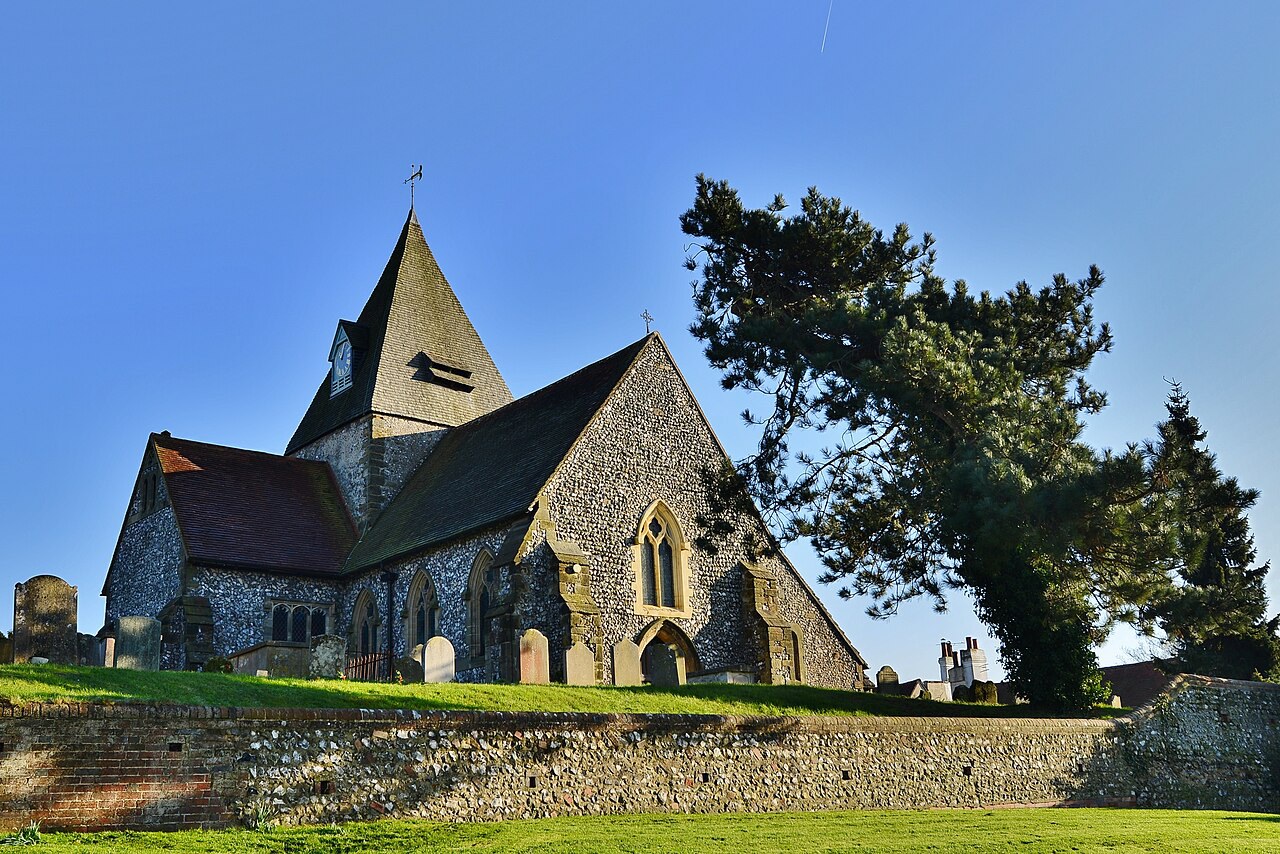
St Margaret of Antioch
A Grade I church with possible 11th-century nave fabric, later medieval work, a shingled pyramidal spire and carvings and lettering tied to Ditchling's craft circle.
- Visit length
- Editorial estimate: around 45 minutes
- Locality
- beside the green and village pond
- Access
- The research establishes the fabric and monuments but not dependable visitor opening hours; verify access before relying on an interior visit.
Ditchling War Memorial
A single Portland-stone block with a seat-like plinth, designed by Eric Gill and executed by Joseph Cribb in 1919, with later Second World War names.
- Visit length
- Editorial estimate: around 15 minutes
- Locality
- by the crossroads
No places match this filter. Choose All places to reset the list.
Three ways to explore Ditchling
Signature outings
The Beacon ridge
Follow the steep chalk scarp to East Sussex's 248-metre high point for hillfort earthworks and views across the Weald and towards the sea.
St Margaret's makers
Look for Joseph Cribb's carving and the coronation sundial designed by Eric Gill among fabric that spans much of the medieval period.
The Bull at the crossroads
Settle into the village pub whose seasonal menu draws on Mac's Farm eggs and Sussex Peasant produce from close to home.
The village story
Ditchling Village Guide
Pubs, craft, deep history and practical village life beneath the sharp rise of the South Downs.
The Bull: field, table and village life
At the Bull, the eggs come from a farm less than a mile away. Mac's Farm keeps twelve thousand free-range hens on Dumbrells Court Road, and its eggs reach the pub's Scotch egg and its breakfast plates alongside produce from the Sussex Peasant, a mobile farm shop that pulls up outside the Bull every Thursday.
The Bull sits at the crossroads in the village centre, the point the whole village turns around. Low beams, open fires, leather sofas, rooms upstairs. The menu runs to cyder-battered haddock with chunky chips and mushy peas, a short-rib-and-brisket burger with pickles and crispy onions, a one-pot half chicken in mustard cream with leeks and carrots, and on Sundays roast beef, Dingley Dell pork belly, roast chicken and a spiced cauliflower pithivier, with lemon tart, banoffee pie or Sussex cheeses to finish. Dogs are welcome throughout, bar and restaurant and bedrooms and garden, and the garden has a terrace, a children's play area, bike racks and a view of the Downs. Harvey's Sussex Best Bitter and Young's London Original are the regular cask ales.
The pub has been the village's committee room for centuries. The Friendly Benefit Society formed here in 1754, a Society for the Prosecution of Thieves met here later that century, and the Ditchling Horticultural Society was constituted at the Bull in 1822, which it claims makes it the oldest in England. Inquests were held here too.
Pubs past and present, then tea
A short walk off the crossroads is the White Horse, plainer, with a front bar, a real fire, cask ale and a walled garden. It does fish and chips, burgers, vegan dishes and sharing boards: an old-fashioned pub that serves food rather than a restaurant with a bar attached. Harvey's again, plus Thornbridge Jaipur and St Austell Proper Job on cask. It was the meeting place of the Foresters' Court Star society from 1859 and, for decades, the headquarters of the village fire brigade, on the practical grounds that the innkeeper was the captain. In 1786 a Ditchling glover named John Burgess wrote in his diary: "After a good days selling, went to ye White Horse had 2 pints of beer."
As recently as the 1980s Ditchling had five pubs, the Bull, the White Horse, the Sandrock, the North Star and the Royal Oak. Two remain.
For the daytime there is the Green Welly, a café in the centre with a walled courtyard garden and bread and pastries delivered each morning from Brighton's Flour Pot Bakery. Walkers and cyclists come down off the hills for its coffee, soup and savoury tarts, and one visitor singled out the homemade cheese scones. A few doors along is the Nutmeg Tree, a tearoom dressed in 1930s and 40s style, with uniformed staff, period music and a Dame Vera Lynn Room opened by the singer's daughter, Virginia Lewis-Jones. The business dates its building to 1681, when it was once J White's bakery, where bread went out by handcart and horse and trap and village women paid a penny to have their own cakes baked on a Saturday. It now does all-day breakfasts, hot buttered crumpets, fresh pasties and sausage rolls, afternoon tea and Taylor's of Harrogate leaf teas.
Provisions, makers and the Downs
Grocery options in Ditchling are limited. The Post Office at Barbers Bank on Lewes Road handles the post; beyond that, the Sussex Peasant's Thursday stall and Mac's Farm's egg shack are the specific options you can rely on. The Peasant began in 2017, when a man named Ed built a mobile shop out of a fifteen-hundred-pound horsebox; it now sells Sussex fruit and vegetables, meat, dairy, bread, local eggs and day-boat fish. For provisions, this is a village that expects you to know which day it is.
The independent shops it does keep are more than a place this size usually manages. Pruden and Smith, goldsmiths and silversmiths, work from a shop and workshop at the crossroads; Anton Pruden is the grandson of the Guild silversmith Dunstan Pruden, and Dunstan's original tools are still in the basement below. Poison Ivy sells hand-tied country flowers, plants and Sussex-made gifts on the High Street. There is a bookshop at the Turner Dumbrell Workshops that runs writing workshops, a plant market growing its stock at a local nursery, and a gallery that has reopened in the village.
South of the rooftops the ground goes almost vertical. Ditchling Beacon is 248 metres, 814 feet, the highest point in East Sussex, and it rises so sharply behind the village that the whole place sits in its shadow for part of the day. Along the top are the earthworks of an Iron Age hillfort; the mounds nearby are Anglo-Saxon burials, and a later beacon once stood here to warn of invasion. From the summit the view runs north across the Weald and south to the sea. Five parish walks start from the Village Hall car park, named Lodge Hill, Three Churches, the Beacon, Blackbrook Wood and Court Garden Farm, and between them they take in ancient farms, the parish's three historic churches, the Beacon and Oldland Mill. The three-mile Lodge Hill circular heads west from the village pond, out over open fields to Oldland post mill and back along part of the old Roman road, with the Jack and Jill windmills above Clayton in view most of the way. The Beacon circular is four or five miles of inclines, dew ponds and loose, muddy ground; from the top the South Downs Way runs west toward Devil's Dyke and east toward Blackcap. A separate, steeper 2.7-mile National Trust route over the same ground welcomes dogs on leads. To the north, quieter and flatter, Ditchling Common Country Park spreads its acidic grassland, bracken and ponds across a former grazing common, with bluebells in spring and bracken to push through in high summer.
Church, craft and deep history
The church stands on a rise beside the green, the pond and the museum. A church was recorded at Ditchling in the Domesday survey, and St Margaret of Antioch may keep some 11th-century fabric in its nave; the south aisle is late 12th century, the cruciform east end late 13th, the south chapel early 14th, the porch 15th. A low central tower carries a tall shingled pyramidal spire. Inside and out, the village's craft circle is hard to miss. Joseph Cribb carved the octagonal font, the commandment board and the south-chapel screens; Eric Gill designed the coronation sundial of 1911, with the lettering cut by Cribb. The churchyard holds Gill-carved stones and the grave Cribb made for Edward Johnston.
That craft circle is why Ditchling has a museum at all. Gill, a sculptor and letter-cutter, moved here in 1907 and developed his direct carving in the village, making around 150 sculptures across his fifteen years before he left for Wales in 1924. He is a difficult figure to celebrate without qualification: Fiona MacCarthy's 1989 biography revealed his sexual abuse of his daughters, and it belongs in any honest account of his work. Around him gathered a remarkable group. Edward Johnston, who arrived in 1912 and stayed for life, founded modern calligraphy and drew the London Underground typeface here. Hilary Pepler ran St Dominic's Press. The weaver and natural dyer Ethel Mairet built her home and workshop, Gospels, trained some 130 apprentices and became the first woman named Royal Designer for Industry in 1937, though as a woman and a non-Catholic she was never allowed into the Guild of St Joseph and St Dominic that Gill, Cribb, Johnston and Pepler founded around 1920. The Guild bound craft, Catholic faith and communal life together at workshops on the Common until it closed in 1989. The Ditchling Museum of Art + Craft, begun in 1985, holds more than 20,000 objects tied to all of this; it is closed to the public at present while its future is decided, so time your visit to the walks and the pubs rather than the collection.
The Domesday surveyors found a substantial place. Ditchling ran to 196 recorded households, a mill worth two shillings and fivepence, and a church, and it was valued at £72 10s in 1086, held by William of Warenne. King Edward had held it before the Conquest. It was, in the language of the record, one of the larger settlements in the country, which is a strange thing to feel while standing at a crossroads with two pubs and a café.
Memorial, arrival and living traditions
By the crossroads is the war memorial, a single block of Portland stone with a seat-like plinth, designed by Eric Gill and cut by Joseph Cribb in 1919. Local people levelled the ground and gave the sandstone blocks around it; the memorial was unveiled soon after, and Cribb added the names of a second war afterwards.
Getting here takes some planning. The nearest station is Hassocks, roughly a mile and a half to two miles off, on the Brighton Main Line with step-free platforms. The B2116 runs east to west through the village and the B2112 north through the Common; Brighton is about fifteen minutes by car in light traffic, and Lewes, with its Norman castle, sits a short way east. The buses are sparse and have changed lately, so check live times before you rely on one.
Ditchling Morris still performs a Mummers' play around Boxing Day, sometimes with the Ditchling Carol, whose music was written by a villager named Peter Parsons who died on Christmas Eve in 1901. On the green there is a tree planted for Dame Vera Lynn's hundredth birthday in 2017. She settled here after the war, first in converted stables near the green and later up on Common Lane, and remained active in village events until late in life. It is a small green, and it has done well by the people who lived beside it.
Stay around South Downs
Make a longer stay of it
Travel Fox holiday homes around South Downs, linked directly to their property pages.
For homeowners
Own a holiday home near Ditchling?
We manage holiday lets across the UK from 12% commission, charged after cleaning costs, with no lock-in. A co-founder visits before you decide.
How our holiday let management works →
A guide with a point of view
Written from research. Edited for real journeys.
Use the Official site links for live practical details, then use this guide for context, ideas and room to explore.
Photography credits & licences
Third-party photographs are credited to their named creators and reused under the linked Creative Commons licence or public-domain dedication. Travel Fox stores an optimised local copy; the file-specific changes and any browser-applied display crop are disclosed below. Reused photographs link both to the Wikimedia Commons source record and to the declared source image; Travel Fox's own photographs carry no such record and are marked as ours. These image licences do not cover Travel Fox text, branding or page design.
- File:Boundary stone on Ditchling Beacon 01.jpg — photograph by Simon Burchell; Own work. Source record on Wikimedia Commons. Declared source image. Licence: CC BY-SA 4.0. File changes: Downloaded from Wikimedia Commons, resized to a maximum 1920px edge and encoded as an optimised JPEG. Display changes: Displayed with responsive CSS cropping.
- File:Ditchling, The church of St. Margaret of Antioch - geograph.org.uk - 4800156.jpg — photograph by Michael Garlick; Ditchling: The church of St. Margaret of Antioch by Michael Garlick. Source record on Wikimedia Commons. Declared source image. Licence: CC BY-SA 2.0. File changes: Downloaded from Wikimedia Commons, resized to a maximum 1920px edge and encoded as an optimised JPEG. Display changes: Displayed with responsive CSS cropping.
Sources
Every place on this page is checked against a published source. Each entry links the record we used and names who publishes it.
- Ditchling Beacon — nationaltrust.org.uk national body or asset manager
- St Margaret of Antioch — historicengland.org.uk statutory register or public authority record not machine-readable; publisher restricts automated access
- The Bull — thebullditchling.com operator, sector body or destination organisation
- Court Garden Vineyard & Winery — courtgarden.com operator, sector body or destination organisation
- The Nutmeg Tree — thenutmegtree.co.uk operator, sector body or destination organisation
- The Green Welly — thegreenwellycafe.com operator, sector body or destination organisation
- The White Horse — whitehorseditchling.com operator, sector body or destination organisation
- Ditchling Common Country Park — eastsussex.gov.uk statutory register or public authority
- Lodge Hill Circular — ditchling.com other published source
- Ditchling War Memorial — historicengland.org.uk statutory register or public authority record not machine-readable; publisher restricts automated access