
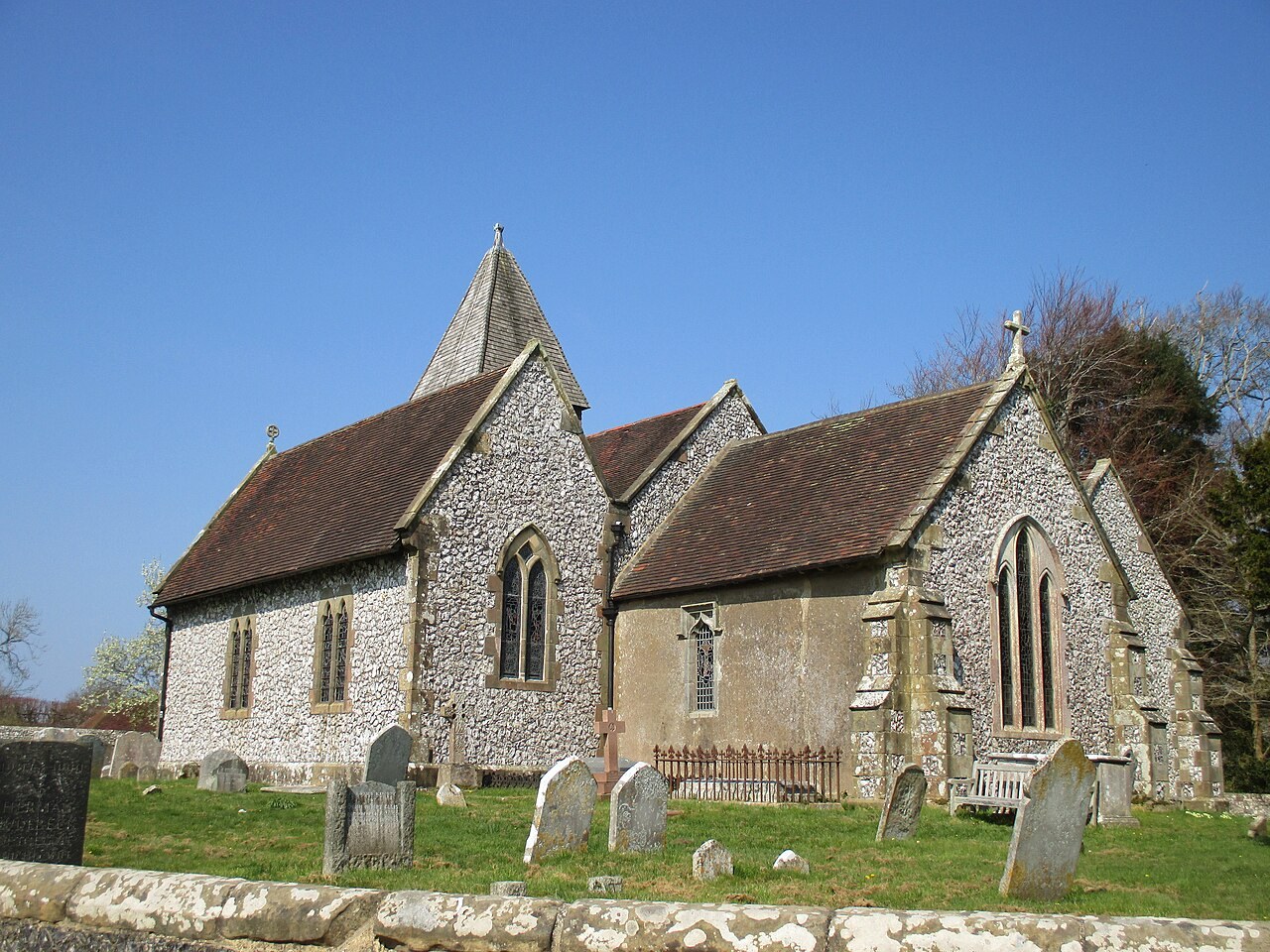
At the foot of the South Downs
Streat
A very small settlement where a regenerative farm and medieval church sit below the chalk, with Ditchling Beacon and village pubs nearby.
- Best for
- Downland walks, farm produce and compact history
- Give it
- Two to three hours for the Beacon circuit
- Don't miss
- The sea, Weald and Downs views from Ditchling Beacon
Photo: Antiquary · CC BY-SA 4.0 · cropped
The Fox verdict
A small village with the Downs doing the talking
Come for regenerative farm produce and a compact historic core, then widen the day to Ditchling Beacon or neighbouring pubs.
Streat's useful stops are few but distinct: My Little Farm, a Grade II* parish church and the chalk escarpment above. Nearby East Chiltington and Plumpton add two different pub stops, while Ditchling Beacon supplies the major walk and Plumpton Racecourse a selected-day family outing.
Where to go
Places in Streat
Every place below is checked against a published source, listed with what it is and how long to give it.
Local signatures
3 placesMy Little Farm / The Streat Garden
A regenerative farm and on-farm shop for seasonal vegetables, herbs, heritage-hen eggs, grass-fed meat, dairy, sourdough, pantry goods and its own herb-and-flower apothecary products.
- Visit length
- Editorial estimate: Allow around 60 minutes
- Locality
- Streat
- Access
- Farm tours run on selected days and the ground is uneven; check the Official site before travel.
The Jolly Sportsman
A country gastropub and restaurant at the foot of the Downs, serving local produce and Sussex wine, with a large garden and outdoor bar.
- Visit length
- Editorial estimate: Allow around 90 minutes
- Locality
- East Chiltington
- Access
- Menus change; check the Official site before making a special journey for a particular dish.
The Half Moon
A Plumpton restaurant-pub with seasonal food, neighbouring Plumpton College wine and a play garden with mini golf, climbing equipment, a sandpit and swings.
- Visit length
- Editorial estimate: Allow around 90 minutes
- Locality
- Plumpton
- Access
- The play garden is seasonal and menus are examples that can change; check the Official site before travel.
Walks & outdoors
1 placeDitchling Beacon
East Sussex's highest point at 248 metres, with views to the sea, across the Weald and along the Downs, plus an official moderate four-to-five-mile circuit.
- Visit length
- Editorial estimate: Allow around 180 minutes
- Locality
- Ditchling Beacon
- Access
- Expect inclines and loose, muddy or uneven ground; dogs should be kept on leads on the history walk.
History & heritage
1 place
The Parish Church, Streat
A Grade II* church with a nave dating from about 1200, a 13th-century chancel, a shingled bell turret and a Robert Thompson lectern bearing his carved mouse.
- Visit length
- Editorial estimate: Allow around 30 minutes
- Locality
- Streat
- Access
- Check visitor access before setting out if seeing the interior is essential.
Things to do
1 placePlumpton Racecourse
A nearby racecourse that describes itself as family-friendly and adds special entertainment on Feature and Family Fun racedays.
- Visit length
- Editorial estimate: Allow around 150 minutes
- Locality
- Plumpton
- Access
- This is a selected-day visit; check the Official site for a suitable meeting before travel.
No places match this filter. Choose All places to reset the list.
Three ways to explore Streat
Signature outings
Walk Ditchling Beacon
Follow the moderate four-to-five-mile circuit for downland views towards the sea, across the Weald and along the South Downs.
Read the Church Interior
Find the Robert Thompson lectern with its carved mouse, alongside Charles II royal arms dated 1660.
A Family Race Meeting
Choose a Feature or Family Fun raceday when Plumpton Racecourse adds special family entertainment.
The village story
Streat Village Guide
Farm beds, old stone, chalk paths and a village skyline marked by a V of trees.
Farm Beds and a Nearby Gastropub
On a fifteen-acre plot at the foot of the chalk, Keivor and Laure grow the vegetables, herbs and flowers that stock My Little Farm. The couple started the project after lockdown walks in 2020, and the Streat Garden was their first field. The farm shop sells seasonal vegetables, heritage-hen eggs, grass-fed meat, dairy, sourdough and pantry goods, alongside apothecary products made from the herbs and flowers grown a few yards away. On the last Saturday of each month they run a tour: you meet the heritage chickens and pigs and walk the growing beds, and under-16s go free. The ground is uneven, and they tell you so before you arrive.
Streat itself has little more shopping than that, because this is a very small settlement, and much of what you will want is a short drive out of it. For a pub, East Chiltington has the Jolly Sportsman, a gastropub with rooms at the foot of the Downs where well-behaved dogs are welcomed throughout, bedrooms included. The kitchen leans on local meat and Sussex wine, and Sunday roasts have typically come with roast potatoes, seasonal vegetables and gravy. There is a large garden with an outdoor bar.
The Half Moon in Plumpton
Plumpton, the other way, has the Half Moon on Ditchling Road. Menus have run from gammon, egg and chips to fresh Newhaven seafood, pork belly, a butternut-squash curry and a British steak burger with chips and coleslaw. It pours wine grown and made up the road at Plumpton College, and its play garden has mini golf, a climbing frame, tunnels, a rope climb, a sandpit and swings.
Beacon, Downs and Jubilee Trees
The reason to be here, though, is the ground itself. Streat sits inside the South Downs National Park, its church and manor at the foot of the escarpment and the parish running north from the Downs. Above it rises Ditchling Beacon, at 248 metres the highest point in East Sussex, with views to the sea, across the Weald and along the Downs. A four-to-five-mile circular from the Beacon follows the South Downs Way over inclines and muddy, uneven ground; a shorter, steeper history walk passes an Iron Age hillfort, dewponds, the old lime works and Anglo-Saxon burial mounds, dogs on leads throughout. On the scarp above the village a V-shaped plantation of trees, said to have been planted for Queen Victoria's Golden Jubilee in 1887, is the landmark you will keep picking out on the skyline. Sussex Villages calls Streat "a tiny place with a big landmark."
Church and Manor
The compact historic heart is the church and Streat Place, standing about sixty metres apart. The church nave is around 1200, the chancel thirteenth-century, with a shingled bell turret and spirelet; inside there is a Robert Thompson lectern carved with his signature mouse and a set of Charles II royal arms dated 1660. Streat Place, faced in knapped flint under a Horsham-slab roof, was probably built for Walter Dobell between 1607 and 1627. Local legend has it that its hall fireplace hid a space large enough for a fugitive Royalist to ride his horse into during the Civil War; horse and rider, the story goes, were never seen again.
Roman Roads and Modern Carving
The village takes its name from the Roman road that runs north of the church, straight towards Lewes. The sculptor John Skelton moved here in 1958 and turned a coach house into his workshop; his carving survives in the churchyard, cut by his daughter Helen Mary.
Stay around South Downs
Make a longer stay of it
Travel Fox holiday homes around South Downs, linked directly to their property pages.
For homeowners
Own a holiday home near Streat?
We manage holiday lets across the UK from 12% commission, charged after cleaning costs, with no lock-in. A co-founder visits before you decide.
How our holiday let management works →
A guide with a point of view
Written from research. Edited for real journeys.
Use the Official site links for live practical details, then use this guide for context, ideas and room to explore.
Photography credits & licences
Third-party photographs are credited to their named creators and reused under the linked Creative Commons licence or public-domain dedication. Travel Fox stores an optimised local copy; the file-specific changes and any browser-applied display crop are disclosed below. Reused photographs link both to the Wikimedia Commons source record and to the declared source image; Travel Fox's own photographs carry no such record and are marked as ours. These image licences do not cover Travel Fox text, branding or page design.
- File:Streat parish church.jpg — photograph by Antiquary; Own work. Source record on Wikimedia Commons. Declared source image. Licence: CC BY-SA 4.0. File changes: Downloaded from Wikimedia Commons, resized to a maximum 1920px edge and encoded as an optimised JPEG. Display changes: Displayed with responsive CSS cropping.
Sources
Every place on this page is checked against a published source. Each entry links the record we used and names who publishes it.
- My Little Farm / The Streat Garden — mylittlefarm.co.uk operator, sector body or destination organisation
- The Parish Church, Streat — historicengland.org.uk statutory register or public authority record not machine-readable; publisher restricts automated access
- Ditchling Beacon — southdowns.gov.uk statutory register or public authority
- The Jolly Sportsman — thejollysportsman.com operator, sector body or destination organisation
- The Half Moon — thehalfmoonplumpton.co.uk operator, sector body or destination organisation record not machine-readable; publisher restricts automated access
- Plumpton Racecourse — plumptonracecourse.co.uk operator, sector body or destination organisation