
Tudor ruins and river country
Midhurst
A historic market town where Cowdray’s causeway crosses the Rother water meadows and independent streets rise behind it.
- Best for
- Tudor ruins and riverside walking
- Give it
- 30–60 minutes for the historic town circuit
- Don’t miss
- Cowdray’s raised causeway across the water meadows
Photo: David960 · CC BY-SA 2.0 · cropped
The Fox verdict
A market town with its history still in the landscape
Midhurst combines an unusually legible Tudor approach, a walkable historic centre and easy access to the River Rother.
Begin with the causeway to Cowdray Ruins, then trace the town’s earlier centre at St Ann’s Hill and its independent streets. River walks, estate food and nearby gardens make Midhurst useful for more than a single heritage stop.
Where to go
Places in Midhurst
Every place below is checked against a published source, listed with what it is and how long to give it.
Local signatures
3 placesCowdray Ruins
Cross the 380-metre causeway to the scheduled, Grade I early Tudor courtyard-house ruins, whose approach across the water meadows remains unusually legible.
- Visit length
- Editorial estimate: about 60 minutes
- Locality
- across the River Rother water meadows
- Access
- Check the Official site before travel for current visitor access.
Midhurst River Walk
An easy 2.8-mile circuit through shaded riverbank, floodplain, Woolbeding Parkland and Whiphill Wood, with river plants and wildlife to watch for.
- Visit length
- Editorial estimate: Allow around 1¾ hours
- Locality
- along the River Rother and through Woolbeding Parkland
- Access
- The route includes a boggy boardwalk section.
Woolbeding Gardens
A National Trust garden of designed rooms, pools, a dry garden and Long Walk, with a topiary swan and Heatherwick Studio’s kinetic glasshouse among its distinctive features.
- Visit length
- Editorial estimate: about 2½ hours
- Locality
- at Woolbeding
- Access
- There is no visitor parking at the garden; use the complimentary shuttle from the Grange and check the Official site before travel.
Food & drink
2 placesCowdray Farm Shop
An estate farm shop, butchery, deli, food hall and café, with meat largely from Cowdray Home Farm and in-house pies, quiches, cakes and cookies.
- Visit length
- Editorial estimate: about 45 minutes
- Locality
- on the Cowdray estate
Spread Eagle Hotel bar
An oak-beamed bar and inglenook restaurant inside the Grade II*-listed Spread Eagle Hotel, with conservatory dining, a terrace and courtyard.
- Visit length
- Editorial estimate: about 75 minutes
- Locality
- on South Street
Walks & outdoors
1 placeIping and Stedham Commons
Follow a largely level 1–2-mile Miles Without Stiles route across rare lowland heath, designed with impaired mobility and pushchairs in mind.
- Visit length
- Editorial estimate: about 75 minutes
- Locality
- on Iping and Stedham Commons
- Access
- The largely level route has a sandy surface that can be uneven; check current public-transport information before travel.
History & heritage
3 placesSt Ann’s Hill
Explore a hill where evidence for an Iron Age defended site overlaps a Norman motte-and-bailey castle; nearby South Pond began as the castle fishpond.
- Visit length
- Editorial estimate: about 45 minutes
- Locality
- on the greensand spur above South Pond
St Mary Magdalene and St Denys
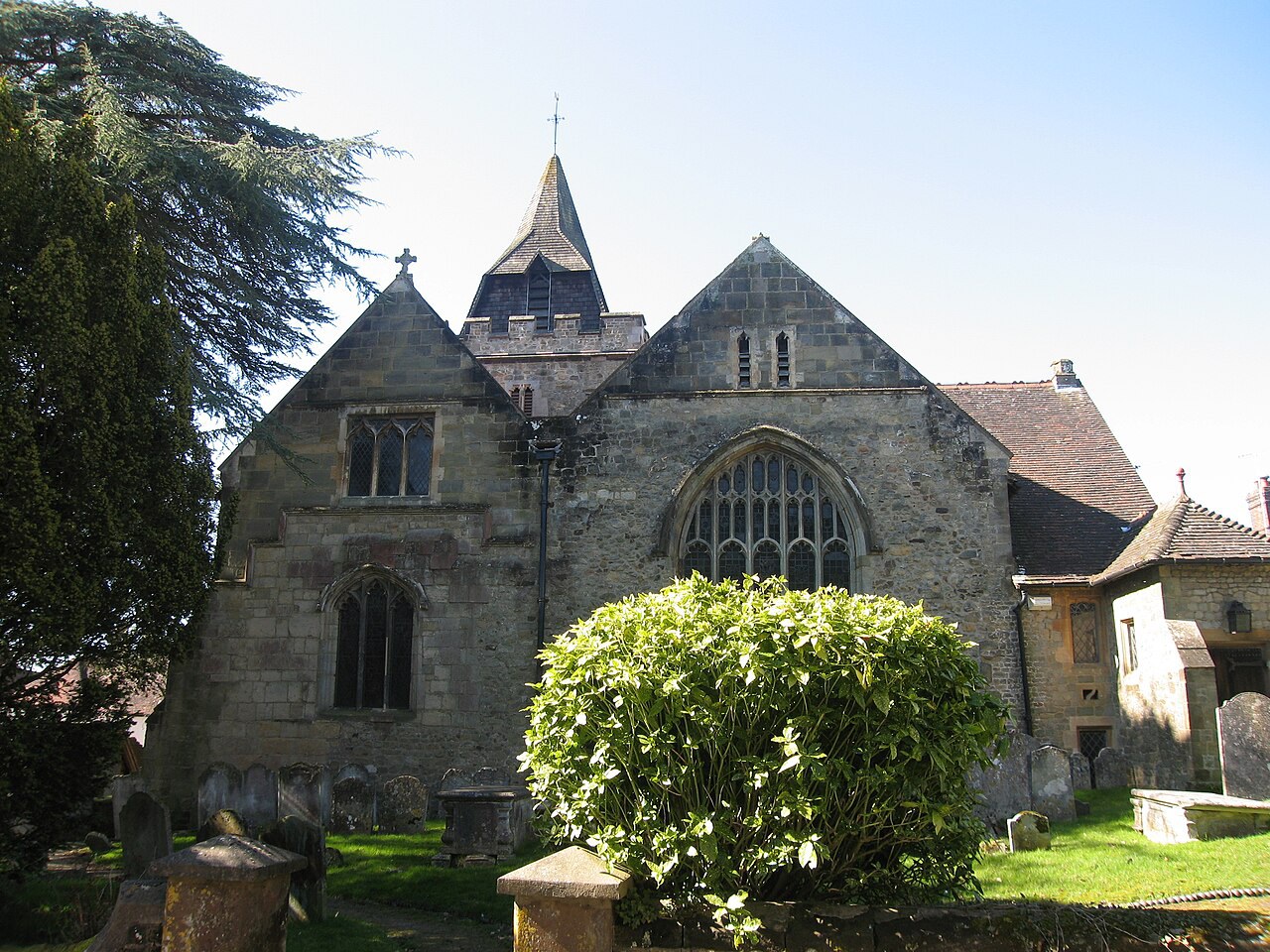
A Grade II* parish church with a 13th-century tower base and font, a low shingled spire and an unusual 1584 monument to Joan Browne showing two kneeling men.
- Visit length
- Editorial estimate: about 40 minutes
- Locality
- on the 1.1-mile historic Midhurst circuit
- Access
- The church is included on the easy 1.1-mile historic Midhurst circuit.
Midhurst Museum
A small local museum in part of the 16th-century Knockhundred Market, using local objects and changing displays to tell stories of former residents and businesses.
- Visit length
- Editorial estimate: about 45 minutes
- Locality
- in Knockhundred Market
- Access
- Check the Official site before travel for current visitor access.
No places match this filter. Choose All places to reset the list.
Three ways to explore Midhurst
Signature outings
Approach Cowdray by Causeway
Follow the 380-metre raised approach to see how the early Tudor courtyard house was meant to be encountered.
Find the Joan Browne Monument
Inside the parish church, the unusual 1584 memorial depicts two kneeling men rather than the woman it commemorates.
Take Tea at the Spread Eagle
Settle into an oak-beamed hotel whose north wing probably dates to the 15th century, with afternoon tea among its documented offers.
The town story
Midhurst Town Guide
Cowdray’s causeway, independent streets, riverside paths and a schoolroom past reveal a town shaped by both estate and landscape.
Causeway, Valley and Independent Streets
The approach to Cowdray is a causeway: 380 metres of raised path, up to twelve metres wide and two metres high, running straight across the water meadows of the River Rother. At the far end stand the ruins of an early Tudor courtyard house, its surviving window and door frames painted the deep yellow that is the Cowdray estate's signature colour. Cattle sometimes graze the meadows the path crosses. You can see exactly how the house was meant to be arrived at, which is rare for a building this ruined.
The town itself sits behind you, on a low spur of greensand above the river, in a broad east–west valley with the chalk scarp of the South Downs rising to the south and a gentler ridge to the north. The land climbs from about 21 metres by the water to more than 70 on Midhurst Common. The whole of the historic centre can be walked in an easy circuit of just over a mile, taking in the causeway, the water meadows, St Ann's Hill, the market square and the church, and it takes roughly 30–60 minutes. It is the best way to get your bearings before you start choosing where to eat.
You will not run short of options for that. Midhurst's independent shops are spread along West Street, Red Lion Street, Church Hill, Knockhundred Row and North Street. There is a jeweller, J. E. Allnutt & Son, run by Geoff Allnutt, who started in the trade at fourteen, studied horology in London and trained with WOSTEP; the shop takes in antique, modern and vintage watches for repair as well as sale. Along the same streets you will find Wheelers Bookshop, Wizzbits toy shop, Fairview Wines, a cycle shop called All Ride Now, and Down to Earth at 8 West Street, which sells ecologically safer household cleaning products and runs a refill station for people who bring their own bottles.
Estate Produce, Cafés and the Swan
For food shopping, the destination is the Cowdray Farm Shop out on the estate — a butchery, deli, food hall and café where the meat comes largely from Cowdray Home Farm, including local venison and award-winning sausages. Stefano and the kitchen team make the pies, quiches, cakes and cookies; there is wood-fired pizza in season and cut flowers by Kate Owens of Verdley Flowers. In the town centre, Comestibles on Red Lion Street is a deli and café doing home-made cakes, quiche, soup and filled sandwiches, baguettes, wraps and jacket potatoes, alongside chocolates and condiments. The Midhurst Bakery is at 65 North Street.
The cafés are worth knowing individually. Fitzcane's does a Works breakfast bap and a full English with free-range eggs, eggs royale, waffles with bacon and maple syrup, beer-battered cod and chips and a Mac-Fitz burger, and finishes with ice cream made eleven miles away. Kemaelli's cooks home-made seasonal food with vegetarian, vegan and gluten-free choices, shows work by local artists on its walls, and has a resident dog called Daisy. Tilly's specialises in afternoon tea: finger sandwiches, home-made cakes and scones, with a savoury version that adds a sausage roll, a savoury tart, a mini prawn cocktail and a cheese scone served with Cheddar and chutney. Faustino's is a Spanish wine and tapas bar on North Street, with polo imagery on the walls and a menu that runs to grilled king prawns, calamari, stuffed mushrooms and an apple-caramel empanada. There is also an Indian restaurant, Lime & Spice, and a recurring farmers' and artisan market run by the town council.
There are six pubs proper, plus the bar at the Spread Eagle Hotel, and they are easy to tell apart. The Swan, on Red Lion Street, is a fifteenth-century coaching inn with exposed beams and floors that have given up on being level, but the kitchen is thoroughly modern: crispy fried calamari it insists on calling "KFC", honey, lemon and chilli BBQ tiger prawns, cacio e pepe, a brisket steak burger, Cumberland sausage with smoked-garlic mash, clam vongole spaghetti and a clotted-cream parfait. Sundays bring roast sirloin, roast chicken and a mushroom-and-cashew Wellington, with sticky toffee pudding to follow. It pours Harvey's Sussex Best and welcomes dogs.
Pubs with Individual Character
The Wheatsheaf, up at Rumbolds Hill by Wool Lane, has served the town since 1621 and runs to low beams, sofas, stone floors and a rear courtyard it calls its secret garden. It keeps Badger Best and Tanglefoot and is dog-friendly. The Bricklayer's Arms, a small corner local where West Street meets Wool Lane, is an L-shaped single bar with a wooden floor, a fireplace and the sport on; Alan and Emma run it around home-made traditional food and local ale, with a Greene King bitter as the house beer. The Greyhound sits a little out on Cocking Causeway and has been kept by the same licensee for more than twenty-three years — a country freehouse with a conservatory restaurant, patios, a heated marquee and a large rear lawn with a play area, which makes it the natural choice with children or a dog after a walk. The kitchen changes its dishes daily and does a Sunday roast.
The Royal Oak, a seventeenth-century pub about a mile south on the A286, cooks with more ambition than most: its sample menu has run to a home-made apple-and-black-pudding Scotch egg, smoked-trout rillette, Lebanese lamb shoulder with fregola and saffron yoghurt, hake with a crab-and-saffron risotto, and a Sussex cheeseboard, with views towards the Downs from the garden and its heated marquee. The landlady is Frankie, and the beer is Doom Bar. The Half Moon, an eighteenth-century listed inn of stone rubble with red-brick dressings on Petersfield Road, sits where the riverside walks come out, and works as much as a walkers' landmark as a pub.
The bar of the Spread Eagle Hotel on South Street is an oak-beamed room with an inglenook inside a building whose timber-framed north wing probably dates to the fifteenth century — the hotel sign claims 1430. Its afternoon tea includes smoked-salmon savoury scones with sour cream, strawberry-and-pistachio meringues, chocolate ganache cake, lemon-drizzle cake and home-made scones with clotted cream and jam.
Riverside Walks and Deep History
The walking is the other reason to come. The Midhurst River Walk is an easy loop of just under three miles through shaded riverbank, floodplain and a boggy boardwalk section, out into Woolbeding Parkland and Whiphill Wood and back near the Half Moon; look for pink purslane, river crowfoot and reedmace along the water, and for kingfisher, grey wagtail and banded demoiselles above it. A National Trust route of about three miles from the Wheatsheaf or Half Moon passes ancient trees, a poplar plantation and a weir, with unsurfaced ground that can turn muddy and a single stile that buggies have to be lifted over. For something largely level, the Iping and Stedham Commons route crosses rare lowland heath on a sandy surface that can be uneven but was built with pushchairs and impaired mobility in mind. Serious walkers can take bus 60 to Cocking Hill and pick up the South Downs Way towards Heyshott Down, past ancient burial barrows and cross dykes.
That there is a bus at all matters, because Midhurst has no station: the railway from Chichester opened in 1881 and was gone by 1991. The town stands on the A272 between Petersfield and Petworth and the A286 between Haslemere and Chichester, and the useful buses are the 70 from Haslemere, the 60 from Chichester and the 91/92 from Petersfield. Haslemere and Petersfield stations are each about eight miles off.
The history is close to the surface here, and worth a little of your time once the practical business is settled. The name first appears in 1186 as Middeherst, a middle wooded hill, and the earliest town grew around St Ann's Hill, where a castle stood from about 1120. It was abandoned by 1317 when the lord moved his household across the river to the site that became Cowdray; stone from the old castle was carried off into later Midhurst buildings, and South Pond, in the middle of the modern town, began as its fishpond. Cowdray itself went up in stages from around 1492, its quadrangular courtyard compared in form to Hampton Court, and it drew the century's traffic: Henry VIII and Elizabeth I both stayed, Guy Fawkes worked there, and members of the Montague family were caught up in the Gunpowder Plot. A fire in September 1793, during preparations for the viscount's marriage, gutted the house and left only the Kitchen Tower standing.
Schoolroom Stories, Church and Dante
Midhurst was a schoolroom town too. The grammar school founded in 1672 later moved to a red-brick building on North Street with a Dutch gable, and one of its pupils was H. G. Wells, who came back afterwards to teach. "Midhurst has always been a happy place for me," he wrote. "I suppose it rained there at times but all my memories of Midhurst are in sunshine." He lodged above a sweet shop next to the old Angel Hotel while he studied. The parish church of St Mary Magdalene and St Denys carries a thirteenth-century tower base under later work, a low shingled spire, and inside a plain polygonal font of the same age and a strange monument of 1584 to Joan Browne that shows two kneeling men rather than the woman it commemorates.
Down by South Pond, where the castle once kept its fish, the sculptor Philip Jackson, who lives locally, has set a bronze of Dante — the poet with Virgil and Beatrice rising out of an open book. People feed the ducks around it without much noticing the Inferno at their feet.
Stay around South Downs
Make a longer stay of it
Travel Fox holiday homes around South Downs, linked directly to their property pages.
For homeowners
Own a holiday home near Midhurst?
We manage holiday lets across the UK from 12% commission, charged after cleaning costs, with no lock-in. A co-founder visits before you decide.
How our holiday let management works →
A guide with a point of view
Written from research. Edited for real journeys.
Use the Official site links for live practical details, then use this guide for context, ideas and room to explore.
Photography credits & licences
Third-party photographs are credited to their named creators and reused under the linked Creative Commons licence or public-domain dedication. Travel Fox stores an optimised local copy; the file-specific changes and any browser-applied display crop are disclosed below. Reused photographs link both to the Wikimedia Commons source record and to the declared source image; Travel Fox's own photographs carry no such record and are marked as ours. These image licences do not cover Travel Fox text, branding or page design.
- File:St Mary Magdalene ^ St Denys Church, Midhurst - geograph.org.uk - 3891816.jpg — photograph by David960; St Mary Magdalene & St Denys Church, Midhurst by David960. Source record on Wikimedia Commons. Declared source image. Licence: CC BY-SA 2.0. File changes: Downloaded from Wikimedia Commons, resized to a maximum 1920px edge and encoded as an optimised JPEG. Display changes: Displayed with responsive CSS cropping.
Sources
Every place on this page is checked against a published source. Each entry links the record we used and names who publishes it.
- Cowdray Ruins — cowdray.co.uk operator, sector body or destination organisation
- St Ann’s Hill — historicengland.org.uk statutory register or public authority record not machine-readable; publisher restricts automated access
- St Mary Magdalene and St Denys — historicengland.org.uk statutory register or public authority record not machine-readable; publisher restricts automated access
- Midhurst Museum — midhurstmuseum.org operator, sector body or destination organisation
- Midhurst River Walk — southdowns.gov.uk statutory register or public authority
- Iping and Stedham Commons — southdowns.gov.uk statutory register or public authority
- Woolbeding Gardens — nationaltrust.org.uk national body or asset manager
- Cowdray Farm Shop — cowdray.co.uk operator, sector body or destination organisation
- Spread Eagle Hotel bar — hshotels.co.uk other published source