
Slate islands, close up
Ellenabeich
A former quarry village where white-harled cottages, a flooded slate pit and a five-minute foot ferry gather at the Atlantic edge of Seil.
- Best for
- Slate history and an Easdale Island day trip
- Crossing
- About five minutes by foot-passenger ferry
- Don't miss
- The flooded quarry beside the village
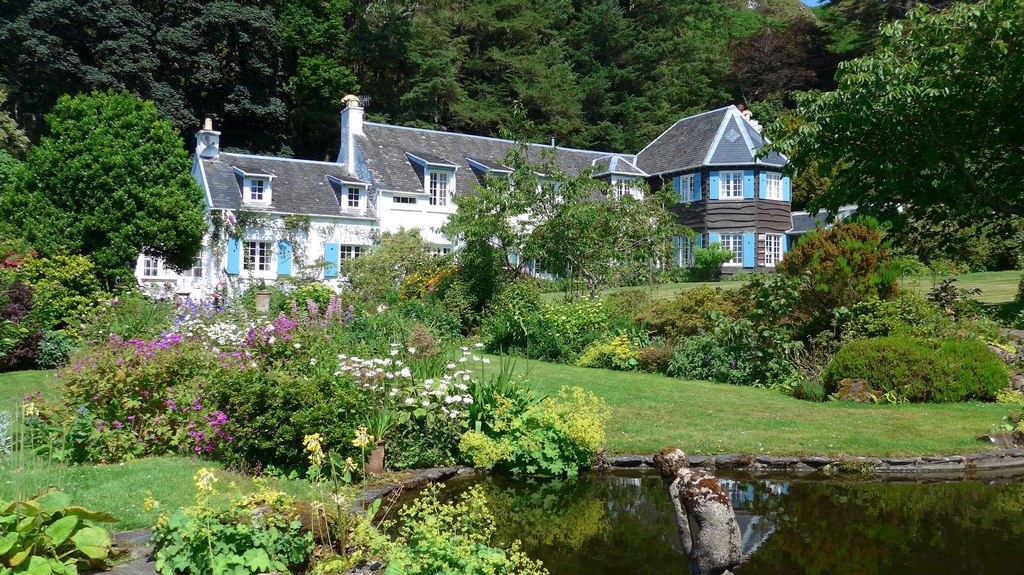
Photo: Gordon Brown · CC BY-SA 2.0 · cropped
The Fox verdict
A slate village with its history still in view
Ellenabeich brings the flooded quarry, former workers' cottages, local heritage and the ferry to Easdale into one compact visit.
Come for the quarry story, the Heritage Centre and An Cala garden; add seafood at the Oyster Bar or cross to car-free Easdale for more flooded quarries and the stone-skimming setting.
Where to go
Places in Ellenabeich
Every place below is checked against a published source, listed with what it is and how long to give it.
Local signatures
3 placesThe Oyster Bar & Restaurant
A family-run village pub and seafood restaurant serving locally sourced seafood alongside pub favourites, with rear decking overlooking the flooded quarry and views towards Scarba and Jura.
- Visit length
- Editorial estimate: around 75 minutes
- Locality
- in the historic conservation village
- Access
- Open seven days a week.
Easdale Island
A car-free slate island reached by foot ferry, with flooded quarries, colourful wheelbarrows, a folk museum and the World Stone Skimming Championships venue.
- Visit length
- Editorial estimate: around 150 minutes
- Locality
- Easdale Island
- Access
- The crossing is for foot passengers, is turn-up-and-go and runs roughly every half hour, with some sailings on request.
Kilbrandon Church
Seil's 1866 parish church contains five stained-glass windows by Douglas Strachan; the central window shows Christ calming the storm.
- Visit length
- Editorial estimate: around 30 minutes
- Locality
- mid-island on the Balvicar-Cuan road
Food & drink
1 placeTigh an Truish
An 18th-century inn beside Clachan Bridge with a restaurant serving in-house British pub food.
- Visit length
- Editorial estimate: around 75 minutes
- Locality
- at Clachan Bridge
Walks & outdoors
1 place
An Cala Garden
A walled garden begun in 1930, with streams, a waterfall, ponds, azaleas, rhododendrons and cherry trees, created with input from landscape designer Thomas Mawson.
- Visit length
- Editorial estimate: around 60 minutes
- Locality
- Ellenabeich
- Access
- The research identifies the walled garden as open to visitors.
History & heritage
3 placesEllenabeich Heritage Centre
A small heritage centre and shop covering 19th-century life, slate quarrying and the local flora, fauna and geology.
- Visit length
- Editorial estimate: around 45 minutes
- Locality
- in a former quarry-worker's cottage
Ellenabeich Flooded Quarry
The former slate pit was worked about 250 feet below sea level before an 1881 storm breached its narrow sea wall; the flooded quarry has stayed largely unchanged since.
- Visit length
- Editorial estimate: around 45 minutes
- Locality
- right beside the village
- Access
- The research describes level walking around the whitewashed cottages, flooded quarry pit and shore.
Clachan Bridge
The Thomas Telford-era single-arch Bridge Over the Atlantic carries the B844 across to Seil.
- Visit length
- Editorial estimate: around 30 minutes
- Locality
- about 3.5 miles north
No places match this filter. Choose All places to reset the list.
Three ways to explore Ellenabeich
Signature outings
The quarry that filled with sea
Walk around the old quarry pit beside the cottages and see the place where an 1881 storm ended several hundred slate jobs.
Streams and ponds at An Cala
Visit the walled garden begun in 1930, where streams, a waterfall, ponds, azaleas, rhododendrons and cherry trees fill the site.
Clachan Bridge's single arch
See the Thomas Telford-era single-arch bridge that carries the road from the mainland onto Seil.
The village story
Ellenabeich Village Guide
Quarry, cottages, garden and island crossing: the existing Travel Fox article, preserved verbatim.
A Quarry-Side Table
The Oyster Bar sits a short walk from the free car park, and its rear decking looks out over a flooded quarry pit that used to be a working slate hole. The kitchen leans on locally landed seafood, though the menu keeps a foot in pub territory too — chargrilled beef burger, chilli beef nachos, surf and turf. The Chaotic Scot found "big portions of decent, home-cooked pub food" and rated the view across the Atlantic to Scarba and Jura. It opens seven days a week, which in a village this size makes it the eating and drinking spot rather than one of several.
The village is a tight run of white-harled terraced cottages, once quarry-workers' homes, set beneath a steep rocky hillside on the Atlantic edge of Seil. The flooded quarry sits right beside the houses. Beyond it the water opens to Easdale, Scarba, the Garvellachs, Mull and Jura. Look closely at the local slate and you'll see it glint — it carries pyrites, fool's gold.
The Island the Quarry Took
The quarry is the whole story here. The Campbells of Breadalbane started digging in 1745, and by 1842 steam pumps let them work 250 feet below sea level, the pit held back from the sea by a single narrow rock wall. At the 1870s peak, Ellenabeich and neighbouring Easdale filled ten steamers a week from a purpose-built pier. These were, in the standing phrase, "the islands that roofed the world."
Then in 1881 a storm breached the wall and the sea came in. Several hundred jobs went with the flood, and the slate was near exhausted anyway. The pit has stayed much as it was left. The village is named after an island that no longer exists — Eilean nam Beitheach, the island of the birchwoods, was quarried away entirely, its spoil filling the channel until the site simply joined onto Seil.
Across the Sound
From the shore a foot ferry runs to Easdale Island, a five-minute crossing roughly every half hour, turn-up-and-go. Easdale is car-free; residents move things around in brightly painted wheelbarrows, and its own flooded quarry hosts the World Stone Skimming Championships, started in 1983 by a former resident, reputedly after an argument in the island's only pub over who could skim farthest. The stones are cut from Easdale slate.
Back in Ellenabeich, An Cala is a walled garden begun in 1930 by Arthur Murray and his wife Faith Celli, the actress J. M. Barrie chose for many of his plays. It started with six sycamores and a willow; Thomas Mawson helped lay it out, and there are streams, a waterfall, ponds, azaleas and cherry trees now. The Heritage Centre, in a former quarry-worker's cottage, covers 19th-century slate life and the local geology.
A Film Set and the Road In
Parts of Ring of Bright Water were filmed here in 1969, the village standing in for Gavin Maxwell's Camusfearna. Mij the otter was played by two otters trained in Wisconsin.
You reach Seil across the Clachan Bridge, Telford's single-arch "Bridge Over the Atlantic," off the A816 from Oban. The 418 bus runs from Oban roughly every three hours. Oban, twelve miles off, is the nearest railway.
Ellenabeich, Not Easdale
The village is labelled "Easdale" on some maps, after the slate. Locals would rather you called it Ellenabeich.
Stay around Argyll
Make a longer stay of it
Travel Fox holiday homes around Argyll, linked directly to their property pages.
A guide with a point of view
Written from research. Edited for real journeys.
Use the Official site links for live practical details, then use this guide for context, ideas and room to explore.
Photography credits & licences
Third-party photographs are credited to their named creators and reused under the linked Creative Commons licence or public-domain dedication. Travel Fox stores an optimised local copy; the file-specific changes and any browser-applied display crop are disclosed below. Reused photographs link both to the Wikimedia Commons source record and to the declared source image; Travel Fox's own photographs carry no such record and are marked as ours. These image licences do not cover Travel Fox text, branding or page design.
- File:House and garden at An-Cala, Seil - geograph.org.uk - 6211619.jpg — photograph by Gordon Brown; House and garden at An-Cala, Seil by Gordon Brown. Source record on Wikimedia Commons. Declared source image. Licence: CC BY-SA 2.0. File changes: Downloaded from Wikimedia Commons, resized to a maximum 1920px edge and encoded as an optimised JPEG. Display changes: Displayed with responsive CSS cropping.
Sources
Every place on this page is checked against a published source. Each entry links the record we used and names who publishes it.
- The Oyster Bar & Restaurant — oysterbareasdale.com operator, sector body or destination organisation
- Ellenabeich Heritage Centre — oscr.org.uk other published source
- Ellenabeich Flooded Quarry — trove.scot other published source record not machine-readable; publisher restricts automated access
- An Cala Garden — portal.historicenvironment.scot statutory register or public authority
- Easdale Island — easdale.org operator, sector body or destination organisation
- Clachan Bridge — portal.historicenvironment.scot statutory register or public authority
- Kilbrandon Church — churchofscotland.org.uk national body or asset manager record not machine-readable; publisher restricts automated access
- Tigh an Truish — tighantruish.co.uk operator, sector body or destination organisation