
Medieval Tretower
Tretower
A round-towered castle, a restored 15th-century court and documented routes through the Rhiangoll landscape.
- Best for
- Medieval architecture and valley walks
- Give it
- A court-and-castle visit or a 3–4-hour walk
- Don't miss
- The court's replica furnishings and Vaughan emblem
Photo: Mike Searle · CC BY-SA 2.0 · cropped
The Fox verdict
A castle and court with the valley at their door
Tretower brings a 13th-century round tower, a finely restored medieval house and the Rhiangoll Valley into one focused visit.
The castle preserves the story of a late-11th-century earthwork rebuilt in stone, while the neighbouring court follows the Vaughans from 15th-century prosperity through decline and restoration. The church, nearby historic inn and documented routes give the visit useful extensions without disguising how small the settlement is.
Where to go
Places in Tretower
Every place below is checked against a published source, listed with what it is and how long to give it.
Local signatures
3 places
Start here
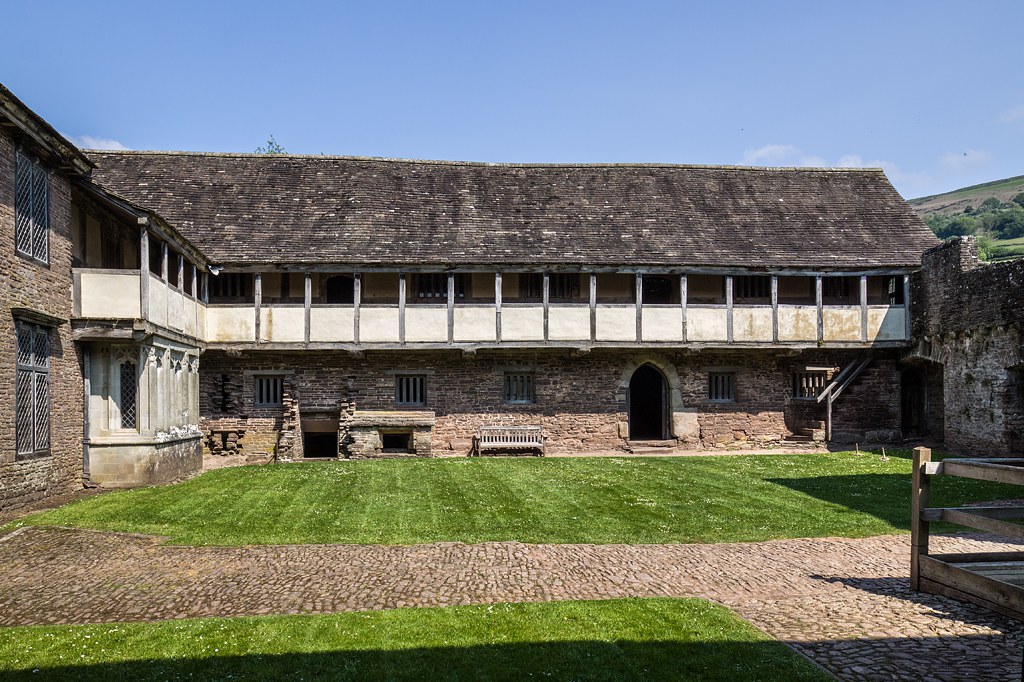
Tretower Court and Castle
A cylindrical castle tower added around 1230 beside a 15th-century court whose restored rooms contain replicas based on period evidence and a recreated medieval garden.
- Visit length
- Editorial estimate: allow around 60 minutes
- Locality
- close to the floor of the Rhiangoll valley
- Access
- Parking, toilets and baby changing are available. Dogs on short leads are welcome at ground-floor levels; the castle includes steps, mud or slippery surfaces and hidden drops, and children under 16 require supervision.
Nantyffin Cider Mill Inn
A family-run country pub and restaurant in a 16th-century drovers' inn, with homemade hearty food, a garden, a separate bar, a children's play park, one changing cask beer and real cider.
- Visit length
- Editorial estimate: allow around 75 minutes
- Locality
- at the A40/A479 junction on the approach to Tretower
Tretower–Pen-y-Gaer–Cefn Moel Circuit
A moderate 13 km circuit with 382 m ascent, using country lanes and moorland tracks via a Roman fort, Felindre and Cwmdu.
- Visit length
- Editorial estimate: Allow roughly 3–4 hours
- Locality
- beginning at Tretower Court
Walks & outdoors
2 placesBwlch Rhiangoll Valley Circular
A seven-mile moderate circular passing Tretower Court and Castle, with Rhiangoll Valley walking and views towards Pen y Fan, Llangorse Lake and the central Beacons.
- Visit length
- Editorial estimate: Allow 3–4 hours
- Locality
- from Bwlch through the Rhiangoll Valley
- Access
- The guide dates from 2017, so check current access and conditions; it notes field paths, stiles, possible mud and later rough ground.
Llangynidr to Cwmdu Pilgrimage Walk
An easy-to-moderate 10 km linear pilgrimage with 140 m ascent, following the River Usk and canal, crossing Glanusk Park and visiting St John's before continuing to St Michael's at Cwmdu.
- Visit length
- Editorial estimate: allow around 180 minutes
- Locality
- from Llangynidr to Cwmdu via St John's at Tretower
- Access
- The organiser labels the walk suitable for adults only.
History & heritage
1 place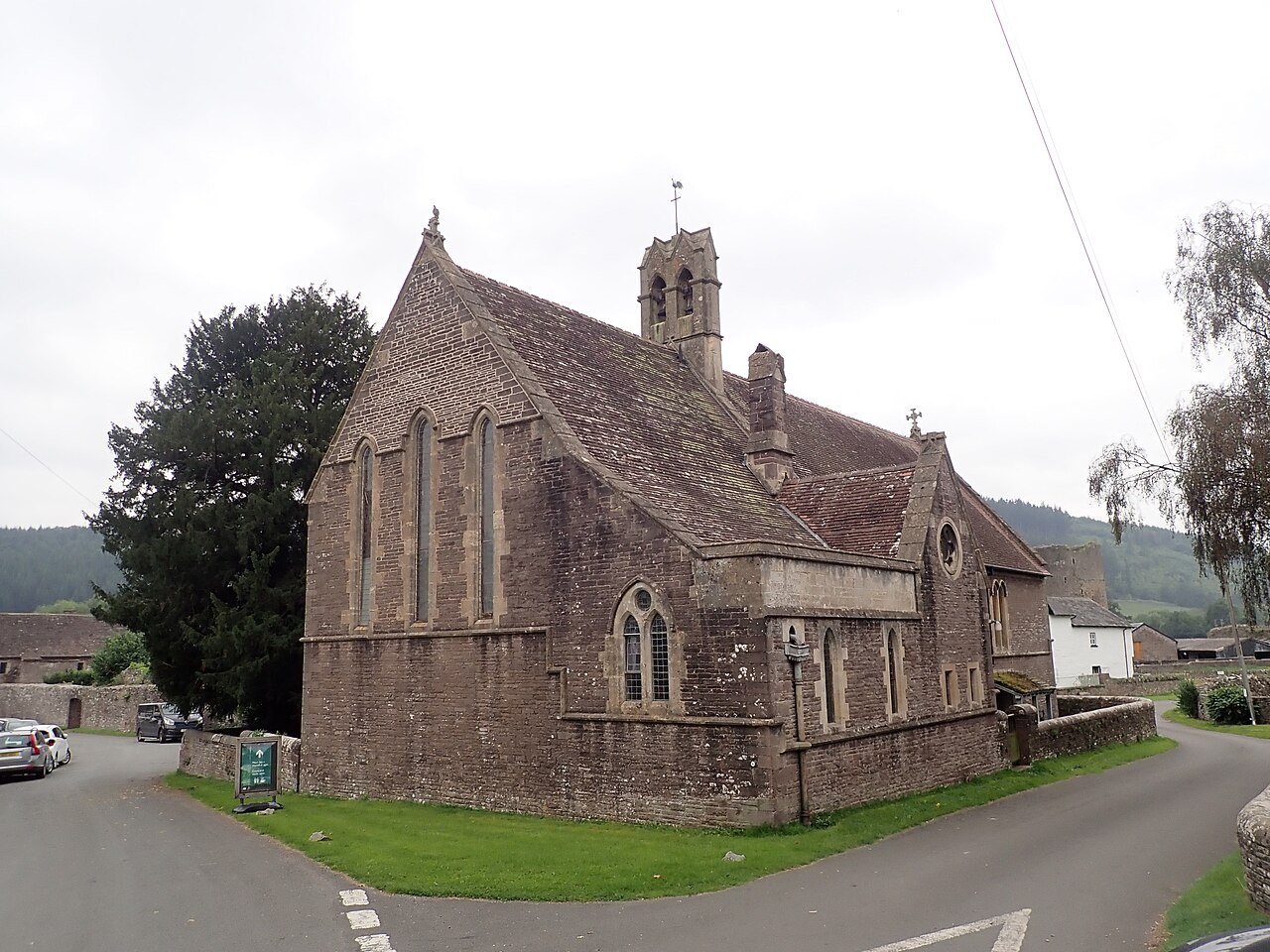
Church of St John the Evangelist
A late-Victorian church built in 1876–77 by J. L. Pearson, with red sandstone walls, buff-yellow dressings, a double bellcote and a medieval stoup surviving outside the nave.
- Visit length
- Editorial estimate: allow around 30 minutes
- Locality
- prominent in the setting of Tretower Court and Castle
No places match this filter. Choose All places to reset the list.
Three ways to explore Tretower
Signature outings
Castle to Court
Trace the site from Picard's late-11th-century earthwork through the round tower of about 1230 to the Vaughans' 15th-century court.
A Medieval Stoup
See Pearson's red-sandstone Victorian church and the disused medieval stoup surviving outside the nave.
The Bwlch Circular
Follow the seven-mile Rhiangoll Valley circuit past Tretower Court and Castle, with views towards Pen y Fan and Llangorse Lake.
The village story
Tretower Village Guide
A valley-floor stronghold, a restored medieval court and the routes that connect them to the wider landscape.
Tower and Court
The round tower stands on the valley floor, not on a hill where you would expect a castle to be. It went up around 1230 inside an older stone bailey, replacing a shell keep from the mid-12th century that had itself replaced Picard's earthwork motte from the end of the 11th. The castle's last documented emergency garrison was in 1403, when Owain Glyndŵr's rebellion made a cylinder of stone in the Rhiangoll valley worth defending again.
A short walk away, across the castle green, stands Tretower Court, one of the finest medieval houses in Wales, built by Sir Roger Vaughan and his descendants across the 15th century: the west range after about 1447, the north range after 1460, and an embattled gatehouse added by Sir Thomas Vaughan around 1480.
The Vaughans and Restoration
Sir Roger was captured by Jasper Tudor during the Wars of the Roses and executed. The family left shortly after 1700, and the abandoned house declined under tenant farmers until its former noble rooms were being used to keep pigs. It was bought for the nation in 1934 and restored over the decades that followed.
Inside, the rooms are furnished with replicas based on 15th-century evidence. There is a green-earth painted cupboard carrying the Vaughan emblem, a boy with a snake around his neck, and a painted cloth that runs from Agincourt to the siege of Harlech. Cadw calls the whole thing "one of the finest medieval houses in Wales."
Visitor Essentials and the Cider Mill
The visitor centre has a gift shop, toilets, baby changing and parking, an audio tour and a recreated medieval garden. Dogs on short leads are allowed at ground level. The café, Y Bwyty Bach, is closed until further notice, so bring what you need or plan to eat elsewhere.
For eating elsewhere, the Nantyffin Cider Mill Inn sits a little out of the village at the junction of the A40 and A479, run by Chris and Penny Skinner. It began as a 16th-century drovers' inn and made cider in the 19th century; the name means the brook by the border. The pub's diners single out the fish and chips, a beef Sunday roast and a vegetarian nut roast with cauliflower cheese, and there is one changing cask beer, usually from a Welsh brewery, alongside real cider. There is a garden, a separate bar and a children's play park.
Church and Walking Routes
The Church of St John the Evangelist is late Victorian, built in 1876-77 by J. L. Pearson in red sandstone with buff-yellow dressings, a double bellcote and trefoiled wind-braces inside. Nothing in it predates the rebuild, though a disused medieval stoup survives outside the nave, the remnant of an earlier church, reputedly dedicated to St Michael, that had fallen into disrepair.
A seven-mile circular from Bwlch passes the court through the Rhiangoll Valley, with views toward Pen y Fan and Llangorse Lake; an eight-mile moorland circuit climbs from the court past a Roman fort to Cefn Moel; and a gentler pilgrimage route from Llangynidr follows the Usk and the canal, calling at St John's before crossing to St Michael's at Cwmdu.
Connections and the Little Brooke
Crickhowell is three miles south-east down the A479, a market town with independent shops, among them Natural Weigh and the Book-ish café and bookshop, a ruined Norman castle, and a bridge that shows twelve arches from one side and thirteen from the other. Abergavenny, eleven miles on, has the nearest railway station. The X43 between Brecon and Abergavenny stops about 400 metres from the court.
John Leland, passing through in the reign of Henry VIII, wrote it down as "a smaulle village stonding on a little brooke." A brook still runs through the village, and south of the court the leat of a probable lost mill survives, one that may have fed the castle moat.
Stay around Brecon Beacons
Make a longer stay of it
Travel Fox holiday homes around Brecon Beacons, linked directly to their property pages.
For homeowners
Own a holiday home near Tretower?
We manage holiday lets across the UK from 12% commission, charged after cleaning costs, with no lock-in. A co-founder visits before you decide.
How our holiday let management works →
A guide with a point of view
Written from research. Edited for real journeys.
Use the Official site links for live practical details, then use this guide for context, ideas and room to explore.
Photography credits & licences
Third-party photographs are credited to their named creators and reused under the linked Creative Commons licence or public-domain dedication. Travel Fox stores an optimised local copy; the file-specific changes and any browser-applied display crop are disclosed below. Reused photographs link both to the Wikimedia Commons source record and to the declared source image; Travel Fox's own photographs carry no such record and are marked as ours. These image licences do not cover Travel Fox text, branding or page design.
- File:Tretower Court and Castle (1) - geograph.org.uk - 8052012.jpg — photograph by Mike Searle; Tretower Court and Castle (1) by Mike Searle. Source record on Wikimedia Commons. Declared source image. Licence: CC BY-SA 2.0. File changes: Downloaded from Wikimedia Commons, resized to a maximum 1920px edge and encoded as an optimised JPEG. Display changes: Displayed with responsive CSS cropping.
- File:Church of St John the Evangelist, Tretower - geograph.org.uk - 7119891.jpg — photograph by Eirian Evans; Church of St John the Evangelist, Tretower by Eirian Evans. Source record on Wikimedia Commons. Declared source image. Licence: CC BY-SA 2.0. File changes: Downloaded from Wikimedia Commons, resized to a maximum 1920px edge and encoded as an optimised JPEG. Display changes: Displayed with responsive CSS cropping.
Sources
Every place on this page is checked against a published source. Each entry links the record we used and names who publishes it.
- Tretower Court and Castle — cadw.gov.wales statutory register or public authority
- Church of St John the Evangelist — cadwpublic-api.azurewebsites.net other published source
- Nantyffin Cider Mill Inn — cidermill.co.uk operator, sector body or destination organisation
- Bwlch Rhiangoll Valley Circular — beacons-npa.gov.uk statutory register or public authority
- Llangynidr to Cwmdu Pilgrimage Walk — celticroots.org.uk other published source
- Tretower–Pen-y-Gaer–Cefn Moel Circuit — ramblers.org.uk operator, sector body or destination organisation record not machine-readable; publisher restricts automated access