
Vaynor, Merthyr Tydfil
Vaynor
A scattered hillside settlement above the wooded Taf Fechan gorge, with an extraordinary ironmaster's grave, industrial tracks and reservoir country close by.
- Best for
- Gorge walking and industrial history
- Give it
- A half day
- Don't miss
- Crawshay's grave inscription
Photo: Alan Hughes · CC BY-SA 2.0 · cropped
The Fox verdict
A quiet hillside base for gorge paths and ironmaster history
Come for the Taf Fechan circuit, the unusual churchyard monuments and the wider Vaynor community's heritage railway and country pub.
Vaynor is a scattered settlement rather than a conventional village centre. Its strongest visit combines the wooded limestone gorge with St Gwynno's church and the remarkable grave of Robert Thompson Crawshay.
Where to go
Places in Vaynor
Every place below is checked against a published source, listed with what it is and how long to give it.
Local signatures
3 placesChurch of St Gwynno
Built around 1868–70 to a design by G. E. Robinson, the church has multi-coloured stonework, heavy downhill buttresses and stained glass that includes a 1934 window by A. L. Wilkinson.
- Visit length
- Editorial estimate: allow around 30 minutes
- Locality
- Vaynor hillside
Taf Fechan Nature Reserve Circular Walk
From Cyfarthfa Castle Park, the published route follows the leat and old tramroad into the wooded Taf Fechan gorge, then returns along the opposite bank past waterfalls and industrial remains.
- Visit length
- Editorial estimate: Allow 2–3 hours
- Locality
- Between Pontsarn and Cefn Coed
- Access
- The route can be muddy, slippery, narrow and uneven, with short stepped climbs, stiles and steep drops.
Brecon Mountain Railway
The heritage train runs beside Taf Fechan Reservoir, with a 35-minute stop at Pontsticill, where the station has a lakeside café, outdoor seating and an adventure playground.
- Visit length
- Editorial estimate: Allow about 1 hour 40 minutes for the return journey
- Locality
- Pant to Torpantau via Pontsticill
Food & drink
1 place
Aberglais Inn
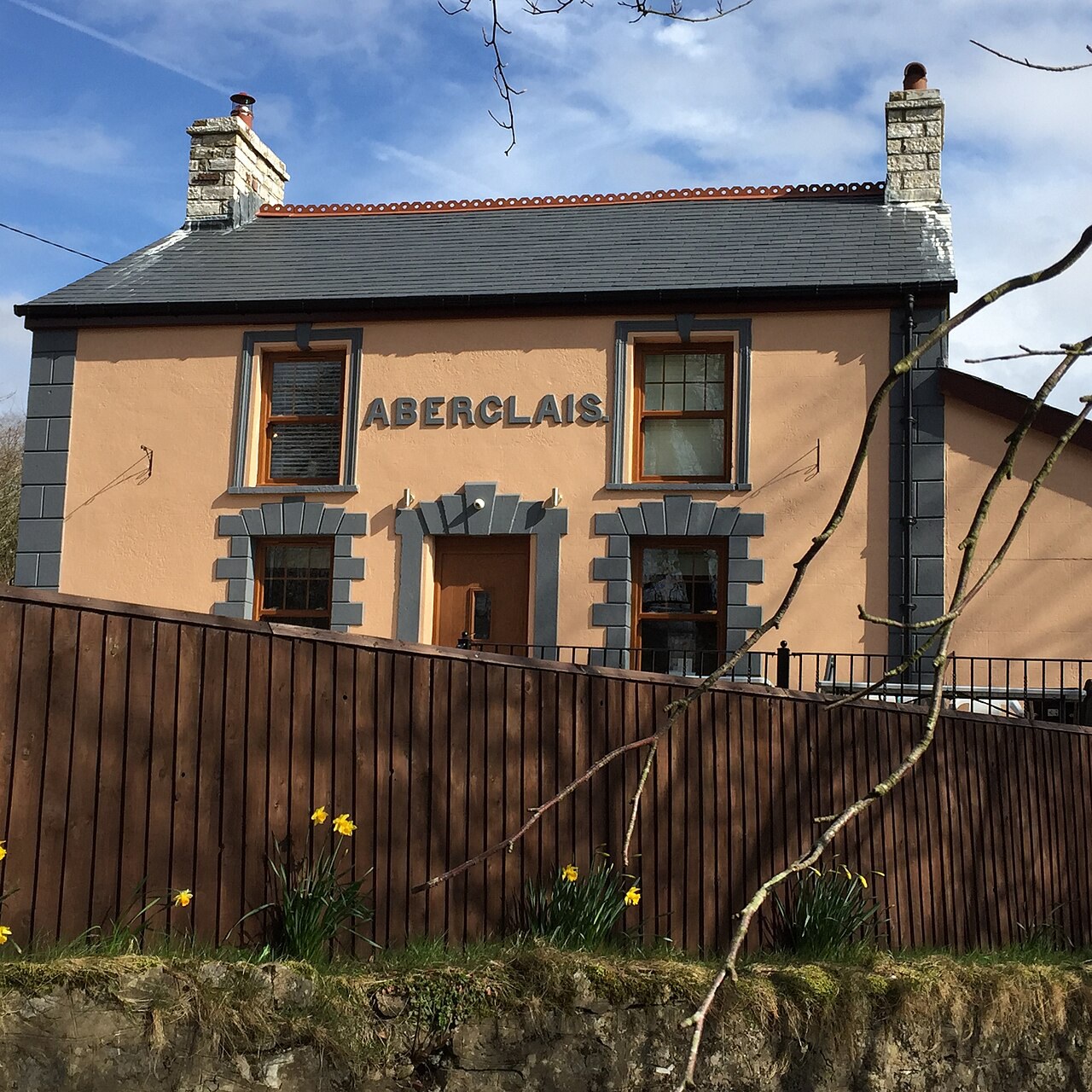
A renovated 19th-century stone hostelry with an oak bar, stone fireplace and log burner; its restaurant looks over the Taf Fechan and Blue Pool.
- Visit length
- Editorial estimate: allow around 75 minutes
- Locality
- Pontsarn
History & heritage
3 placesTower of the Old Church of St Gwynno
A Grade II battlemented tower and west end survive from the medieval church after the rest decayed following construction of the new church.
- Visit length
- Editorial estimate: allow around 20 minutes
- Locality
- Vaynor
Robert Thompson Crawshay's Grave
The Grade II monument is a vast pink conglomerate slab within spearheaded cast-iron railings, its bronze lettering ending “GOD FORGIVE ME”.
- Visit length
- Editorial estimate: allow around 15 minutes
- Locality
- Churchyard of the Church of St Gwynno
Morlais Castle
Gilbert de Clare began Morlais Castle around 1288 on a limestone ridge at the edge of his lands. Its construction provoked a dispute with neighbouring lord Humphrey de Bohun; fragments of masonry and a vaulted basement survive.
- Visit length
- Editorial estimate: allow around 45 minutes
- Locality
- From Pontsarn Road
Things to do
1 placeCyfarthfa Castle Museum and Art Gallery
The Grade I-listed 1825 ironmaster's house is now a museum and art gallery; its parkland includes formal gardens, a lake, children's play area, model railway and tearoom.
- Visit length
- Editorial estimate: allow around 90 minutes
- Locality
- Cyfarthfa
No places match this filter. Choose All places to reset the list.
Three ways to explore Vaynor
Signature outings
Find Crawshay's singular grave
Crawshay’s monument stands out for its vast scale and unique inscription, linking this churchyard to a major figure in Welsh industrial history.
Eat beside the Taf Fechan
After a Taff Trail walk, bring the dog: the pub welcomes dogs and serves Felinfoel Double Dragon and Dragons Heart as regular ales.
Explore Cyfarthfa's collections
The 1825 ironmaster's house now holds social-history and art collections within extensive parkland.
The village story
Vaynor: gorge paths, ironmasters and a rebuilt railway
Crawshay’s extraordinary grave anchors a visit to Vaynor’s hillside, the Taf Fechan gorge, Morlais Castle, the rebuilt railway and the annual show.
A grave above the gorge
In the churchyard at Vaynor lies an enormous slab of pink conglomerate, its bronze letters ending GOD FORGIVE ME. It marks the grave of Robert Thompson Crawshay, the ironmaster, who died in 1879, and is enclosed by spearheaded cast-iron railings. Its unusual scale and unique inscription mark it as a monument to a major figure in Welsh industrial history.
Vaynor is a scattered hillside settlement above the wooded Taf Fechan gorge, where limestone cliffs, old quarry workings and river pools meet the southern edge of Bannau Brycheiniog. Food stops are in Pontsarn and Pontsticill, beyond the church hamlet.
Pubs beyond the church hamlet
The Aberglais Inn at Pontsarn is a renovated nineteenth-century stone hostelry with an oak floor, a log burner and a restaurant looking over the Taf Fechan and the Blue Pool. The pub welcomes dogs, serves Felinfoel Double Dragon and Dragons Heart as regular ales, and stands beside the Taff Trail.
In Pontsticill, the Butchers Arms is a grill pub with an eighteen-bed bunkhouse, a few hundred metres from the reservoir and the heritage-railway station; its menu includes deep-fried halloumi, salt-and-pepper squid, a prime-beef smash burger, a mixed grill and Welsh Black slow-cooked beef-and-stout pie. The Red Cow is a stone-built pub with a real fire. Both welcome dogs.
Gorge paths and Crawshay's church
The eight-kilometre Taf Fechan circuit starts at Cyfarthfa Castle Park. It follows the Cyfarthfa Leat and an old tramway through the Taf Fechan gorge, then returns along the opposite riverbank. Allow two to three hours and expect muddy, uneven ground, stiles and steep drops. Near Pontsarn Road, there is a view of the 1864 viaduct, now part of the Taff Trail.
Crawshay paid for St Gwynno's Church on the hillside. Designed by G. E. Robinson of Cardiff and built around 1868–70, the church has multi-coloured “crazy paving” stonework and heavy downhill buttresses. George Pace replaced the spire with a gabled cap during a 1987 reroofing, and the glass includes a 1934 window by A. L. Wilkinson.
Castle conflict and railway revival
A 3.21-kilometre extension from Pontsarn Road leads to Morlais Castle, which Gilbert de Clare began around 1288 on land disputed by Humphrey de Bohun, the neighbouring lord of Brecon. Their quarrel led to warfare in 1290 before Edward I intervened. The castle was captured during a Welsh rebellion in 1294; today its collapsed walls and rock-cut ditch mark the limestone ridge.
The Brecon & Merthyr railway closed in 1964. Tony Hills rebuilt the Pant–Pontsticill section almost from nothing and reopened it in 1980 behind a small locomotive called Sybil; the track reached Torpantau by 2014. The heritage trains run from Pant through Pontsticill beside the reservoir, and on a clear day you can see Pen y Fan from the carriage. Pontsticill station has a lakeside café and an adventure playground.
Connections and the annual show
Merthyr Tydfil is the nearest railhead. Service 25 links its bus station with Trefechan and Pontsticill.
Once a year the fields fill for the Vaynor Show at Maes-y-Faenor: livestock classes, a dog show, speed shearing and sheepdog demonstrations, and children's entertainment on a hillside that spends the rest of the year very quiet.
Stay around Brecon Beacons
Make a longer stay of it
Travel Fox holiday homes around Brecon Beacons, linked directly to their property pages.
For homeowners
Own a holiday home near Vaynor?
We manage holiday lets across the UK from 12% commission, charged after cleaning costs, with no lock-in. A co-founder visits before you decide.
How our holiday let management works →
A guide with a point of view
Written from research. Edited for real journeys.
Use the Official site links for live practical details, then use this guide for context, ideas and room to explore.
Photography credits & licences
Third-party photographs are credited to their named creators and reused under the linked Creative Commons licence or public-domain dedication. Travel Fox stores an optimised local copy; the file-specific changes and any browser-applied display crop are disclosed below. Reused photographs link both to the Wikimedia Commons source record and to the declared source image; Travel Fox's own photographs carry no such record and are marked as ours. These image licences do not cover Travel Fox text, branding or page design.
- File:Aberglais Inn - geograph.org.uk - 4865850.jpg — photograph by Alan Hughes; Aberglais Inn by Alan Hughes. Source record on Wikimedia Commons. Declared source image. Licence: CC BY-SA 2.0. File changes: Downloaded from Wikimedia Commons, resized to a maximum 1920px edge and encoded as an optimised JPEG. Display changes: Displayed with responsive CSS cropping.
Sources
Every place on this page is checked against a published source. Each entry links the record we used and names who publishes it.
- Church of St Gwynno — coflein.gov.uk statutory register or public authority
- Tower of the Old Church of St Gwynno — cadwpublic-api.azurewebsites.net other published source
- Robert Thompson Crawshay's Grave — cadwpublic-api.azurewebsites.net other published source
- Aberglais Inn — aberglais.online operator, sector body or destination organisation
- Taf Fechan Nature Reserve Circular Walk — visitmerthyr.co.uk operator, sector body or destination organisation
- Morlais Castle — coflein.gov.uk statutory register or public authority
- Brecon Mountain Railway — visitwales.com operator, sector body or destination organisation
- Cyfarthfa Castle Museum and Art Gallery — cyfarthfa.co.uk operator, sector body or destination organisation