
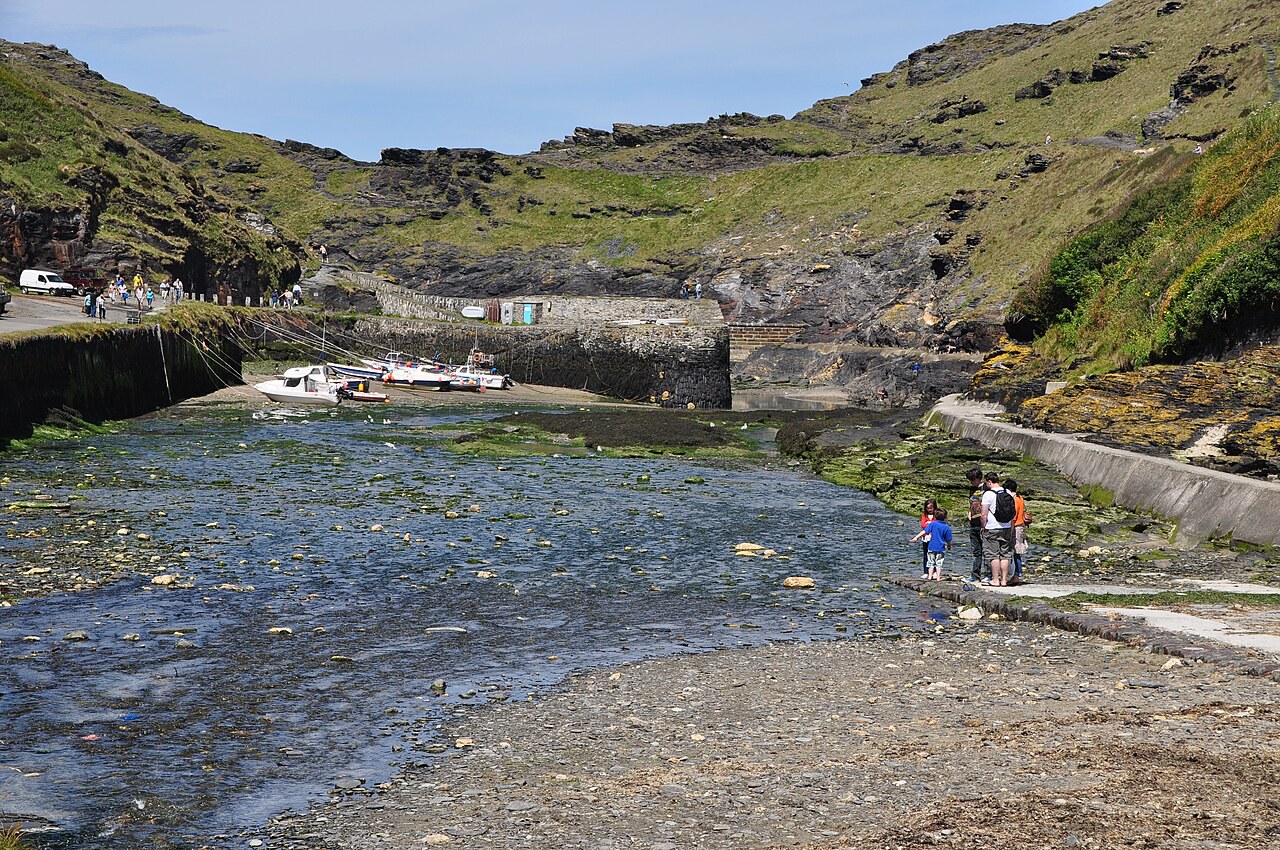
Harbour, valley and headland
Boscastle
An S-shaped natural harbour between steep cliffs, with wooded valley walks, medieval field strips and a singular museum.
- Best for
- Harbour, coast and Valency Valley walking
- Why stay
- The walking is the main reason to stay a week
- Don't miss
- The blowhole around low tide on a good swell
Photo: Lewis Clarke · CC BY-SA 2.0 · cropped
The Fox verdict
A harbour town made for walking
Boscastle gathers a natural harbour, wooded river valley, clifftop headland and medieval fields into one compact north Cornwall stay.
The harbour and the Valency Valley give Boscastle its setting, while the Cobweb Inn, the Wellington Hotel, St Symphorian's Church and the Museum of Witchcraft and Magic supply character and history. The strongest reason to linger is the walking, from the National Trust's coast-and-valley circuit to Willapark and the Forrabury Stitches.
Where to go
Places in Boscastle
Every place below is checked against a published source, listed with what it is and how long to give it.
Local signatures
3 placesBoscastle Blowhole
Also called the Devil's Bellows, this horizontal fissure can force a jet of white spray across the harbour mouth with a distinct boom and mist.
- Visit length
- Editorial estimate: around 30 minutes
- Locality
- on the outer harbour wall near the entrance
- Access
- A good swell and the period around low tide are needed for the spray and boom.
Boscastle and Valency Valley Walk
A National Trust circular walk across the cliffs and inland through oak woodland beside the meandering Valency River, with summer meadows that attract butterflies.
- Visit length
- Editorial estimate: around 2 hours 30 minutes
- Locality
- from the cliffs above the medieval harbour into the Valency Valley
Boscastle Farm Shop and Café
A farm shop, deli, artisan bakery and café offering breads, locally sourced produce, artisan cheeses, homemade preserves, breakfast, lunch and coffee.
- Visit length
- Editorial estimate: around 60 minutes
- Locality
- just outside the village up the hill on the B3263 at Hillsborough Farm
Food & drink
2 placesThe Cobweb Inn
A tall five-floor free house whose name recalls basement cobwebs said to protect beer from flies; it serves homemade food and usually keeps four real ales.
- Visit length
- Editorial estimate: around 90 minutes
- Locality
- by the harbour
The Wellington Hotel
A 16th-century coaching inn serving Cornish real ales and home-cooked food, renamed in 1852 after the Duke of Wellington.
- Visit length
- Editorial estimate: around 90 minutes
- Locality
- up the road from the harbour-side Cobweb Inn
Walks & outdoors
1 placeWillapark Headland
A 317-foot promontory topped by a whitewashed lookout tower, with earthworks from an Iron Age promontory fort across its neck.
- Visit length
- Editorial estimate: around 60 minutes
- Locality
- a promontory guarding the harbour
History & heritage
4 places
Boscastle Harbour
An S-shaped natural inlet with harbour walls built in 1584 by Sir Richard Grenville, once used to import limestone and coal and export slate and local produce.
- Visit length
- Editorial estimate: around 45 minutes
- Locality
- where the Valency and Jordan meet and run to the sea
Forrabury Stitches
A surviving medieval open-field system of long strips, farmed for summer crops and grazed in winter, with many original boundaries still visible.
- Visit length
- Editorial estimate: around 45 minutes
- Locality
- above the village on Forrabury Common
Church of St Symphorian
A Grade II* church with Norman origins, a porch dated 1520 and a chalice-shaped Norman font, largely rebuilt in 1867.
- Visit length
- Editorial estimate: around 45 minutes
- Locality
- on Forrabury Hill overlooking the sea
Museum of Witchcraft and Magic
A museum in Boscastle since 1960 with more than 3,000 objects and 7,000 books, including the skeleton of Joan Wytte.
- Visit length
- Editorial estimate: around 75 minutes
- Locality
- in Boscastle
No places match this filter. Choose All places to reset the list.
Three ways to explore Boscastle
Signature outings
Harbour walls and river mouth
See where the Valency and Jordan meet before the narrow natural inlet turns towards harbour walls built in 1584.
Witchcraft, folklore and Joan Wytte
Explore a collection of more than 3,000 objects and 7,000 books in the museum that made Boscastle its permanent home in 1960.
The chalice-shaped font
Look for the Norman font retained by St Symphorian's when the church was largely rebuilt in 1867.
The town story
Boscastle Town Guide
Harbour legends, old inns, cliff walks and survival stories from a north Cornwall valley.
Cobwebs and Coaching-Inn Ghosts
The Cobweb Inn is named after the cobwebs. When it was an off-licence in the 1700s, the thick webs in the basement were said to keep flies off the beer, and when it became a pub in 1947 the name stuck. It's a tall five-floor free house by the harbour that usually keeps four real ales, mostly West Country — St Austell, Sharp's, Tintagel Brewery — plus a guest or two. The pizzas run from a £12.95 margarita to a Cobweb BBQ chicken at £14.50, the burgers come in brioche buns with chips and coleslaw, and the Sunday carvery has a following. Food stops at half two and starts again at six.
Up the road is the Wellington Hotel, a sixteenth-century coaching inn doing Cornish ales and home-cooked food. It was the Bos Castle Hotel until 1852, then renamed after the Duke of Wellington had died. It is reputedly haunted — guests report a coachman, a little girl and an old lady, with Room 9 the worst of it.
Provisions and the Harbour
For provisions there's the Boscastle Farm Shop and Café, up the hill on the B3263 at Hillsborough Farm, open daily nine to five: a bakery, a deli, artisan cheeses and homemade preserves, and a café doing breakfast and lunch.
The harbour is an S-shaped natural inlet where the Valency and the Jordan meet and run to the sea, the only real harbour for twenty miles of coast. Its walls were built in 1584 by Sir Richard Grenville. Near the entrance is the Boscastle Blowhole, also called the Devil's Bellows: on a good swell an hour or two either side of low tide, the sea forces air through a fissure and fires a jet of white spray halfway across the harbour mouth, with a boom.
Headlands, Stitches and the Norman Font
The walking is the main reason to stay a week. The Willapark headland, a 317-foot promontory topped by a whitewashed lookout tower, now a coastguard station, guards the mouth. The National Trust circular route climbs the cliffs and drops inland through oak woodland along the Valency, where summer meadows draw the rare pearl-bordered fritillary. Above the village sit the Forrabury Stitches, a medieval field system of long strips still farmed the old way, rare in England. The coast path runs about three miles to Tintagel.
The Church of St Symphorian stands on Forrabury Hill overlooking the sea, largely rebuilt in 1867 but keeping its Norman font, shaped like a chalice. The village takes its name from the Bottreaux family, whose castle here has dwindled to earthworks.
Magic, Flood and Rebuilding
The Museum of Witchcraft and Magic has been here since 1960 — over 3,000 objects, the largest anywhere, among them the skeleton of Joan Wytte, the Fighting Fairy Woman of Bodmin.
In August 2004 eight hours of rain sent a flash flood through the village; seven helicopters lifted about 150 people to safety and roughly fifty cars went into the harbour. Nobody died. The National Trust, which owns the harbour and much of the land, rebuilt the village. Bodmin Parkway is the nearest station; the 95 bus stops at Boscastle Bridge between Bude and Wadebridge.
Two Views of Boscastle
One visitor called it "like stepping into the picture of one of those old chocolate or fudge boxes." John Leland, the sixteenth-century antiquary, called it "a very filthy town and il kept." Both are on record.
Stay around Cornwall
Make a longer stay of it
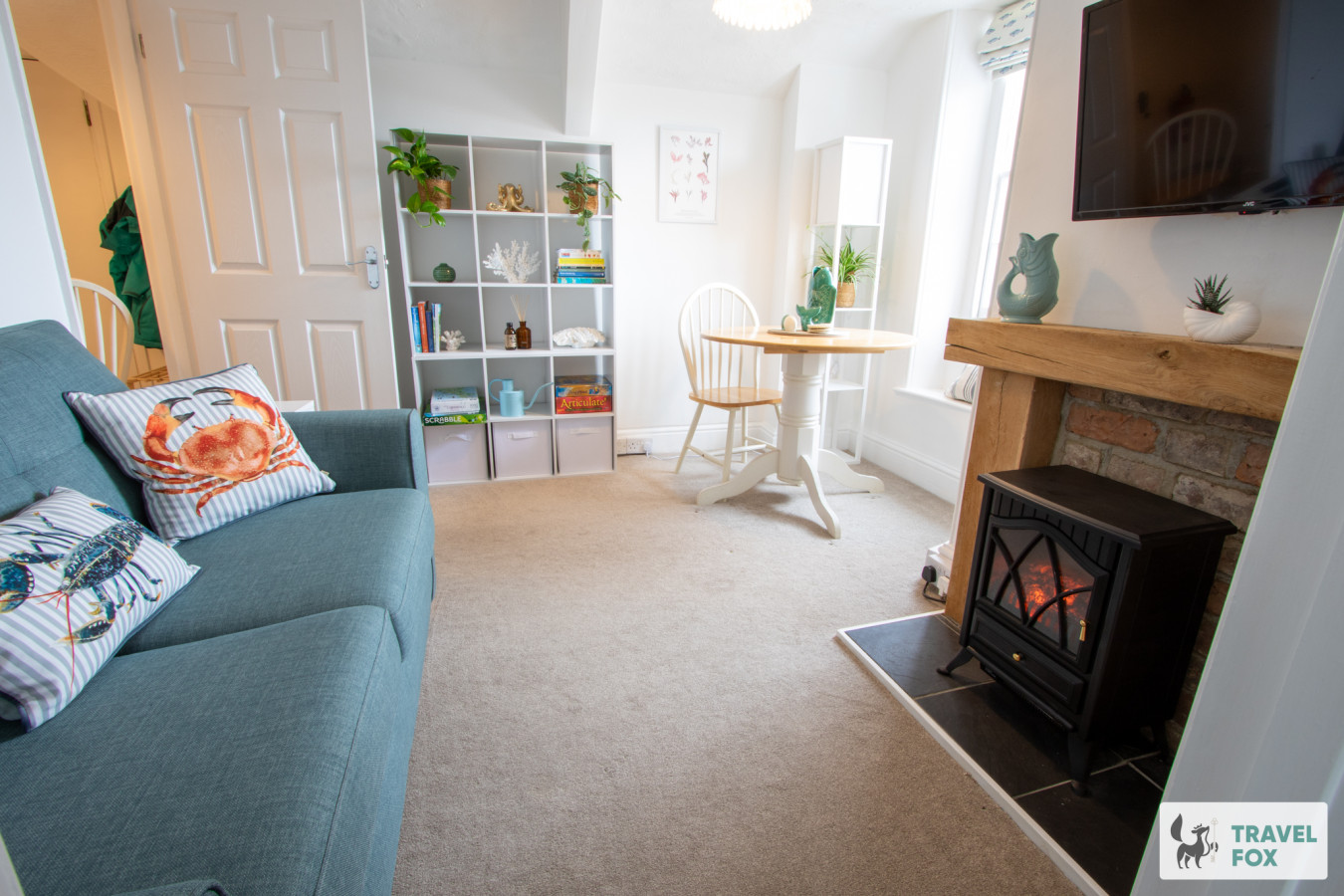
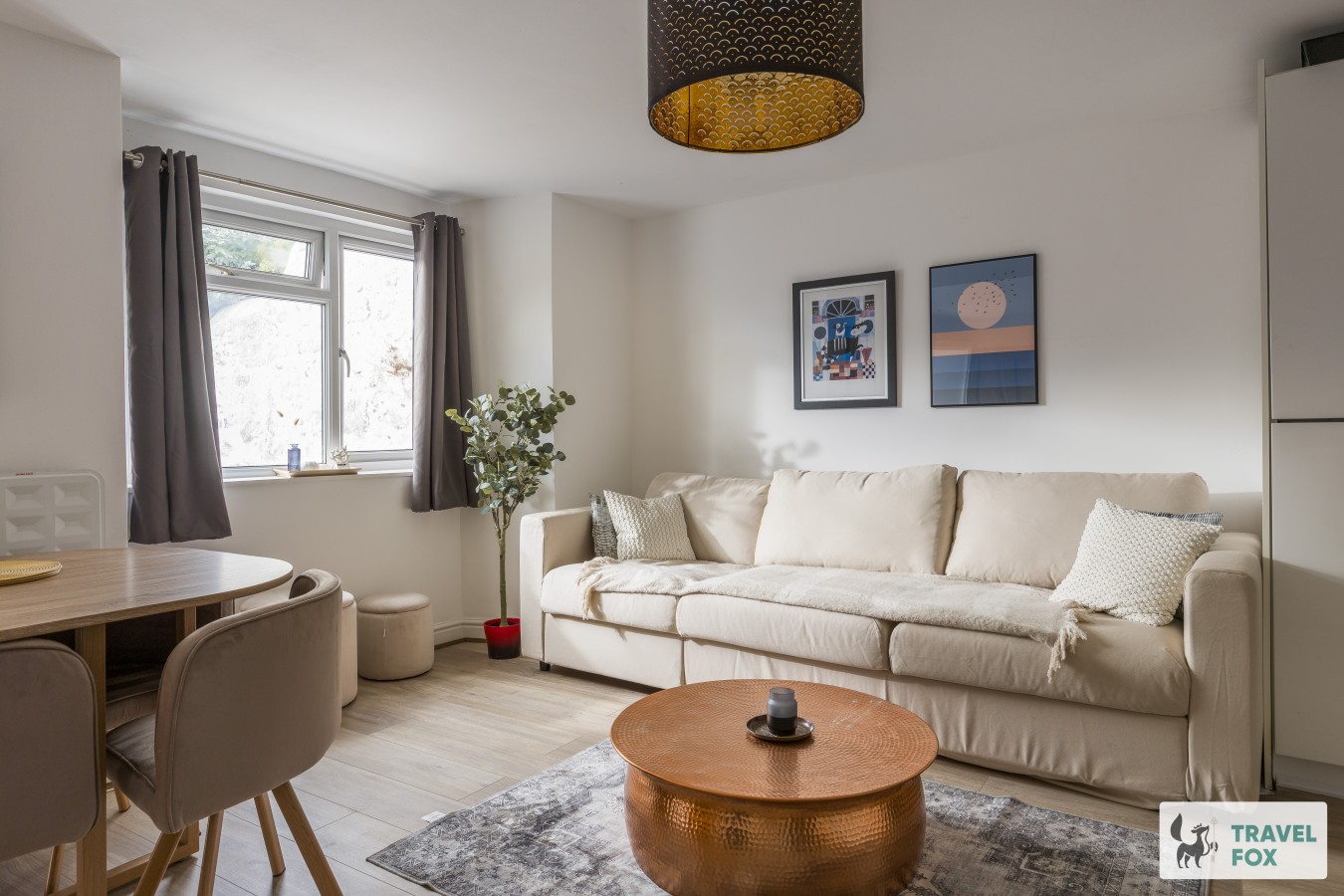
Travel Fox holiday homes around Cornwall, linked directly to their property pages.
A guide with a point of view
Written from research. Edited for real journeys.
Use the Official site links for live practical details, then use this guide for context, ideas and room to explore.
Photography credits & licences
Third-party photographs are credited to their named creators and reused under the linked Creative Commons licence or public-domain dedication. Travel Fox stores an optimised local copy; the file-specific changes and any browser-applied display crop are disclosed below. Reused photographs link both to the Wikimedia Commons source record and to the declared source image; Travel Fox's own photographs carry no such record and are marked as ours. These image licences do not cover Travel Fox text, branding or page design.
- File:Boscastle , Boscastle Harbour - geograph.org.uk - 2491326.jpg — photograph by Lewis Clarke; Boscastle : Boscastle Harbour by Lewis Clarke. Source record on Wikimedia Commons. Declared source image. Licence: CC BY-SA 2.0. File changes: Downloaded from Wikimedia Commons, resized to a maximum 1920px edge and encoded as an optimised JPEG. Display changes: Displayed with responsive CSS cropping.
Sources
Every place on this page is checked against a published source. Each entry links the record we used and names who publishes it.
- Boscastle Harbour — nationaltrust.org.uk national body or asset manager
- Boscastle Blowhole — visitcornwall.com operator, sector body or destination organisation
- Boscastle and Valency Valley Walk — nationaltrust.org.uk national body or asset manager
- Willapark Headland — heritagerecords.nationaltrust.org.uk other published source
- Forrabury Stitches — heritagerecords.nationaltrust.org.uk other published source
- Church of St Symphorian — historicengland.org.uk statutory register or public authority record not machine-readable; publisher restricts automated access
- Museum of Witchcraft and Magic — museumofwitchcraftandmagic.co.uk operator, sector body or destination organisation
- The Cobweb Inn — cobweb-boscastle.co.uk operator, sector body or destination organisation
- The Wellington Hotel — wellingtonhotelboscastle.com operator, sector body or destination organisation
- Boscastle Farm Shop and Café — boscastlefarmshop.co.uk operator, sector body or destination organisation