
The Gateway to the Cotswolds
Burford
A steep, honey-hued High Street that tumbles down to the River Windrush, blending medieval wool wealth with a living roadside charm.
- Best for
- Historic architecture and artisan shopping
- Give it
- A full day to explore the town and valley walks
- Don't miss
- The 12th-century tower of St John the Baptist
Photo: Burford Heritage · CC BY-SA 4.0 · cropped
The Fox verdict
A living portrait of limestone and legacy
Burford is more than a postcard view; it is a working town where medieval trade and modern gastronomy meet on a dramatic slope.
The town's identity is defined by its geography, with a High Street that falls toward a narrow four-arched bridge. While the main road remains busy, the true character of Burford is found in its shaded arcades, secluded pub gardens, and the quiet lanes leading to its great wool church. From the specialist sporting antiques of Manfred Schotten to the Michelin-trained pastries of Hugo Lovage, it offers a sophisticated blend of rural tradition and contemporary quality.
Your picks, your pace
Make Burford yours
Choose a mood or build your own list. Your saved stops are an ordering aid, with a direct map route when you are ready.
Local signatures
3 placesR. Reavley Chemist
Claiming to be England's oldest chemist, this working pharmacy retains an unusually intact Victorian interior within a building that served as a pub until 1734.
- Visit length
- Editorial estimate: around 20 minutes
- Locality
- 124 High Street
The Angel
A 16th-century family-run inn with a walled courtyard garden, known for its food-led menu and Hook Norton cask ales.
- Visit length
- Editorial estimate: around 90 minutes
- Locality
- on the High Street
Hugo Lovage Patisserie
A high-end patisserie run by Michelin-trained chef Cindy Kosmala, specialising in macarons, éclairs, and lamingtons.
- Visit length
- Editorial estimate: around 30 minutes
- Locality
- on the High Street
Food & drink
2 places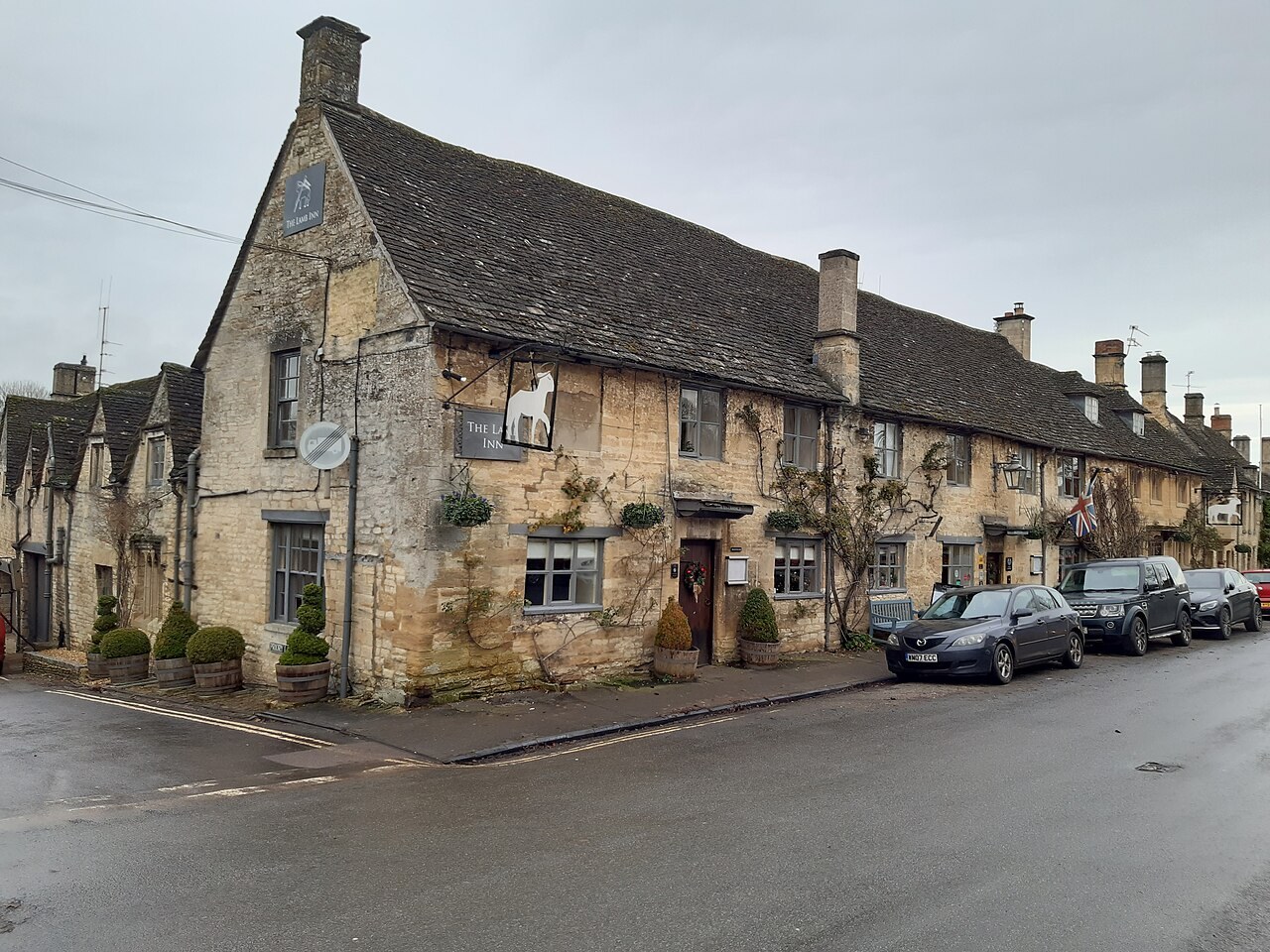
The Lamb Inn
A food-led inn built from former weavers' cottages, offering a secluded rear garden and menus featuring slow-cooked pig cheek and Cotswold-lamb shepherd's pie.
- Visit length
- Editorial estimate: around 90 minutes
- Locality
- on the High Street
Huffkins Bakery and Tea Room
A historic family-owned bakery founded around 1890, famous for its small-batch scones, lardy cake, and traditional wood-fired bakes.
- Visit length
- Editorial estimate: around 45 minutes
- Locality
- on the High Street
History & heritage
3 places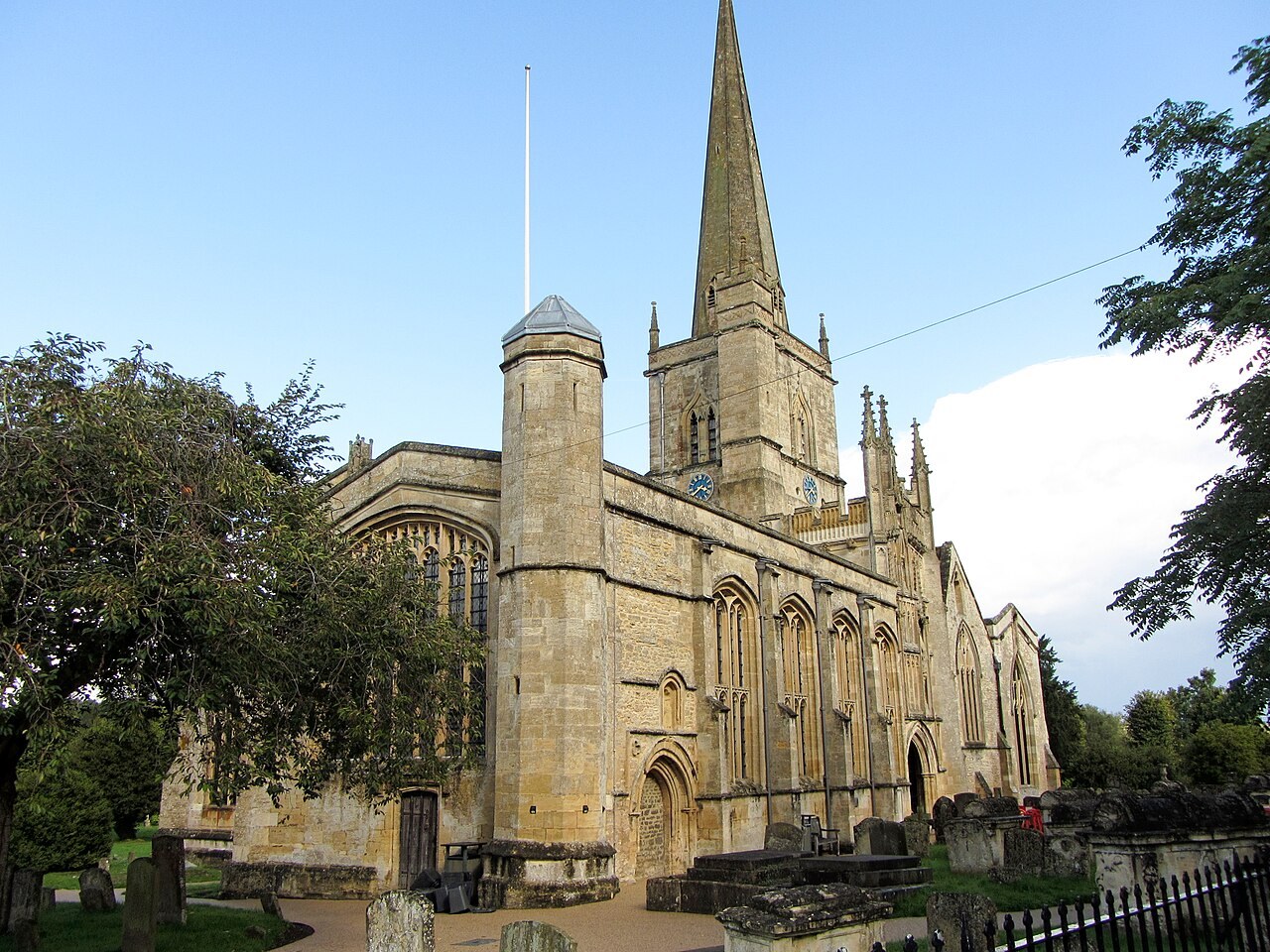
Church of St John the Baptist
A great Cotswold wool church featuring a 12th-century crossing tower, a Norman west doorway, and the 1628 Tanfield monument. It holds a poignant history as the site where Leveller soldiers were imprisoned in 1649.
- Visit length
- Editorial estimate: around 60 minutes
- Locality
- at the foot of Church Lane
Tolsey Museum
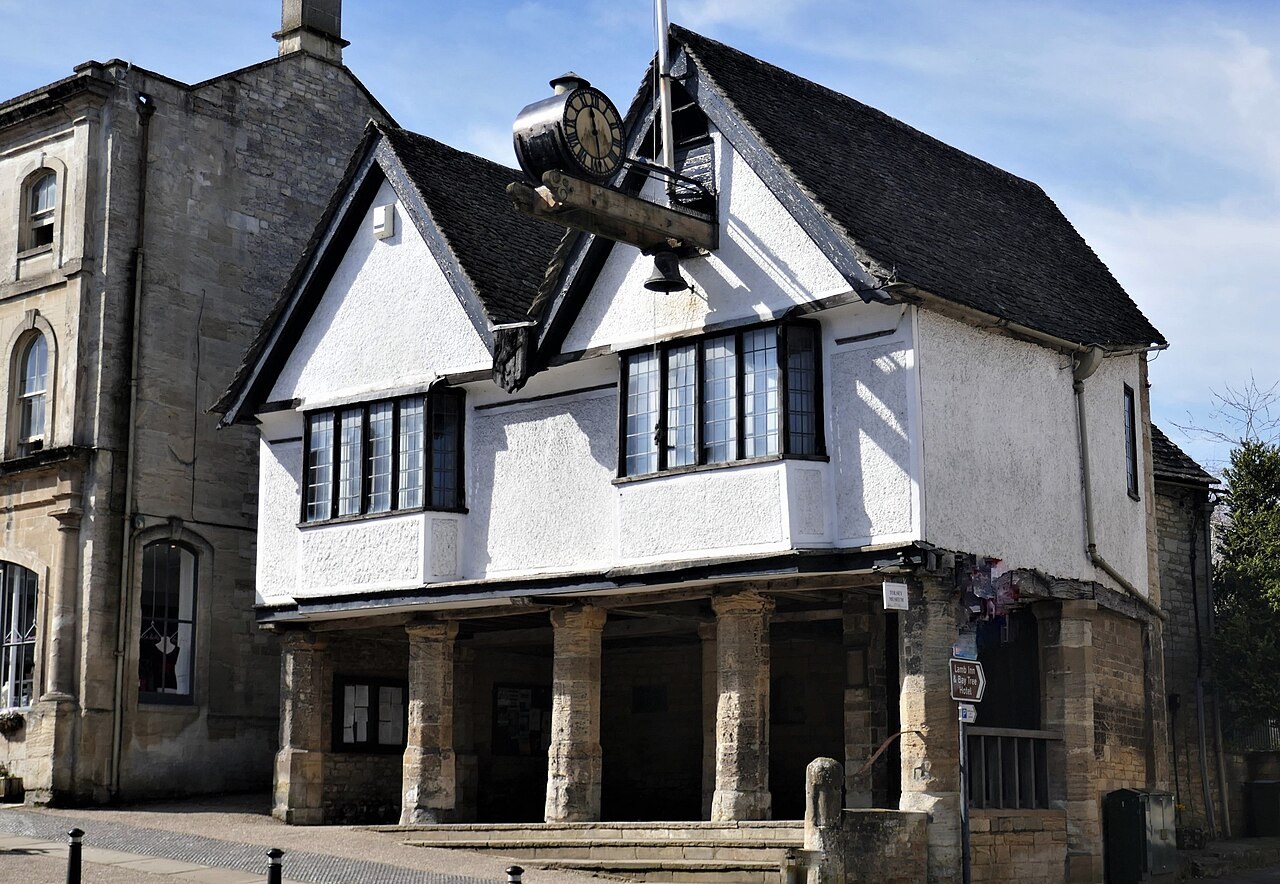
Housed in a Grade II* listed 16th-century market house, this museum displays local history and curiosities, including rope-making tools and a boxwood clarinet.
- Visit length
- Editorial estimate: around 45 minutes
- Locality
- on the High Street
Manfred Schotten Antiques
A specialist dealer established in 1979 focusing on historic sporting objects, including antique golf, cricket, fishing, and tennis equipment.
- Visit length
- Editorial estimate: around 45 minutes
- Locality
- on the High Street
No places match this filter. Choose All places to reset the list.
On the map
Burford at a glance
Tap a marker to jump to its guide card.
Three ways to explore Burford
Signature outings
Step inside the Tolsey
Use the former toll house collection to trace Burford's trades and civic life.
Pause at The Lamb
Turn from the High Street for a quieter inn stop on Sheep Street.
The Leveller's Legacy
Find the 1649 inscription scratched into the lead font at the Church of St John the Baptist.
The town story
Burford Town Guide
From the heights of the High Street to the banks of the Windrush, discover a town shaped by wool, water, and war.
The High Street Slope
The High Street at Burford falls rather than runs. From the top it drops in a long, straight slope of honey-coloured stone toward the River Windrush, and at the bottom it narrows onto a four-arched medieval bridge barely wide enough for the traffic still crossing it. Stand on the bridge and look back up and you have the whole town in one frame: gables, the church spire off to the left, pale limestone taking whatever light is going. Country Life put it neatly — "A well-to-do honeyed-stone high street tapers down a steep hill to a narrow bridge over the River Windrush."
That slope is the first thing to understand about staying here, because it shapes the day. This is a living roadside town, not a preserved pedestrian set. The A361 comes down the High Street and over the bridge, so the main street carries cars along with everyone else. The relief is in what runs off it — Church Lane, the churchyard, the river paths, and the shaded arcades under the Tolsey, where you can stand out of the traffic and watch the street work.
Burford is well supplied with places to eat and drink, and the pubs sort themselves usefully by where they sit and what they do. The Angel, a low-beamed sixteenth-century inn run by the King family since 2011, leans food-led: a recent menu ran to hand-picked crab crumpet with lobster mayonnaise, a pork-and-'nduja Scotch egg, Hooky-battered fish and chips, cod with potato terrine and pea velouté, and a vegan rainbow-chard and olive-puttanesca ravioli. Four Hook Norton cask ales and real cider are on, and the walled courtyard garden feels enclosed rather than roadside. Dogs are welcome.
Gastronomy and Inns
The Lamb, built from former weavers' cottages, is the other serious kitchen. Chef Elliot's menus name slow-cooked pig cheek with quince and celeriac, devilled kidneys, beetroot tart, beer-battered haddock, a beef-shin and Brakspear-ale pie, Cotswold-lamb shepherd's pie, pan-fried cod with curry sauce, miso aubergine, whole plaice, celeriac IPA risotto and rhubarb meringue. Fuller's London Pride is the regular ale, and there is a secluded rear garden. Dogs are allowed on leads. That a luxury inn stands in a row of buildings raised on wool money is a direct link to the wool wealth that made the town.
The Mermaid keeps a fourteenth-century doorway and cooks modern British food, with day-boat fish arriving from Brixham within a day. It does beer-battered fish with crushed peas and chunky tartare, Aurox beef burgers, and Sunday roasts of Aurox beef, Iron Age pork or Somerset chicken, eaten in a sheltered stone-walled courtyard planted with mature trees and climbers. The Cotswold Arms, known locally as "The Coty," is the more straightforwardly local pub, family-run with a log fire, live music on Friday and Saturday, and a secluded rear garden that takes children and dogs. Its menu names fish and chips, a beef-and-ale pie, pollock with chorizo and tomato, spinach koftas, a sun-dried tomato and feta risotto, and a honey-mustard chicken and avocado salad.
If you want pie and a pint with the least fuss, the Royal Oak is the one: family-run by John, Jeanette and Harry, with a sun-trap garden and an in-house range from the Cotswold Pie Company, plus a separate gluten-free menu. Wadworth 6X, Henry's IPA and Horizon are the beers. The Highway Inn is the surprise — a fifteenth-century inn now paired with Toro, a Spanish kitchen built on tapas and sharing plates: pork-belly croquettes and grilled octopus are named, and the format is a run of small plates rather than a single dish each. The Golden Pheasant, with a Georgian front over a sixteenth-century frame, keeps Greene King Abbot and IPA as regulars alongside changing beers often from North Cotswold Brewery, and has a garden and rooms.
Artisan Shops and Curios
Three of the larger houses read more as hotels with good bars. The Bay Tree's Woolsack Bar is flagstones, beams, open fires, a library and a big walled garden with a croquet lawn, quieter than the High Street pubs and advertising local ales; it took Fuller's 2025 Griffin Trophy as best hotel or inn, with general manager Becky Hannis and her team named in the award. Burford House is smaller still, an informal bar inside a seventeenth-century inn with a courtyard under grapevines. And The Bull, a coaching inn that says it opened in 1536, has been reworked since 2023 by its resident owner Matthew Freud into an art-filled hotel with an evolving line-up of kitchens under one roof that has included the accessible Horn, serving Atlantic cod with gremolata, beans, tomato, cucumber and olive; the live-fire Wild, a small performance-like tasting experience led by chef Ben Chamberlain; and Sl'ice for pizza and gelato. The modern art hung throughout is Freud's own, and he makes no claim that it hangs together. The Prince of Burford sits at the town's edge, easier for drivers than for walkers, with an AA-Rosette restaurant, a big garden, three cask ales on Butcombe Original, and its own dog menu.
The shops reward a slow walk up the hill. Huffkins, a bakery and tea room descended from a Burford business founded around 1890 by a Mr Titcomb whose donkey and cart once delivered the wood-fired bakes, has been owned by the Taee family since 1999; the small-batch scones, lardy cake, Victoria sponge and carrot cake are the things to try. Bakery on the Hill traces its roots to 1928 and bakes bread, pastries and coffee through the day. Hugo Lovage, a patisserie run by the Michelin-trained pastry chef Cindy Kosmala, turns out macarons, éclairs, cheesecake, lamingtons, Battenberg and meringue pops, with plant-based and gluten-free afternoon-tea options. For dedicated vegan and coeliac-friendly food, Nutmeg + Thyme at No. 31 does bakes, savouries, hot takeaway, ready meals and house nut butters.
To build a picnic, the Cotswold Cheese Company at 113 High Street will sort the cheese, and Castle Butchers — a traditional shop now part of the Hawes family's Jesse Smith business, with third-generation David and John named in it — the meat; just outside town, Upton Smokery at Upton Downs Farm adds smoked meat and fish, biltong and cheese. Madhatter Bookshop covers the browsing, and Manfred Schotten Antiques, on the High Street since 1979, deals specifically in historic golf, cricket, fishing and tennis objects. The one shop to step inside for its own sake is R. Reavley at 124 High Street, an independent pharmacy that calls itself England's oldest chemist; the building was a pub until 1734 before it became an apothecary, and behind the dispensing counter it keeps an unusually intact Victorian interior. It is still, first and last, a working chemist.
The Windrush Valley and Beyond
Getting out of town is quick. Beyond the bridge the Windrush valley opens into water meadows, field paths and small limestone churches linking Fulbrook, Swinbrook, Widford, Asthall and the Barringtons. The full-day walk is Burford and Beyond, a ten-mile circular from Guildenford car park through Signet, Holwell and Westwell — the Cotswolds National Landscape allows about five and a half hours and grades it moderate, with some steep ground. Gentler is a five-mile circuit east of town linking Asthall, Widford and Swinbrook along the river past the Swan Inn. If you would rather stay in the centre, the Tolsey Museum's self-guided town trail is under a mile and takes about an hour, threading the old buildings together. Cyclists have a twenty-six-mile Windrush Valley loop out of Kingham station. Charlbury, about seven miles off and step-free, is the practical railhead with the most trains; the road access is easy from Oxford and Cheltenham, which is also why the High Street is busy. Families tend to make for Cotswold Wildlife Park at Bradwell Grove, or Crocodiles of the World at Brize Norton, the UK's only crocodile zoo, with more than 150 animals across nineteen crocodilian species.
The history is worth an hour once the shopping is done. Around 1090 Robert Fitzhamon granted the townspeople a charter loosening feudal ties and giving them market and property rights; the town seal still carries his arms. Wool made the money — mills, weavers, tanners and saddlers, the saddlery said to have been known across Europe, the town once among the four wealthiest in Oxfordshire. Two buildings hold that story physically. The Tolsey, an open-ground-floor market house first documented in 1561, is where traders paid their tolls below while the Borough Court met above; it also housed the lock-up, the town clock and bell, and the fire engine into the twentieth century. Its upper room is now the museum, filled with local material collected by the antiques dealer Roger Warner from the 1930s — rope-making tools, a boxwood clarinet — and donated to open the museum in 1960.
The church of St John the Baptist, at the foot of Church Lane past the Warwick Almshouses founded in 1457, is the great Cotswold wool church: a mighty twelfth-century crossing tower with a later spire, a Norman west doorway carved with beak-head and chevron, a five-bay nave and windows spanning medieval glass to work by Hardman, Kempe and Christopher Whall. G. E. Street's 1870s restoration here was one of the cases that pushed William Morris to found the Society for the Protection of Ancient Buildings. Inside, the 1628 Tanfield monument encloses Sir Lawrence and Lady Tanfield behind ironwork; when a femur beneath it was once examined, the rest of the "bones" turned out to be stone. Henry Harman, one of Henry VIII's barbers, is commemorated with his wife Agnes and their sixteen children on a monument that carries what the church describes as Britain's earliest known depiction of people from the Americas.
Wool Wealth and Leveller History
The church's hardest history is more recent. In May 1649 some 340 Leveller soldiers, mutinous over pay, were locked in it; one, Anthony Sedley, scratched his name and "1649" into the lead font, where it remains. Three ringleaders were shot in the churchyard on 16 May while their fellow prisoners watched from the Lady Chapel roof, and the rest were pardoned. The exact places of execution and burial are not known. When the railway later passed Burford by, the last stagecoach ran in 1850 and the market died in 1870, the town fell into decline, before motor touring revived it as a destination.
Come back down to the bridge at the end of the day, when the traffic has thinned and the stone has gone gold. Anthony Sedley's name and 1649 remain carved in the lead font a few streets up, cut by a frightened man who had no idea anyone would still be reading them.
Stay around Cotswolds
Make a longer stay of it
Travel Fox holiday homes around Cotswolds, linked directly to their property pages.
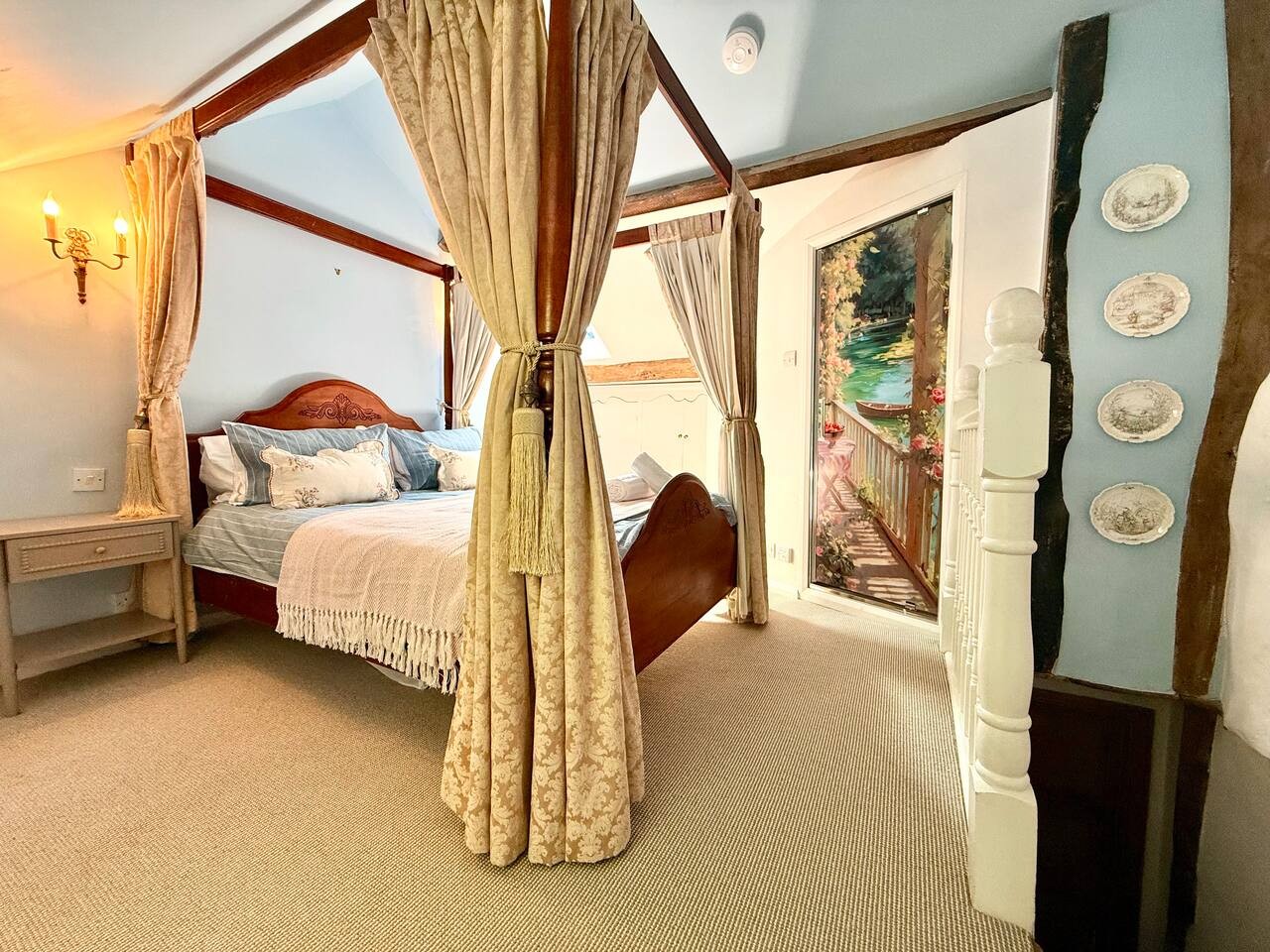
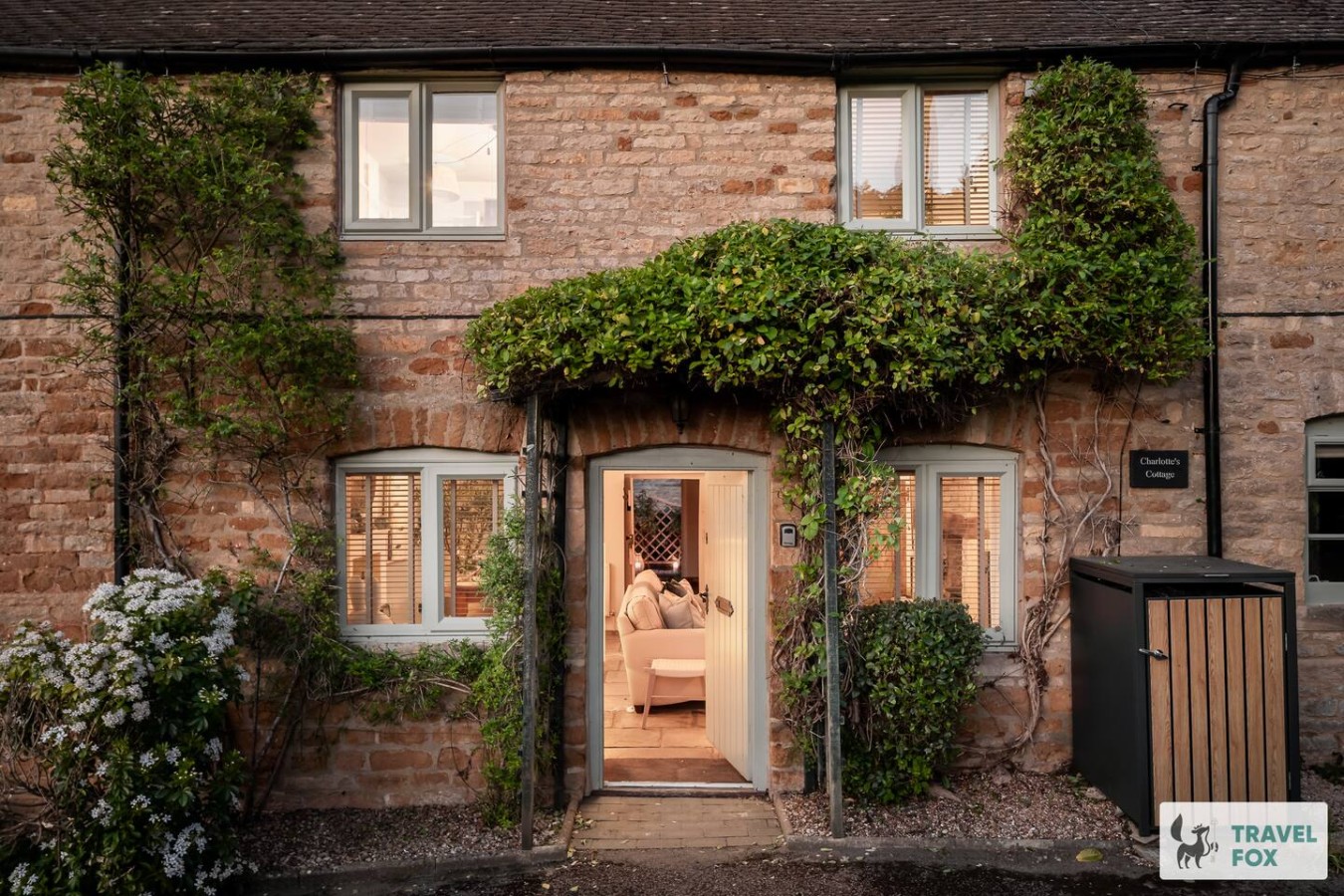
For homeowners
Own a holiday home near Burford?
We manage holiday lets across the Cotswolds from 12% commission, charged after cleaning costs, with no lock-in. A co-founder visits before you decide.
Holiday let management in the Cotswolds →
A guide with a point of view
Written from research. Edited for real journeys.
Use the Official site links for live practical details, then use this guide for context, ideas and room to explore.
Photography credits & licences
Third-party photographs are credited to their named creators and reused under the linked Creative Commons licence or public-domain dedication. Travel Fox stores an optimised local copy; the file-specific changes and any browser-applied display crop are disclosed below. Reused photographs link both to the Wikimedia Commons source record and to the declared source image; Travel Fox's own photographs carry no such record and are marked as ours. These image licences do not cover Travel Fox text, branding or page design.
- File:The Tolsey, High Street, Burford.jpg — photograph by Burford Heritage; Own work. Source record on Wikimedia Commons. Declared source image. Licence: CC BY-SA 4.0. File changes: Downloaded from Wikimedia Commons, resized to a maximum 1920px edge and encoded as an optimised JPEG. Display changes: Displayed with responsive CSS cropping.
- File:The Lamb Inn, Burford (49177640713).jpg — photograph by Hugh Llewelyn from Keynsham, UK; The Lamb Inn, Burford. Source record on Wikimedia Commons. Declared source image. Licence: CC BY-SA 2.0. File changes: Downloaded from Wikimedia Commons, resized to a maximum 1920px edge and encoded as an optimised JPEG. Display changes: Displayed with responsive CSS cropping.
- File:St John the Baptist church, Burford - geograph.org.uk - 5532853.jpg — photograph by Gareth James; St John the Baptist church, Burford by Gareth James. Source record on Wikimedia Commons. Declared source image. Licence: CC BY-SA 2.0. File changes: Downloaded from Wikimedia Commons, resized to a maximum 1920px edge and encoded as an optimised JPEG. Display changes: Displayed with responsive CSS cropping.