
Stone, siege and steam
Corfe Castle
A Purbeck limestone village beneath a ruined royal castle, with common-land walks, steam trains and centuries of stone-working history.
- Best for
- Castle history, heritage steam trains and common-land walks
- Give it
- The castle ruins, railway and a village pub stop
- Don't miss
- The Fox Inn's glass-covered well
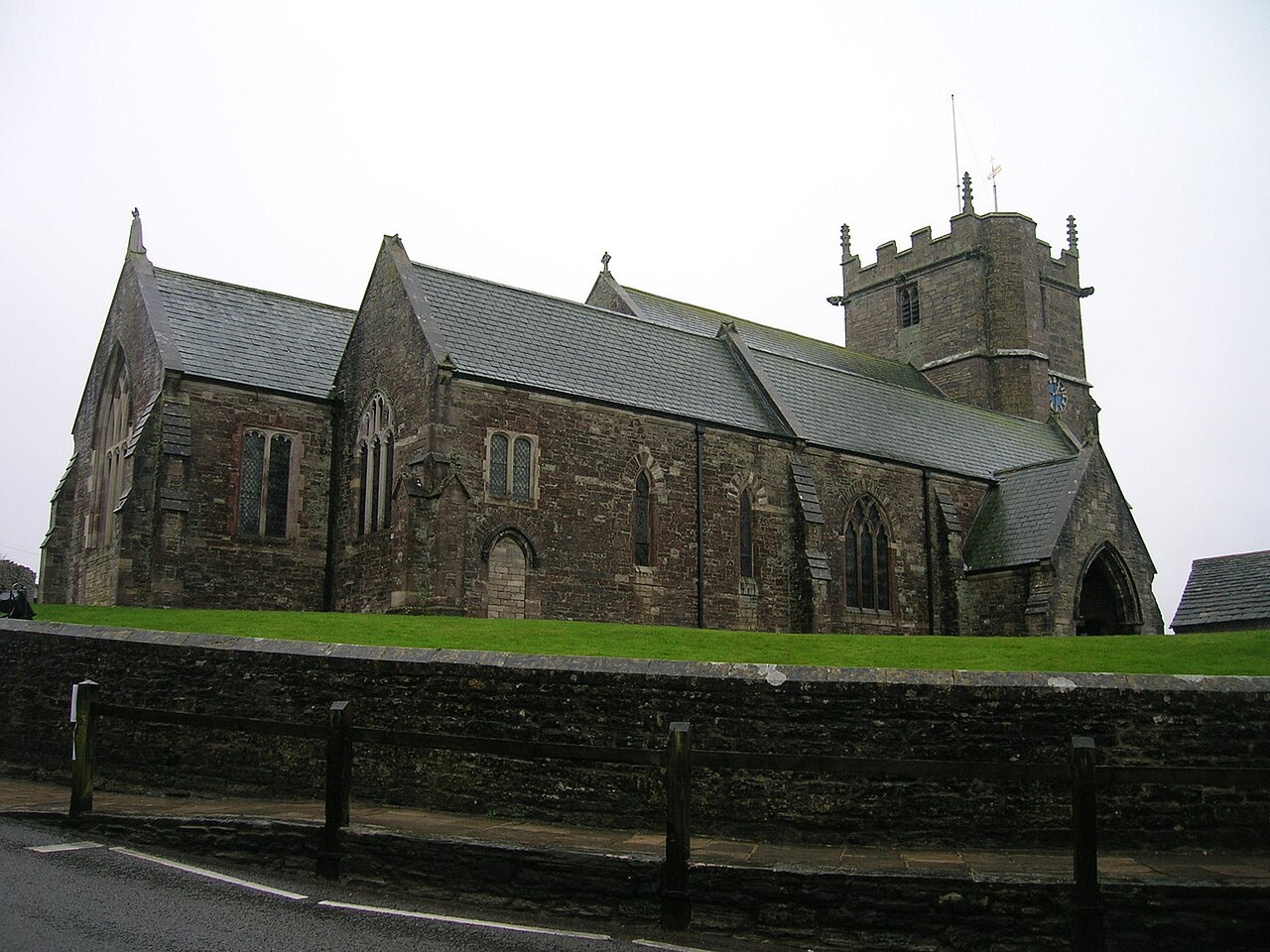
Photo: JThomas · CC BY-SA 2.0 · cropped
The Fox verdict
A village shaped by castle, stone and steam
Purbeck stone history, a heritage railway, common-land walks and characterful pubs come together in one Dorset village.
The ruined castle rises on a conical hill above grey Purbeck limestone rooftops, while East Street and West Street meet at the Square below. Corfe Common adds Bronze Age burial mounds, picnics and walks; the station brings Swanage Railway steam trains into the same story.
Where to go
Places in Corfe Castle
Every place below is checked against a published source, listed with what it is and how long to give it.
Local signatures
3 placesCorfe Common
Dorset's largest area of common land offers open space, Bronze Age burial mounds, picnics and walks; the Shrove Tuesday Marblers' route preserves an old stone-carrying right of way.
- Visit length
- Editorial estimate: Allow around 1 hour
- Locality
- from the National Trust car park
The Fox Inn
This family-run traditional pub dates from 1568 and has an ancient well under a glass cover in the middle of the floor, plus a beer garden with the Fox's Den BBQ shack.
- Visit length
- Editorial estimate: Allow around 1 hour 30 minutes
- Locality
- West Street
The Greyhound Inn
A country pub and former coaching inn directly below the castle, with a terrace and garden overlooking the ruins and Swanage Railway and food sourced within twenty miles.
- Visit length
- Editorial estimate: Allow around 1 hour 30 minutes
- Locality
- directly below the castle
History & heritage
1 place
Church of St Edward, King & Martyr
The Grade II* church has a fifteenth-century octagonal Purbeck marble font and an alabaster reredos with white marble carvings designed by George Edmund Street.
- Visit length
- Editorial estimate: Allow around 45 minutes
- Locality
- at the centre of it all
Things to do
1 placeCorfe Castle railway station
The village station is a stop on the Swanage Railway heritage steam line, with steam trains to Swanage and Park & Ride at Norden.
- Visit length
- Editorial estimate: Allow around 1 hour 30 minutes
- Locality
- east of East Street, in the village
No places match this filter. Choose All places to reset the list.
Three ways to explore Corfe Castle
Signature outings
Walk among ancient barrows
Follow open ground past Bronze Age burial mounds and along an old right of way once used to carry quarried stone.
Take the train to Swanage
Board a Swanage Railway steam train at the village station for the ride from Corfe to Swanage.
Find the Purbeck marble font
Look for the church's fifteenth-century octagonal Purbeck marble font with its panelled sides.
The village story
Stone, common and steam
Pubs, steam trains and common-land walks gather beneath a castle whose ruin still tells the story of siege and betrayal.
Pubs beneath the castle
There is a well in the middle of the floor of the Fox Inn, set under a glass cover, and the story attached to it is that smugglers were once hidden inside. The Fox dates from 1568, claims to be the smallest pub in England, and stands on West Street directly opposite the town hall. It is dog-friendly, has a beer garden with a BBQ shack called the Fox's Den, and for a long stretch was run by Graham White, described as the ultimate Royalist, alongside his aunt Annette Brown, who wore sandals or flip-flops whatever the weather and was an honorary member of the Purbeck Marblers. When White died in 2021 he left £10,000 to the Corfe Castle Town Trust in his will. Melissa Beresford runs it now. "Graham was a very well-known eccentric in the village," she has said. "He was a lovely character, very much larger than life, quite quirky."
The Fox is one of two main streets' worth of pubs, and the streets themselves are quickly explained. East Street and West Street meet at the Square, where a stone cross marks Victoria's Diamond Jubilee of 1897 and a village pump stands that no longer works. Almost everything is built of the same grey Purbeck limestone, which the village once made its living cutting. Above the rooftops, on a steep conical hill, are the ruins of the castle. The whole place sits in a gap through the Purbeck Hills, roughly four miles from Wareham on one side and four from Swanage on the other, with the A351 running straight through East Street to link the two.
Directly below the castle is the Greyhound Inn, a former coaching inn that describes itself as Britain's most photographed pub and probably has a decent claim to it. Its terrace and garden look out over the ruins and the Swanage Railway line, and it opens onto the castle bridge itself. The fish and chips are made with sustainably caught cod, Sunday roasts run to about £20 for a main, and the pub sources its food locally within twenty miles. The ales are guests from south-west breweries, with Bath Ales and Yeovil the regulars, and Dorset Brewing Company, Ringwood, and Purbeck Cider Company turning up alongside them. One reviewer's children reckoned the fish and chips were the best they'd eaten. The Greyhound also gives ten percent off to castle visitors, Swanage Railway passengers, National Trust members, and NHS staff, and it appeared in Mike Leigh's 1976 television play Nuts in May.
Food, walks and village provisions
The Bankes Arms is a sixteenth-century former manor house, Grade II listed and named for the Bankes family, who owned the castle. Its garden runs to the rear, and it is a favourite spot for watching the steam trains go by. The Castle Inn does home-cooked food, a traditional Sunday lunch, fresh local fish, and children's menus, with theme nights, a patio and garden for the summer, and fires in winter. Then there is the Corfe Castle Club, a members' social club housed in a former school built of Purbeck stone, which does filled rolls, keeps sports on the television, and has darts, shove ha'penny, and a pool table upstairs for hire.
For a view of the whole thing, the walk out to Kingston is the one to take. The Scott Arms sits on the hill to the south and its garden looks straight back at the castle; it does both pub food and fine dining, runs a summer barbecue, and has four en-suite rooms if you want to make a night of it. The Corfe Castle to Kingston loop is a 4.9-mile circular that crosses Corfe Common and the fields with the Fox and the Scott Arms as rest stops along the way. Corfe Common is the largest area of common land in Dorset, scattered with Bronze Age burial mounds, and the route across it follows an old right of way once used to carry quarried stone. A longer option is the 5.3-mile loop up to Nine Barrow Down, where you can picnic among the tumuli and listen for the steam-train whistle carrying up from the valley. There is also a rockier, moderately challenging Purbeck Way circular of around 6.8 miles, and the National Trust's Purbeck Ridgeway route runs from the village down to the coast. All of them start from the National Trust car park at BH20 5DR.
Provisions are covered by the village convenience store, which once featured in a BBC episode of Mary Queen of Shops, and by the National Trust shop and tearoom in a Grade II listed building. Two former mills sit on the edges of things, both now in the hands of the Trust: Boar Mill, whose cottage later became a bakery, and West Mill, which closed in 1792 and was used for poor housing until 1915.
Steam trains, sieges and Domesday
The station is at the eastern end of East Street, a stop on the Swanage Railway heritage steam line. From there the steam trains run down to Swanage, and a diesel service links back to Wareham for the National Rail network and trains to London, Southampton, Bournemouth, and Weymouth. There is a Park & Ride at Norden if you would rather leave the car behind, and Purbeck buses run the A351 corridor between Wareham and Swanage.
The castle is the reason most people come, and it has earned the attention. It stands as a deliberate ruin, demolished on the orders of the House of Commons in 1646 at the end of the Civil War, after Lady Mary Bankes had held it through two sieges. In the first her small garrison kept the Upper Ward by heaving stones and hot embers down from the battlements onto the attackers. She was finally betrayed in 1646 by one of her own officers, Colonel Pitman, who let Parliamentarian troops in through a sally gate with their coats reversed to pass as Royalists. She surrendered, and was allowed to keep the castle keys, which are held at Kingston Lacy to this day. If you want to see what stood there before the demolition, the Corfe Model Village recreates the village and its castle at 1/20 scale exactly as they were in 1646, before the walls came down.
The Domesday Book of 1086 records only one castle in the whole of Dorset, and the entry, which names Wareham, is generally taken to mean Corfe rather than the timber castle at Wareham itself. It counts among the four castles Domesday credits to William the Conqueror. The site was occupied long before that, with burial mounds on Corfe Common pointing back to around 6000 BC, and a Celtic and then Roman presence following.
Stone, ceremony and St Edward
The village made its money from stone for centuries. Purbeck marble was carted to the masons' yards in West Street throughout the thirteenth and fourteenth centuries, worked into fonts, pillars, and tombs, and shipped out across the country from Ower Quay in Poole Harbour. Later came ball clay: a merchant named William Pike arrived from Devon, and in 1791 signed a five-year contract with Josiah Wedgwood to supply 1,200 tons of it. By the 1796 census, 55 of the 96 men in the village were clay cutters.
That stone-cutting past is still marked once a year. The Ancient Order of Purbeck Marblers, formed by royal charter in 1651, gathers each Shrove Tuesday, with the freemen waiting in the Fox Inn until the church chimes noon before processing to the town hall for their elections. New apprentices are admitted, and a football is kicked around the boundary of Corfe to preserve the old right of way along which the stone was once carried. The ball is only ever trundled along the ground, never touched by hand. At Ower Farm the junior freemen hand over a pound of pepper as rent for the right to use the quay.
The church at the centre of it all is St Edward, King and Martyr, Grade II* listed and dedicated to the young king said to have been murdered at Corfe on 18 March 978 on the orders of his stepmother. Its font is a fifteenth-century octagon of Purbeck marble with panelled sides, and behind the altar is an alabaster reredos with white marble carvings, designed by the Victorian architect George Edmund Street and presented by Lord Eldon in 1876.
Stories, screens and civic memory
The village has done more than its share of standing in for other places. Enid Blyton used the castle as the model for Kirrin Castle in the Famous Five books, describing it as built of big white stones, with broken archways and tumbledown towers where the jackdaws nested and the gulls sat on the topmost stones. Corfe played "Pepperinge Eye" in Disney's Bedknobs and Broomsticks in 1971, and Keith Roberts set part of his science-fiction novel Pavane here. The composer Kaikhosru Shapurji Sorabji lived in the village for many years, which is a lot of unusual names for one small place in Dorset.
From the museum in the lower part of the town hall, currently being refitted, to the two wells that no longer draw water, much of what the village keeps is administered by the Corfe Castle Town Trust, set up in 1889 to look after what was left of a dissolved rotten borough. It is the kind of place where a man can leave ten thousand pounds to the town in his will, and where, on the right afternoon, you can sit in the garden of the Bankes Arms with a drink and watch the steam trains go past.
Stay around Dorset
Make a longer stay of it
Travel Fox holiday homes around Dorset, linked directly to their property pages.
A guide with a point of view
Written from research. Edited for real journeys.
Use the Official site links for live practical details, then use this guide for context, ideas and room to explore.
Photography credits & licences
Third-party photographs are credited to their named creators and reused under the linked Creative Commons licence or public-domain dedication. Travel Fox stores an optimised local copy; the file-specific changes and any browser-applied display crop are disclosed below. Reused photographs link both to the Wikimedia Commons source record and to the declared source image; Travel Fox's own photographs carry no such record and are marked as ours. These image licences do not cover Travel Fox text, branding or page design.
- File:Parish Church of St Edward King and Martyr, Corfe Castle - geograph.org.uk - 2269126.jpg — photograph by JThomas; Parish Church of St Edward King and Martyr, Corfe Castle by JThomas. Source record on Wikimedia Commons. Declared source image. Licence: CC BY-SA 2.0. File changes: Downloaded from Wikimedia Commons, resized to a maximum 1920px edge and encoded as an optimised JPEG. Display changes: Displayed with responsive CSS cropping.
Sources
Every place on this page is checked against a published source. Each entry links the record we used and names who publishes it.
- Corfe Common — nationaltrust.org.uk national body or asset manager
- Corfe Castle railway station — lineguide.swanagerailway.co.uk operator, sector body or destination organisation
- Church of St Edward, King & Martyr — stedwardscorfecastle.co.uk operator, sector body or destination organisation
- The Fox Inn — historicengland.org.uk statutory register or public authority record not machine-readable; publisher restricts automated access
- The Greyhound Inn — historicengland.org.uk statutory register or public authority record not machine-readable; publisher restricts automated access