
Harbour town
Cowes
A Solent-facing town shaped by sailing, shipbuilding and a harbour busy with yachts and motor cruisers.
- Best for
- Maritime heritage and seafront walking
- Give it
- A day shared between Cowes and East Cowes
- Don't miss
- The paved promenade past Egypt Point towards Gurnard
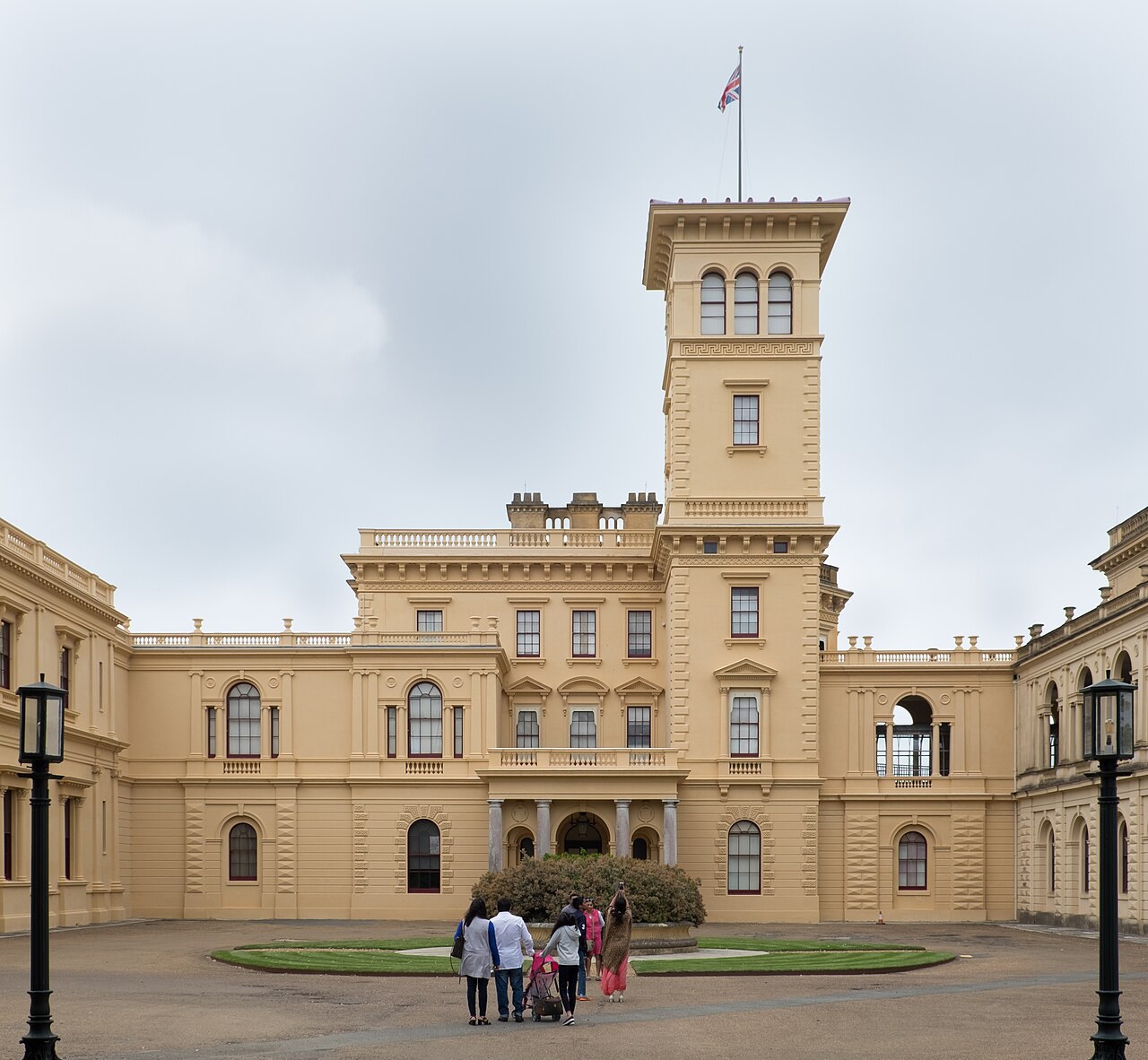
Photo: DeFacto · CC BY-SA 4.0 · cropped
The Fox verdict
A harbour town with sailing in its fabric
Come for the working yachting town, then follow its maritime story from an old sail loft to the museums and Osborne House across the Medina.
Cowes sits at the mouth of the River Medina facing the Solent. Its harbour, historic pubs and sailing outfitters lead naturally into a flat seafront walk towards Gurnard, while the floating bridge links the town with East Cowes and its major heritage attractions.
Where to go
Places in Cowes
Every place below is checked against a published source, listed with what it is and how long to give it.
Local signatures
3 placesThe Anchor Inn
A traditional pub serving home-cooked meals, real ale, ciders, beers, wines and spirits, with live music from Wednesday to Saturday.
- Visit length
- Editorial estimate: Allow around 90 minutes
- Locality
- 1-3 High Street, in the heart of Cowes
Northwood Park
Public green space in the former grounds of Northwood House, donated to the town in 1929.
- Visit length
- Editorial estimate: Allow around 60 minutes
- Locality
- in the centre of town
Classic Boat Museum
A maritime collection of nearly 90 vessels, including dinghies, yachts, powerboats and lifeboats, alongside models, photographs and paintings.
- Visit length
- Editorial estimate: Allow around 90 minutes
- Locality
- East Cowes waterfront
Walks & outdoors
1 placeCowes to Gurnard Coastal trail
A Solent-facing promenade walk passing Egypt Point and its lighthouse before reaching Gurnard, with views towards Lymington, Yarmouth and Portsmouth.
- Visit length
- Editorial estimate: Allow around 90 minutes
- Locality
- Cowes seafront to Gurnard
- Access
- The route is flat, paved and suitable for wheelchairs and prams.
History & heritage
4 placesSir Max Aitken Museum
Maritime and nautical artefacts fill an 18th-century sail-makers' loft once used by Ratsey & Lapthorn, makers of sails for the King's racing yacht Britannia.
- Visit length
- Editorial estimate: Allow around 60 minutes
- Locality
- High Street
- Access
- Open in summer.
St Mary's Church, Cowes
A Grade II* church whose unusual Greek Revival tower was designed by John Nash in 1815-16 as a mausoleum for the Ward family and retained during the 1867 rebuild.
- Visit length
- Editorial estimate: Allow around 45 minutes
- Locality
- Cowes
Cowes Floating Bridge
The chain ferry links Cowes and East Cowes across the Medina; the first floating bridge dates from 1859 and a ferry has run here since 1720.
- Visit length
- Editorial estimate: Allow around 15 minutes
- Locality
- across the Medina to East Cowes
Osborne House
Queen Victoria and Prince Albert's Italian Renaissance seaside palace, built in 1845-51, with the Durbar Room, Swiss Cottage and Victoria's private beach among its principal features.
- Visit length
- Editorial estimate: Allow around 180 minutes
- Locality
- East Cowes
No places match this filter. Choose All places to reset the list.
Three ways to explore Cowes
Signature outings
Walk to Gurnard
Take the flat, paved seafront route past Egypt Point and its lighthouse, with Solent views opening on both sides.
See the Greek Revival tower
Look for John Nash's unusual 1815-16 tower, built as the Ward family mausoleum and preserved through the church's later rebuild.
Explore Osborne House
Visit Queen Victoria and Prince Albert's Italian Renaissance seaside palace in East Cowes.
The town story
Cowes Town Guide
Sailing heritage, historic pubs and a paved Solent promenade at the mouth of the Medina.
Harbour Castle and Historic Sail Loft
Arriving by sea, you pass a harbour packed with yachts and motor cruisers, a wooden pier, and a castellated building on the point that turns out to be a clubhouse. That is Cowes Castle, built by Henry VIII in 1539 as a defence against France and the Holy Roman Empire, decommissioned in 1854, and now the headquarters of the Royal Yacht Squadron. Its cannons are a gift: twenty-one brass pieces handed over by the Prince of Wales after William IV's miniature frigate was destroyed in 1877.
The High Street runs back from the water as a working shopping street of chandlers, sailing outfitters and clothing shops that serve the yachting trade. Partway along it stands an 18th-century sail-makers' loft, once part of Ratsey & Lapthorn, who made the sails for the King's racing yacht Britannia. The loft is now the Sir Max Aitken Museum, full of maritime and nautical artefacts and open in summer.
Cowes Pubs and Waterfront Tables
The Anchor Inn at 1-3 High Street has been named CAMRA's Isle of Wight Pub of the Year, serves home-cooked meals and real ale, and puts on live music Wednesday to Saturday. The Fountain Inn, a waterside hotel dating to 1793 with long ties to Cowes Week, keeps twenty dog-friendly rooms. The Union Inn, off the Parade, has a three-sided bar wrapped around a lounge, snug, dining area and conservatory, with a fire lit in season. The Globe puts a rooftop terrace over the seafront for watching the yachts, and the Duke of York, family-owned since 1969, looks out across the Solent from the edge of town.
Promenade, Park and St Mary's
The seafront walk west is flat, paved and suitable for wheelchairs and prams. It runs about 2.3 miles to Gurnard, passing Egypt Point and its lighthouse, with the Solent opening out toward Lymington and Yarmouth one way and Portsmouth the other. This is also where the Isle of Wight Coastal Path begins its full circuit of the island. Behind the town, Northwood Park gives you green space in the centre — the former grounds of Northwood House, home of the Ward family, whose mausoleum is the Greek Revival tower John Nash designed for St Mary's Church in 1815. When the rest of the church was rebuilt in 1867, the tower was left standing.
Ferries, Floating Bridge and Buses
Cowes has no railway; the line closed in 1966 and the trackbed is now a cycle path. You arrive instead on Red Funnel's Red Jet catamaran from Southampton, a foot-passenger crossing, with a car ferry running to East Cowes across the estuary. Between the two towns runs the Cowes Floating Bridge, a chain ferry that carries up to twenty cars across the Medina roughly every ten or fifteen minutes; the alternative is a ten-mile drive. Southern Vectis Route 1 handles the buses.
East Cowes and Cowes Week
East Cowes, minutes away over the bridge, holds Osborne House, where Queen Victoria died in 1901, and the Classic Boat Museum with its ninety-odd vessels. In early August the population swells for Cowes Week, the oldest and largest sailing regatta in the world, and the harbour fills with what feels like everyone who owns a boat and several who wish they did.
Stay around Isle of Wight
Make a longer stay of it
Travel Fox holiday homes around Isle of Wight, linked directly to their property pages.
For homeowners
Own a holiday home near Cowes?
We manage holiday lets across the UK from 12% commission, charged after cleaning costs, with no lock-in. A co-founder visits before you decide.
How our holiday let management works →
A guide with a point of view
Written from research. Edited for real journeys.
Use the Official site links for live practical details, then use this guide for context, ideas and room to explore.
Photography credits & licences
Third-party photographs are credited to their named creators and reused under the linked Creative Commons licence or public-domain dedication. Travel Fox stores an optimised local copy; the file-specific changes and any browser-applied display crop are disclosed below. Reused photographs link both to the Wikimedia Commons source record and to the declared source image; Travel Fox's own photographs carry no such record and are marked as ours. These image licences do not cover Travel Fox text, branding or page design.
- File:Osborne House Pavilion Wing, East Cowes.jpg — photograph by DeFacto; Own work. Source record on Wikimedia Commons. Declared source image. Licence: CC BY-SA 4.0. File changes: Downloaded from Wikimedia Commons, resized to a maximum 1920px edge and encoded as an optimised JPEG. Display changes: Displayed with responsive CSS cropping.
Sources
Every place on this page is checked against a published source. Each entry links the record we used and names who publishes it.
- Sir Max Aitken Museum — sirmaxaitkenmuseum.org operator, sector body or destination organisation
- The Anchor Inn — theanchorcowes.co.uk operator, sector body or destination organisation
- Cowes to Gurnard Coastal trail — outdooractive.com other published source
- St Mary's Church, Cowes — historicengland.org.uk statutory register or public authority record not machine-readable; publisher restricts automated access
- Northwood Park — northwoodhouse.org operator, sector body or destination organisation
- Cowes Floating Bridge — iow.gov.uk statutory register or public authority
- Osborne House — english-heritage.org.uk national body or asset manager
- Classic Boat Museum — classicboatmuseum.com operator, sector body or destination organisation