
Vale of Lorton
Lorton
A two-part Lakeland village with a lone pub, a boundary church and a vale opening towards forest, fell and water.
- Best for
- Forest trails and quieter valley landscapes
- Give it
- A flexible half-day with a car
- Don't miss
- The western fell view from The Wheatsheaf
The Fox verdict
A small village with a much larger landscape
Lorton is a quiet base for the Vale, with village history nearby, Whinlatter rising to the east and the western fells beyond.
Low Lorton holds the village’s only remaining pub, while High Lorton rises above it and St Cuthbert’s stands between the two settlements. Beyond them, walking and mountain-bike trails fill Whinlatter Forest, while the village hall and Wordsworth’s ancient yew carry Lorton’s history into the landscape.
Where to go
Places in Lorton
Every place below is checked against a published source, listed with what it is and how long to give it.
Local signatures
3 placesThe Wheatsheaf Inn
Lorton’s only remaining pub, with two rooms warmed by real fires, an outdoor area and a campsite behind.
- Visit length
- Editorial estimate: Allow around 75 minutes
- Locality
- Low Lorton, on the valley floor
Whinlatter Forest
A 3,000-acre mountain forest with walking routes, mountain-bike trails and an osprey viewpoint.
- Visit length
- Editorial estimate: Allow around 2 hours
- Locality
- east of Lorton
Yew Tree Hall
The former Jennings Brewery malthouse, converted into Lorton’s village hall in 1909.
- Visit length
- Editorial estimate: Allow around 20 minutes
- Locality
- High Lorton
History & heritage
2 placesSt Cuthbert's Church
A church with medieval origins, rebuilt in 1807–9, standing on the long-established line between High and Low Lorton.
- Visit length
- Editorial estimate: Allow around 20 minutes
- Locality
- between High Lorton and Low Lorton
The Lorton Yew
The ancient yew celebrated by Wordsworth as ‘the pride of Lorton Vale’, still standing in Lorton.
- Visit length
- Editorial estimate: Allow around 10 minutes
- Locality
- Lorton
No places match this filter. Choose All places to reset the list.
Three ways to explore Lorton
Signature outings
The village’s last pub
Settle into one of The Wheatsheaf’s two fire-warmed rooms, or look west from the outdoor tables towards the fells.
St Cuthbert's on the boundary
Visit the church that stands between High and Low Lorton, where a chaplain was recorded in 1198 and the present building was rebuilt in 1807–9.
Wordsworth’s yew
Wordsworth wrote a poem about this ancient yew in Lorton, calling it ‘the pride of Lorton Vale’; the tree still stands.
The village story
Lorton Village Guide
A valley-floor pub, a centuries-old dividing line and a road south into some of the western Lakes’ strongest scenery.
The inn at the heart of Low Lorton
The Wheatsheaf sits on the valley floor in Low Lorton, with a campsite behind it and two rooms inside kept warm by real fires. It has been a pub since 1847, converted from the farmstead of a man called Henry Fletcher, and it is the only pub left in Lorton. That gives it a certain weight of responsibility, which it carries without fuss.
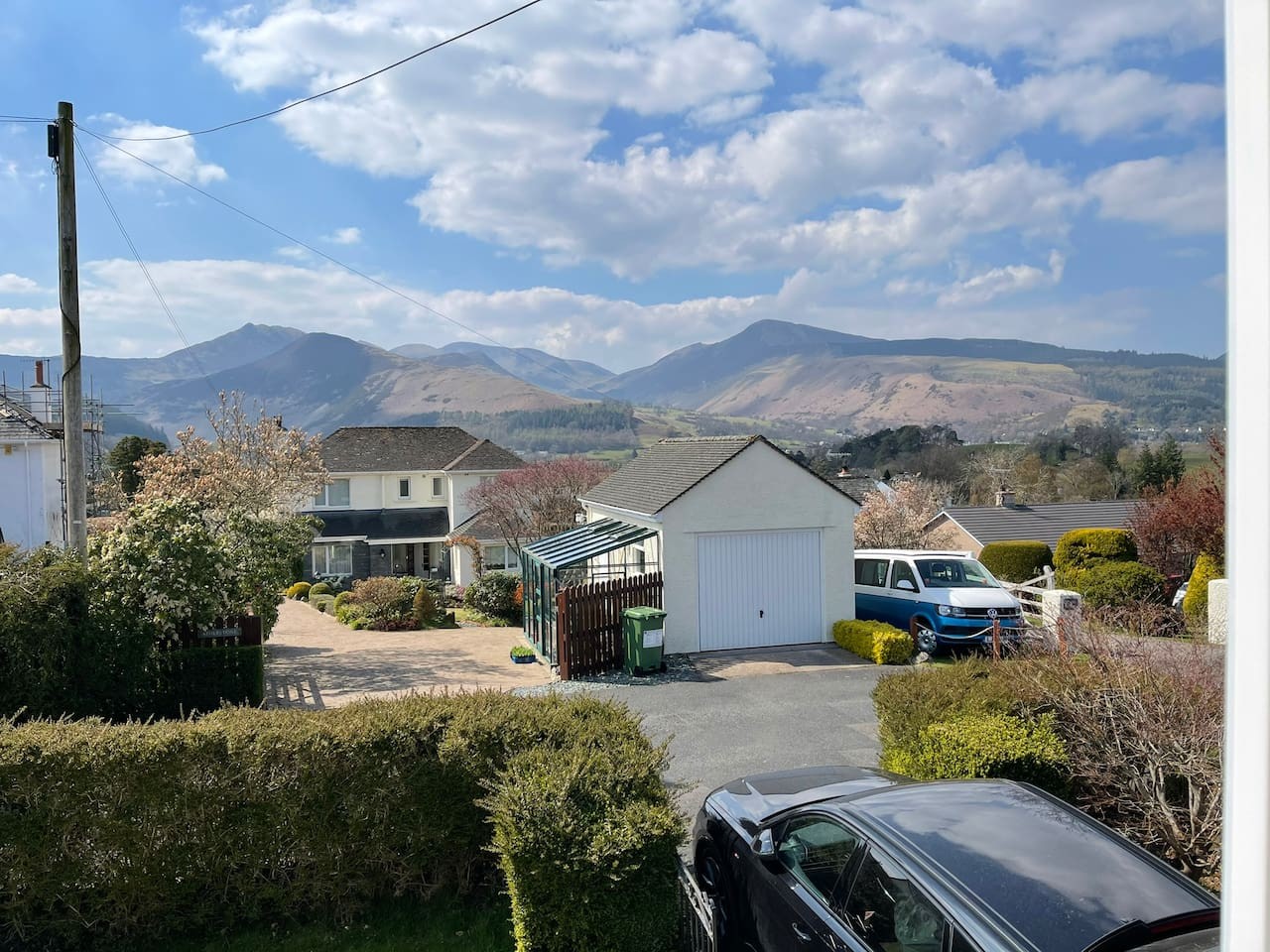
The menu is unfussy too: shepherd's pie, lasagne, a choice of burgers, vegetarian options, a children's menu. You eat it looking west, where the panorama of the fells does most of the decorating. On a fine evening the outdoor tables and the campground behind fill up, and the western sky over Grasmoor and Mellbreak takes its time going dark.
Two Lortons and the line between
Lorton is really two villages. Low Lorton is the one on the valley floor, with the pub. High Lorton climbs the eastern hillside above it, and the two have been separated since 1158, when High Lorton was handed to Carlisle Cathedral Priory. The dividing line — Church Lane — still runs between them, which is a long time for a boundary to survive an administrative decision.
St Cuthbert's Church stands on that line, between the two settlements. A chaplain was recorded here in 1198; the present building was rebuilt in 1807-9. In 2020 it won a Gold Eco Church Award, which is a modern distinction for a very old parish.
What Lorton has instead
There are no shops. For those you drive to Cockermouth, north up the vale. What Lorton has instead is what surrounds it.
To the east the ground rises into Whinlatter Forest, which bills itself as Britain's only mountain forest — 3,000 acres of trail. There are mountain bike routes, walking paths, and an osprey viewpoint. Ospreys have nested here since 2011, the first breeding pair in England in a century and a half.
Waterfalls, bluebells and an ancient yew
South of the village the vale runs down to Crummock Water. Scale Force is about 5.6 miles from Lorton in a straight line. From the lake shore you can walk to this waterfall, the highest in the Lake District at 170 feet, tucked in a wooded ravine that keeps it hidden until you're almost on it. Above the lake sits Rannerdale Knotts, famous for its bluebells in spring.
Lorton's other claim is a tree. Wordsworth wrote a poem about an ancient yew that grows here and called it "the pride of Lorton Vale." The yew is still standing, which is more than can be said for most things a poet has admired.
Ways in and a brewery’s beginnings
Getting here takes some planning. There is no railway in Lorton — Workington station is about 10.0 miles west in a straight line, with a longer road journey — so by car you come over Whinlatter Pass on the B5289 from Keswick, or up the B5292 from Cockermouth. In summer the seasonal 77 and 77A buses, the Honister Rambler, run from Keswick through Braithwaite and on to Buttermere, stopping in Lorton on the way.
The brewery that became a national name started here. John Jennings founded it in High Lorton around 1828, then moved it to Cockermouth in 1881. The old malthouse he left behind became the village hall in 1909, and it is called Yew Tree Hall, after the tree.
Stay around Lake District
Make a longer stay of it
Travel Fox holiday homes around Lake District, linked directly to their property pages.
For homeowners
Own a holiday home near Lorton?
We manage holiday lets across the Lake District from 12% commission, charged after cleaning costs, with no lock-in. A co-founder visits before you decide.
Holiday let management in the Lake District →
A guide with a point of view
Written from research. Edited for real journeys.
Use the Official site links for live practical details, then use this guide for context, ideas and room to explore.
Sources
Every place on this page is checked against a published source. Each entry links the record we used and names who publishes it.
- The Wheatsheaf Inn — wheatsheafinnlorton.co.uk operator, sector body or destination organisation
- St Cuthbert's Church — melbreakcommunities.org.uk other published source
- Whinlatter Forest — forestryengland.uk national body or asset manager
- The Lorton Yew — melbreakcommunities.org.uk other published source
- Yew Tree Hall — historicengland.org.uk statutory register or public authority record not machine-readable; publisher restricts automated access