
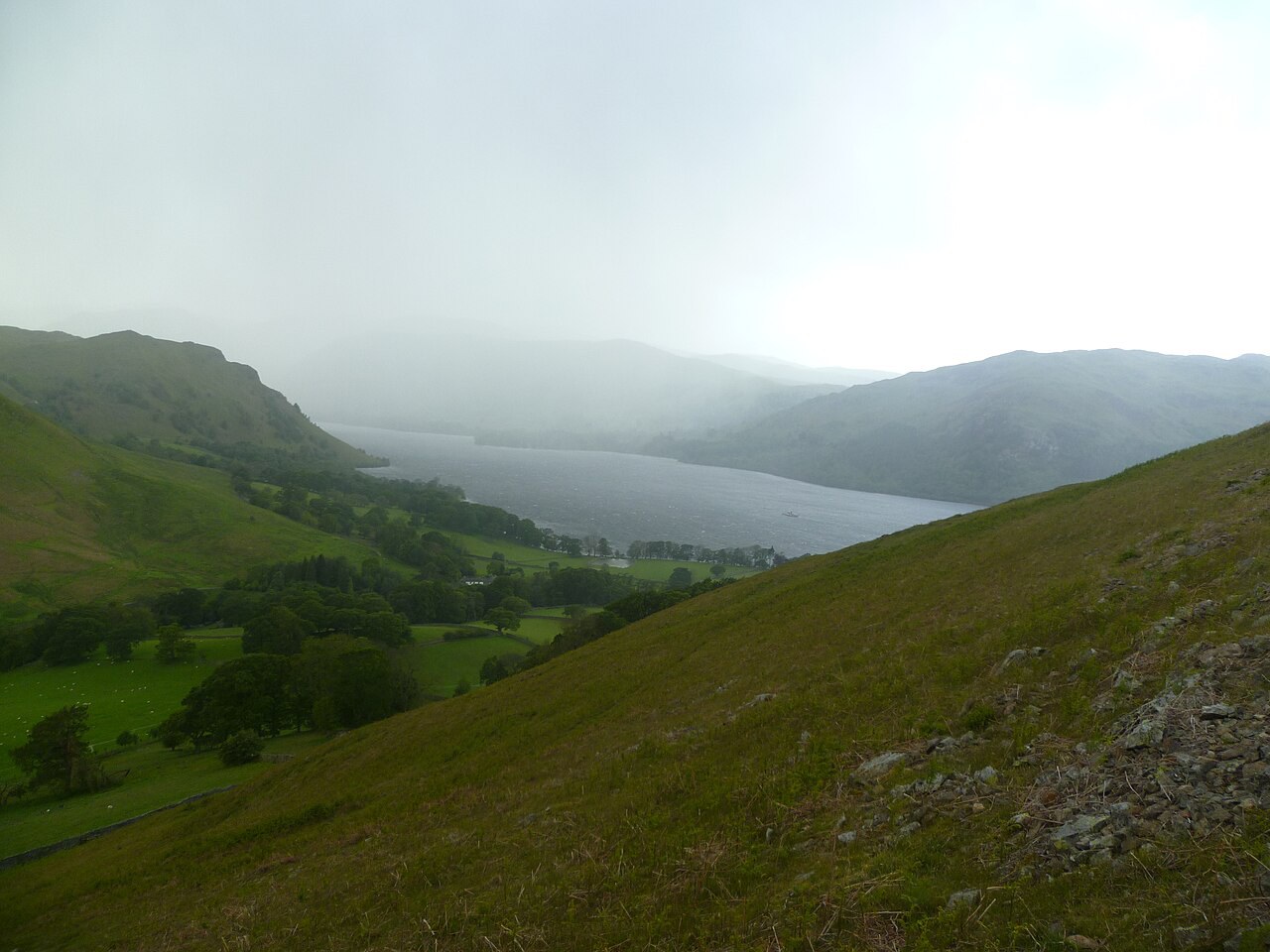
Ullswater's hidden valley
Martindale
A single-track road leads to old churches, open deer country and steep fell paths above Ullswater.
- Best for
- Remote fell walking
- Give it
- Half a day or longer
- Don't miss
- Hallin Fell's Ullswater view
Photo: Michael Graham · CC BY-SA 2.0 · cropped
The Fox verdict
A small valley with a long memory
Come for two historic churches, a medieval deer landscape and fell walking above Ullswater.
Choose the churches and Hallin Fell for a compact visit, or give the 16 km Martindale Skyline a day of its own. The Nab and Martindale Common add eight centuries of deer-park history to the open fell.
Where to go
Places in Martindale
Every place below is checked against a published source, listed with what it is and how long to give it.
Local signatures
3 placesSt Martin's Church (Old Church)
A Grade II* late-16th-century church beside an approximately 1,300-year-old yew tree.
- Visit length
- Editorial estimate: Allow around 30 minutes
- Locality
- Martindale valley
St Peter's Church (New Church)
The 1880 church has five south windows by Jane Gray, including a memorial window to the officers and men of HMS Glorious.
- Visit length
- Editorial estimate: Allow around 30 minutes
- Locality
- higher Martindale valley
The Nab and Martindale Common
Open fell within an ancient deer park where red deer have roamed for more than 800 years.
- Visit length
- Editorial estimate: Allow around 2 hours 30 minutes
- Locality
- Martindale Common
Walks & outdoors
3 places
Hallin Fell
A short, steep climb to a 388 m summit with spectacular views over Ullswater.
- Visit length
- Editorial estimate: Allow around 2 hours
- Locality
- above St Peter's Church
Martindale Skyline
A demanding circular ridge walk over Beda Fell, Steel Knotts and the peaks around the valley.
- Visit length
- Editorial estimate: Allow a full day
- Locality
- Martindale fells
Howtown Pier
The nearest Ullswater Steamers pier to Martindale, served from Pooley Bridge and Glenridding.
- Visit length
- Editorial estimate: Allow around 30 minutes
- Locality
- Howtown
No places match this filter. Choose All places to reset the list.
Three ways to explore Martindale
Signature outings
Ullswater from Hallin Fell
Take the short, steep climb to Hallin Fell's 388 m summit for spectacular views over Ullswater.
The Yew Before the Church
Pause beside St Martin's approximately 1,300-year-old churchyard yew, one of the oldest living things in the Lake District.
Howtown Pier to Martindale
Step ashore at Howtown Pier, the nearest Ullswater Steamers landing to Martindale, about 0.7 mile from the hamlet in a straight line.
The village story
Martindale Village Guide
A dead-end Ullswater valley shaped by an ancient yew, free-roaming deer and two very different days on the fells.
The Yew and the End of the Road
The yew tree in the churchyard of St Martin's is about 1,300 years old, which makes it one of the oldest living things in the Lake District and considerably older than the church it stands beside. St Martin's — the Old Church — was first recorded here in 1220, though the building you see went up in the late sixteenth century. Its roof was replaced in 1882, after a storm violent enough to take the old one off.
This is a valley of fewer than fifty permanent residents, reached by a single-track road that climbs over the Martindale Hause and then stops. There is no through road. There is no pub, no shop, and no bus. What Martindale has instead is red deer.
Wild Deer and a Naval Memorial
They have been here a long time. The Nab, the high ground around Martindale Common, has been a deer park for over 800 years — the last surviving medieval deer park in the Lake District, and home to the only truly wild red deer herd in the region. They roam the open fell freely. You do not go looking for them so much as notice, at some point on a walk, that they are there.
The road delivers you first to St Peter's, the New Church, built in 1880 higher up the valley. It has five south windows of modern stained glass by Jane Gray, and among them a memorial to the officers and men of HMS Glorious. Glorious was a Royal Navy aircraft carrier sunk by the German battleships Scharnhorst and Gneisenau off the Norwegian coast on 8 June 1940, with over 1,500 men lost — one of the worst naval disasters of the war. It is a large thing to find commemorated in a small church at the end of a dead-end valley, and the ship had local connections.
Two Ways onto the Fells
Behind St Peter's rises Hallin Fell, 388 metres and steep, one of Wainwright's Outlying Fells. It is a short climb for the view it returns: the whole length of Ullswater laid out below you. If you do one walk here, do that one.
The longer day is the Martindale Skyline, a 16-kilometre circuit with a thousand metres of ascent over Beda Fell, Steel Knotts and the surrounding tops — a classic eastern Lake District ridge walk, and quieter than most because getting here takes effort.
Across Ullswater, Back to the Yew
Getting here does take effort. There is no railway. The single-track road runs in from Howtown on the eastern shore of Ullswater, and the nearest thing to public transport is the Ullswater Steamers, which call at Howtown pier about 0.7 mile away in a straight line, sailing from Pooley Bridge and Glenridding across the lake.
The yew has been standing in that churchyard since before the church, before the deer park, before the road. It will likely outlast the lot.
Stay around Lake District
Make a longer stay of it
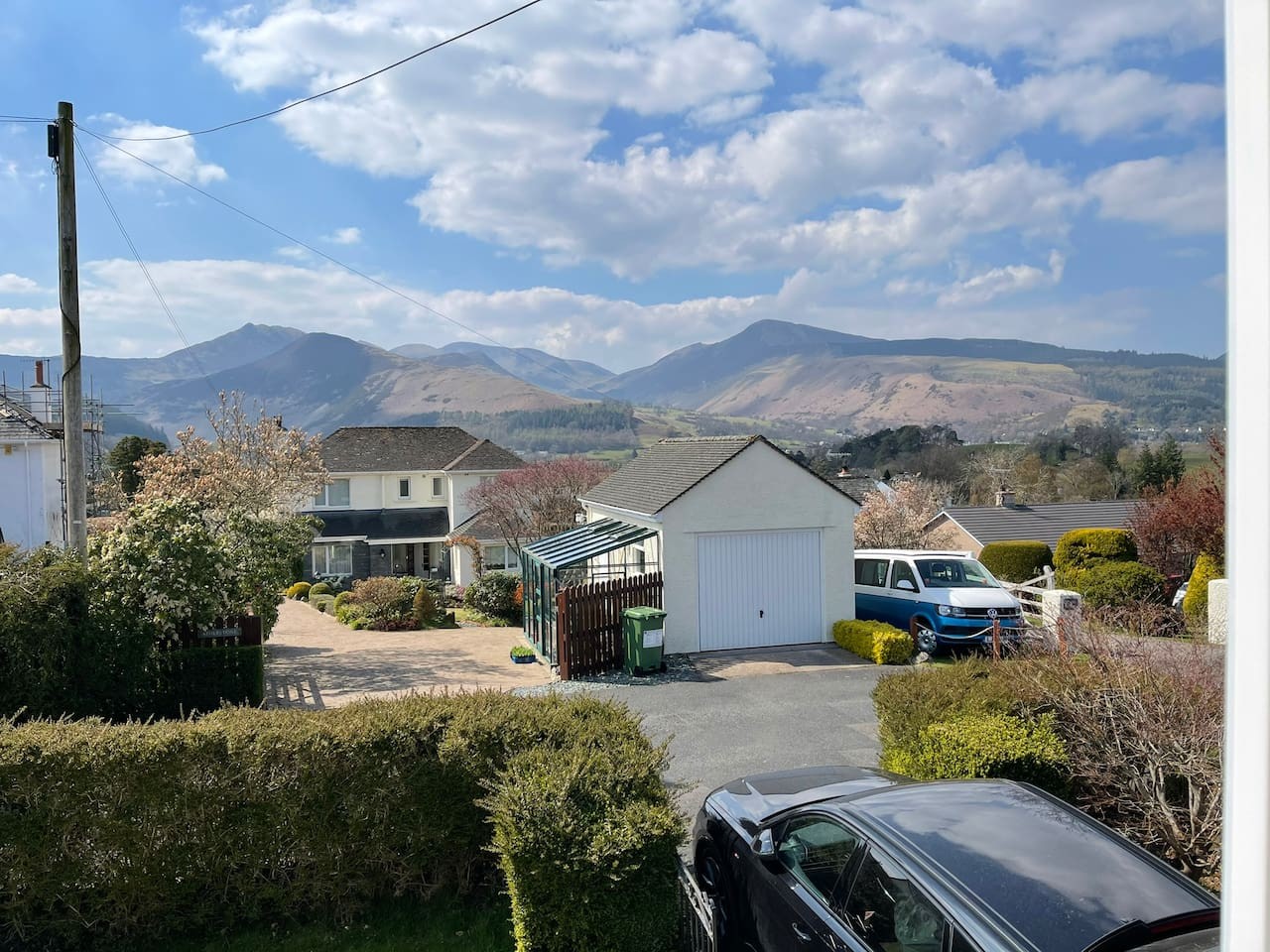
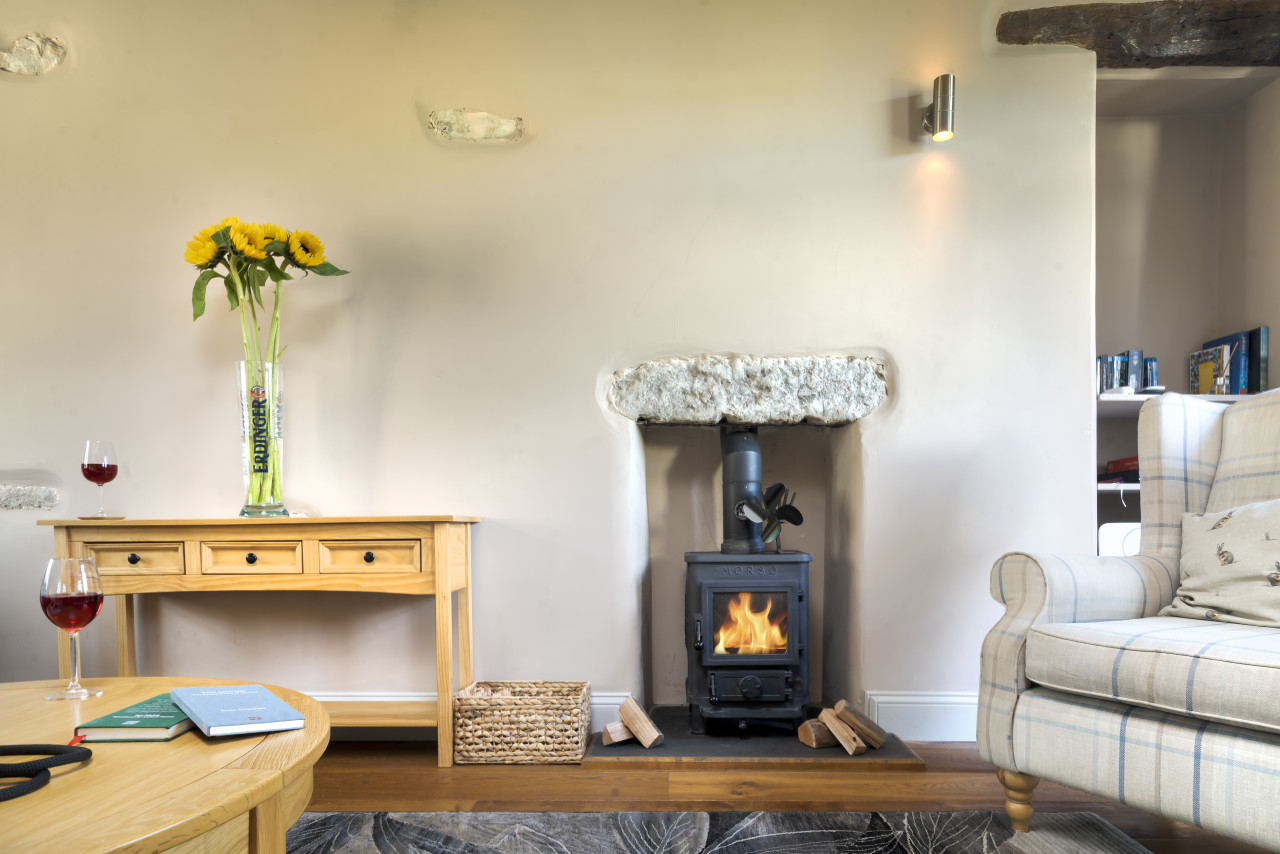
Travel Fox holiday homes around Lake District, linked directly to their property pages.
For homeowners
Own a holiday home near Martindale?
We manage holiday lets across the Lake District from 12% commission, charged after cleaning costs, with no lock-in. A co-founder visits before you decide.
Holiday let management in the Lake District →
A guide with a point of view
Written from research. Edited for real journeys.
Use the Official site links for live practical details, then use this guide for context, ideas and room to explore.
Photography credits & licences
Third-party photographs are credited to their named creators and reused under the linked Creative Commons licence or public-domain dedication. Travel Fox stores an optimised local copy; the file-specific changes and any browser-applied display crop are disclosed below. Reused photographs link both to the Wikimedia Commons source record and to the declared source image; Travel Fox's own photographs carry no such record and are marked as ours. These image licences do not cover Travel Fox text, branding or page design.
- File:Descending Hallin Fell - geograph.org.uk - 2427408.jpg — photograph by Michael Graham; Descending Hallin Fell by Michael Graham. Source record on Wikimedia Commons. Declared source image. Licence: CC BY-SA 2.0. File changes: Downloaded from Wikimedia Commons, resized to a maximum 1920px edge and encoded as an optimised JPEG. Display changes: Displayed with responsive CSS cropping.
Sources
Every place on this page is checked against a published source. Each entry links the record we used and names who publishes it.
- St Martin's Church (Old Church) — historicengland.org.uk statutory register or public authority record not machine-readable; publisher restricts automated access
- St Peter's Church (New Church) — achurchnearyou.com national body or asset manager
- Hallin Fell — ullswater-steamers.co.uk other published source
- Martindale Skyline — thelakedistrictwalker.co.uk other published source
- The Nab and Martindale Common — lakedistrict.gov.uk statutory register or public authority
- Howtown Pier — ullswater-steamers.co.uk other published source