
Lake, fell and village
Portinscale
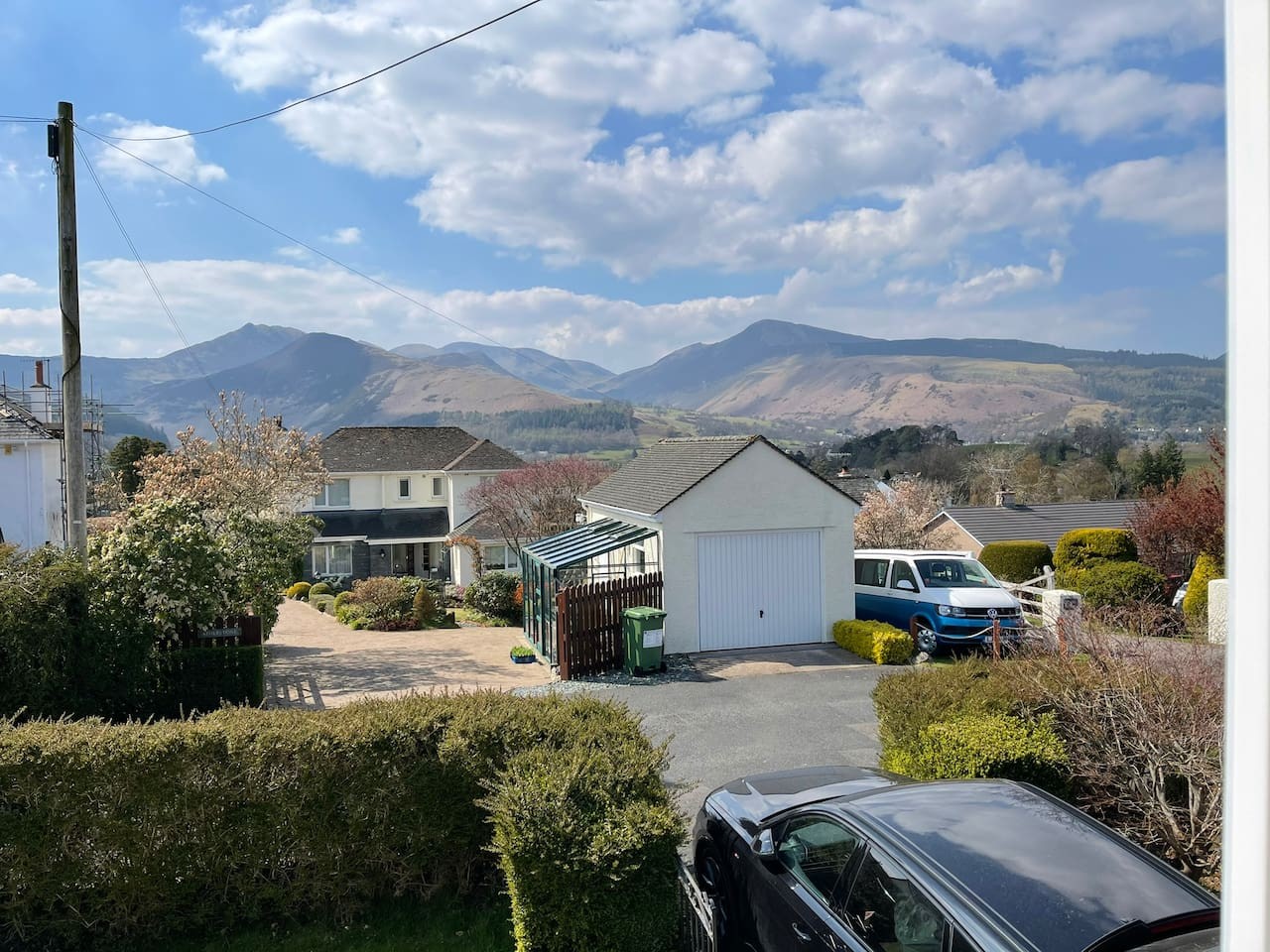
A compact base on Derwentwater's north-west shore, with watersports south of the lanes, Newlands Valley walks close by and Keswick across the river.
- Best for
- Watersports, fell walks and tearoom stops
- Give it
- A half day or an unhurried full day
- Don't miss
- Derwentwater and Lingholm's walled garden
The Fox verdict
A small village with the lake and fells on its doorstep
Portinscale works as a quieter base for Derwentwater and the Newlands Valley while keeping Keswick within an easy walk.
Come for a watersports session, a fell walk or a slow café stop. The two marinas broaden the choice on the water, while Lingholm adds a walled garden and Beatrix Potter connection just outside the village.
Where to go
Places in Portinscale
Every place below is checked against a published source, listed with what it is and how long to give it.
Local signatures
3 placesNichol End Marine
A family-run marina combining paddleboard, kayak, canoe, sailing-boat and rowing-boat hire with a lakeside café known for large scones baked on site.
- Visit length
- Editorial estimate: Allow around 120 minutes
- Locality
- Derwentwater shore, just south of Portinscale
Derwentwater Marina
A watersports base for paddleboards, kayaks, canoes, pedalos, dinghies, rowing boats and windsurfers, with RYA-certified sailing and windsurfing courses.
- Visit length
- Editorial estimate: Allow around 120 minutes
- Locality
- Just south of Portinscale
Whinlatter Forest
England's only true mountain forest, with walking and mountain-bike trails, high ropes, a children's play trail and a visitor-centre café.
- Visit length
- Editorial estimate: Allow around 150 minutes
- Locality
- Whinlatter, near Keswick
Food & drink
2 placesThe Chalet Tearooms & Restaurant
A village tearoom and restaurant serving breakfast, lunch and afternoon tea.
- Visit length
- Editorial estimate: Allow around 60 minutes
- Locality
- Portinscale
Lingholm Kitchen & Walled Garden
A café, artisan bakery and shop with a 100-foot glass wall overlooking an octagonal Victorian walled garden linked to Beatrix Potter.
- Visit length
- Editorial estimate: Allow around 75 minutes
- Locality
- Lingholm Estate, just outside Portinscale
History & heritage
3 placesSt Kentigern's Church, Crosthwaite
Portinscale's Grade II* parish church, associated with National Trust co-founder Hardwicke Rawnsley and with poet Robert Southey, who is buried in the churchyard.
- Visit length
- Editorial estimate: Allow around 45 minutes
- Locality
- Great Crosthwaite, on the outskirts of Keswick
Honister Slate Mine
Britain's last working slate mine, with mine tours and a Via Ferrata.
- Visit length
- Editorial estimate: Allow around 120 minutes
- Locality
- Honister, near Keswick
Castlerigg Stone Circle
A stone circle dating to around 3000 BCE in a dramatic fell setting.
- Visit length
- Editorial estimate: Allow around 60 minutes
- Locality
- Castlerigg, near Keswick
No places match this filter. Choose All places to reset the list.
Three ways to explore Portinscale
Signature outings
Settle in at The Chalet
Choose a tearoom stop at The Chalet, a Portinscale restaurant serving breakfast, lunch and afternoon tea.
Pause at Lingholm's garden
See the walled garden linked to Mr McGregor's garden, then look across it from the café's long glass wall.
Visit St Kentigern's
Explore Portinscale's parish church at Crosthwaite, where Robert Southey is buried in the churchyard.
The village story
Portinscale: between village lanes, lake and fell
The unchanged Travel Fox article moves from food and watersports to the bridge, the fells, Beatrix Potter and the village's lost landmarks.
A village fed by fell and lake
The Farmers Arms is the village's only pub, and it knows it. Ramblers coming off the Cumbria Way pile in alongside the residents of the local B&Bs, and the food changes day to day — steak and ale pie one afternoon, lamb curry or beef lasagne the next, Cumberland sausages, burgers, fish. Two regular ales, both from Jennings over in Cockermouth. Dogs are welcome throughout, there's a beer garden round the back, and the current landlords, Charlie and Tom, took the place on after its future looked shaky in early 2022. One reviewer did once complain of being ignored at the bar for two minutes while the landlord finished a conversation about gaming, which is the sort of thing that happens in a pub with only one bar.
For somewhere this small — 560 people, about a hundred acres of lanes on the northwest shore of Derwentwater — Portinscale is well supplied with tearooms. Local guides count three. The Chalet does breakfast, lunch and afternoon tea; the Dandelion is a café; and down at Nichol End Marine, the lakeside café bakes scones on the premises every day and describes them as famously huge, which for once is a claim you can test in person. There are hot outdoor showers there too, for the people who've been out on the water.
Boats, bridges and the way to Keswick
The water is much of the point. Two marinas sit just south of the village — Derwentwater Marina and Nichol End — and between them you can hire paddleboards, kayaks, canoes, pedalos, dinghies, rowing boats and windsurfers, or take an RYA-certified sailing course. The Keswick Launch stops at Nichol End landing stage on its circular cruise of the lake.
To get to Keswick you cross the Derwent on a pedestrian suspension bridge, fifteen level minutes over fields known as the Howrahs. The name was traced by one historian to Edward Stephenson, an East India Company man with a connection to the Howrah district of Calcutta, which is a long way for a Cumbrian field to have come.
Fell paths and Potter's garden
Walkers use the village as a start line. Catbells rises almost from the doorstep — an easy path with a bit of a scramble at the top — and Causey Pike, the Coledale Horseshoe and the Newlands Round all set off from here.
Beatrix Potter spent ten summers at Lingholm, on the estate just outside the village, between 1885 and 1907. The kitchen gardens became Mr McGregor's garden in Peter Rabbit; the red squirrels in the woods became Squirrel Nutkin; and St Herbert's Island, out on the lake, turns up in her illustrations as Owl Island. The Lingholm Kitchen café now looks over the walled garden through a hundred-foot glass wall.
What the village lost — and kept in its name
The village has no church of its own, no railway, and no through road since the 1960s bypass. The medieval Long Bridge, unusual for having two arches, was saved from a 1911 council demolition scheme by Hardwicke Rawnsley of the National Trust, only to be finished off by floods in 1954.
The name, incidentally, comes from Old English and Old Norse and means, more or less, the harlot's hut.
Stay around Lake District
Make a longer stay of it
Travel Fox holiday homes around Lake District, linked directly to their property pages.
A guide with a point of view
Written from research. Edited for real journeys.
Use the Official site links for live practical details, then use this guide for context, ideas and room to explore.
Sources
Every place on this page is checked against a published source. Each entry links the record we used and names who publishes it.
- The Chalet Tearooms & Restaurant — thechaletportinscale.co.uk operator, sector body or destination organisation
- Lingholm Kitchen & Walled Garden — thelingholmestate.co.uk operator, sector body or destination organisation
- Nichol End Marine — nicholend.co.uk operator, sector body or destination organisation
- Derwentwater Marina — derwentwatermarina.co.uk operator, sector body or destination organisation
- St Kentigern's Church, Crosthwaite — crosthwaitechurchkeswick.co.uk operator, sector body or destination organisation record not machine-readable; publisher restricts automated access
- Whinlatter Forest — forestryengland.uk national body or asset manager
- Honister Slate Mine — honister.com operator, sector body or destination organisation
- Castlerigg Stone Circle — english-heritage.org.uk national body or asset manager