
Woodland, quietly worked
Rusland
A scattered southern Lake District valley where coppiced woods, mosses, meadows and moorland hold centuries of human influence.
- Best for
- Quiet woodland walking and literary history
- Give it
- A slow half-day with your own supplies
- Don't miss
- Arthur and Evgenia Ransome's grave at St Paul's
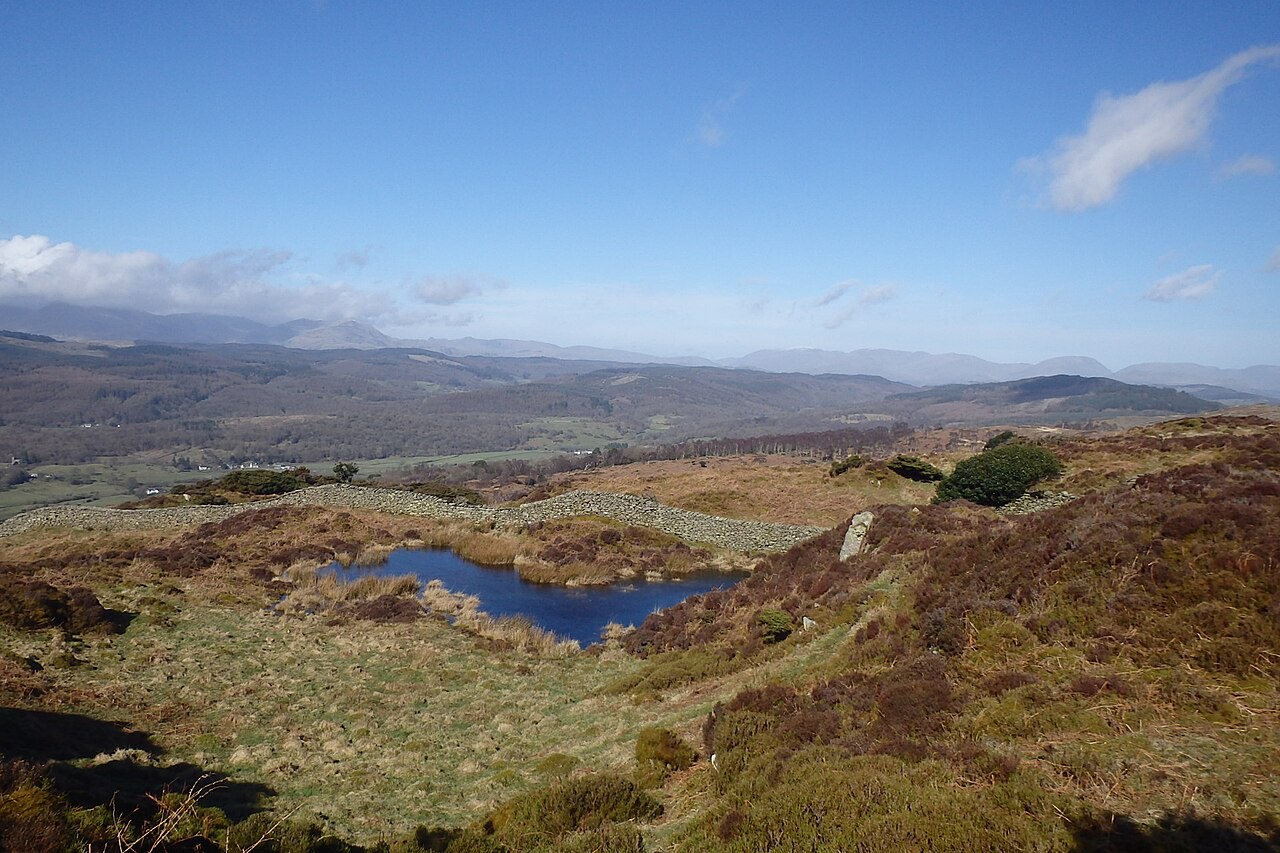
Photo: Michael Graham · CC BY-SA 2.0 · cropped
The Fox verdict
A valley that rewards preparation
Rusland's wooded slopes and open fell sit among scattered settlements and winding minor roads.
Come for the wooded valley and the open ground of Rusland Heights, then visit the churchyard where Arthur and Evgenia Ransome are buried. Coppicing and charcoal production are part of the area's working history, alongside its meadows, mosses and tarns.
Where to go
Places in Rusland
Every place below is checked against a published source, listed with what it is and how long to give it.
Local signatures
3 placesSt Paul's Church and Churchyard
A church built in 1745 and largely rebuilt in 1868, with the Ransomes' burial place in a quiet corner of its churchyard.
- Visit length
- Editorial estimate: allow around 30 minutes
- Locality
- Rusland
Rusland Heights
The 13.7 km Greenwood Trail 5 crosses riverside fields, woodland and open fell before climbing steeply to Rusland Heights. Paths are rough, and tidal water can make part of the route impassable.
- Visit length
- Editorial estimate: allow 4 to 5 hours for the long Greenwood Trail 5 route
- Locality
- Rusland Pool Hotel trail start
- Access
- The published start is at SD 329 843. Roadside pull-offs along the route hold only one or two cars; the Black Beck start is for caravan-site users.
The White Hart, Bouth
A traditional pub at Wear Bridge in Bouth, serving meals in its bar, dining area and beer terrace.
- Visit length
- Editorial estimate: allow around 75 minutes
- Locality
- Bouth
Walks & outdoors
1 placeRusland Valley
Follow Greenwood Trail 5's shorter 7.5 km Rusland Valley route through riverside fields and woodland.
- Visit length
- Editorial estimate: allow 2 to 2½ hours for the short Greenwood Trail 5 route
- Locality
- Rusland Pool Hotel trail start
- Access
- The published start is at SD 329 843. Roadside pull-offs along the route hold only one or two cars; the Black Beck start is for caravan-site users.
History & heritage
1 placeArthur and Evgenia Ransome's Grave
The shared burial place of Swallows and Amazons author Arthur Ransome and his wife Evgenia.
- Visit length
- Editorial estimate: allow around 20 minutes
- Locality
- St Paul's churchyard, Rusland
No places match this filter. Choose All places to reset the list.
Three ways to explore Rusland
Signature outings
Ransome's resting place
Look beneath the Corsican pine in the south-east corner of the churchyard, where Ransome chose to be buried.
Walk the Rusland Valley floor
Choose Greenwood Trail 5's shorter route for riverside fields and woodland without the steep climb to Rusland Heights.
Rusland Heights
On the longer Greenwood Trail, a steep climb leads to Rusland Heights and panoramic views.
The village story
Rusland: Woodland, Fell and Ransome's Churchyard
Arthur Ransome, charcoal coppice and a landscape whose stillness was shaped by centuries of work.
Ransome and the scattered valley
Arthur and Evgenia Ransome are buried together beneath a Corsican pine in the south-east corner of St Paul's churchyard. Arthur first came across the church while exploring the area and told the vicar he wished to be buried there.
The church was built in 1745 and largely rebuilt in 1868. Around it, Rusland spreads through an agricultural valley of scattered homes rather than a compact village.
Woodland, meadows and mosses
The White Hart at Bouth serves meals for walkers exploring Rusland.
Rusland's landscape includes wooded slopes, meadows, mosses and open fell. Its scattered settlements and working woods sit within a varied mosaic of habitats that supports wildlife.
Two Greenwood Trail routes
Greenwood Trail 5 begins at the published SD 329 843 start. Roadside pull-offs along the route hold only one or two cars.
The shorter Greenwood Trail 5 route crosses riverside fields and woodland. The longer route continues over rougher ground and climbs steeply to Rusland Heights for panoramic views. Tidal water can make part of the riverside route impassable.
How coppice shaped the woods
People have cut and regrown broadleaved trees in the Rusland area for centuries. Coppicing was established here by 1510: stems were cut close to the ground and new shoots grew from the stump for another harvest. Demand for charcoal later slowed as coal and coke came into wider use.
Coppice coupes and forestry plantations are still in use today. The woods belong to a working cultural landscape shaped by settlement, farming and woodland industry.
A final return to Ransome
Coniston Water, its surrounding fells and Peel Island inspired Ransome's Swallows and Amazons stories. The writer spent many summers nearby and later made his home in the area.
Stay around Lake District
Make a longer stay of it
Travel Fox holiday homes around Lake District, linked directly to their property pages.
For homeowners
Own a holiday home near Rusland?
We manage holiday lets across the Lake District from 12% commission, charged after cleaning costs, with no lock-in. A co-founder visits before you decide.
Holiday let management in the Lake District →
A guide with a point of view
Written from research. Edited for real journeys.
Use the Official site links for live practical details, then use this guide for context, ideas and room to explore.
Photography credits & licences
Third-party photographs are credited to their named creators and reused under the linked Creative Commons licence or public-domain dedication. Travel Fox stores an optimised local copy; the file-specific changes and any browser-applied display crop are disclosed below. Reused photographs link both to the Wikimedia Commons source record and to the declared source image; Travel Fox's own photographs carry no such record and are marked as ours. These image licences do not cover Travel Fox text, branding or page design.
- File:On Rusland Heights - geograph.org.uk - 5312160.jpg — photograph by Michael Graham; On Rusland Heights by Michael Graham. Source record on Wikimedia Commons. Declared source image. Licence: CC BY-SA 2.0. File changes: Downloaded from Wikimedia Commons, resized to a maximum 1920px edge and encoded as an optimised JPEG. Display changes: Displayed with responsive CSS cropping.
Sources
Every place on this page is checked against a published source. Each entry links the record we used and names who publishes it.
- St Paul's Church and Churchyard — achurchnearyou.com national body or asset manager
- Arthur and Evgenia Ransome's Grave — hawksheadbenefice.co.uk other published source
- Rusland Valley — lakedistrict.gov.uk statutory register or public authority
- Rusland Heights — ruslandhorizons.org operator, sector body or destination organisation
- The White Hart, Bouth — whitehartbouth.co.uk operator, sector body or destination organisation