
Wordsworth country
Rydal
A tiny Lake District hamlet where garden terraces, literary viewpoints and paths above the water reward a slower visit.
- Best for
- Literary history and gentle lake walks
- Give it
- A relaxed half day
- Don't miss
- The cascade in Rydal Hall's gardens
Photo: Lewis Clarke · CC BY-SA 2.0 · cropped
The Fox verdict
Small in scale, rich in paths and stories
Rydal works best as a walking stop, bringing together the lake, gardens and Wordsworth connections in one compact hamlet.
Come for an easy circuit or a fellside viewpoint, then add the modest church, the gardens beside Rydal Beck or a meal at the village's walkers' pub. The appeal is the concentration of landscape and literary history in a tiny hamlet between Ambleside and Grasmere.
Where to go
Places in Rydal
Every place below is checked against a published source, listed with what it is and how long to give it.
Local signatures
3 placesSt Mary's Church, Rydal
A small, modest church built in 1824 for the Fleming family of Rydal Hall, with a family pew used by William Wordsworth.
- Visit length
- Editorial estimate: Allow around 30 minutes
- Locality
- in Rydal hamlet
Rydal Cave
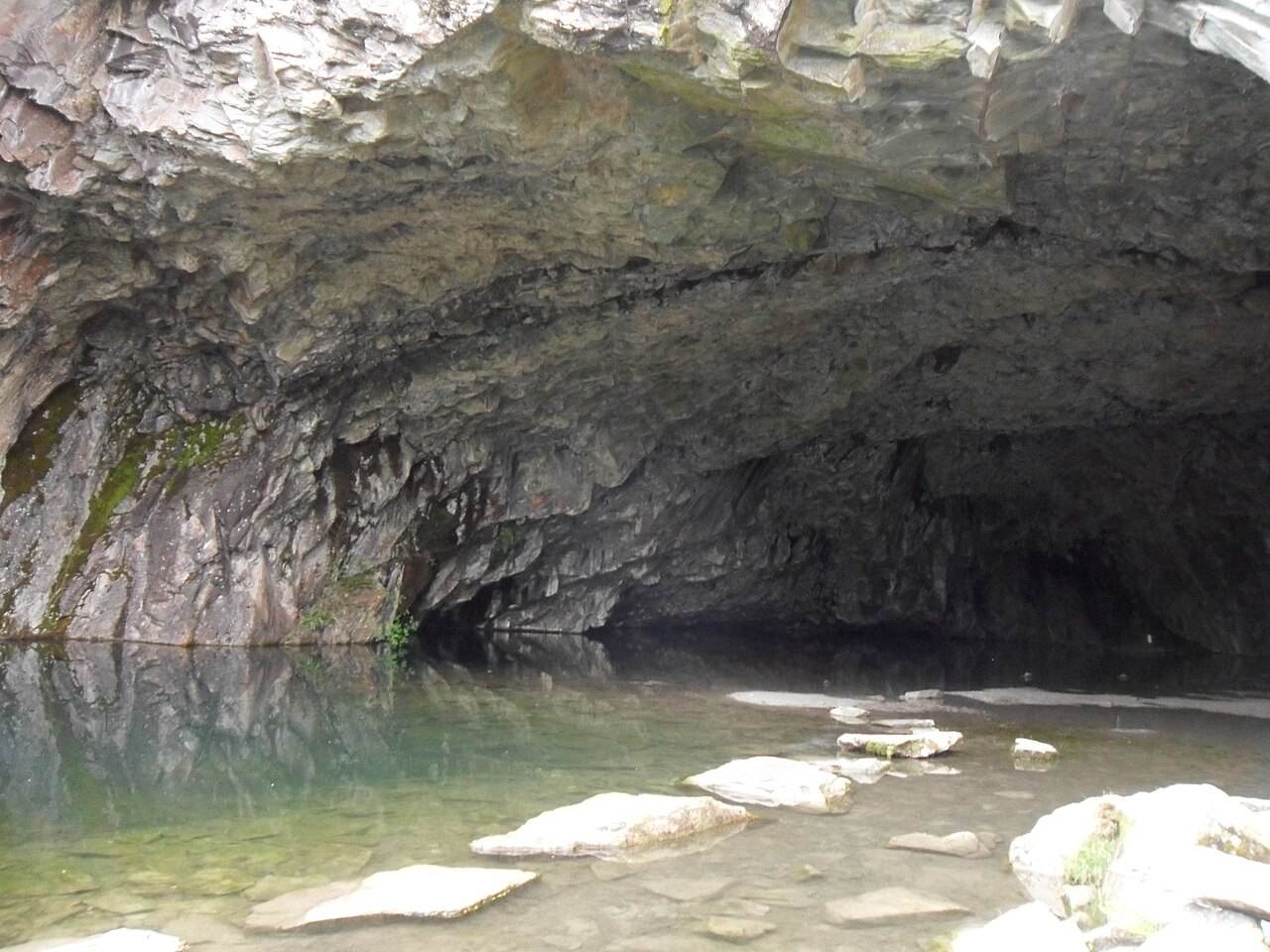
A large quarried cavern above the lake, reached on the Rydal Water walk and opening onto dramatic views.
- Visit length
- Editorial estimate: Allow around 60 minutes
- Locality
- above Rydal Water
Loughrigg Terrace
A moderate path above Rydal Water's south shore and one of the classic viewpoints in Wordsworth country.
- Visit length
- Editorial estimate: Allow around 90 minutes
- Locality
- above the south shore of Rydal Water
Food & drink
1 place
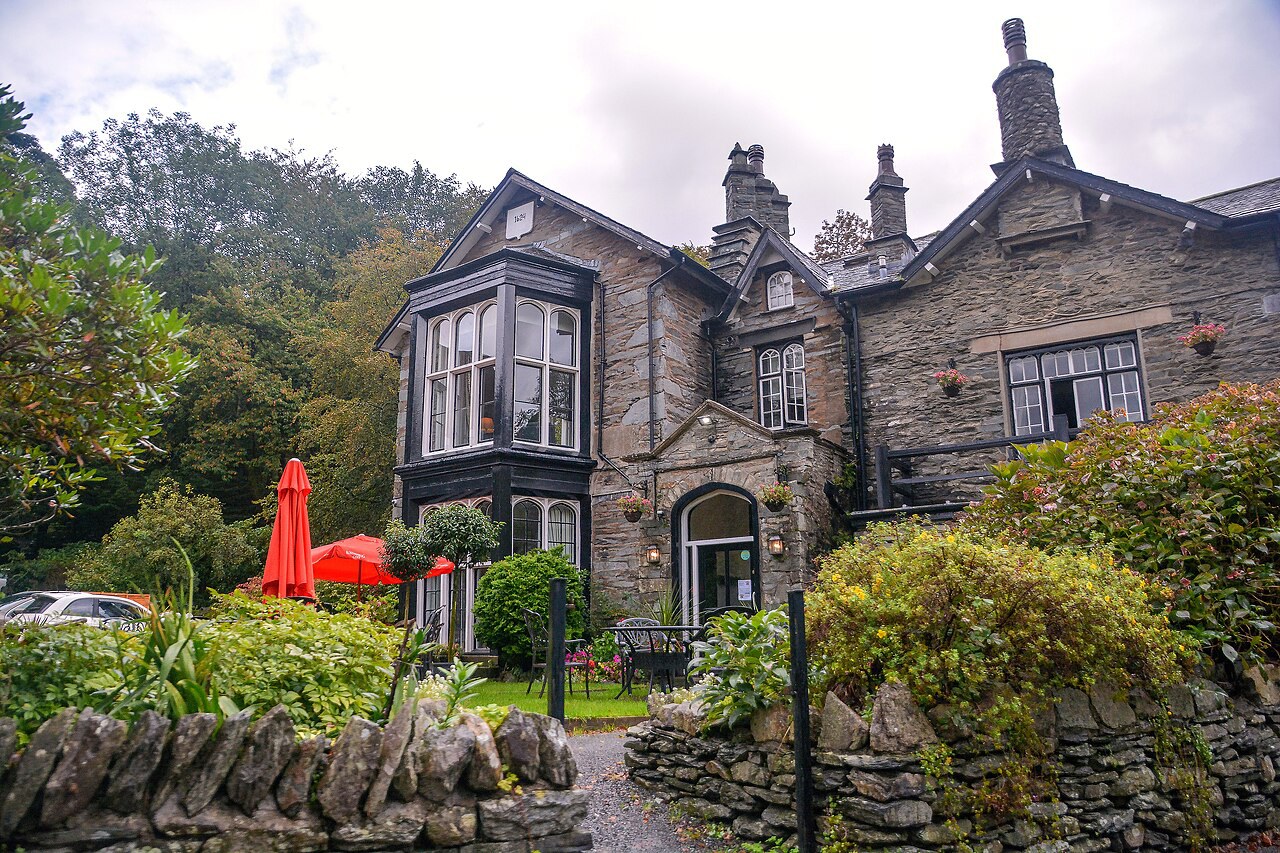
Glen Rothay Hotel & Badger Bar
A quirky old inn serving homemade British food and local Cumbrian beers, with space for walkers and dogs to dry out by the fire.
- Visit length
- Editorial estimate: Allow around 75 minutes
- Locality
- on the A591 in Rydal
History & heritage
1 place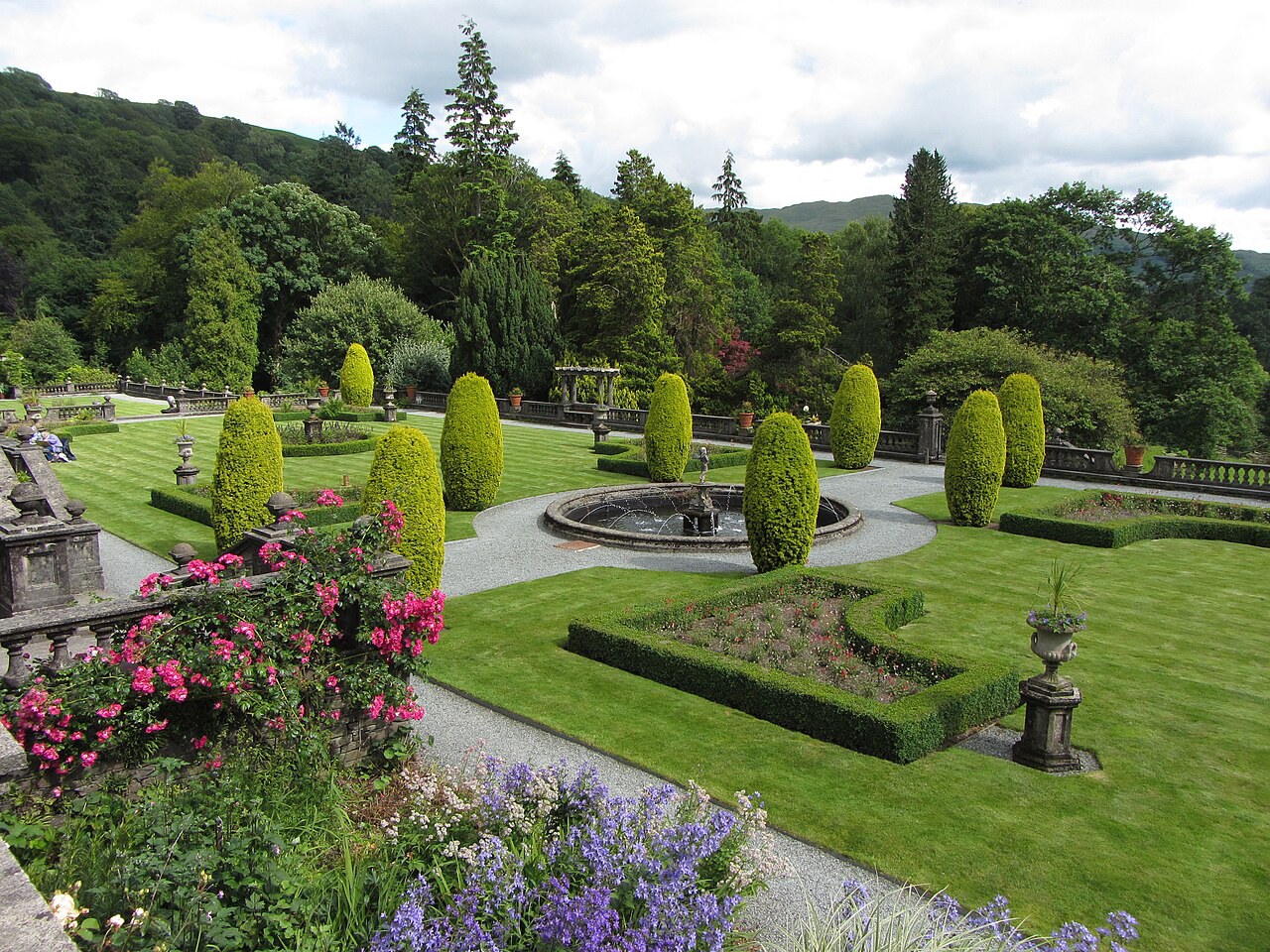
Rydal Hall Gardens
Public gardens around the Rydal Hall estate, with a formal cascade garden and the waterfall of Rydal Ghyll.
- Visit length
- Editorial estimate: Allow around 75 minutes
- Locality
- beside Rydal Beck in Rydal
No places match this filter. Choose All places to reset the list.
Three ways to explore Rydal
Signature outings
A Cumbrian Pint
Warm up with local Cumbrian beer and homemade British food at Rydal's characterful walkers' pub.
The Garden Cascade
Trace Rydal Beck through the public gardens to the formal cascade and Rydal Ghyll waterfall.
The Quarried Cavern
Walk up from the lakeside to the large quarried chamber of Rydal Cave and its dramatic outlook.
The village story
Rydal: Badgers, Poets and Paths
The untouched Travel Fox story moves from a wonderfully eccentric pub into gardens, fell paths and the Romantic lives gathered around this tiny hamlet.
Badgers, Beer and a Wonky Old Inn
The badgers are real. Every evening at dusk — around nine o'clock in summer — the staff of the Badger Bar put food out at a feeding station on the hill behind the pub, and a colony of wild badgers comes down to eat it. Guests are invited to watch. There is a webcam trained on the feeding spot, called Badgercam, and the hotel has fielded the question "are they actually real" so often that its Facebook page eventually issued a statement confirming it. Paul and Eleanor Knowles, who bought the place in 2014, have observed that a resident badger colony was not a feature they were looking for when they viewed the property.
The Badger Bar occupies the oldest part of the Glen Rothay Hotel, a Grade II listed building on the A591 that started life in 1624 as a pub called David's Inn, spent the nineteenth century as a private house named Ivy Cottage, and was then extended by the Victorians into a hotel. The bar kept the old bones: wonky floors, open fires, original carved woodwork, a recessed cupboard beside the main fireplace, and loos built into the living rock face behind the building. There are no video games, by policy. Acoustic music on Wednesday nights. Dogs are welcome through most of the bar, and the oldest room in particular fills up with walkers drying spaniels by the fire.
The beer is Cumbrian only. That is the house rule — at least four real ales, changing weekly, plus a Badger Ale brewed specially for the pub. Bowness Bay Lakeland Blonde and Swift Best are regulars, along with Great Corby's Tizzie Whizie and Handsome Hound. CAMRA members get a discount; one beer blogger recorded 36p off a pint. There are also about twenty whiskies, for the days when the fells have won.
The food is homemade and unfussy: beer-battered haddock and chips, a wild game casserole in wild-mushroom and red-wine gravy garnished with the kitchen's own game crisps, Cumberland sausage baked with date chutney on caramelised-onion mash. The burgers are eight ounces of homemade steak mince, and the one named after the village — the Rydal, with goat's cheese and caramelised onions — is the one to order. Home-roasted pork scratchings come with homemade apple sauce. Pudding runs to a vanilla and peanut butter crème brûlée with homemade shortbread, and a trio of Lakeland ice creams in flavours that have included strawberry with a hint of black pepper, and prune and armagnac. A blackboard outside once read "Today's Soup is Very Nice," which was funny enough to be clipped by the Daily Mail; the framed cutting hangs inside. Food hours are shorter than bar hours — roughly lunchtime and early evening, a little longer at weekends — so check before you build an afternoon around it.
A Tiny Village and Its Gardens
There are two beer gardens, a large one at the front facing Rydal Water and a sheltered side terrace by the bus stop. Directly next to the garden is Dora's Field, which we will come back to. If you are staying, four of the eight rooms — Bluebell, Otter, Woodland and Heron — take dogs at £12 a night, maximum two, well-behaved. The Bluebell room is closest to the badger feeding area, so its occupants can nip out in slippers.
The pub matters because it is, in the ordinary commercial sense, most of the village. Rydal is a hamlet of around thirty dwellings strung along the main road between Ambleside, about 1.3 miles southeast in a straight line, and Grasmere, about two miles west-northwest in a straight line. There is no shop and no bakery. What it has instead is one pub, one tea shop, a church, two literary houses, a lake, and roughly twenty-five listed buildings — which for thirty dwellings is a remarkable strike rate. The 555 bus stops at Rydal Church, despite what older guides say, and runs to Grasmere one way and to Ambleside, Windermere station and eventually Lancaster the other; the open-top 599 also calls every twenty minutes in season. Parking is the tight spot: Rydal Pelter Bridge Car Park is just south of the village. The bus is honestly the sensible answer.
The tea shop is the Old School Room, in the grounds of Rydal Hall, with outdoor tables beside Rydal Beck. The building was put up around 1650 by Sir Daniel Fleming of the Hall as a schoolroom for his sons — one of whom, George, did his homework well enough to become Bishop of Carlisle. It now does homemade soups such as Moroccan chickpea and tomato, paninis, baked potatoes, scones and cream teas, and a Guinness chocolate brownie that reviewers keep calling divine. Windermere ice cream in the freezer, dog biscuits behind the counter, dogs allowed inside and out, and a loyalty card that gives you every eleventh visit free — presumably aimed at regulars on the Grasmere path, of whom there are more than you might think.
The tea shop earns its keep because Rydal Hall's thirty acres of gardens are free to enter, and they are not ordinary gardens. The formal Italianate terraces were laid out by Thomas Mawson in 1909 and are among the most complete of his gardens anywhere. Below them, a few steps from the café terrace, stands The Grot: a small stone summer house built in 1669 by Sir Daniel Fleming for the single purpose of framing the waterfall on Rydal Beck through its window. It is one of the earliest purpose-built viewing stations in Britain. Visitors were led in with the fall hidden, then the door opened and the waterfall appeared, framed like a painting — a seventeenth-century special effect. Fleming's account books survive, and show the panelling and glazing cost more than the rest of the building. Joseph Wright of Derby painted the view. You can take your tea in with you. There is also a woodland sculpture trail and red squirrels if you are patient.
Lake Paths and Wordsworth's Homes
The walking from the village door is the other reason to be here. The circuit of Rydal Water is about three miles, mostly on good stone paths, and passes Rydal Cave — which is not a cave but the main chamber of Loughrigg Quarry, worked in the nineteenth century for the dark slate that roofs many of the surrounding buildings. Stepping stones cross the pool at its mouth so you can stand inside, and small brown fish shoal in the entrance water — among them, unexplained, several bright domestic goldfish. Above the south shore, Loughrigg Terrace gives you both Rydal Water and Grasmere at once; the full Loughrigg Fell summit, at 335 metres, is a three-to-four-mile round. Behind the village, Nab Scar goes up a thousand feet on stone-pitched steps — short, sharp, and generous with its view. And for a proper day, the Fairfield Horseshoe starts and finishes here: ten and a half miles, eight Wainwrights, around 3,200 feet of ascent, five to seven hours. Swimming in Rydal Water is permitted and beginner-friendly; boats of any kind are not allowed, which keeps it quiet. At White Moss, between the two lakes, a smooth pram-and-wheelchair-friendly path runs down to the water, there is river paddling below the footbridge.
The most storied walk is the Coffin Route, the old corpse road running along the fellside above the lake's north shore. St Mary's churchyard has never held a burial, and before the church existed there was nothing here at all, so Rydal's dead were carried along this terrace towards Grasmere, the bearers pausing at flat resting stones that still sit beside the path. Today it is an easy two miles linking Rydal Mount at one end with Dove Cottage at the other — Wordsworth's two most famous homes, connected by a path built for funerals and now walked mostly by people carrying flapjack.
Which brings us to the houses. Wordsworth moved to Rydal Mount in 1813 and stayed until his death in 1850, renting it from the le Flemings for £35 a year — he never owned it. He designed the garden himself and called it his office, composing while pacing the terraces, and was appointed Poet Laureate in 1843 while living here. In March 2026 the Wordsworth Trust bought the house for £2.5 million from his descendants, who had run it since 1969, and it is closed for the immediate future while surveys and repairs are done — so check its status before you come, and don't promise the children a gift shop. Dove Cottage at Grasmere, the Trust's other Wordsworth house, remains fully open.
Dora's Field and Romantic Neighbours
The best Rydal Mount story concerns the field below the church. In 1825 his landlady, Lady Anne le Fleming, moved to install a relative in the house. Wordsworth responded by buying the adjacent field and commissioning an architect to draw up plans for a new house that would have stood squarely in Rydal Mount's view. The bluff worked; the tenancy was never ended. After his daughter Dora died in 1847, he, his wife Mary, his sister Dorothy and the gardener planted the field with daffodils in her memory. Dora's Field passed to the National Trust in 1935 and the display peaks in March and April, below St Mary's and beside the pub garden.
St Mary's itself was built in 1824 by Lady Anne at a cost of £1,500. Wordsworth helped choose the site — formerly an orchard — then complained that the architect had not furnished an elevation suited to it, served a term as chapelwarden, and worshipped here until six weeks before his death. His family pew faces the pulpit; the pew opposite belonged to the Arnolds — Dr Thomas Arnold of Rugby School, whose son Matthew spent his boyhood holidays across the river. The le Flemings, meanwhile, had a gallery at the west end with its own external door, so they never had to mix with anyone.
One more house: Nab Cottage, the whitewashed 1702 farmhouse on the lakeshore. In 1802 Dorothy Wordsworth passed it and noted little Peggy Simpson standing at the door catching hailstones in her hand. Peggy grew up to marry Thomas De Quincey, the opium-eater, in 1817 — the Wordsworth circle disapproved of a farmer's daughter. Later, Hartley Coleridge, Samuel Taylor Coleridge's brilliant and wayward eldest son, lived there from 1840 until his death in 1849, with the elderly Wordsworth at his bedside. One hamlet, a few hundred metres of road, and half of English Romanticism in it.
The Railway Refused and the Show That Stayed
Rydal also has the distinction of a railway it successfully refused. When the Kendal and Windermere line was proposed in 1844 to push past the village towards Grasmere, Wordsworth fought it from his desk with letters to the Morning Post, a letter to Gladstone, and a sonnet opening "Is then no nook of English ground secure / From rash assault?" The line opened in 1847 and stopped at Windermere. That is a large part of why Rydal still looks the way it does.
Every August the village briefly becomes the busiest place in the valley, when the Rydal Sheepdog Trials and Hound Show takes over Rydal Park, as it has since Stanley le Fleming and a committee of fifteen residents and farmers first held it in June 1901. Sheepdog trials, fell-hound shows, terrier racing; in 1931 it became the first Lakeland event ever broadcast to the world by wireless. The 2026 show is on Thursday 13 August, still on le Fleming land after a hundred and twenty-five years.
Then the crowds go, the park empties, and the village returns to its usual population of thirty households, some Herdwicks, and the goldfish in the pool at Rydal Cave. And at about nine o'clock, someone at the Badger Bar walks up the hill with the badgers' dinner, same as every night.
Stay around Lake District
Make a longer stay of it
Travel Fox holiday homes around Lake District, linked directly to their property pages.
For homeowners
Own a holiday home near Rydal?
We manage holiday lets across the Lake District from 12% commission, charged after cleaning costs, with no lock-in. A co-founder visits before you decide.
Holiday let management in the Lake District →
A guide with a point of view
Written from research. Edited for real journeys.
Use the Official site links for live practical details, then use this guide for context, ideas and room to explore.
Photography credits & licences
Third-party photographs are credited to their named creators and reused under the linked Creative Commons licence or public-domain dedication. Travel Fox stores an optimised local copy; the file-specific changes and any browser-applied display crop are disclosed below. Reused photographs link both to the Wikimedia Commons source record and to the declared source image; Travel Fox's own photographs carry no such record and are marked as ours. These image licences do not cover Travel Fox text, branding or page design.
- File:Rydal , The Glen Rothay Hotel and Badger Bar - geograph.org.uk - 6357680.jpg — photograph by Lewis Clarke; Rydal : The Glen Rothay Hotel and Badger Bar by Lewis Clarke. Source record on Wikimedia Commons. Declared source image. Licence: CC BY-SA 2.0. File changes: Downloaded from Wikimedia Commons, resized to a maximum 1920px edge and encoded as an optimised JPEG. Display changes: Displayed with responsive CSS cropping.
- File:Rydal Hall Gardens - geograph.org.uk - 4588993.jpg — photograph by Gareth James; Rydal Hall Gardens by Gareth James. Source record on Wikimedia Commons. Declared source image. Licence: CC BY-SA 2.0. File changes: Downloaded from Wikimedia Commons, resized to a maximum 1920px edge and encoded as an optimised JPEG. Display changes: Displayed with responsive CSS cropping.
- File:Rydal Cave - geograph.org.uk - 4337833.jpg — photograph by Anthony Foster; Rydal Cave by Anthony Foster. Source record on Wikimedia Commons. Declared source image. Licence: CC BY-SA 2.0. File changes: Downloaded from Wikimedia Commons, resized to a maximum 1920px edge and encoded as an optimised JPEG. Display changes: Displayed with responsive CSS cropping.
Sources
Every place on this page is checked against a published source. Each entry links the record we used and names who publishes it.
- Glen Rothay Hotel & Badger Bar — theglenrothay.co.uk operator, sector body or destination organisation
- St Mary's Church, Rydal — achurchnearyou.com national body or asset manager
- Rydal Hall Gardens — rydalhall.org operator, sector body or destination organisation
- Rydal Cave — visitlakedistrict.com operator, sector body or destination organisation
- Loughrigg Terrace — visitlakedistrict.com operator, sector body or destination organisation