
Cumbria meets the Irish Sea
St Bees
A small coastal village of sandy shore, red sandstone cliffs, Norman history and the western start of Wainwright's Coast to Coast Walk.
- Best for
- Coastal walks, Norman history and a Coast to Coast send-off
- Give it
- A full day between village and headland
- Don't miss
- The pebble ritual at the western start
The Fox verdict
A storied start beside the Irish Sea
Come for the coast, then make time for the priory and a walker-friendly pub.
St Bees brings together a sandy bay, a dramatic red sandstone headland and the western beginning of Alfred Wainwright's Coast to Coast Walk. The Norman priory adds a remarkable medieval chapter, while The Manor Inn supplies a traditional village pause for walkers.
Where to go
Places in St Bees
Every place below is checked against a published source, listed with what it is and how long to give it.
Local signatures
3 placesSt Bees Beach
A sandy beach at St Bees Bay, well suited to a pause beside the Cumbrian coast.
- Visit length
- Editorial estimate: Allow around 60 minutes
- Locality
- at St Bees Bay
St Bees Head
A dramatic red sandstone headland and RSPB nature reserve, with seabird colonies that include the rare-in-England black guillemot.
- Visit length
- Editorial estimate: Allow around 120 minutes
- Locality
- on the coastal headland
St Bees Priory
Cumbria's finest Norman church, founded in the early twelfth century and home to the displayed shroud associated with the remarkably preserved St Bees Man.
- Visit length
- Editorial estimate: Allow around 60 minutes
- Locality
- in St Bees
Food & drink
1 placeThe Manor Inn
A traditional village pub with real ales and familiar dishes including fish and chips, steak and ale pie and Cumbrian sirloin.
- Visit length
- Editorial estimate: Allow around 90 minutes
- Locality
- in the village
- Access
- Dogs are welcome in the public bar only.
Walks & outdoors
1 placeCoast to Coast Path
The St Bees beginning of Alfred Wainwright's route to Robin Hood's Bay, marked by the tradition of touching the Irish Sea and carrying a pebble east.
- Visit length
- Editorial estimate: Allow around 120 minutes for an opening walk
- Locality
- at the St Bees western start
No places match this filter. Choose All places to reset the list.
Three ways to explore St Bees
Signature outings
A headland alive with seabirds
Follow the coastal paths at St Bees Head for red sandstone scenery and seabird colonies that include black guillemots.
Set out from the Irish Sea
Touch the water and pocket a pebble before following Alfred Wainwright's Coast to Coast route towards Robin Hood's Bay.
A traditional pub pause
Stop at The Manor Inn for real ales and familiar pub dishes in a village pub popular with Coast to Coast walkers.
The village story
St Bees Village Guide
From the Irish Sea pebble ritual to Norman stone, red cliffs and railway arrivals, St Bees tells its story through journeys.
From the starting shore to Main Street
Most mornings in summer, somebody at the north end of St Bees beach picks up a pebble, dips a boot in the Irish Sea, and sets off to walk 192 miles. This is the start of Alfred Wainwright's Coast to Coast Walk, devised in 1972, and the ritual is fixed: touch the sea with your right hand or wet your feet in it, pocket a stone, and carry it across England to drop in the North Sea at Robin Hood's Bay. The monument marking the spot stands by the lifeboat station. Wainwright wrote of the route that "surely there cannot be a finer itinerary for a long-distance walk," and a steady stream of walkers take him at his word, most of them setting out from this beach looking slightly too clean.
The village itself sits inland, strung up the slope of the Pow Beck valley — Main Street began as a line of farms and farmworkers' cottages, and the oldest surviving house dates to the early sixteenth century. Below it, a mile of sand and shingle with nine groynes marching down it, a wide promenade, and a big tidal range that pulls back at low water to expose wide sands and rock pools. Behind the beach, the red sandstone cliffs of St Bees Head climb to ninety metres. North Head is the most westerly point of Northern England, and the cliffs here are the only stretch of designated Heritage Coast on the entire English west coast between Wales and Scotland.
The Manor Inn, on Main Street, is a Grade II listed building — Georgian by the official record, seventeenth-century by its own account — that spent most of its life as the Manor House Hotel before a remodelling and a rename in 2014. It is run by Country Village Inns, a small family group whose stated mission is to give their country pubs back to their communities, and it is Cask Marque accredited — Ossett Blonde is the regular, with Wainwright and Robinson's beers usually among the changing pumps. The food is home-cooked pub cooking: fish and chips that reviewers keep calling out for the size of the portions, steak and ale pie, Cumbrian sirloin, a Sunday roast, with vegan and gluten-free options. There is a beer garden, a real fire in winter, a sports bar with a pool table and Sky Sports, and nine letting rooms that fill up with walkers on night zero. The pub's own line is that muddy boots and muddy paws are welcome, though dogs are public bar only. Book ahead at weekends.
The Queens, a little way along, is also seventeenth century — two bars and a conservatory, a Marston's house, recently reopened after a full refurbishment. Wychwood Hobgoblin Gold is the regular beer alongside two changing casks. The kitchen leans to steaks, burgers and lamb shanks, and — unusually for the village — pizzas. Food runs evenings only and not on Mondays, which is worth knowing if Monday is your first night before the big walk. Garden, pool table, real fire, dogs welcome.
Food, shops and seafront stays
Two more pubs, the Oddfellows Arms and the Albert Hotel, were both closed at the last check, the Oddfellows with its future uncertain — a loss locals feel, since one review titled it simply the best pub in St Bees. Ask in the village whether anything has changed.
Down at the beach, the café has a story. Hartley's Ice Cream was founded in 1931 by Grayson Hartley, an Egremont sawmill owner who fancied a change and started out selling ices from a motorbike and sidecar. His son Billy made the name synonymous with West Cumbrian summers, and the firm ran the beach café here for generations until it folded in January 2025, after ninety-four years, blaming the weather. The site reopened in June 2025 as Beach Road Bakehouse, under Gina Goulding of Whitehaven — twenty-seven years old, founder of Bakes by Gina, which she started from her home kitchen in lockdown selling brownie boxes and grew into a wholesale bakery employing eight. She offered jobs first to the former beach-café staff. The counter now runs to crusty sourdough, croissants, cinnamon buns and traybakes; the breakfasts come with Cumberland sausage and Lancashire black pudding; the coffee is roasted at Kells and the small-batch ice cream comes from Whycham Valley. Dog friendly, wheelchair accessible, kitchen closed Tuesdays and Wednesdays.
The attached Beach Road Stores covers the basics — milk, bread, eggs — plus Wild and Fruitful chutneys, books from Hills Books, and, on Fridays, seasonal flowers from Cumberland Flower Farm. Up in the village, the post office at 122 Main Street, which trades online as the St Bees Postie, sells hot pies and pasties, filled rolls and takeaway drinks, and has a cash machine — the first one on the Coast to Coast, a fact that has organised many a walker's day one.
The Seacote Hotel stands right on the seafront. It was founded in 1860 — built, the hotel says, by Lord Lonsdale after the railway arrived and turned St Bees into a resort — and the Lord Mayor of London was reportedly staying as early as 1851, which suggests the resort idea took. It has been run by the Milburn family for over forty years, Thomas Milburn now handing over to his son Richard. There are bar meals in the lounges and a more formal restaurant called Headlands, where the specials board often carries locally caught fish. It is also the most dog-committed billet in the village: up to two dogs per room at £10 a night each, with dedicated dining areas where the dog can join you for breakfast, and a beach outside that allows dogs off the lead all year round. No seasonal ban at all, which is rarer than it should be.
Family sands and red-cliff walks
Families are well served without anyone having tried very hard to make it feel that way. The seafront playground has a play galleon, zip wires and a six-foot climbing web, with the sea directly behind it. The beach won a Seaside Award for cleanliness, and the rock pools do what rock pools do. St Bees Golf Club, founded 1929, is a nine-hole links-style course above the sea with views to the Head; visitors are welcome April to September, with restrictions on Wednesdays and at weekends.
The walking is the reason most people come, and it starts at the door. The cliff path north from the beach car park is the King Charles III England Coast Path: a steep pull onto South Head, then grassy cliff-top all the way, with three built viewpoints over the RSPB reserve. St Bees Head holds the largest seabird colony in north-west England — one survey counted over 12,000 guillemots — along with razorbills, kittiwakes, fulmars, puffins, and England's only breeding black guillemots, best looked for on the water at the cliff base just north of Fleswick Bay between late April and July. The full lighthouse circuit is about five miles; a longer loop from the village runs to nearly nine. On a clear day you can see the Isle of Man and the Galloway coast. The cliff edges are unfenced in places, so keep children and dogs close.
Fleswick Bay itself is the walk to do if you only do one. About 1.7 miles from St Bees village centre in a straight line (the cliff path is longer), it is a shingle cove pinched between the two headlands, reached down a narrow rock gorge where a stream trickles to the sea. The shingle hides agates, garnets and jaspers, and behind the boulders at the north end is a smugglers' cave whose walls carry names carved since the mid-nineteenth century — among them the stonemason James McKay, who over the years carved the names of his girlfriend, his wife, and his daughter Judy. No facilities, and check the tides.
Long routes and Norman mysteries
For a longer day, the coast path continues to Whitehaven — six and a half miles over the highest cliffs in Cumbria, past the lighthouse and the Candlestick Chimney to the Georgian harbour — and the train brings you back. The Coast to Coast's first full stage runs fourteen miles inland to Ennerdale Bridge via the fell of Dent, and the route has since been upgraded to a National Trail. The parish council publishes eight waymarked circular walks of its own, including one through Lovers Lonnin, an enclosed lane between two old stone dykes — lonnin being the local word for exactly that.
Then there is the priory, which is the finest Norman church in Cumbria and knows it quietly. The Priory Church of St Mary and St Bega was founded around 1120 by William Meschin, Lord of Egremont, for a prior and six monks, on the site of a nunnery said to have been founded by St Bega, an Irish princess who fled an arranged marriage in Norway in the seventh century. The legend attached to her is specific: a local lord promised her as much land as snow fell upon the next morning, and snow fell on Midsummer Day. The west doorway, carved around 1150, is the most richly decorated in the county — three orders of columns with chevron ornament and beak-heads, carved men and serpents biting the moulding. Opposite it, set into the churchyard wall, is the Dragon Stone, a massive carved lintel of St Michael slaying a dragon, Viking in style, dating to about 1120.
In 1981, an excavation of the ruined south chapel found a lead coffin, and inside it a man who had been dead for six hundred years and barely looked it. Skin, hair and internal organs intact; liquid blood still in the chest; his last meal — porridge with grape skins — still identifiable. He was identified from heraldic evidence as Anthony de Lucy, a knight who died in 1368 on crusade in Lithuania. His sister Maud enlarged the vault to be buried beside him. The shroud is on display in the priory.
Village history, railways and traditions
St Bees has no Domesday entry, because in 1086 most of Cumberland lay under Scottish control and the surveyors simply stopped short. The village's other export is education: Edmund Grindal, born at Cross Hill House, a farmer's son who rose to Archbishop of Canterbury under Elizabeth I, founded the free grammar school here in 1583, weeks before his death. St Bees School is still going. Its boarders have included William Leefe Robinson, who won the Victoria Cross for shooting down the first Zeppelin over Britain, and, in the 1970s, Rowan Atkinson.
The station — the only mainline stop on the whole Coast to Coast — is on the Cumbrian Coast Line, roughly hourly, with Carlisle about seventy minutes north. Its 1891 signal box is Grade II listed as one of the few in Britain built in the Arts and Crafts style, and its original 24-lever frame still works the level crossing. The Stagecoach 32 bus runs to Whitehaven and Egremont, and by road it is reached via the B5345 from Whitehaven, just off the A595.
In June the St Bees Bash brings a fancy-dress parade down Main Street and games on the school field by the railway line. In July 2025 the Eat Street food festival set up on the beachfront green, with Ennerdale Brewery — whose registered office is in the village — pouring its beers at the bar, and the proceeds going to keep the public toilets funded. And in December, Santa's sleigh comes down Main Street, the lights go on at the tree on Cross Hill, a few yards from where Grindal was born, and everyone walks down to the lifeboat station for carols — the same spot where, come spring, the boots and the pebbles start again.
Stay around Lake District
Make a longer stay of it
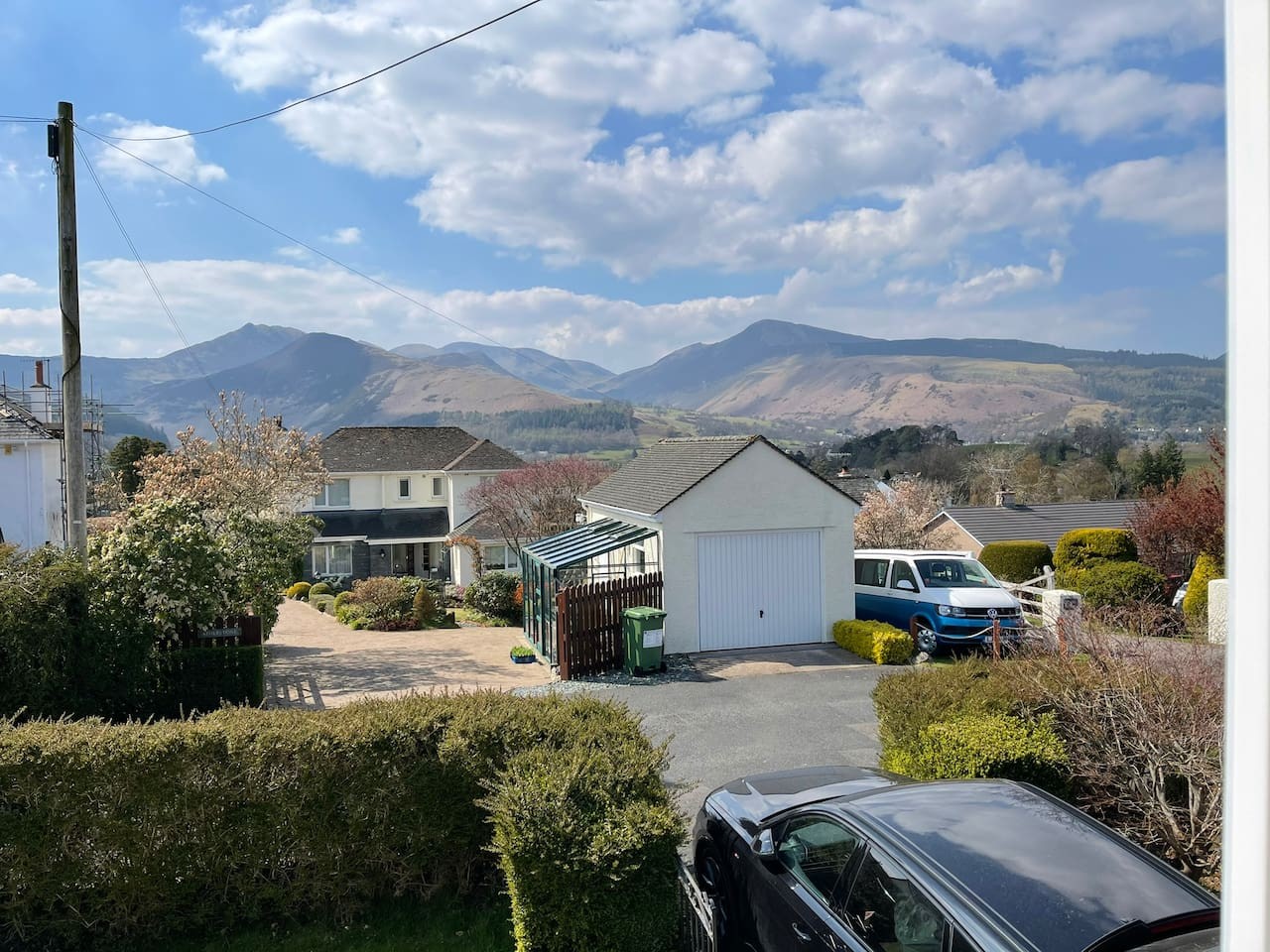
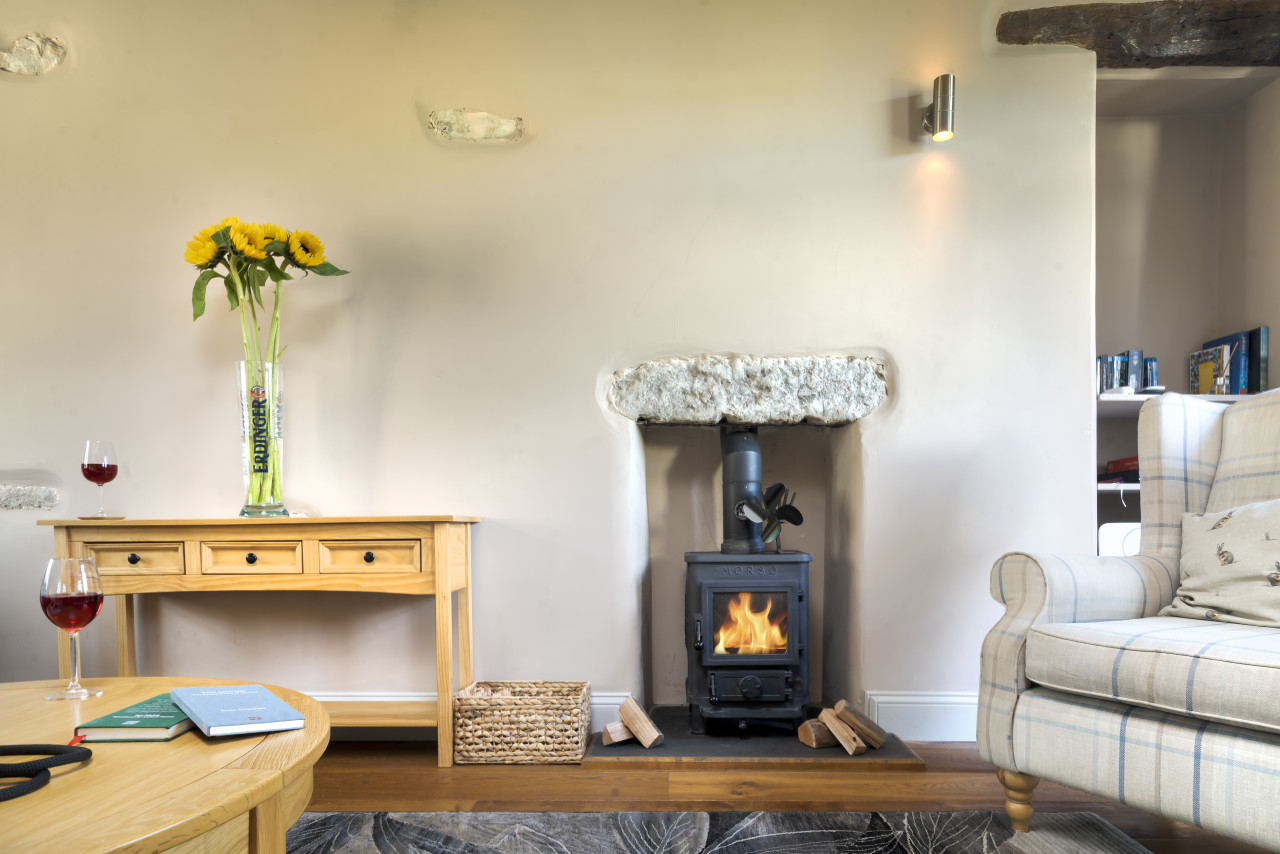
Travel Fox holiday homes around Lake District, linked directly to their property pages.
For homeowners
Own a holiday home near St Bees?
We manage holiday lets across the Lake District from 12% commission, charged after cleaning costs, with no lock-in. A co-founder visits before you decide.
Holiday let management in the Lake District →
A guide with a point of view
Written from research. Edited for real journeys.
Use the Official site links for live practical details, then use this guide for context, ideas and room to explore.
Sources
Every place on this page is checked against a published source. Each entry links the record we used and names who publishes it.
- St Bees Beach — cumberland.gov.uk statutory register or public authority
- St Bees Head — rspb.org.uk national body or asset manager
- Coast to Coast Path — gov.uk statutory register or public authority
- St Bees Priory — achurchnearyou.com national body or asset manager
- The Manor Inn — themanor-stbees.co.uk operator, sector body or destination organisation