
Eden Valley village
Temple Sowerby
Red sandstone, old trees and an easy rhythm between the village green, the River Eden and St James's Church.
- Best for
- Village character, gentle walks and garden history
- Give it
- A relaxed half day or an unhurried full day
- Don't miss
- The tree-ringed village green and nearby River Eden paths
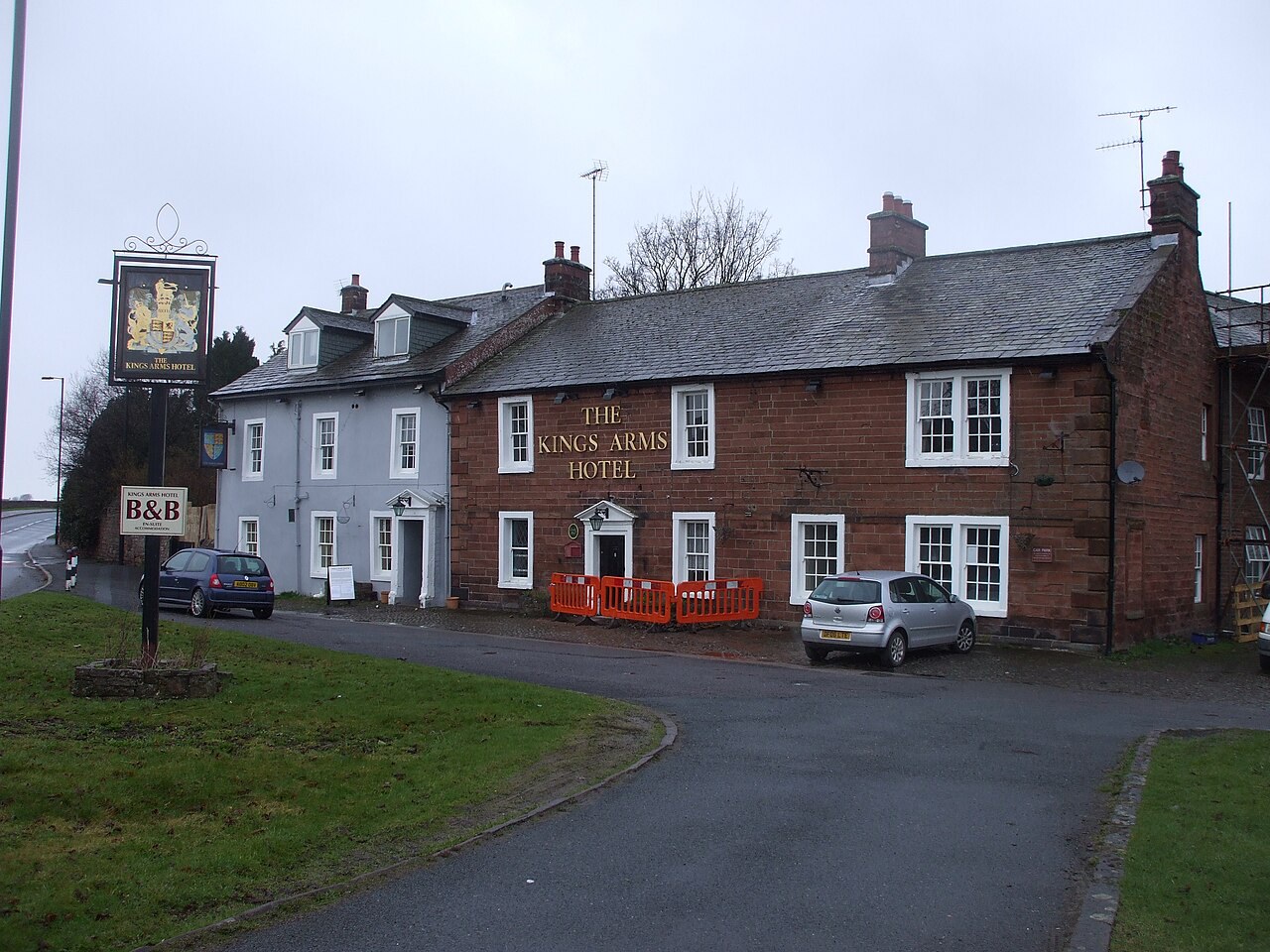
Photo: John Lord · CC BY-SA 2.0 · cropped
The Fox verdict
A handsome green with more depth than bustle
Temple Sowerby suits visitors who would rather slow down than work through a long checklist.
Temple Sowerby's tree-ringed green and red-sandstone houses set the tone; the Kings Arms, St James's Church and nearby riverside paths round out an unhurried village visit.
Where to go
Places in Temple Sowerby
Every place below is checked against a published source, listed with what it is and how long to give it.
Local signatures
3 placesTemple Sowerby Village Green
A large green ringed by mature trees and red-sandstone buildings, long associated with the village's 'Queen of Westmorland Villages' reputation.
- Visit length
- Editorial estimate: Allow around 30 minutes
- Locality
- Temple Sowerby village centre
St James's Church
An eighteenth-century church built in 1754, rebuilt and enlarged in 1770, then restored in the 1870s.
- Visit length
- Editorial estimate: Allow around 30 minutes
- Locality
- Temple Sowerby
Acorn Bank
A historic estate with a medicinal and culinary herb garden, traditional orchard and seasonally operating watermill.
- Visit length
- Editorial estimate: Allow around 2 hours for the garden, orchard and watermill
- Locality
- Acorn Bank estate, outside Temple Sowerby
Food & drink
1 place
The Kings Arms Hotel
A 400-year-old coaching inn serving locally sourced, seasonal food, with a particular strength in meat and vegetarian pies.
- Visit length
- Editorial estimate: Allow around 1 hour 15 minutes
- Locality
- On Temple Sowerby village green
Walks & outdoors
1 placeRiver Eden Walks
Pleasant riparian paths beside the River Eden offer a gentle walking extension to time on the village green.
- Visit length
- Editorial estimate: Allow around 1 hour 30 minutes
- Locality
- By the River Eden near Temple Sowerby
No places match this filter. Choose All places to reset the list.
Three ways to explore Temple Sowerby
Signature outings
Sandstone beneath old trees
Take in the red-sandstone buildings gathered around Temple Sowerby's large, mature-tree-ringed green.
The coaching inn table
Choose from the Kings Arms' line-up of meat and vegetarian pies, made with locally sourced ingredients.
Take the level Eden paths
Extend a village-green visit with a gentle walk on the riparian paths beside the River Eden.
The village story
Temple Sowerby: green, inn and garden
The story moves from a centuries-old coaching inn to the village's grand reputation, then follows its history to St James's.
The inn and the village green
The Kings Arms sits on the village green, and it has been putting up travellers for four hundred years. It started as a coaching inn on the main east–west road through the Eden Valley — the road is now the A66, which passes just outside the village rather than through it, which is the better arrangement for everyone. The rooms are stylish, the food is well regarded, and if you'd rather not eat indoors they can also arrange fly fishing.
The kitchen leans heavily on pies. Steak and ale, game, cock-a-leekie, and a wild mushroom stroganoff pie for anyone who wants the pastry without the meat. Ingredients are locally sourced, the menu shifts with the seasons, and food is served seven days a week.
Beyond the pub, the village is mostly houses — red sandstone, clustered around a large green ringed with mature trees. There's a village hall and a primary school on the green, and not much else in the way of shops. This is not a place you come to for retail.
Queen of Westmorland by the Eden
It is a place people have thought highly of for a long time. Temple Sowerby has been called the "Queen of Westmorland Villages" for several hundred years, which is a considerable claim to have been sustaining without a shop.
The green is the reason. It's one of the most attractive in Cumbria — sandstone buildings on all sides, old trees, the River Eden running close by with riparian paths for anyone who wants a flat walk beside the water.
For a longer outing, Acorn Bank is about one mile from the village in a straight line; the walking route is longer. It's a National Trust property with medieval origins and a walled garden holding the largest collection of medicinal and culinary herbs in the north of England. The orchard grows traditional northern apple and pear varieties, and there's a working watermill, open seasonally.
Templars, Norse roots and St James's
The "Temple" in the name is not decoration. The estate at Acorn Bank belonged to a Knights Templar knight in the era of the crusades, and the village kept the association after the order itself was gone. The second half is less grand: "Sowerby" is Norse for "homestead with poor soil." So the full translation runs roughly to "the Templars' farm on bad ground," which the Queen of Westmorland Villages has quietly declined to advertise.
St James's Church is the eighteenth-century one on the site — built in 1754, rebuilt and enlarged in 1770, restored again in the 1870s. It has been reconstructed enough times that pinning it to a single century feels optimistic.
Arrival and the garden's long memory
Getting here means driving. There's no railway; the nearest station is Penrith, about eight miles west, and the bus services along the A66 corridor are the limited-rural sort that reward owning a car. From Penrith you head east on the A66 and turn off before the traffic notices you've gone.
The herb garden at Acorn Bank has been kept up since the Middle Ages. Somebody has been tending the same beds, more or less, since a Templar owned the ground under them.
Stay around Lake District
Make a longer stay of it
Travel Fox holiday homes around Lake District, linked directly to their property pages.
For homeowners
Own a holiday home near Temple Sowerby?
We manage holiday lets across the Lake District from 12% commission, charged after cleaning costs, with no lock-in. A co-founder visits before you decide.
Holiday let management in the Lake District →
A guide with a point of view
Written from research. Edited for real journeys.
Use the Official site links for live practical details, then use this guide for context, ideas and room to explore.
Photography credits & licences
Third-party photographs are credited to their named creators and reused under the linked Creative Commons licence or public-domain dedication. Travel Fox stores an optimised local copy; the file-specific changes and any browser-applied display crop are disclosed below. Reused photographs link both to the Wikimedia Commons source record and to the declared source image; Travel Fox's own photographs carry no such record and are marked as ours. These image licences do not cover Travel Fox text, branding or page design.
- File:The Kings Arms Hotel, Temple Sowerby - geograph.org.uk - 1807112.jpg — photograph by John Lord; The Kings Arms Hotel, Temple Sowerby by John Lord. Source record on Wikimedia Commons. Declared source image. Licence: CC BY-SA 2.0. File changes: Downloaded from Wikimedia Commons, resized to a maximum 1920px edge and encoded as an optimised JPEG. Display changes: Displayed with responsive CSS cropping.
Sources
Every place on this page is checked against a published source. Each entry links the record we used and names who publishes it.
- Temple Sowerby Village Green — eden.gov.uk statutory register or public authority
- The Kings Arms Hotel — kingsarmstemplesowerby.co.uk operator, sector body or destination organisation
- St James's Church — achurchnearyou.com national body or asset manager
- River Eden Walks — visiteden.co.uk operator, sector body or destination organisation
- Acorn Bank — nationaltrust.org.uk national body or asset manager