
Lakeland at full scale
Wasdale Head
A road-end hamlet where England's highest mountain rises above its deepest lake and British climbing history gathers around an old inn.
- Best for
- High fells, climbing history and remote-valley scenery
- Give it
- A valley stop or a carefully planned mountain day
- Don't miss
- The high fells above the valley
Photo: Peter Trimming · CC BY-SA 2.0 · cropped
The Fox verdict
The Lake District stripped back to its essentials
Wasdale Head offers very little conventional choice and an extraordinary concentration of mountain landscape.
Come for the high fells and the story of British rock climbing; stay for the contrast between a tiny church and the inn that became the climbers' headquarters. This is a place to choose one clear purpose, allow it proper time and accept the remoteness as part of the visit.
Where to go
Places in Wasdale Head
Every place below is checked against a published source, listed with what it is and how long to give it.
Local signatures
3 places
Start here
St Olaf's Church
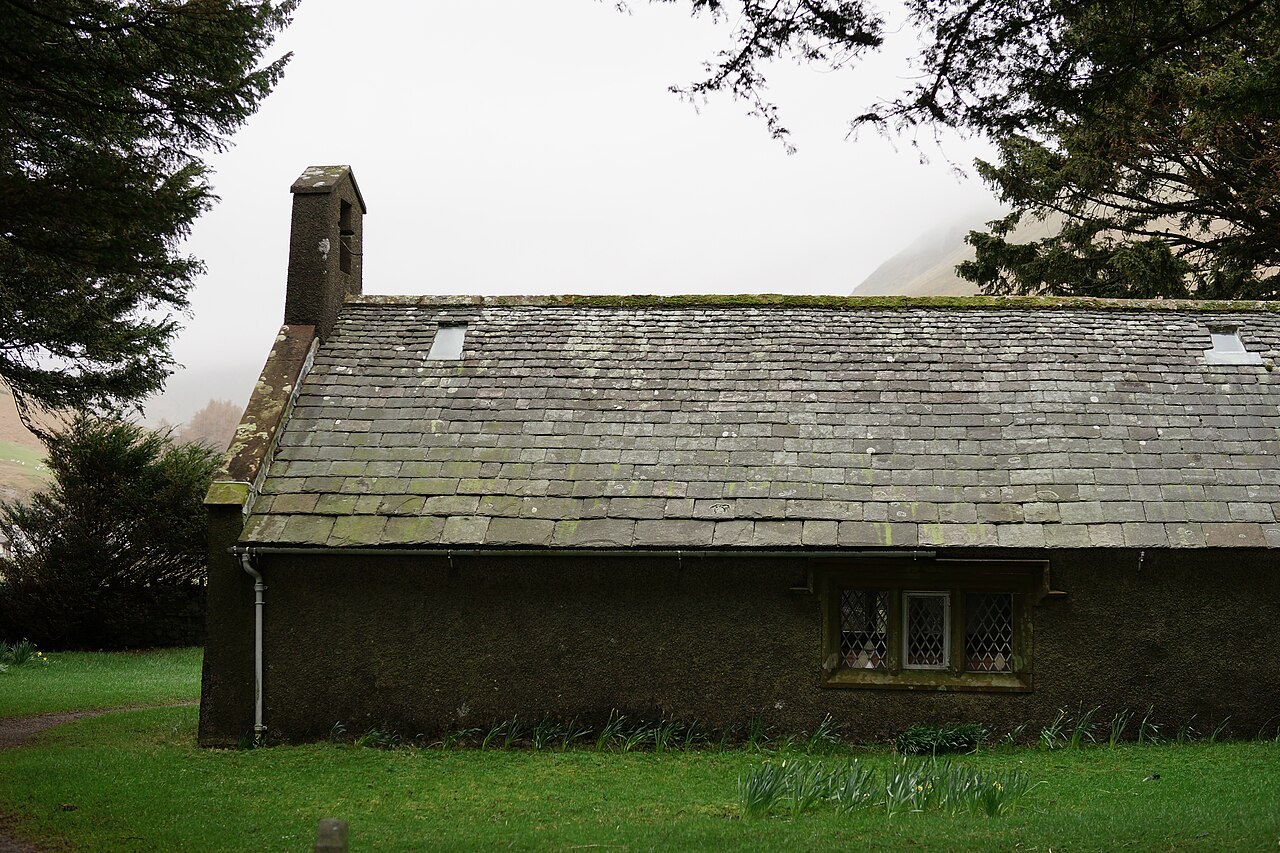
A tiny Grade II-listed church among ancient yews, with climbers' graves outside and a south-window etching of Napes Needle commemorating fallen climbers.
- Visit length
- Editorial estimate: around 15 minutes
- Locality
- Wasdale Head
Scafell Pike
England's highest mountain at 978 metres, approached from Wasdale Head via Lingmell Col or Brown Tongue on a steep high-fell outing.
- Visit length
- Editorial estimate: around six hours
- Locality
- Wasdale fells
- Access
- High-fell route; check land-manager guidance before setting out.
Wastwater
England's deepest lake, framed by the Wasdale Screes and the surrounding fells.
- Visit length
- Editorial estimate: around 30 minutes for the lakeshore view
- Locality
- Wasdale valley
Walks & outdoors
1 place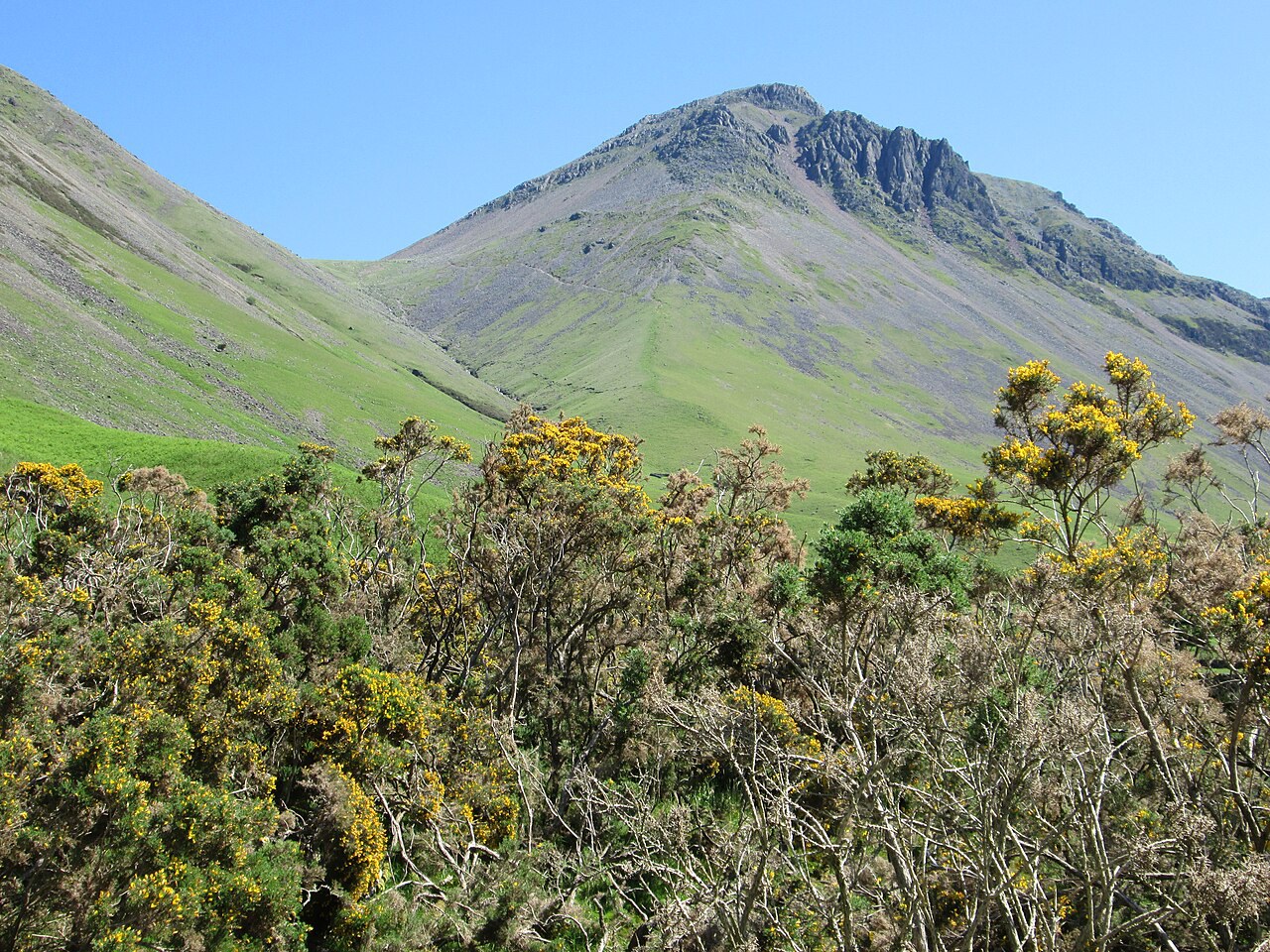
Great Gable
A classic 899-metre mountain outing from Wasdale Head, with the historic Napes Needle rock pinnacle on its south face.
- Visit length
- Editorial estimate: around five hours
- Locality
- Wasdale fells
- Access
- High-fell route; check land-manager guidance before setting out.
History & heritage
1 placeThe Bridge Inn
The Santon Bridge venue for the annual World's Biggest Liar competition, inspired by Will Ritson's legendary tall tales.
- Visit length
- Editorial estimate: around 45 minutes
- Locality
- Santon Bridge
- Access
- The World's Biggest Liar competition is an annual event; check the official site before planning around it.
No places match this filter. Choose All places to reset the list.
Three ways to explore Wasdale Head
Signature outings
Find Will Ritson's Legacy
Visit The Bridge Inn in Santon Bridge, where the World's Biggest Liar competition carries on the tall-tale tradition inspired by Wasdale's Will Ritson.
Find Napes Needle in Glass
Look for the small south-window etching that memorialises Fell & Rock Climbing Club members killed in the First World War.
Take the Great Gable Route
Set out from Wasdale Head via Sty Head for the classic Great Gable circuit, with Napes Needle's rock-climbing history written into the mountain's south face.
The village story
Wasdale Head Village Guide
One inn, one tiny church and a valley whose mountains changed the history of climbing.
At the End of the Road
The only shop at Wasdale Head sells ice axes and ice cream. The Barn Door Shop, next door to the inn, was set up by Jim Balmer in 1983 and run after his 2016 retirement by his wife Joanne; it stocks boots, waterproofs, maps and climbing gear for the quarter of a million people who come through this valley each year, and it went up for sale in February 2026 after forty-three years, so check who is behind the counter when you arrive. There is nothing else at the road end. No cafe, no bakery, no other restaurant. A few farms, one inn, one shop, and one very small church, at the end of a road that ends.
You get here by a single-track lane from Gosforth or Santon Bridge, the last stretch running along the shore of Wastwater with the screes rising straight out of the far side of the lake — great fans of shattered rock falling from six hundred metres into the water and carrying on falling underneath it. The lake is England's deepest at 79 metres, which means its bottom lies more than fifty feet below sea level. The view up it, to Great Gable's pyramid framed by Yewbarrow and Lingmell, is the official emblem of the Lake District National Park, and in 2007 it won ITV's Britain's Favourite View, beating the Gower Peninsula, Bamburgh Castle and Strangford Lough.
Wasdale Head deals in superlatives generally. England's highest mountain, its deepest lake, and — by its own claim — its smallest parish church, all in the surrounding Wasdale landscape.
That bar is Ritson's, the public bar of the Wasdale Head Inn, which grew out of a farmhouse in 1856 and is where you will spend a fair portion of any stay. Slate floors, wooden booths, a log-burning stove, walls hung with climbing memorabilia and old photographs, and up to six cask ales, almost all from Cumbrian breweries, fewer in winter. The building holds three more places to eat: a Residents' Bar, an outdoor bistro at the back doing a shorter menu faster, and Abraham's Restaurant, a small wood-panelled dining room open Wednesday to Saturday evenings with a set menu that changes with the season — slow-cooked lamb, butternut squash risotto. The restaurant is named after George and Ashley Abraham, the Keswick brothers who photographed the first generation of British rock climbers. The beer garden looks straight at the fells, because at Wasdale Head everything does.
Inn Life and the Birth of Climbing
Bar food runs from noon until the kitchen closes between half past eight and nine: steak and ale pie with homemade chips and mushy peas, Cumberland sausage and mash, beer-battered haddock, and — less predictably for a mountain bar — a Hyderabadi spiced lamb shoulder shank with coriander rice and minted raita. There are vegetarian, vegan and gluten-free options, and the dish reviewers mention most is the sticky toffee pudding.
Dogs do well here. Biscuits on the bar, towels for wet paws. Dogs stay in the hotel rooms at £10 a night, beds provided.
For a few years the inn was also England's remotest brewery. Great Gable Brewing Co started up in an outbuilding behind the hotel in 2002, naming its beers after the surrounding fells — Great Gable, Yewbarrow, Wry'Nose, Wasd'ale — before moving away in 2009 and ceasing altogether in 2013. The inn adds a voluntary £1 per person to every booking for Wasdale Mountain Rescue Team, removable on request, though given where you are sleeping it seems poor form. WiFi is residents-only and the valley is a near-total mobile blackspot. Guests either find this a hardship or the entire point.
Waterfalls, Ridges and Tall Tales
The walking is the reason the inn exists. Scafell Pike, 978 metres and the top of England, goes from Lake Head car park beside the National Trust Wasdale Campsite via Lingmell Gill and Brown Tongue — about six miles there and back with 989 metres of climbing, the shortest and steepest of the standard routes, two and a half hours to the summit for the fit and up to eight hours round for everyone else. It is also the Scafell Pike leg of the National Three Peaks Challenge, which is why the valley has a parking problem. Great Gable, 899 metres, goes via Sty Head, the old packhorse pass. On its south face stands Napes Needle, the rock pinnacle Walter Parry Haskett Smith first climbed in 1886 — the ascent generally taken as the birth of rock climbing as a sport, and the reason the Victorian pioneers made this inn their headquarters. Walkers cannot climb the Needle, but the Gable Girdle path threads the crags past its foot, and scramblers can work round the back of its base and lay a hand on it. Wainwright called the Girdle "the finest mountain walk in the district that does not aim to reach a summit." Not everything requires a dawn start. Ritson's Force is a forty-five-minute family walk to a series of small waterfalls and blue-green pools on Mosedale Beck — through the gate opposite the bar, over the eighteenth-century packhorse bridge, a Grade II-listed single arch, then right along a grassy track. Greendale Tarn, partway down the valley, is a climb to a quiet paddling spot with a mountain backdrop. The lakeside path through Low Wood at the bottom end of Wastwater is genuinely flat, and the shingle beach by Overbeck Bridge, halfway along the lake road, is the paddling beach — shelving, clear, and cold enough that calm days are the only sensible days.
The serious end of the menu is the Mosedale Horseshoe, the fourteen-mile ridge circuit over Yewbarrow, Red Pike, Scoat Fell, Pillar and Kirk Fell, which Wainwright ranked among his dozen best Lakeland ridge walks and reserved for experienced fellwalkers. One warning while we're at it: the shore-level path under the Wastwater screes looks like a lakeside stroll on the map and is in fact a maze of unstable boulders that keeps the mountain rescue team supplied with ankle injuries. Take the ridge above it — Illgill Head and Whin Rigg — instead.
The inn's first landlord was Will Ritson, 1808 to 1890 — huntsman, wrestler, farmer, and a liar of national consequence. He told visitors that Wasdale's turnips grew so big the farmers hollowed them out and used them as sheep pens, and that the Herdwicks had to be trained to run with their legs tied together to stop them falling off the fells. His memory is kept up every November at the Bridge Inn, Santon Bridge, about 6.5 miles from Wasdale Head in a straight line with a longer road journey, where the World's Biggest Liar competition gives entrants five minutes to tell the most convincing lie. No props, no scripts, and politicians and lawyers are barred as too skilled at telling porkies. Sue Perkins won in 2006, the first woman to do so. The other serial champion is a Wasdale local, Mike "Monkey Liar" Naylor, an animal health adviser with at least six wins, one of them for a tale about Wassie, the monster that lives in Wastwater. The audience is fed a traditional Cumbrian tattie pot — lamb and black pudding — before the lying starts.
Church, Fell Runners and Valley Traditions
St Olaf's, the church, is a single low room among ancient yews: pebble-dashed walls three feet thick, an interior of 142 cubic metres, seating for about thirty-five. There has been a church on the site since at least 1550, but it got electricity in 1977, which was also the year it got a name — until then it was simply Wasdale Head Church. In the plain south window a small etching of Napes Needle sits above a line from Psalm 121, a memorial to the Fell & Rock Climbing Club members killed in the First World War. The churchyard holds the graves of climbers killed on the surrounding fells; the oldest memorial commemorates three of the four young men who fell roped together from Scafell Pinnacle in September 1903, buried in a single grave in a churchyard consecrated only two years before. Until that consecration, Wasdale Head carried its dead six miles over Burnmoor by fell pony to Boot in Eskdale — the corpse road, still walkable, and said to be haunted by a horse that bolted with its coffin and was never found. The church is having its first major restoration since 1892 during 2026, so it may be shut when you visit; it expects to reopen in the autumn.
Its most attended funeral was recent. Joss Naylor, born at Middle Row Farm at Wasdale Head in 1936, farmed sheep in this valley all his life and in between ran 72 Lakeland peaks in under a day in 1975, then all 214 Wainwrights in just over seven days at the age of fifty. When he died in June 2024, his funeral at St Olaf's drew hundreds of fell runners. Mike the Monkey Liar is his nephew — one Wasdale family covering England's most honest sport and its least.
There is no Domesday entry, because there could not be one: William's surveyors never reached this corner of Cumbria. The valley was settled around 950 by Norse farmers who named it Vatnsdalr, valley of the water; an inquisition of 1322 records just four families living here. The enormous drystone walls dividing the valley floor date from after the 1801 Enclosure Act, some built deliberately thick to use up the stone cleared from the fields. Herdwicks still graze between them, and on the second Saturday of October the Wasdale Head Show fills its show field with Herdwick classes, hound trails, Cumberland and Westmorland wrestling, terrier racing and a fell race to the top of Kirk Fell and back, as it has for over a century. On Great Gable's summit there is a bronze war memorial plaque, dedicated in 1924 before a crowd of five hundred; every Remembrance Sunday, hundreds still climb from Wasdale Head for the two-minute silence.
Down-Valley Food and the Road In
Down the valley the eating widens out. At Nether Wasdale, about 4.9 miles from Wasdale Head in a straight line with a longer road journey, the Strands Inn brews up to six of its own beers behind the pub — the first, a hoppy amber bitter, was named "Errmmm..." because the family sat around saying exactly that — and in 2025 the whole lot was bought by Dave Keeler, who had worked behind the Strands bar in the early 1980s when his godmother owned the hotel. The Screes Inn opposite, under the same owners, runs an American-diner menu with a serious vegan list and a separate fryer to match, and sells dog biscuits and poo bags for £1. Gosforth, about 8.1 miles from Wasdale Head in a straight line with a longer road journey, has Gosforth Bakery, which Gillian Unsworth started in January 1980 by making thirteen Cornish pasties for the workmen altering the road outside. Her daughter Rachel bakes alongside her now, locals still advise arriving before the pies sell out, and Gillian says she doesn't plan on retiring.
Getting here is the filter. No railway ever reached Wasdale; the nearest stations are Seascale, about 10.5 miles from Wasdale Head in a straight line, and Ravenglass, about 9.9 miles in a straight line; both require a longer road journey into the valley. Otherwise it is the single-track road, forty minutes from the A595 on a busy day, and the inn's own advice is to phone for directions rather than trust a sat-nav. Arrive early: after years of illegal parking and fly-camping, 2026 brought double yellow lines, boulders on the verges and patrols on busy weekends.
If you bring the dog to stay at the inn, and the management takes to it, a cooked sausage may appear at breakfast. Not for you. For the dog.
Stay around Lake District
Make a longer stay of it
Travel Fox holiday homes around Lake District, linked directly to their property pages.
For homeowners
Own a holiday home near Wasdale Head?
We manage holiday lets across the Lake District from 12% commission, charged after cleaning costs, with no lock-in. A co-founder visits before you decide.
Holiday let management in the Lake District →
A guide with a point of view
Written from research. Edited for real journeys.
Use the Official site links for live practical details, then use this guide for context, ideas and room to explore.
Photography credits & licences
Third-party photographs are credited to their named creators and reused under the linked Creative Commons licence or public-domain dedication. Travel Fox stores an optimised local copy; the file-specific changes and any browser-applied display crop are disclosed below. Reused photographs link both to the Wikimedia Commons source record and to the declared source image; Travel Fox's own photographs carry no such record and are marked as ours. These image licences do not cover Travel Fox text, branding or page design.
- File:St.Olaf's Church, Wasdale Head - geograph.org.uk - 3895041.jpg — photograph by Peter Trimming; St.Olaf's Church, Wasdale Head by Peter Trimming. Source record on Wikimedia Commons. Declared source image. Licence: CC BY-SA 2.0. File changes: Downloaded from Wikimedia Commons, resized to a maximum 1920px edge and encoded as an optimised JPEG. Display changes: Displayed with responsive CSS cropping.
- File:Great Gable from Wasdale Head - geograph.org.uk - 3618626.jpg — photograph by Peter S; Great Gable from Wasdale Head by Peter S. Source record on Wikimedia Commons. Declared source image. Licence: CC BY-SA 2.0. File changes: Downloaded from Wikimedia Commons, resized to a maximum 1920px edge and encoded as an optimised JPEG. Display changes: Displayed with responsive CSS cropping.
Sources
Every place on this page is checked against a published source. Each entry links the record we used and names who publishes it.
- St Olaf's Church — historicengland.org.uk statutory register or public authority
- Great Gable — visitlakedistrict.com operator, sector body or destination organisation
- The Bridge Inn — santonbridgeinn.co.uk operator, sector body or destination organisation
- Scafell Pike — visitlakedistrict.com operator, sector body or destination organisation
- Wastwater — lakedistrict.gov.uk statutory register or public authority