
Small city, deep history
Lancaster
Coffee counters, castle courts, canal walking and a Georgian quay in Lancashire's county town on the River Lune.
- Best for
- History, independent food and waterside walking
- Give it
- A full day or a history-led weekend
- Don't miss
- The Castle and Priory side by side on the hill
The Fox verdict
A compact city with an unusually long memory
Lancaster combines independent food and drink with a castle, priory, museums, canal walking and the open views of Williamson Park.
Come for a walkable concentration of landmarks and amenities, then stay with the difficult history: the Pendle trials, a working prison that closed in 2011, and the wealth the Georgian port drew from the transatlantic slave trade.
Where to go
Places in Lancaster
Every place below is checked against a published source, listed with what it is and how long to give it.
Local signatures
3 placesLancaster Castle
Take a guided tour of the gatehouse, dungeons, Shire Hall and Crown Court in the castle that remained a working prison until 2011 and hosted the 1612 Pendle witch trials.
- Visit length
- Editorial estimate: Allow around 75 minutes
- Locality
- the hill occupied by the Castle and Priory
Williamson Park
A 53.6-acre Victorian park with the Ashton Memorial, Butterfly House, animal house, fountains, artificial waterfall, play area, Temple folly, café and panoramic views.
- Visit length
- Editorial estimate: Allow around 120 minutes
- Locality
- the eastern hill
Atkinsons Coffee Roasters
An independent roaster trading since 1837, with a China Street shop whose mahogany Gillows counter stands before rows of large jars and metal canisters.
- Visit length
- Editorial estimate: Allow around 45 minutes
- Locality
- China Street
Food & drink
2 placesLancaster Charter Market
A traditional open-air market with produce, fish, deli goods, preserves, baking, crafts, plants and street-food stalls spanning several central streets and spaces.
- Visit length
- Editorial estimate: Allow around 60 minutes
- Locality
- Market Street, Market Square and Cheapside
The Borough
A gastropub with an on-site micro-brewery, Lancashire specialities, pub classics, a create-your-own deli board and a courtyard garden.
- Visit length
- Editorial estimate: Allow around 90 minutes
- Locality
- 3–5 Dalton Square
Walks & outdoors
1 placeLancaster Canal Towpath
A level, traffic-free walking and cycling route beside the flat, lock-free Lancaster Canal, with the 1797 Lune Aqueduct reached along the towpath.
- Visit length
- Editorial estimate: Allow around 120 minutes
- Locality
- from the city centre
History & heritage
4 placesLancaster Priory
A hilltop church with a priory founded in 1094, a 1759 tower and carved oak choir stalls from around 1340, described as the third oldest in England.
- Visit length
- Editorial estimate: Allow around 45 minutes
- Locality
- hilltop immediately beside the Castle
Lancaster Maritime Museum
A museum in Richard Gillow's 1764 Custom House and the neighbouring warehouse, telling the story of the quay, the River Lune and Lancaster's slave-trade history.
- Visit length
- Editorial estimate: Allow around 75 minutes
- Locality
- St George's Quay
Judges' Lodgings Museum
Lancaster's oldest town house, built around 1625 by Castle keeper Thomas Covell, now displaying a major public collection of Gillows furniture and a Museum of Childhood.
- Visit length
- Editorial estimate: Allow around 75 minutes
- Locality
- Lancaster
Assembly Rooms Emporium
Vintage, retro, collectable, art and craft stalls occupy a Grade II listed hall built in 1759 for balls and concerts held by Lancaster's elite.
- Visit length
- Editorial estimate: Allow around 60 minutes
- Locality
- Lancaster
No places match this filter. Choose All places to reset the list.
Three ways to explore Lancaster
Signature outings
Castle law and punishment
Tour the gatehouse, dungeons, Shire Hall and Crown Court of the castle where the Pendle accused were tried and where a working prison continued until 2011.
Medieval choir stalls
See Lancaster Priory's carved oak choir stalls from around 1340, with the elaborate canopies praised by Pevsner.
The quay tells its story
Visit the 1764 Custom House and neighbouring warehouse for the story of the quay, the Lune and Lancaster's involvement in the transatlantic slave trade.
The village story
Lancaster Village Guide
Independent coffee and lively pubs lead into canal paths, hilltop landmarks and the difficult history of Lancaster's castle and Georgian quay.
Coffee, city and real ale
On China Street there is a shop with a mahogany counter, rows of huge glass jars, and metal canisters ranked along the wall behind it. This is J. Atkinson & Co, tea and coffee merchants, roasting on this site since 1901 and trading since 1837 — the year Victoria came to the throne, when Thomas Atkinson opened it as the Grasshopper Tea Warehouse. The counter was made by Gillows, the Lancaster firm whose furniture is why the city was once a byword for good cabinet-making. The Steel family took the place over in 2005 and built what they call a coffee quarter around it: the roastery here, a café and music venue called The Hall next door doing an award-winning flat white, and a third café in the Music Room on Sun Square. You can buy a bag of beans across a counter older than most of the buildings you passed to reach it.
Lancaster is a small city rather than a village — the county town, set on a hill above the River Lune where it opens toward Morecambe Bay. The hilltop is crowned by a castle and a priory church standing side by side, and nearly everything worth doing sits within a walk of them.
Start at street level with the pubs, of which there are a lot for a place this size. Ye Olde John O'Gaunt on Market Street is a back-street real-ale pub established in 1871 and named after John of Gaunt, Duke of Lancaster. It has live music — jazz, blues — on most nights, a wide changing ale range, and reviewers who don't do things by halves: it sits around 4.5 out of 5 across more than fifteen hundred reviews, one of which is simply headlined "100% best pub in lancaster." The food is plain, and the thing people single out is the pork. "Perfectly cooked pork is the tastiest dish," one of them writes, which is not the sentence you expect to be the highlight of a music pub, but there it is.
Brewing, old inns and canal pubs
The Borough, on the corner of Dalton Square by the Town Hall, brews its own beer on the premises and serves food all day, from breakfast through to dinner — Lancashire specialities, pub classics, and a build-your-own deli board, with ingredients from independent local suppliers. On Sunday nights its function room hosts Lancaster Comedy Club, which has booked acts you'll have seen on Mock the Week, Never Mind the Buzzcocks and Have I Got News For You. There is a courtyard garden for the days that allow it.
A minute from the Castle on Church Street is The Sun Hotel & Bar. A Sun Inn has been recorded on the site since 1610, and the current building is 17th century — a coaching inn now working as a boutique hotel. The food is heartier than most: venison and port suet pudding, gourmet sharing plates, burgers with triple-cooked chips and house slaw. Round the corner, near the quay side of the old town, is The Three Mariners, reputed to be the oldest pub in Lancaster, a Grade II listed building with parts dating to the 15th century.
Two of the best pubs are down on the canal. The Water Witch stands on the towpath in a converted stone building that was originally the stables for the horses that hauled the express passenger boats along the Lancaster Canal. It's named after one of those boats — the iron-hulled Water Witch, launched in April 1833, which cut the Preston-to-Kendal run to about ten hours. A little further along, the White Cross occupies a converted mill and keeps up to twelve ales on at once. If you want a pub named for the city's grimmer history, The Pendle Witch in town takes its name from the twelve people tried for witchcraft at the Castle in 1612, and reviewers describe it, without apparent irony, as a friendly pub with great ales.
Waterways, markets and the eastern hill
The canal those pubs sit on is worth walking. It is flat, lock-free, and famously isolated — the "Lanky" was never joined to the national canal network, because the money ran out before anyone could build the link. That leaves a level, traffic-free towpath running straight out of the city centre, good for walking or cycling. Follow it out and you reach John Rennie's Lune Aqueduct of 1797, five seventy-foot arches carrying the canal over the river, and you can loop back along the riverside on what locals call the Lancaster Loop. About three or four miles upriver, near Halton, the river doubles back on itself at the Crook o' Lune, gently undulating walking toward Aughton Woods with views of Clougha Pike and the fells. Turner painted the bends here, which tells you roughly what to expect.
For food to take home, the Charter Market runs on Wednesdays and Saturdays across Market Street, Market Square and Cheapside. Fruit and veg, fish, deli, preserves, home-made cakes and breads, pottery, plants, and street food — Indian, Moroccan, hog roast, pies, sausages — all of it in the shadow of the old buildings. Under cover, the Assembly Rooms Emporium is a warren of vintage, retro and craft stalls in a Grade II listed hall built in 1759 for the balls and concerts of Lancaster's elite. The second-hand stalls only moved in during 1984, after the city's indoor market burned down and had to go somewhere.
The great set-piece up the eastern hill is Williamson Park, fifty-three acres laid out from the 1870s on former moorland that had been, at various points, a gallows and then a quarry. At its top stands the Ashton Memorial, roughly a hundred and fifty feet of Edwardian Baroque built between 1907 and 1909 by James Williamson, the linoleum millionaire, in memory of his second wife Jessy. It is visible for miles and is popularly known as "the Taj Mahal of Northern England." From the terrace you get Morecambe Bay, the Bowland fells, and on a clear day the Lakeland hills. The park also has a tropical Butterfly House, an animal house, a waterfall, a café and a children's playground.
Stage, museums and hilltop history
Down on Moor Lane, The Dukes runs a theatre and independent cinema out of a former church, opened in 1971 with three auditoria and, in 2017, the title of Northern Soul's Cinema of the Year. Each summer it stages an outdoor promenade production up in Williamson Park, the audience walking from scene to scene. For museums, the Judges' Lodgings is the oldest town house in Lancaster — built around 1625 by Thomas Covell, the Castle keeper who locked up the Pendle witches — and now holds the world's finest public collection of Gillows furniture along with a Museum of Childhood. Down on St George's Quay, the Maritime Museum occupies Richard Gillow's 1764 Custom House.
The priory church on the hill, St Mary's, is worth the climb. There may have been a church here around AD 200; a Benedictine priory was founded in 1094, it was rebuilt in the Perpendicular style after 1431, and it became the parish church in 1540 when Henry VIII dissolved the monastery. Its treasure is a set of carved oak choir stalls from around 1340, the third oldest in England, of which Pevsner wrote that they carry "about the most luxuriant canopies in the country." The tower is younger, from 1759, and Pevsner liked that too, calling it "solid and convincing." It stands on the site of the Roman fort that gave the city its name — the castle on the Lune.
Which brings you to the Castle next door, and the darker part of the story, which Lancaster tells honestly rather than tidily. This was Europe's longest continuously operating prison until it closed in 2011. In August 1612, twelve people from around Pendle Hill were tried here for witchcraft; they had no defence counsel and could call no witnesses. Old Demdike died in the dungeons before the trial. Ten were found guilty and nine were hanged at Gallows Hill on the moor above the town on the 20th of August. The chief witness against her own family was Demdike's granddaughter, Jennet Device, who was nine. The whole thing was written up by the court clerk, Thomas Potts, in a book called The Wonderfull Discoverie of Witches, which is why we know so much about it. George Fox, the founder of the Quakers, was tried and imprisoned here more than once; of one of his cells he complained that "it was so bad – rainy and windy, and the badness of the floor" that visitors would scarcely go in.
The quay, the journey and the Music Room
The Georgian quay is handsome, and it was paid for by the slave trade. Between 1750 and 1775, Lancaster ships made more than a hundred voyages to the African coast, and over the 18th century the port's ships carried more than twenty-nine thousand enslaved Africans; by 1764 this was England's fourth-largest slaving port, behind London, Liverpool and Bristol. The merchant fortunes that built the quay and the fine town houses were bound up in that trade. In 2005 an anti-slavery memorial by the artist Kevin Dalton-Johnson was placed on St George's Quay, and the Maritime Museum tells the story straight. The linoleum boom that came later — James Williamson & Son's vast Lune Mills, employing thousands and funding the grandest buildings in town — has simply vanished from the waterfront.
Getting here is easy. Lancaster station sits on the West Coast Main Line, with direct trains to Preston, Manchester, London Euston, Carlisle and Glasgow, about half a mile from the bus station. The M6 runs just east of the city at junctions 33 and 34. Buses reach Morecambe, Heysham, Carnforth and Preston; the Morecambe service runs roughly every ten minutes and takes about eighteen. Morecambe itself, three miles off, has the Eric Morecambe statue on its promenade, the Art Deco Midland Hotel, and the Bay stretching out behind.
If you want to sleep somewhere with a bit of history under you, the Music Room on Sun Square is a tall Georgian pavilion built around 1730, covered inside with Baroque plasterwork of the nine Muses and Apollo. It fell derelict, became a stained-glass workshop, and was rescued by the Landmark Trust in 1976. There's a café below now, and above it a holiday flat — which means you can, if you time it right, spend the night over three centuries of the Muses looking down at you.
Stay around Lancashire
Make a longer stay of it
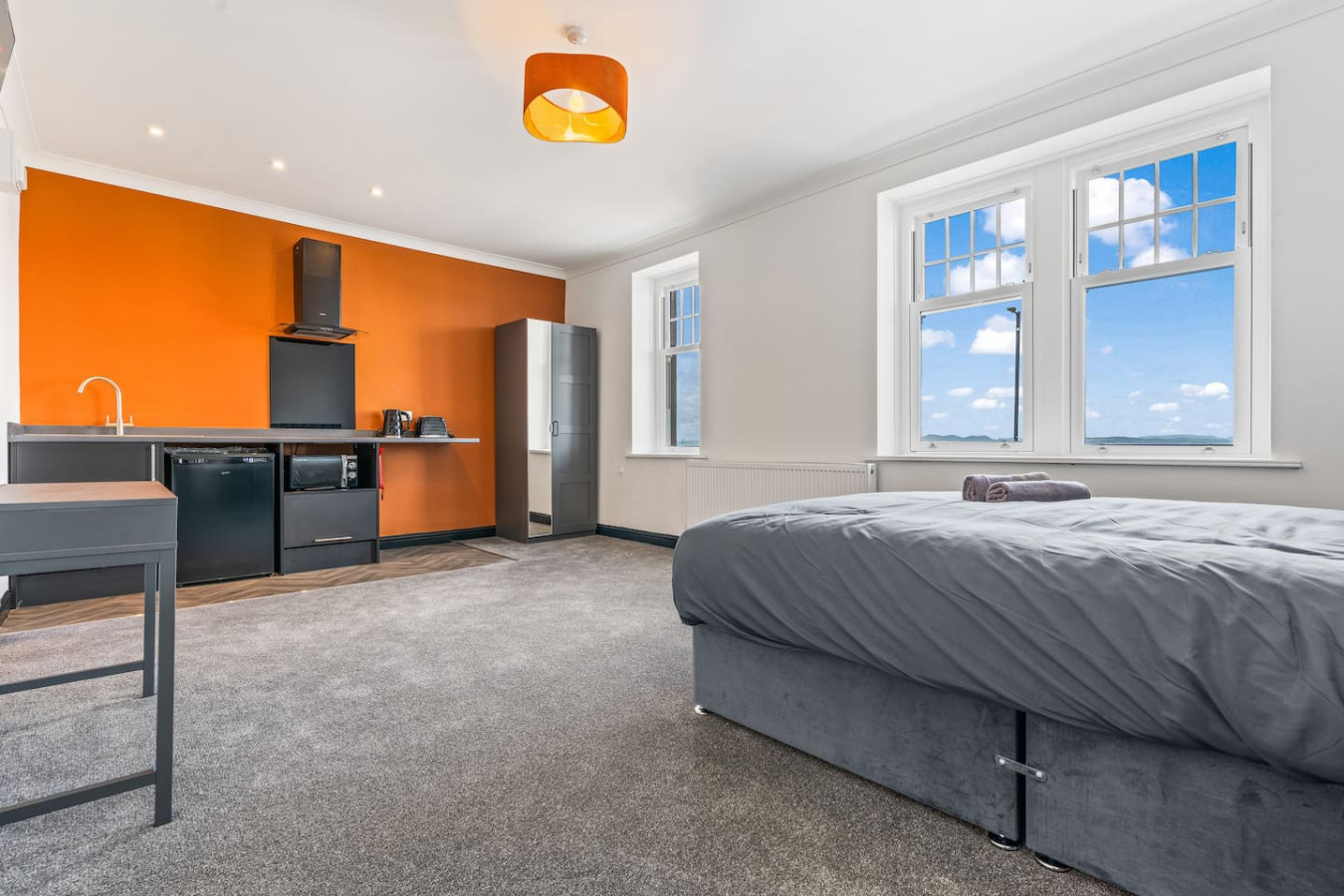
Travel Fox holiday homes around Lancashire, linked directly to their property pages.
A guide with a point of view
Written from research. Edited for real journeys.
Use the Official site links for live practical details, then use this guide for context, ideas and room to explore.
Sources
Every place on this page is checked against a published source. Each entry links the record we used and names who publishes it.
- Lancaster Castle — lancastercastle.com operator, sector body or destination organisation
- Lancaster Priory — lancasterpriory.org operator, sector body or destination organisation
- Williamson Park — lancaster.gov.uk statutory register or public authority
- Lancaster Maritime Museum — lancaster.gov.uk statutory register or public authority
- Judges' Lodgings Museum — lancashire.gov.uk statutory register or public authority
- Atkinsons Coffee Roasters — atkinsonscoffee.com operator, sector body or destination organisation
- Lancaster Charter Market — lancaster.gov.uk statutory register or public authority
- Assembly Rooms Emporium — lancaster.gov.uk statutory register or public authority
- Lancaster Canal Towpath — canalrivertrust.org.uk national body or asset manager
- The Borough — theboroughlancaster.co.uk operator, sector body or destination organisation