
Lune peninsula
Overton
A Lancashire village of old stone, pub stories and tidal saltmarsh, with a causeway leading towards Sunderland Point.
- Best for
- Tidal marsh walking and early church history
- Give it
- A village visit or the roughly five-mile circular
- Don't miss
- St Helen's Norman doorway and the Ship's old village pump
The Fox verdict
Old stone at the edge of the tide
Overton pairs a historic village pub and an exceptionally old church with level walking across and around the Lune saltmarsh.
Come for the Ship Hotel's village stories, St Helen's Saxon and Norman fabric, and the tidal route towards Sunderland Point. A longer circular continues along the coast and returns around Bazil Point, while Battery Stone and Hall Greaves Hill offer another parish view.
Where to go
Places in Overton
Every place below is checked against a published source, listed with what it is and how long to give it.
Local signatures
3 placesThe Ship Hotel
A traditional village pub and Thwaites food-and-drink house, with real ales, a yard containing the old village pump and a shuttered servery in the main bar.
- Visit length
- Editorial estimate: Allow around 90 minutes
- Locality
- the village
Overton–Sunderland Point–Bazil Point Circular
A roughly five-mile circular via Sunderland Point and the coast to Middleton, returning inland across pasture before a shoreline loop around Bazil Point.
- Visit length
- Editorial estimate: Allow around 150 minutes
- Locality
- Sunderland Point, Middleton and Bazil Point
- Access
- The route heads out along the causeway, which floods at every high tide.
Overton & District Memorial Hall
The village's main events venue, built in 1949 in memory of four local men and one woman who died in the Second World War.
- Visit length
- Editorial estimate: Allow around 30 minutes
- Locality
- the village
Walks & outdoors
1 placeSunderland Point
A remote tidal hamlet reached across a causeway, with Sambo's Grave, a bird hide and a camera obscura.
- Visit length
- Editorial estimate: Allow around 90 minutes
- Locality
- Sunderland Point
- Access
- Accessible only when the tide is out; the causeway floods at every high tide.
History & heritage
1 placeSt Helen's Church
A Grade II* church with a main body dated c.1050–1140, an almost certainly Saxon west wall, a carved Norman doorway and an 18th-century pulpit with sounding board.
- Visit length
- Editorial estimate: Allow around 45 minutes
- Locality
- Overton
No places match this filter. Choose All places to reset the list.
Three ways to explore Overton
Signature outings
The Ship's old pump
Have a meal at the Thwaites house, then look for the old village pump in its yard.
A Norman doorway
Look closely at the carved Norman doorway on the south side of this Grade II* church.
The Sunderland causeway
Walk the level causeway from Overton towards the bird hide, camera obscura and Sambo's Grave when the tide is out.
The village story
Overton between stone and saltmarsh
The village story moves from the Ship's long memory to a tide-cut causeway, Saxon and Norman church fabric, quarry stone and the Rose Queen.
The Ship and its keepers
The Ship Hotel still has the old village pump standing in its yard. Inside, the main bar keeps a shuttered servery, and somewhere in the pub there is said to be a collection of birds' eggs left by Thomas Jackson, who held the licence from 1874 to 1922 and collected eggs on the side. It's a Thwaites house now, serving the house real ales and food that recent visitors have called the best they've had in a long time. The menu runs to a "Bird and Beast" burger, chicken parma, beef and onion pie, a ploughman's the pub describes as enough for two, and Sunday roasts. There's a bowling green out the back, reformed in 1984.
The pub began as two 18th-century cottages, two storeys tall, raised to three in 1905. In Victorian times it was where the village held its wedding receptions, funeral teas and dances. The Macluskie family ran it for more than sixty years from around 1930, and "Ma McCluskie" served Army and RAF men from camps within a fifty-mile radius during the war. An upstairs function room is named after her.
Marsh, memory and village services
Overton sits on the Lune peninsula, north of the river's mouth, ringed by tidal saltmarsh that floods twice a day. Lancaster station is three and a half miles up the road, and Stagecoach service 5 links the village to Morecambe and Heysham. The Globe Hotel, which once drew charabancs of weekend holidaymakers to its putting greens and pleasure gardens, closed and now stands derelict. In its garden is the grave of Rover, a black-and-white spaniel who carried a collection box on his back all his life and gathered over £3,000 for charity; a memorial stone stands just inside the gate.
For shops there's a grocery in the Square and a Post Office and gift shop on Palings Road, with the village noticeboard and a footpath map beside it.
Causeway and ancient church
The footpath you want is the causeway to Sunderland Point, about a mile and a half across the marsh on a single-track road that floods at every high tide. Sunderland Point is the only community on the British mainland you can only reach when the tide is out. The walk is level, passing a bird hide, a camera obscura and Sambo's Grave. If you want more, a five-mile circuit carries on north along the coast and loops back around Bazil Point, with wide views across the Lune estuary to Glasson Dock.
St Helen's Church claims to be the oldest church building in Lancashire. The west wall is almost certainly Saxon, thicker than any known Norman wall. The plan is T-shaped, built so the whole congregation could see and hear an 18th-century pulpit set in the middle, and that pulpit still has its sounding board. The list of vicars begins in 1215 with a man recorded simply as Roger, surnames not yet being in use.
Fire, quarry stone and Rose Queen
The Great Fire of 1618 took many of the village's wooden houses, and Main Street was rebuilt in stone in the early 1700s; the date stones are still there, 1739 and 1741. Ninety per cent of the parish was built from two local quarries, worked by skilled local stonemasons; the monks of Cockersand Abbey quarried stone here too.
The parish holds a Rose Queen in the first week of July, opened each year by a past queen.
Stay around Lancashire
Make a longer stay of it
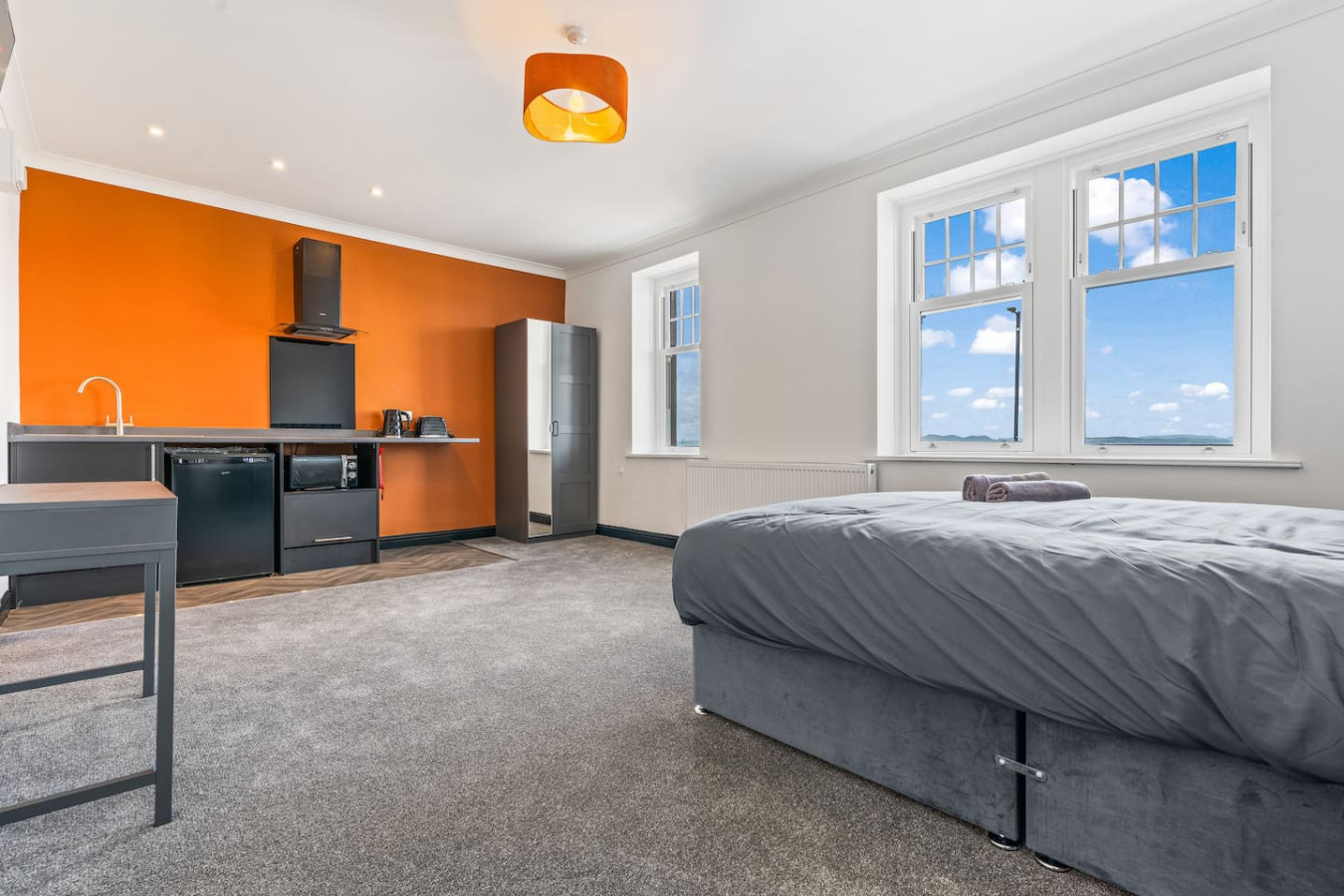
Travel Fox holiday homes around Lancashire, linked directly to their property pages.
A guide with a point of view
Written from research. Edited for real journeys.
Use the Official site links for live practical details, then use this guide for context, ideas and room to explore.
Sources
Every place on this page is checked against a published source. Each entry links the record we used and names who publishes it.
- The Ship Hotel — overton-pc.gov.uk statutory register or public authority
- St Helen's Church — overton-pc.gov.uk statutory register or public authority
- Sunderland Point — overton-pc.gov.uk statutory register or public authority
- Overton–Sunderland Point–Bazil Point Circular — overton-pc.gov.uk statutory register or public authority
- Overton & District Memorial Hall — overton-pc.gov.uk statutory register or public authority