

Spring, priory, holloway
Farewell
A tiny Staffordshire hamlet where a clear spring, a surviving priory chancel and an old pilgrim lane carry most of the story.
- Best for
- Quiet church history and a four-hour country walk
- Give it
- Half a day, or add nearby Lichfield
- Don't miss
- The medieval stone chancel against the brick nave
Photo: Bs0u10e01 · CC BY-SA 3.0 · cropped
The Fox verdict
A small place with unusually deep roots
Farewell is best approached as a quiet historical pause, with its priory remnant, ancient lane and namesake spring doing more than a conventional village centre could.
The strongest visit pairs St Bartholomew’s surviving medieval fabric with Cross in Hand Lane, once the main Lichfield-to-Stafford road and probably a pilgrim approach to St Chad’s shrine. Chorley supplies the practical lunch stop, while Lichfield Cathedral and Cannock Chase give two contrasting extensions.
Where to go
Places in Farewell
Every place below is checked against a published source, listed with what it is and how long to give it.
Local signatures
3 places
Start here
St Bartholomew's Church
A Grade II* church whose medieval stone chancel survives from Farewell Priory beside a brick nave and tower rebuilt in the 18th century.
- Visit length
- Editorial estimate: Allow around 25 minutes
- Locality
- Farewell, near the spring
- Access
- Check before travel if seeing the church interior and its misericords is important to your visit.
The Malt Shovel
A family-run pub and restaurant with an open-fire bar, a refurbished dining room, a beer garden and a field with a children's play area.
- Visit length
- Editorial estimate: Allow around 75 minutes for a meal
- Locality
- Lower Lane, Chorley
- Access
- Booking ahead may help at busy times.
Lichfield Cathedral
The only medieval three-spired cathedral in the UK and the destination associated with the St Chad pilgrim route remembered by Cross in Hand Lane.
- Visit length
- Editorial estimate: Allow around 45 minutes
- Locality
- Lichfield
- Access
- Check the cathedral's official visitor page before travel.
Walks & outdoors
2 placesCross in Hand Lane
An ancient route, sunken between sandstone banks in places and hedged elsewhere, that served as the main Lichfield-to-Stafford road until 1770.
- Visit length
- Editorial estimate: Allow about four hours at a steady pace
- Locality
- through Farewell and Chorley
- Access
- This is a narrow historic lane shared with vehicles; take care when walking.
Cannock Chase
A protected landscape west of Farewell, known for walking, cycling and wildlife.
- Visit length
- Editorial estimate: Allow around 90 minutes for a walk
- Locality
- west of Farewell
- Access
- Plan your route before setting out into the wider landscape.
No places match this filter. Choose All places to reset the list.
Three ways to explore Farewell
Signature outings
Medieval Work in Brick
Compare the surviving medieval stone chancel with the 18th-century brick nave and, if access allows, look for the two ranges of misericords dated to around 1300.
Cross in Hand Lane
Walk the roughly five-mile route through sandstone banks and mature hedges along the road that carried Lichfield-to-Stafford traffic until 1770.
Cannock Chase
Explore the protected landscape west of Farewell, where Cannock Chase offers walking, cycling and wildlife.
The village story
Farewell Village Guide
A clear spring, a vanished priory and a pilgrim road give this tiny Staffordshire settlement an unexpectedly long memory.
The Fair Well and Its Twin Hamlet
A clear spring still rises near the church at Farewell, and it is where the village gets its name — Old English fæger wielle, the fair or clear well. There's no sign on it, no bench, just the fact that it's still flowing. It fed a mill from the 12th century until the 1940s; old maps show a pond there into the late 1960s.
Farewell itself has no shop and no pub. It shares a parish with Chorley, a neighbouring hamlet; its Malt Shovel pub is about 0.9 miles from Farewell in a straight line, with a longer road route.
A Pub Stop and the Pilgrim Road
The Malt Shovel, on Lower Lane in Chorley, is a family-run pub with an open-fire bar on one side and a refurbished restaurant on the other. Dan and Terri run it now, and reviewers say the food's better for it. King prawns in Marie Rose sauce with a fresh bread roll is £9, whole baked camembert with caramelised onion marmalade and garlic ciabatta is £9, and a pan-roasted chicken breast with Parmentier potatoes and romesco sauce runs to £18. There's a weekday fixed-price menu and a Sunday roast. Dogs are welcome, there's a beer garden and a field beyond it with a children's play area, and enough cyclists and walkers stop by that booking ahead helps.
The walking is Cross in Hand Lane, which sounds modern and isn't — it was the main Lichfield-to-Stafford road until 1770, and before that a pilgrim route, named for travellers carrying a wooden cross toward St Chad's shrine at Lichfield Cathedral. The Lichfield Lore blog describes it as a series of holloways that "cosy up with the wildflowers while you wait for a car or three to squeeze past." Sunk between sandstone banks in places, hedged elsewhere, it makes a five-mile loop of about four hours, passing Cresswell Green roughly halfway round.
What Survived at Farewell
Farewell and Chorley Village Hall, on Shute Hill, hosts the parish council and little else.
The church, St Bartholomew's, is Grade II* and older than it looks from the road. The nave and tower were rebuilt in brick in 1745, but the chancel is the original chapel of Farewell Priory, with 15th-century tracery windows and two ranges of misericords carved around 1300. During the 1747 rebuild, workmen found rows of earthenware jars plastered into the south wall, openings facing inward — acoustic jars, probably. Most broke on removal. One survived and ended up in a Lichfield museum.
From Priory to Cathedral Country
The priory was founded around 1129 by Roger de Clinton, Bishop of Lichfield, first as a hermitage and then, in the old account, it "soon became a nunnery" — a small Benedictine house, never rich, with sixteen prioresses recorded between 1248 and 1527. A 1331 visitation found nuns leaving without permission and sleeping where they shouldn't. The priory closed in 1527, fallout from Cardinal Wolsey's fundraising for his Oxford college; the last prioress, Elizabeth Kylshawe, and her four remaining nuns were dispersed within a month. The buildings were gone by the 18th century. Only the church stayed.
Lichfield Cathedral is about 2.4 miles from Farewell in a straight line, with a longer road journey, and Cannock Chase lies to the west. Lichfield Trent Valley is the nearest station.
The Sound That Remains
On a quiet evening the loudest thing in Farewell is still the spring, doing what it's done since before the nuns arrived.
Stay around Staffordshire
Make a longer stay of it
Travel Fox holiday homes around Staffordshire, linked directly to their property pages.
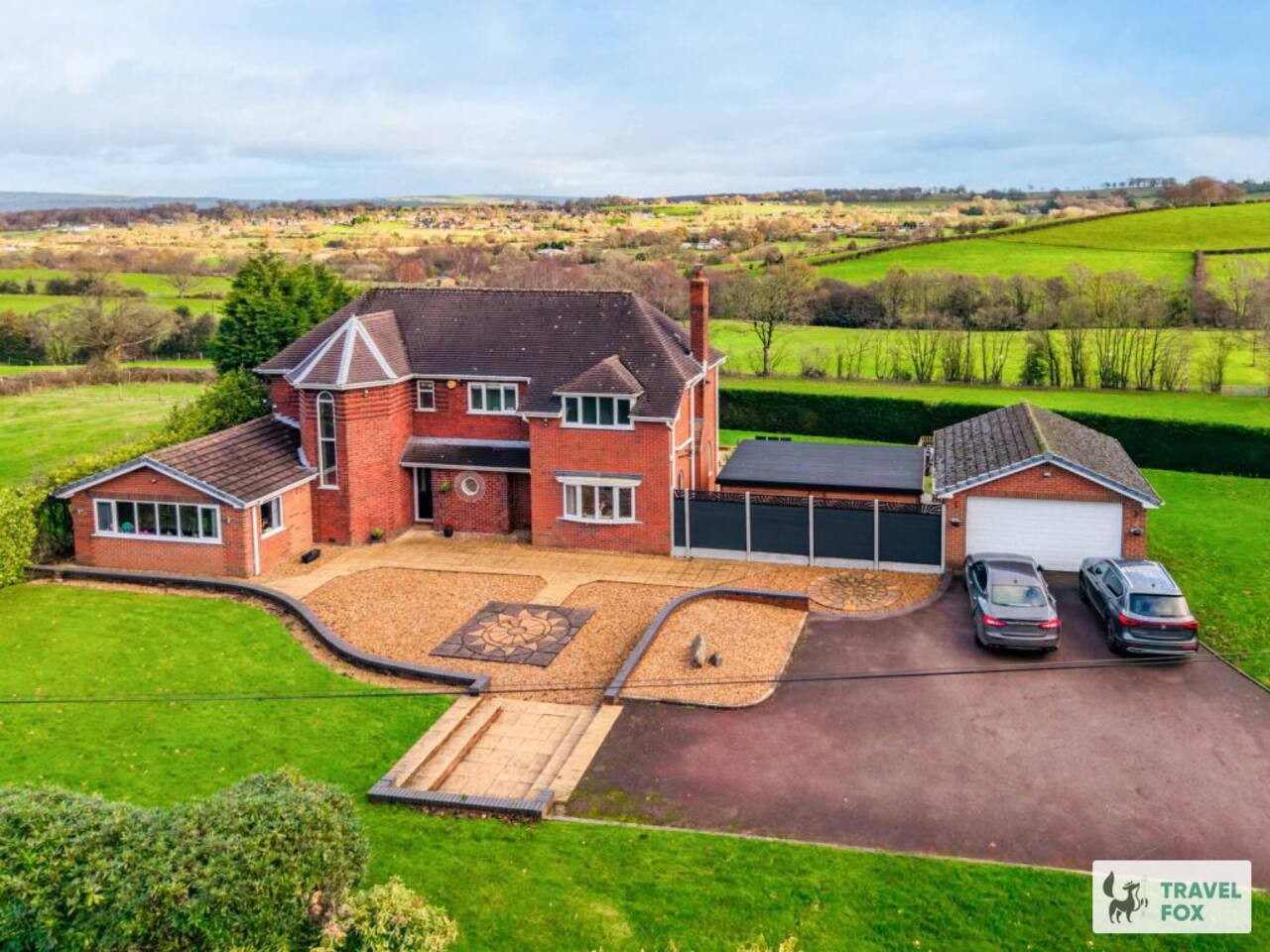
Cheddleton
Greenways House - Parking, Pool Table and Garden!
- Sleeps 10
- 4 bedrooms
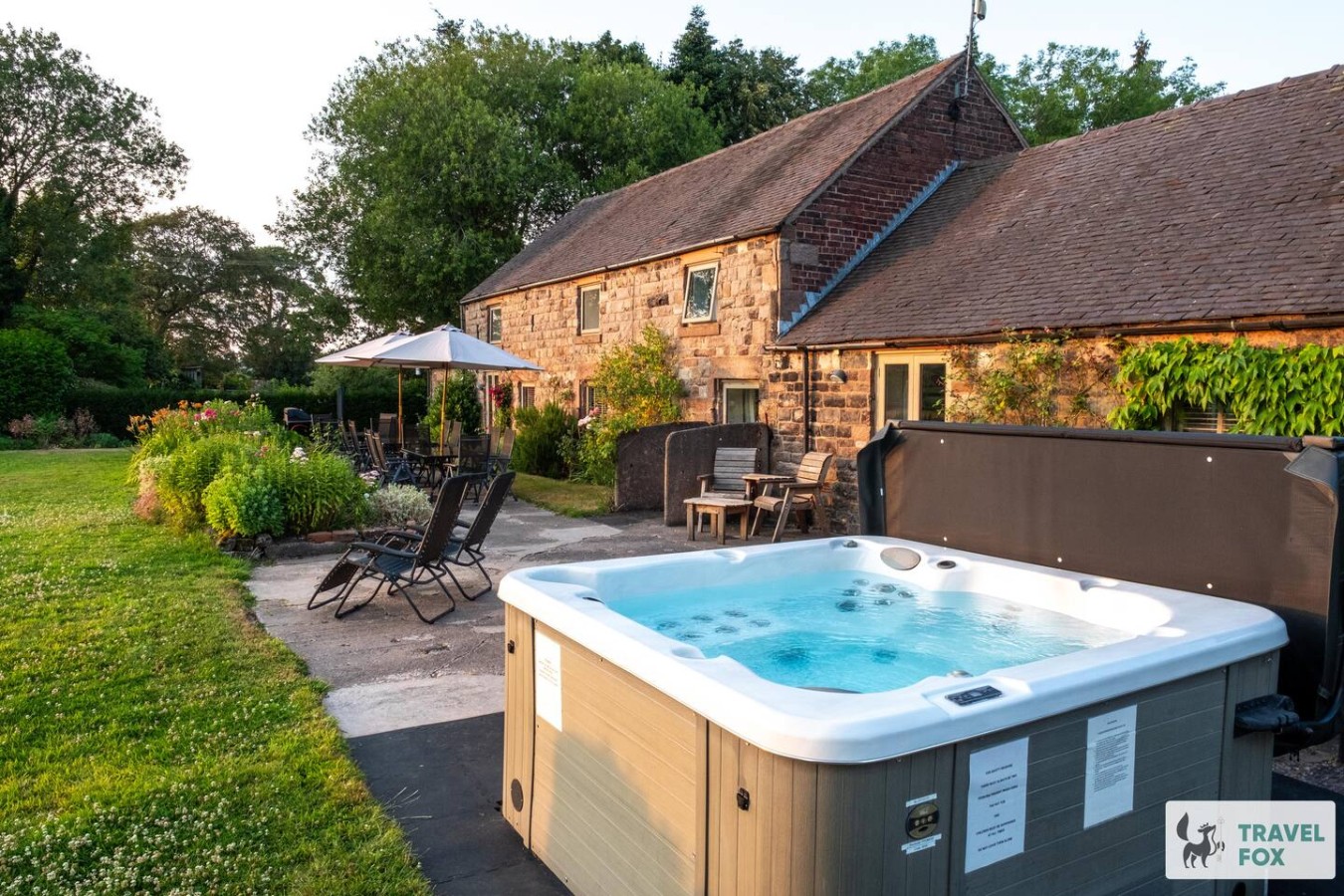
Cheddleton
Lee House Cottage + Annexe
- Sleeps 19
- 8 bedrooms

Leek
Silkwood House | Boutique 4 Bed nr. Peak District
- Sleeps 8
- 4 bedrooms
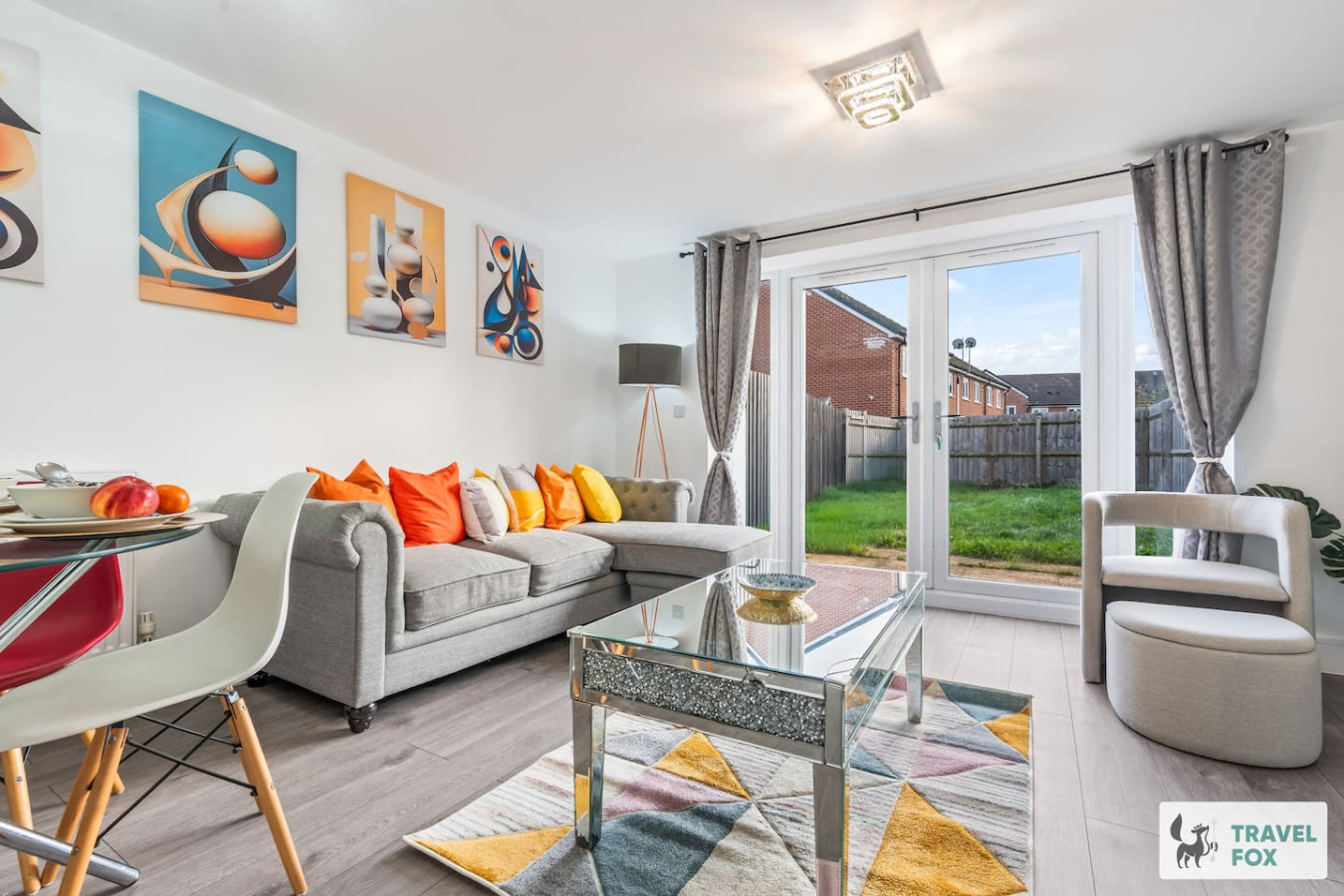
Stoke-on-Trent
Heather's House
- Sleeps 6
- 2 bedrooms
For homeowners
Own a holiday home near Farewell?
We manage holiday lets across Staffordshire from 12% commission, charged after cleaning costs, with no lock-in. A co-founder visits before you decide.
Holiday let management in Staffordshire →
A guide with a point of view
Written from research. Edited for real journeys.
Use the Official site links for live practical details, then use this guide for context, ideas and room to explore.
Photography credits & licences
Third-party photographs are credited to their named creators and reused under the linked Creative Commons licence or public-domain dedication. Travel Fox stores an optimised local copy; the file-specific changes and any browser-applied display crop are disclosed below. Reused photographs link both to the Wikimedia Commons source record and to the declared source image; Travel Fox's own photographs carry no such record and are marked as ours. These image licences do not cover Travel Fox text, branding or page design.
- File:St Bartholomew's Church, Farewell.jpg — photograph by Bs0u10e01; Own work. Source record on Wikimedia Commons. Declared source image. Licence: CC BY-SA 3.0. File changes: Downloaded from Wikimedia Commons, resized to a maximum 1920px edge and encoded as an optimised JPEG. Display changes: Displayed with responsive CSS cropping.
Sources
Every place on this page is checked against a published source. Each entry links the record we used and names who publishes it.
- St Bartholomew's Church — historicengland.org.uk statutory register or public authority record not machine-readable; publisher restricts automated access
- Cross in Hand Lane — search.staffspasttrack.org.uk other published source
- The Malt Shovel — themaltshovelchorley.co.uk operator, sector body or destination organisation
- Lichfield Cathedral — lichfield-cathedral.org operator, sector body or destination organisation
- Cannock Chase — cannock-chase.co.uk operator, sector body or destination organisation