

Ridge, river and remembrance
Wychnor
A quiet Staffordshire parish where a medieval church and lost-village earthworks overlook the Trent, with canal walks and useful stops in Alrewas and Barton-under-Needwood.
- Best for
- Medieval traces and canal walking
- Give it
- A half day, or longer with the Arboretum
- Don't miss
- The church and lost-village earthworks
Photo: Roger Kidd · CC BY-SA 2.0 · cropped
The Fox verdict
A small place with unusually deep traces
Wychnor rewards visitors who come for the church, read the ground opposite it and treat the surrounding canal country as part of the day.
St Leonard's and the earthworks of the deserted medieval village make a compact historic pairing above the Trent. The wider visit works best when combined with a canal walk, a public meal in Alrewas, Barton Marina or the National Memorial Arboretum.
Where to go
Places in Wychnor
Every place below is checked against a published source, listed with what it is and how long to give it.
Local signatures
3 placesWychnor Deserted Medieval Village Earthworks
Hollow ways, raised house platforms, banks, ditches and field boundaries preserve the outline of the deserted medieval village beside the former hall's moated site.
- Visit length
- Editorial estimate: Allow around 45 minutes
- Locality
- on higher ground opposite St Leonard's Church
- Access
- The surviving features are earthworks rather than standing ruins; use the nearby information board for context.
National Memorial Arboretum-Wychnor Walking Trail
A longer walking route using the Trent & Mersey Canal corridor to link the National Memorial Arboretum with Wychnor and Alrewas.
- Visit length
- Editorial estimate: Allow around 3 hours
- Locality
- between the National Memorial Arboretum, Wychnor and Alrewas
National Memorial Arboretum
The UK's year-round centre of remembrance, with 150 acres of woodland and gardens, more than 400 memorials and a Remembrance Centre.
- Visit length
- Editorial estimate: Allow around 2 hours
- Locality
- at Alrewas
Food & drink
2 placesThe George and Dragon, Alrewas
A public pub in Alrewas that provides a practical food-and-drink stop outside pub-less Wychnor and a starting point for the canal walk.
- Visit length
- Editorial estimate: Allow around 1 hour 15 minutes
- Locality
- Alrewas
The Butcher, Baker Farm Shop
A farm shop with locally sourced produce, a deli counter and bakery goods from Cress, Springdale, Holleys and TLC Bakery.
- Visit length
- Editorial estimate: Allow around 45 minutes
- Locality
- at Barton Marina, Barton-under-Needwood
History & heritage
1 place
St Leonard's Church, Wychnor
A Grade II* church, mainly 14th century, with a partly brick-rebuilt tower, a shield-carved octagonal font and Levett family memorials.
- Visit length
- Editorial estimate: Allow around 45 minutes
- Locality
- on Wychnor's ridge above the River Trent
- Access
- Visitor opening is seasonal; check current access before travel.
Things to do
1 placeBarton Marina
A canalside stop for dining and shopping, with the farm shop on site and the Trent & Mersey Canal setting tying it back to Wychnor.
- Visit length
- Editorial estimate: Allow around 1 hour
- Locality
- at Barton-under-Needwood
No places match this filter. Choose All places to reset the list.
Three ways to explore Wychnor
Signature outings
Climb to St Leonard's
Look from the red-sandstone church body to the brick upper tower, then find the shield-carved font and Levett memorials inside when visitor access is available.
Watch Barton Marina
Use the canalside setting for a slower stop before browsing the marina's dining and shopping options.
Explore a Living Landscape
Give the Arboretum time for its woodland, gardens, Remembrance Centre and more than 400 memorials.
The village story
Wychnor Village Guide
A vanished settlement still legible in church stone, uneven ground, a marriage custom and the routes that cross the Trent valley.
Finding Food Beyond Wychnor
Wychnor doesn't have a pub. It used to have a hall, a manor, a railway junction and a full village of houses, and none of those survive either, but the pub is the gap you notice first when you're deciding where to eat. Wychnor Park Country Club, at the old hall site, keeps a bar and restaurant, but it's a private members' club — reception will point you elsewhere if you turn up without a membership card.
Elsewhere means Alrewas, about 1.1 miles away in a straight line (the canal towpath route is longer), where the George and Dragon does the job a village pub is meant to do. Barton-under-Needwood has its own pubs too, a short drive the other way. For food shopping, head to Barton Marina on the Trent & Mersey Canal, where the Butcher, Baker Farm Shop runs a deli counter alongside bakery goods from Cress, Springdale, Holleys and TLC Bakery. There's also a butcher on Main Street in Alrewas, if you'd rather sort dinner before you get back.
Inside St Leonard's Church
What Wychnor does have is a church worth walking up the hill for. St Leonard's stands on a ridge above the Trent, mostly 14th century with a tower that's two-thirds rebuilt in brick — probably 17th century work, done in three stages, with diagonal buttresses, a crenellated parapet and gargoyles that don't quite match the red sandstone below them. The font is a 15th-century octagonal stone piece carved with shields; the south aisle holds marble memorials to the Levett family, who owned the hall for 148 years. It's open Saturdays and Sundays, 10 till 5, through May, June, July and September, and every day in August.
In the churchyard, a memorial to Harry Dooling, an eighteen-year-old sailor lost with HMS Barham in 1941, carries the line: "Let him sleep. Where sleep the men who made us free, For England's heart is in the deep, And England's glory is the sea."
Earthworks, Legends and the Flitch
Opposite the church, across a field, the ground is lumpy in a way that turns out to mean something: hollow ways, raised platforms, banks and ditches — the surviving outline of the medieval village itself, abandoned centuries ago. Historic England calls the whole site, hall moat and fishponds included, one of the few places in the county where all of that survives together. Local tradition adds that Cromwell had the church tower's top taken off during the Civil War, suspecting Royalists were using it to watch the river crossing below. Nobody claims that one as documented fact, only as the story that's been told.
The stranger custom is the flitch. In 1338 the manor was granted to Sir Philip de Somerville on condition he kept a side of bacon hanging in his hall, to be given to any couple who could swear, a year and a day after their wedding, that they hadn't once regretted it. Only three couples ever managed it. By the time Horace Walpole visited in 1760, the bacon had gone unclaimed for thirty years, so a carved wooden flitch hung there instead — a monument to a prize nobody could win.
Following the Canal Towpath
For walking, the Alrewas–Wychnor loop is just over four miles: canal towpath past moored narrowboats, then a stile up a grass bank to the church, muddy enough near the country club to want boots. A longer nine-and-a-half-mile circuit out of Barton-under-Needwood takes in Wychnor, Alrewas and Yoxall Meadows, with an information board at Wychnor filling in the history for anyone who wants it.
Arriving in a Vanished Village
Lichfield Trent Valley station is the nearest with regular trains, about eight miles away by road, and the A38 — still following the line of the Roman road it replaced — crosses the Trent at Wychnor Bridges. The 2021 census counted 497 people in the parish. Domesday counted six households, and didn't think to name a single one of them.
Stay around Staffordshire
Make a longer stay of it
Travel Fox holiday homes around Staffordshire, linked directly to their property pages.
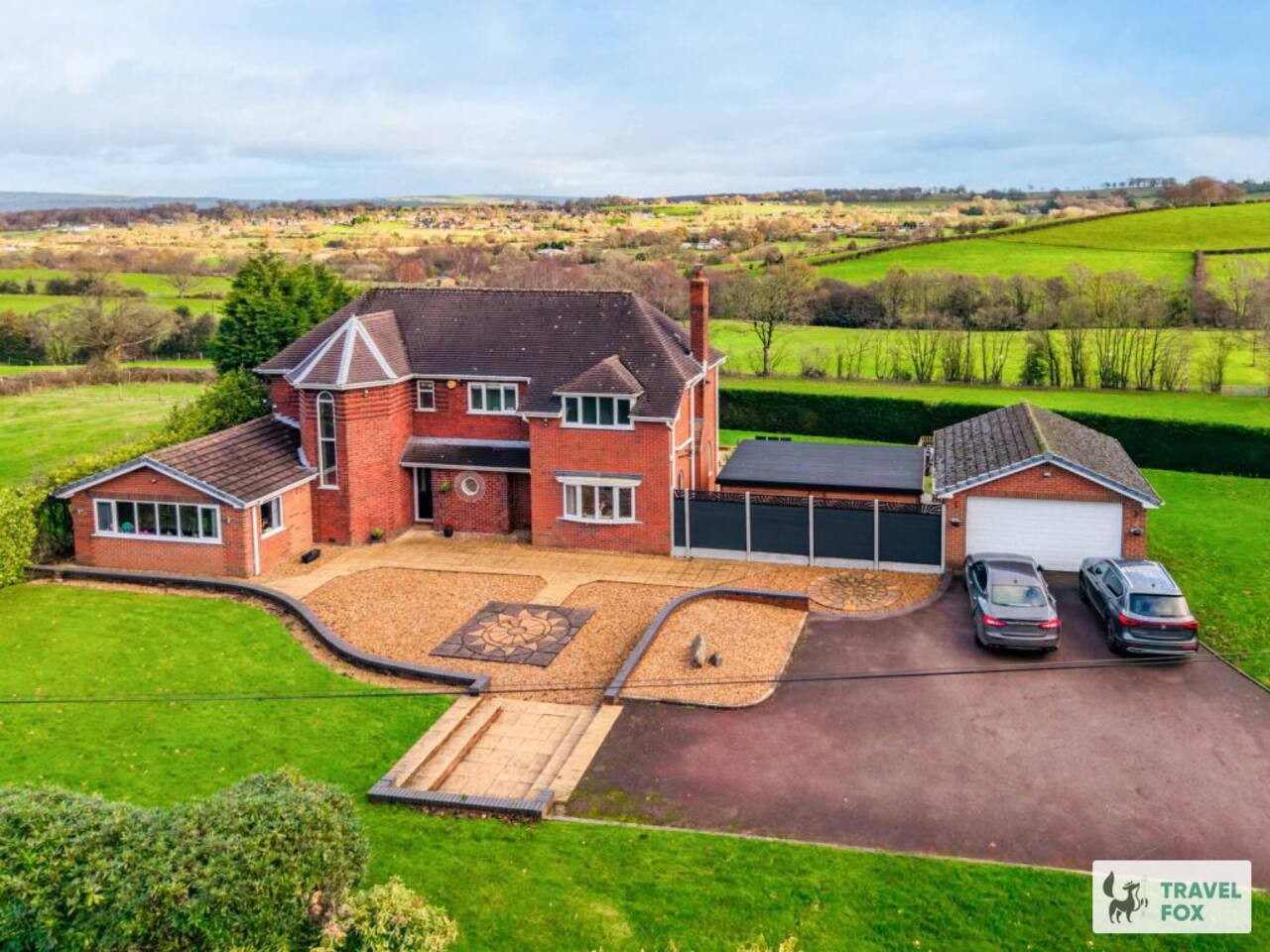
Cheddleton
Greenways House - Parking, Pool Table and Garden!
- Sleeps 10
- 4 bedrooms
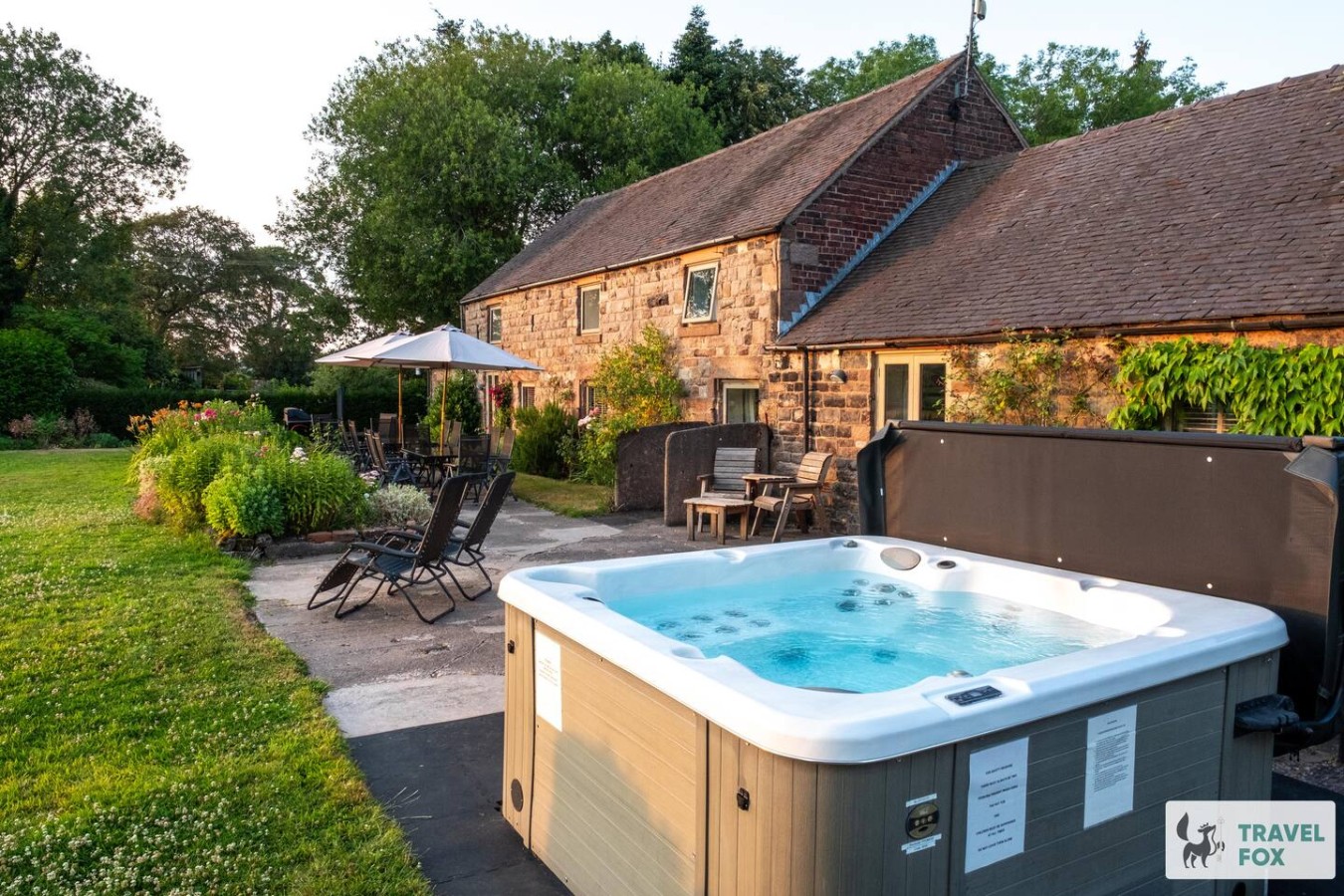
Cheddleton
Lee House Cottage + Annexe
- Sleeps 19
- 8 bedrooms

Leek
Silkwood House | Boutique 4 Bed nr. Peak District
- Sleeps 8
- 4 bedrooms
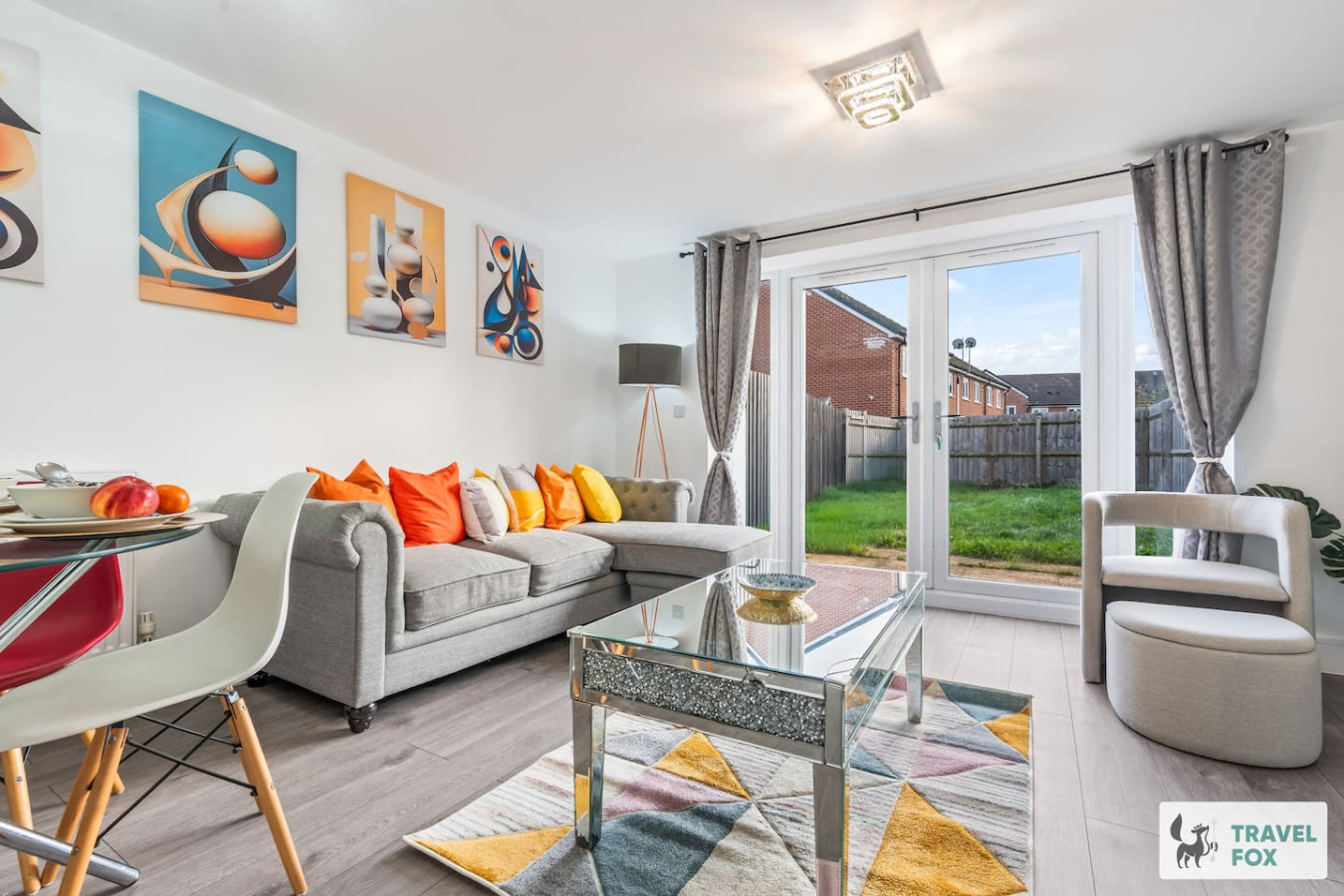
Stoke-on-Trent
Heather's House
- Sleeps 6
- 2 bedrooms
For homeowners
Own a holiday home near Wychnor?
We manage holiday lets across Staffordshire from 12% commission, charged after cleaning costs, with no lock-in. A co-founder visits before you decide.
Holiday let management in Staffordshire →
A guide with a point of view
Written from research. Edited for real journeys.
Use the Official site links for live practical details, then use this guide for context, ideas and room to explore.
Photography credits & licences
Third-party photographs are credited to their named creators and reused under the linked Creative Commons licence or public-domain dedication. Travel Fox stores an optimised local copy; the file-specific changes and any browser-applied display crop are disclosed below. Reused photographs link both to the Wikimedia Commons source record and to the declared source image; Travel Fox's own photographs carry no such record and are marked as ours. These image licences do not cover Travel Fox text, branding or page design.
- File:St Leonard's Church at Wychnor, Staffordshire - geograph.org.uk - 2663914.jpg — photograph by Roger Kidd; St Leonard's Church at Wychnor, Staffordshire by Roger Kidd. Source record on Wikimedia Commons. Declared source image. Licence: CC BY-SA 2.0. File changes: Downloaded from Wikimedia Commons, resized to a maximum 1920px edge and encoded as an optimised JPEG. Display changes: Displayed with responsive CSS cropping.
Sources
Every place on this page is checked against a published source. Each entry links the record we used and names who publishes it.
- St Leonard's Church, Wychnor — historicengland.org.uk statutory register or public authority record not machine-readable; publisher restricts automated access
- Wychnor Deserted Medieval Village Earthworks — historicengland.org.uk statutory register or public authority record not machine-readable; publisher restricts automated access
- National Memorial Arboretum-Wychnor Walking Trail — nationalforest.org operator, sector body or destination organisation
- The George and Dragon, Alrewas — georgeanddragonalrewas.co.uk operator, sector body or destination organisation
- Barton Marina — bartonmarina.co.uk operator, sector body or destination organisation
- The Butcher, Baker Farm Shop — butcherbakerfarmshop.co.uk operator, sector body or destination organisation
- National Memorial Arboretum — gov.uk statutory register or public authority