

Horns, history and old woodland
Abbots Bromley
A Staffordshire village where a timber market cross, an ancient antler tradition and paths to reservoir country all belong to the same day out.
- Best for
- Village history, pub stops and waymarked walks
- Give it
- A relaxed half-day, or longer for the Bagot's Park circuit
- Don't miss
- The Butter Cross and St Nicholas' Church
Photo: Rod Grealish · CC BY-SA 2.0 · cropped
The Fox verdict
A living village with an extraordinary old ritual
Abbots Bromley combines a compact historic core with proper village food stops and a choice of longer walks into old woodland and reservoir country.
Begin at the 17th-century Butter Cross, follow the Horn Dance story to St Nicholas' Church, then choose between traditional pubs, the High Ash farm courtyard and the waymarked landscape around Blithfield Reservoir. The village is most rewarding when its everyday places and unusually deep history are experienced together.
Where to go
Places in Abbots Bromley
Every place below is checked against a published source, listed with what it is and how long to give it.
Local signatures
3 placesThe Goat's Head
A 17th-century timber-framed, two-room village pub with wood panelling, beamed ceilings, a beer garden and a local Dick Turpin story recorded on an outside plaque.
- Visit length
- Editorial estimate: Allow around 75 minutes
- Locality
- Market Place
High Ash Country Stores
A small independent shopping courtyard at High Ash Farm, combining the Pie Shak's award-winning pies with Cobwebs Coffee Shop's homemade cakes and wood-fired pizzas.
- Visit length
- Editorial estimate: Allow around 75 minutes
- Locality
- High Ash Farm, Goose Lane
Abbots Bromley and Bagot's Park Circular Walk
A long Staffordshire County Council waymarked circuit through Bagot's Park and Bagot's Wood, remnants of the ancient Needwood Forest.
- Visit length
- Editorial estimate: Allow around 4 hours 40 minutes
- Locality
- Abbots Bromley, Bagot's Park and Bagot's Wood
- Access
- This is the long rural option, covering the full 18–19 km circuit.
Food & drink
2 placesThe Crown at Abbots Bromley
A mock-Tudor village pub, believed to have begun as seven cottages, with Horn Dance photographs in the public bar and a rear beer garden.
- Visit length
- Editorial estimate: Allow around 75 minutes
- Locality
- A short walk from Market Place
The Bagot Arms
A Grade II listed traditional local with linked bar and lounge spaces, a separate games room and a large lawn for outdoor drinking.
- Visit length
- Editorial estimate: Allow around 60 minutes
- Locality
- Western side of the village
Walks & outdoors
1 placeBlithfield Reservoir Walks
Three waymarked routes through broadleaf and coniferous woodland, wetland boardwalk and reservoir-edge landscape, including the Tad Brook crossing.
- Visit length
- Editorial estimate: Allow around 2 hours
- Locality
- Blithfield Reservoir, south of Abbots Bromley
- Access
- Use the managed walking routes from the reservoir.
History & heritage
2 placesThe Butter Cross
A probably 17th-century hexagonal timber market cross whose central post rises through the tiled roof; it still serves as a bus shelter and village noticeboard.
- Visit length
- Editorial estimate: Allow around 15 minutes
- Locality
- Market Place
St Nicholas' Church
A Grade II* parish church with a core dating to around 1300, a 17th-century rebuilt west tower and major 1850s work by G. E. Street; the Horn Dance concludes here.
- Visit length
- Editorial estimate: Allow around 35 minutes
- Locality
- Older end of the village
No places match this filter. Choose All places to reset the list.
Three ways to explore Abbots Bromley
Signature outings
The Butter Cross
Look up through the open-sided hexagonal structure to the central post that continues above the tiled roof as a cross.
St Nicholas' Church
Trace the Horn Dance to the Grade II* church where the procession ends and Compline is sung.
Blithfield Reservoir
Choose one of three waymarked routes through woodland and wetland, including a boardwalk across Tad Brook.
The village story
Abbots Bromley Village Guide
Market-place timbers, celebrated pies, old woodland and a reindeer-antler tradition whose origins remain mysterious.
The Cross and the Market Place
The Butter Cross stands in the middle of the Market Place doing two jobs it was never built for: bus shelter and noticeboard. It is a hexagonal, tile-roofed structure on a central timber post that rises above the roofline to form a cross, dated to the 17th century, and it is a Scheduled Ancient Monument, which has not stopped anyone leaning a bike against it while they wait for the 63. A vehicle hit it in 2001 and the restoration took a year, finishing just in time for Horn Dance Day 2002. The Parish Council calls it the oldest remaining building in the village, and looking at what surrounds it — Georgian houses, half-timbered cottages, the green — that is a reasonable claim to make.
The Market Place and the green form the centre of things, with the historic core still holding conservation area status for a townscape that predates the Industrial Revolution and mostly looks it. Seventy-seven buildings in the parish are on the National Heritage List. Three of them are Grade II*: the church, the Butter Cross, and a house called Church House dating to 1619. The rest are Grade II — cottages, farm buildings, shopfronts, the kind of listing status a village accumulates rather than applies for.
Facing the Butter Cross across the square is the Goat's Head, a 17th-century timber-framed building that started life as a house and is claimed locally to have once served as the village town hall. Two rooms, wood panelling, beamed ceilings, a fire that stays lit. One room is named for Dick Turpin, who is said to have spent a night here after stealing the horse Black Bess from Rugeley Horsefair — there's a plaque outside recording the stay, for what a highwayman's overnight stop is worth as a credential. New owners have brought in a doggie refreshment bar, which tells you where the pub's priorities sit; the beer garden is good for kids and dogs in summer. The Sunday roast comes with all the trimmings, and one Trip Advisor review is simply titled "Pie to die for," which is the kind of endorsement that doesn't need editing.
Pubs, Pies and the Farm Courtyard
A short walk along takes you to the Crown, a mock-Tudor building generally believed to have started out as a row of seven cottages knocked through. The public bar has old photographs of the Horn Dance on the walls, which is as good a piece of interior decoration as any pub in the village could ask for. Three regular ales plus a rotating guest — Wye Valley HPA and Draught Bass Premium Bitter both turn up — and reviewers keep coming back to the steak pie. It has a proper beer garden behind, reached down School House Lane, with a covered area for when the weather doesn't cooperate, and a family seating area for summer. Rated 4.8 out of 5 across more than seven hundred reviews on Restaurant Guru, which for a village pub is not a small number of people to have agreed on anything.
On the western side of the village is the Bagot Arms, a Grade II listed building named for the Bagot family, who have been in the area since the 11th century and still hold Blithfield Hall. It has the feel of a proper local — bar and lounge linked in an L-shape around wood-topped counters, a separate games room off to one side for darts — with a large lawn out back for outdoor drinking. Thursday is steak night. The menu runs to fillet steaks, ribs, lasagne, and a sea bass fillet in a wine, cream and chive sauce that reviewers rate above what you'd expect for the price. There's also a £6 meal menu alongside the full grill card, so it covers both ends of an evening out.
For food to take away, High Ash Country Stores on Goose Lane is a shopping courtyard built into a working farm — around ten independent retailers under one roof, a cheese shop, a Joules outpost, giftware. The reason to go is the Pie Shak, run by the team from Wilson's Butchers, whose pork pies have picked up more prizes than a village shop has any obvious right to: three-times winner of Best Small Pork Pie at the Great Yorkshire Pie competition, a couple of overall wins at the Pork Pie Appreciation Society's event in Ripponden, and a Britain's Best Butchers title in 2013. The main Wilson's shop bakes over ten thousand pork pies a week. Next door at High Ash is Cobwebs Coffee Shop, doing homemade cakes and wood-fired pizzas, which between the pies and the coffee makes the farm courtyard a fairly complete lunch stop on its own.
Church, Horns and a Thousand Years
St Nicholas' Church sits at the older end of the village, Grade II* listed, its core dating to around 1300 with a substantial Victorian restoration in the 1850s by the architect G. E. Street. The west tower was rebuilt in the 17th century after an earlier spire came down, and it now carries a balustraded parapet that gives the building a slightly more formal silhouette than the cottages around it. It is one of only three Grade II* buildings in the parish, and it is where the Horn Dance ends every year, with Compline sung as the dancers finally stop.
Which brings us to the thing the village is actually known for. Every Wakes Monday — the Monday after the first Sunday after the 4th of September — six men shoulder sets of reindeer antlers, three painted white and three red, and set off from the green accompanied by a hobby-horse, a Fool, a bowman, Maid Marian and a triangle player. They walk the parish, roughly ten to twelve miles on foot in a single day, calling at Blithfield Hall along the route, and return to the church in the evening. The hobby-horse dance is first recorded in writing in 1532. Robert Plot described it properly in his Natural History of Staffordshire in 1686 — a hobby-horse with a bow and arrow, six dancers with reindeer heads on their shoulders bearing the arms of the Paget, Bagot and Wells families on their palms, performing country dances including one called "the Hays," with the takings going to church repairs and the parish poor. In 1976, radiocarbon dating put one set of antlers at 1065 AD, give or take eighty years — meaning the horns are roughly six hundred years older than the first written mention of the dance, and older than reindeer have existed in Britain at all, which means someone imported them, probably from Scandinavia, for reasons nobody has fully explained.
The village's documented history goes back further still. The manor of "Bromleage" was granted to a man called Wulfsige the Black in 942, transferred to Burton Abbey in 1002 under the will of Wulfric Spot, and turns up in Domesday as "Brunlege" — three households, one ploughland, two leagues of woodland, valued at a pound to the lord, up from ten shillings twenty years earlier. After the Dissolution, Henry VIII granted the manor to Sir William Paget, and the village went briefly by the name Paget's Bromley. A later Paget, Henry William, 2nd Earl of Uxbridge, commanded the cavalry at Waterloo and lost a leg there. The Bagot family's association with the area is older than the Pagets' — Ralph Bagot married Elizabeth Blithfield in 1360 — and it comes with its own animal: the Bagot goat, black-necked and one of Britain's oldest breeds, said to have been brought back from the Crusades by Sir John Bagot, or given to him by Richard II after a good day's hunting in Bagot's Park. They're still kept at Blithfield.
Woodland, Water and Village Sport
Walking out from the village, the Staffordshire Way runs south to Blithfield Reservoir, a mile and three-quarters away, past a bend of the river known as Yenbrook and along the reservoir dam. The reservoir itself has three waymarked routes — Blue, Red and Yellow — through broadleaf and coniferous woodland and a wetland crossed by boardwalk over Tad Brook, with more than fifty plant species recorded along that stretch. A circular route from the village to the reservoir causeway and back comes in at around eight miles; a longer loop through Bagot's Park and Bagot's Wood, remnants of the ancient Needwood Forest, runs closer to eighteen or nineteen kilometres. None of it is dramatic country — Staffordshire outside the Peak District rarely is — but it's well waymarked and it puts you through genuinely old woodland rather than replanted stuff.
The village supports more organised sport than its size would suggest. The cricket club was founded in 1881 and fields two senior Saturday sides in the Derbyshire County League plus a Sunday XI, playing at the Anglesey Ground off Swan Lane. Abbots Bromley FC, known as the Stags, play at the Lowers in the Stafford & District League. There's a tennis club dating to 1913 with two floodlit courts by the Village Hall, and a netball section affiliated to England Netball. A combined sports ground is being developed to bring cricket, football and netball together on one site with a new clubhouse.
The naturalist and broadcaster Phil Drabble, best known for presenting One Man and His Dog, bought a derelict cottage and ninety acres of neglected Needwood Forest woodland here at the age of forty-seven and turned it into the Goat Lodge Reserve, now a Site of Special Scientific Interest after he fought off a proposal to build a Center Parcs nearby. Two footballers with long careers at Aston Villa, Stephen Smith and Harry Burrows, both came from the village, and the chemist Philip Lawley, who helped establish DNA damage as a mechanism of cancer, was born here too.
Connections and the Village Noticeboard
The Sunday Times named Abbots Bromley the best place to live in the Midlands in both 2013 and 2016, and the village followed up with Best Kept Village awards three years running from 2017. Rugeley Town station is the nearest, just under six miles southwest, and the Chaserider 63 runs at varying intervals from the Butter Cross itself out to Uttoxeter, Rugeley, Hednesford and Cannock — about thirty-eight minutes to Rugeley if you're catching a train. Stafford, Lichfield and Uttoxeter are all within a twelve-mile drive. Blithfield Hall is about 3.8 km in a straight line west of the village centre. Uttoxeter Racecourse, home of the Midlands Grand National, is about 5.3 miles in a straight line from Abbots Bromley centre; road travel is longer. Cannock Chase's ancient woodland and heathland offer another afternoon excursion.
Ask what's on the noticeboard pinned to the Butter Cross on any given week and you'll likely find the cricket fixtures, a lost cat, and a flyer for whatever the Village Hall has coming up — the same three items, more or less, that would have gone up there a generation ago, on the same six-sided roof that has been standing since before anyone thought to protect it by law.
Stay around Staffordshire
Make a longer stay of it
Travel Fox holiday homes around Staffordshire, linked directly to their property pages.
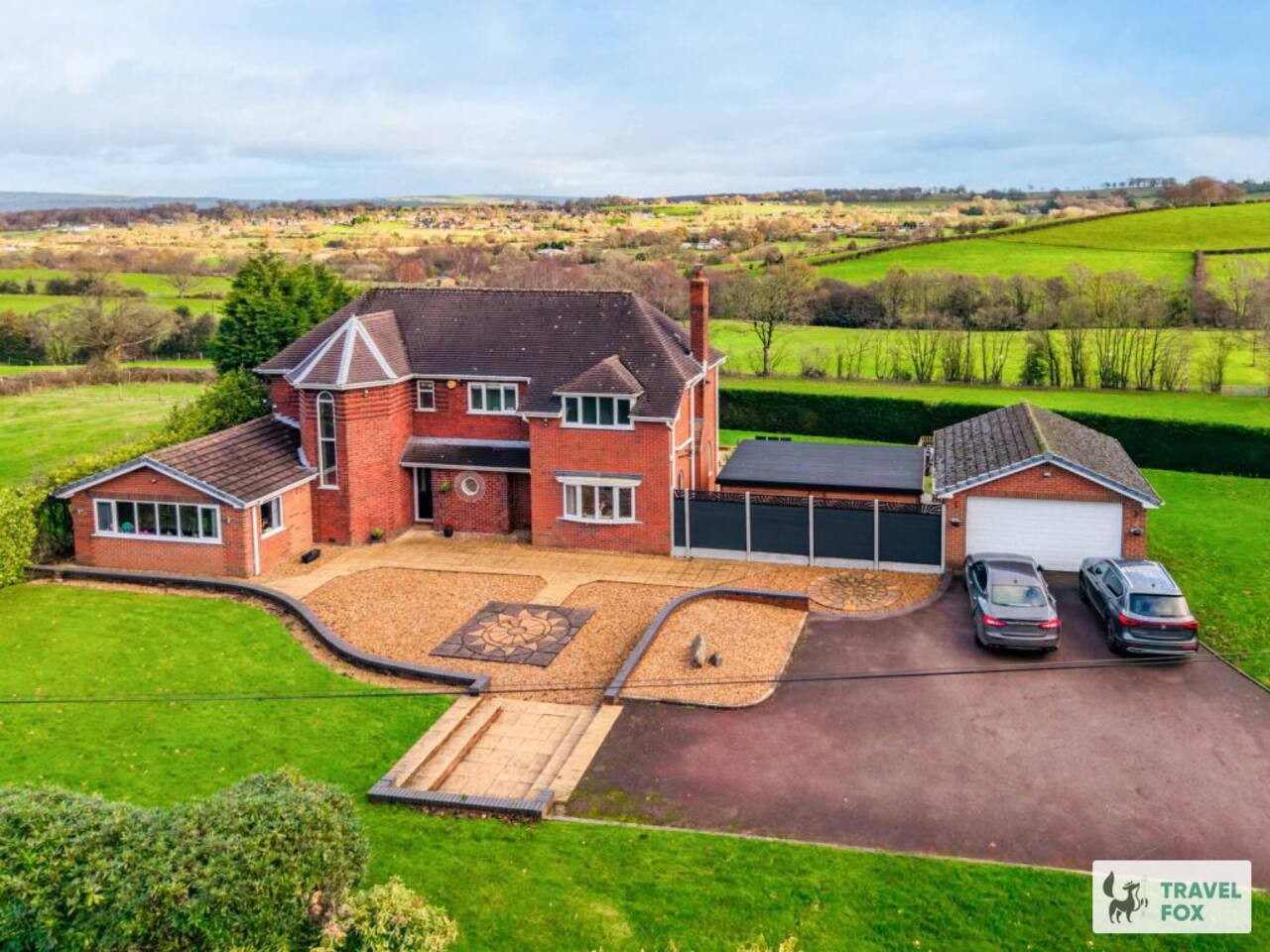
Cheddleton
Greenways House - Parking, Pool Table and Garden!
- Sleeps 10
- 4 bedrooms
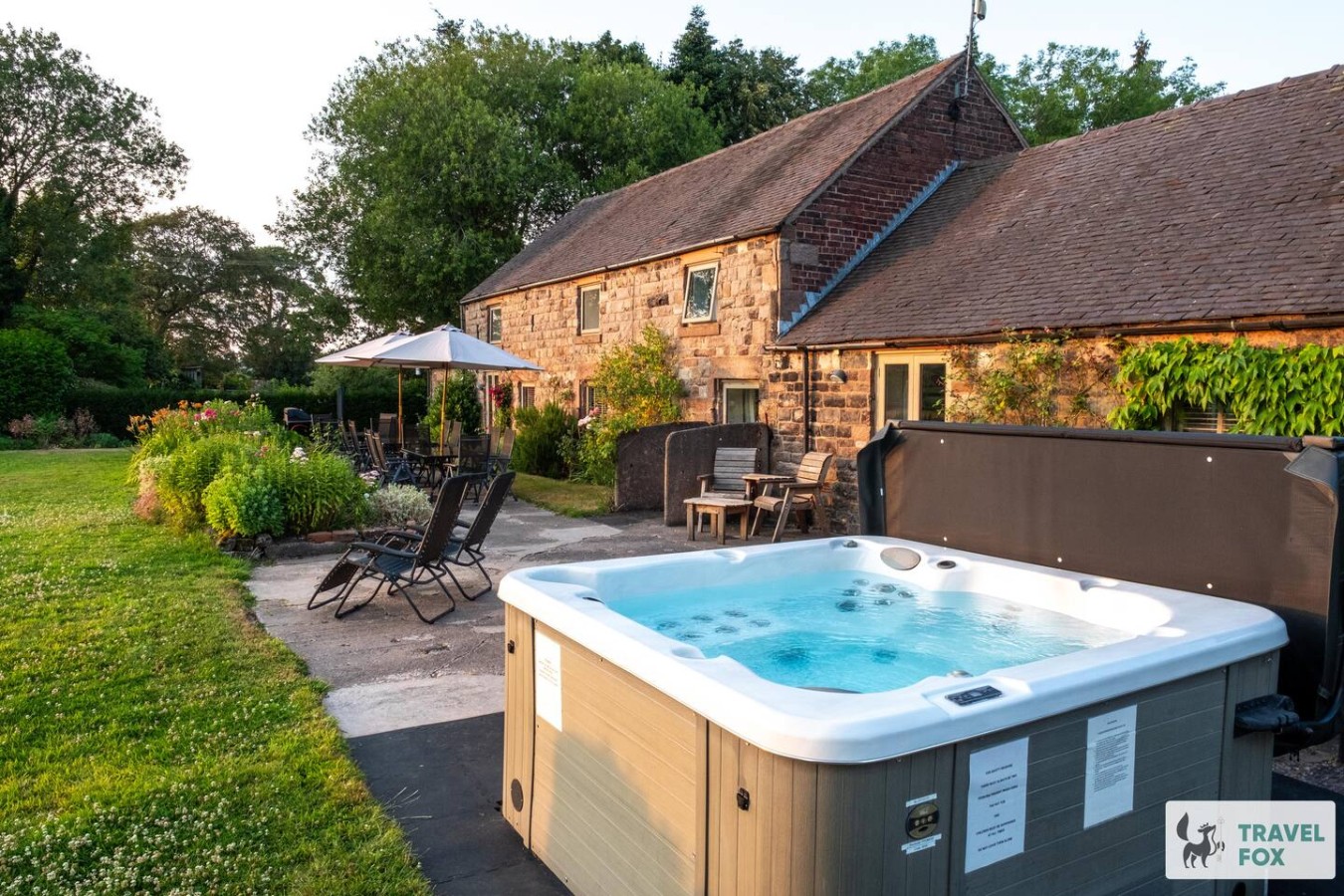
Cheddleton
Lee House Cottage + Annexe
- Sleeps 19
- 8 bedrooms
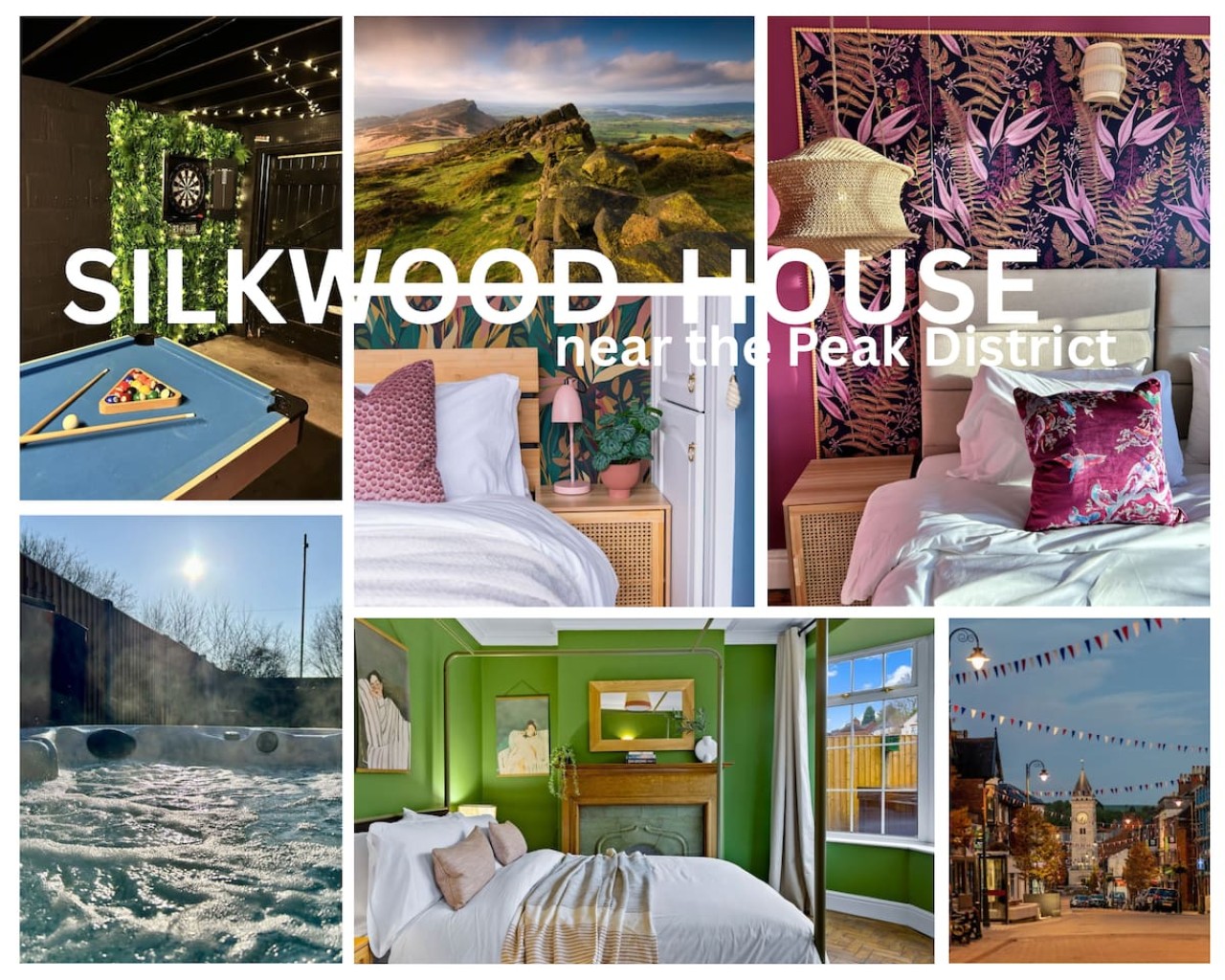
Leek
Silkwood House | Boutique 4 Bed nr. Peak District
- Sleeps 8
- 4 bedrooms
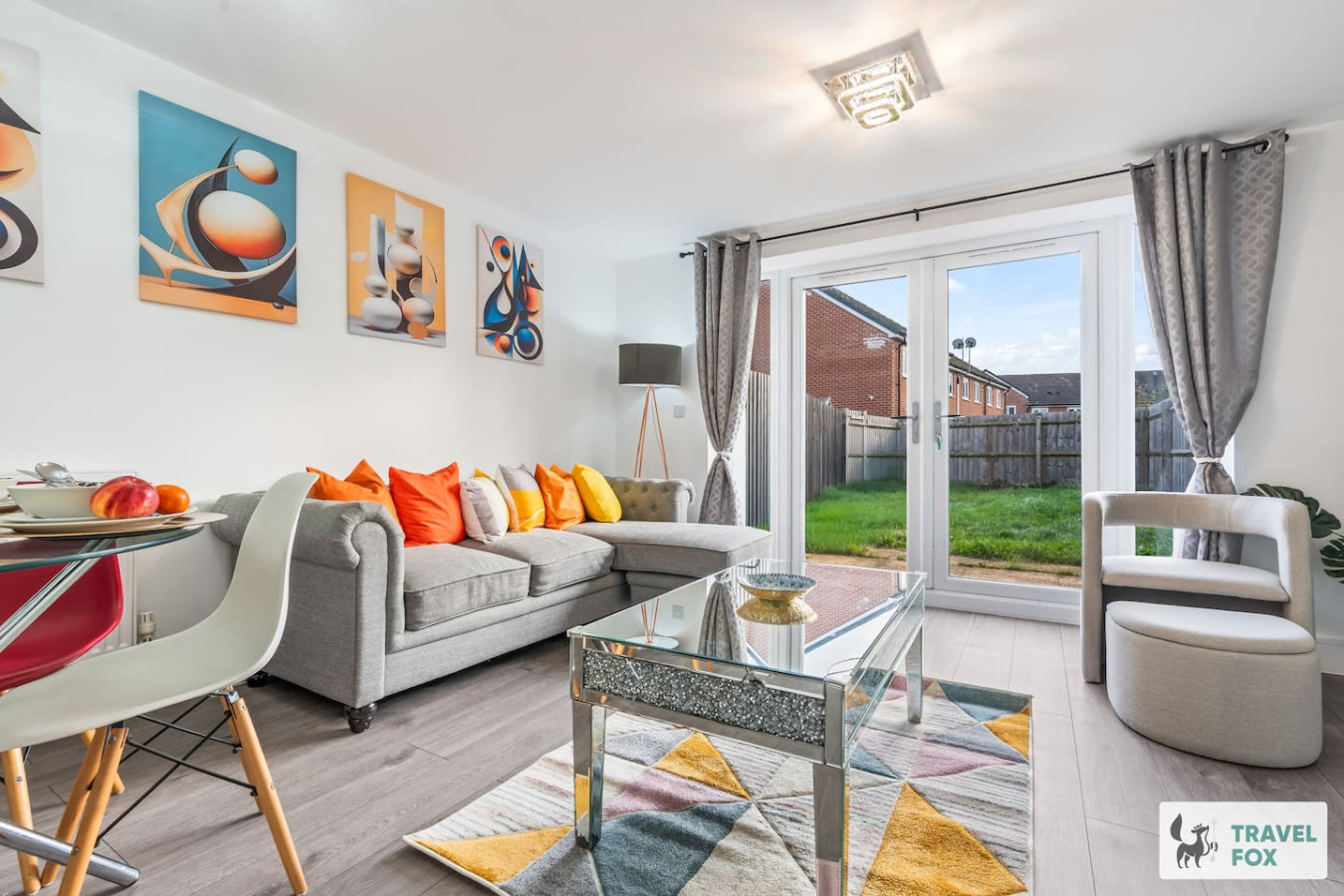
Stoke-on-Trent
Heather's House
- Sleeps 6
- 2 bedrooms
For homeowners
Own a holiday home near Abbots Bromley?
We manage holiday lets across Staffordshire from 12% commission, charged after cleaning costs, with no lock-in. A co-founder visits before you decide.
Holiday let management in Staffordshire →
A guide with a point of view
Written from research. Edited for real journeys.
Use the Official site links for live practical details, then use this guide for context, ideas and room to explore.
Photography credits & licences
Third-party photographs are credited to their named creators and reused under the linked Creative Commons licence or public-domain dedication. Travel Fox stores an optimised local copy; the file-specific changes and any browser-applied display crop are disclosed below. Reused photographs link both to the Wikimedia Commons source record and to the declared source image; Travel Fox's own photographs carry no such record and are marked as ours. These image licences do not cover Travel Fox text, branding or page design.
- File:St Nicholas' Church, Abbots Bromley, Staffordshire - geograph.org.uk - 7277806.jpg — photograph by Rod Grealish; St Nicholas' Church, Abbots Bromley, Staffordshire by Rod Grealish. Source record on Wikimedia Commons. Declared source image. Licence: CC BY-SA 2.0. File changes: Downloaded from Wikimedia Commons, resized to a maximum 1920px edge and encoded as an optimised JPEG. Display changes: Displayed with responsive CSS cropping.
Sources
Every place on this page is checked against a published source. Each entry links the record we used and names who publishes it.
- The Butter Cross — historicengland.org.uk statutory register or public authority record not machine-readable; publisher restricts automated access
- The Goat's Head — historicengland.org.uk statutory register or public authority record not machine-readable; publisher restricts automated access
- The Crown at Abbots Bromley — thecrownatabbotsbromley.co.uk operator, sector body or destination organisation
- The Bagot Arms — historicengland.org.uk statutory register or public authority record not machine-readable; publisher restricts automated access
- High Ash Country Stores — discovereaststaffordshire.com operator, sector body or destination organisation
- St Nicholas' Church — historicengland.org.uk statutory register or public authority record not machine-readable; publisher restricts automated access
- Blithfield Reservoir Walks — south-staffs-water.co.uk other published source
- Abbots Bromley and Bagot's Park Circular Walk — staffordshire.gov.uk statutory register or public authority