

Quiet border-country Staffordshire
Adbaston
Medieval stone, level canal walking and nearby market-town stops.
- Best for
- Church architecture and unhurried canal walking
- Give it
- A relaxed half day with nearby stops
- Don't miss
- The medieval church and its late Perpendicular tower
Photo: John Lord · CC BY-SA 2.0 · cropped
The Fox verdict
A tiny village best paired with Knighton and the canal
Adbaston rewards a focused visit rather than a full day spent within the village boundary.
Begin with the Grade II* church, then continue into the wider parish for the Shropshire Union Canal at Knighton. Norbury Junction and Eccleshall add worthwhile nearby stops, while Adbaston remains a village without everyday amenities.
Where to go
Places in Adbaston
Every place below is checked against a published source, listed with what it is and how long to give it.
Local signatures
3 places
Start here
St Michael and All Angels
A Grade II* parish church with fabric spanning the 12th to 16th centuries, a late Perpendicular west tower and a nave arcade carried on octagonal piers.
- Visit length
- Editorial estimate: Allow around 45 minutes
- Locality
- Adbaston
Norbury Junction
A canal hub that makes a clear nearby starting or turning point for the roughly 4.5-mile towpath link with Knighton.
- Visit length
- Editorial estimate: Allow around 45 minutes
- Locality
- Norbury Junction
Eccleshall Monthly Market
A monthly market under the Royal Oak arches in Eccleshall, a Georgian market town with independent shops along its high street.
- Visit length
- Editorial estimate: Allow around 60 minutes
- Locality
- Eccleshall
- Access
- Monthly market under the Royal Oak arches in Eccleshall; check current dates before travelling.
Food & drink
1 placeOld Wharf Tearoom, Norbury Junction
The Norbury Wharf tearoom serves homemade cakes and daily specials beside the Shropshire Union Canal.
- Visit length
- Editorial estimate: Allow around 45 minutes
- Locality
- Norbury Junction
Walks & outdoors
1 placeShropshire Union Canal at Knighton
A level towpath through open agricultural land, with Shebdon Embankment, Knighton Reservoir and the engineered line of Thomas Telford's canal nearby.
- Visit length
- Editorial estimate: Allow around 2 hours for a chosen out-and-back stretch
- Locality
- Knighton, Adbaston civil parish
No places match this filter. Choose All places to reset the list.
Three ways to explore Adbaston
Signature outings
Arcades, tower and a remarkable memorial
Look from the octagonal piers and late Perpendicular tower to the wooden tablet commemorating William Wakeley, whose reputed age remains a local curiosity.
Homemade cakes at Norbury Wharf
After a towpath stretch, stop at the Old Wharf Tearoom for homemade cakes beside the canal.
Level miles beside water and fields
At Knighton Wharf, trace the canal's working past: Cadbury sent chocolate crumb from here by boat to Bournville between 1911 and 1961.
The village story
Adbaston Village Guide
A clear-eyed portrait of a quiet Staffordshire village, its medieval church and the useful places just beyond it.
A small parish with village essentials
Adbaston's parish council has recently installed three public defibrillators, replaced four noticeboards and imposed a 30mph limit through the village. There is no shop here, no restaurant and no pub within the village boundary itself. Residents travel to nearby towns for everyday facilities, including Stone and, across the border, Newport in Shropshire.
Adbaston is the village at the centre of a civil parish that also includes Bishop's Offley, Knighton, Doley and Flashbrook. The name derives from the Anglo-Saxon personal name Eadbald and appears in Domesday Book as Edboldestone.
Towpath miles and town stops
Knighton sits on the Shropshire Union Canal, engineered by Thomas Telford between 1826 and 1835 to carry lime from Shropshire's quarries to Staffordshire's farms. The towpath offers a level, easy 4.5-mile walk from Norbury Junction through Knighton towards Cheswardine, along the Shebdon Embankment beside a reservoir. Buzzards, ravens and otters are part of the local wildlife, with occasional larger-animal sightings.
Eccleshall, the more useful town for a proper shop, has a Georgian high street of independent boutiques, a monthly market under the Royal Oak arches and a 13th-century castle.
Medieval stone and industrial memory
Back in Adbaston, St Michael and All Angels is Grade II* listed, its fabric spanning the 12th to 16th centuries, with a late Perpendicular west tower and a nave arcade of octagonal piers that Pevsner singled out as characteristic of the area. Inside, a wooden tablet commemorates William Wakeley of nearby Outlands, reputed locally to have died in 1714 aged 125; the age remains a local tradition.
At Knighton Wharf, Cadbury used the wharf and associated buildings from 1911 to 1961 to process milk into chocolate crumb, which was transported by canal boat to Bournville. In 2024, Excelsior Foods acquired the former Premier Foods site and announced plans to bring it into full operation over two years for dietary and nutritional products.
Getting here
Stone has the nearest railway station, and the A41 passes about 4.7 miles to the southwest.
The quiet that remains
One visitor to Offley Grove Farm, the B&B within the parish, wrote that "the farmhouse is set in a very rural location, peaceful and relaxing" — a fitting summary of a place with three defibrillators, one church and little else asking to be noticed.
Stay around Staffordshire
Make a longer stay of it
Travel Fox holiday homes around Staffordshire, linked directly to their property pages.
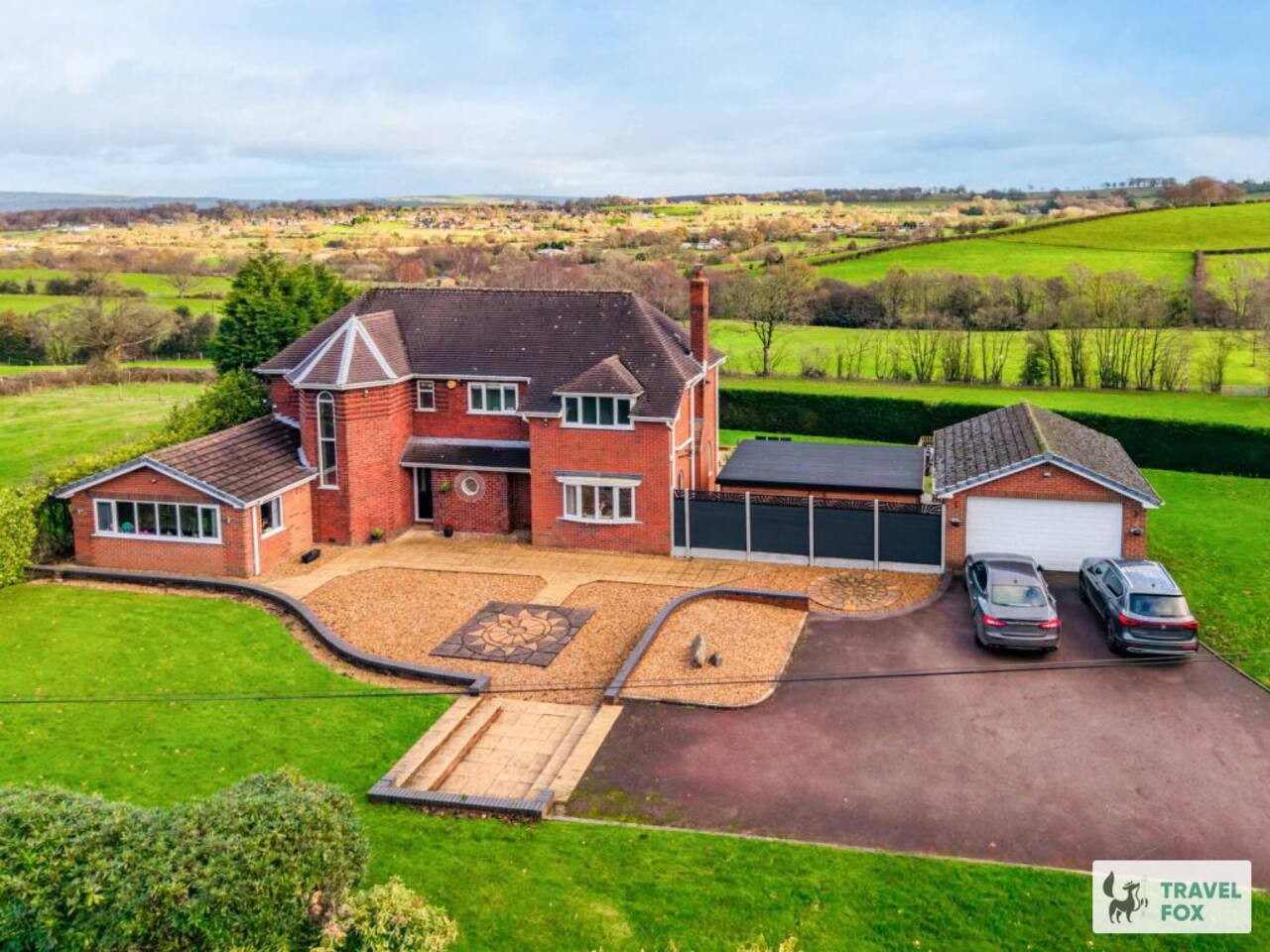
Cheddleton
Greenways House - Parking, Pool Table and Garden!
- Sleeps 10
- 4 bedrooms
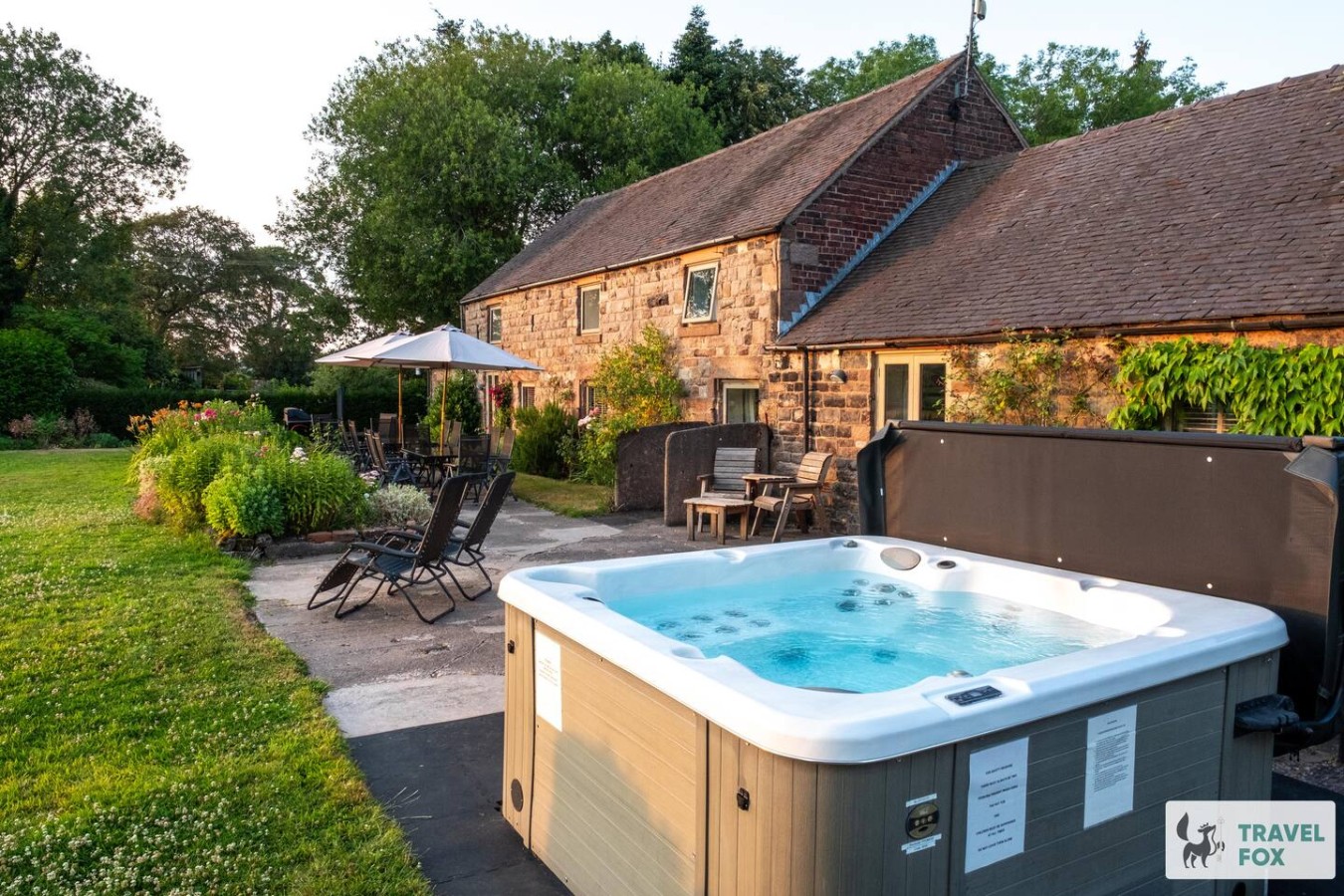
Cheddleton
Lee House Cottage + Annexe
- Sleeps 19
- 8 bedrooms

Leek
Silkwood House | Boutique 4 Bed nr. Peak District
- Sleeps 8
- 4 bedrooms
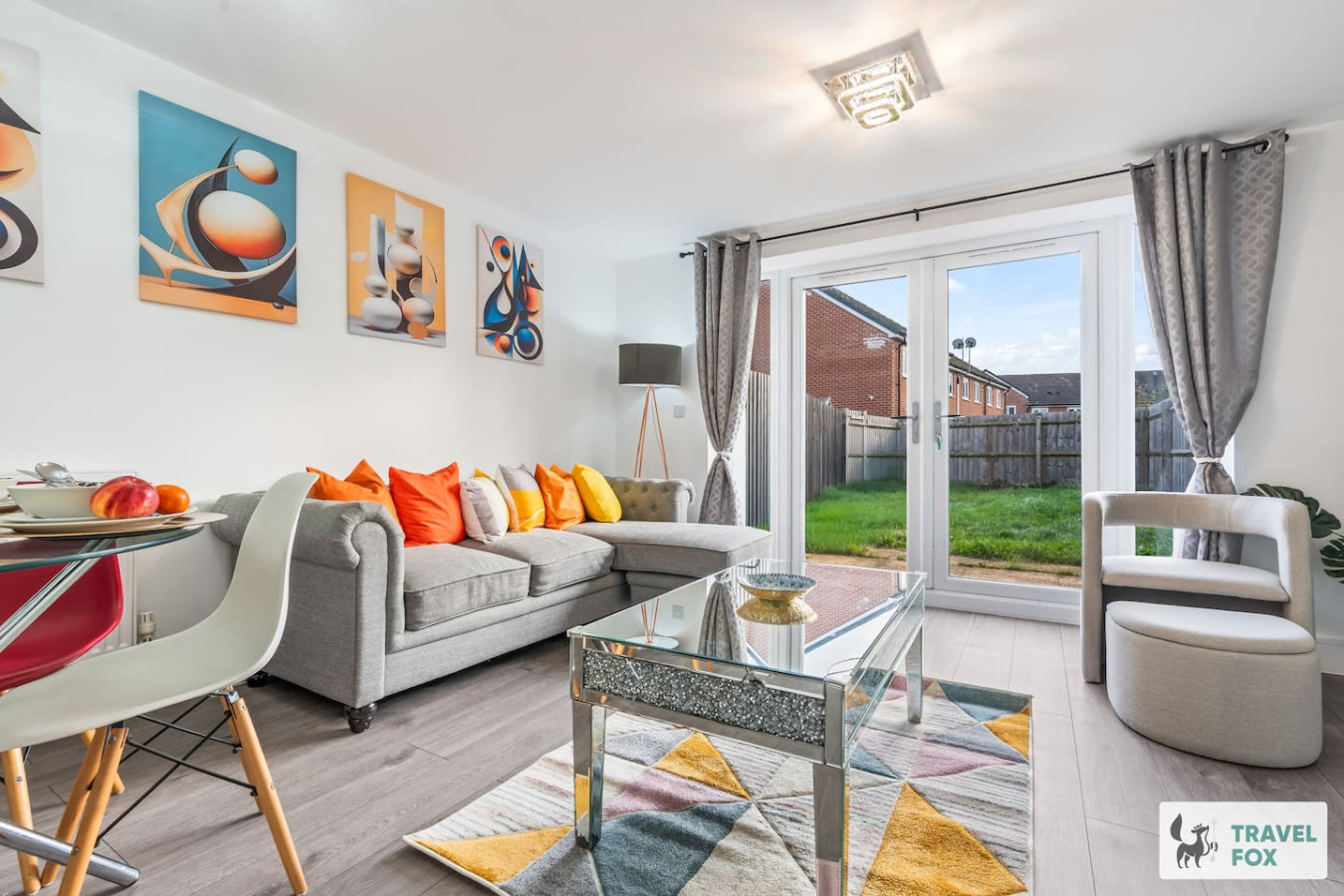
Stoke-on-Trent
Heather's House
- Sleeps 6
- 2 bedrooms
For homeowners
Own a holiday home near Adbaston?
We manage holiday lets across Staffordshire from 12% commission, charged after cleaning costs, with no lock-in. A co-founder visits before you decide.
Holiday let management in Staffordshire →
A guide with a point of view
Written from research. Edited for real journeys.
Use the Official site links for live practical details, then use this guide for context, ideas and room to explore.
Photography credits & licences
Third-party photographs are credited to their named creators and reused under the linked Creative Commons licence or public-domain dedication. Travel Fox stores an optimised local copy; the file-specific changes and any browser-applied display crop are disclosed below. Reused photographs link both to the Wikimedia Commons source record and to the declared source image; Travel Fox's own photographs carry no such record and are marked as ours. These image licences do not cover Travel Fox text, branding or page design.
- File:Church of St Michael and All Angels, Adbaston - geograph.org.uk - 1804019.jpg — photograph by John Lord; John Lord. Source record on Wikimedia Commons. Declared source image. Licence: CC BY-SA 2.0. File changes: Downloaded from Wikimedia Commons, resized to a maximum 1920px edge and encoded as an optimised JPEG. Display changes: Displayed with responsive CSS cropping.
Sources
Every place on this page is checked against a published source. Each entry links the record we used and names who publishes it.
- St Michael and All Angels — historicengland.org.uk statutory register or public authority record not machine-readable; publisher restricts automated access
- Shropshire Union Canal at Knighton — canalrivertrust.org.uk national body or asset manager
- Norbury Junction — norburywharfltd.co.uk operator, sector body or destination organisation
- Eccleshall Monthly Market — eccleshallparishcouncil.gov.uk statutory register or public authority
- Old Wharf Tearoom, Norbury Junction — norburywharfltd.co.uk operator, sector body or destination organisation