
Canals, craft and city appetite
Birmingham
A city of industrial scale, neighbourhood character, serious food and an inner canal network of about thirty-five miles.
- Best for
- Food, canals and industrial history
- Give it
- A few nights with time for distinct quarters
- Don't miss
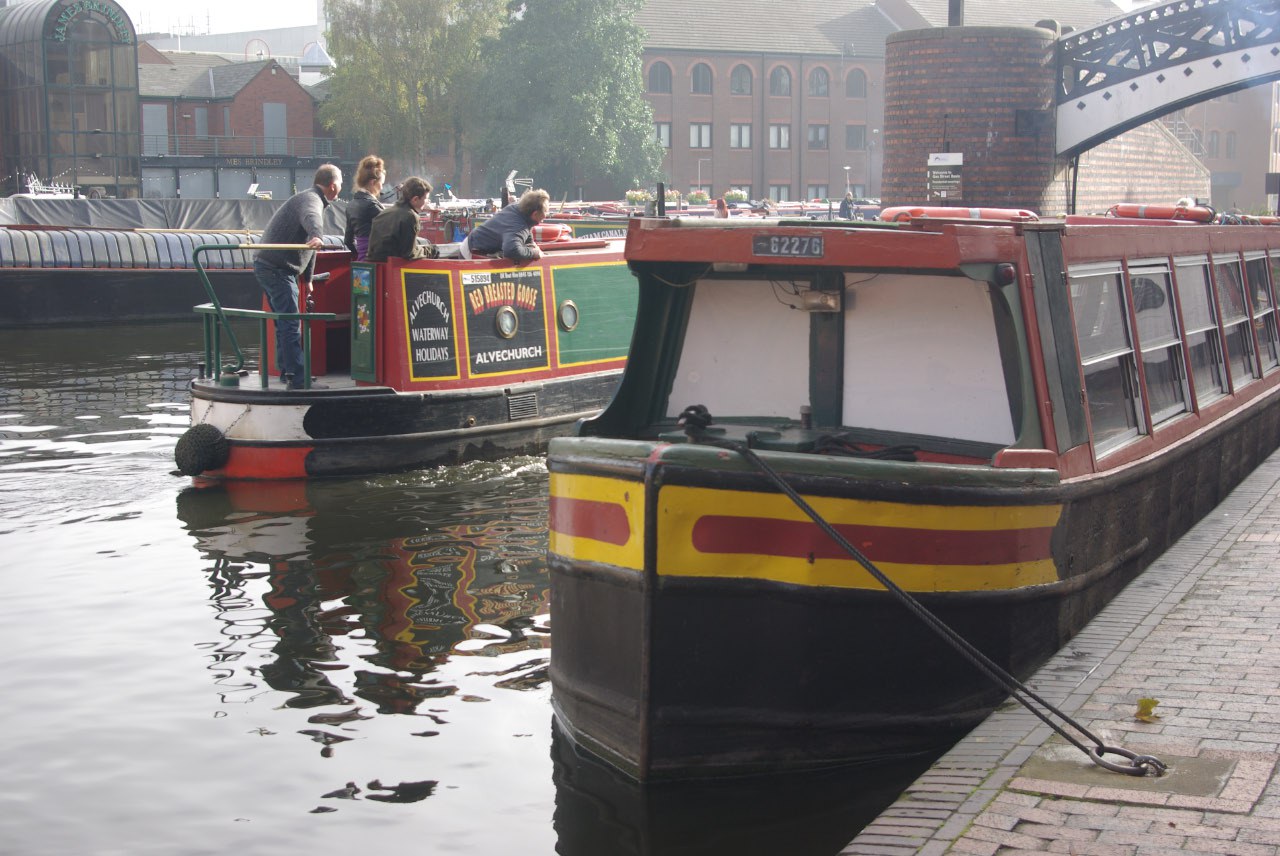
- Gas Street Basin, where two canals meet
Photo: Stephen McKay · CC BY-SA 2.0 · cropped
The Fox verdict
A city that rewards appetite and curiosity
Birmingham brings landmark dining, working industrial heritage, canalside quarters and extensive green space into one city break.
Come for a range that runs from the balti and more than sixty-five kinds of dim sum to Michelin-starred kitchens, then follow the city's manufacturing story through its markets, surviving back-to-backs, canals and Jewellery Quarter.
Where to go
Places in Birmingham
Every place below is checked against a published source, listed with what it is and how long to give it.
Local signatures
3 placesCannon Hill Park
A 250-acre family-focused park with a boating lake, funfair, mini golf and land train, next to the MAC arts centre.
- Visit length
- Editorial estimate: around 90 minutes
- Locality
- Edgbaston
Birmingham Back to Backs
Birmingham's last surviving court of back-to-back houses, with a terrace built in 1831 and opened by the National Trust as a museum in 2004.
- Visit length
- Editorial estimate: around 75 minutes
- Locality
- Court 15, Inge Street / Hurst Street
Cadbury World
A chocolate attraction in George Cadbury's Quaker model village, a popular family visit in the historic dry estate of Bournville.
- Visit length
- Editorial estimate: around 150 minutes
- Locality
- Bournville
Food & drink
1 placeChung Ying Cantonese
The city's oldest Cantonese restaurant, established by the Wong family in 1981 and still Wong-run, with more than 65 dim sum dishes including siu mai and char siu buns.
- Visit length
- Editorial estimate: around 90 minutes
- Locality
- 16-18 Wrottesley Street
Walks & outdoors
1 placeSutton Park
A 2,400-acre National Nature Reserve and SSSI with seven lakes, heath, woodland, wild ponies and muntjac deer.
- Visit length
- Editorial estimate: around 120 minutes
- Locality
- Sutton Coldfield, north of Birmingham
History & heritage
4 placesBullring Rag Market
An indoor market of around 350 stalls selling fabrics, haberdashery, textiles and household goods, continuing a Birmingham market tradition that began with a royal charter in 1154.
- Visit length
- Editorial estimate: around 60 minutes
- Locality
- Edgbaston Street
Gas Street Basin
The hub of Birmingham's canal network, where the Worcester & Birmingham Canal meets the older Birmingham Canal Navigations amid bars and restaurants along the water.
- Visit length
- Editorial estimate: around 75 minutes
- Locality
- Gas Street Basin
Winterbourne House and Garden
A rare surviving Arts-and-Crafts suburban villa garden of seven acres, built in 1903-04 for the Nettlefold family and now owned by the University of Birmingham.
- Visit length
- Editorial estimate: around 90 minutes
- Locality
- Edgbaston
Birmingham Cathedral
A compact Baroque church of 1715, a cathedral since 1905, with four monumental Pre-Raphaelite stained-glass windows by Edward Burne-Jones and Morris & Co.
- Visit length
- Editorial estimate: around 45 minutes
- Locality
- Colmore Row
Things to do
1 placeSarehole Mill
A working watermill and Tolkien childhood haunt: he grew up in Sarehole within 300 yards of the mill, and the setting helped inspire Hobbiton and the Shire.
- Visit length
- Editorial estimate: around 75 minutes
- Locality
- Hall Green
No places match this filter. Choose All places to reset the list.
Three ways to explore Birmingham
Signature outings
Meet at the Basin
See the Worcester & Birmingham Canal meet the older Birmingham Canal Navigations at the bar- and restaurant-lined Gas Street Basin.
Burne-Jones in Colour
Study Birmingham Cathedral's four monumental Pre-Raphaelite windows by Edward Burne-Jones, made by Morris & Co. between 1885 and 1897.
A Wilder Birmingham
Spend time among Sutton Park's seven lakes, heath and woodland in a 2,400-acre National Nature Reserve.
The city story
Birmingham City Guide
A city of metal, markets, canals and food, with neighbourhood character and green space beyond the centre.
Metal, Markets and the Jewellery Quarter
Outside the Bullring, on the West Mall, there is a bronze bull by Laurence Broderick, and it is probably the most photographed thing in the city. Behind it stands the Selfridges building, one of only four in the country, clad in fifteen thousand aluminium discs and modelled on a Paco Rabanne sequinned dress. The two of them together — a farm animal and a frock rendered in metal — tell you most of what you need to know about Birmingham, which has never been shy about scale and doesn't especially care whether it all matches.
This is the country's second city, and it wears the title lightly. You come here to eat, mainly. Birmingham has twelve restaurants in the 2026 Michelin Guide, more than any UK city outside London, and it also invented the balti, and it keeps a Cantonese restaurant that runs sixty-five kinds of dim sum. A guest staying a few nights can bracket the whole range in a single day if they pace themselves.
Where you base yourself matters more than in most cities, because the character changes street by street. The Jewellery Quarter is the one to want. It sits about a mile from New Street station in a straight line, or one tram stop, and it is low-rise and red-brick and built to human proportions, which the rest of the centre is not. It is also still a working jewellery district. The Birmingham Assay Office is here, founded by Act of Parliament in 1773 after the industrialist Matthew Boulton lobbied for it, and it is now the busiest assay office in the world, hallmarking around twelve million items a year. You can walk past the place that stamps the gold and then get dinner two streets over.
Dinner in the Quarter is a good problem to have. 1000 Trades does seasonal British and is one of the most loved rooms in the area. The Button Factory has a rooftop terrace, Trentina is an independent Italian deli and kitchen making its own pasta, and the Indian Brewery pairs its own craft beer with Indian street food, which is a combination the city takes as read. Saint Paul's House pours cocktails over St Paul's Square. If you want the full production, The Wilderness is here too — chef Alex Claridge won it a first Michelin star in February 2026. For a quieter pint there is The Queens Arms, which has been serving ale since 1878, and The Jewellers Arms, which started life in the 1830s or 40s as the Goldsmiths and Jewellers Arms and eventually gave up half its name.
Creative Quarters, Heavy Metal and Canals
Digbeth is the other end of the register. It is the creative quarter and, reportedly, the oldest settlement in the city, going back to the seventh century, which is a lot of history for somewhere now defined by street art and indie bars. The centrepiece is the Custard Factory, the former works of Alfred Bird's custard empire, now studios and venues: Baked in Brick does pizza, NQ64 is a retro arcade bar, Golf Fang is crazy golf, and Chance & Counters is a boardgame café. The Digbeth Dining Club runs Thursday to Sunday as a permanent street-food venue with rotating vendors — burgers, noodles, kebabs, tacos — plus bars and live music. Kilder, on Shaw's Passage, does British charcuterie and cheese with craft beer; Passing Fancies placed third in the UK's top fifty cocktail bars in 2024; and Alfred Works is a food hall. The name Peaky Blinders is believed to have started at the Rainbow pub down here, though we'll come back to that, because almost none of the television series was actually filmed in the city.
For the canalside version of a night out, Brindleyplace and Broad Street cover it. This is the 1990s regeneration — tree-lined squares, waterside terraces, mostly mainstream and chain dining, Cosy Club and Bank and the Box sports bar and a canalside All Bar One. The Ikon Gallery sits on Oozells Square, free contemporary art in a neo-gothic former school. Broad Street is the nightlife strip, with a pavement Walk of Stars honouring Ozzy Osbourne, Tony Iommi and the comedian Jasper Carrott, and in 2019 the canal bridge here was renamed Black Sabbath Bridge, which is a thing a city does when it is quietly certain it invented heavy metal.
It did, as it happens. Black Sabbath were all Birmingham boys who grew up in the city and worked its factories — Ozzy Osbourne's childhood home was 14 Lodge Road in Aston. Tony Iommi lost the tips of two fingers in a sheet-metal press, and the loose, down-tuned, power-chord sound came partly out of that injury. UB40, Duran Duran and Judas Priest are all from here too. The Crown on Station Street, where Sabbath played early gigs, is Grade II listed and gets called the cradle of heavy metal.
From Michelin Stars to Balti and Dim Sum
The canals are the thing everyone mentions and the claim is true, if you read it carefully. Birmingham has more miles of canal than Venice — the Canal & River Trust checked, and it comes out at about 35.7 miles here against Venice's 30.7. The inner network runs to around thirty-five miles; the full Birmingham Canal Navigations reach roughly a hundred, and at the industrial peak the whole thing exceeded a hundred and sixty. The first canal opened in 1768. The place to see it is Gas Street Basin, where the Worcester & Birmingham meets the older Birmingham Canal Navigations, now lined with bars and restaurants along the water.
If the Michelin count is why you came, Opheem is the top of it — two stars, chef Aktar Islam doing progressive Indian, the only two-star kitchen in the city. The signature is an achaari Pink Fir potato with mango and tamarind, a reworked Delhi aloo tuk that gets water-bathed, grilled, deep-fried and turned into foam, which is more engineering than most potatoes receive. There is lamb raan and a seafood rasam too. Adam's, on Waterloo Street, holds one star for Adam Stokes's refined modern British — halibut with sea vegetables and oregano, salt-marsh lamb with wild-garlic purée and a morel stuffed with duck-liver mousse. Simpsons is another one star, set in an Edwardian villa in Edgbaston, known for tapenade bread rolls, soufflés, and pairings that shouldn't work on paper: banana and foie gras, beef with snails and haggis.
The balti is the other pilgrimage, and it points south of the centre to the Balti Triangle, spread across Sparkbrook, Sparkhill and Balsall Heath along Ladypool Road, Stoney Lane and Stratford Road. The dish was invented here. Adil's on Stoney Lane, founded in 1977, calls itself the home of balti cuisine, and its owner Mohammed Arif says he brought the idea from Kashmir — spices cooked in vegetable oil rather than ghee, boneless meat, served fast in a pressed-steel bowl and eaten with naan and no cutlery. The Triangle held thirty-plus balti houses in its 1990s heyday and now runs to a handful. Shababs has been a mainstay since 1987 and grown from twenty-two covers to a hundred and twenty-two, bring your own booze. Shahi Nan Kabab has served balti since 1984; its chef, Azhar Mahmood, once cooked for the Pakistani navy.
Parks, Tolkien and Civic Landmarks
Then there is dim sum in the Chinese Quarter, in Southside, which also takes in Theatreland and the Gay Village. Chung Ying Cantonese at 16–18 Wrottesley Street is the city's oldest Cantonese restaurant, established in 1981 by the Wong family and still Wong-run, with the largest dim sum selection in the UK — more than sixty-five dishes, from siu mai to char siu buns. Wing Wah, pagoda-style, moved into Chinatown in 2019. People drive in from across the Midlands for it.
For all the eating, the city is greener than its reputation allows — 591 parks and open spaces across more than 3,500 hectares, more than any equivalent-sized European city. Sutton Park, out in Sutton Coldfield, runs to 2,400 acres and is the largest urban nature reserve in Europe, a National Nature Reserve with seven lakes, heath, woodland, wild ponies and muntjac deer. Cannon Hill Park in Edgbaston is the family pick, 250 acres with a boating lake, funfair, mini golf and land train, next door to the MAC arts centre. Winterbourne House keeps a rare Arts-and-Crafts villa garden of seven acres, built in 1903–04 for the Nettlefold family. And out at Hall Green, Sarehole Mill and Moseley Bog are a working watermill and a patch of ancient woodland that happen to be Tolkien childhood haunts — he grew up in Sarehole from 1896 to 1900, within three hundred yards of the mill, and called those the happiest years of his youth. Sarehole became Hobbiton and the Shire; Moseley Bog fed the Old Forest. Two Edgbaston towers, Perrott's Folly and the Edgbaston Waterworks tower, are the models usually cited for the Two Towers of Gondor.
The markets are older than any of it. Birmingham's has run since a royal charter granted to Peter de Birmingham in 1154 — the Corn Cheaping — and the Bull Ring name probably comes from bull-baiting, dogs set on a tethered bull, popular from around 1200. The Bullring Rag Market on Edgbaston Street is a vast indoor hall of some 350 stalls selling fabric, haberdashery, textiles and household goods, and it sits right beside the shiny 2003 shopping centre, which is a fair summary of how the city holds its past and present in the same eyeline.
Connections, Day Trips and Dry Bournville
The architecture rewards a slow walk. Symphony Hall opened in 1991 with the CBSO under a young Simon Rattle and gets called an acoustic triumph by the Sunday Times and the best concert hall in the country by the Telegraph; it has a raise-and-lower canopy and a reverberation chamber that adds fifty per cent to the hall's volume when its giant doors open. St Philip's Cathedral on Colmore Row is a compact Baroque church of 1715 holding four monumental Pre-Raphaelite windows by Edward Burne-Jones, made by Morris & Co. between 1885 and 1897 — the Last Judgement, his masterpiece, was installed the year he died. The Library of Birmingham on Centenary Square is the largest public library in the UK, free, with a Secret Garden roof terrace and city views.
Getting here and out is straightforward. New Street sits directly beneath the Grand Central shopping centre and runs to London Euston in about an hour and twenty; Snow Hill and Moor Street handle Chiltern and local routes, Moor Street being the atmospheric restored one, handy for the Bullring. The Metro trams run from Grand Central out to Wolverhampton, and the airport is about 6.6 miles from New Street station in a straight line, and further by road. For a day trip, the Black Country Living Museum at Dudley is about 8.1 miles from New Street station in a straight line, and further by road — twenty-six acres of cobbled streets and canal docks, and the principal place where Peaky Blinders was actually shot.
One more thing to know before you plan a big night: Bournville, George Cadbury's Quaker model village built to lift workers out of the city's cramped back-to-backs, is dry. No alcohol has been sold within the historic estate since it was laid out in the 1890s, and none is sold there today. You can tour Cadbury World and eat all the chocolate you like. You just can't get a pint to go with it.
Stay around West Midlands
Make a longer stay of it
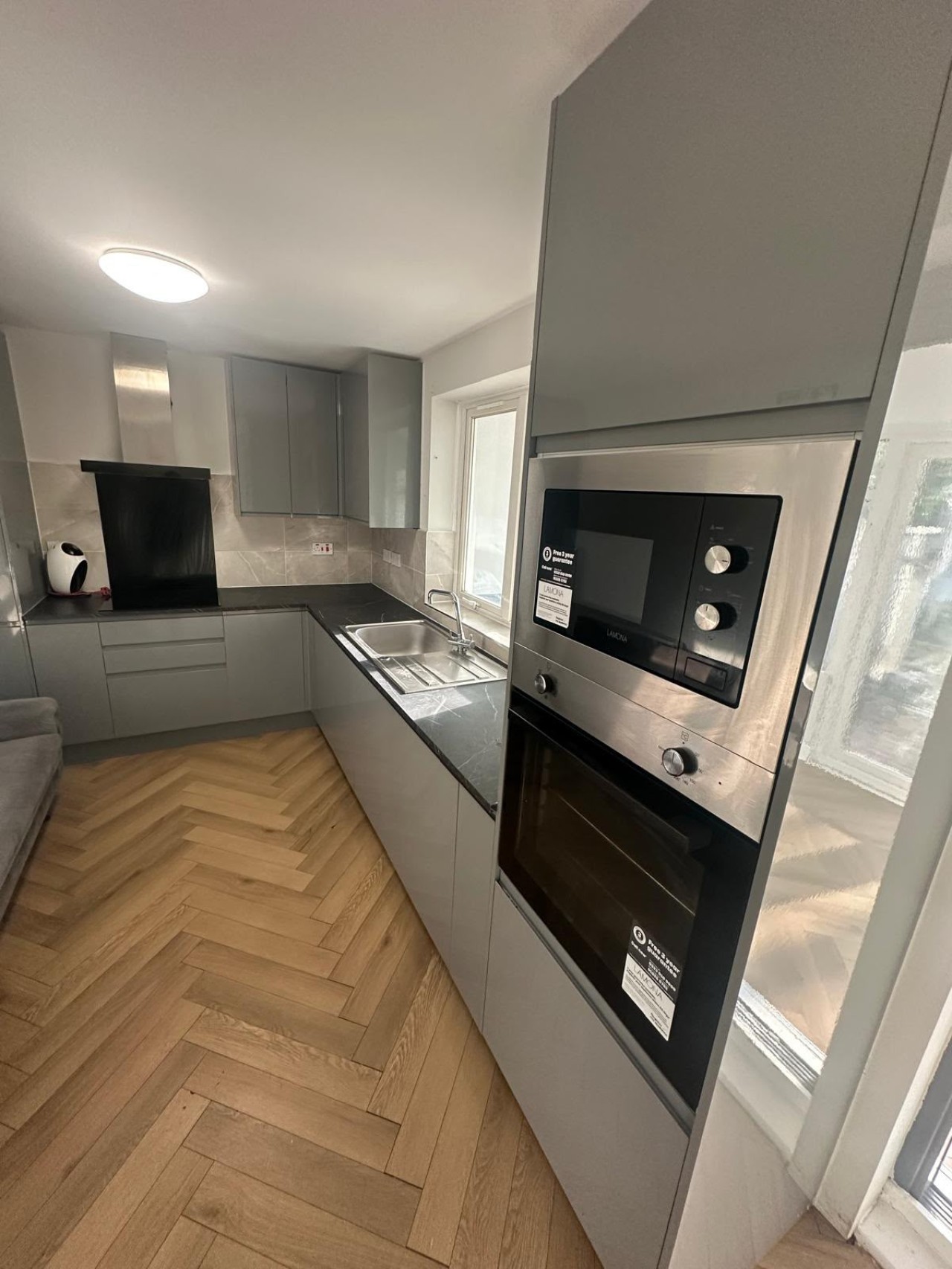
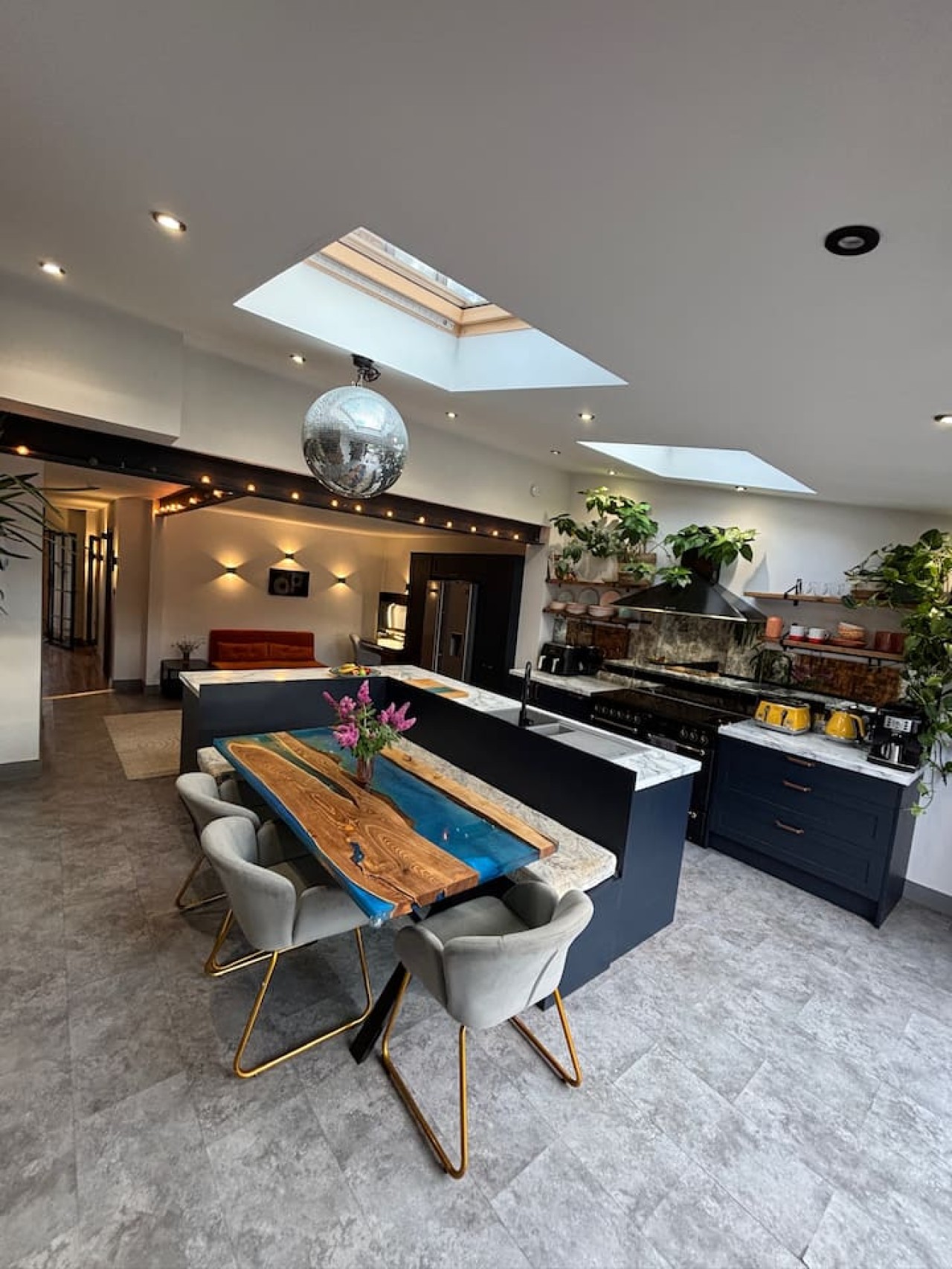
Travel Fox holiday homes around West Midlands, linked directly to their property pages.

For homeowners
Own a holiday home near Birmingham?
We manage holiday lets across the UK from 12% commission, charged after cleaning costs, with no lock-in. A co-founder visits before you decide.
How our holiday let management works →
A guide with a point of view
Written from research. Edited for real journeys.
Use the Official site links for live practical details, then use this guide for context, ideas and room to explore.
Photography credits & licences
Third-party photographs are credited to their named creators and reused under the linked Creative Commons licence or public-domain dedication. Travel Fox stores an optimised local copy; the file-specific changes and any browser-applied display crop are disclosed below. Reused photographs link both to the Wikimedia Commons source record and to the declared source image; Travel Fox's own photographs carry no such record and are marked as ours. These image licences do not cover Travel Fox text, branding or page design.
- File:Gas Street Basin, Birmingham - geograph.org.uk - 3197352.jpg — photograph by Stephen McKay; Gas Street Basin, Birmingham by Stephen McKay. Source record on Wikimedia Commons. Declared source image. Licence: CC BY-SA 2.0. File changes: Downloaded from Wikimedia Commons, resized to a maximum 1920px edge and encoded as an optimised JPEG. Display changes: Displayed with responsive CSS cropping.
Sources
Every place on this page is checked against a published source. Each entry links the record we used and names who publishes it.
- Bullring Rag Market — arrivalguides.com other published source
- Gas Street Basin — canalrivertrust.org.uk national body or asset manager
- Sutton Park — birmingham.gov.uk statutory register or public authority
- Cannon Hill Park — birmingham.gov.uk statutory register or public authority
- Winterbourne House and Garden — winterbourne.org.uk operator, sector body or destination organisation
- Sarehole Mill — birminghammuseums.org.uk other published source
- Birmingham Cathedral — birminghamcathedral.com operator, sector body or destination organisation
- Birmingham Back to Backs — nationaltrust.org.uk national body or asset manager
- Chung Ying Cantonese — chungying.co.uk operator, sector body or destination organisation
- Cadbury World — cadburyworld.co.uk operator, sector body or destination organisation