
The little bay
Oban
A horseshoe harbour sheltered by Kerrera, where seafood, whisky, ferries and Highland history meet.
- Best for
- Seafood, whisky and town viewpoints
- Give it
- A day in town, longer for the coastal walks
- Don't miss
- The Railway Pier green shack and McCaig's Tower
Photo: David Dixon · CC BY-SA 2.0 · cropped
The Fox verdict
A harbour town with its own appetite
Oban turns a sheltered bay into a compact mix of working ferries, named seafood suppliers, one of Scotland's oldest distilleries and viewpoints over the isles.
Start with shellfish on Railway Pier, follow the town's whisky and chocolate trail, then climb to McCaig's unfinished granite ring or continue north to clan history, a family beach and Dunstaffnage Castle.
Where to go
Places in Oban
Every place below is checked against a published source, listed with what it is and how long to give it.
Local signatures
3 placesOban Distillery
Founded by John and Hugh Stevenson in 1794, the two-still distillery predates the modern town that grew around it and runs visitor tours.
- Visit length
- Editorial estimate: around 60 minutes
- Locality
- corner of George and Stafford Streets in the town centre
Dunollie Castle, House and Museum
The ruined tower house of Clan MacDougall on a site fortified since the early medieval period, with clan collections in Dunollie House and its museum.
- Visit length
- Editorial estimate: around 90 minutes
- Locality
- a headland above Oban Bay
Dunstaffnage Castle
A 13th-century castle with a visitor centre and cafe, set on a rock above Loch Etive.
- Visit length
- Editorial estimate: around 90 minutes
- Locality
- c. 3.5 miles NE
Food & drink
3 places
Oban Seafood Hut
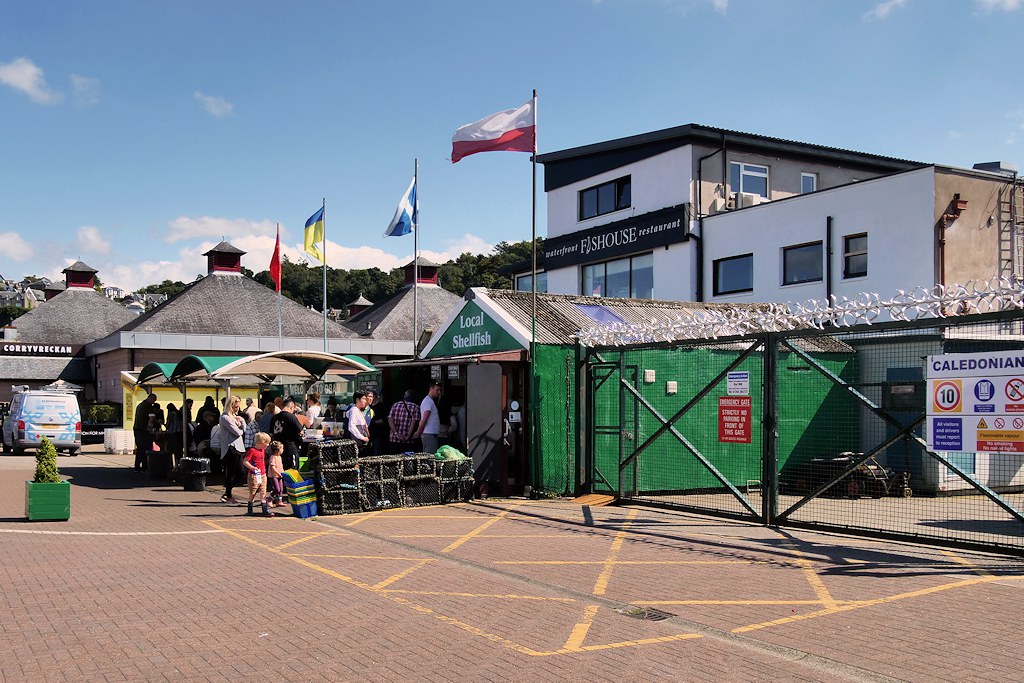
The little green shack established in 1990 by fisherman John Ogden as a place for Oban's fishermen to sell affordable, high-quality shellfish.
- Visit length
- Editorial estimate: around 30 minutes
- Locality
- Railway Pier, by the CalMac terminal
Ee-Usk
A sit-down seafood restaurant in the former railway-station building, run by the MacLeod family and supplied by named producers around Oban and Loch Creran.
- Visit length
- Editorial estimate: around 90 minutes
- Locality
- North Pier
Oban Chocolate Company
A chocolatier and cafe where every chocolate is handmade on the premises.
- Visit length
- Editorial estimate: around 45 minutes
- Locality
- just around the corner from the distillery
History & heritage
3 places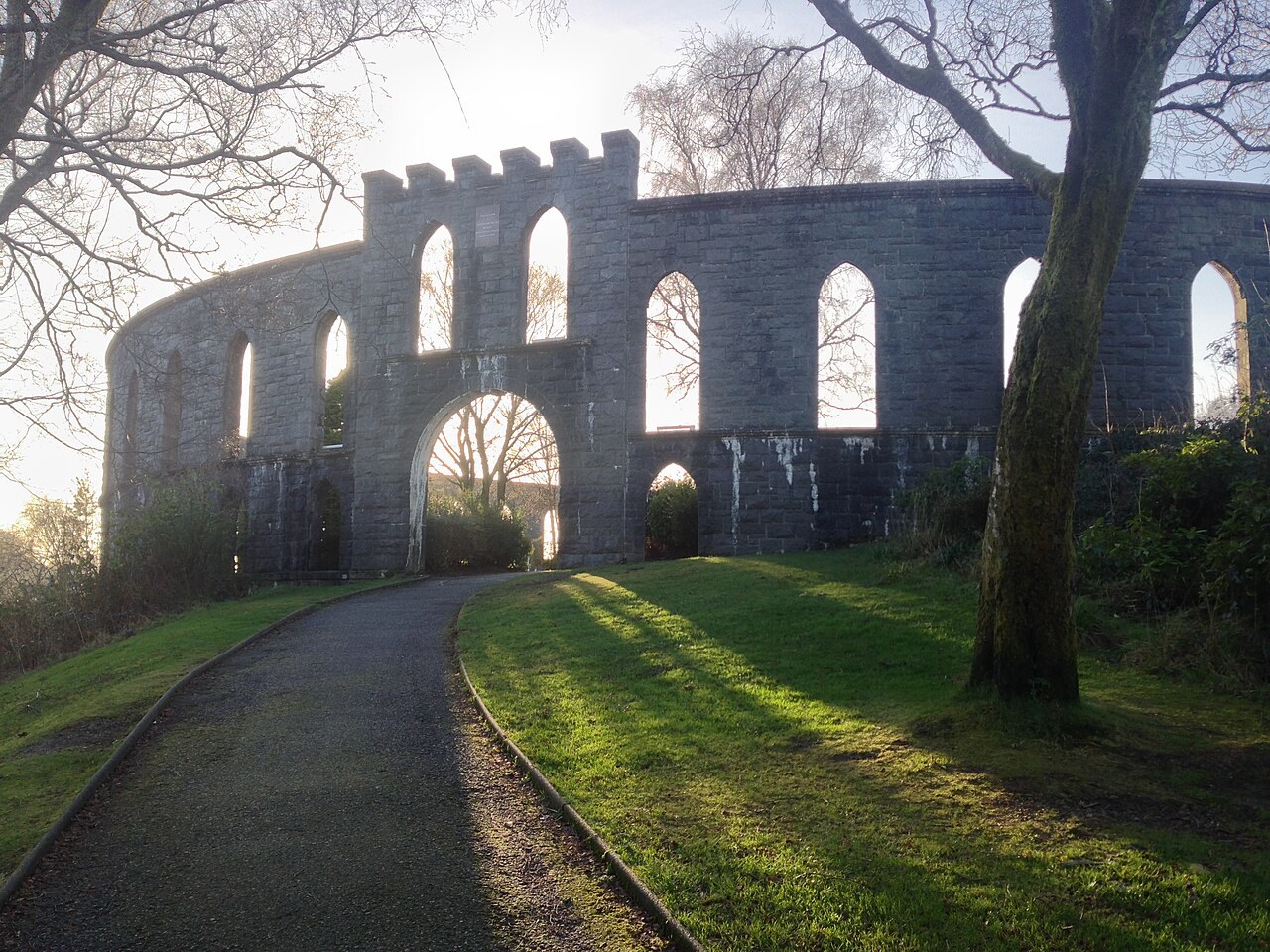
McCaig's Tower
John Stuart McCaig's unfinished 1897-1902 granite monument: two tiers of 94 lancet arches enclosing a public garden and views to Kerrera, Lismore and Mull.
- Visit length
- Editorial estimate: around 45 minutes
- Locality
- Battery Hill above the town
Oban War and Peace Museum
A museum devoted to Oban's local, wartime and maritime history.
- Visit length
- Editorial estimate: around 60 minutes
- Locality
- on the Esplanade
St Columba's Cathedral
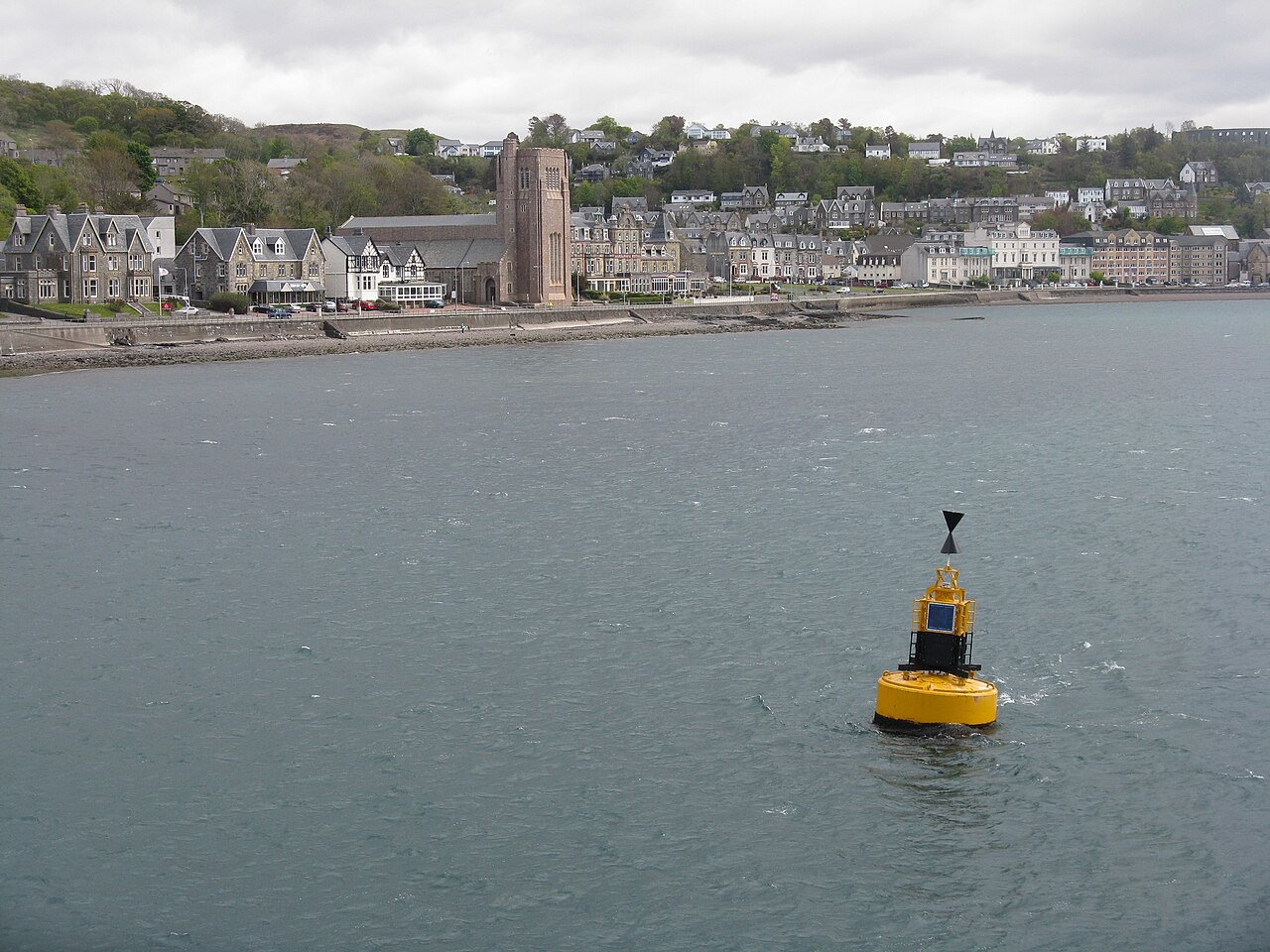
The mother church of the Roman Catholic Diocese of Argyll and the Isles, designed by Sir Giles Gilbert Scott in pink Peterhead and blue Inverawe granite.
- Visit length
- Editorial estimate: around 30 minutes
- Locality
- Corran Esplanade at the northern end of town
No places match this filter. Choose All places to reset the list.
Three ways to explore Oban
Signature outings
The green seafood shack
Try the cheap-and-cheerful shellfish stop John Ogden established in 1990 for Oban's fishermen to sell directly to residents and visitors.
McCaig's unfinished vision
Walk up Jacob's Ladder to the empty ring of 94 granite arches and its views towards Kerrera, Lismore and Mull.
St Columba's Cathedral
See Sir Giles Gilbert Scott's Neo-Gothic cathedral, built in contrasting pink Peterhead and blue Inverawe granite.
The town story
Oban Town Guide
The original Travel Fox guide to Oban's bay, seafood, whisky, landmarks, history, transport and walks.
The Little Bay and Its Seafood
On the Railway Pier, next to the CalMac terminal where the Mull ferry loads, there is a small green shack. It sells shellfish. A fisherman called John Ogden set it up in 1990 because he wanted Oban's own boats to sell good, cheap shellfish to the people standing on the pier. He had been cooking shellfish for his crewmates at sea for years, so the leap was not a large one. The shack is still there, still cheap, and it is one of the handful of things — with the red-roofed North Pier buildings behind it — that people use to know, in a photograph, that they are looking at Oban.
The town sits on a horseshoe bay, close to a perfect one, sheltered by the low green bulk of the island of Kerrera a few hundred yards offshore. You look west across the water to Kerrera, then Lismore, then Mull, then the hills of Morvern behind them. Behind you the town climbs a short way up two craggy hills, and on top of one of them is a structure that needs explaining later. First, though, the eating.
Oban calls itself the Seafood Capital of Scotland, which is the kind of claim a town makes about itself, but the supply chain behind it is real and mostly named. Ee-Usk, on the North Pier, is the sit-down version. The name is a phonetic spelling of the Gaelic *iasg*, fish, and the building it occupies used to be the town's railway station. It is run by the MacLeod family, who have been running seafood restaurants here for over twenty years. Their oysters are grown from seed by Caledonian Oysters on Loch Creran; the langoustines are caught by David Fraser out of the sea lochs around the town; the smoked salmon and trout come from the Inverawe Smokery. The kitchen's stated ambition is to cook all of it as simply as possible, which for a Grand Seafood Platter of six oysters, half a lobster, dressed crab, king scallops, langoustines, Thai fishcakes, smoked salmon, mussels, fresh salmon and crab claws is probably the correct ambition. There is a smaller platter for people who would like to keep some room.
Chocolate, Pubs and Whisky
For pudding, or for the walk between meals, the Oban Chocolate Company is round the corner from the distillery and makes every chocolate on the premises. Sweet Memories, on George Street, is a traditional sweet shop and does what a traditional sweet shop does.
The pubs run older than the restaurants. The Oban Inn, by the North Pier, dates to 1790 and is one of the few original buildings left in the town — old maritime photographs and artefacts on the walls, stained-glass panels said to have come from an Irish monastery, and a whisky list that takes the whisky seriously. Aulay's Bar stands on the site of Tigh Clach A' Gheodha, reputedly the town's oldest droving inn, and keeps up the theme with maritime prints and a traditional Scottish menu. Markie Dans has a beer garden that looks straight out over the bay and more than a hundred malt whiskies, and it is the one to take the dog to. The Lorne Bar does local seafood and pub classics with an extensive whisky and draught selection, and puts a live band or a DJ on at weekends, which is either what you want on a Saturday in Oban or exactly what you are trying to avoid.
The whisky is not incidental. The Oban Distillery sits in the middle of the town, on the corner of George and Stafford Streets, and it got there first. It was founded in 1794 by two brothers, John and Hugh Stevenson, on the site of the town's short-lived brewery, and the modern town grew up around it rather than the other way round. It is one of the oldest distilleries in Scotland and, with just two pot stills, one of the smallest. It ran in the family until Hugh died in 1820 and his son Thomas came back from Buenos Aires to take it over, then passed through a few hands before Walter Higgin bought and rebuilt it in 1883. It was during that rebuild, digging behind the buildings, that the workmen found a cave full of prehistoric remains. More on the caves shortly. The distillery runs tours and bottles a whisky called Little Bay, which is what Oban's Gaelic name, *An t-Òban*, means.
Towers, Viewpoints and Clan History
Above all of this, on Battery Hill, is the structure that needs explaining. McCaig's Tower is a two-tier ring of lancet arches — ninety-four of them, forty-four below and fifty above — built in Bonawe granite to a circumference of about six hundred and sixty feet, and it looks, deliberately, like the Colosseum. It was built between 1897 and 1902 by John Stuart McCaig, a banker from the Isle of Lismore who acted as his own architect. He had two purposes. One was to give the local stonemasons work through the winters. The other was to raise a permanent monument to the McCaig family, complete with a museum, an art gallery, a central tower and statues of himself, his siblings and his parents. He built the outer walls, then died of a heart attack in June 1902, and none of the inside ever appeared. His will tried to keep the money flowing into the project after his death, and the Court of Session struck it down twice, in 1907 and 1915, as serving "objects of no utility." So the shell stands empty, which is the point of it now — a public garden inside a monument to a plan that stopped. You reach it up 144 steps called Jacob's Ladder, and from the top you can see Kerrera, Lismore and Mull.
If you want the same view without the folly, Pulpit Hill is the other town viewpoint, a little to the south, 239 feet up. Just east of the summit is a square stone called the Minister's Stone, where ministers are said to have stood to preach to congregations gathered on the hilltop in the open air.
The other headland, north of the bay, holds Dunollie Castle, the ruined tower house of Clan MacDougall. There has been a fort here since the early medieval period — an earlier stronghold, Dun Ollaigh, appears in the Annals of Ulster in the eighth century, when this was one of the chief forts of the Gaelic kingdom of Dál Riata. The MacDougalls, at their height in the thirteenth century, were the most powerful clan in the Western Highlands. The clan holds the Brooch of Lorn, which tradition says was torn from Robert the Bruce's cloak when John MacDougall ambushed him at the Battle of Dalrigh in 1306; the brooch was later carried off in a raid on Gylen Castle on Kerrera in 1647 and went missing for nearly two centuries before it came back. Dunollie House and its museum hold the clan's collections, including the Hope MacDougall Collection of Scottish domestic and working life.
Ancient Caves and Modern Connections
The caves are older than any of it. Oban gives its name to the Obanian, a Late Mesolithic coastal culture of shell middens and rock shelters, and the type-site is MacArthur's Cave, which quarrymen found late in 1894 and Anderson excavated the year after — about 140 bone implements, antler harpoons, and the bones of at least four people, one barbed point dated to somewhere around 4,700 BC. The second cave, the one behind the distillery, turned up the same sort of thing. People have been living on this bay for the better part of seven thousand years, and mostly, it seems, eating shellfish.
Getting here is straightforward for a Highland town. The railway station is the terminus of the West Highland Line, which runs up through Crianlarich to Glasgow Queen Street, and it sits right next to the ferry terminal and the bus station, so you can arrive by train and be on a boat to Mull without crossing a road. By car the A85 runs east to Tyndrum, the A816 south to Lochgilphead, and the A828 north over the Connel Bridge. West Coast Motors runs the local buses, including the one out to Ganavan.
Walks, Ferries and Highland Games
For walking, Ganavan Sands is a sandy beach about two miles north, thirty minutes on foot or a short bus, with the same view out to Mull and Lismore; from there a loop of about four and a half miles runs on through woodland to the thirteenth-century Dunstaffnage Castle, which has a visitor centre and a café. For something longer, take the foot-ferry from Gallanach across to Kerrera and walk the seven-mile island circuit past the ruins of Gylen Castle, which are as atmospheric as ruins on a small island tend to be.
Every August the town fills up for the Argyllshire Gathering — the Oban Games — one of the leading Highland Games in Scotland, where among the dancing and the heavy events the solo piping competitions draw the best players in the world, and the day opens with competing pipers leading the March of the Stewards. The rest of the year the town does whisky and seafood and takes families out to the ferries. Somewhere in all of this Robert MacIntyre, who plays golf for a living and did rather well at it, grew up, and still comes from Oban whenever anyone asks where he is from.
Stay around Argyll
Make a longer stay of it
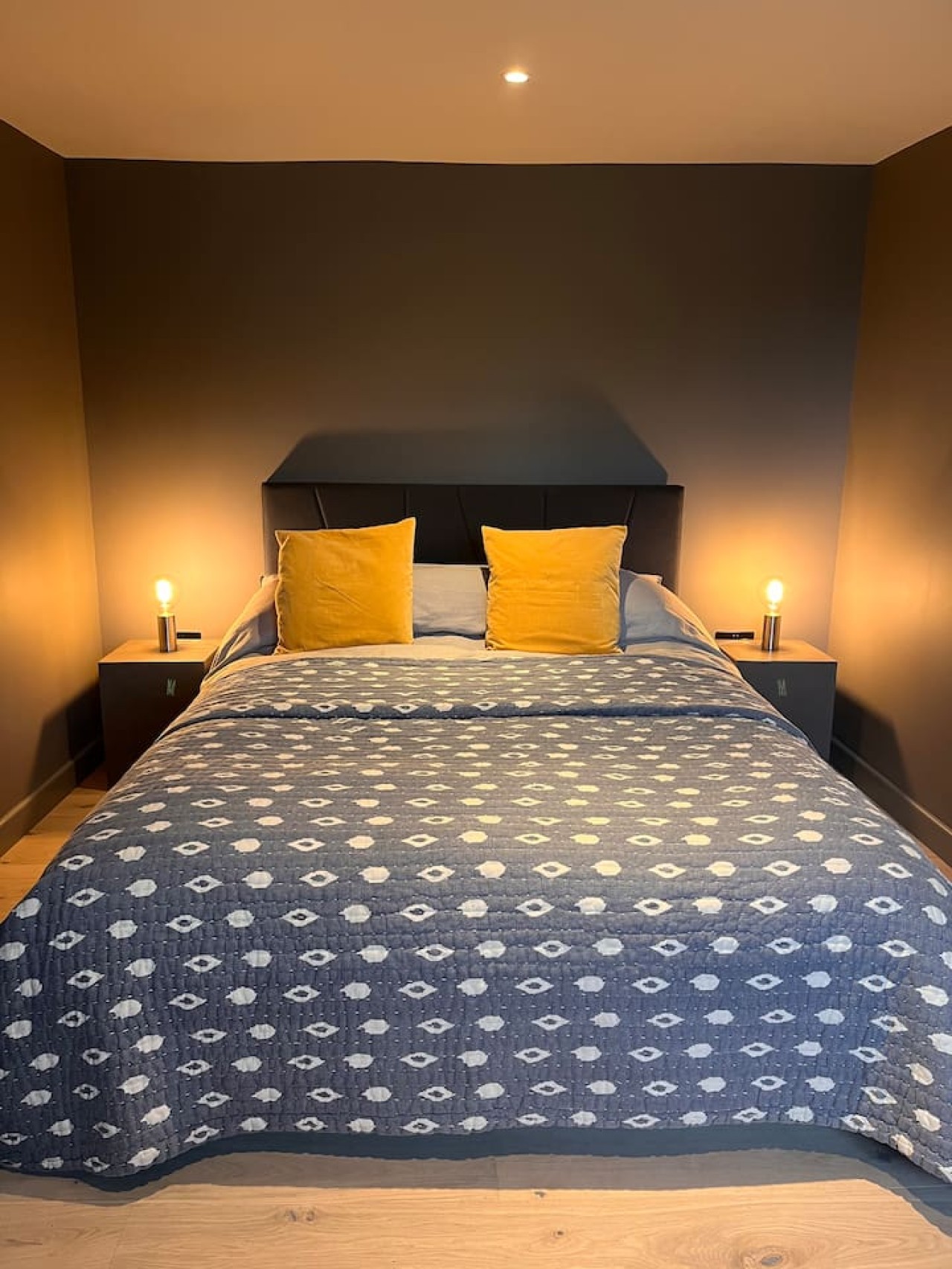
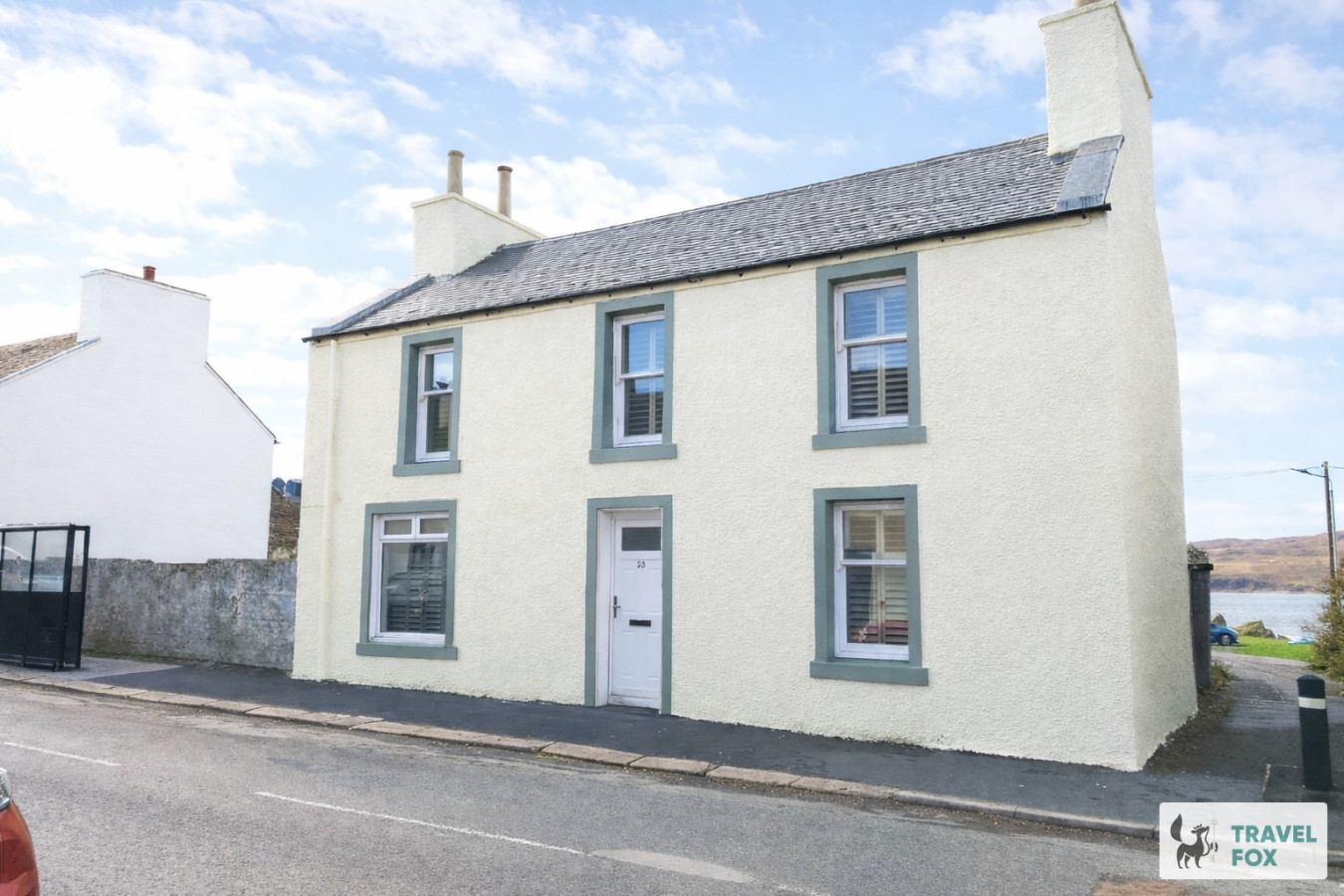
Travel Fox holiday homes around Argyll, linked directly to their property pages.
A guide with a point of view
Written from research. Edited for real journeys.
Use the Official site links for live practical details, then use this guide for context, ideas and room to explore.
Photography credits & licences
Third-party photographs are credited to their named creators and reused under the linked Creative Commons licence or public-domain dedication. Travel Fox stores an optimised local copy; the file-specific changes and any browser-applied display crop are disclosed below. Reused photographs link both to the Wikimedia Commons source record and to the declared source image; Travel Fox's own photographs carry no such record and are marked as ours. These image licences do not cover Travel Fox text, branding or page design.
- File:Oban Seafood Hut - geograph.org.uk - 7609714.jpg — photograph by David Dixon; Oban Seafood Hut by David Dixon. Source record on Wikimedia Commons. Declared source image. Licence: CC BY-SA 2.0. File changes: Downloaded from Wikimedia Commons, resized to a maximum 1920px edge and encoded as an optimised JPEG. Display changes: Displayed with responsive CSS cropping.
- File:Oban, Mccaig's Tower - 20170104123723.jpg — photograph by Mpeace37; Own work. Source record on Wikimedia Commons. Declared source image. Licence: CC BY-SA 4.0. File changes: Downloaded from Wikimedia Commons, resized to a maximum 1920px edge and encoded as an optimised JPEG. Display changes: Displayed with responsive CSS cropping.
- File:St Columba's Cathedral, Oban - geograph.org.uk - 2952082.jpg — photograph by M J Richardson; St Columba's Cathedral, Oban by M J Richardson. Source record on Wikimedia Commons. Declared source image. Licence: CC BY-SA 2.0. File changes: Downloaded from Wikimedia Commons, resized to a maximum 1920px edge and encoded as an optimised JPEG. Display changes: Displayed with responsive CSS cropping.
Sources
Every place on this page is checked against a published source. Each entry links the record we used and names who publishes it.
- Oban Seafood Hut — visitscotland.com operator, sector body or destination organisation
- Ee-Usk — eeusk.com other published source
- Oban Chocolate Company — obanchocolate.co.uk operator, sector body or destination organisation
- Oban Distillery — portal.historicenvironment.scot statutory register or public authority
- McCaig's Tower — visitscotland.com operator, sector body or destination organisation
- Dunollie Castle, House and Museum — dunollie.org operator, sector body or destination organisation
- Dunstaffnage Castle — historicenvironment.scot statutory register or public authority record not machine-readable; publisher restricts automated access
- Oban War and Peace Museum — obanmuseum.org.uk operator, sector body or destination organisation
- St Columba's Cathedral — rcdai.org.uk other published source