
Lake Shore, Stories and Fells
Bowness-on-Windermere
A lakeside town where cruises leave from the bay, Potter tales come to life and nearby viewpoints open across Windermere.
- Best for
- Lake cruises, family stories and panoramic walks
- Give it
- A full day with one nearby walk
- Don't miss
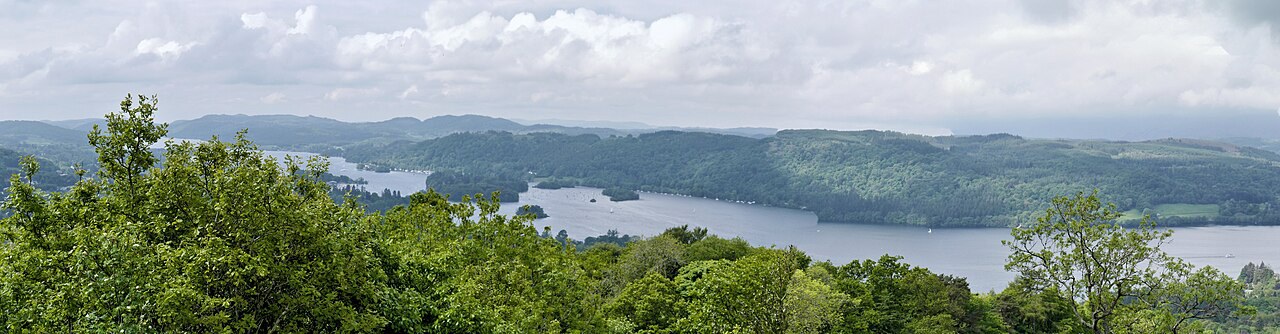
- The panoramic lake view from Orrest Head
Photo: David Dixon · CC BY-SA 2.0 · cropped
The Fox verdict
The Lake District's busy waterfront gateway
Bowness combines direct access to Windermere with family attractions, historic character and nearby viewpoints.
Start with a cruise from Bowness Bay, follow Beatrix Potter indoors, or start beside the Windermere Hotel for the climb to Orrest Head and its panorama. St Martin's Church and two traditional inns give the town centre enough depth for a visit that is not only about the water.
Your picks, your pace
Make Bowness-on-Windermere yours
Choose a mood or build your own list. Your saved stops are an ordering aid, with a direct map route when you are ready.
Local signatures
3 placesThe World of Beatrix Potter Attraction
An indoor family attraction bringing all 23 Beatrix Potter tales to life, with the Peter Rabbit Café alongside.
- Visit length
- Editorial estimate: Allow around 90 minutes
- Locality
- Crag Brow
Bowness Pier and Windermere Lake Cruises
The main embarkation point for cruises across Windermere, with services towards Ambleside and Lakeside.
- Visit length
- Editorial estimate: Allow around 60 minutes
- Locality
- Bowness Bay
Claife Heights
Viewpoint walks above the western shore of Windermere, starting at Ash Landing car park and reached from Bowness via the ferry.
- Visit length
- Editorial estimate: Allow around 120 minutes
- Locality
- western shore of Windermere
- Access
- Access from Bowness is by ferry; check transport services before travel.
Food & drink
2 places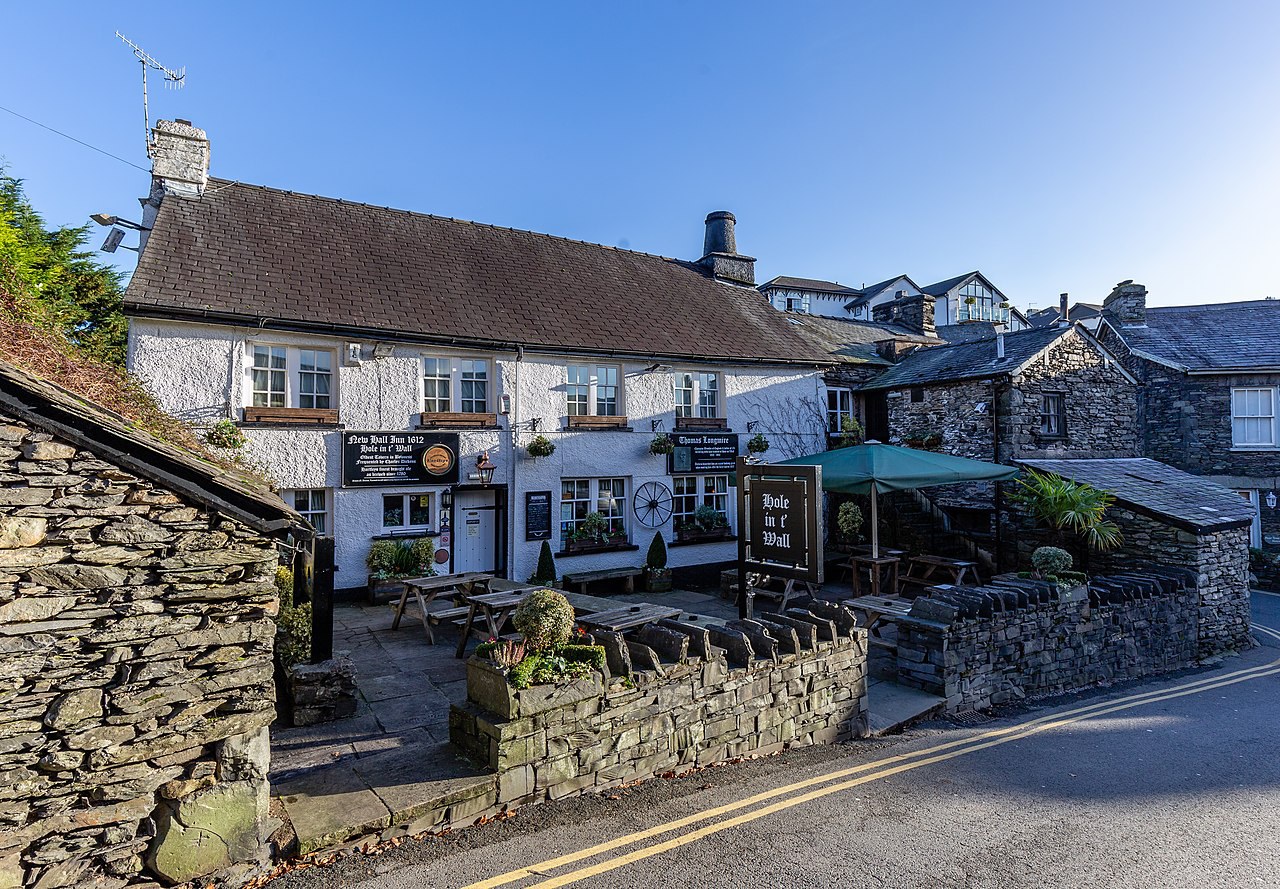
Hole in t' Wall
Bowness's oldest pub, established in 1612, with traditional interiors, Robinsons' cask ales, a wide gin range and a menu of pub classics.
- Visit length
- Editorial estimate: Allow around 75 minutes
- Locality
- Bowness-on-Windermere
- Access
- Dogs are welcome in the beer garden, not inside.
The Angel Inn
A traditional pub restaurant serving freshly cooked British classics and Cumbrian dishes with modern twists.
- Visit length
- Editorial estimate: Allow around 75 minutes
- Locality
- Bowness-on-Windermere
Walks & outdoors
1 place
Orrest Head
A viewpoint walk starting at the narrow lane beside the lower entrance of the Windermere Hotel and climbing to Orrest Head for panoramic lake views.
- Visit length
- Editorial estimate: Allow around 75 minutes
- Locality
- Windermere Hotel, Windermere
History & heritage
1 place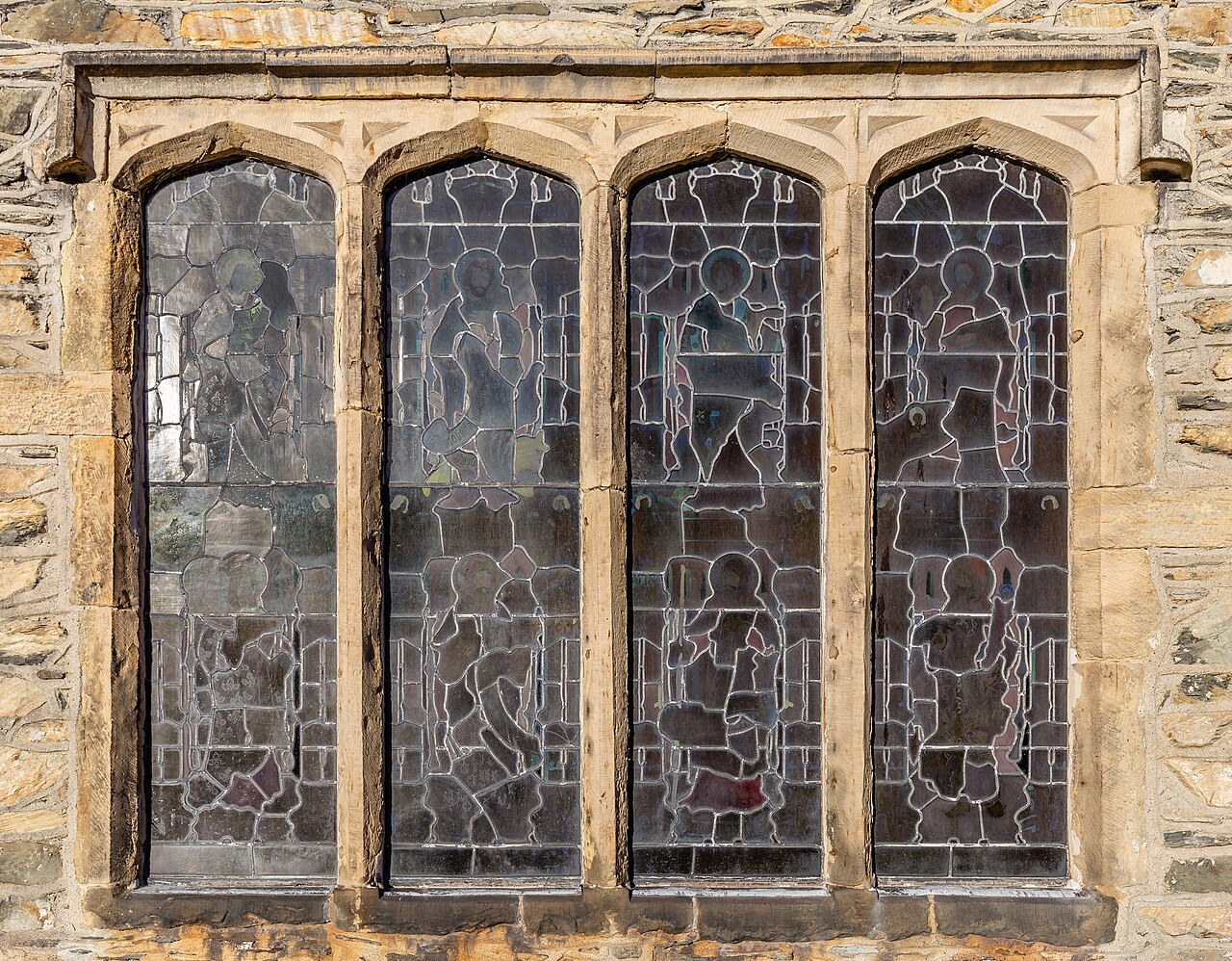
St Martin's Church
A Grade I church first recorded in 1203, with an east window rich in medieval glass and a Washington family heraldic connection.
- Visit length
- Editorial estimate: Allow around 45 minutes
- Locality
- Bowness-on-Windermere
No places match this filter. Choose All places to reset the list.
On the map
Bowness-on-Windermere at a glance
Tap a marker to jump to its guide card.
Three ways to explore Bowness-on-Windermere
Signature outings
Windermere from Orrest Head
Start at the narrow lane beside the Windermere Hotel for the climb to Orrest Head and panoramic lake views.
Ale in Bowness's Oldest Pub
Try Robinsons' cask ales at the historic Hole in t' Wall.
Centuries in One East Window
Look for medieval glass and the Washington family heraldic connection at St Martin's Church.
The village story
Bowness-on-Windermere Village Guide
A waterfront town shaped by lake travel, old inns, high viewpoints and stories that cross the water.
Old Inn, Lake and Railway Views
The blacksmith's hole is still there, more or less. In the back wall of the Hole in t' Wall on Fallbarrow Road — formally the New Hall Inn, dating to 1612 — you can see where a smithy once knocked through the stone so he could be passed ale without leaving his forge. The pub kept the name. The forge did not keep the smithy. Charles Dickens drank here in 1857 and described the landlord, Thomas Longmire — champion Cumberland wrestler through the 1850s — as "a quiet-looking giant." There are jugs and chamber pots hanging from the ceiling, a log fire in winter, and a menu that runs to fish pie with salmon, haddock and prawns in white wine sauce, pork pie with scratchings and piccalilli chutney, and a curry of the day. Robinsons supply the cask ales — Unicorn and Dizzy Blonde are the regulars — and there are more than twenty gins behind the bar. Dogs are welcome in the beer garden but not inside, which given the number of breakable objects suspended from the ceiling is probably wise.
Walk downhill from there to the shore of the largest natural lake in England. Windermere stretches about ten and a half miles from Newby Bridge to Waterhead, a mile across at its widest, sixty-four metres deep in places. Eighteen islands sit in it. The largest, Belle Isle, is directly opposite the Bowness waterfront, close enough that you can make out the trees clearly, far enough that the round house built on it in 1774 is only a pale shape through the branches. John Plaw designed it after the Pantheon in Rome. It is circular, three storeys, built in brick. Wordsworth called it a pepper pot. The Curwen family lived on the island until 1993.
Bowness itself has a population of around 3,800, which on a summer Saturday feels like a clerical error. The town sits on a bay on the eastern shore, a knot of narrow streets climbing steeply from the water, and it has been the main point of access to Windermere for longer than the town that now shares the lake's name. The place called Windermere, a mile and a half uphill, only really came into being after the railway arrived in 1847. The residents of Bowness had opposed a station in their own town, which turned out to be one of the more consequential planning objections in English tourism history. The trains stopped at the top of the hill instead, the town of Windermere grew around the station, and Bowness kept its waterfront. The railway carried a hundred and twenty thousand passengers in its first full year.
If you arrive by train, Orrest Head is the walk to do before you even come down to the lake. The path starts at the narrow lane beside the lower entrance of the Windermere Hotel, a few minutes from Windermere station, and takes twenty to thirty minutes to the top. Alfred Wainwright climbed it in 1930, aged twenty-three, on his first visit to the Lake District from Blackburn. He later wrote that Orrest Head cast a spell that changed his life, which is the sort of thing that sounds overwrought until you stand on the summit and see the full length of Windermere below you with the Langdale Pikes, the Old Man of Coniston, Scafell Pike, and Great Gable arranged behind it. There is a panorama plaque naming the fells. On a clear day, it earns every word Wainwright gave it.
Shore Walks, Fell Paths and Pubs
From the waterfront, the easier stroll is to Cockshott Point — ten minutes along a flat, paved path from Bowness Bay, suitable for pushchairs and wheelchairs. The path curves around a small wooded peninsula owned by the National Trust. The land was bought by Beatrix Potter specifically to give the public lakeside access near Bowness. From the point you look straight across to Belle Isle. Ducks will follow you most of the way. Swans patrol the bay with the unhurried authority of harbour masters.
For something steeper, Brant Fell rises behind Bowness. The route climbs along Brantfell Road until the shops give way to fields and fell. The summit is marked by two stone pillars and some interestingly shaped rocks, and the views take in Windermere, the Langdale Pikes, and the Coniston fells.
This stretch of Brantfell Road is also the last quarter-mile of the Dales Way, which finishes its eighty-one miles from Ilkley right here in Bowness. There is a commemorative stone and slate seat in the last field before Bowness. The official end point is the Royal Oak, which sits on the road and is worth knowing about even if you haven't walked from Yorkshire to get there. Six cask ales on at any given time, the selection rotating but usually including something from Bowness Bay Brewing. The menu is honest pub food done carefully — steak and ale pie, beer-battered haddock, homemade meat and potato pie, all somewhere around seventeen pounds. There is a pool table and darts board in the games room, exposed beams and a fire in the bar, and dogs are welcome inside. The building is over four hundred years old. It has eight guest rooms upstairs if you need them.
The Angel Inn has a beer garden with views over the lake. The Village Inn, down towards the waterfront, does a goulash that appears on enough review sites to suggest it is a genuine speciality rather than a misprint, and has live music at weekends. Between them, Bowness has four or five proper pubs within about six minutes' walk of each other, which for a settlement of this size is generous.
Tables, Bakeries and Potter Tales
For something with a tablecloth, Porto on Ash Street is a family-run restaurant with an AA Rosette and a rooftop terrace. The menu moves between crispy oyster mushrooms with miso mayonnaise, lamb koftas with pickled red onion, and Herdwick lamb chump — the Herdwick being the native Lake District breed that Beatrix Potter spent much of her later life conserving. The sticky toffee soufflé is spoken of with some reverence. Jackson's Bistro, ranked third of eighty-four restaurants in Bowness on TripAdvisor, does a slow-cooked lamb henry that regulars treat as a reason to visit in itself, and a Peach Schnapps cheesecake that sounds improbable but keeps getting ordered. Bodega, if you want something different, does proper Spanish tapas — gambas al ajillo, patatas bravas, paella — in a bar downstairs and restaurant upstairs.
Base, nearby, makes sourdough pizzas good enough to have been named one of the top fifty pizzerias in the UK by The Times. If you want fish and chips, Vinegar Jones in Royal Square won the UK Seafish Fish and Chip Shop of the Year and does gluten-free every day. West View does Chinese, Japanese, and Korean under one roof, and reviews suggest they are getting away with it.
Bryson's Tea Room and Bakery occupies a corner of Royal Square and opens at half past eight. The ground floor is a bakery selling bread, pies, and pastries. Upstairs is a tea room with table service, a full grill breakfast, and their three-tier Traditional Lakeland Afternoon Tea. The Welsh rarebit gets mentioned a lot.
Crag Brow, the steep road climbing from the waterfront, is where most of the shops and attractions sit. The World of Beatrix Potter is partway up — all twenty-three of her tales recreated as three-dimensional scenes, with a Peter Rabbit garden behind, and the largest collection of Beatrix Potter merchandise anywhere. It is aimed at children, but adults with any residual affection for Mrs Tiggy-Winkle will find themselves lingering. Elsewhere on Crag Brow and Ash Street: Love the Lakes sells spirits from the Lakes Distillery; Mabel and Mu stocks designer products for dogs and cats, which tells you something about the Lake District visitor economy in 2026; and there are galleries, outdoor shops, and enough places selling fudge to suggest a supply chain of some seriousness.
Across the Water and Back Through Time
Readers of Swallows and Amazons will recognise Bowness as the lakeside town Arthur Ransome called Rio. The real Beatrix Potter connection, though, is across the water. The Windermere Ferry — a cable ferry called the Mallard — runs from Ferry Nab, a short walk south of Bowness Bay, to the western shore near Far Sawrey. The crossing takes about ten minutes and runs roughly every twenty minutes. You cannot book. From the far side, it is a walk of about two miles to Hill Top, the farm Potter bought in 1905 with the proceeds from Peter Rabbit and left to the National Trust when she died in 1943. You can also climb up to the Claife Viewing Station, built in the 1790s for early tourists, where the views were originally framed through panes of coloured glass. The station is a ruin now, but the National Trust has stabilised it, and the views through the empty window frames are still very good.
Back on the Bowness side, the Windermere Jetty Museum sits on the shore just north of the town. It opened in 2019 after a twenty-million-pound rebuild by Carmody Groarke — seven copper-clad buildings with the sculptural quality of boat sheds. The collection runs to about forty vessels, including SL Dolly, built around 1850 and believed to be the oldest mechanically powered boat in the world still running with its original engine, and Beatrix Potter's tarn boat, which she used for sketching on quiet water. The Victorian steam launch Branksome, fifty feet of polished mahogany from 1896, is the sort of thing that makes you reassess what Victorians considered a reasonable afternoon on a lake.
Windermere Lake Cruises runs two main routes from Bowness Pier: north to Ambleside, about an hour and a quarter return, and south to Lakeside at Newby Bridge, about an hour and a half. At Lakeside, about 6.2 miles from Bowness in a straight line, the cruise route connects with the Lakeside and Haverthwaite Railway at Lakeside station. The open-top 599 bus does the same axis by road — Bowness to Windermere station, Ambleside, and on to Grasmere — roughly every half hour in summer.
St Martin's Church stands at the top of the town, slightly set back from the main streets, where it has been in some form since at least 1203. The current building was consecrated in 1483 after the previous one burned down. Only the font, the base of the tower, and one doorway survived the fire. The east window holds what has been described as the finest collection of medieval glass in the north-west of England — some of it fifteenth century, with panels believed to have come from Cartmel Priory after the Dissolution. Among the glass is the coat of arms of a local family called Wessington, said to be ancestors of George Washington. Pevsner called the interior "a strange sight" — the whole thing is thickly plastered, white-painted rubble, which gives it a pale, almost Mediterranean quality that feels unlikely this far north.
Churchyard Memory and a Village at Dusk
In the churchyard, separately Grade II listed, is the headstone of Rasselas Belfield, who died in 1822. The stone describes him as a native of Abyssinia. He had been enslaved, was later freed, and served as a valet to the Taylor family of nearby Belfield House. The headstone was given its listing in 2007, on the bicentenary of the abolition of the slave trade. It is easy to walk past.
The Domesday surveyors never reached this part of Westmorland, so Bowness's written record begins with the church. The name Bowness comes from the Old English "Bulnes" — the headland where the bull grazes. By the nineteenth century it had grown from a Norse fishing village into the centre of boat-building on Windermere, producing the sailing yachts, rowing boats, and steam launches the lake was becoming famous for. The railway brought the tourists, the steamers moved them around, and Bowness provided the pubs and the piers. The basic economic model has not changed in a hundred and seventy years.
On a summer evening, when the day-trippers have driven back to their hotels and the lake has gone flat and silver, the waterfront empties out to something approaching its actual population. A few people sit on the wall by the steamer pier with chips from Vinegar Jones. The swans drift. Someone is always trying to park. Across the water, Belle Isle darkens into silhouette, and the round house disappears into the trees until morning.
Stay around Lake District
Make a longer stay of it
Travel Fox holiday homes around Lake District, linked directly to their property pages.
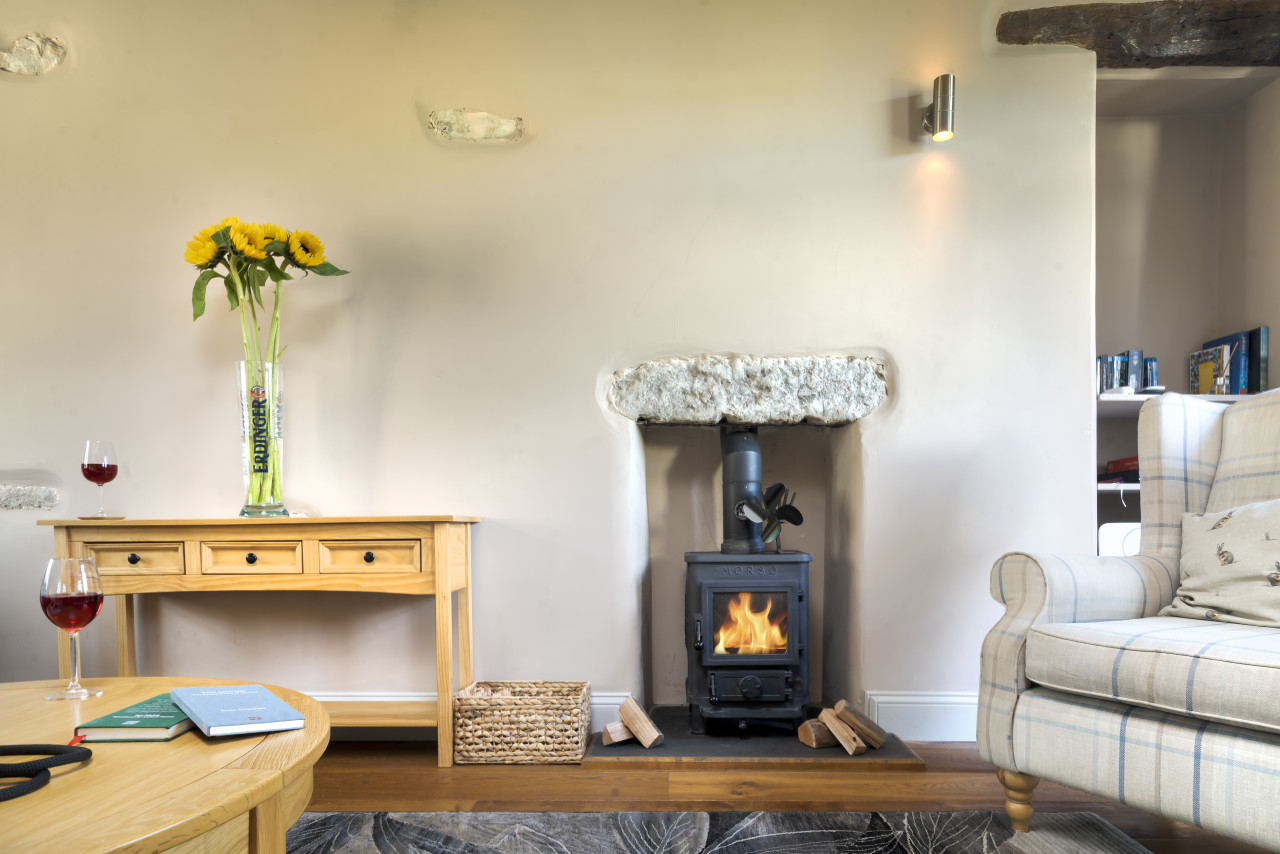
For homeowners
Own a holiday home near Bowness-on-Windermere?
We manage holiday lets across the Lake District from 12% commission, charged after cleaning costs, with no lock-in. A co-founder visits before you decide.
Holiday let management in the Lake District →
A guide with a point of view
Written from research. Edited for real journeys.
Use the Official site links for live practical details, then use this guide for context, ideas and room to explore.
Photography credits & licences
Third-party photographs are credited to their named creators and reused under the linked Creative Commons licence or public-domain dedication. Travel Fox stores an optimised local copy; the file-specific changes and any browser-applied display crop are disclosed below. Reused photographs link both to the Wikimedia Commons source record and to the declared source image; Travel Fox's own photographs carry no such record and are marked as ours. These image licences do not cover Travel Fox text, branding or page design.
- File:Windermere (South) from Orrest Head - geograph.org.uk - 4009223.jpg — photograph by David Dixon; Windermere (South) from Orrest Head by David Dixon. Source record on Wikimedia Commons. Declared source image. Licence: CC BY-SA 2.0. File changes: Downloaded from Wikimedia Commons, resized to a maximum 1920px edge and encoded as an optimised JPEG. Display changes: Displayed with responsive CSS cropping.
- File:Hole in t'Wall public house, Bowness-on-Windermere, England.jpg — photograph by Michal Klajban; Own work. Source record on Wikimedia Commons. Declared source image. Licence: CC BY-SA 4.0. File changes: Downloaded from Wikimedia Commons, resized to a maximum 1920px edge and encoded as an optimised JPEG. Display changes: Displayed with responsive CSS cropping.
- File:St Martin's Church - window, Bowness-on-Windermere, England 10.jpg — photograph by Michal Klajban; Own work. Source record on Wikimedia Commons. Declared source image. Licence: CC BY-SA 4.0. File changes: Downloaded from Wikimedia Commons, resized to a maximum 1920px edge and encoded as an optimised JPEG. Display changes: Displayed with responsive CSS cropping.