
Between lake and fells
Buttermere
Two village hotels, a small church and walks between the lakeshore and surrounding fells.
- Best for
- Lakeside and fell walking
- Give it
- A half-day by the lake or a full fell day
- Don't miss
- The rock tunnel on the Buttermere Circuit
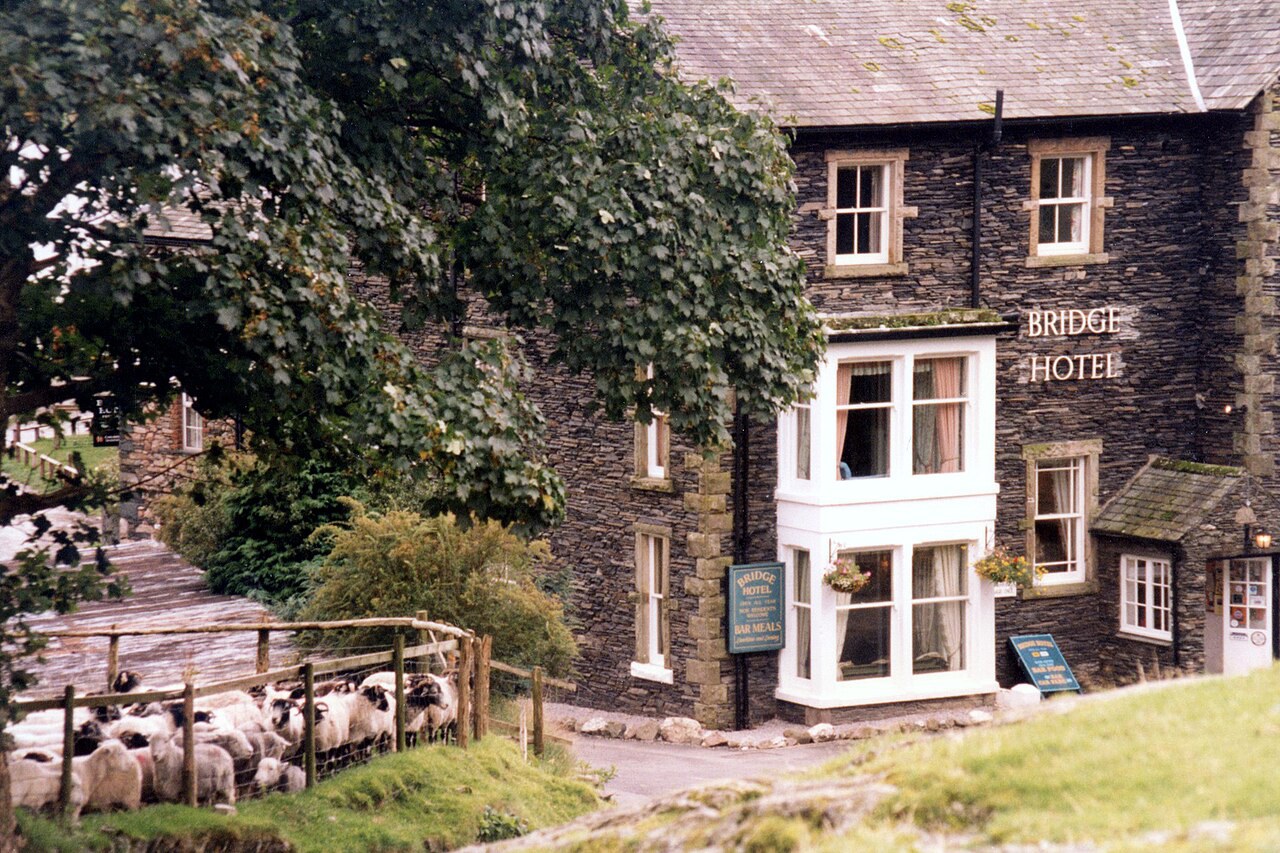
Photo: Jo Turner · CC BY-SA 2.0 · cropped
The Fox verdict
A tiny village with a valley-sized choice of walks
Buttermere keeps the village simple and puts the lake, waterfall and surrounding fells first.
Come for the 4.5-mile lakeshore circuit, with its short road section, rock step and April–June north-shore diversion, or take a longer walk on the Red Pike and High Stile ridge. The Bridge Hotel and Buttermere Court Hotel serve the village, while St James's holds a memorial to Alfred Wainwright.
Where to go
Places in Buttermere
Every place below is checked against a published source, listed with what it is and how long to give it.
Local signatures
3 places
Start here
The Bridge Hotel
A Lakeland hotel pub where muddy boots and dogs are welcome in the public bar, with local ales, its own Bridge Inn Blonde and hearty food.
- Visit length
- Editorial estimate: Allow around 1 hour
- Locality
- Buttermere village
St James's Church
The present church dates from 1840. A stone memorial tablet to Alfred Wainwright is set into a south window sill overlooking Haystacks.
- Visit length
- Editorial estimate: Allow around 30 minutes
- Locality
- Buttermere village
Red Pike and High Stile Ridge
The route climbs from Buttermere to Red Pike and follows the High Stile Range's craggy ridge toward High Crag.
- Visit length
- Editorial estimate: Allow around 5 hours
- Locality
- Buttermere valley fells
Food & drink
1 placeButtermere Court Hotel (formerly the Fish Inn)
Between the two lakes, this hotel welcomes non-residents for food and drinks. Formerly the Fish Inn, it recalls Mary Robinson, whose father was that inn's landlord.
- Visit length
- Editorial estimate: Allow around 1 hour
- Locality
- Buttermere village
Walks & outdoors
1 placeButtermere Circuit
A mostly level 4.5-mile lakeshore circuit with a short road section, a rock step where hands may be needed and a tunnel cut through rock. A waymarked alternative applies on the north shore from April through June to protect nesting sandpipers.
- Visit length
- Editorial estimate: Allow around 3 hours
- Locality
- Buttermere lakeshore
No places match this filter. Choose All places to reset the list.
Three ways to explore Buttermere
Signature outings
Walk through the rock
Walk the 4.5-mile lakeshore circuit through its rock tunnel, allowing for a short road section and a rock step; a north-shore diversion applies from April through June.
Settle into the public bar
Stop at the Bridge Hotel for its own Bridge Inn Blonde, local ales and a walkers' welcome.
Pause at Buttermere Court Hotel
Remember Mary Robinson: travellers sought her out in Buttermere before her 1802 marriage to an impostor.
The village story
Buttermere Village Guide
A Lakeland village with two hotels, a Victorian church and lakeshore and fell walks between Buttermere and Crummock Water.
Two hotels and a famous daughter
The Bridge Hotel's public bar welcomes hungry walkers and dogs. It serves local ales and its Bridge Inn Blonde, brewed by Tractor Shed Brewery in Workington, alongside bar food and Sunday roasts. Muddy boots fit the mood after a walk in the valley.
The other village hotel is Buttermere Court Hotel, between Buttermere and Crummock Water. It was formerly the Fish Inn. Mary Robinson's father ran the historic inn, and her fame drew visitors to the valley.
The Maid of Buttermere and the fells
Mary Robinson became known as the Maid of Buttermere after a guidebook drew attention to her, and visitors came to see her. In 1802 she married a man posing as Alexander Augustus Hope. He was later exposed as a forger who was already married and was hanged at Carlisle. Mary later married a local farmer and moved to Caldbeck.
The 4.5-mile Buttermere Circuit has a mostly level lakeshore path, a short road section, a rock step where hands may be needed and a tunnel cut through rock. A waymarked diversion replaces part of the north-shore route from April through June to protect nesting sandpipers. Haystacks rises above the lake; Wainwright called it "the best fell top of all". Fleetwith Pike dominates the view from the shore, while the Red Pike and High Stile route follows a craggy ridge. Sourmilk Gill cascades down from Bleaberry Tarn toward Buttermere.
Wainwright's memorial
The present St James's Church dates from 1840. A stone tablet commemorating Alfred Wainwright is set into the sill of a south window that looks toward Haystacks. At his wish, his ashes were scattered on the fell.
The road over Honister
There is no railway to Buttermere. The B5289 reaches the village over Honister Pass from Keswick or through Lorton from Cockermouth. The seasonal 77/77A Honister Rambler connects Keswick and Buttermere.
A wet afternoon in the bar
On a wet afternoon, walkers can settle into a village bar after the lakeshore path and watch cloud gather around Haystacks.
Stay around Lake District
Make a longer stay of it
Travel Fox holiday homes around Lake District, linked directly to their property pages.
For homeowners
Own a holiday home near Buttermere?
We manage holiday lets across the Lake District from 12% commission, charged after cleaning costs, with no lock-in. A co-founder visits before you decide.
Holiday let management in the Lake District →
A guide with a point of view
Written from research. Edited for real journeys.
Use the Official site links for live practical details, then use this guide for context, ideas and room to explore.
Photography credits & licences
Third-party photographs are credited to their named creators and reused under the linked Creative Commons licence or public-domain dedication. Travel Fox stores an optimised local copy; the file-specific changes and any browser-applied display crop are disclosed below. Reused photographs link both to the Wikimedia Commons source record and to the declared source image; Travel Fox's own photographs carry no such record and are marked as ours. These image licences do not cover Travel Fox text, branding or page design.
- File:Bridge Hotel Buttermere - geograph.org.uk - 3390162.jpg — photograph by Jo Turner; Bridge Hotel Buttermere by Jo Turner. Source record on Wikimedia Commons. Declared source image. Licence: CC BY-SA 2.0. File changes: Downloaded from Wikimedia Commons, resized to a maximum 1920px edge and encoded as an optimised JPEG. Display changes: Displayed with responsive CSS cropping.
Sources
Every place on this page is checked against a published source. Each entry links the record we used and names who publishes it.
- The Bridge Hotel — thebridgehotel.uk operator, sector body or destination organisation
- Buttermere Court Hotel (formerly the Fish Inn) — buttermerecourthotel.co.uk operator, sector body or destination organisation
- St James's Church — achurchnearyou.com national body or asset manager
- Buttermere Circuit — which.co.uk other published source
- Red Pike and High Stile Ridge — visitlakedistrict.com operator, sector body or destination organisation