
Ancient Dacre
Dacre
A quiet Eden Valley village where medieval stone bears, an old church and paths towards Ullswater reward a slow visit.
- Best for
- Early history and quiet country walks
- Give it
- A gentle half day
- Don't miss
- The four unexplained churchyard bears
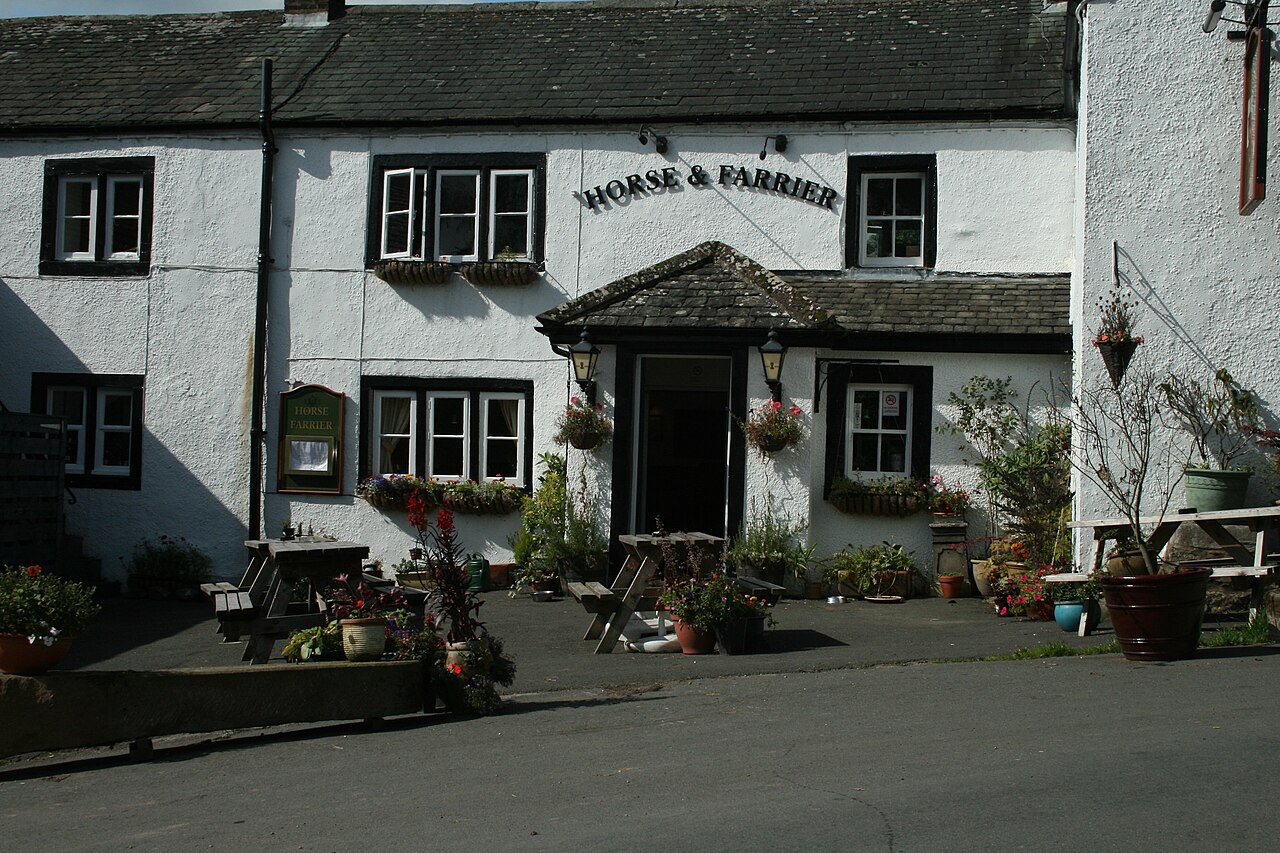
Photo: Alistair Bradbury · CC BY-SA 2.0 · cropped
The Fox verdict
Small in scale, deep in history
Dacre suits visitors who prefer old stones, open countryside and unhurried exploration to a busy village centre.
The four carved bears and St Andrew's Church give the village an unusually rich historic focus, while the Horse & Farrier, the Dalemain Loop through Dacre and Dalemain House make it possible to shape a fuller visit around them.
Where to go
Places in Dacre
Every place below is checked against a published source, listed with what it is and how long to give it.
Local signatures
3 placesSt Andrew's Church, Dacre
A Grade I listed Norman church on the site of a seventh-century Saxon monastery, with later medieval additions.
- Visit length
- Editorial estimate: Allow around 40 minutes
- Locality
- Dacre village
Ullswater Way near Dacre
The Ullswater Way circles the lake and links to Dacre via the signed Dalemain Loop at Pooley Bridge; follow the loop through the village to reach the connection.
- Visit length
- Editorial estimate: Allow around 120 minutes for a chosen stretch
- Locality
- Ullswater Way at Pooley Bridge, reached via the Dalemain Loop through Dacre
Dalemain House & Gardens
A Grade I listed mansion combining medieval, Tudor and Georgian periods, with noted gardens open to visitors.
- Visit length
- Editorial estimate: Allow around 120 minutes
- Locality
- east of Dacre near Stainton
- Access
- The house and gardens welcome visitors; check the official site before travel.
Food & drink
1 place
Horse & Farrier Inn
Dacre's only pub is a traditional village inn with longstanding ties to the Eden Valley's agricultural community.
- Visit length
- Editorial estimate: Allow around 75 minutes
- Locality
- in the heart of Dacre
History & heritage
1 placeThe Dacre Bears
Four roughly four-foot red sandstone bears stand in different postures around the churchyard, their medieval purpose still unknown.
- Visit length
- Editorial estimate: Allow around 25 minutes
- Locality
- St Andrew's churchyard
No places match this filter. Choose All places to reset the list.
Three ways to explore Dacre
Signature outings
Meet the four bears
Compare the four medieval red sandstone figures, each set in a different posture and none with an agreed purpose.
Settle into the local
Take a break at Dacre's only pub, a traditional inn rooted in the Eden Valley's agricultural community.
Pair house and gardens
Follow the signed Dalemain Loop to Dalemain for a Grade I listed house spanning medieval, Tudor and Georgian periods and its noted gardens.
The village story
Dacre Village Guide
Stone bears, early kings and a running beck give this quiet village a story far larger than its size.
The Bears and the Ancient Church
There are four stone bears in the churchyard at Dacre. Each is about four feet high, carved from red sandstone, and standing at one of the four corners of St Andrew's churchyard. One appears to be sleeping. Another is waking. A third stands upright, and the fourth holds something in its paws. They are medieval, and nobody knows what they are for. The guesses run to heraldry, boundary markers, or religion, and none of them has settled the matter. They are among the most enigmatic monuments in the Lake District, which is a way of saying that people have looked at them for centuries and come away none the wiser.
The church behind them is worth the same slow look. St Andrew's is Grade I listed, Norman in its bones, and built on the site of a seventh-century Saxon monastery. There were additions in the thirteenth and fourteenth centuries, but the older story is the one that matters here. The Venerable Bede recorded a miraculous healing at Dacre in 698, which is the sort of thing that only gets written down about places that mattered.
Kings and Fortified Walls
Dacre mattered more than its size suggests. In 934, King Athelstan convened a great assembly here — the Congress of Dacre, one of the more significant political gatherings in early medieval Britain. It is a quiet village now, five miles west of Penrith, and you would not guess that kings once met in it.
A few hundred yards off stands Dacre Castle, a quadrangular pele tower with four turrets, built around 1360. It is the kind of fortified tower house the Anglo-Scottish border zone produced in quantity, when a defensible home was a sensible investment. It's privately owned and closed to the public, but visible from the road, which is enough to give you the shape of it.
The Village Pub and Country Paths
The village has one pub, the Horse & Farrier Inn — a traditional village inn that has long served the agricultural community of the Eden Valley. There are no shops. This is a place you come to for the walking and the quiet, not for the provisioning, so bring what you need.
The walking rewards the trip. A circular route around the village takes in the castle, the church and Dacre Beck, which runs through the middle of everything on its way toward Ullswater. The signed Dalemain Loop passes through Dacre and links with the Ullswater Way at Pooley Bridge, and the whole village sits on rolling agricultural land at the foot of the eastern fells. About 1.2 miles east in a straight line is Dalemain House, a Grade I listed mansion that is medieval, Tudor and Georgian by turns, with gardens that are open to visitors. The loop links the house with Dacre for a longer walk and an easy afternoon.
Arriving in Dacre, Following the Beck
Getting here means driving. There is no railway and no regular bus; you reach Dacre on the B5320 from Penrith, or from Ullswater by way of Pooley Bridge.
The beck keeps running through it, past the church and the four bears that no one has ever explained, on toward the lake.
Stay around Lake District
Make a longer stay of it
Travel Fox holiday homes around Lake District, linked directly to their property pages.
For homeowners
Own a holiday home near Dacre?
We manage holiday lets across the Lake District from 12% commission, charged after cleaning costs, with no lock-in. A co-founder visits before you decide.
Holiday let management in the Lake District →
A guide with a point of view
Written from research. Edited for real journeys.
Use the Official site links for live practical details, then use this guide for context, ideas and room to explore.
Photography credits & licences
Third-party photographs are credited to their named creators and reused under the linked Creative Commons licence or public-domain dedication. Travel Fox stores an optimised local copy; the file-specific changes and any browser-applied display crop are disclosed below. Reused photographs link both to the Wikimedia Commons source record and to the declared source image; Travel Fox's own photographs carry no such record and are marked as ours. These image licences do not cover Travel Fox text, branding or page design.
- File:Horse and Farrier Inn, 18th Century - geograph.org.uk - 2040504.jpg — photograph by Alistair Bradbury; Horse and Farrier Inn, 18th Century by Alistair Bradbury. Source record on Wikimedia Commons. Declared source image. Licence: CC BY-SA 2.0. File changes: Downloaded from Wikimedia Commons, resized to a maximum 1920px edge and encoded as an optimised JPEG. Display changes: Displayed with responsive CSS cropping.
Sources
Every place on this page is checked against a published source. Each entry links the record we used and names who publishes it.
- The Dacre Bears — dacrechurch.com operator, sector body or destination organisation
- St Andrew's Church, Dacre — historicengland.org.uk statutory register or public authority record not machine-readable; publisher restricts automated access
- Horse & Farrier Inn — horseandfarrierdacre.com operator, sector body or destination organisation record not machine-readable; publisher restricts automated access
- Ullswater Way near Dacre — ullswater.org operator, sector body or destination organisation
- Dalemain House & Gardens — dalemain.com operator, sector body or destination organisation