
Dry Docking
Docking
A high Norfolk village shaped by a deep-water history, a landmark church tower and the last survivor of four village pubs.
- Best for
- Church history, village food and gentle walking
- Give it
- An unhurried half-day visit
- Don't miss
- St Mary’s late-medieval font
The Fox verdict
A hilltop village with stories beneath the surface
Docking brings together an exceptional medieval font, a living village market, gentle walking and a railway-themed pub that outlasted the railway.
The village’s height explains both the far-reaching church tower and the old nickname ‘Dry Docking’: rainwater reservoirs and a 230-foot well once answered the lack of a natural water supply. Today the visitor stops include the produce and morning cafe in Ripper Hall, the Docca village sign and the Roman-road Peddars Way close by.
Where to go
Places in Docking
Every place below is checked against a published source, listed with what it is and how long to give it.
Local signatures
3 placesThe Railway Inn
Docking’s only remaining pub is a family-run free house with seasonal food, local ales, a beer garden and a working miniature model railway train.
- Visit length
- Editorial estimate: allow around 90 minutes
- Locality
- Station Road
- Access
- Dog friendly, with disabled access.
Docking Village Market
A regular market for locally grown produce and flowers, fresh fish and meat, crafts, bread, pastries, toiletries, jams and jellies, with tea, coffee and the Docking Bacon Butty in the morning cafe.
- Visit length
- Editorial estimate: allow around 60 minutes
- Locality
- W.E. Ripper Memorial Hall, High Street
St Mary the Virgin
Docking’s oldest building has a tower from around 1415 and a late-medieval octagonal font carved with evangelists, female saints and angels; St Henry Walpole was baptised here.
- Visit length
- Editorial estimate: allow around 45 minutes
- Locality
- Docking
Walks & outdoors
1 placePeddars Way
The Roman-road Peddars Way passes very close to Docking, offering gentle, generally flat walking.
- Visit length
- Editorial estimate: allow around 120 minutes
- Locality
- Very close to Docking
- Access
- The terrain is gentle and generally flat.
History & heritage
1 placeDocking Village Sign
The village sign depicts Docca, Docking’s reputed Anglo-Saxon founder, and was made for the 1936/37 coronation of George VI before its unveiling in 1937.
- Visit length
- Editorial estimate: allow around 15 minutes
- Locality
- Docking
No places match this filter. Choose All places to reset the list.
Three ways to explore Docking
Signature outings
A Font Full of Detail
At St Mary the Virgin, the late-medieval font brings together the evangelists, eight female saints and angels representing the souls of the righteous.
Peddars Way
Take to the Roman-road Peddars Way close to Docking for gentle, generally flat walking.
Docca’s Village Sign
Docking’s sign depicts the reputed Anglo-Saxon founder Docca and commemorates the 1936/37 coronation of George VI.
The village story
Docking Village Guide
A hilltop Norfolk village of railway memories, market mornings, a remarkable medieval font and the long story of Dry Docking.
The Railway Inn
There is a working miniature model railway running inside the Railway Inn, which is the last pub standing in a village that used to have four. It opened in 1868 next to the old railway line, put up by Truman's of London, and it has outlasted the line, the station, and the three other pubs. The Hare closed in 2005, the Plough in 1969, the King William in 2009. So when you want a pint in Docking, this is where you go, and it turns out to be a good place to end up.
The Railway does Sunday roasts, lasagne, fish and chips, and a hunters chicken that one reviewer called absolutely mouth-watering. There are three handpumps, two of them guest ales, plus a beer garden and a pool table. Dogs are welcome. It runs at 4.4 on TripAdvisor across nearly 500 reviews, which for a village pub is a lot of people bothering to say something nice. The place calls itself a locals pub and means it.
Market Life and Dry Docking
The other food happening in the village is the market in the W.E. Ripper Memorial Hall on the High Street, which brings in produce, flowers, fresh fish and meat, and craft stalls selling bread, jam and toiletries. The morning cafe there serves what is advertised as the famous Docking Bacon Butty. Wagg's built a proper bakery in 1952 but it's gone now; for a fuller high street, Burnham Market is about five miles east with a butcher, baker, fishmonger and chemist.
Docking sits high. At 82.7 metres it's one of the highest villages in Norfolk, a settlement on a chalk rise with its church tower visible for miles and thirteen lanes fanning out across open arable land. The height is also why it has a nickname. Since at least the reign of James I it's been "Dry Docking," because sitting up here it had no water except rainwater, and the water table was a long way down. They built dew ponds. In the 1760s they sank a single well 230 feet deep and sold water at a farthing a bucket, the farthing paying the man who worked the windlass. The well served until 1936, when the mains finally arrived.
St Mary’s Medieval Font
The church is St Mary the Virgin, the oldest building here and the only Grade II* one, with an 80-foot tower from around 1415. Its font is the thing to see: octagonal, late medieval, carved with the four evangelists, eight female saints, and nude angels representing the souls of the righteous. One of the saints is St Apollonia, patron of dentists, shown holding a pair of forceps. The faces were mutilated at the Reformation. This is the font where St Henry Walpole, born in the village in 1558 and later a martyr, was baptised.
Peddars Way and Connections
For walking, the Roman-road Peddars Way passes close by, gentle and flat, with the Norfolk Coast Path and the beaches at Hunstanton, Brancaster and Holme within a short drive. The Lynx 33 bus runs from King's Lynn through Docking to Hunstanton; King's Lynn is the nearest railhead now.
Docca on the Village Sign
The village sign shows Docca, the Anglo-Saxon founder nobody can quite verify, unveiled in 1937 and still keeping watch over the top of the hill.
Stay around Norfolk
Make a longer stay of it
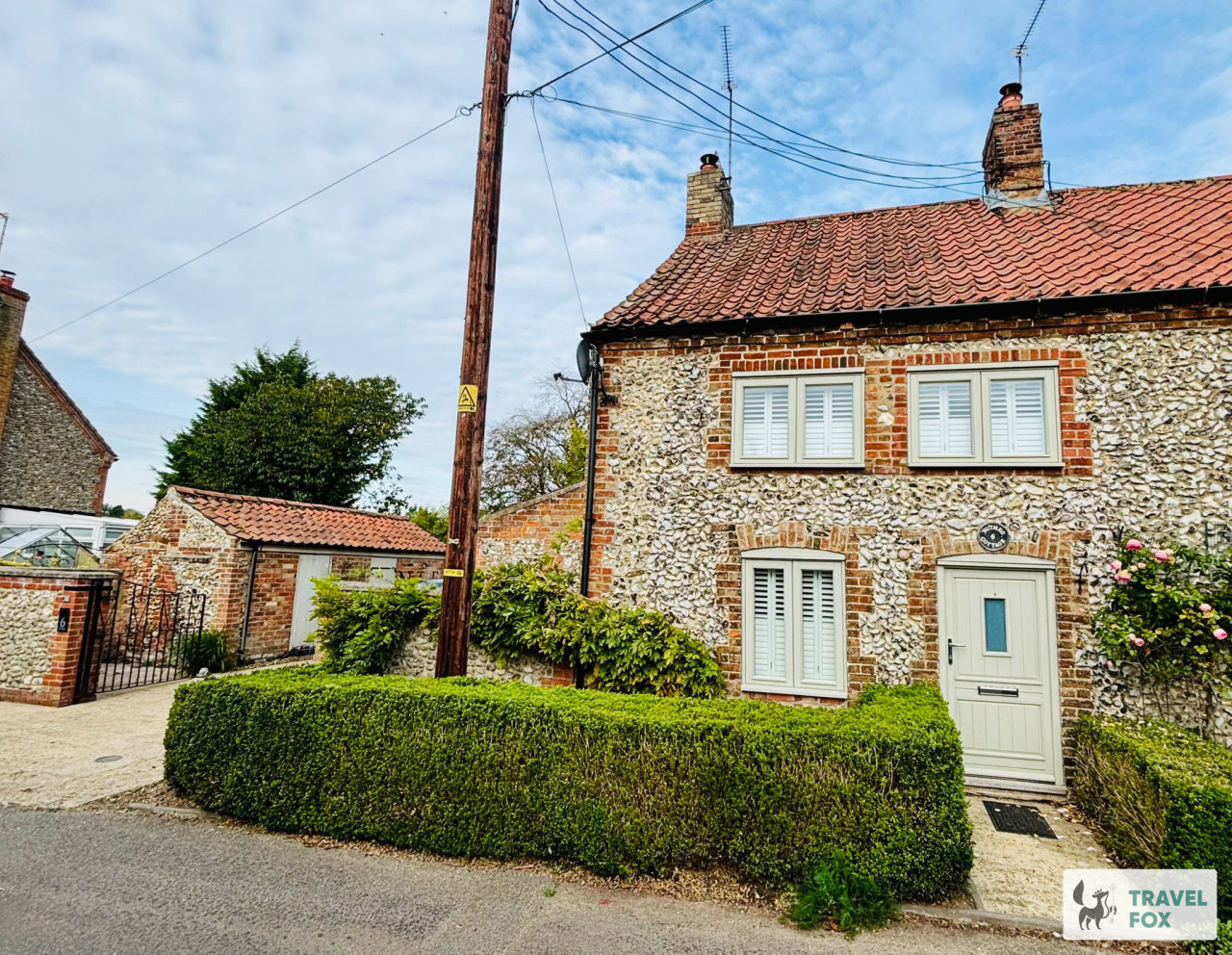
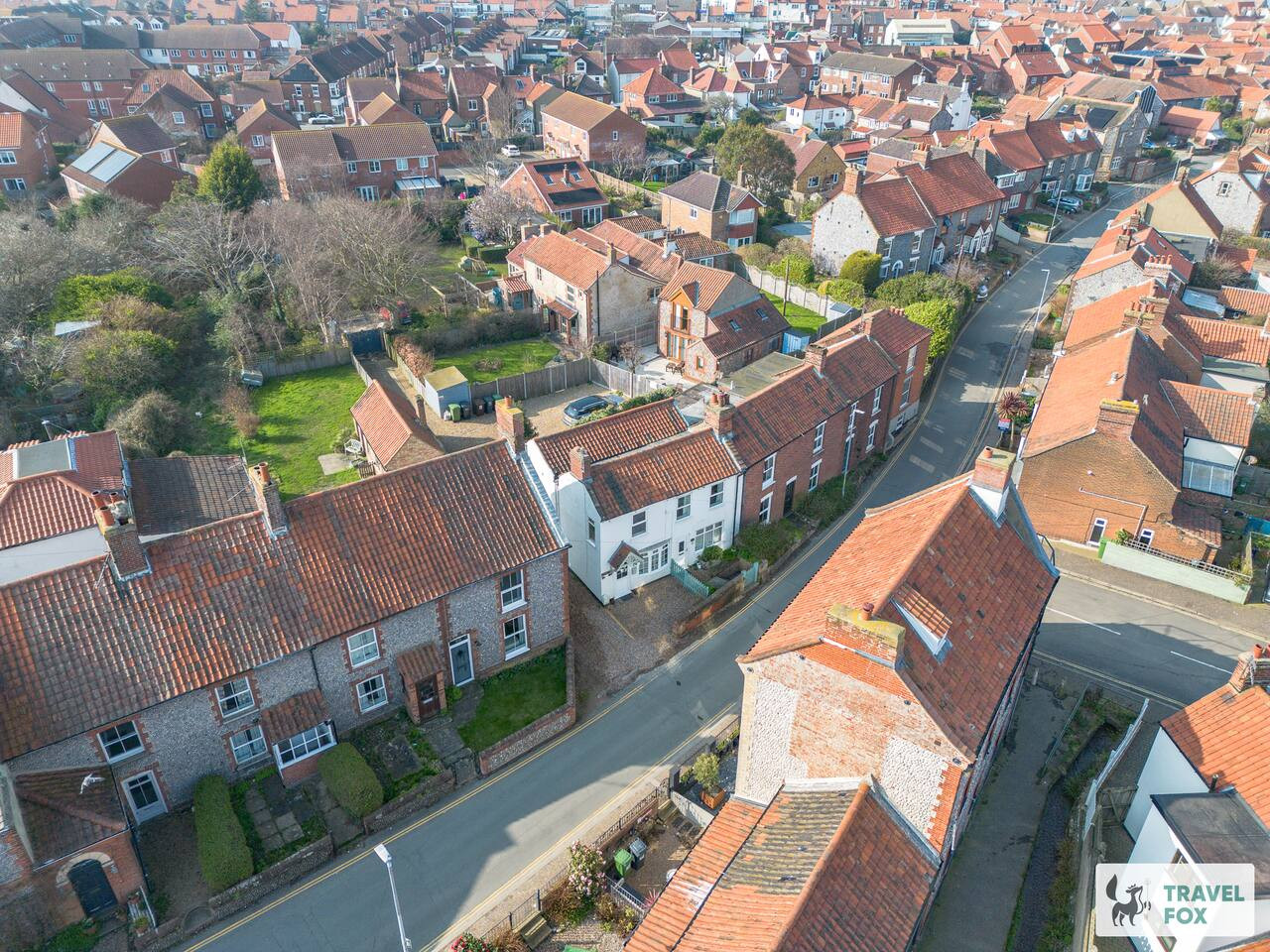
Travel Fox holiday homes around Norfolk, linked directly to their property pages.
A guide with a point of view
Written from research. Edited for real journeys.
Use the Official site links for live practical details, then use this guide for context, ideas and room to explore.
Sources
Every place on this page is checked against a published source. Each entry links the record we used and names who publishes it.
- The Railway Inn — railwayinndocking.co.uk operator, sector body or destination organisation
- Docking Village Market — dockingvillagehall.com operator, sector body or destination organisation
- St Mary the Virgin — historicengland.org.uk statutory register or public authority record not machine-readable; publisher restricts automated access
- Peddars Way — norfolkcoast.org other published source
- Docking Village Sign — dockingparishcouncil.gov.uk statutory register or public authority