
Norfolk's west-facing resort
Hunstanton
Striped Cretaceous cliffs, sunsets over The Wash and a seafront shaped by Victorian ambition.
- Best for
- Striped cliffs, sunsets and family seafront attractions
- Give it
- A full day at an unhurried pace
- Don't miss
- The red-and-white cliffs and sunset over The Wash
The Fox verdict
A resort with geology, history and sunset on its side
Hunstanton brings a traditional family seafront together with remarkable striped cliffs and the older story of Old Hunstanton.
The Green and Central Promenade form the resort's focal point, while the cliff-top walk leads towards St Edmund's Chapel and Old Hunstanton. Churches, food stops and a seal rescue centre add useful choices beyond the beach and funfair.
Where to go
Places in Hunstanton
Every place below is checked against a published source, listed with what it is and how long to give it.
Local signatures
3 placesRainbow Park
Hunstanton's seafront funfair has rides for all ages.
- Visit length
- Editorial estimate: Allow around 90 minutes
- Locality
- on the seafront
SEA LIFE Sanctuary
Home to Norfolk's Seal Rescue Centre and Hospital, which has rescued and rehabilitated more than 750 seals since opening in 1989.
- Visit length
- Editorial estimate: Allow around 120 minutes
- Locality
- Hunstanton
St Edmund's Chapel
Ruins of the chapel erected in 1272 in memory of St Edmund, who according to tradition landed at Hunstanton in 855.
- Visit length
- Editorial estimate: Allow around 30 minutes
- Locality
- at St Edmund's Point
Food & drink
3 placesThe Golden Lion Hotel
The resort's founding building serves pub classics and a carvery with changing cask beers from a setting overlooking the Green and sea.
- Visit length
- Editorial estimate: Allow around 75 minutes
- Locality
- on the New Hunstanton seafront
The Ancient Mariner Inn
A traditional inn converted from old barns and stables, serving seafood and pub classics with a large garden and direct beach access.
- Visit length
- Editorial estimate: Allow around 90 minutes
- Locality
- Old Hunstanton
The Norfolk Deli
A delicatessen specialising in artisan cheeses and accompaniments, named the country's best deli at the 2024 Farm Shop & Deli Retailer Awards.
- Visit length
- Editorial estimate: Allow around 45 minutes
- Locality
- Hunstanton
Walks & outdoors
2 placesHunstanton Cliffs
Three visible marine layers form the orange-brown, red and white cliff face, recognised by the Geological Society as one of its 100 Great Geosites.
- Visit length
- Editorial estimate: Allow around 60 minutes
- Locality
- along the shore
The Green
A broad clifftop and seafront green with a bandstand, forming the resort's focal point and the traditional start of the Coast Path.
- Visit length
- Editorial estimate: Allow around 30 minutes
- Locality
- at the top of Hunstanton cliffs
History & heritage
2 placesChurch of St Edmund
The Grade II town parish church was built from 1865 to 1869 by Frederick Preedy for his cousin Henry Le Strange.
- Visit length
- Editorial estimate: Allow around 45 minutes
- Locality
- New Hunstanton
Church of St Mary
A Grade I church with fourteenth-century Decorated fabric and Le Strange family monuments, restored and reroofed around 1860.
- Visit length
- Editorial estimate: Allow around 45 minutes
- Locality
- Old Hunstanton
Things to do
1 placeAlive Oasis
A leisure centre with a swimming pool, aqua slide, fun castle and roller skating.
- Visit length
- Editorial estimate: Allow around 90 minutes
- Locality
- on the Central Promenade
No places match this filter. Choose All places to reset the list.
Three ways to explore Hunstanton
Signature outings
Three colours of cliff
See Carrstone, Red Chalk and white Ferriby Chalk stacked in the striped face along Hunstanton's shore.
The resort begins here
The Golden Lion was Henry Le Strange's first building when he began creating the Victorian resort in 1846.
Decorated church history
St Mary's combines fourteenth-century Decorated fabric with Le Strange family monuments and an ambitious nineteenth-century restoration.
The town story
Hunstanton Town Guide
Striped cliffs, west-facing sunsets and the long story of a purpose-built Victorian resort.
Cliffs, Sunsets and Seafront Fun
The cliffs at Hunstanton are striped: orange-brown at the base, a band of dull red above it, then white on top. They run for about a kilometre and a half along the shore, and up close the stripes resolve into three separate rocks, laid down between 108 and 99 million years ago. Carrstone at the bottom, which is sand cemented together by iron oxide, or rust. The Red Chalk above it, red for the same reason and full of ammonites and belemnites. And the white Ferriby Chalk on top, made almost entirely of the shells of algae. The Geological Society lists the whole face as one of a hundred great geosites. From the beach it looks like someone got carried away with a paintbrush.
The other unusual thing about Hunstanton is which way it points. It is the only resort on the east coast of England that faces west, so the sun sets over the sea — across The Wash toward the Lincolnshire shore — which on this coast almost never happens. Locally the town is "Sunny Hunny," and it has the promenade and the funfair to justify the name.
The focal point is the Green, a broad stretch of clifftop grass with a bandstand, sitting where the town meets the drop to the beach. Walkers on the Norfolk Coast Path traditionally start here, on the grass at the top of the cliffs, and head north. Below, the central promenade runs the length of the main beach, past the leisure centre, the funfair, and the site of the old pier.
The funfair is Rainbow Park, rides for all ages, on the seafront. Nearby there is crazy golf, and the Alive Oasis leisure centre, which has a swimming pool with an aqua slide, a fun castle, and roller skating. The Princess Theatre is a small seafront theatre with a sun terrace facing the sea. This is a resort that has been in the business of entertaining families for a long time and knows what it is doing.
Beaches, Food and Coastal Pubs
South Beach is the sandy one, with beach huts to rent, groynes, and rock pools at low tide. If you want something more strenuous, Old Hunstanton next door is reckoned one of the best kitesurfing beaches in England. Hunstanton Sailing Club, on the seafront, runs kitesurfing, windsurfing, sailing, paddleboarding, kayaking and wing-foiling, and has parking, showers and a bar for when you come out of the water.
For food, the town punches above its size. The Norfolk Deli was named best deli in the entire country at the Farm Shop & Deli Retailer Awards in 2024 — artisan cheeses, the accompaniments to go with them, and "wedding cheese cakes," which are cakes made of cheese for weddings. A few miles east at Thornham there is Thornham Deli, part restaurant, part bakery, part lifestyle shop, doing patés, pies, tarts, macarons and cakes alongside homeware and garden ware. Also at Thornham, Drove Orchards Farm Shop grows its own apples, strawberries, raspberries, plums and pears and sells them next to a bakery, a wine cellar and a deli.
The fish and chips are taken seriously. One Tripadvisor reviewer's verdict on Fishers of Hunstanton was "10 out of 10 isn't high enough."
The pubs sort themselves geographically. On the New Hunstanton seafront is the Golden Lion Hotel, which is the oldest building in the resort — more on why in a moment — and does pub classics and a carvery with a couple of changing cask beers, from a terrace overlooking the Green. It reopened in March 2024 after a refurbishment that added a conservatory lounge with a glass lantern roof. Over in Old Hunstanton, the Ancient Mariner Inn was converted from old barns and stables attached to the Le Strange Arms Hotel. It does seafood and pub cooking, keeps at least four ales on and up to seven in season — Adnams Ghost Ship and Ampersand Bidon among them — and has a large garden with direct access to the beach. The terrace at the rear is a locally known spot for watching the sun go down, which, given the town faces west, is the whole point.
The Le Stranges and the Victorian Resort
The Le Strange Arms itself is a seaside hotel whose lawns run down to the sand. And if you want the town's high-end option, the Neptune sits in an eighteenth-century former coaching inn at Old Hunstanton, where the chef Kevin Mangeolles and his wife Jacki have held a Michelin star since 2009, retained in the 2026 guide. It is a tasting-menu place, seafood-led, and about as far from the carvery as you can get within a mile.
Almost everything here comes back to one family. The Le Stranges — l'Estrange in the older spelling — were resident at Hunstanton from around the time of Domesday until after the Second World War, seated at Hunstanton Hall. In the Domesday survey of 1086 the settlement had eighty households under five owners, which put it in the largest fifth of places recorded, and among the population the surveyors counted sixteen villagers, seven freemen, four smallholders and one slave.
The town you actually walk through, though, is Victorian, and it exists because one man decided it should. In 1846 Henry L'Estrange Styleman Le Strange looked at the land south of the old village and the growing fashion for sea bathing and decided to build a resort from scratch. The Golden Lion was the first building. With his friend the architect William Butterfield he laid out a model town in an "Old English" Gothic Revival style. The Lynn and Hunstanton Railway opened in 1862, the year Le Strange died, and his son Hamon carried the work on. By 1881 the place had two hotels, a pier and rows of handsome terraces.
The family's older claim is stranger. As hereditary Lords High Admiral of the Wash they held salvage and wreckage rights over anything cast ashore, defined in their charter as "everything in the sea as far as a man riding a horse can throw a javelin from the low-tide mark." A court upheld their foreshore and fishery rights across The Wash as recently as 1885.
Churches, Legends and the Cliff-top Walk
Hunstanton Hall has one further distinction. P. G. Wodehouse was a friend of Charles Le Strange and a regular guest in the 1920s and 30s, and reputedly wrote with his typewriter set up on a punt in the moat. The Hall became Rudge Hall in his 1928 novel Money for Nothing and is sometimes claimed, disputedly, as a model for Blandings Castle. In the moated garden stands the Octagon, a summerhouse said to have been built by an earlier Sir Hamon Le Strange as a place to practise his violin without being overheard.
The two churches split along the same old-and-new line as everything else. St Edmund's, in the new town, was built between 1865 and 1869 by Frederick Preedy for his cousin Henry Le Strange, at a cost of £3,700, and is dedicated to the martyred king of East Anglia. St Mary's, in Old Hunstanton, is older and grander — fourteenth-century Decorated work, restored and reroofed around 1860, again by Henry Le Strange, and regarded in the Pevsner tradition as one of the most exciting Decorated parish churches in Norfolk. It holds the family's monuments.
The saint the new church is named for is supposed to have arrived here in 855 to be crowned king. Edmund led an army against the Vikings, lost, was captured and killed, and became the first patron saint of England. A chapel was raised in his memory at the northern point of the cliffs in 1272, and its ruins are still there, near the lighthouse.
That walk north along the cliff tops is the best short one in the town. It runs from the Green past the striped cliffs to St Edmund's Point, where you find the chapel ruins and the Old Hunstanton Lighthouse. The present lighthouse dates from 1840, but a light has stood on this spot since the seventeenth century, when a pair of stone towers was built in 1665 by a consortium of Boston and Lynn merchants for a little over £200. Fulmars nest in pairs all along the cliff face. Below, on the sand, lie the skeletal remains of the Sheraton, a steam trawler that served the Royal Navy in both world wars, ended up as a target ship painted yellow, and drifted ashore in a gale in 1947. Its hull is visible at low tide.
Trails, Travel and Sea Rescue
Longer walks fan out from here. The Norfolk Coast Path runs the length of the county's shore; the Peddars Way, a forty-six-mile trail along an old Roman road, comes up from Suffolk and meets it just east at Holme-next-the-Sea. East of the town the walking is easy and near-level, out toward the dunes and the nature reserve at Holme.
Hunstanton's own railway closed in 1969, so the nearest station now is King's Lynn, about eighteen miles south, from where the A149 coast road brings you up. The Lynx Coastliner 36 runs seven days a week between King's Lynn, Hunstanton, Wells and Fakenham, and the Coasthopper carries on east along the coast for anyone who wants to walk one way and ride back.
The sea here is not always benign. On the last night of January 1953 the North Sea broke through the defences and put up to ten feet of water across the low-lying South Beach. Fifteen local residents and sixteen Americans, from service families quartered nearby, were killed. An American airman named Reis Leming, twenty-two years old and unable to swim, waded through the flood in a survival suit dragging an inflatable raft and pulled twenty-seven people out before he collapsed from exhaustion and cold. He was given the George Medal, the first non-British person to receive it in peacetime.
The town still keeps its rescuers. The RNLI station operates an Atlantic 85 lifeboat and one of only four inshore rescue hovercraft in the service, which it needs for the soft mud and shifting sands of The Wash. And at the SEA LIFE Sanctuary, open since 1989, Norfolk's seal hospital has treated more than 750 animals over the years, taking in forty or fifty orphaned or sick pups a season. The ones too damaged to go back to the wild stay on, and they have names: Sally, Amber, Callie, Lora, Macey and Pippa.
Stay around Norfolk
Make a longer stay of it
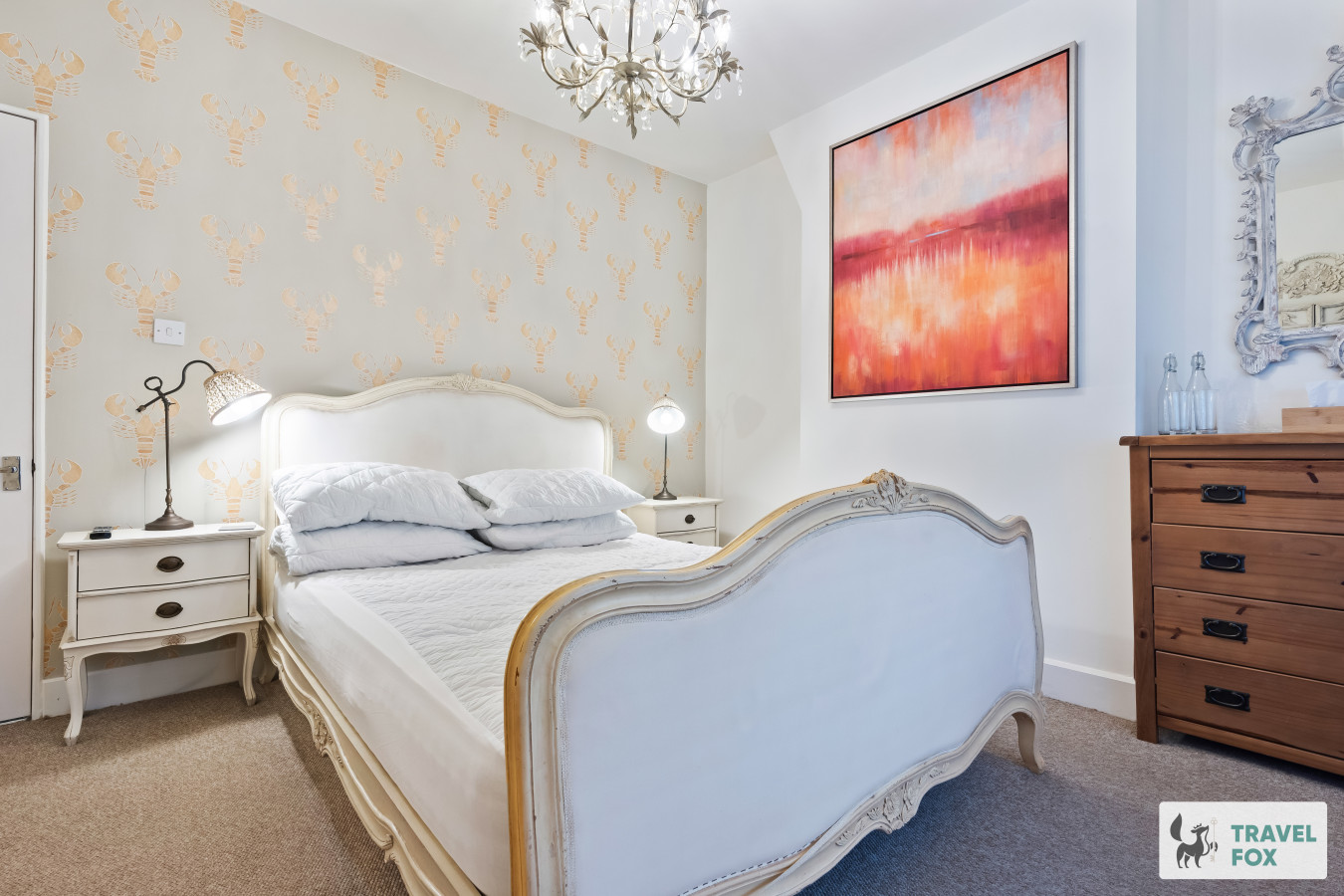
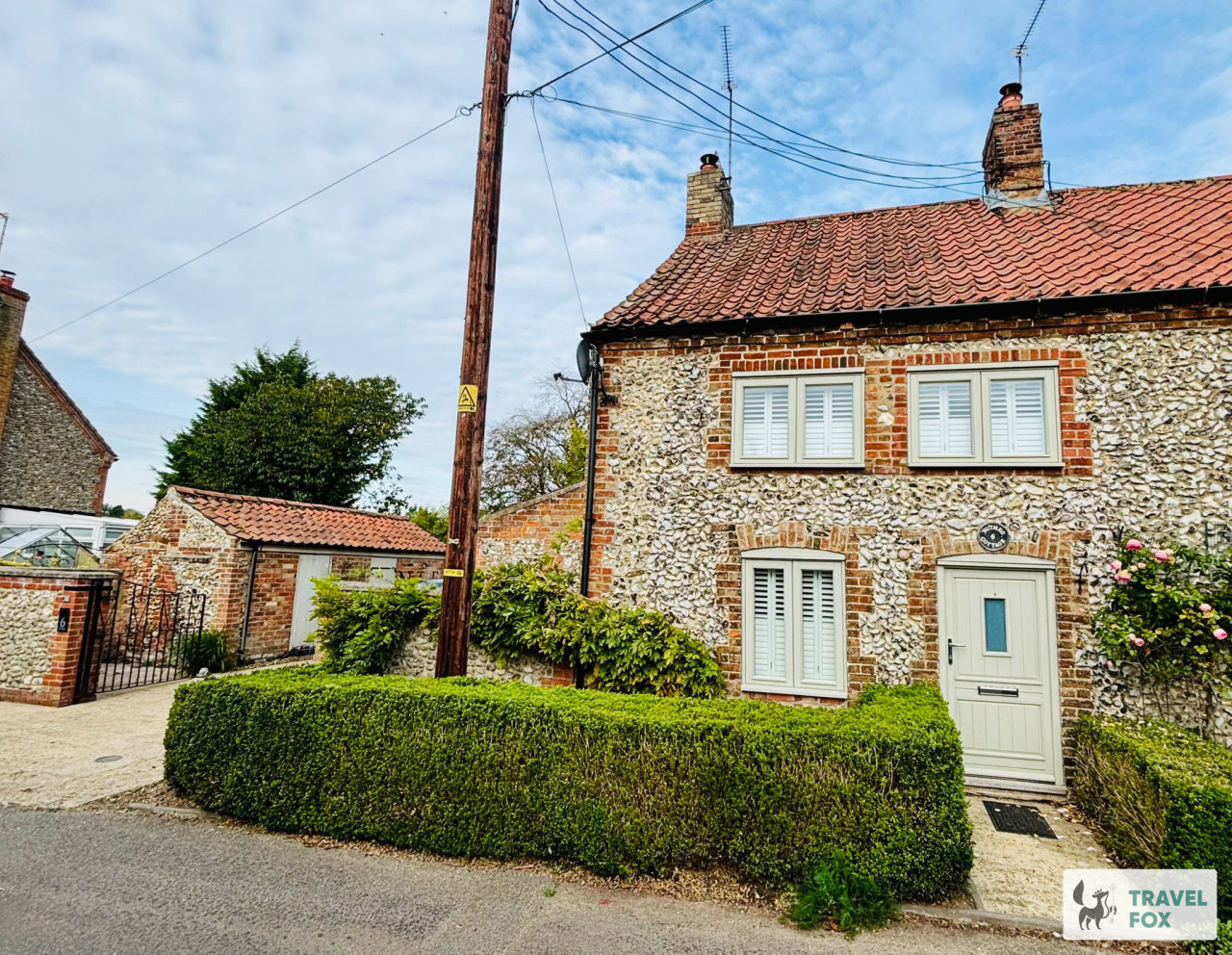
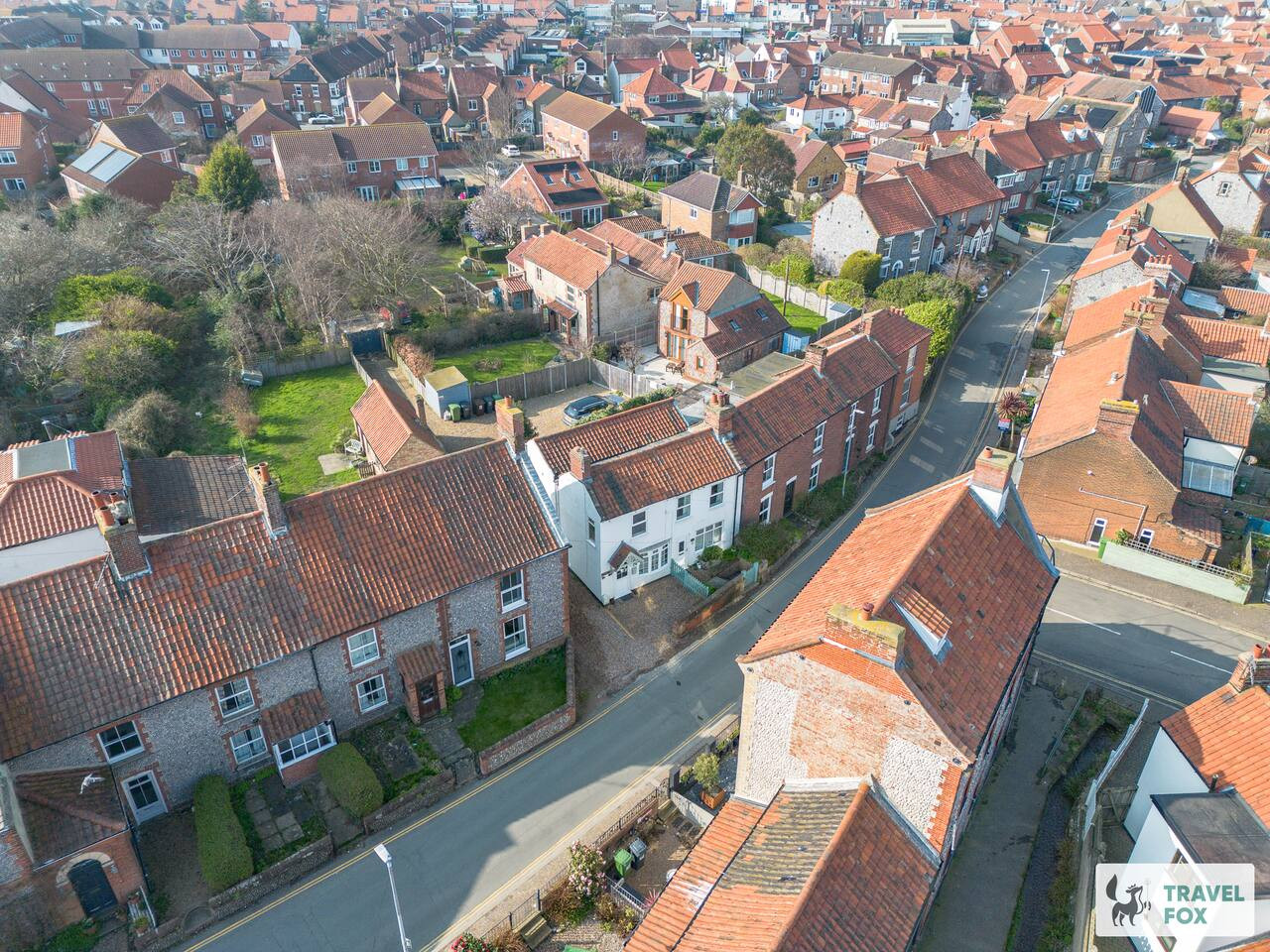
Travel Fox holiday homes around Norfolk, linked directly to their property pages.
A guide with a point of view
Written from research. Edited for real journeys.
Use the Official site links for live practical details, then use this guide for context, ideas and room to explore.
Sources
Every place on this page is checked against a published source. Each entry links the record we used and names who publishes it.
- Hunstanton Cliffs — west-norfolk.gov.uk statutory register or public authority
- The Green — hunstantontowncouncil.gov.uk statutory register or public authority
- Rainbow Park — rainbow-park.co.uk operator, sector body or destination organisation
- Alive Oasis — alivewestnorfolk.co.uk operator, sector body or destination organisation
- SEA LIFE Sanctuary — visitsealife.com operator, sector body or destination organisation
- The Golden Lion Hotel — thegoldenlionhunstanton.co.uk operator, sector body or destination organisation
- The Ancient Mariner Inn — theancientmarinerinn.co.uk operator, sector body or destination organisation
- The Norfolk Deli — norfolk-deli.co.uk operator, sector body or destination organisation
- Church of St Edmund — historicengland.org.uk statutory register or public authority record not machine-readable; publisher restricts automated access
- Church of St Mary — historicengland.org.uk statutory register or public authority record not machine-readable; publisher restricts automated access
- St Edmund's Chapel — historicengland.org.uk statutory register or public authority record not machine-readable; publisher restricts automated access