
Cliffs, dunes and west-facing sea
Old Hunstanton
A quiet north-west Norfolk village where striped cliffs rise above a broad sandy beach, historic landmarks and the western start of the Norfolk Coast Path.
- Best for
- Clifftop walks, fossils and sunsets over the sea
- Give it
- A beach-to-village day
- Don't miss
- The orange, red and white bands of the cliffs
The Fox verdict
A quieter coast of colour and history
Come for the west-facing beach and layered cliffs; stay for historic paths, a remarkable church and food close to the shore.
Old Hunstanton brings together a broad sandy beach, fossil-rich striped cliffs and the western start of the Norfolk Coast Path. Its 14th-century church and clifftop chapel ruins add deeper history, while the Ancient Mariner, Le Strange Arms and The Neptune give the village three very different places to eat.
Where to go
Places in Old Hunstanton
Every place below is checked against a published source, listed with what it is and how long to give it.
Local signatures
3 placesThe Neptune
A Michelin-starred restaurant-with-rooms in an 18th-century former coaching inn, where Kevin Mangeolles cooks and Jacki Mangeolles runs front of house.
- Visit length
- Editorial estimate: Allow around 120 minutes
- Locality
- on Old Hunstanton Road
Hunstanton Lifeboat Station
An RNLI station operating an Atlantic 85 inshore lifeboat and one of only four RNLI inshore rescue hovercraft.
- Visit length
- Editorial estimate: Allow around 30 minutes
- Locality
- on Sea Lane
- Access
- The lifeboat station is open to visitors.
Norfolk Coast Path
The western start of the Norfolk Coast Path, following the coast behind dunes and beside the golf course towards Thornham.
- Visit length
- Editorial estimate: Allow around 120 minutes
- Locality
- western start at the RNLI lifeboat station on Sea Lane
Food & drink
2 placesThe Ancient Mariner Inn
A coastal dining pub in former 1600s farmhouse barns and stabling, retaining its boat, beams and fireplace and serving local crab, fish and chips, pies and bar snacks.
- Visit length
- Editorial estimate: Allow around 90 minutes
- Locality
- on the edge of the beach
- Access
- Dogs are welcome alongside locals, walkers, holidaymakers and day-trippers.
Le Strange Arms Hotel
A seaside hotel with bar and dining, built around a traditional Norfolk farmhouse of the 1600s and named for the Le Strange family.
- Visit length
- Editorial estimate: Allow around 90 minutes
- Locality
- next door to the Ancient Mariner Inn
Walks & outdoors
2 placesOld Hunstanton Beach
A broad sandy beach below orange Carstone, red chalk and white chalk cliffs, with fossils, fulmars and west-facing sunsets among its defining features.
- Visit length
- Editorial estimate: Allow around 90 minutes
- Locality
- separated from the village by sand dunes, pinewoods and beach huts
- Access
- The broad sandy beach is dog-friendly.
Holme Dunes
A dune nature reserve crossed by a boardwalk, with the beach beyond marking the discovery place of the 4,000-year-old timber circle Seahenge.
- Visit length
- Editorial estimate: Allow around 90 minutes
- Locality
- at Holme-next-the-Sea, just east of Old Hunstanton
- Access
- A boardwalk crosses the nature reserve.
History & heritage
2 placesSt Mary's Church
A Grade I church with 14th-century fabric raised by the Le Strange family and churchyard gravestones for two men killed by smugglers in 1784.
- Visit length
- Editorial estimate: Allow around 45 minutes
- Locality
- up in the village
St Edmund's Chapel
Clifftop ruins built in 1272, with a surviving wall section and Norman doorway plus the foundations of the nave and chancel.
- Visit length
- Editorial estimate: Allow around 30 minutes
- Locality
- on the clifftop
No places match this filter. Choose All places to reset the list.
Three ways to explore Old Hunstanton
Signature outings
Walk beneath the striped cliffs
Look for orange Carstone, red chalk and white chalk above a broad sandy beach where the west-facing coast catches sunsets over the sea.
Meet Old Hunstanton's smugglers
At St Mary's, find the churchyard graves of customs officer William Green and dragoon William Webb, killed by smugglers in 1784.
Eat beside the beach
Choose local crab, beer-battered fish or a Mariner's pie, then take the west-facing terrace for a sunset over the sea.
The village story
Old Hunstanton Village Guide
Striped chalk, broad sand and a west-facing horizon frame a village of coastal paths, historic buildings and memorable food.
Striped Cliffs and West-Facing Sands
The cliffs here are striped: orange Carstone at the base, a band of red chalk in the middle, white chalk on top, all of it laid down between 108 and 99 million years ago. Fulmars nest along the face. People walk the clifftop looking for ammonites, belemnites and shark's teeth, and the disused lighthouse and the ruins of St Edmund's Chapel, built in 1272, sit up there among the fossils.
Below the cliffs, sand dunes, pinewoods and a line of beach huts separate the village from a broad sandy beach. It's dog-friendly. Because Old Hunstanton faces west, it gets sunsets over the sea, which is not something most east-coast resorts can offer.
Beachside Inns and Links
The Ancient Mariner Inn sits right on the edge of it, with a garden that opens onto the beach and a west-facing terrace for the sunsets. The buildings were barns and stabling for a Norfolk farmhouse from the 1600s. Chestnut reopened them in March 2026 after a refurbishment that kept the boat, the beams and the fireplace and added sea-view windows. The menu runs to potted local crab, beer-battered fish with triple-cooked chips, Mariner's pies and sirloin with peppercorn sauce, and there are sausage rolls at the bar. Dogs are as welcome as walkers. Some regulars still miss the old curry.
Next door, the Le Strange Arms is a seaside hotel with lawns running down to the beach, named for the family who were lords of the manor from Domesday until after the Second World War. Half a mile off is Hunstanton Golf Club, a championship links laid out in 1891 after Hamon le Strange put up £30 for the original nine holes.
The Neptune and the Coastal Trail
For dinner there is The Neptune, a Michelin-starred restaurant-with-rooms in an 18th-century coaching inn on Old Hunstanton Road. Kevin Mangeolles cooks alone; his wife Jacki runs the front of house. They opened it in August 2007 and have held the star since 2009.
Old Hunstanton is the western start of the Norfolk Coast Path. The trail begins at the RNLI lifeboat station on Sea Lane, which keeps one of only four RNLI inshore rescue hovercraft and is open to visitors, and runs behind the dunes and alongside the golf course toward Thornham. The Peddars Way meets it at Holme-next-the-Sea, just east, where a boardwalk crosses Holme Dunes and the beach beyond is where the 4,000-year-old timber circle Seahenge was found.
Church, Smugglers and Connections
St Mary's, up in the village, is 14th-century work raised by the Le Stranges. Pevsner called it "perhaps the most exciting Dec parish church in Norfolk." In the churchyard are the graves of a customs officer and a dragoon killed by smugglers in 1784; no one was ever convicted.
The village has a shop, the pubs, cafés and a playground, all within walking distance. King's Lynn station is about sixteen miles down the A149, and the Lynx Coastliner 36 runs through roughly hourly.
Wodehouse at Hunstanton Hall
P. G. Wodehouse used to stay at Hunstanton Hall. The pig Empress of Blandings is said to be based on one kept in the hall's pigsty while he was there.
Stay around Norfolk
Make a longer stay of it
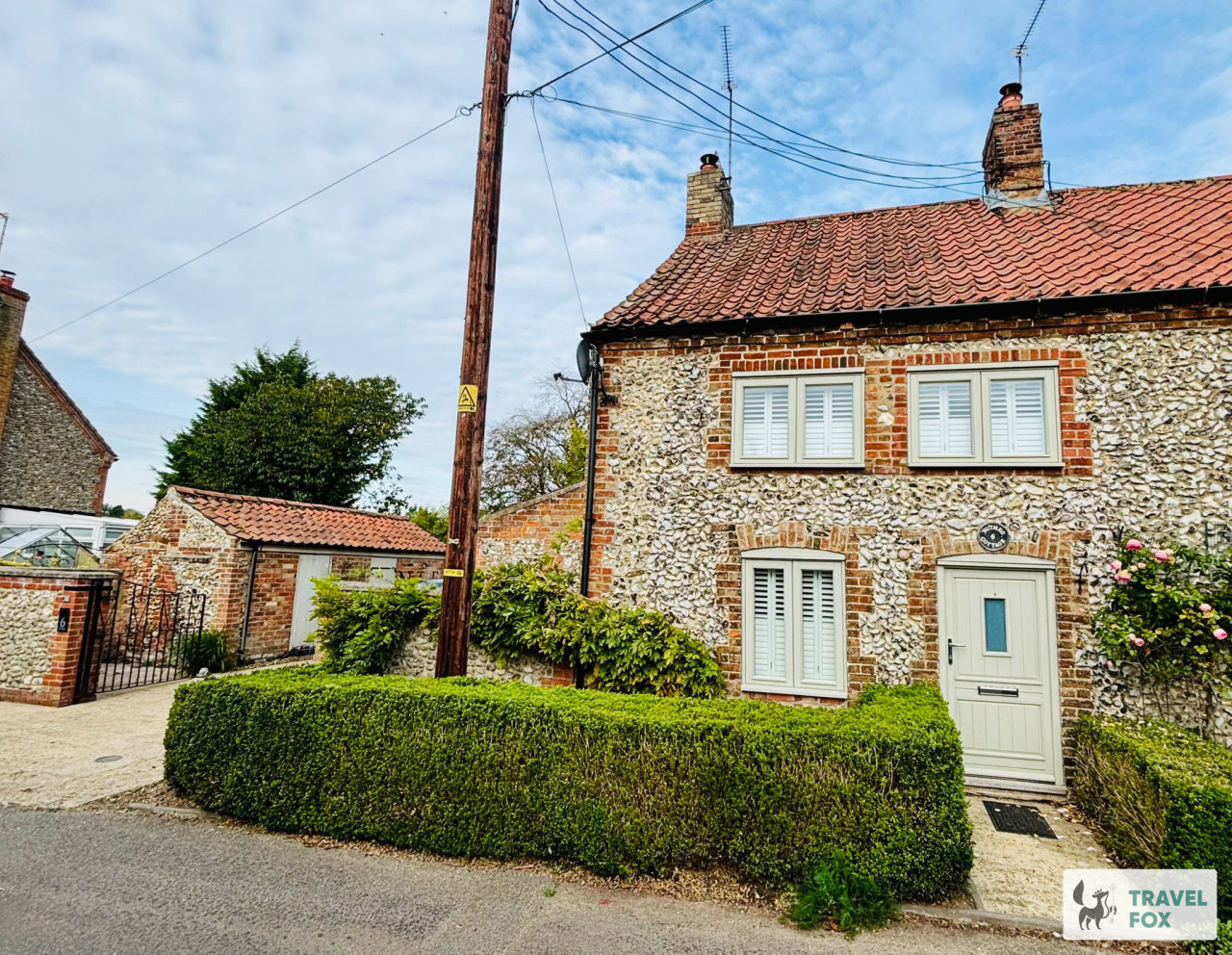
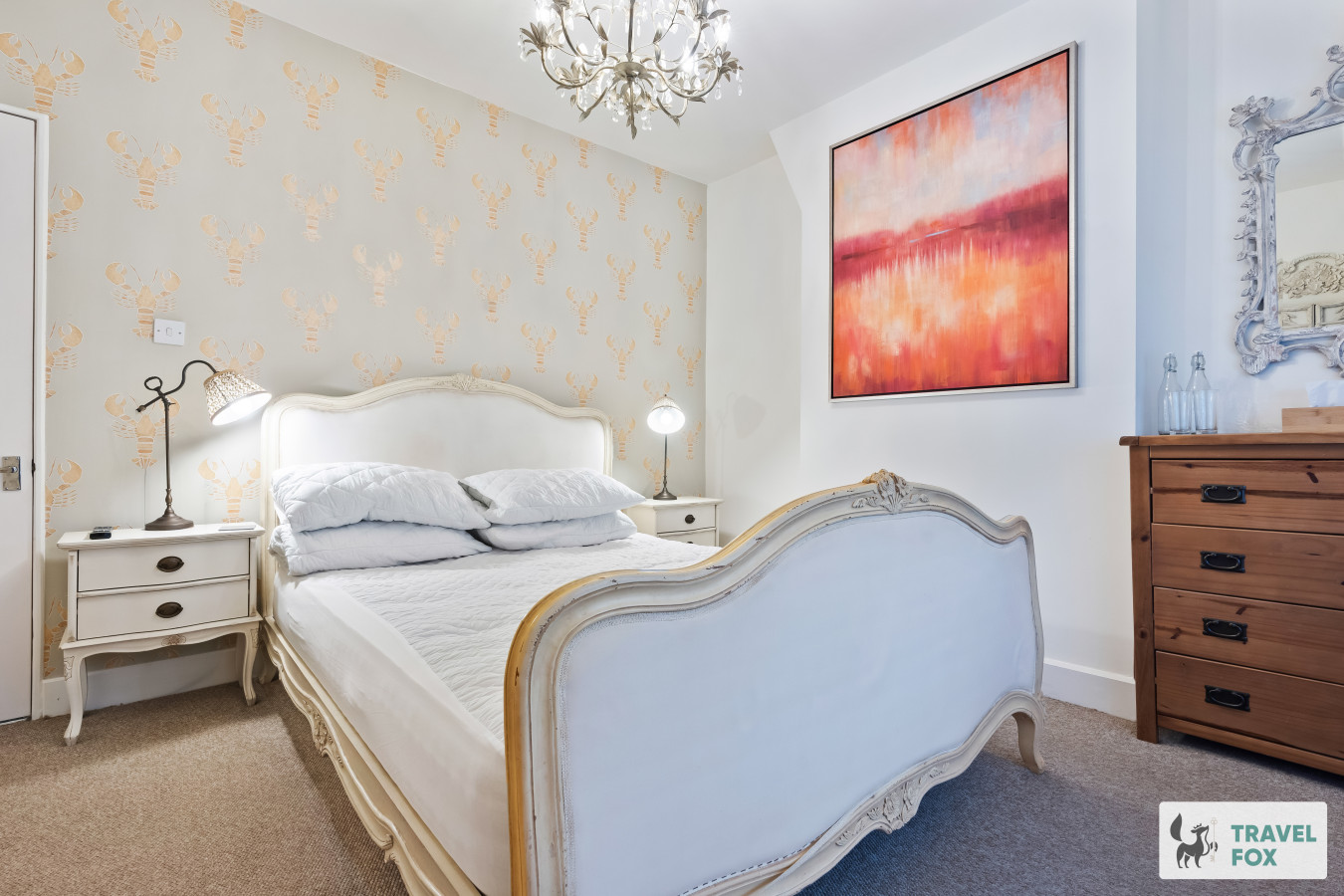
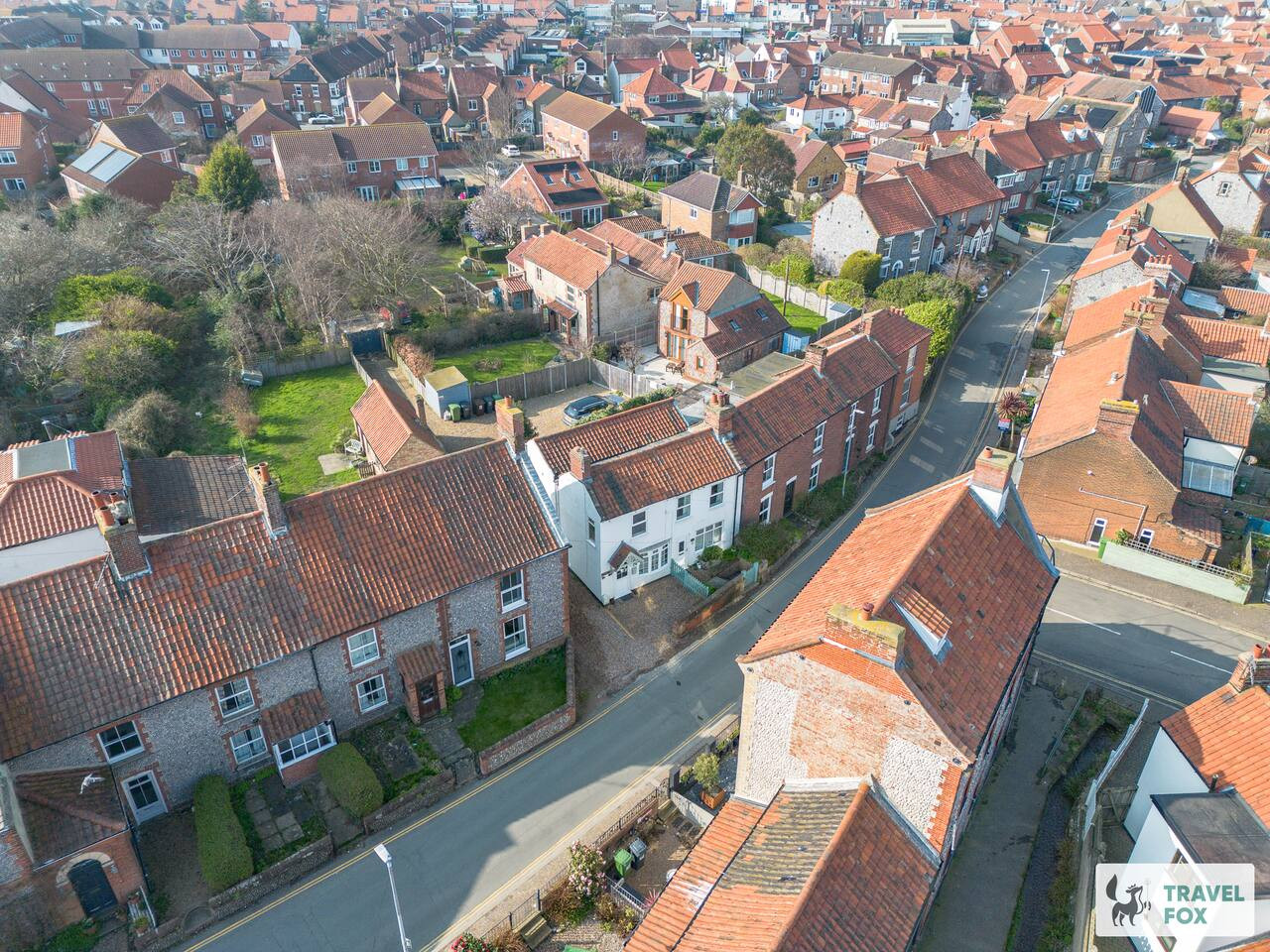
Travel Fox holiday homes around Norfolk, linked directly to their property pages.
A guide with a point of view
Written from research. Edited for real journeys.
Use the Official site links for live practical details, then use this guide for context, ideas and room to explore.
Sources
Every place on this page is checked against a published source. Each entry links the record we used and names who publishes it.
- Old Hunstanton Beach — visitwestnorfolk.com operator, sector body or destination organisation
- The Ancient Mariner Inn — theancientmarinerinn.co.uk operator, sector body or destination organisation
- Le Strange Arms Hotel — lestrangearms.co.uk operator, sector body or destination organisation
- The Neptune — theneptune.co.uk operator, sector body or destination organisation
- St Mary's Church — historicengland.org.uk statutory register or public authority record not machine-readable; publisher restricts automated access
- Hunstanton Lifeboat Station — west-norfolk.gov.uk statutory register or public authority
- Norfolk Coast Path — gov.uk statutory register or public authority
- Holme Dunes — norfolkwildlifetrust.org.uk national body or asset manager
- St Edmund's Chapel — historicengland.org.uk statutory register or public authority record not machine-readable; publisher restricts automated access