
Caves, lace and castle rock
Nottingham
A compact, walkable city centre above more than a thousand man-made sandstone caves, with a castle, lace warehouses and singular pubs gathered into one urban core.
- Best for
- Caves, civic history and independent city culture
- Give it
- The compact centre on foot, then Wollaton three miles west
- Don't miss
- The medieval tannery beneath the streets
The Fox verdict
A city built above its own hidden world
Nottingham brings caves, lace warehouses, castle history and characterful pubs into a city centre covering less than a square mile.
More than a thousand man-made caves run beneath the streets, while the Lace Market preserves the scale of the city's machine-lace trade. Above ground, the Council House lions, Nottingham Castle and a three-way oldest-pub dispute give a compact walk a succession of precise local stories.
Where to go
Places in Nottingham
Every place below is checked against a published source, listed with what it is and how long to give it.
Local signatures
3 placesNational Justice Museum
A Victorian courtroom above a gaol dating from at least 1449, with costumed trial re-enactments and a working gallows brought from Wandsworth prison.
- Visit length
- Editorial estimate: allow around 90 minutes
- Locality
- Shire Hall, High Pavement
Nottingham Castle
A 1670s ducal palace on the castle site, now a museum and art gallery, with the 127-step Mortimer's Hole passage descending to Brewhouse Yard.
- Visit length
- Editorial estimate: allow around 120 minutes
- Locality
- Nottingham city centre
Canalhouse
A Grade II listed former canal museum where a canal arm runs inside the building with resident narrowboats and a footbridge.
- Visit length
- Editorial estimate: allow around 60 minutes
- Locality
- Nottingham canal-side
Food & drink
1 placeYe Olde Trip to Jerusalem
A pub below the castle with rooms carved into Castle Rock, a roughly 60-foot sandstone chimney and the Cursed Galleon in the Rock Lounge.
- Visit length
- Editorial estimate: allow around 60 minutes
- Locality
- 1 Brewhouse Yard, below the castle
Walks & outdoors
2 placesThe Arboretum
Nottingham's first public park, with more than 800 trees, a circular aviary, a bandstand and a Chinese Bell Tower war memorial ringed by Crimean War cannon.
- Visit length
- Editorial estimate: allow around 75 minutes
- Locality
- Nottingham
Wollaton Park
A roughly 500-acre deer park around an Elizabethan hall whose Natural History Museum includes George the Gorilla, Hilary the Hippopotamus and Geoffrey the Giraffe.
- Visit length
- Editorial estimate: allow around 120 minutes
- Locality
- around three miles west of Nottingham city centre
- Access
- Keep at least 50 metres back from the deer.
History & heritage
4 placesOld Market Square
Roughly three acres of paved public square, with the Council House and its 200-foot dome at the east end and two stone lions guarding its steps.
- Visit length
- Editorial estimate: allow around 30 minutes
- Locality
- Nottingham city centre
City of Caves
The largest publicly accessible section of Nottingham's man-made cave network, including Britain's only known underground tannery.
- Visit length
- Editorial estimate: allow around 75 minutes
- Locality
- beside Nottingham Contemporary
Nottingham Contemporary
A free gallery whose concrete cladding reproduces a mid-19th-century cherry-blossom design by Nottingham lace industrialist Richard Birkin.
- Visit length
- Editorial estimate: allow around 60 minutes
- Locality
- Weekday Cross
Green's Windmill
A restored working corn mill and free museum and science centre telling the story of George Green, whose work introduced Green's theorem and Green's functions.
- Visit length
- Editorial estimate: allow around 75 minutes
- Locality
- Sneinton
No places match this filter. Choose All places to reset the list.
Three ways to explore Nottingham
Signature outings
The Left Lion
Use Nottingham's traditional meeting place beside the Council House before setting out across the compact centre.
The Medieval Tannery
Descend into the largest publicly accessible part of Nottingham's cave network and see Britain's only known underground tannery.
Wollaton Hall and Park
Cross the roughly 500-acre park below the Elizabethan hall while keeping at least 50 metres back from the red and fallow deer.
The city story
Nottingham City Guide
From the Left Lion to the sandstone caves, Nottingham's defining stories sit close together above and below the compact centre.
Lions, Square and Sandstone
There are two stone lions outside the Council House, and the whole city has agreed, without ever putting it to a vote, that meetings happen at the left one. "See you by the Left Lion" has been the standard opening move of Nottingham courtship for generations. Nobody meets at the right lion.
The lions put you in Old Market Square — about three acres of open paving, one of the largest paved public squares in the country, with the Council House dome rising two hundred feet over the east end. The city centre fits inside a square mile from here, which means you walk everything: the castle one way, the Lace Market the other, the station downhill and the canal just beyond it.
What the walking doesn't show you is what's underneath. A Welsh monk writing in 893 recorded Nottingham's old British name as Tig Guocobauc — "place of caves" — and the city has spent eleven centuries living up to it. More than a thousand man-made caves are cut into the sandstone under the streets: dwellings, workshops, beer cellars in continuous use since the thirteenth century, the only known underground tannery in Britain, and eighty-six public air-raid shelters by 1941. None of them are natural. The rock is soft enough to dig with hand tools and stable enough not to come down on you afterwards, and generations of Nottingham people drew the obvious conclusion. City of Caves, entered down the steps beside Nottingham Contemporary, takes you through the largest accessible stretch, tannery included, and the ticket lasts a year.
Cave Pubs and Castle Rock Beer
The caves are also why Nottingham can sustain a three-way argument about the oldest pub in England. Ye Olde Trip to Jerusalem, carved into the rock directly below the castle, paints 1189 on its wall; there is no documentary evidence for the date, which is thought to have been invented around 1909 by a landlord named George Ward, a man who understood his market. The Bell Inn on Angel Row says 1437, and tree-ring dating of its roof timbers comes back at 1442, give or take a decade. Ye Olde Salutation Inn claims 1240, and a 1937 investigation dated its rock-cut cellars to the ninth century. In 1998 a Channel 4 programme adjudicated: the Salutation is the oldest building, the Trip has the oldest caves, and the Bell was the earliest actually run as a pub. All three absorbed the verdict and carried on selling beer.
The Trip is the one to see first. Its back rooms are caves, its chimney is a sixty-foot shaft bored up through Castle Rock, and in the Rock Lounge a model galleon sits in a glass case under decades of dust, because the last three people to clean it are said to have died mysteriously and no landlord since has wanted to run the experiment. There is also an antique chair, reputed to help women conceive, which the pub keeps locked away on account of too many women sitting on it. Down in the Salutation's cellars, meanwhile, visitors leave dolls for Rosie, a Victorian flower seller said to have died there after a carriage accident. One knitted doll has been in the caves so long nobody can say who brought it.
For the beer itself, the name that matters is Castle Rock, whose Harvest Pale was named Champion Beer of Britain in 2010. The brewery tap, the Vat and Fiddle, is a small art-deco building by the station with thirteen cask lines and a beer garden backing onto the brewery yard. The Canalhouse goes one further: the canal comes in through the front of the building, narrowboats moor inside, and you cross a footbridge to reach the bar. At Sneinton Market, Neon Raptor pours its own New England IPAs in a taproom decorated with neon dinosaurs.
Food, Lace and Hockley Independents
Eating is the same story of specifics. Restaurant Sat Bains has held two Michelin stars since 2011 — the chef's Great British Menu starter of egg, ham and peas once scored three perfect tens — and the tasting menus run from £149 to £259, booked well ahead. Alchemilla serves a veg-first menu in a Victorian carriage house on Derby Road. MemSaab, the fine-dining Indian that A.A. Gill rated among the three best in the country, has been going more than twenty years. Bar Iberico in Hockley does all-day tapas and takes no bookings unless there are ten of you. Delilah Fine Foods keeps over 150 cheeses in a former bank on Victoria Street and was named the UK's best delicatessen in 2025. Bustler Market at Sneinton fills a hall with fried chicken, gyoza and whatever the current guest kitchen is doing. And 200 Degrees, the coffee roaster that has since grown to eighteen-plus shops, started here in 2011 with two founders roasting beans at home. The one that got away: World Service, the restaurant in a seventeenth-century house by the castle, closed in 2024 on its twenty-fourth anniversary with a statement that ended, "It's been a hell of a ride."
The Lace Market is the quarter that built all this. For a century Nottingham made the world's machine lace, and this quarter-mile of red-brick warehouses, up to seven storeys of tall finishing-room windows with the showrooms below, was its trading floor. More than forty thousand people worked in lace at the peak; by the 1970s it was under five thousand. The warehouses are flats, bars and offices now, and walking Stoney Street still feels like walking a canyon someone cut through brick. St Mary's, the city's largest medieval church, stands at the top; the Adams Building of 1855, once the biggest lace warehouse of them all, built by a Quaker who installed a chapel and a schoolroom for his workers, is now a college. Nottingham Contemporary, the free gallery at Weekday Cross, wears the industry on its skin — its concrete panels are imprinted with a cherry-blossom lace pattern copied from a nineteenth-century Nottingham design. A few doors up High Pavement, the National Justice Museum runs costumed trials in a real Victorian courtroom, above a gaol dating from 1449 and a yard with a working gallows from Wandsworth prison.
Hockley, next door, is where the city keeps its record shops. The BBC called it "the Soho of Nottingham" in 2005 and The Times listed it among the coolest places in the UK in 2022; in practice it is four streets of vintage clothes (Wild Clothing, COW), vinyl (Rough Trade, with gigs in the back), and Broadway, the independent cinema that was among the first in Britain to screen Pulp Fiction. Broadway's Screen 4 is upholstered in Paul Smith's signature stripes — Smith opened his first shop on Byard Lane in 1970 with £600 of savings, trading Fridays and Saturdays only. The neighbourhood has form for this sort of thing: the Boot family started as herbalists on Goose Gate in 1849, and Jesse Boot later ran his first proper Boots shop nearby.
Castle Rebellion, City Inventions and Green Space
The castle keeps watch over all of it from its rock. The building is not the medieval one — that came down after the Civil War — but a ducal palace burned out in 1831 by a mob angry that the Duke had voted against the Reform Bill; they sold his tapestries to bystanders at three shillings a yard, and the Duke pocketed £21,000 in damages and left the burnt shell on the skyline for forty years. It reopened as a museum in the 1870s and again, after a recent overhaul, in 2026; entry is £18, the ticket lasts a year, and children go free. The £9 cave tour is the thing to add: Mortimer's Hole, the 127-step passage up which the seventeen-year-old Edward III crept one night in 1330 to arrest his mother's lover and take his own throne back. Outside the gates, Robin Hood stands in bronze, aiming his arrow at the castle — placed there in 1952, outside the walls, an outlaw to the last. And it was on this rock in August 1642 that Charles I raised his standard to start the Civil War, on a wet day, to a thin crowd; the standard blew down in the gale almost immediately. Five years later he came back through the city as a prisoner.
The city's other exports are a strange and mostly accidental list. Ibuprofen was invented at the Boots laboratories here; its discoverer, Stewart Adams, tested a 600mg dose on his own hangover before giving a speech and pronounced it very effective. HP Sauce was invented by a Nottingham grocer who sold the name and recipe to a Birmingham firm in 1899 for £150. Raleigh was, by 1913, the largest bicycle maker in the world, named after the street its first workshop stood on. Torvill and Dean skated Boléro in 1984 and took twelve perfect sixes — the ice centre's rink now carries their names, and you enter it from Bolero Square. Nottingham Forest won the European Cup twice, in 1979 and 1980, which means this city has won it more times than London, Paris, Berlin, Moscow and Rome combined; their manager Brian Clough — "I wouldn't say I was the best manager in the business. But I was in the top one." — has his statue in the square. Trent Bridge, the world's third-oldest Test cricket ground, exists because a cricketer named William Clarke noticed the meadow behind the Trent Bridge Inn in 1838 and, efficiently, married the landlady.
When you want green, Wollaton Park is three miles west: five hundred acres, a herd of red and fallow deer, and an Elizabethan hall that played Wayne Manor in The Dark Knight Rises — the natural history museum inside keeps a gorilla called George. The Arboretum, the city's first public park, has a bandstand, an aviary, a pagoda ringed with Crimean War cannon, and a persistent, unproven local legend that J.M. Barrie, then a reporter in Nottingham, based Neverland on it. In Sneinton, Green's Windmill still grinds flour; its miller, George Green, had roughly a year of schooling and produced mathematics that physicists still lean on. Attenborough Nature Reserve, five miles out, was opened in 1966 by Sir David Attenborough, whose family hails from the village. The Big Track runs a ten-mile car-free loop along the canal and the Trent if you want to walk or cycle it all off.
Connections, Lost Streets and Returning Traditions
Getting about is simple: trams every ten minutes or so, and direct trains to London St Pancras in around ninety minutes.
Some of Nottingham is missing, and the city remembers it. Drury Hill, a medieval street four feet ten inches wide at its narrowest — neighbours could lean out and join hands across it — was demolished in the 1960s for a shopping centre; the shopping centre is itself now half-demolished and awaiting replacement, a sequence locals note without surprise. The Black Boy Hotel, a tower-and-gables extravagance on Long Row, came down in 1970 for a store that is currently a Primark. Victoria Station went in 1967; its clock tower survives, embedded in the entrance of the shopping centre built on top, still telling the time to people hurrying past it.
In October the Goose Fair arrives at the Forest, as a fair has arrived in Nottingham since at least 1541, when the geese were driven up from the Lincolnshire fens. In December the square fills with the winter market. The rest of the year, the arrangement is the one it has always been: pick a person, pick a time, and meet by the lion. The left one.
Stay around Nottinghamshire
Make a longer stay of it
Travel Fox holiday homes around Nottinghamshire, linked directly to their property pages.
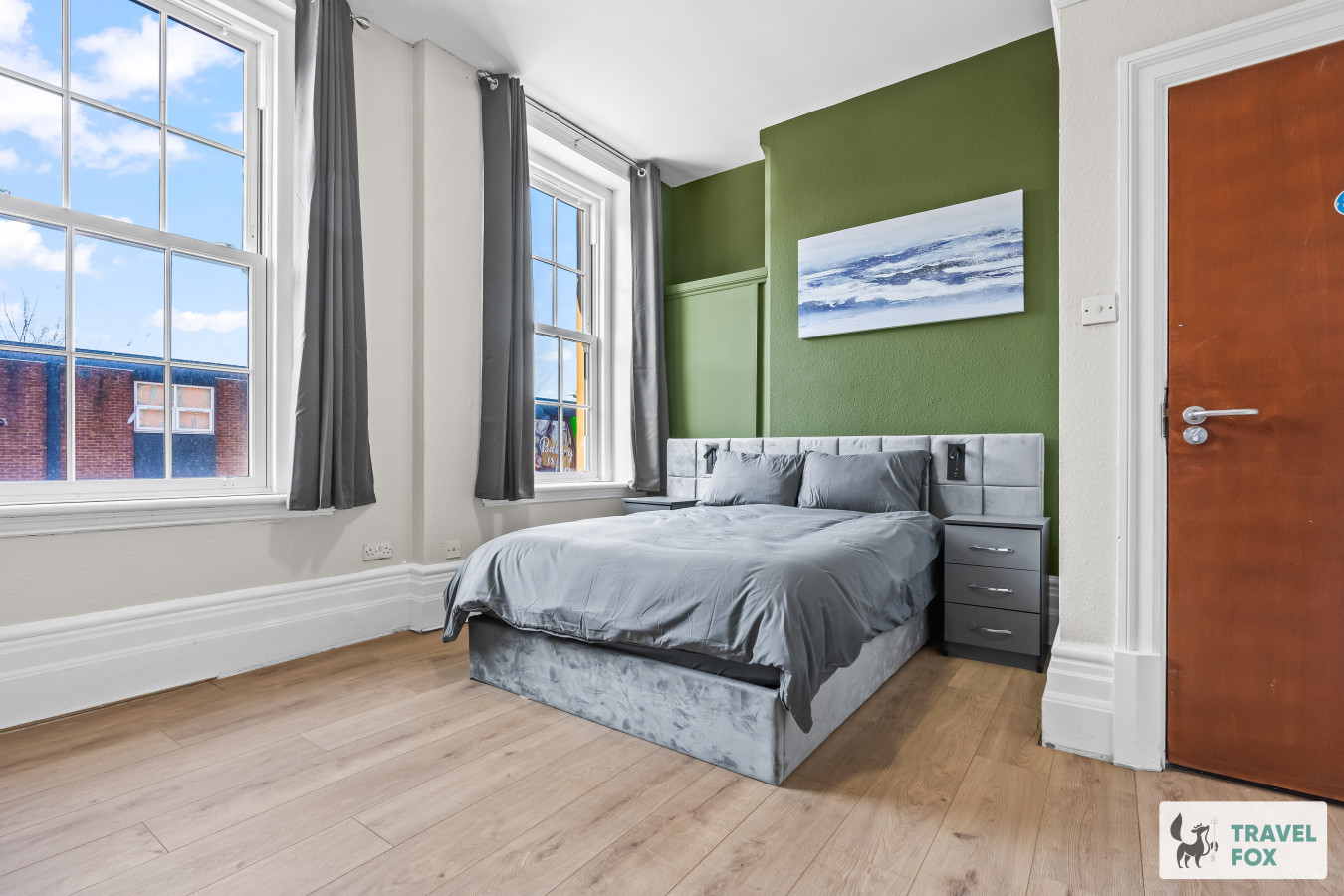
Nottingham
Melissa's Central Stay
- Sleeps 13
- 5 bedrooms
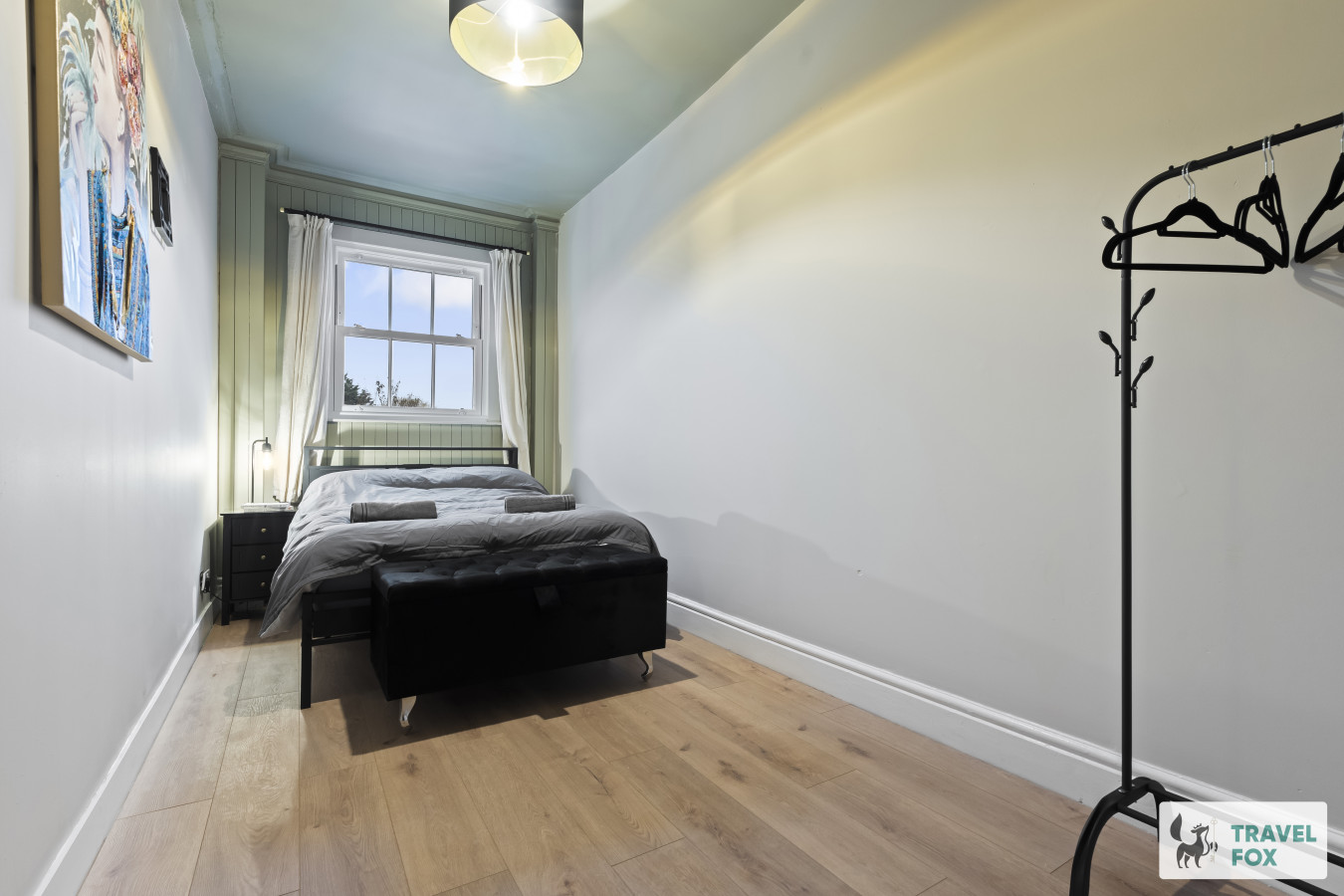
Nottingham
Callie's Central Stay
- Sleeps 9
- 3 bedrooms
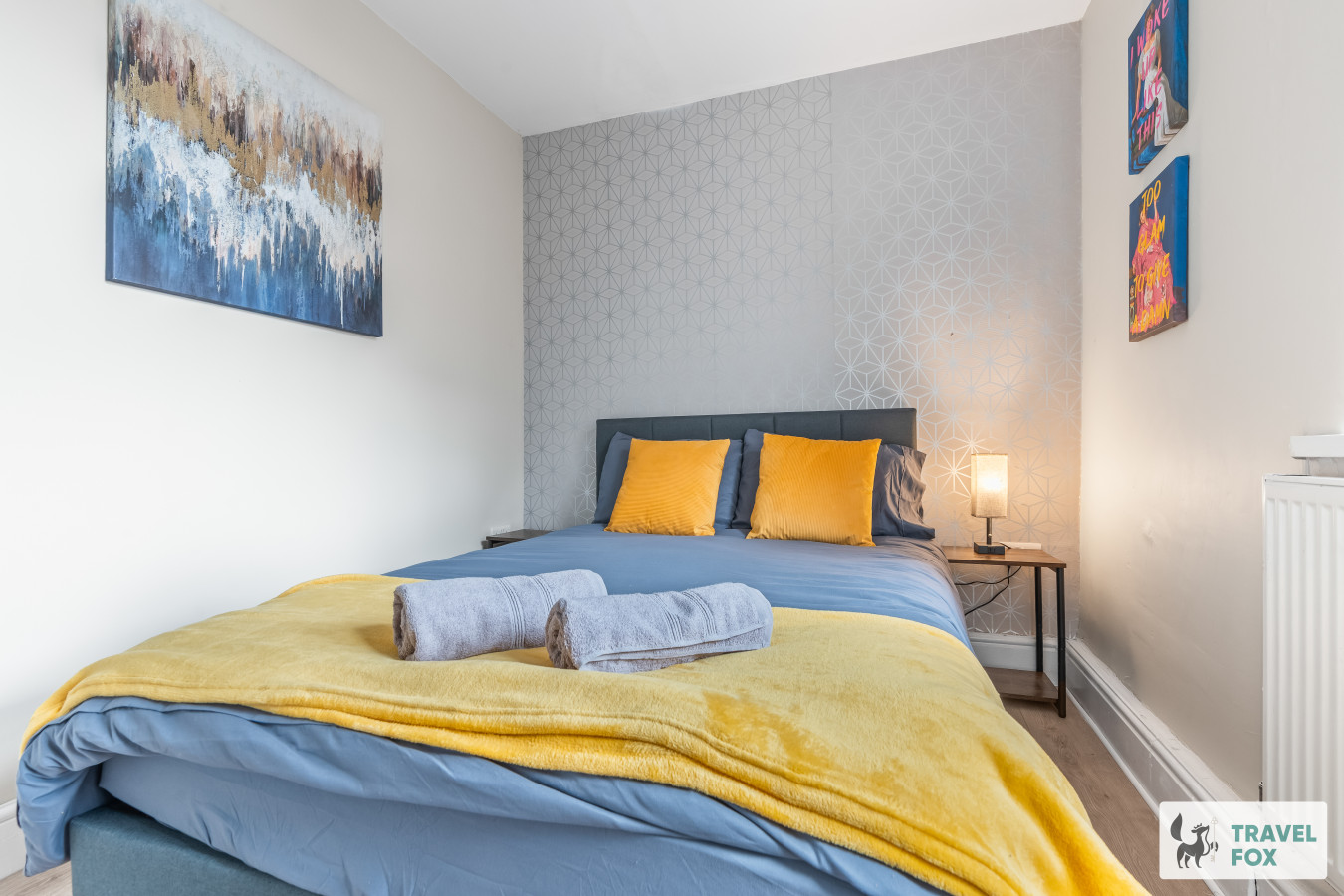
Nottingham
Stephanie's Central Stay
- Sleeps 6
- 2 bedrooms
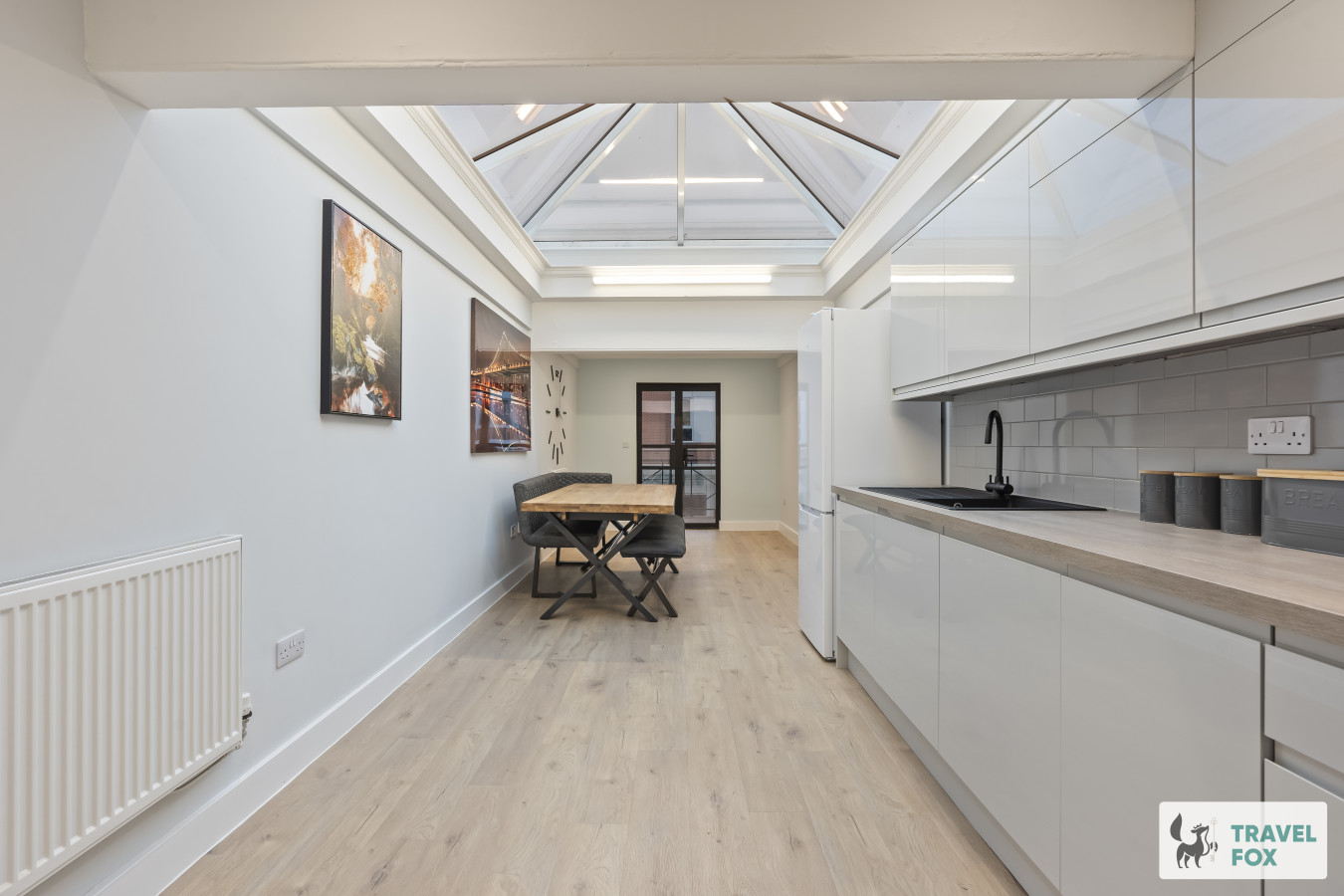
Nottingham
Camila's Penthouse Central Stay with Balcony
- Sleeps 16
- 5 bedrooms
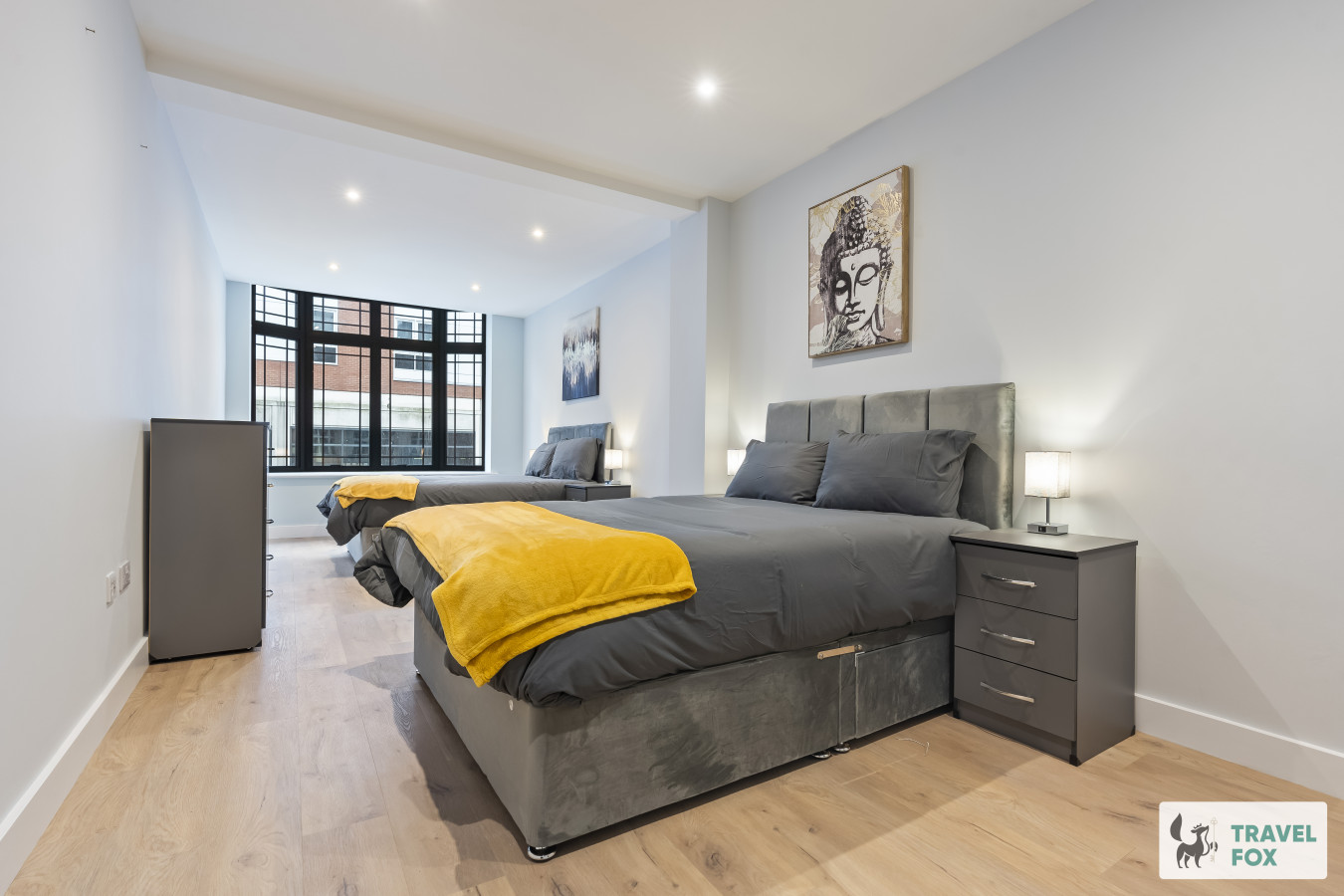
Nottingham
Blair's Central Stay
- Sleeps 16
- 5 bedrooms
For homeowners
Own a holiday home near Nottingham?
We manage holiday lets across the UK from 12% commission, charged after cleaning costs, with no lock-in. A co-founder visits before you decide.
How our holiday let management works →
A guide with a point of view
Written from research. Edited for real journeys.
Use the Official site links for live practical details, then use this guide for context, ideas and room to explore.
Sources
Every place on this page is checked against a published source. Each entry links the record we used and names who publishes it.
- Old Market Square — visit-nottinghamshire.co.uk operator, sector body or destination organisation
- City of Caves — nationaljusticemuseum.org.uk other published source
- National Justice Museum — nationaljusticemuseum.org.uk operator, sector body or destination organisation
- Nottingham Contemporary — nottinghamcontemporary.org operator, sector body or destination organisation
- Nottingham Castle — nottinghamcastle.org.uk operator, sector body or destination organisation
- Ye Olde Trip to Jerusalem — greeneking.co.uk other published source
- Canalhouse — historicengland.org.uk statutory register or public authority record not machine-readable; publisher restricts automated access
- Green's Windmill — greensmill.org.uk other published source
- The Arboretum — nottinghamcity.gov.uk statutory register or public authority
- Wollaton Park — wollatonhall.org.uk operator, sector body or destination organisation