
Water, flint and chalk
East Marden
A tiny South Downs settlement whose deep communal well, old church and surrounding lanes reveal how life worked high above the nearest river.
- Best for
- Village history and downland character
- Give it
- A slow half-day
- Don't miss
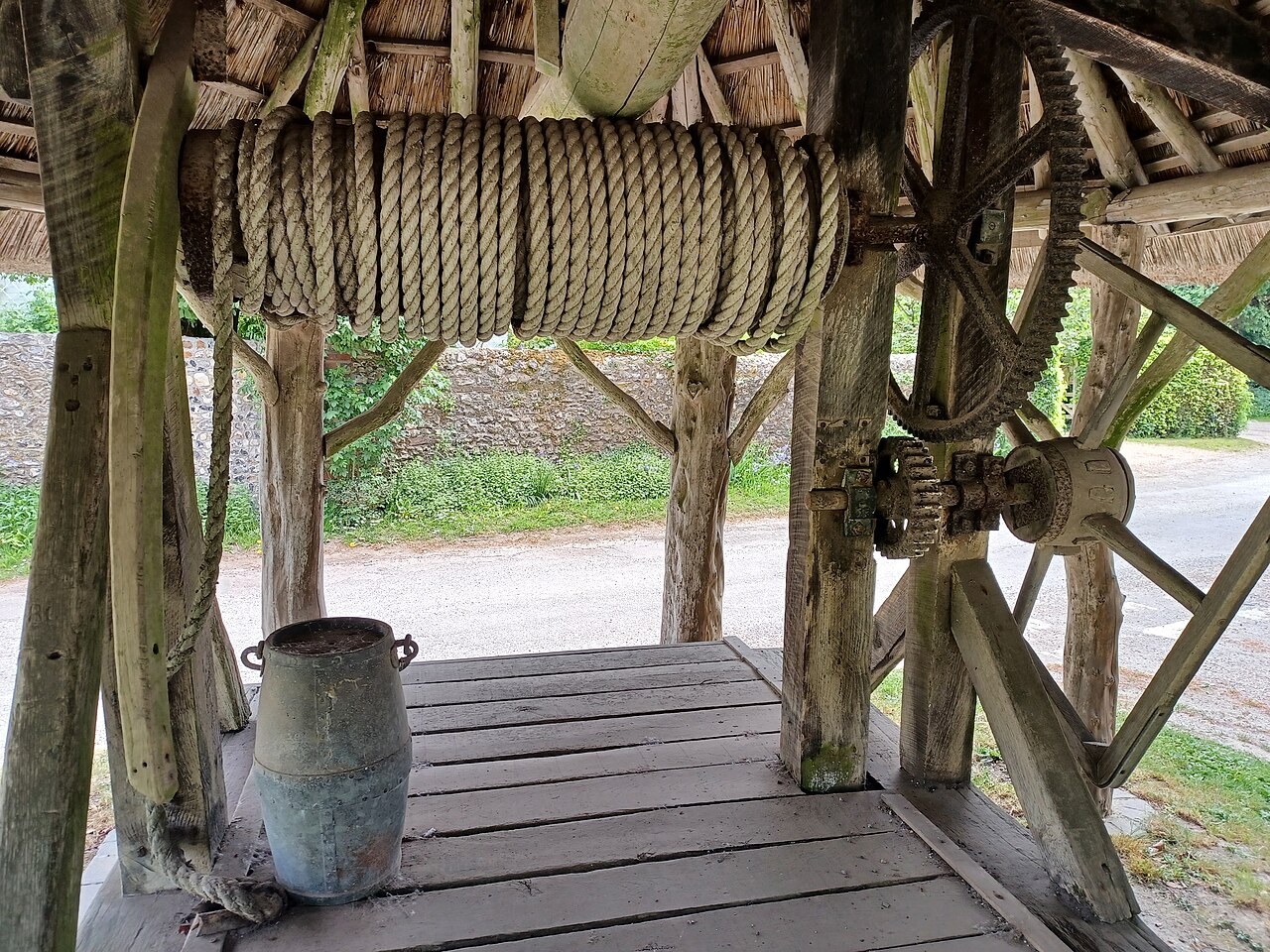
- The thatched 200-foot village well
Photo: Simon Burchell · CC BY-SA 4.0 · cropped
The Fox verdict
A small village with a deep story
East Marden rewards visitors who slow down for its well, flint church and the landscape that shaped them.
The village has no pub or shop, but its compact historic core makes a memorable starting point for the surrounding lanes. Pair the well and St Peter's with a nearby country pub, or add one of the wider South Downs attractions for a fuller day.
Where to go
Places in East Marden
Every place below is checked against a published source, listed with what it is and how long to give it.
Local signatures
3 places
Start here
East Marden Village Well
An intact communal well head beneath a conical thatched roof, marking the 200-foot shaft that supplied the village until 1924.
- Visit length
- Editorial estimate: around 15 minutes
- Locality
- by the village green
Uppark House and Garden
A 17th-century house with Repton-influenced gardens, meadow and panoramic South Downs views.
- Visit length
- Editorial estimate: around 120 minutes
- Locality
- South Harting
- Access
- Visitor opening is limited; check the National Trust page before travel.
Weald & Downland Living Museum
A 40-acre hands-on museum with more than 50 rescued historic buildings, period gardens, traditional animals and a millennium of rural history.
- Visit length
- Editorial estimate: around 180 minutes
- Locality
- Singleton
- Access
- Check the museum's official site for current visitor arrangements before travel.
Food & drink
2 placesVictoria Inn, West Marden
A family-run traditional country pub with a bar, log burner, separate dining room and garden with country views.
- Visit length
- Editorial estimate: around 75 minutes
- Locality
- West Marden
- Access
- Check the pub's official site for current food service before travel.
The Royal Oak, Hooksway
An independent free house in a 16th-century cottage, associated with walking and complemented by a large garden.
- Visit length
- Editorial estimate: around 75 minutes
- Locality
- Hooksway
- Access
- Check the pub's official site for current food service before travel.
Walks & outdoors
1 placeKingley Vale National Nature Reserve
A protected landscape of ancient yew forest and chalk grassland, including a grove described as among Britain's oldest living things.
- Visit length
- Editorial estimate: around 120 minutes
- Locality
- the wider South Downs
- Access
- Check the public-body reserve page and current access information before travel.
History & heritage
1 placeSt Peter's Church, East Marden
A small, little-restored flint church with a weatherboarded bell turret, old tie-beam roof and unusual late-12th-century chalice-shaped font.
- Visit length
- Editorial estimate: around 30 minutes
- Locality
- beside the village core
- Access
- Check the parish site for current visitor access before travel.
No places match this filter. Choose All places to reset the list.
Three ways to explore East Marden
Signature outings
Peer beneath the thatch
See the wheel, rope and bucket above the 200-foot shaft that supplied East Marden until 1924.
Find the chalice-shaped font
Look for St Peter's unusual late-12th-century font beneath its closely spaced old tie-beams.
Enter the yew grove
Explore Kingley Vale's ancient yew forest and chalk grassland on a dedicated countryside outing.
The village story
East Marden Village Guide
A deep well, a little-restored church and quiet downland lanes frame the story of this tiny South Downs settlement.
The Well and the Vanished Village Services
The well head stands beneath a conical thatched roof on eight rough wooden columns, its wheel, rope and bucket all still in place. The shaft below drops two hundred feet through chalk. Until 1924 this was the village's only water, which tells you most of what you need to know about living at eighty-five metres on a spur of the South Downs, several miles from the nearest river.
East Marden is small: about thirty-two houses gathered around the church, the green and that well. There is no shop and no pub in the village now. In the 1920s and 30s it kept a school, a post office, a visiting baker, a club and a cricket team. All of them have gone.
Two Pubs on the Lanes
For a drink and a meal you go to one of two pubs on the surrounding lanes. The Victoria Inn at West Marden is a family-run country pub built in 1810, with a bar, a log burner and a separate dining room. Charlotte North took it on in 2021. Recent menus have included a homemade shortcrust pie of the week, liver and bacon with mash and onion gravy, cod and chips, BBQ ribs, homemade lasagne and a Cajun chicken burger. Dogs and children are both welcome, and there is a garden with views over the fields. The pub sign was painted by Ralph Ellis, a First World War artist; the front room was once a village shop where you left your payment in a tin. The same owner keeps a shop and tea room over at Compton.
The other pub is the Royal Oak at Hooksway, down a secluded lane off the B2141 in a sixteenth-century cottage. It is a walkers' pub with a large garden, dogs welcome, and cask ales that usually include Langham Hip Hop and Arundel Castle. David Jeffrey and Sarah Warner have run it since 1990. Local lore holds that a sheep-rustler named William "Shagger" Shepherd was shot here around 1680 and never quite left.
Flint, Font and Downland Paths
St Peter's, the flint parish church, is worth the short walk from wherever you are staying. It is small and little restored, with no structural break between nave and chancel and a weatherboarded bell turret at the west end. Inside there is a chalice-shaped font from the late twelfth century, a roof of closely spaced old tie-beams, and a Millennium Tapestry on the north wall. The organ, by tradition, once belonged to Prince Albert and was played by him at St James's Palace.
There is good walking here. A seven-mile circuit from the Royal Oak links three downland churches across ancient field patterns and the steep wooded slopes the locals call hangers; in spring it runs through wild garlic, bluebells and yellow archangel, with later views towards the Trundle and Goodwood racecourse. Another footpath loop passes the thatched well on its way round. Further afield there is Uppark House and its gardens at South Harting, the Weald and Downland Living Museum at Singleton, and the ancient yew forest of Kingley Vale.
Reaching East Marden
Getting here means minor downland lanes off the B2141, with Chichester and Petersfield each a short drive away. The nearest station is Rowlands Castle, about five miles off. On Wednesday mornings a community minibus stops at St Peter's and runs to Rowlands Castle, Stansted Park, Emsworth or Havant Tesco.
Smugglers, Schooling and Greyhound Racing
The village has drawn some unlikely residents over the years. Battine House was home to Major William Battine, who in 1749 sat on the Chichester grand jury that sent members of the Hawkhurst smuggling gang to the gallows; the Manor House later belonged to Brigadier General Alfred Cecil Critchley, who helped form British greyhound racing and staged its first UK race in Manchester in 1926. In 1927 Bertrand and Dora Russell used Battine House as an annex to the experimental Beacon Hill School they had started nearby. Katherine Russell remembered the school's woods and wildlife long afterwards. "It was incomparable," she said.
Stay around South Downs
Make a longer stay of it
Travel Fox holiday homes around South Downs, linked directly to their property pages.
For homeowners
Own a holiday home near East Marden?
We manage holiday lets across the UK from 12% commission, charged after cleaning costs, with no lock-in. A co-founder visits before you decide.
How our holiday let management works →
A guide with a point of view
Written from research. Edited for real journeys.
Use the Official site links for live practical details, then use this guide for context, ideas and room to explore.
Photography credits & licences
Third-party photographs are credited to their named creators and reused under the linked Creative Commons licence or public-domain dedication. Travel Fox stores an optimised local copy; the file-specific changes and any browser-applied display crop are disclosed below. Reused photographs link both to the Wikimedia Commons source record and to the declared source image; Travel Fox's own photographs carry no such record and are marked as ours. These image licences do not cover Travel Fox text, branding or page design.
- File:East Marden village well 01.jpg — photograph by Simon Burchell; Own work. Source record on Wikimedia Commons. Declared source image. Licence: CC BY-SA 4.0. File changes: Downloaded from Wikimedia Commons, resized to a maximum 1920px edge and encoded as an optimised JPEG. Display changes: Displayed with responsive CSS cropping.
Sources
Every place on this page is checked against a published source. Each entry links the record we used and names who publishes it.
- East Marden Village Well — historicengland.org.uk statutory register or public authority record not machine-readable; publisher restricts automated access
- St Peter's Church, East Marden — theoctagonparish.org.uk other published source
- Victoria Inn, West Marden — victoriainnwestmarden.com operator, sector body or destination organisation
- The Royal Oak, Hooksway — royaloakhooksway.co.uk operator, sector body or destination organisation
- Uppark House and Garden — nationaltrust.org.uk national body or asset manager
- Weald & Downland Living Museum — wealddown.co.uk operator, sector body or destination organisation
- Kingley Vale National Nature Reserve — gov.uk statutory register or public authority