
Staffordshire village guide
Elford
A quiet River Tame village where a courthouse cellar, a volunteer-restored garden and one of Staffordshire's richest collections of medieval tombs reward a deliberate visit.
- Best for
- Village history and gardens
- Give it
- Editorial estimate: half a day in Elford
- Don't miss
- The Stanley Boy monument
The Fox verdict
Small village, unusually deep stories
Elford pairs a restored walled garden and riverside setting with a church full of exceptional monuments and a pub whose former cellar once held prisoners.
Come for the compact village trio of St Peter's, Elford Hall Garden and the Crown Inn, then add restored wetlands, national remembrance or Tamworth's castle according to your pace.
Where to go
Places in Elford
Every place below is checked against a published source, listed with what it is and how long to give it.
Local signatures
3 placesThe Crown Inn
Elford's only operating pub, with an 18th-century brick exterior, historic interior, real ale, games, a real fire and the vaulted Old Cellar linked to its courthouse story.
- Visit length
- Editorial estimate: allow around 75 minutes
- Locality
- The Square, Elford
Elford Hall Garden
A free volunteer-restored walled garden with roses, allotments, a boules court, orchard, sensory garden, riverside boat house and the Giant Garden play area.
- Visit length
- Editorial estimate: allow around 75 minutes
- Locality
- Elford, beside the River Tame
Croxall Lakes
A Staffordshire Wildlife Trust reserve where former sand-and-gravel workings have become restored Trent Valley wetlands with more natural river braiding.
- Visit length
- Editorial estimate: allow around 90 minutes
- Locality
- Croxall
History & heritage
3 placesSt Peter's Church
A Grade II* church with a tower dating to 1598 and a celebrated group of tombs, including the hand-holding Arderne effigies and the enigmatic Stanley Boy.
- Visit length
- Editorial estimate: allow around 60 minutes
- Locality
- Elford
National Memorial Arboretum
A 150-acre remembrance landscape on former gravel workings, with more than 420 memorials, a daily Act of Remembrance, guided walks, a land train and a children's sensory play garden.
- Visit length
- Editorial estimate: allow around 150 minutes
- Locality
- Alrewas
Tamworth Castle
A castle visit in Tamworth.
- Visit length
- Editorial estimate: allow around 120 minutes
- Locality
- Tamworth
No places match this filter. Choose All places to reset the list.
Three ways to explore Elford
Signature outings
Meet the Stanley Boy
Walk the tree-lined approach to St Peter's and seek out the grit-stone figure whose tennis-ball legend is more certain than his true identity.
Walk a Memorial Landscape
Hear the Shot at Dawn talk about First World War soldiers who were later posthumously pardoned.
Explore Tamworth Castle
Explore the castle's Battle & Tribute exhibition, including items from the Staffordshire Hoard.
The village story
Elford Village Guide
Courthouse cells, walled gardens and disputed tomb legends beside the River Tame.
Cellars, Ale and the Village Pub
The Crown Inn's former courtroom was upstairs; the cells were in the cellars below. At the back is a vaulted room called the Old Cellar. Food is served at advertised themed events.
The pub is the only one left in Elford — brick-built, mainly 18th century, with a Victorian bar-back and period panelling. It is Grade II listed, and its interior has a one-star rating for special national historic interest. There's a pool table, table football, a dartboard and a real fire. Draught Bass is the standing order at the bar, alongside two changing guest beers; briefly, in the late 2010s, the pub brewed its own on a one-barrel kit called Crown Brewhouse.
Outside there's a beer garden with a converted horsebox pouring cocktails, and the pub is dog friendly. One Tripadvisor review is headlined, simply, "Best pub in the constituency." The address is The Square.
Garden Walls and Tame-side Paths
Elford has no general shops — no butcher, deli or bakery — but the village hall hosts a Tuesday Post Office service. The Walled Garden is a twelve-foot enclosure that once fed Elford Hall's kitchens, left to go wild for fifty years after the Hall itself was demolished, and rebuilt from 2009 by volunteers under David Watton, later awarded a British Empire Medal for it.
Sophie, Countess of Wessex, opened it officially in 2011. The garden is free, with a rose garden, a boules court, a boat house on the River Tame, and a children's play area optimistically named the Giant Garden.
Footpaths follow the Tame out towards Harlaston, a mile and a half east. Croxall Lakes is a restored wetland about 2.4 miles north of Elford in a straight line, where the river has been allowed to braid and wander the way it used to.
Tombs, Legends and the Stanley Boy
St Peter's Church sits at the end of a tree-lined avenue, its tower dating to 1598, the body rebuilt in the 1840s and 1860s. Inside are alabaster tombs Pevsner rated among the finest in the county.
Sir Thomas Arderne and his wife Matilda lie holding hands in effigy. Sir John Stanley is carved in armour, an eagle by his head. In the Stanley Chapel is the monument known as the Stanley Boy: a figure in hard grit stone holding a tennis ball, his hand raised to his temple where it struck him.
The Latin on the plinth reads Ubi dolor ibi digitus — where the pain is, there is the finger. The story was first written down by the antiquarian Sampson Erdeswicke around 1600. It has no record to back it up, and later scholars think the carving is a century too early to be him at all.
Manor, Mills and Mercian Memory
The manor belonged to Ælfgar, Earl of Mercia, before it was forfeited to the Crown in 1066. Domesday records twenty-four villagers, eight smallholders and two mills working the Tame.
Robert Bage, the novelist, ran a paper mill here and wrote from the Mill House. Three of his six books were rated by Walter Scott among the fifty best of the age.
Rails, Roads and a Riverside Dusk
Elford's own railway station closed long ago. Tamworth and Lichfield, both about five miles off, cover the trains now, and the number 84 bus still comes through on its way to Harlaston.
Walk the riverside path at dusk, where dogs on leads and an unhurried village feel complete the scene.
Stay around Staffordshire
Make a longer stay of it
Travel Fox holiday homes around Staffordshire, linked directly to their property pages.
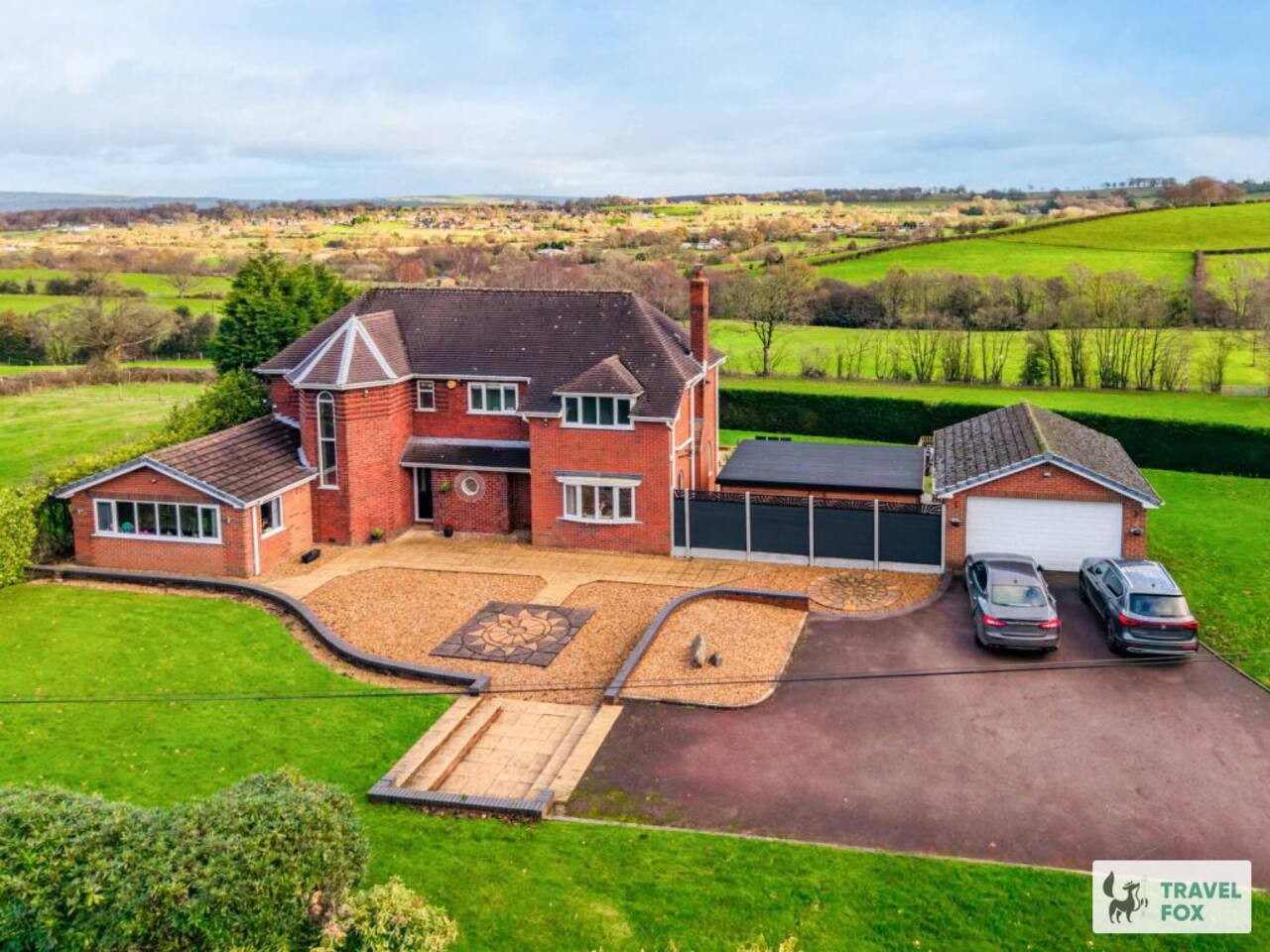
Cheddleton
Greenways House - Parking, Pool Table and Garden!
- Sleeps 10
- 4 bedrooms
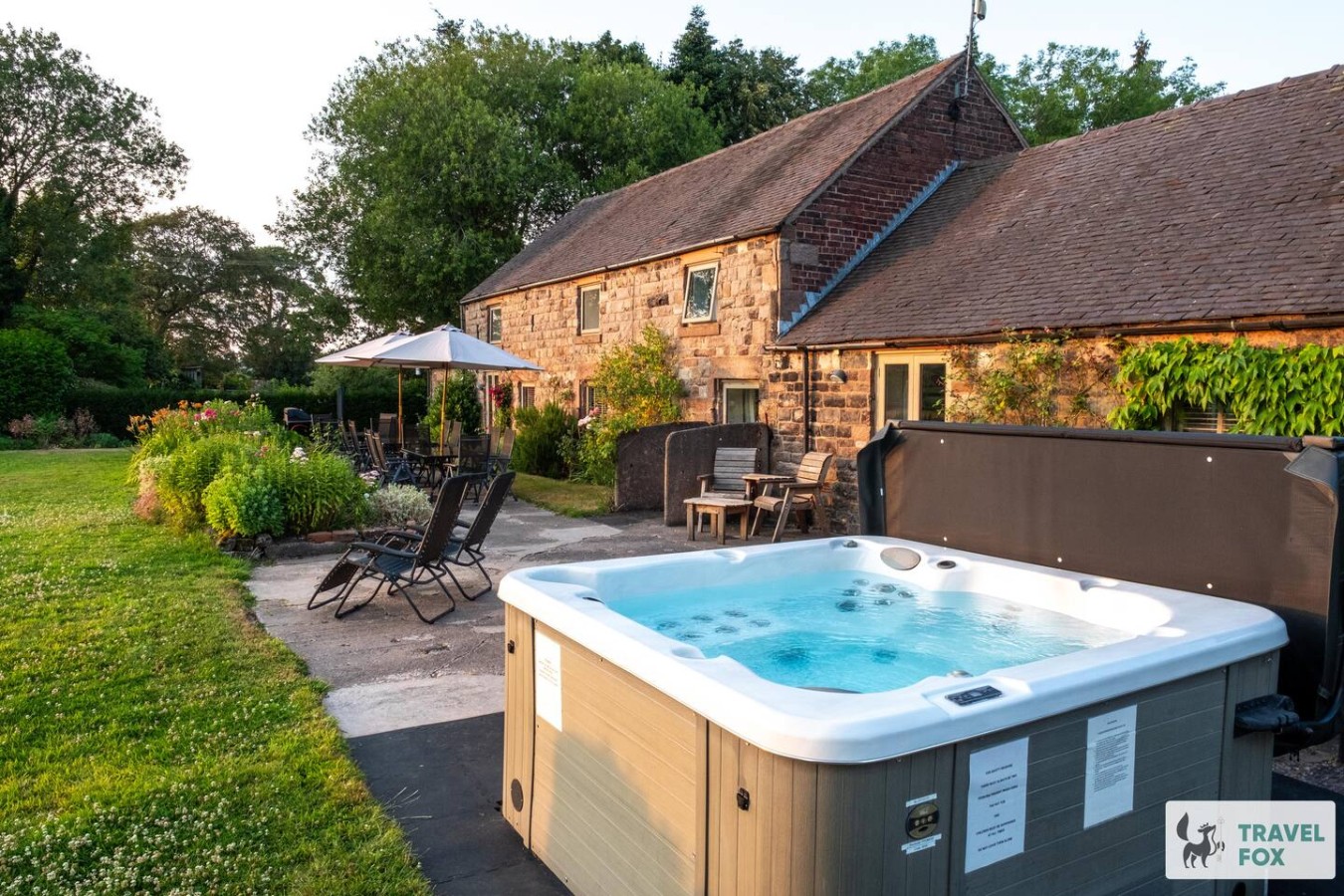
Cheddleton
Lee House Cottage + Annexe
- Sleeps 19
- 8 bedrooms

Leek
Silkwood House | Boutique 4 Bed nr. Peak District
- Sleeps 8
- 4 bedrooms
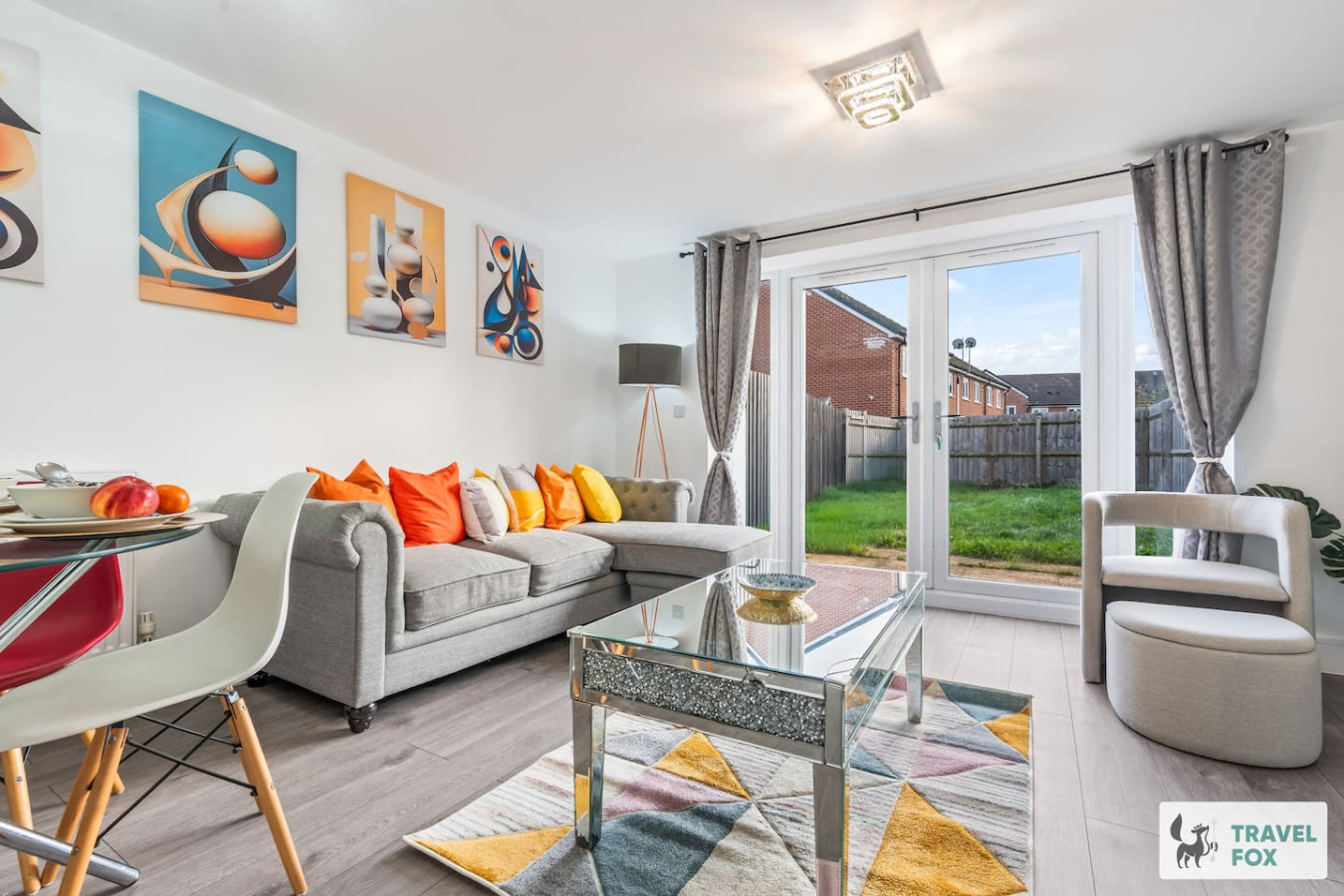
Stoke-on-Trent
Heather's House
- Sleeps 6
- 2 bedrooms
For homeowners
Own a holiday home near Elford?
We manage holiday lets across Staffordshire from 12% commission, charged after cleaning costs, with no lock-in. A co-founder visits before you decide.
Holiday let management in Staffordshire →
A guide with a point of view
Written from research. Edited for real journeys.
Use the Official site links for live practical details, then use this guide for context, ideas and room to explore.
Sources
Every place on this page is checked against a published source. Each entry links the record we used and names who publishes it.
- The Crown Inn — historicengland.org.uk statutory register or public authority record not machine-readable; publisher restricts automated access
- St Peter's Church — historicengland.org.uk statutory register or public authority record not machine-readable; publisher restricts automated access
- Elford Hall Garden — elfordhallgarden.org operator, sector body or destination organisation record not machine-readable; publisher restricts automated access
- Croxall Lakes — staffs-wildlife.org.uk national body or asset manager
- National Memorial Arboretum — thenma.org.uk other published source
- Tamworth Castle — tamworthcastle.co.uk operator, sector body or destination organisation