

Three spires, two pools
Lichfield
A compact cathedral city where medieval stone, reflective water and a lively cultural history sit within an easy walk.
- Best for
- Cathedral history, literary lives and gentle city walks
- Give it
- Estimate: a full day, with an evening stop if you wish
- Don't miss
- The cathedral's three spires reflected in Minster Pool
Photo: Diliff · CC BY-SA 3.0 · cropped
The Fox verdict
A small city with an unusually deep story
Lichfield brings its cathedral, pools, park and famous former residents together in a centre that rewards slow exploration.
The three-spired cathedral supplies the skyline, while Samuel Johnson and Erasmus Darwin give the city an intellectual character of its own. Between them are waterside paths, a generous park, a long-running market and buildings still used for worship, culture and civic life.
Where to go
Places in Lichfield
Every place below is checked against a published source, listed with what it is and how long to give it.
Local signatures
3 places
Start here
Lichfield Cathedral
England's only medieval cathedral with three spires, with the St Chad Gospels displayed in its Chapter House.
- Visit length
- Editorial estimate: Allow around 90 minutes
- Locality
- Cathedral Close
- Access
- The St Chad Gospels are displayed in the Chapter House.
Beacon Park
Around 70 acres of green space with play areas, sports, a pool and Leomansley Brook running through it.
- Visit length
- Editorial estimate: Allow around 90 minutes
- Locality
- western edge of the historic centre
- Access
- Some recreation is seasonal; check the Official site before travel.
Samuel Johnson Birthplace Museum
Johnson was born above his father's bookshop here in 1709, and the building has been a museum since 1901.
- Visit length
- Editorial estimate: Allow around 60 minutes
- Locality
- Market Square
- Access
- The museum stands in Market Square, above the former bookshop.
Food & drink
1 placeLichfield Market
An open-air market whose first charter was granted by King Stephen in 1153.
- Visit length
- Editorial estimate: Allow around 45 minutes
- Locality
- Market Square
- Access
- Market activity is day-dependent; check the Official site before travel.
Walks & outdoors
3 placesMinster Pool and Walk
An ornamental pool and public waterside space giving the classic reflection of Lichfield Cathedral's three spires.
- Visit length
- Editorial estimate: Allow around 45 minutes
- Locality
- beside Cathedral Close
Lichfield Canal Heritage Trail
An easy walk along a restored stretch of the Lichfield Canal, passing Borrowcop Locks Canal Park.
- Visit length
- Editorial estimate: Allow around 90 minutes
- Locality
- Darnford Park and Borrowcop Locks
- Access
- A shorter 1.5-mile stretch starts and ends at Fosseway Heath Nature Reserve.
Fradley Junction
The meeting of the Coventry and Trent & Mersey canals, with towpaths and woodland walks around Fradley Pool Nature Reserve.
- Visit length
- Editorial estimate: Allow around 90 minutes
- Locality
- Fradley
- Access
- Woodland walks run through Fradley Pool Nature Reserve beside the towpath.
History & heritage
2 placesErasmus Darwin House
The Grade I listed former home of physician and inventor Erasmus Darwin, with an apothecary garden and displays on his inventions.
- Visit length
- Editorial estimate: Allow around 60 minutes
- Locality
- Cathedral Close
- Access
- Cellar visits are by guided tour.
St Chad's Church and Well
The church marks the spring where Chad lived as a hermit before becoming Bishop of Lichfield in 669; the well stands in the churchyard.
- Visit length
- Editorial estimate: Allow around 45 minutes
- Locality
- Stowe
- Access
- St Chad's Well stands in the churchyard.
Things to do
1 placeThe Hub at St Mary's
St Mary's stopped being solely a working church before becoming home to Lichfield Library, tourist information, a cafe and an events space.
- Visit length
- Editorial estimate: Allow around 60 minutes
- Locality
- Market Square
No places match this filter. Choose All places to reset the list.
Three ways to explore Lichfield
Signature outings
Read a city in stone
Explore the three-spired cathedral and seek out the St Chad Gospels in the Chapter House.
Step into Darwin's house
Visit Erasmus Darwin's former home for its apothecary garden and displays on his inventions.
Walk beside Minster Pool
Take the south-bank view where the cathedral's three spires are reflected in the water.
The village story
Lichfield Village Guide
Pubs, pools, spires and thinkers reveal a cathedral city with far more texture than its compact centre suggests.
Small pubs beneath three spires
The Whippet Inn on Tamworth Street was a dress shop until 2014. Deb Henderson and Paul Hudson took the lease and opened Lichfield's first micropub — no bar, drinks poured from behind a counter for a room that seats around 25 and holds about 45 at a squeeze. Within twelve months it had won CAMRA Lichfield, Sutton & Tamworth Pub of the Year and then Staffordshire Pub of the Year. There are four ever-changing real ales, two real ciders, locally produced cobs most days, and a complimentary cheeseboard on Sundays. Dogs get treats and water. It is, by any measure, a lot of pub for a converted dress shop.
You're in the middle of a cathedral city, and the cathedral is not subtle about it. Three spires rise over the rooftops — the "Ladies of the Vale," the only medieval cathedral in England to have three — visible from the approach roads, from Beacon Park, and best of all reflected in Minster Pool, directly south of the Cathedral Close. The city sits low around two ornamental pools, Minster Pool and Stowe Pool, both dammed in the eleventh century to power mills, landscaped in the eighteenth, and turned into waterworks reservoirs in the 1850s. They stopped supplying water in 1968 and have been public space since, so the three spires sit on real water rather than a postcard.
The pubs are worth planning an evening around. The Duke of York on Greenhill, near St Michael's Church, is reputed to date from 1644, with ancient oak beams and a beer garden regulars describe as gorgeous — a Joule's Brewery taphouse pouring Pale Ale, Slumbering Monk and Pure Blonde. One Tripadvisor review sums it up plainly: "A real traditional old pub. Great Joules ales on tap." Down Market Street, the Angel Inn is the other Joule's house, a parlour pub with cosy snugs, a "hideaway," a real fire and an opening roof in the middle of the building — called "an important survivor of the small parlour pub."
The King's Head on Bird Street is the oldest of the lot, dating to 1408. It started as the Antelope, became the Bush, and has been the King's Head since around 1650, a name that likely nods at Charles I's execution. Grade II listed, with exposed timber framing, it does home-cooked traditional food and cask ale at lowered prices on Mondays, and has a claim most pubs can't make: in March 1705, Colonel Luke Lillingston raised a regiment of foot here that became the 38th Foot, then the 1st Staffordshire Regiment, ancestor of today's Mercian Regiment. On Sandford Street, the Horse and Jockey remembers the Lichfield races, run from 1702 until 1895.
Food, markets and paths through the city
WIP, on Tamworth Street, opened in 2019 in a former games shop and stands for Work in Progress — handmade pizzas, eight craft keg taps plus a cask ale or two, breweries like Vocation, DEYA and Verdant on rotation. It's walk-in only, no bookings, and one visitor called it "a really cool dinner spot with friendly vibes, great selection of drinks." The BitterSuite, a bar-less micropub on Upper St John Street that poured cask straight from the barrel and ran a beer terrace out back for live music, closed abruptly in January 2025 and was expected to reopen under Black Country Ales later that year.
For something grander, the George Hotel was described as one of the best late eighteenth-century hotel buildings in the country, and served the London–Chester coaching road; the playwright George Farquhar stayed there in 1707 and wrote The Recruiting Officer and The Beaux' Stratagem while he was at it. It survived the 1838 railway ending stagecoach travel by rebuilding into a full hotel, and today runs a lounge bar and restaurant, Darwin's at The George — sandwiches, jacket potatoes, burgers and pizzas at lunch, a Sunday carvery — with dogs welcome for a £25 first-night fee. On Walsall Road, The Boat is a different proposition: chef-patron Liam Dillon, who worked under Marcus Wareing at The Berkeley and through Quay Sydney, Noma and Eleven Madison Park, opened it as a pub-restaurant hybrid in 2017 and has since turned it into a restaurant and micro-farm, with a three-course menu at £45. One review called it "this powerhouse of posh nosh," Lichfield's top foodie destination — though not everyone agrees.
In the middle of town, Lichfield Market has been running on the Market Square since 1153, when King Stephen granted the first charter — Tuesday and Friday are Charter Markets, Saturday a statutory market under the Food Act.
Walking starts easily from the centre. The Lichfield City Walk begins at the tourist information centre on Market Street and heads down to Minster Pool, then into Beacon Park — a gentle 3.3km loop, or a fuller circuit of just over four kilometres through the park's seventy acres, taking in the Museum Gardens, Beacon Pool Lake and its sculptures. The Lichfield Canal Heritage Trail follows a restored stretch of canal south of Darnford Park past the Borrowcop Locks Canal Park. The Heart of England Way, a hundred-mile path between Milford and Bourton-on-the-Water, passes through and gives you the spires from a distance, and Fradley Junction, where the Coventry Canal meets the Trent & Mersey, is a short drive out, with the canalside Swan Inn and woodland walks around Fradley Pool Nature Reserve.
Playgrounds, spires and sacred ground
Families tend to end up in Beacon Park regardless of what else was planned. There's an enclosed playground and a larger play area with a train structure for younger children and a ship with rope play and a slide for the rest, plus crazy golf, tennis, bowls and foot golf, and in summer paddle boats on the pool. Leomansley Brook runs through the park, and children can find fish, tadpoles and shrimp in it without much trouble. The Lichfield Garrick Theatre, with a 560-seat main house and a 150-seat studio, runs family programming, with a Green Room Bar and Café for something before curtain up.
The cathedral earns the fuss it gets. It's the only medieval cathedral in England with three spires, and it paid for that — besieged three times during the Civil War between 1643 and 1646, cannon fire destroying the central spire and the roof, and Puritan forces smashing much of the west front sculpture. No other English cathedral took more damage. Restoration began under Bishop Hacket in the 1660s, part-funded by Charles II, but full repair wasn't finished until the nineteenth century, under Sir George Gilbert Scott. Pevsner noted that the Lady Chapel's polygonal apse is "a form frequent on the Continent, but very rare in England," and added that "in all stylistic considerations at Lichfield it must be remembered that the vast majority of the details is Scott's." The Chapter House holds the St Chad Gospels, an illuminated manuscript from around 720–740 with the earliest known written Welsh marginalia anywhere. During dredging on Minster and Stowe Pools in the 1850s, labourers pulled cannonballs and shells from the Civil War sieges straight out of the mud.
The other churches are each worth a detour. St Chad's, at Stowe, marks the spring where Chad lived as a hermit and prayed on a stone before becoming Bishop of Lichfield in 669 — the founding event of the city; St Chad's Well still stands in the churchyard, rebuilt as the simple timber canopy you see today after the medieval well dried up in the 1920s. St Michael's on Greenhill has stood on its site since at least 1190, and its churchyard is one of the largest in the country at nine acres — one of only five ancient burial grounds left in England. Among the graves is John Brown, the trumpeter who sounded the charge for the 17th Lancers at the Charge of the Light Brigade. St Mary's, on the Market Square itself, stopped being solely a working church in 1978; since 2018 it has housed the city library, tourist information, a café and event space, as The Hub at St Mary's.
A city of philosophers and old customs
The Domesday survey of 1086 found a modest place: 42 villagers, 12 smallholders, 10 slaves and 5 priests, valued at £15 to the Bishop of Chester, who held it in both 1066 and 1086, part of it recorded as waste — a population putting Lichfield among the smaller 40% of Domesday settlements, a reminder the city grew up around its cathedral rather than as a large lay manor.
That character stuck. Samuel Johnson was born above his father Michael's bookshop on the Market Square on 18 September 1709; the building has been the Samuel Johnson Birthplace Museum since 1901, and a seated statue of Johnson, sculpted by Richard Cockle Lucas in 1838, sits in the square with relief panels telling scenes from his life. David Garrick, later the leading actor of the London stage, grew up here too, was schooled alongside Johnson, and travelled to London with him in 1737. Erasmus Darwin — physician, inventor, poet, and grandfather of Charles Darwin — lived in a Grade I listed house in the Cathedral Close that is now a museum, with a recreated apothecary garden, free to enter, and a room devoted to his inventions, which included a flushing toilet. His literary circle included Anna Seward, "the Swan of Lichfield," who hosted her own circle at the Bishop's Palace with Darwin, Johnson and Boswell, and who landscaped Minster Pool into its serpentine shape; she's buried beneath the choir stalls in the Cathedral, under an epitaph written by her friend Walter Scott.
In 1776 Johnson brought Boswell to Lichfield to show him, as he put it, "genuine civilised life in an English provincial town." When Boswell remarked the city had little industry, Johnson answered: "We are a city of philosophers: we work with our heads, and make the boobies of Birmingham work for us with their hands." Lichfield has more or less agreed with him ever since. The Lichfield Bower, or Court of Arraye, a tradition going back to the reign of Henry II, is still held every year in Beacon Park with a procession and a funfair — the only place in England still holding it.
Easy arrivals and a final reflection
Further out there's the National Memorial Arboretum at Alrewas, about 5.1 miles from central Lichfield in a straight line — 150 acres within the National Forest, over 400 memorials, free entry. Fradley Junction is about 3.1 miles from the city centre in a straight line; the Staffordshire Regiment Museum at Whittington is about 2.7 miles, Tamworth Castle about 6.6 miles and Drayton Manor theme park about 7.0 miles by the same measure. Road journeys are longer. The heathland of Cannock Chase lies farther west. One visitor, comparing Lichfield to two much larger cathedral cities, wrote that it felt "like a blend of York and Durham, with historical treasures at every turn" — generous, but you can see what they meant standing at Minster Pool with the three spires doubled in the water.
Getting here is straightforward. Two stations serve the city — Lichfield City on Birmingham Road runs direct to Birmingham, while Lichfield Trent Valley has services south to London and north to Crewe. The A38 and A5 meet here, putting the M42, M40, M5, M6 and M6 Toll within easy reach, and Arriva Midlands North buses run from the bus station on Birmingham Road, opposite Lichfield City.
Come at dusk and stand on the south bank of Minster Pool. The three spires go dark against the sky before the water does, so for a few minutes you get them twice — once overhead, once at your feet, broken up by whatever's moving on the surface. Nobody built that view on purpose. Anna Seward happened to be tidying the edges of a millpond two hundred years ago, and the cathedral was already there.
Stay around Staffordshire
Make a longer stay of it
Travel Fox holiday homes around Staffordshire, linked directly to their property pages.
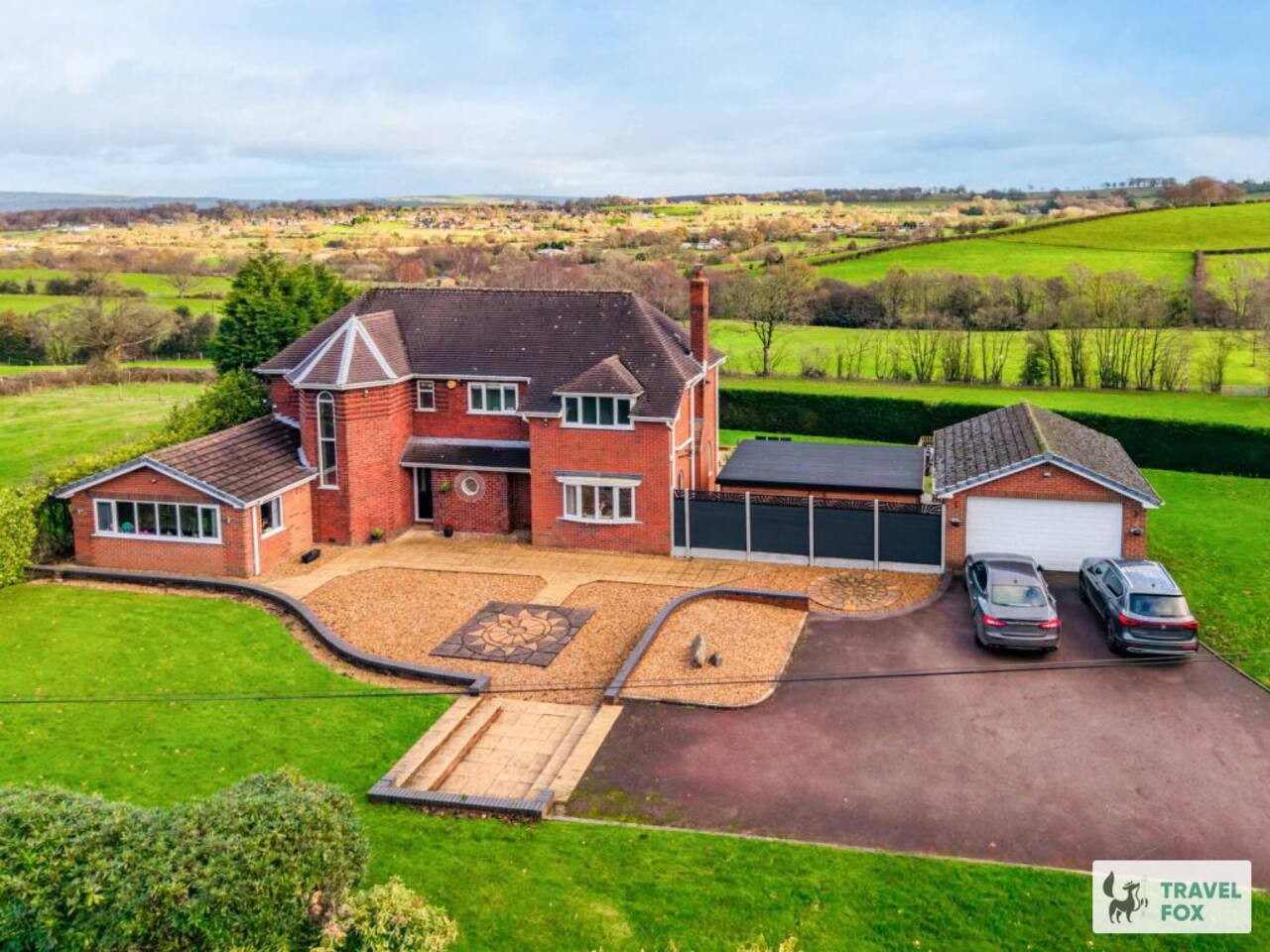
Cheddleton
Greenways House - Parking, Pool Table and Garden!
- Sleeps 10
- 4 bedrooms
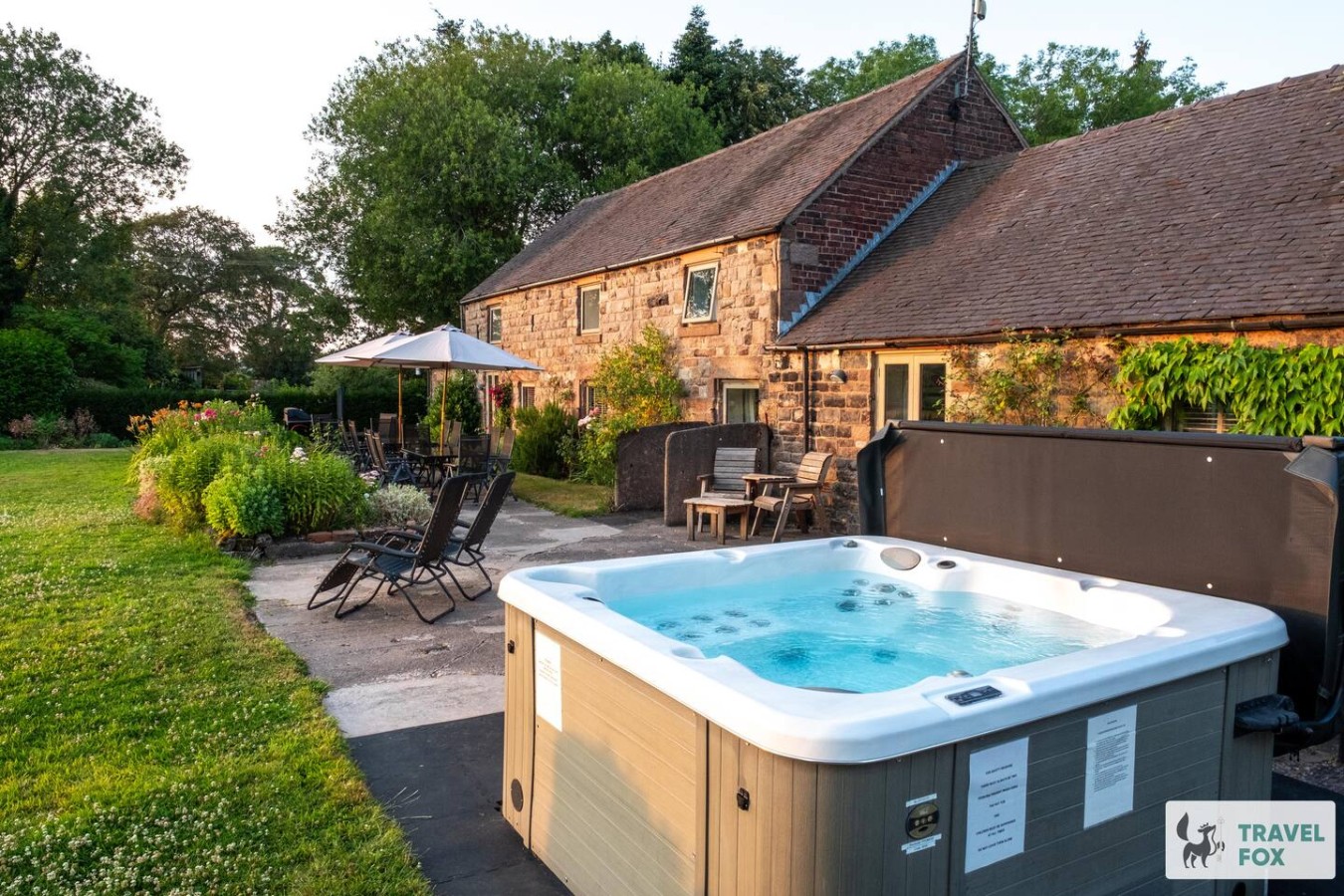
Cheddleton
Lee House Cottage + Annexe
- Sleeps 19
- 8 bedrooms

Leek
Silkwood House | Boutique 4 Bed nr. Peak District
- Sleeps 8
- 4 bedrooms
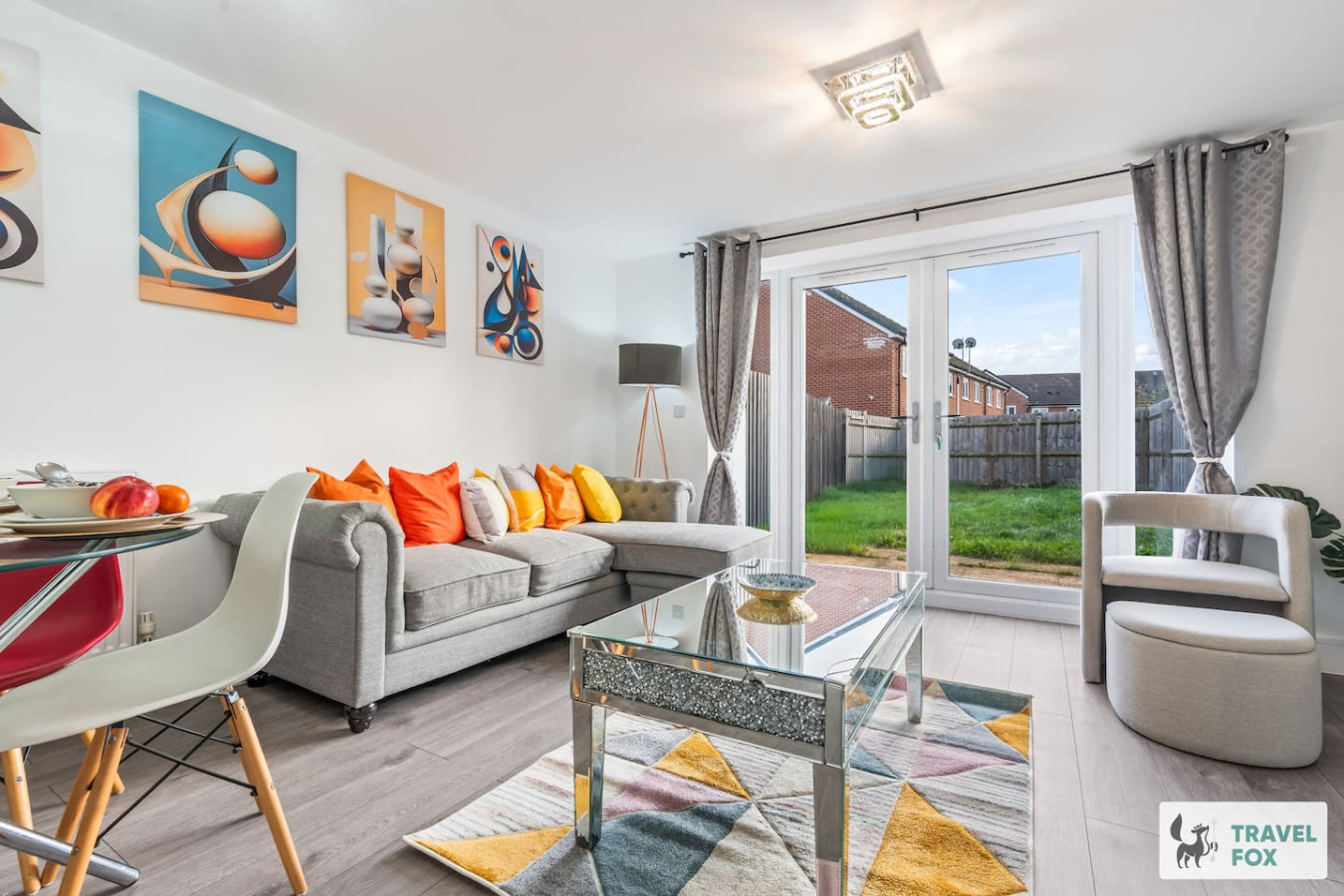
Stoke-on-Trent
Heather's House
- Sleeps 6
- 2 bedrooms
For homeowners
Own a holiday home near Lichfield?
We manage holiday lets across Staffordshire from 12% commission, charged after cleaning costs, with no lock-in. A co-founder visits before you decide.
Holiday let management in Staffordshire →
A guide with a point of view
Written from research. Edited for real journeys.
Use the Official site links for live practical details, then use this guide for context, ideas and room to explore.
Photography credits & licences
Third-party photographs are credited to their named creators and reused under the linked Creative Commons licence or public-domain dedication. Travel Fox stores an optimised local copy; the file-specific changes and any browser-applied display crop are disclosed below. Reused photographs link both to the Wikimedia Commons source record and to the declared source image; Travel Fox's own photographs carry no such record and are marked as ours. These image licences do not cover Travel Fox text, branding or page design.
- File:Lichfield Cathedral High Altar from choir, Staffordshire, UK - Diliff.jpg — photograph by Diliff; Own work. Source record on Wikimedia Commons. Declared source image. Licence: CC BY-SA 3.0. File changes: Downloaded from Wikimedia Commons, resized to a maximum 1920px edge and encoded as an optimised JPEG. Display changes: Displayed with responsive CSS cropping.
Sources
Every place on this page is checked against a published source. Each entry links the record we used and names who publishes it.
- Lichfield Cathedral — lichfield-cathedral.org operator, sector body or destination organisation
- Minster Pool and Walk — lichfielddc.gov.uk statutory register or public authority
- Beacon Park — lichfielddc.gov.uk statutory register or public authority
- Samuel Johnson Birthplace Museum — samueljohnsonbirthplace.org.uk operator, sector body or destination organisation
- Erasmus Darwin House — erasmusdarwin.org operator, sector body or destination organisation
- The Hub at St Mary's — thehubstmarys.co.uk operator, sector body or destination organisation
- St Chad's Church and Well — achurchnearyou.com national body or asset manager
- Lichfield Market — market.lichfield.gov.uk statutory register or public authority
- Lichfield Canal Heritage Trail — lhcrt.org.uk other published source
- Fradley Junction — canalrivertrust.org.uk national body or asset manager