
Fell, water and working history
Coniston
A Lake District village shaped by the Old Man, Coniston Water, copper mining, brewing and the stories of Ruskin and Campbell.
- Best for
- Fell walks, lake journeys and local history
- Give it
- A full day, or longer when the summit calls
- Don't miss
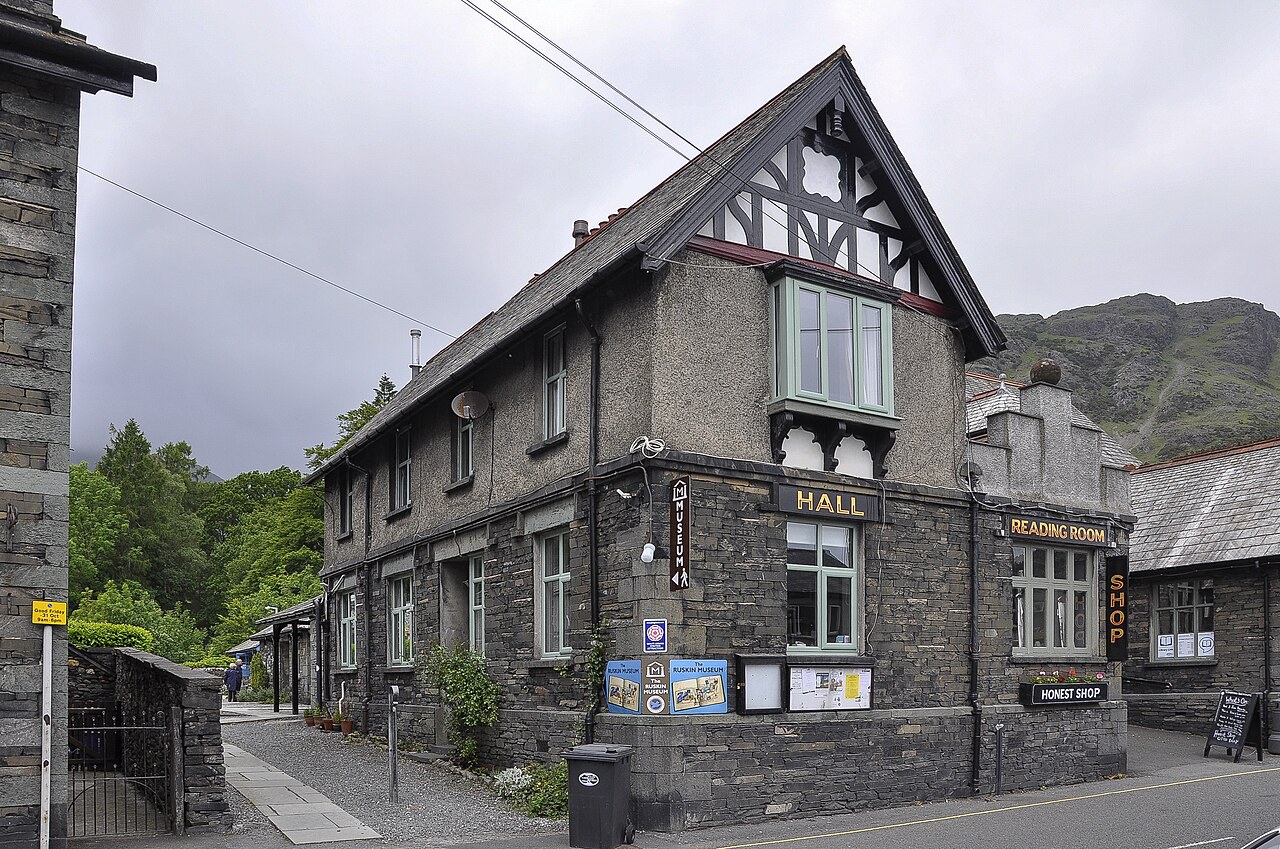
- Bluebird K7 at the Ruskin Museum
Photo: Paul Hermans · CC BY-SA 3.0 · cropped
The Fox verdict
A village where the fell and lake tell the story
Coniston brings a major fell, a long lake and unusually rich industrial and cultural history together in one compact base.
Climb towards the Old Man and the copper workings, follow the shoreline, cross the water towards Ruskin's Brantwood, or stay in the village for the museum, church and an award-winning local ale. Coniston works best when its landscape and its people are explored together.
Where to go
Places in Coniston
Every place below is checked against a published source, listed with what it is and how long to give it.
Local signatures
3 placesCoppermines Valley
A valley walk through the remains of Coniston's copper-mining landscape, with evidence spanning Bronze Age beginnings, Elizabethan workings and nineteenth-century extraction.
- Visit length
- Editorial estimate: Allow around 135 minutes
- Locality
- north of Coniston village
Brantwood
John Ruskin's home from 1872 until his death in 1900, set on the eastern shore with the view across Coniston Water that he prized.
- Visit length
- Editorial estimate: Allow around 90 minutes
- Locality
- eastern shore of Coniston Water
Coniston Launch
A passenger boat service across Coniston Water, linking Coniston with Brantwood and Torver.
- Visit length
- Editorial estimate: Allow around 75 minutes
- Locality
- Coniston Water
Food & drink
1 placeBlack Bull Inn & Hotel
A 400-year-old coaching inn with outdoor seating, freshly cooked pub classics and award-winning ales from the adjacent Coniston Brewing Company.
- Visit length
- Editorial estimate: Allow around 60 minutes
- Locality
- Coniston village
- Access
- Dogs are not permitted in the restaurant; dog-friendly rooms, each with its own outdoor seating, are available.
Walks & outdoors
2 placesOld Man of Coniston
The classic village fell walk climbs to an 803-metre summit, with routes through the surrounding mining landscape and wide views over Coniston Water.
- Visit length
- Editorial estimate: Allow around 210 minutes
- Locality
- Coniston fells
Coniston Water Shoreline
Starting at Lake Road car park, this gentle lakeside walk follows Coniston Water towards Torver, with Brantwood across the lake.
- Visit length
- Editorial estimate: Allow around 75 minutes
- Locality
- Coniston lakeshore start at Lake Road car park
History & heritage
2 placesChurch of St Andrew, Coniston
A rebuilt Victorian church whose churchyard contains John Ruskin's grave, marked by a carved cross designed by W.G. Collingwood.
- Visit length
- Editorial estimate: Allow around 30 minutes
- Locality
- Coniston village
Ruskin Museum
Founded in 1901, the museum connects Coniston's copper mines, John Ruskin, Arthur Ransome and Donald Campbell, with restored Bluebird K7 displayed in its Bluebird Wing.
- Visit length
- Editorial estimate: Allow around 75 minutes
- Locality
- Coniston village
No places match this filter. Choose All places to reset the list.
Three ways to explore Coniston
Signature outings
Meet the Old Man
Take the classic village walk towards the 803-metre summit for views over Coniston Water and the surrounding fells.
Read Coniston in the museum
Follow the village's mining, Ruskin, Ransome and Campbell stories, then see restored Bluebird K7 in the Bluebird Wing.
Order the house ale
Settle into the 400-year-old Black Bull for pub food and an ale brewed by the adjacent Coniston Brewing Company.
The village story
Coniston Village Guide
From coaching-inn ales to copper-mining paths and stories carried across the water, Coniston's character is inseparable from its landscape.
Slate, beer and the village below the fell
The bar floor of the Black Bull is slate, quarried from the mines in the fells directly above the village, and behind the pub is a brewery. The Bradley family have owned the Black Bull for around forty-eight years; Susan Bradley runs it with her son Ian, who went away, took a degree in brewing, came back, and built the Coniston Brewing Company behind the pub in 1995. Three years later, when the brewery was barely up and running, Bluebird Bitter won Supreme Champion Beer of Britain. In 2012 the brewery did it again with No.9 Barley Wine — named because it was the ninth beer they made — which at 8.5% is the strongest beer ever to take the award; the judges compared it to a fine cognac. You can order the house ales in pints, halves or third-pint tasting flights, and eat haddock fried in Bluebird batter with mushy peas and chips for £19, or Cumberland sausage, or a Moroccan spiced tagine. Card only. When The Telegraph named the Black Bull the best pub in Cumbria, Susan Bradley found out secondhand: "We didn't really know. I think a customer rang us up and asked if we knew so we had a look and then we were just delighted."
The pub is four hundred years old. Turner stayed. Coleridge stayed. So, in the 1950s, did Donald Campbell — but more on him later, because the village would rather you ate first.
Coniston sits at the foot of the Old Man, an 803-metre fell that fills the view at the end of most streets, on the northwest shore of Coniston Water, five miles long and the third largest lake in the Lake District. The passenger trains stopped in 1958. You come in on the A593 from Ambleside, eight miles, or on the 505 bus — the Coniston Rambler, via Hawkshead — or on the X12 up from Ulverston and the Furness Line trains, and everything worth doing is then on foot or on the water.
The village supports six pubs, which for a place this size takes some explaining, and the explanation is walkers. The Sun, at the bottom of the path up the Old Man, is a sixteenth-century inn with eight handpumps, flagstone floors, a cast-iron range still doing the heating and hot water, and a big beer garden. Campbell made it his headquarters for the final record attempt in January 1967 — the pub says he stayed in what is now Bedroom No. 2 — and Anthony Hopkins lodged there in 1988 while playing him in the BBC film Across the Lake. Dogs are welcome everywhere except the conservatory, and the pub keeps dog blankets and beds because some dogs don't like cold slate floors. The steak and ale pie and the Sunday roasts are what reviewers keep mentioning.
Inn tables, new kitchens and farm ties
The Crown, in the village centre, is a Robinsons house run by Diane and her team, refitted in 2023, its rear rooms looking straight at the Old Man. Ten of its thirteen rooms take dogs, muddy boots and all, and there are dog bowls and treats kept behind the bar. The menu is more adventurous than it needs to be — saag aloo pie, Moroccan cauliflower fritters, burrata salad — alongside a sharing board called the Old Man of Coniston. The Yewdale Inn, built in 1896 as part guest house, part bank, now contains Enzo's Caffe & Pizzeria, named in memory of the chef Enzo Mauro, father of one of the owners; the wood-fired oven was imported from Italy, and the Napoletana pizzas run from noon daily. About half a mile south-southwest in Bowmanstead, the Ship Inn is an eighteenth-century pub on the Cumbria Way run by Jim and Julie, with a log fire, homemade pizzas, and four letting rooms. And down on the lakeshore, the old Waterhead Hotel — where John Ruskin was a regular and, the hotel says, Charles Darwin visited — was restored in 2022 as The Coniston Inn, a forty-seven-bed pub with rooms.
The restaurant to book is Steam, run by chef Sarah and her husband Colin. It started as a pop-up supper club in 2013, became a bistro in 2015, closed in early 2024 in the industry's staffing crisis, and reopened in June 2025 in a new spot on Lake Road. Fridays and Saturdays it runs a classic bistro menu — two courses £28.95 — and other evenings small plates; the bang bang chicken burger has its own following, and the menu moves with the Cumbrian seasons through scallops, venison, panna cotta and lemon tart with meringue. It is unlicensed, so you bring your own bottle and pay £2.50 corkage, and you reserve, because it has spent years at the top of the village's restaurant rankings. Sara's Indian Restaurant opens evenings only, is also bring-your-own, takes cash only, and does onion bhajis people cross the village for. Our Plaice, the chippy on Lake Road, fries haddock and cod to order Tuesday to Saturday. Also cash only. Coniston has not fully committed to the twenty-first century's payment methods, and seems untroubled by this.
Herdwicks Café & Bistro on Yewdale Road runs the shortest supply chain in the Lakes. It is owned by Gemma and Spencer Metcalfe, village locals, in partnership with Jon Watson and Jo McGrath of Yew Tree Farm up the valley — the seven-hundred-acre National Trust hill farm that Beatrix Potter bought in the 1930s to save from developers, and where she furnished the tearoom parlour with her own furniture. Spencer cooks Herdwick lamb and Belted Galloway beef raised on that farm; Gemma runs the front of house; Jo McGrath, a well-known local artist, has her paintings on the walls. Cooked breakfasts go until half eleven. The farm itself, about 1.8 miles northeast of the village in a straight line, played Hill Top in the film Miss Potter and offers visits where you can meet — the farm says hug — its Ambassador Flock.
Breakfast counters, local shops and the climb
For breakfast the village splits its loyalties. The Green Housekeeper on Yewdale Road is small and homely, produces scones with a following that borders on the devotional, and does a Welsh rarebit and a broccoli and cheddar soup that carry the savoury side; the queue at busy times is part of the arrangement. Down on the shore, the Bluebird Café has been run by Phil and Judith Dixon since 1982. It seats more than 140, bakes its own cakes, hands out free dog biscuits on the covered heated terrace, and stands on the spot where Sir Malcolm Campbell borrowed a steamer slipway in 1939 and set a world water speed record at 141.74 mph. His son Donald set four more records off this shore in the 1950s.
The shopping is genuinely local. The Co-op on Yewdale Road opened in 1898 and is one of the few single-village co-operative societies in Britain to have stayed independent since its founding in 1875, still democratically controlled by its members. Summitreks on Lake Road, founded in 1987 by Ron Rutland and Hilary Mills, sells walking and climbing kit and runs guided activities. Just for Ewe does sheepskins, maps and books.
You will, at some point, climb the Old Man. Everyone does. The classic circular from the village runs about six and a half miles, four hours or so, up past Low Water — a corrie tarn once dammed to feed the quarries — to the 803-metre summit, with views over the lake and, on a clear day, to the Isle of Man. Wainwright observed that the fell, though scarred by its quarries, keeps a dignified bearing, and the scars are half the interest: the route up Coppermines Valley leaves from the lane between the Black Bull and the Co-op and climbs past the ruins of what were among the biggest copper mines in Britain. In 1602 as many as five hundred people were employed just carting ore to Keswick; by 1896 there were no workers left. The valley floor is strewn with the foundations of vanished buildings, there are waterfalls at Miners Bridge, and the four-mile circuit up to Levers Water takes about three hours.
Gentler paths, boats and Coniston's defining stories
Gentler options exist. Tarn Hows, about 2.4 miles northeast of the village in a straight line — a landscape Beatrix Potter also bought and passed to the National Trust — has a 1.75-mile gravel circuit suitable for pushchairs and wheelchairs, with all-terrain mobility scooters to borrow and Belted Galloways grazing the shores. The lakeshore path from Lake Road car park to Torver jetty is about 2.2 miles each way and stile-free; you come back across the water on the Coniston Launch. Between Tilberthwaite and Little Langdale, about 3.4 miles north of Coniston in a straight line, Cathedral Cavern is a slate chamber forty feet high, lit through a window opening and reached along a quarry track, and the flooded pit at nearby Hodge Close reflects its own rock face into the shape of a skull — deep, cold, and strictly for looking at. Swimming is done properly elsewhere: three stretches of the lake were designated official bathing waters in 2024, Brown Howe has the shingle beach.
The water is the other half of Coniston. The lake has a ten-mile-an-hour speed limit. The Steam Yacht Gondola, built in 1859 for the Furness Railway's steamer service and rebuilt by the National Trust, still sails from the pier. The Launch's two wooden boats, the Ruskin and the Ransome, run on solar-electric hybrid power and pass Peel Island — the original of Wild Cat Island in Swallows and Amazons. Arthur Ransome learned to sail on this lake as a boy, in a boat belonging to the writer W.G. Collingwood. The boat's actual name was Swallow.
Ruskin is across the water at Brantwood, the house he bought in 1872 and lived in until his death in 1900; he reckoned the view from it the finest in England. His family declined a burial in Westminster Abbey, and he lies instead in St Andrew's churchyard, under a cross of Tilberthwaite slate designed by Collingwood and carved with the symbols of his books. The Ruskin Museum, founded in his memory in 1901, now also holds the village's hardest story: Bluebird K7, the jet hydroplane that flipped at around 320 mph on 4 January 1967, killing Donald Campbell. Boat and pilot lay in the lake until 2001. Campbell's funeral was held at St Andrew's that September, his coffin carried down the measured kilometre by launch one last time, and he is buried in the cemetery behind the Crown. The restored K7 came home in March 2024 and sits in the museum's purpose-built Bluebird Wing; in 2026 it was announced that she is set to return to the water.
County lines, summer traditions and the last stop
Until 1974, all of this was in Lancashire. Nobody seems to miss it.
Each summer the Coniston Country Fair sets up on the lakeshore, with Cumberland and Westmorland wrestling, terrier racing, a dry-stone walling competition, and a fell race from the showfield to the summit of the Old Man and back, run in under an hour. In spring around 1,600 runners circle the entire lake in the Coniston 14, a road race organised entirely by a committee of village volunteers.
If you finish your own, slower circuit at the Ship Inn, your dog will be met at the door by the pub's resident dog and offered a Sir Woofchester, the house doggy snack. The humans have to order at the bar like everyone else.
Stay around Lake District
Make a longer stay of it
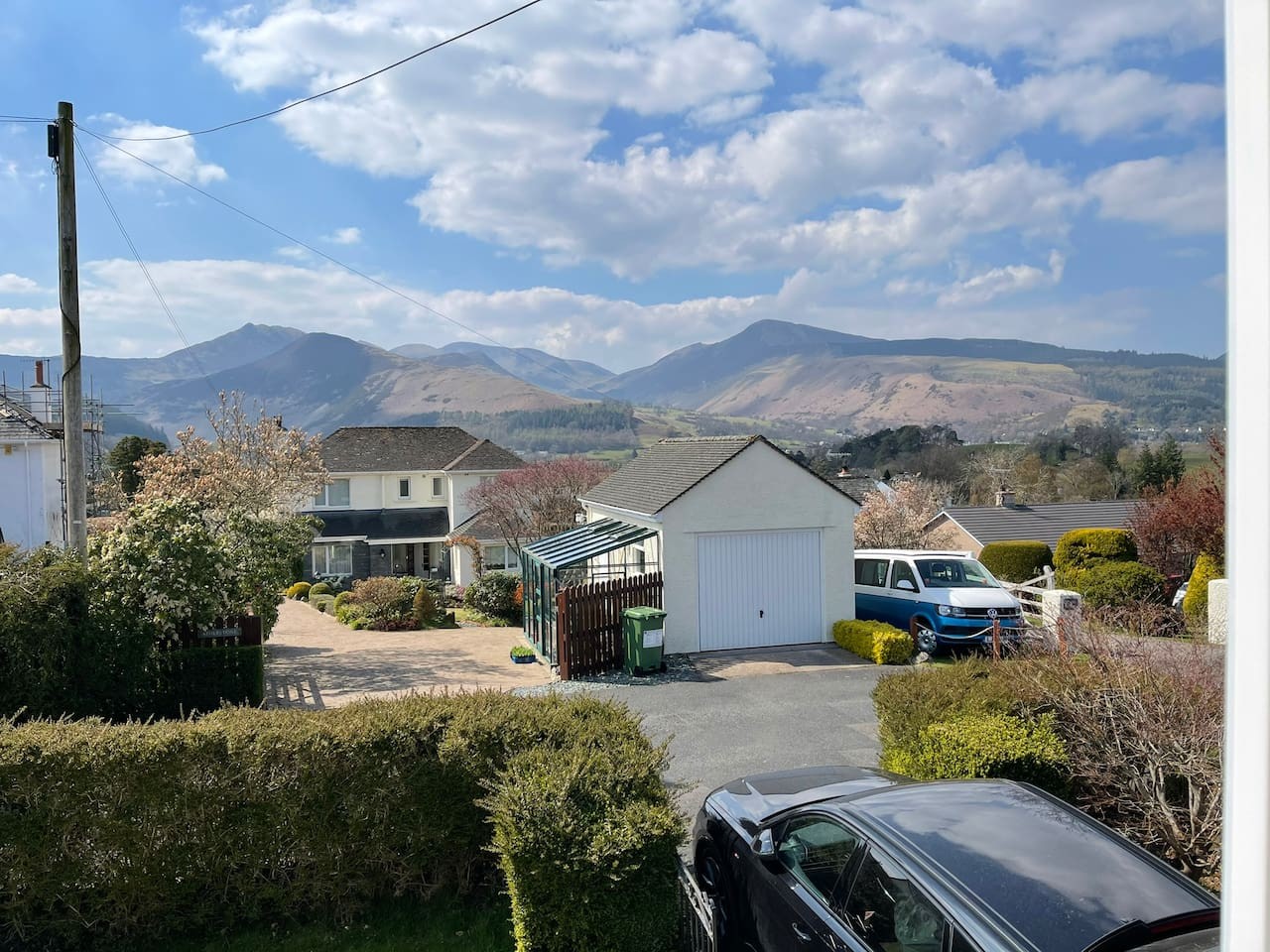
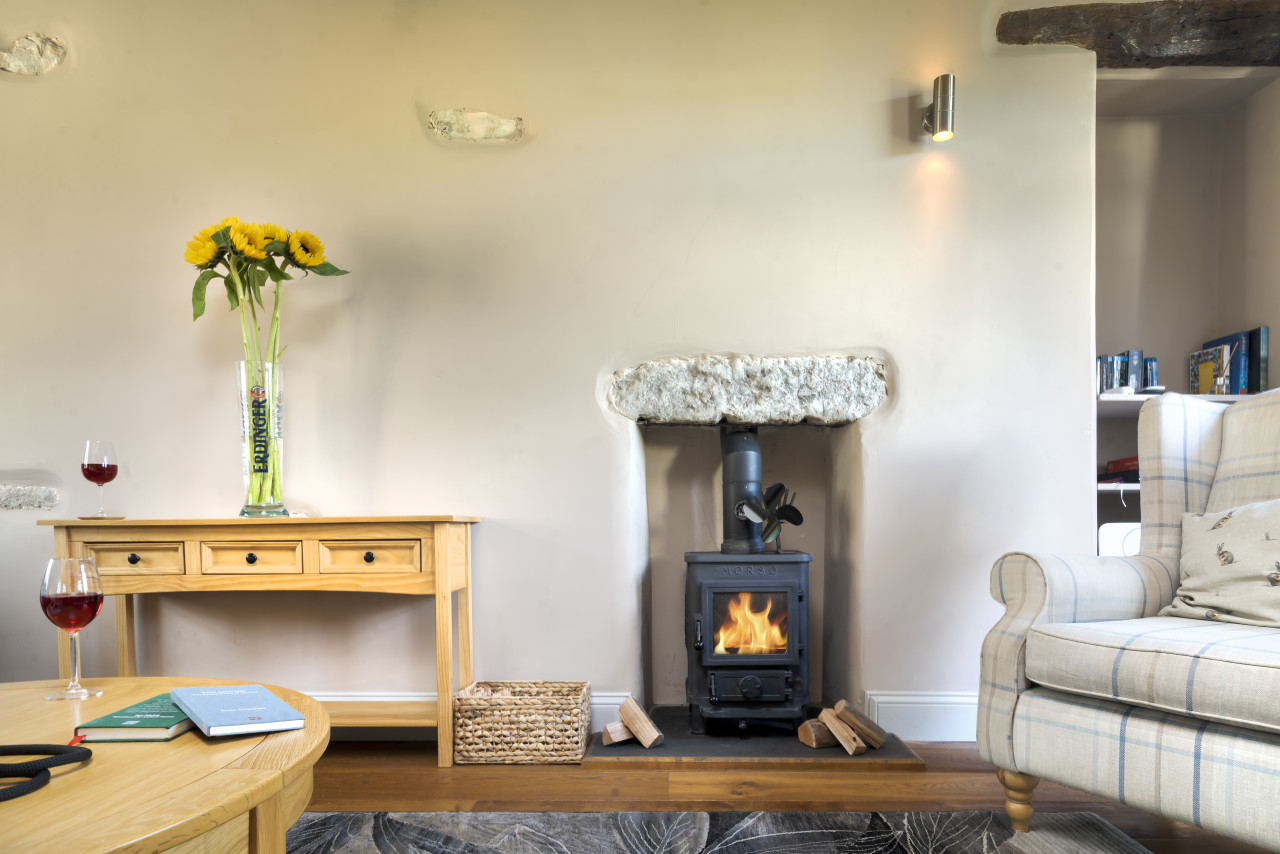
Travel Fox holiday homes around Lake District, linked directly to their property pages.
For homeowners
Own a holiday home near Coniston?
We manage holiday lets across the Lake District from 12% commission, charged after cleaning costs, with no lock-in. A co-founder visits before you decide.
Holiday let management in the Lake District →
A guide with a point of view
Written from research. Edited for real journeys.
Use the Official site links for live practical details, then use this guide for context, ideas and room to explore.
Photography credits & licences
Third-party photographs are credited to their named creators and reused under the linked Creative Commons licence or public-domain dedication. Travel Fox stores an optimised local copy; the file-specific changes and any browser-applied display crop are disclosed below. Reused photographs link both to the Wikimedia Commons source record and to the declared source image; Travel Fox's own photographs carry no such record and are marked as ours. These image licences do not cover Travel Fox text, branding or page design.
- File:Ruskin Museum 18-06-2015 14-17-18.JPG — photograph by Paul Hermans; Own work. Source record on Wikimedia Commons. Declared source image. Licence: CC BY-SA 3.0. File changes: Downloaded from Wikimedia Commons, resized to a maximum 1920px edge and encoded as an optimised JPEG. Display changes: Displayed with responsive CSS cropping.
Sources
Every place on this page is checked against a published source. Each entry links the record we used and names who publishes it.
- Black Bull Inn & Hotel — blackbullconiston.co.uk operator, sector body or destination organisation
- Church of St Andrew, Coniston — conistonandcrakechurches.co.uk operator, sector body or destination organisation
- Ruskin Museum — ruskinmuseum.com operator, sector body or destination organisation
- Old Man of Coniston — visitlakedistrict.com operator, sector body or destination organisation
- Coppermines Valley — lakedistrict.gov.uk statutory register or public authority
- Coniston Water Shoreline — lakedistrict.gov.uk statutory register or public authority
- Brantwood — brantwood.org.uk operator, sector body or destination organisation
- Coniston Launch — conistonlaunch.co.uk operator, sector body or destination organisation