
Tarns, passes and smuggler country
Little Langdale
A quiet side valley of tarnside paths, mining-country ravines and a historic inn beneath Wrynose Pass.
- Best for
- Low-level tarn walks and remote-valley quiet
- Give it
- Half a day, or longer for more than one walk
- Don't miss
- The Three Shire Stone on Wrynose Pass
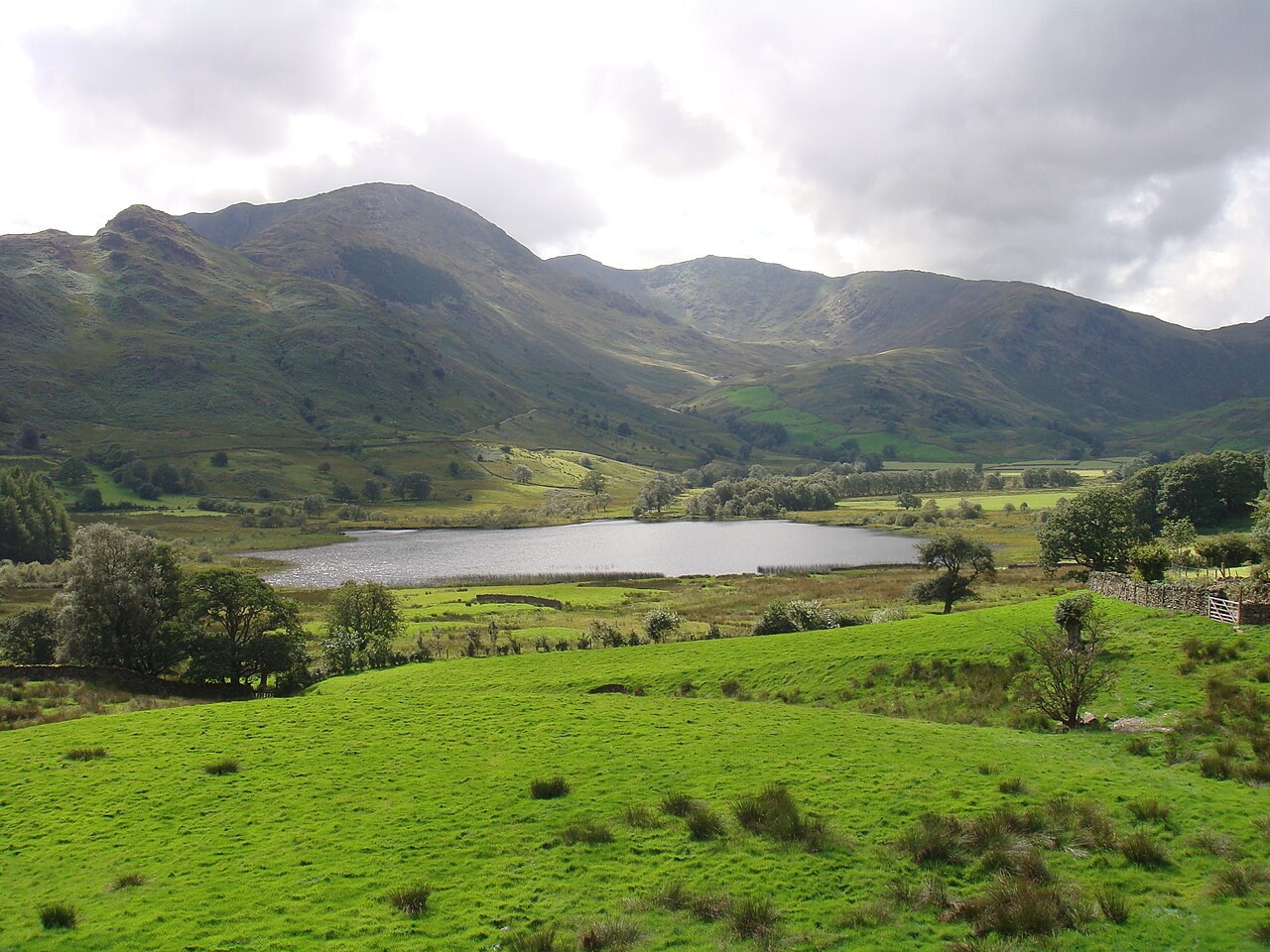
Photo: Sally · CC BY-SA 2.0 · cropped
The Fox verdict
A small valley with a strong sense of place
Little Langdale rewards visitors who come for walking, quiet and the stories carried over its mountain passes.
The choice is compact but distinctive: easy tarnside walking, a waterfall in old copper-mining country, the historic road over Wrynose and an inn tied to the legend of whisky smuggler Lanty Slee.
Where to go
Places in Little Langdale
Every place below is checked against a published source, listed with what it is and how long to give it.
Local signatures
3 placesLanty Slee's Langdale
The Victorian inn formerly known as the Three Shires now honours local whisky smuggler Lanty Slee in its name and serves meals, light bites and real ale.
- Visit length
- Editorial estimate: Allow around 90 minutes for a meal
- Locality
- Little Langdale village
Hardknott Pass
A steep mountain pass continuing from Wrynose towards Eskdale.
- Visit length
- Editorial estimate: Allow around 45 minutes for the high-pass views
- Locality
- Hardknott Pass, towards Eskdale
Blea Tarn
An upland tarn in the hanging valley between Little and Great Langdale, reached by an easy walk from the road.
- Visit length
- Editorial estimate: Allow around 60 minutes for the tarn path and views
- Locality
- Blea Tarn, between Little and Great Langdale
Walks & outdoors
1 place
Little Langdale Tarn
A valley-floor tarn bordered by traditional meadow and woodland, offering lower-level walking when the surrounding fells feel too demanding.
- Visit length
- Editorial estimate: Allow around 90 minutes for a low-level walk
- Locality
- Little Langdale valley floor
History & heritage
1 placeThree Shire Stone
This boundary stone stands beside the road at the summit of Wrynose Pass, where the historic counties of Cumberland, Westmorland and Lancashire met.
- Visit length
- Editorial estimate: Allow around 45 minutes for the summit landmark
- Locality
- Wrynose Pass summit
- Access
- The pass road is extremely steep and may be impassable in winter; check current conditions before setting out.
No places match this filter. Choose All places to reset the list.
Three ways to explore Little Langdale
Signature outings
Lunch at Lanty Slee's
Settle into the historic inn in Little Langdale for a meal and the story of its smuggler namesake.
Walk beside Little Langdale Tarn
Choose the lower-level path beside Little Langdale Tarn through traditional meadow and woodland.
Climb to the boundary stone
Reach the Three Shire Stone at 393 metres on the historic road over Wrynose Pass.
The village story
Little Langdale Village Guide
A valley where a smuggler's legend, an old county boundary and quiet waters still shape the visit.
The Smuggler and His Inn
The Three Shires Inn sits in Little Langdale, about half a mile from Little Langdale Tarn in a straight line, and now trades as Lanty Slee's Langdale. This requires some explanation, and the explanation is the best thing about the village.
Lanty Slee was a farmer here who ran illicit whisky stills through the Langdale valleys for most of the nineteenth century. He sold moonshine at ten shillings a gallon, or loaded it onto pack-horses and carried it over Wrynose and Hardknott to Ravenglass, coming back with smuggled tobacco. The excise officers caught up with him more than once. He was never convicted. He died in 1878 a local legend, and the pub now trades under his name.
Stone, Summit and Supper
The inn was built in 1872 and named, originally, after the Three Shire Stone at the summit of Wrynose Pass, where Cumberland, Westmorland and Lancashire used to meet before the county boundaries were redrawn in 1974. The stone is still up there — a monolith cut in Cartmel and erected in 1860, now a landmark for everyone who drives the pass.
The inn's current website offers hearty dishes, light bites, coffee, cakes and real ale. It also lists rooms for visitors who want to stay in the valley.
A Valley Without Shops
There are no shops. The nearest are at Ambleside or Coniston, so you bring what you need and the pub takes care of the rest.
The walking is the reason to be here. Blea Tarn sits in a hanging valley between Little and Great Langdale, with a path from the road; Wordsworth put it in "The Prelude." Tilberthwaite Gill is a narrow ravine and waterfall in the wider valley, old copper-mining country, with footpaths that climb on to Coniston Old Man. Little Langdale Tarn gives you flat lakeside walking through meadow and woodland when the fells feel like too much. And Wrynose Pass itself climbs to the Three Shire Stone at 393 metres, then Hardknott carries on to Eskdale.
The Road In, and the Quiet Beyond
Wrynose and Hardknott take the road through the valley head, with gradients of 1:3 in places. In winter the passes may be impassable. The valley is enclosed by low fells — Castle Howe and Lingmoor. There is no railway and no regular bus. You come by car from Ambleside via Skelwith Bridge, or over Wrynose from the Duddon Valley if you trust the weather.
What you get for the effort is a quiet side valley running southwest off Great Langdale, the tarn on the valley floor, and a pub named after a man who spent his life not getting caught. On a still evening you can stand by the tarn and hear nothing at all, which up here is the whole point.
Stay around Lake District
Make a longer stay of it
Travel Fox holiday homes around Lake District, linked directly to their property pages.
For homeowners
Own a holiday home near Little Langdale?
We manage holiday lets across the Lake District from 12% commission, charged after cleaning costs, with no lock-in. A co-founder visits before you decide.
Holiday let management in the Lake District →
A guide with a point of view
Written from research. Edited for real journeys.
Use the Official site links for live practical details, then use this guide for context, ideas and room to explore.
Photography credits & licences
Third-party photographs are credited to their named creators and reused under the linked Creative Commons licence or public-domain dedication. Travel Fox stores an optimised local copy; the file-specific changes and any browser-applied display crop are disclosed below. Reused photographs link both to the Wikimedia Commons source record and to the declared source image; Travel Fox's own photographs carry no such record and are marked as ours. These image licences do not cover Travel Fox text, branding or page design.
- File:Little Langdale Tarn - geograph.org.uk - 2266337.jpg — photograph by Sally; Little Langdale Tarn by Sally. Source record on Wikimedia Commons. Declared source image. Licence: CC BY-SA 2.0. File changes: Downloaded from Wikimedia Commons, resized to a maximum 1920px edge and encoded as an optimised JPEG. Display changes: Displayed with responsive CSS cropping.
Sources
Every place on this page is checked against a published source. Each entry links the record we used and names who publishes it.
- Lanty Slee's Langdale — lantyslittlelangdale.com operator, sector body or destination organisation
- Little Langdale Tarn — lakedistrict.gov.uk statutory register or public authority
- Hardknott Pass — visitlakedistrict.com operator, sector body or destination organisation
- Three Shire Stone — historicengland.org.uk statutory register or public authority record not machine-readable; publisher restricts automated access
- Blea Tarn — lakedistrict.gov.uk statutory register or public authority