
Georgian Holt
Holt
A hilltop market town of Georgian streets, independent shops, wooded walks and a heritage railway to the coast.
- Best for
- Independent shops, local history and woodland walks
- Give it
- A day for the centre and Country Park
- Don't miss
- The Poppy Line and St Andrew's Church
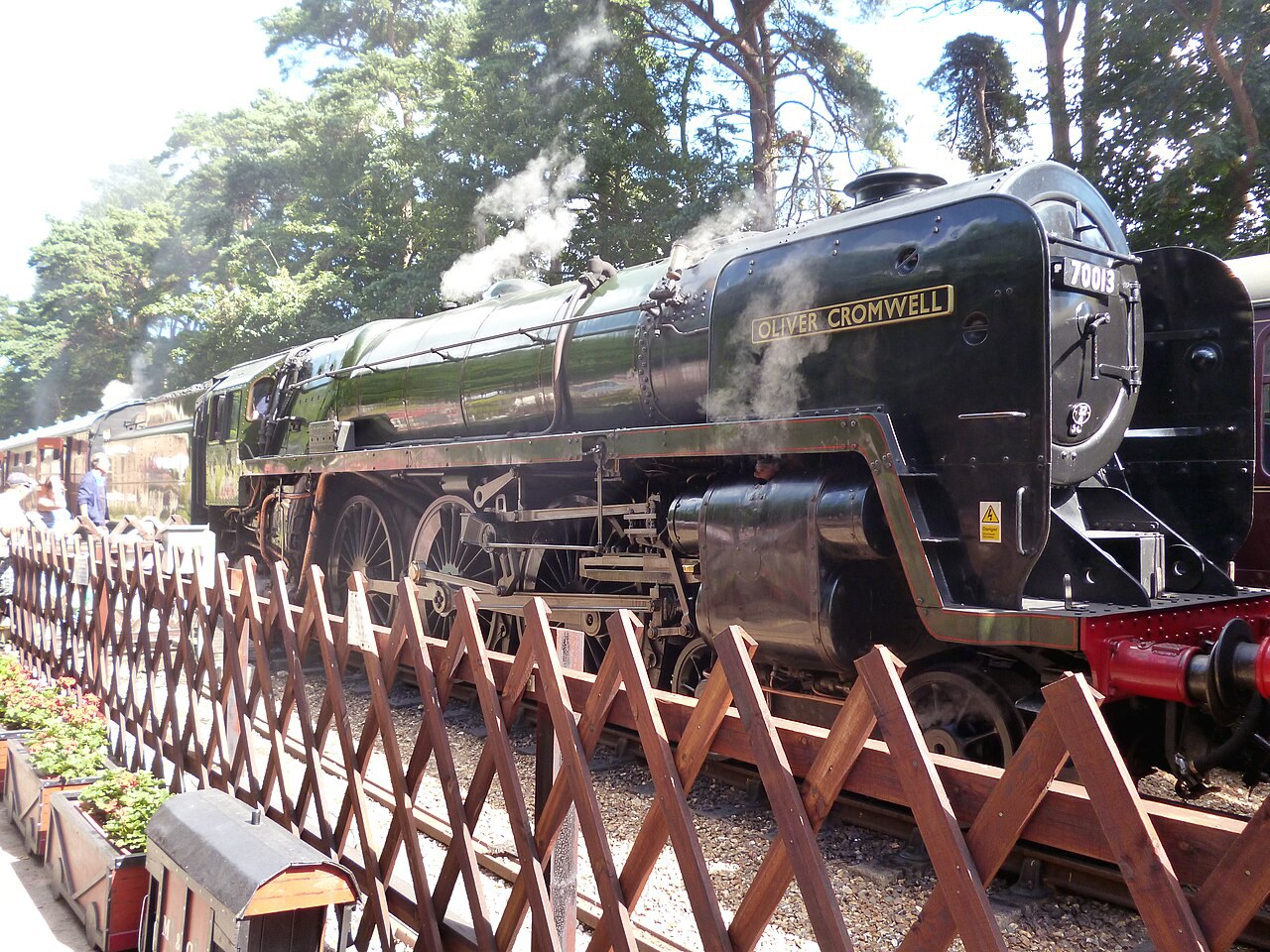
Photo: Dr Neil Clifton · CC BY-SA 2.0 · cropped
The Fox verdict
Georgian streets with woods and steam nearby
Holt combines independent food and shopping with a compact historic centre, a hundred-acre Country Park and its own heritage railway terminus.
The fire of 1708 explains the town's coherent Georgian character, while Bakers & Larners, Byfords and long-established pubs give the centre independently useful stops. Add St Andrew's, a short woodland loop or the Poppy Line to shape a visit around history, food or time outdoors.
Where to go
Places in Holt
Every place below is checked against a published source, listed with what it is and how long to give it.
Local signatures
3 placesBakers & Larners of Holt
An independent, ninth-generation family department store founded in 1770, with a Food Hall, chocolate counter and a 2,000-square-foot wine cellar cut into the ridge's glacial deposits.
- Visit length
- Editorial estimate: around 45 minutes
- Locality
- 8-10 Market Place
Byfords
A cafe, restaurant, store and self-described posh B&B whose oldest part is a 15th-century cellar believed to have survived the fire of 1708.
- Visit length
- Editorial estimate: around 75 minutes
- Locality
- Shirehall Plain
Kings Head, Holt
A Grade II listed gastro-pub with rooms, four regular ales plus a rotating guest, a rear beer garden and a roughly sixty-seat restaurant where diners can watch steaks being cooked.
- Visit length
- Editorial estimate: around 90 minutes
- Locality
- 19 High Street
Food & drink
2 placesOwl Tea Rooms
A tea room and bakery established in 1929, billed as Norfolk's oldest, with bread, cakes, cookies and savouries baked on site.
- Visit length
- Editorial estimate: around 45 minutes
- Locality
- White Lion Street
The Feathers Hotel
A centrally located 17th-century hotel, pub and dining stop with a long coaching history; travellers praise its position and breakfast, while waits are a recurring complaint.
- Visit length
- Editorial estimate: around 75 minutes
- Locality
- Market Place
Walks & outdoors
1 placeHolt Country Park
Around 100 acres of mixed woodland with broad rides, glades, waymarked walks and more than thirty tree species; it has held a Green Flag Award since 2005.
- Visit length
- Editorial estimate: Popular 1.6-mile loop: about 34 minutes
- Locality
- about 10 minutes' walk from the town centre
- Access
- The park has an Easy Access Trail suitable for pushchairs and less mobile visitors.
History & heritage
1 placeSt Andrew's Church
A Grade II* church of Norman origin, rebuilt in the early 14th century and again after the 1708 fire, with a 12th-century font, 14th-century piscina and Chaucer Window.
- Visit length
- Editorial estimate: around 45 minutes
- Locality
- Holt
Things to do
1 place
North Norfolk Railway - Holt Station
The Holt terminus of the five-and-a-quarter-mile Poppy Line, running heritage steam and diesel services to Sheringham via Weybourne and Kelling Heath Park.
- Visit length
- Editorial estimate: around 120 minutes
- Locality
- on the eastern edge of town
No places match this filter. Choose All places to reset the list.
Three ways to explore Holt
Signature outings
Steam towards Sheringham
Board at Holt's eastern-edge terminus for the five-and-a-quarter-mile heritage railway through Weybourne and Kelling Heath Park to Sheringham.
A short woodland circuit
Follow the popular 1.6-mile loop through Holt Country Park's mixed woodland, broad rides and glades in about 34 minutes.
Font, piscina and Chaucer glass
Look for the circular 12th-century font, the 14th-century piscina and Francis Spear's Chaucer Window inside St Andrew's.
The village story
Holt Village Guide
A Georgian market town shaped by fire, independent enterprise, woodland and the railway to the coast.
Pineapple, springs and Georgian streets
At the west end of the High Street stands a whitewashed stone gatepost with a carved pineapple on top. It is one of a pair that came from Melton Constable Park, each cut with the distances to the town. Its twin went to Dereham in 1757, and at the start of the Second World War the people of Dereham dropped theirs down a deep well to deny a possible invader a landmark. It is still down there. Holt took a different approach and painted its pineapple white. The obelisk is now the emblem of the town.
A hundred and fifty yards from it is Spout Hills, fourteen acres of common where a spring line running round the valley once supplied the town's water and now keeps a handful of scarce wetland plants going. That is roughly the shape of Holt: a hilltop market town on the Cromer–Holt Ridge, a run of glacial moraine hills, with wooded country on one side and the coastal marshes a few miles north.
The town you walk through is mostly Georgian, and there is a straightforward reason for that. On 1 May 1708 a fire broke out among the market stalls at Shirehall Plain and destroyed most of the medieval town in three hours. It gutted the church and did about £11,000 of damage, a figure that later reconstruction put more precisely at £11,258. The town was rebuilt over the following century in brick, stone and flint, which is why the streets read as one coherent period rather than the usual English pile-up of everything at once. A 1744 fire-insurance plaque still survives on a building in Bull Street.
The rebuilding left Holt with a compact centre and a set of small yards running off the main streets, and these are now full of independent shops, cafés, galleries and antique dealers selling everything from Georgian furniture to mid-century modern. The lifestyle brand Holly & Co put the town in a roundup of seven of the best high streets in the UK for Shop Independent Day, which is the sort of thing that happens to Holt fairly regularly.
Independent tables and counters
The anchor of the Market Place is Bakers & Larners, an independent department store that has been family-run since 1770, when it started as an ironmongery. It is now in its ninth generation. Michael Baker, the seventh, was a chartered chemical engineer who came back to Norfolk in the 1970s to revive the store; rebuilding began in 1976 and the neighbouring Larner's shop was bought in 1977. He is widely credited with putting Holt on the map, and ran the place for 45 years until his death in 2019. The Food Hall has a chocolate counter and a 2,000 square foot wine cellar cut into the glacial deposits of the ridge itself. The store's own marketing describes the Market Place building as "Grade III listed," a distinction that does not exist in the English system.
Round on Shirehall Plain is Byfords, which calls itself a "posh B&B" and is also a café, restaurant and store. Iain and Clair Wilson bought the building in 2000, when it was known as Paige's, and renamed it. Its oldest part is a cellar dating to the 15th century, believed to be the oldest structure in Holt and one of the few things to survive the 1708 fire. There are now sixteen bedrooms and four self-catering apartments, and it marked its 25th year in 2025.
For a cup of tea and something baked that morning, the Owl Tea Rooms on White Lion Street have been going since 1929 and are billed as the oldest tea room in Norfolk. Everything is made on site — bread, cakes, cookies, savouries, a salad bar — and the coffee is from Little Red Roaster in Norwich.
Pubs and paths
There are two proper pubs in the town. The Feathers Hotel sits centrally on the Market Place and dates from the 17th century, built, some sources say, on the site of the old cattle market around 1650. It was supplied by the Letheringsett Brewery from 1781 to 1804, and in 1830 the coach known as the NORFOLK REGULATOR left the Feathers for London every Monday, Wednesday and Friday at a quarter to six in the morning, a journey scheduled to take fourteen hours. Henry Garner's opening dinner there in November 1862 attracted some seventy gentlemen. The place has a long list of named landlords going back to Martin Ayres in 1740, and it was fined £5, twice, in 1921 and 1927, for selling out of hours. Travellers still praise the position and the breakfast; the recurring complaint is that you may wait a while.
The Kings Head, a Grade II listed gastro-pub with rooms at 19 High Street, is the one to book for dinner. There are four regular ales plus a rotating guest, often from Moon Gazer, three B&B rooms above the bar, and a secluded beer garden to the rear. The restaurant seats around sixty and is arranged so that diners can watch the chef cook the steaks, which are what most people come for; there are vegetarian, vegan and gluten-free options too. One TripAdvisor review simply titled itself "Best pub in Holt!" — a claim complicated only slightly by the fact that a different, award-winning Kings Head sits a mile west at Letheringsett, which is not in Holt at all.
Walking is easy to come by. Holt Country Park is about ten minutes on foot from the centre, a hundred acres of mixed woodland that has held a Green Flag Award since 2005. There are broad rides, glades and waymarked routes from one to eighteen miles, an Easy Access Trail suitable for pushchairs, and a popular loop of about a mile and a half that takes a little over half an hour. Over thirty tree species grow there — Scots pine, silver birch, oak — along with deer, greater spotted woodpeckers and butterflies. Adjoining it is Holt Lowes, 120 acres of heathland declared a Site of Special Scientific Interest in 1954, with the River Glaven running nearby. Back in the town, the Holt Owl Trail is a circular walk marked by 24 plaques explaining the buildings, monuments, streets and clocks as you pass them.
Steam, stone and school
On the eastern edge of town is Holt's station, the terminus of the North Norfolk Railway, better known as the Poppy Line. It runs five and a quarter miles of heritage steam and diesel to Sheringham by way of Weybourne and Kelling Heath. The line first opened in stages in the 1880s, closed in 1964 under Beeching, and was taken on by a preservation society the following year, with the first preserved steam train running in 1976. The station building itself was originally put up at Stalham in 1883 and moved, brick by brick, to Holt in 2002. The name comes from Clement Scott's "Poppyland," the Victorian tag for this stretch of coast.
The church at the centre of all this is St Andrew's, Grade II* listed and Norman in origin, rebuilt in the early 14th century in the Decorated Gothic style by Sir William de Nerford and his wife Petronilla. It was gutted with the rest of the town in 1708, rebuilt in 1727, then heavily restored by William Butterfield between 1862 and 1874, with money from Lord Townshend, the Prince of Wales and Robert Walpole. Inside there is a circular 12th-century font carved with fleur-de-lys, a 14th-century piscina under a Decorated Gothic canopy, and the Chaucer Window by Francis Spear, illustrating scenes from the Canterbury Tales. A memorial stone hangs there for the seven airmen killed on 19 August 1968, when a Victor tanker and a Canberra bomber collided in mid-air over the area.
The other institution is Gresham's School, founded in 1555 by Sir John Gresham, a Tudor merchant and Lord Mayor of London who turned the family manor house into a free grammar school and handed the trust to the Fishmongers' Company. It has been co-educational since 1971. The list of former pupils is out of proportion to a town this size: the poet W. H. Auden, the composers Benjamin Britten and Lennox Berkeley, the poet Stephen Spender, the inventor James Dyson, the KGB spy Donald Maclean, the first Director-General of the BBC Lord Reith, and, more recently, the actor Olivia Colman. Sebastian Shaw, who played the unmasked face of Darth Vader in Return of the Jedi, was also here. Dyson funded the school's purchase of Holt Hall, a Grade II listed house on an 86-acre estate, in 2023.
A long view beyond Holt
Holt is old enough to appear in the Domesday survey of 1086 as a market town and port, with twelve plough teams, five watermills, and livestock recorded down to a single cob, 27 pigs and 230 sheep. Its value had risen from £25 in 1066 to £50 twenty years later. The tenant-in-chief was King William; the first lord of the manor was Walter Giffard.
The coast is close. Cley-next-the-Sea and the Blakeney National Nature Reserve are a few miles north, with seal trips running out from Blakeney Point; Cromer, with its Victorian pier and its crabs, is about ten miles east; Sheringham, at the other end of the Poppy Line, is around seven. Baconsthorpe Castle, the ruined and moated 15th-century manor of the Heydon family, sits three or four miles to the south-east. The nearest mainline station is at Sheringham, on the Bittern Line to Norwich, and the A148 from King's Lynn to Cromer runs straight through the town; Sanders Coaches handle the local buses.
For the war memorial on the Market Place, a twenty-foot Clipsham stone spire unveiled in 1921, the town chose the inscription "Their name liveth for ever more." One of the more recent names attached to Holt belongs to Kieron Williamson, born here in 2002 and selling out exhibitions of landscape paintings as a boy, which the local press inevitably called Mini Monet. He grew up looking at the same ridge and the same marshes as everyone else, and made rather more of them.
Stay around Norfolk
Make a longer stay of it
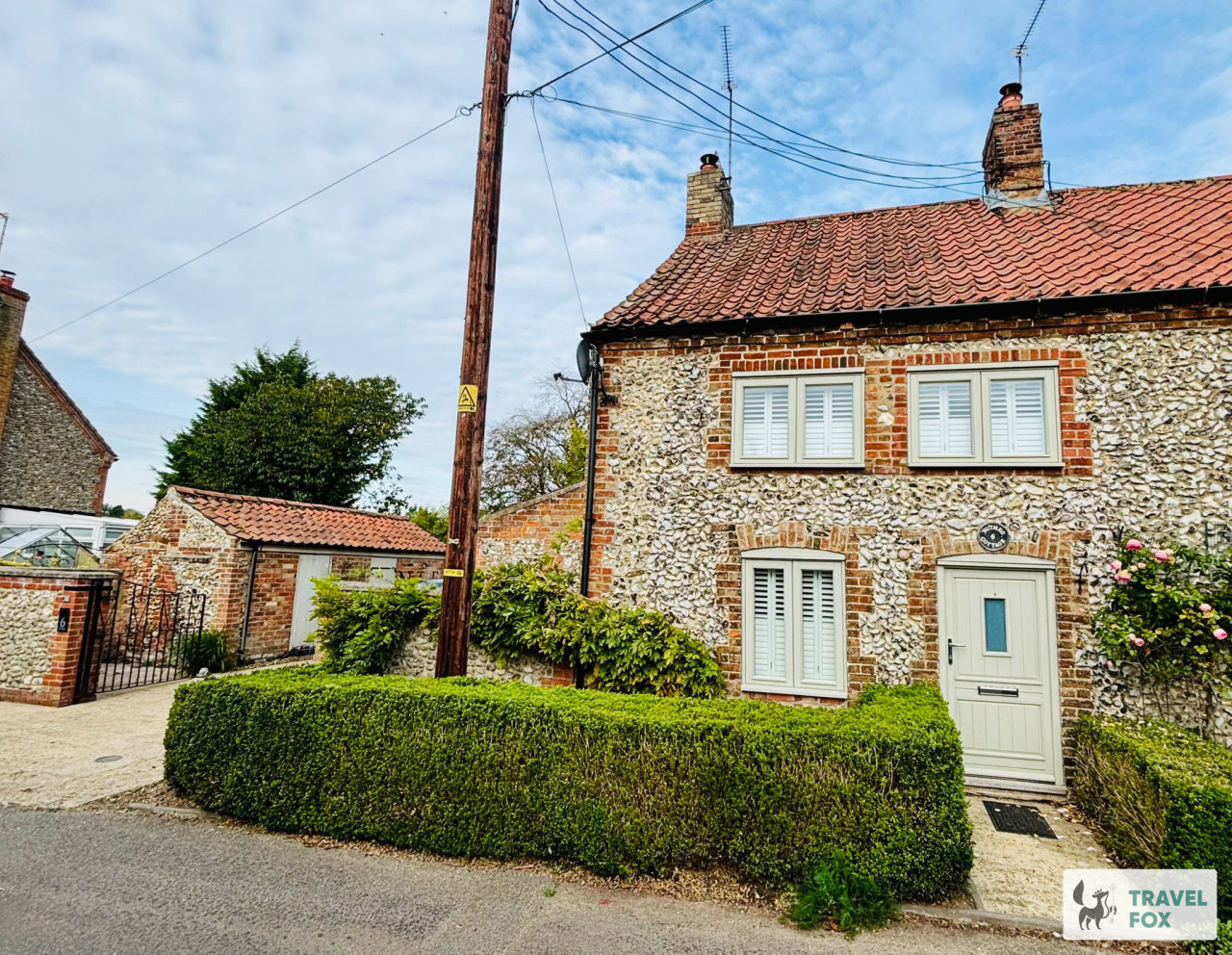
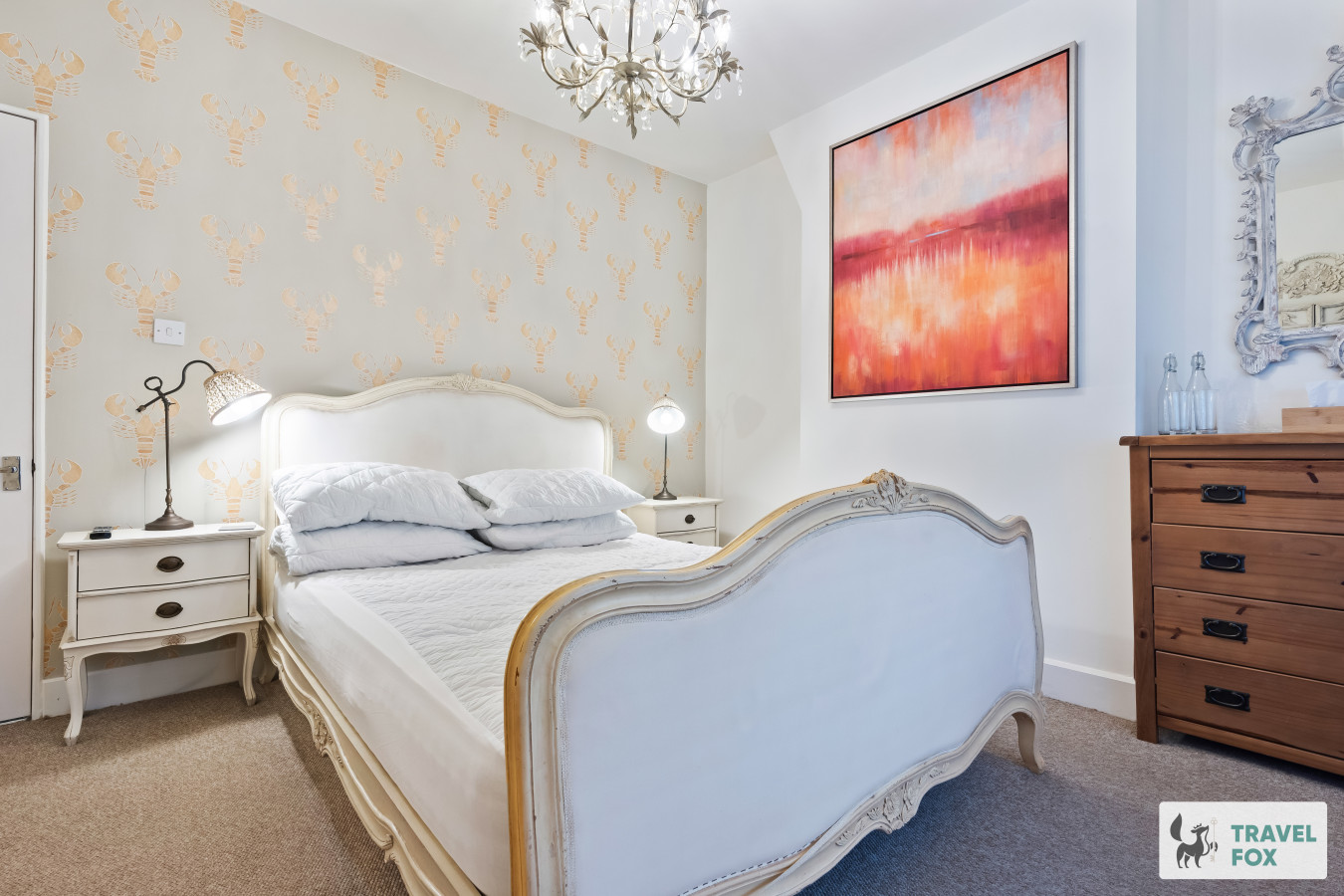
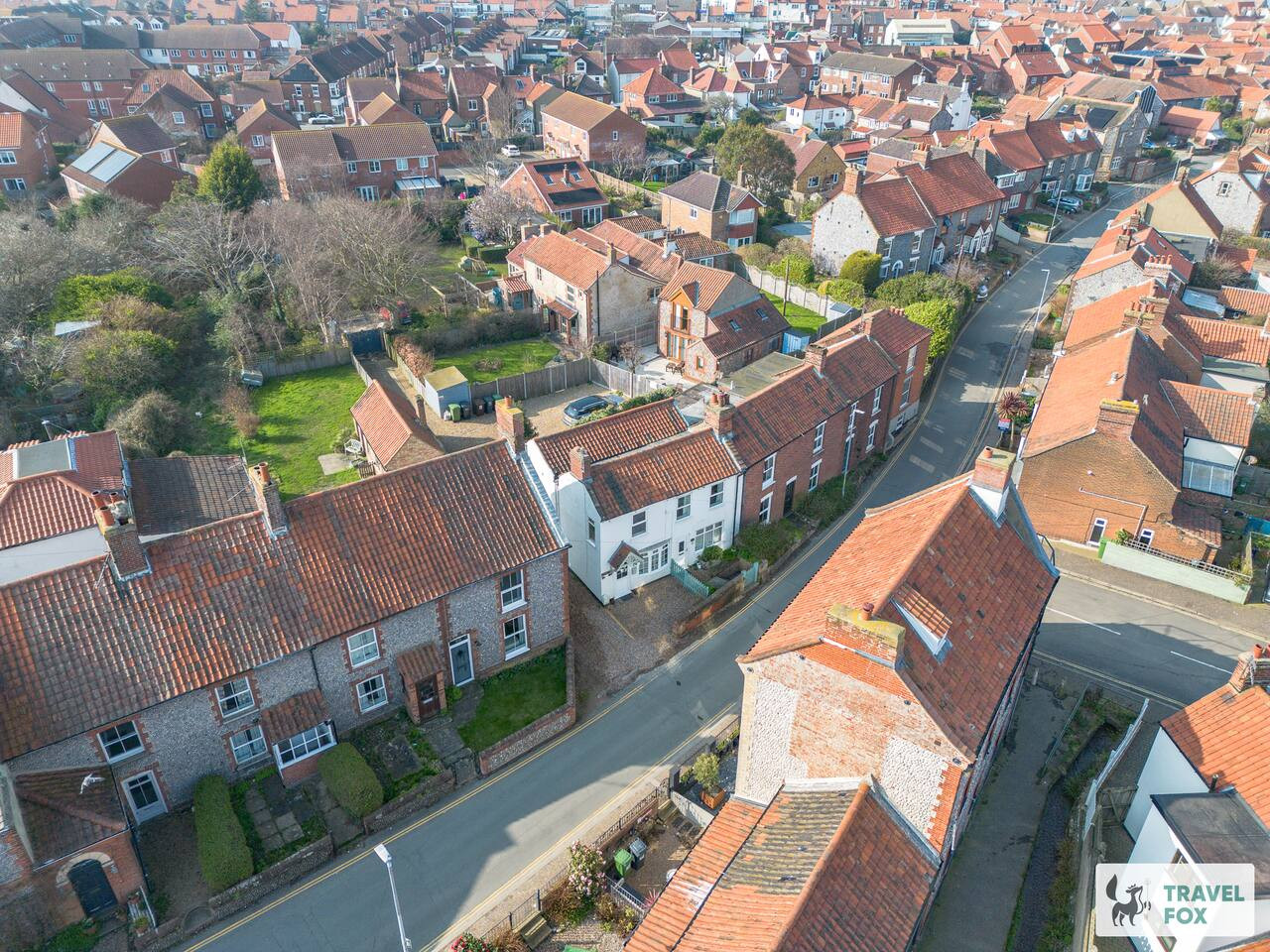
Travel Fox holiday homes around Norfolk, linked directly to their property pages.
A guide with a point of view
Written from research. Edited for real journeys.
Use the Official site links for live practical details, then use this guide for context, ideas and room to explore.
Photography credits & licences
Third-party photographs are credited to their named creators and reused under the linked Creative Commons licence or public-domain dedication. Travel Fox stores an optimised local copy; the file-specific changes and any browser-applied display crop are disclosed below. Reused photographs link both to the Wikimedia Commons source record and to the declared source image; Travel Fox's own photographs carry no such record and are marked as ours. These image licences do not cover Travel Fox text, branding or page design.
- File:Holt Station, North Norfolk Railway - geograph.org.uk - 3649247.jpg — photograph by Dr Neil Clifton; Holt Station, North Norfolk Railway by Dr Neil Clifton. Source record on Wikimedia Commons. Declared source image. Licence: CC BY-SA 2.0. File changes: Downloaded from Wikimedia Commons, resized to a maximum 1920px edge and encoded as an optimised JPEG. Display changes: Displayed with responsive CSS cropping.
Sources
Every place on this page is checked against a published source. Each entry links the record we used and names who publishes it.
- Bakers & Larners of Holt — bakersandlarners.co.uk operator, sector body or destination organisation
- Byfords — byfords.org.uk operator, sector body or destination organisation
- Owl Tea Rooms — owltearooms.squarespace.com other published source
- The Feathers Hotel — thefeathersholt.com operator, sector body or destination organisation
- Kings Head, Holt — kingsheadholt.org.uk operator, sector body or destination organisation
- Holt Country Park — north-norfolk.gov.uk statutory register or public authority
- North Norfolk Railway - Holt Station — nnrailway.co.uk operator, sector body or destination organisation
- St Andrew's Church — holtchurch.org other published source