
Harbour, pines and sand
Wells-next-the-Sea
A working port town where the Quay, salt marsh, pinewoods and long beach tell one continuous coastal story.
- Best for
- Quayside food, coastal walking and maritime history
- Give it
- A full day between the town and beach
- Don't miss
- The colourful beach huts where pinewoods meet sand
The Fox verdict
A harbour town with the sea beyond the pines
Wells combines a working Quay, deep maritime history and a long approach to a dune-backed beach.
Start with fish and chips beside the harbour, then follow the town's story through the Maltings, the Eliza Adams memorial and St Nicholas's fire-scarred history. Beyond the Quay, the Norfolk Coast Path threads towards the pinewoods and beach, while the narrow-gauge railway carries a different strand of local transport history to Little Walsingham.
Where to go
Places in Wells-next-the-Sea
Every place below is checked against a published source, listed with what it is and how long to give it.
Local signatures
3 placesNorfolk Coast Path
The 84-mile path skirts the pinewoods between Holkham Beach and Wells, runs down Beach Road to the Quay, then continues east beside the salt marshes towards Stiffkey.
- Visit length
- Editorial estimate: allow around 90 minutes
- Locality
- via Beach Road and the Quay
French's Fish Shop
An award-winning, family-owned fish and chip shop that started in 1921, remains in the same family and has panoramic views of the Quay.
- Visit length
- Editorial estimate: allow around 45 minutes
- Locality
- on the Quay
Church of St Nicholas
A Grade II* church whose 15th-century west tower survived the lightning fire of 1879; it was almost wholly rebuilt by Herbert Green and reopened in 1883.
- Visit length
- Editorial estimate: allow around 45 minutes
- Locality
- Wells-next-the-Sea
Walks & outdoors
1 placeWells Beach
A long, flat beach with sand dunes, backed by dense pinewoods within the Holkham National Nature Reserve; colourful stilted beach huts stand where the pinewoods meet the beach.
- Visit length
- Editorial estimate: allow around 90 minutes
- Locality
- about a mile from the town
History & heritage
2 placesWells & Walsingham Light Railway
A 10¼-inch gauge railway, described in the brief as the world's longest of that gauge, running four miles to Little Walsingham since services began in 1982.
- Visit length
- Editorial estimate: allow around 150 minutes
- Locality
- between Wells and Little Walsingham
Eliza Adams Lifeboat Memorial
A listed memorial to the eleven crew members lost when the Eliza Adams lifeboat capsized on 29 October 1880 while going to the aid of the Ocean Queen.
- Visit length
- Editorial estimate: allow around 20 minutes
- Locality
- Wells-next-the-Sea
Things to do
1 placeWells Maltings
Reopened in 2018 after a major restoration, with a theatre and cinema, Heritage Centre, Visitor Information Centre, cafe bar, art gallery and community spaces.
- Visit length
- Editorial estimate: allow around 60 minutes
- Locality
- Wells-next-the-Sea
No places match this filter. Choose All places to reset the list.
Three ways to explore Wells-next-the-Sea
Signature outings
Pines, huts and open sand
Cross salt marsh and pinewoods to the long, flat beach, where colourful stilted huts stand between the trees and sand.
From malt to modern culture
Step into Wells Maltings for its Heritage Centre, theatre, cinema, gallery and visitor information under one roof.
Four miles to Walsingham
Take the 10¼-inch gauge Wells & Walsingham Light Railway on its four-mile run to Little Walsingham.
The village story
Wells-next-the-Sea Village Guide
From a cantilevered granary and seafood on the Quay to beach huts, pinewoods and the memory of the Eliza Adams, Wells tells its history beside the water.
The Working Quay
On the seafront stands a granary with a gantry sticking out of its upper storey, cantilevered over the road. It was built in 1904 and finished the following year, and the overhang existed so that grain could be swung from ships into the building without stopping the traffic underneath. It stopped being a granary in 1990 and became luxury flats in 1998, but the gantry is still there, jutting out over the street, and it remains the first thing you notice when you arrive at the Quay.
The Quay is where most of Wells happens. It runs along the water, and along it you can eat almost anything that came out of the sea that morning. French's Fish Shop has been frying on the Quay since 1921 and is still run by the same family, which is over a hundred years of one family selling fish and chips from the same stretch of harbour. Platten's, a little further along, has been at it since 1966. If you'd rather not sit down, there's a seafood stall that has stood on the Quay since 1957, selling ready-to-eat pots of cockles, mussels, prawns, shrimp, rollmops, crayfish and crab sticks. Wells Crab House does crab and lobster rolls, chowders and seafood platters with wine. The pattern establishes itself quickly.
For the fish you take home rather than eat standing up, Wells Fishmongers sells smoked fish, shellfish and wet fish alongside handmade pâtés, pies, soups, curries and something called the Gurney fishcake, which is renowned locally. The butcher is Arthur Howell, fourth-generation and award-winning, dealing in locally sourced meat. Between the fishmonger and the butcher, you could feed a house for a week without leaving the town.
Pubs Around The Buttlands
The pubs cluster around The Buttlands, a large tree-lined green fringed with Georgian houses and lime trees, which is the genteel end of Wells and feels a world of its own after the working Quay. Two gastro pubs sit on the green, The Crown and The Globe, both relaxed places. The Crown Hotel is a 16th-century former coaching inn, now done up light and airy with old photographs of itself around the bar. Its menu follows the seasons and leans on local specialities — Wells crab and Brancaster oysters both turn up — and the beamed bar serves something called the Crown Black Slate, a sampler of European and Asian appetisers, alongside Welsh rarebit and marinated pork belly with stir-fried noodles. There are usually at least two rotating guest ales and a garden at the back.
The Globe Inn, across the green, is the one to bring the dog to. It is very dog friendly, to the point of running a dog menu of treats, and the overnight package includes treats and a sausage breakfast for the dog, which is more than most hotels offer the humans. The landlord is Ian. The food is hearty — fish and chips, pies, Sunday roasts, burgers, sticky toffee pudding — and there's a good range of local real ales, a covered heated seating area and a courtyard with a large pizza oven. The reviews are genuinely warm about the pies and the roasts and slightly less warm about the waiting times, which can be long even when you've booked.
Down on the Quay, the Golden Fleece has the water view, a roaring wood fire and modern decor, and does the sort of seafood-forward menu the location demands. It rates well, with the usual quayside caveats about prices and portion size. Off the green, the Edinburgh Inn on Station Road is a traditional local attached to a restaurant called Ollies, and the Bowling Green Inn sits on Church Street, the main road through town, and is by all accounts a lovely pub. Wells is not short of pubs, though it has fewer than it once did — a great many of the town's public houses have closed over the years, and the narrow cottage yards at the northern end went in slum clearances.
Beach, Coast Path and Railway
The beach is a walk from all this, and the walk is part of the point. The North Sea has retreated over the centuries and now sits about a mile from the town, reached across salt marsh and through pinewoods. You go down Beach Road, and where the pinewoods meet the sand there is a row of colourful beach huts up on stilts, which you can rent. The pinewoods were planted more than 150 years ago and back a long, flat beach of sand dunes within the Holkham National Nature Reserve. A naturist area lies to the west, towards Holkham, which is worth knowing before you set out with the children.
The Norfolk Coast Path runs 84 miles from Hunstanton to Hopton-on-Sea and threads straight through Wells: it skirts the pinewoods between Holkham Beach and the town, comes down Beach Road to the Quay, and then heads east alongside the salt marshes towards Stiffkey. The obvious loop is the Wells–Holkham circular, west through the pines to Holkham Beach and back. If you want more waymarked walking, Holkham Park a few miles west has seven routes, from just over two miles up to six, plus a lakeside nature trail.
There is a railway here, but not the kind that takes you to London. The Wells & Walsingham Light Railway is a 10¼-inch gauge line — the longest of that gauge anywhere in the world — that has run the four miles to Little Walsingham since it opened on 6 April 1982. Little Walsingham at the other end is a historic pilgrimage village with an abbey. The proper railway, the branch line to Wells-on-Sea, opened in 1857 and closed in the 1960s, so there is no mainline station now; the nearest are Sheringham and Cromer to the east or King's Lynn to the west. Wells is on the A149 coastal road, four miles east of Burnham Market and a couple east of Holkham, and the Coastliner 36 bus runs along the coast, one of the two services the old King's Lynn–Cromer Coasthopper split into in 2018.
Water, Malt and Lifeboat History
The other things to do are mostly on or near the water. Crabbing off the Quay is the classic family afternoon, a line and a bucket and a lot of patience. Seal-watching boats run out from Wells to the grey seal colonies on the sandbanks. Wells Sailing Club races old wooden sailing boats out on the high tide at weekends in summer. The playground has a pirate ship and a sit-on tractor, along with the usual swings and slide and roundabout. And the Wells Maltings, reopened in 2018 after a major restoration, holds a theatre and cinema, a heritage centre, an art gallery, a café bar and the visitor information centre, all under one roof.
That name — Maltings — is the town's other history. Wells was a malting town on a serious scale: at its peak twelve maltings operated here, and in 1750 the town produced roughly a third of all England's malt exports, most of it shipped to Holland. F. & G. Smith eventually acquired the whole estate and closed the operation in 1929, and the twelve maltings are gone. So is a great deal else. Wells was a working port for over 600 years, a major English harbour in Tudor times, at its most prosperous between about 1830 and 1860 exporting grain to London and importing coal for the town's coal merchants. It was a renowned whelking port too — into the 1950s and 60s, the sheds at the end of the East Quay were where whelks caught by a small fleet were boiled and sent off to market, first by rail.
The sea that made the town also took from it. On 29 October 1880 the lifeboat Eliza Adams went out to the aid of a brig called the Ocean Queen and capsized; eleven of her thirteen crew drowned, leaving ten widows and twenty-seven children. The names of the lost are recorded — Coxswain Robert Elsdon, Frank Abel, John Elsdon, William Field, William Green, Charles Hines, George Jay, Charles Smith, Samuel Smith, John Stacey and William Wordingham — and the Eliza Adams memorial that marks them is a listed monument. The current lifeboat station, opened in 2022, houses a Shannon-class boat named the Duke of Edinburgh; there has been an RNLI lifeboat here since 1869.
St Nicholas and the High Tide
The Church of St Nicholas sits back from all this, Grade II* listed and on the Heritage at Risk register. Its 15th-century west tower survived a fire that struck the rest on 3 August 1879 — the church was hit by lightning and gutted, then almost wholly rebuilt by the diocesan architect Herbert Green and reopened in 1883. The interior is now light and airy but lost its old stained glass in the blaze. In the churchyard lies John Fryer, born in Wells in 1753, who served as sailing master of HMS Bounty under Captain Bligh; his gravestone is displayed in the church porch. The town appears in the Domesday Book as Guella, valued at £15 to its lord, with a mill, 160 sheep, seventeen pigs and six beehives on its books, which is a fairly detailed accounting for a place recorded a thousand years ago. The name comes from the spring wells that rise through the chalk, and the town became Wells-next-the-Sea in the 14th century — then dropped it, then formally re-adopted the "next-the-Sea" in 1956, presumably to settle the matter.
Back on the water, the sailing club is out most summer weekends, old wooden boats leaning into the wind on the high tide, and the crabbing lines hang off the Quay wall beside them, buckets filling through the long afternoon.
Stay around Norfolk
Make a longer stay of it
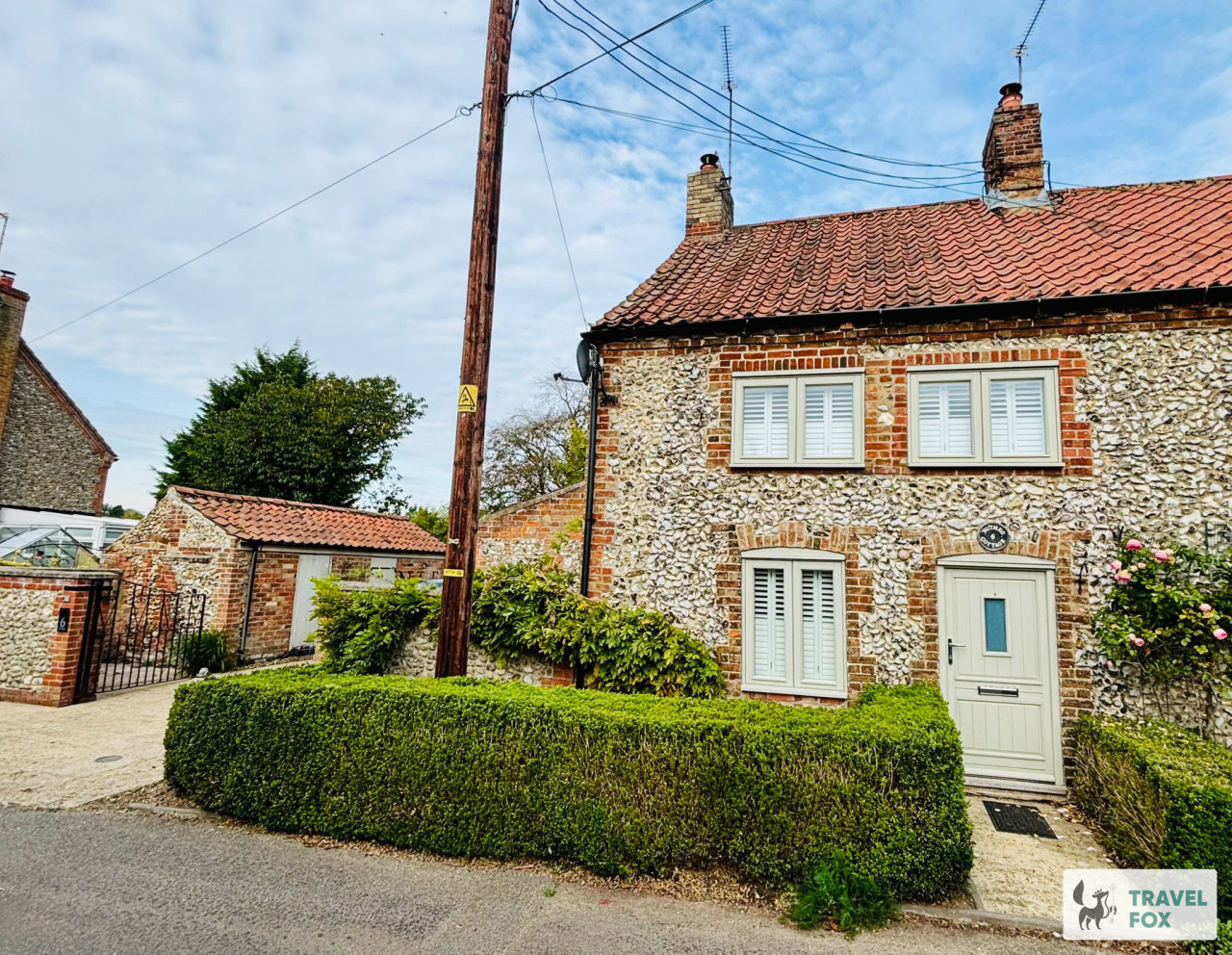
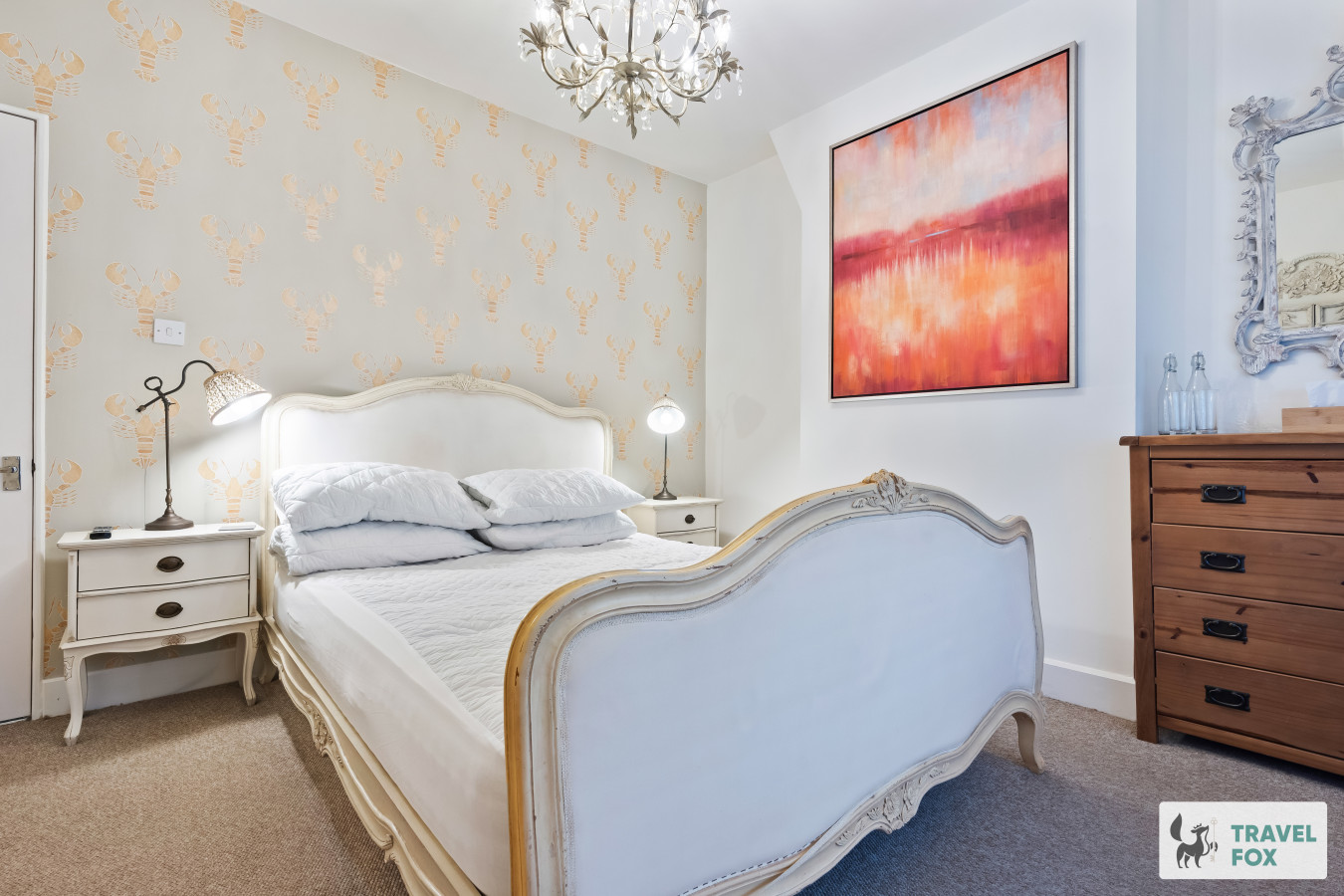
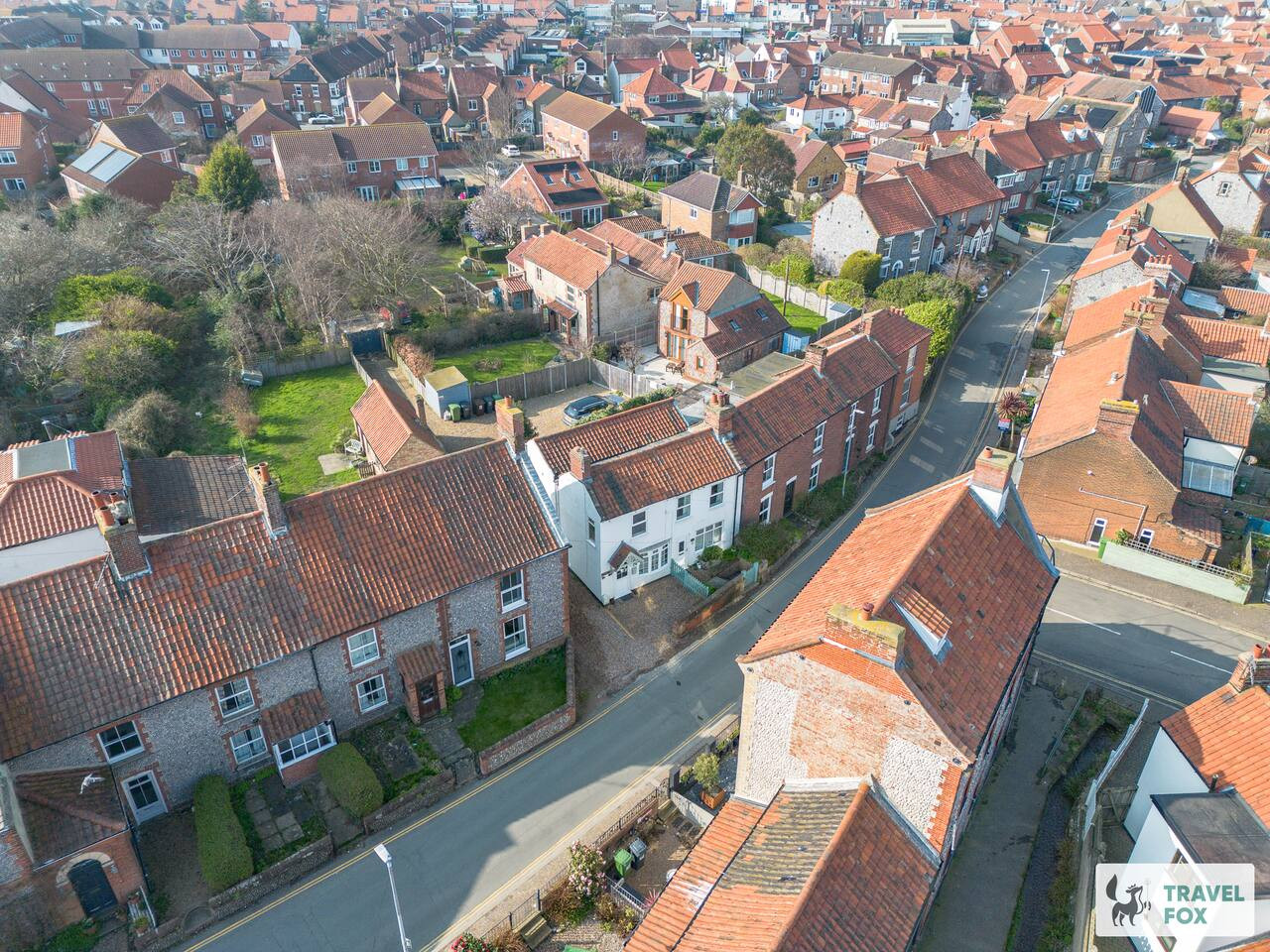
Travel Fox holiday homes around Norfolk, linked directly to their property pages.
A guide with a point of view
Written from research. Edited for real journeys.
Use the Official site links for live practical details, then use this guide for context, ideas and room to explore.
Sources
Every place on this page is checked against a published source. Each entry links the record we used and names who publishes it.
- Wells Beach — gov.uk statutory register or public authority
- Norfolk Coast Path — norfolk.gov.uk statutory register or public authority record not machine-readable; publisher restricts automated access
- French's Fish Shop — frenchs.co.uk operator, sector body or destination organisation
- Wells Maltings — wellsmaltings.org.uk operator, sector body or destination organisation
- Wells & Walsingham Light Railway — wwlr.co.uk other published source record not machine-readable; publisher restricts automated access
- Church of St Nicholas — historicengland.org.uk statutory register or public authority record not machine-readable; publisher restricts automated access
- Eliza Adams Lifeboat Memorial — historicengland.org.uk statutory register or public authority record not machine-readable; publisher restricts automated access