
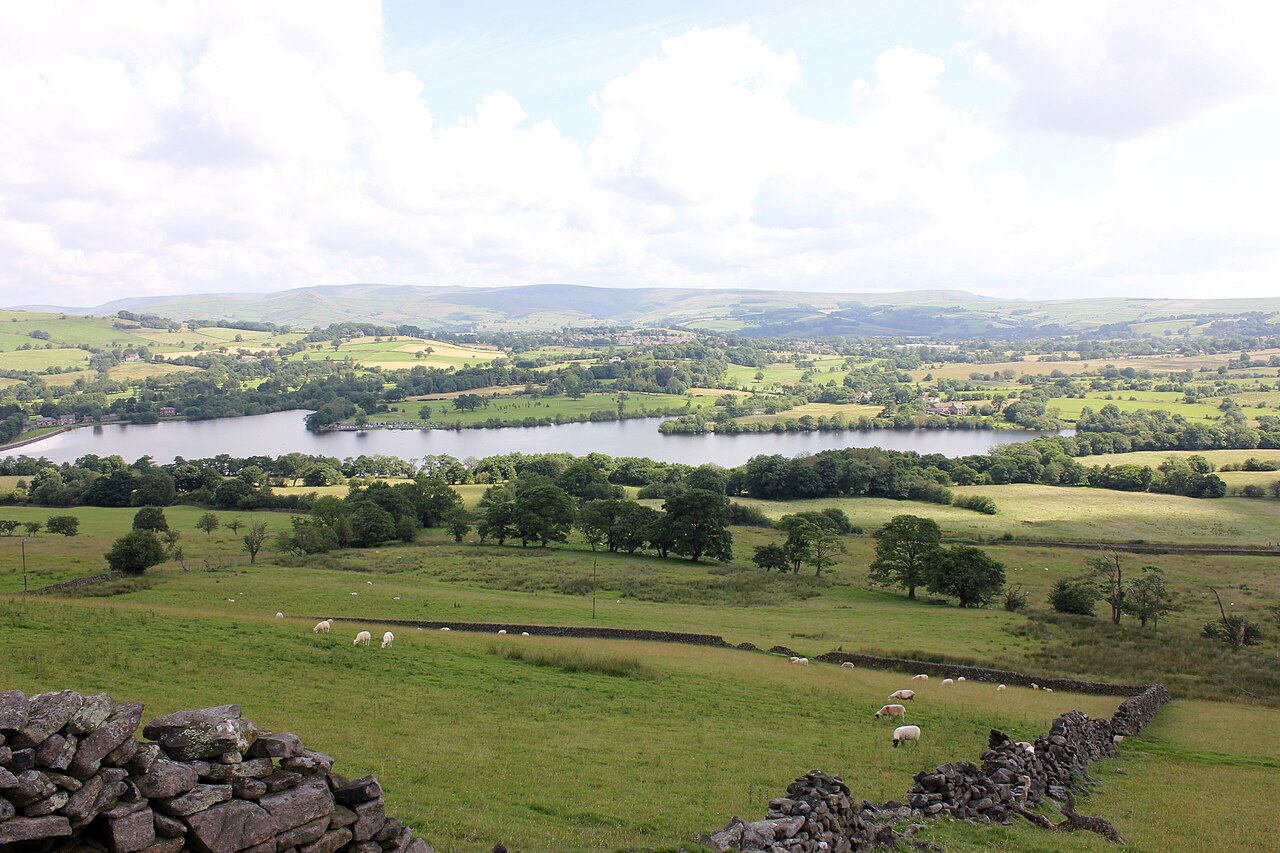
A quiet valley beneath the gritstone
Combs
Follow the reservoir shore, climb towards Castle Naze and come back to a village pub with deep local roots.
- Best for
- Waterside walks and gritstone edges
- Give it
- Half a day
- Don't miss
- The view from Castle Naze
Photo: Peter Turner · CC BY-SA 2.0 · cropped
The Fox verdict
Come for a valley that feels complete in itself
Combs brings water, moorland and village hospitality together in a compact corner of the High Peak.
The reservoir gives the valley a shoreline circuit, while Castle Naze and Combs Moss open up higher ground. The Beehive Inn makes a natural place to finish.
Where to go
Places in Combs
Every place below is checked against a published source, listed with what it is and how long to give it.
Local signatures
3 places
Start here
Combs Reservoir Circular
A shoreline circuit around the 1797 canal-feeder reservoir, combining water, a green valley and views towards the surrounding gritstone edges.
- Visit length
- Editorial estimate: Allow around 1 hour 30 minutes
- Locality
- Combs Reservoir, beside the village
Combs Sailing Club
A reservoir sailing club with watersports activity on the water; the research also identifies lessons in canoeing, kayaking and stand-up paddle-boarding for all abilities.
- Visit length
- Editorial estimate: Allow around 2 hours
- Locality
- Combs Reservoir
- Access
- Check the club's official site before travelling for participation details.
Combs Moss and Black Edge
A moorland gritstone-edge walk onto the highest ground enclosing the valley, with Black Edge reaching 507 metres.
- Visit length
- Editorial estimate: Allow around 2 hours 30 minutes
- Locality
- The moorland above Combs valley
Food & drink
1 place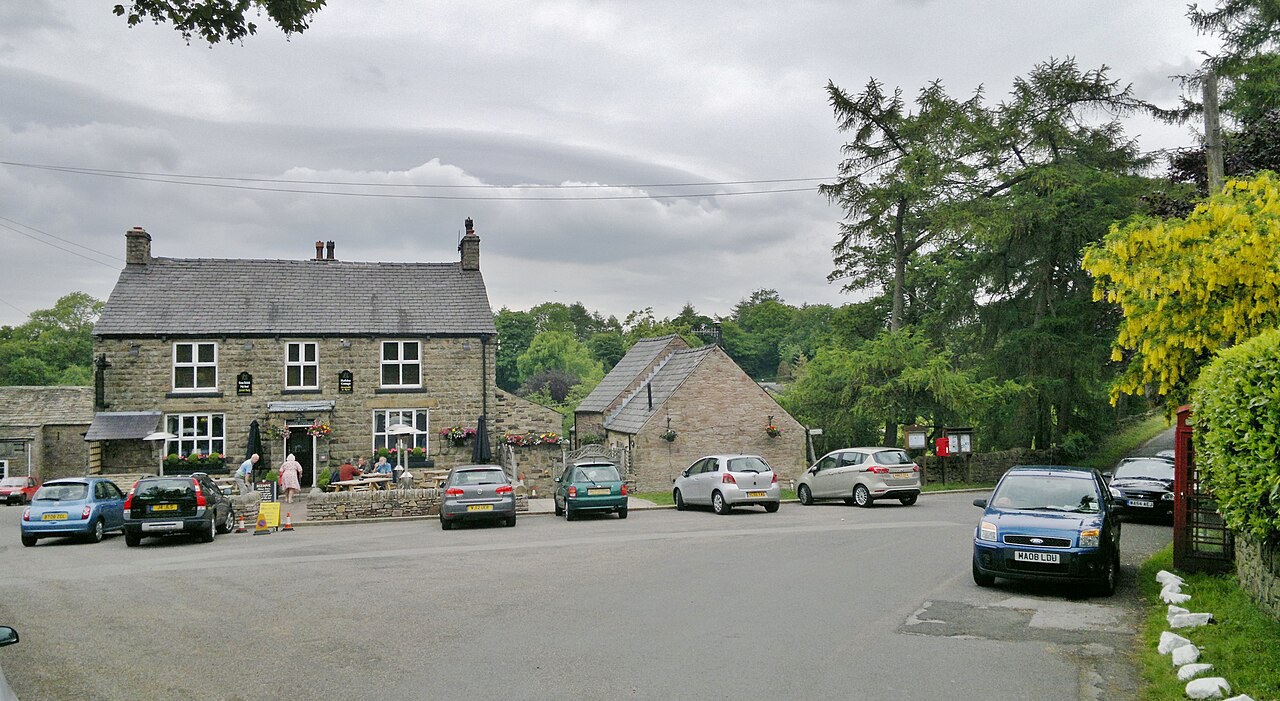
The Beehive Inn
A traditional family-run pub serving fresh home-cooked food and cask ales, with an attached farm shop for local produce and essentials.
- Visit length
- Editorial estimate: Allow around 1 hour
- Locality
- Combs village
History & heritage
1 place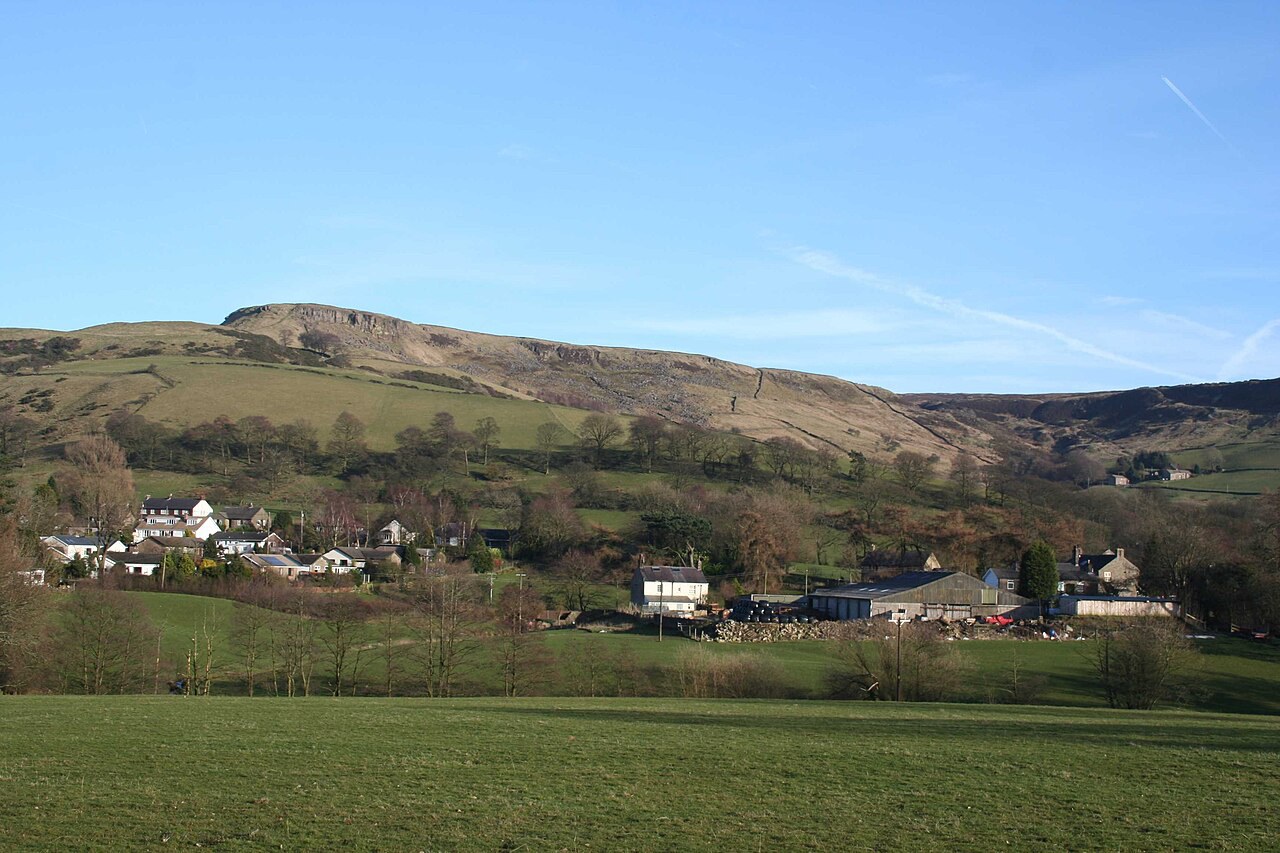
Castle Naze
An Iron Age promontory hillfort on Combs Moss, naturally defended on two sides and marked by a double rampart on the third, with views over the valley and reservoir.
- Visit length
- Editorial estimate: Allow around 1 hour 30 minutes
- Locality
- Combs Edge above the valley
No places match this filter. Choose All places to reset the list.
Three ways to explore Combs
Signature outings
Circle the reservoir
Follow the shoreline footpath around the canal-feeder reservoir and back towards the village.
Find Castle Naze
Climb to the Iron Age promontory hillfort for its double rampart and views over the reservoir.
Settle in at the Beehive
Finish with home-cooked food, cask ale or local produce at the family-run pub and farm shop.
The village story
Inside Combs' comfortable valley
Seven original paragraphs move from the Beehive and enclosed valley to the reservoir, hillfort, industrial memory and local pronunciation.
The Beehive and a Valley Apart
The Beehive Inn was built in 1864 to house the gangs laying the Buxton railway spur, and it is still the centre of the village — a family-run pub that also runs a farm shop out of the same building, open daily, selling local produce and the sort of everyday essentials you forget to bring. The landlord is Stefan Herling; his wife raises livestock. The kitchen does Sunday roasts all day, noon to nine, and a menu that recent reviewers have picked out for the sea bass, the seafood platter and the steak pie. If you want to eat cheaply there's the Menu Rapide set lunch: one course £8.95, two for £10.95, three for £12.95. There are plenty of vegan options and a house ale called Beehive Bitter. Dogs get a designated area, and in summer the beer garden fills with flowers; in winter there are log fires. The Fifty Four and Counting travel blog called it "a hidden country pub and amazing food, close to Buxton."
You reach the village down a mile-long lane off the main road, which is part of why it feels the way it does. Combs sits in a secluded green valley closed in on three sides by gritstone edges and moorland — Castle Naze, Combs Moss, Ladder Hill, with Black Edge the high point at 507 metres. The writer and farmer Crichton Porteous, who set books here, called it "self-contained in its comfortable valley," which is about right.
Reservoir Water and Castle Naze
To the north is Combs Reservoir, separated from the village by the railway embankment that carries the Buxton-to-Stockport line. The reservoir was built in 1797, the first one dug to feed the Peak Forest Canal, and there is a shoreline footpath that loops the water and links back to the village. The Sailing Club has been out on it since 1950; you can also take lessons in canoeing, kayaking and paddle-boarding.
For higher walking, climb to Castle Naze, an Iron Age promontory hillfort at the north end of Combs Moss, defended by cliffs on two sides and a double rampart on the third. It is a Scheduled Monument, and the edge paths give you the whole valley and reservoir laid out below.
Industry, Invention and the Road Out
The village grew as a cotton-spinning centre in the Industrial Revolution; the mills are gone now, converted to houses or pulled down. Two things came out of Combs worth mentioning. Herbert Frood, a resident, invented the vehicle brake lining and founded Ferodo here in 1897. And in 1840 William Nightingale bought the Pyegreave property nearby — his daughter Florence and he were remembered riding through the village on horseback.
Buxton, with its spa-town Crescent and Pavilion Gardens, is twenty minutes by the A6; Chapel-en-le-Frith, the "Capital of the Peak," is minutes away. Buses serve the wider area, but this is a place where you'll want a car.
The Name Combs Answers To
The local pronunciation rhymes Combs with "looms," though some older residents hold out for "foams." Noel and Rita Pollard have lived at Pyegreave for forty-four years.
Stay around Peak District
Make a longer stay of it
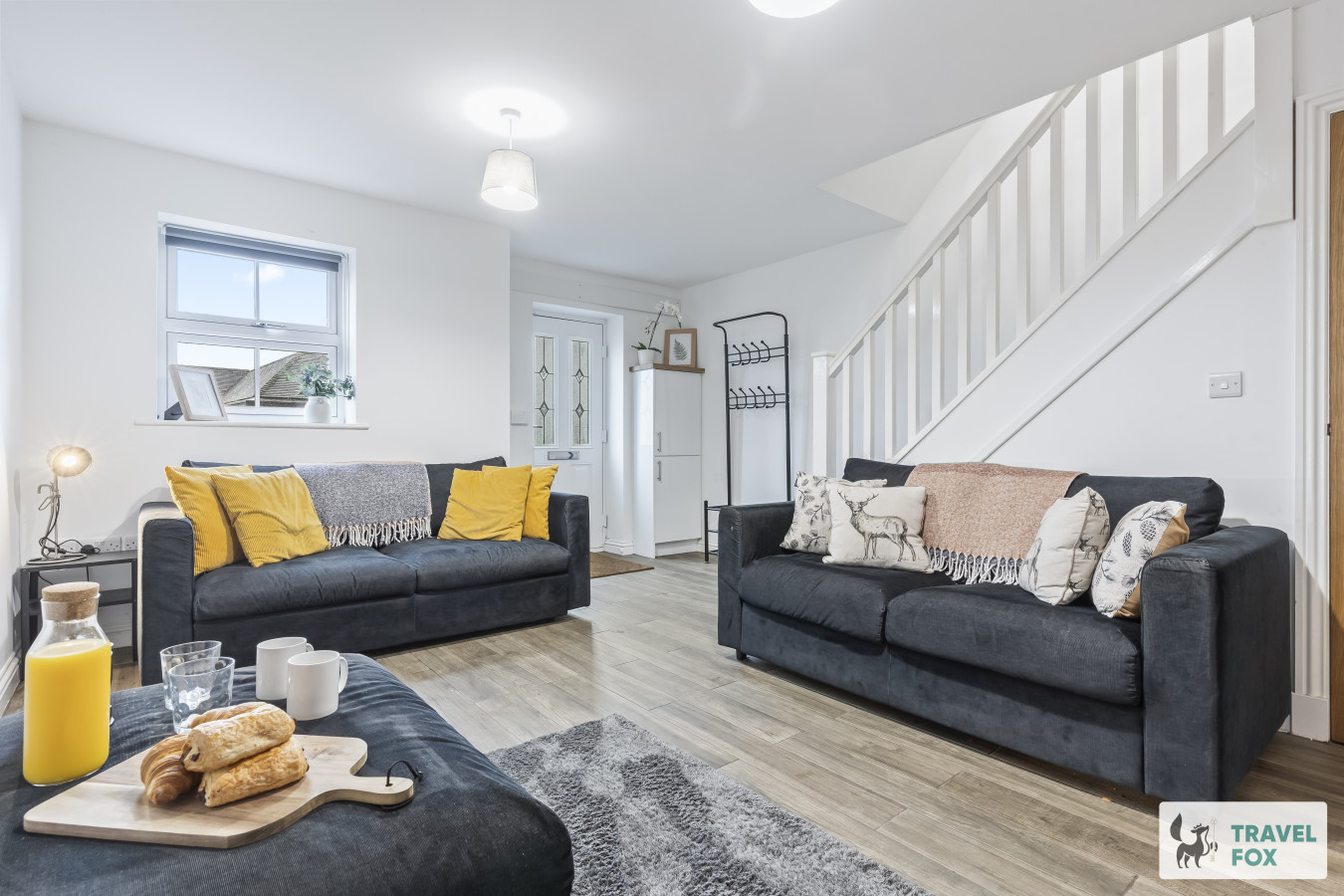
Travel Fox holiday homes around Peak District, linked directly to their property pages.
Leek
Lisa's House Leek: 20mins Alton Towers
- Sleeps 6
- 2 bedrooms
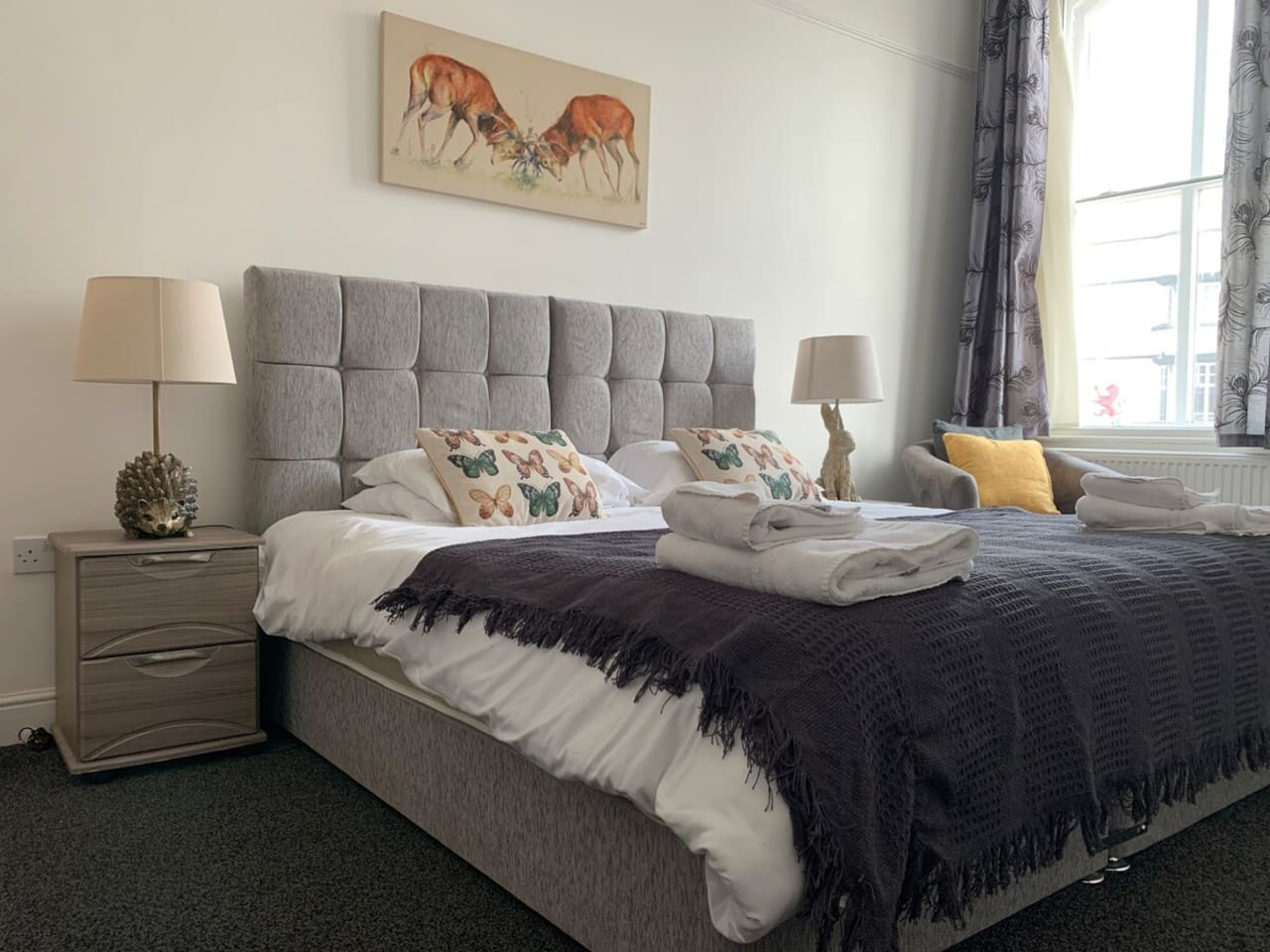
Leek
The Rudyard Suite - Large 1 Bed Apartment
- Sleeps 5
- 1 bedroom
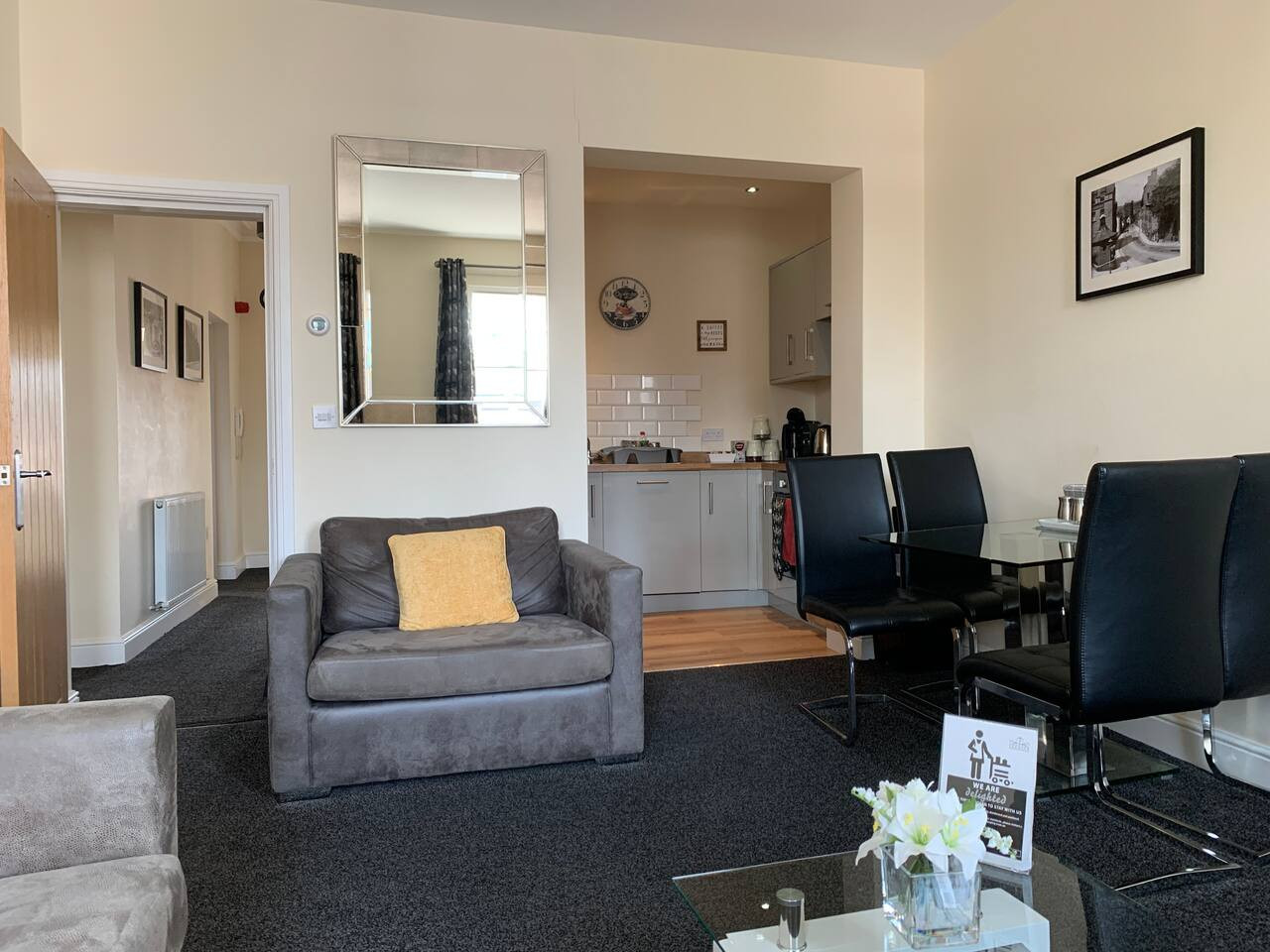
Leek
The Roaches Suite - Large 2 Bedroom Apartment
- Sleeps 7
- 2 bedrooms
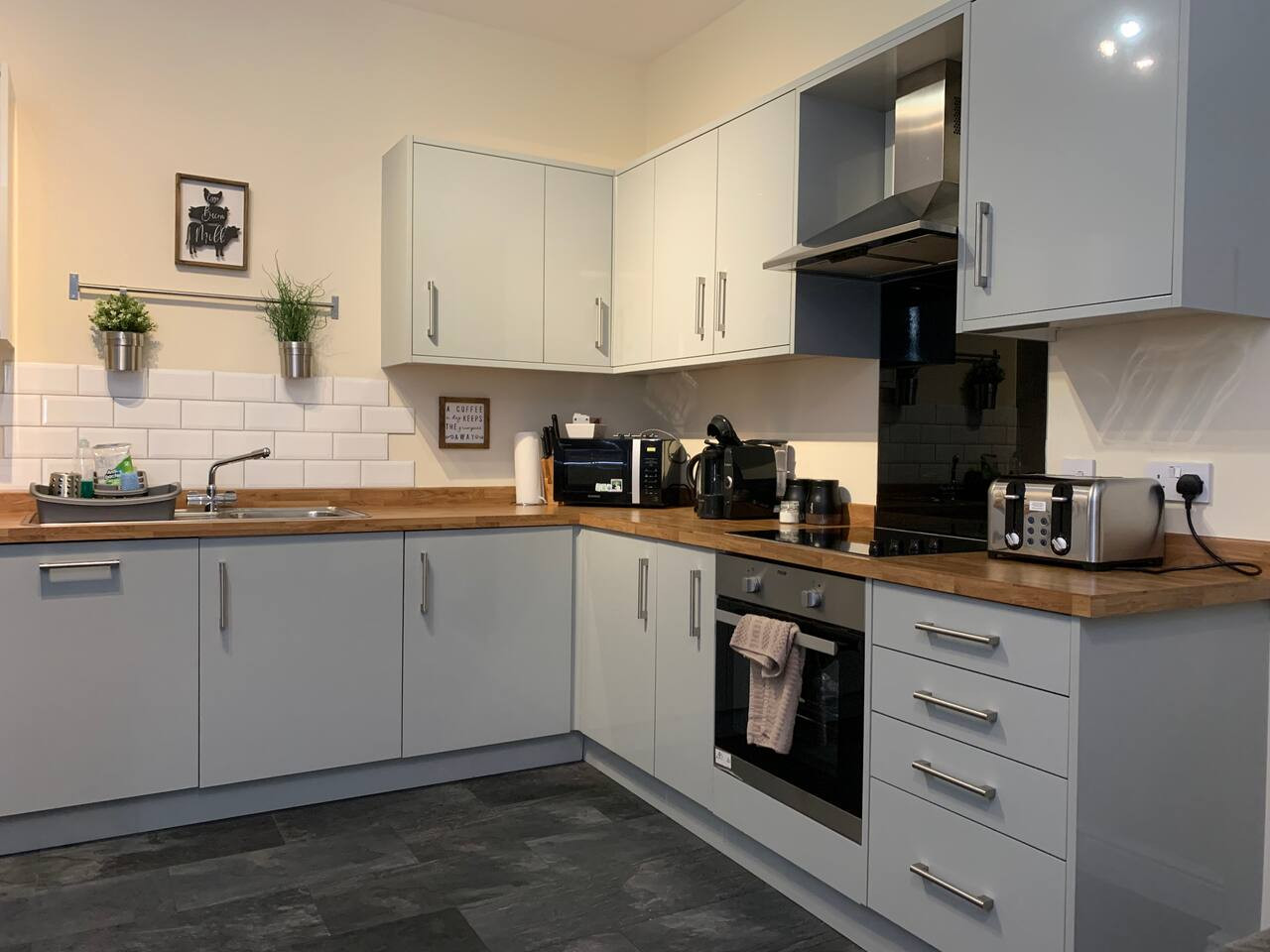
Leek
The Moorlands Suite - 1 Bed Apartment
- Sleeps 4
- 1 bedroom
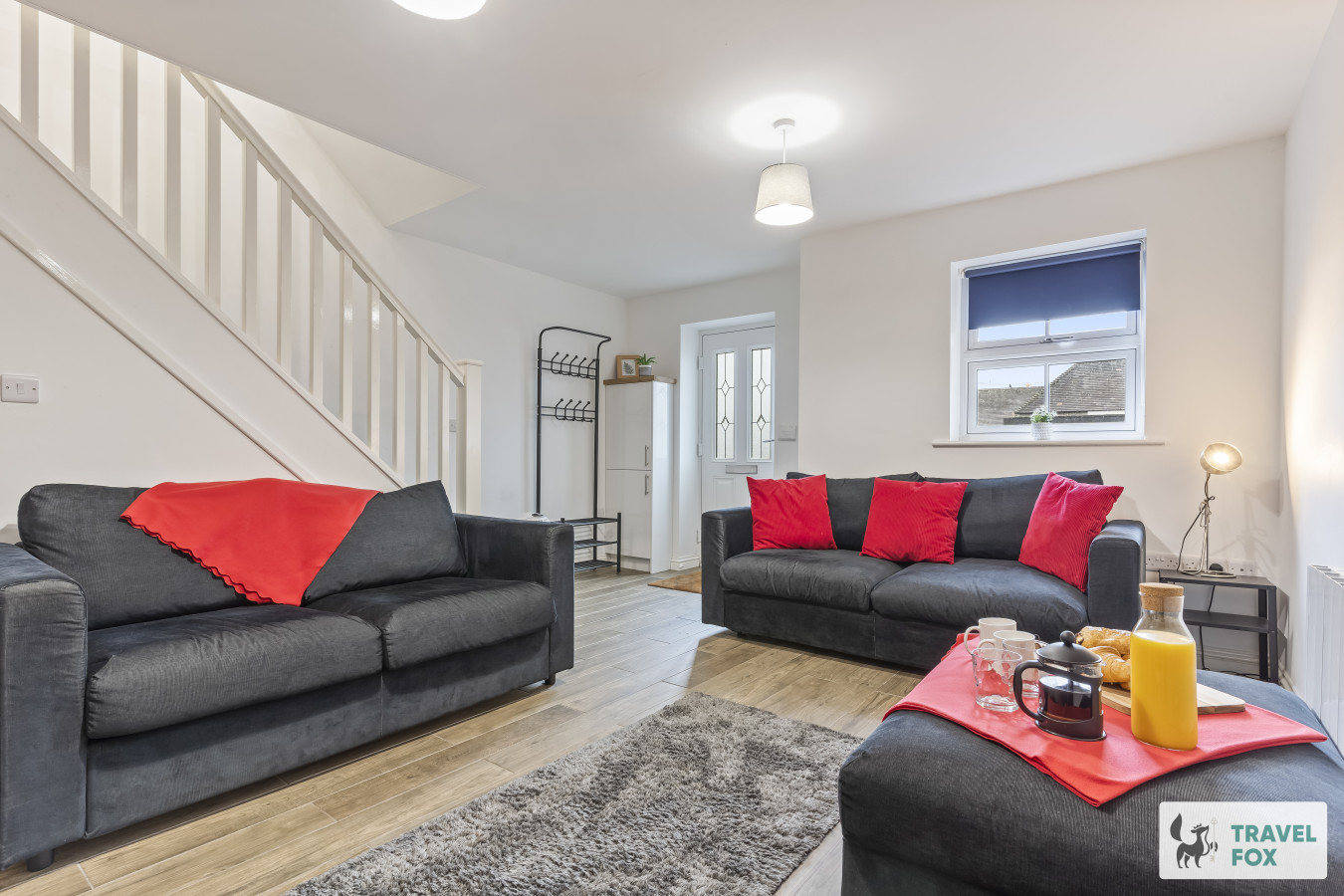
Leek
Amy's House: 20mins Alton Towers
- Sleeps 6
- 2 bedrooms
For homeowners
Own a holiday home near Combs?
We manage holiday lets across the Peak District from 12% commission, charged after cleaning costs, with no lock-in. A co-founder visits before you decide.
Holiday let management in the Peak District →
A guide with a point of view
Written from research. Edited for real journeys.
Use the Official site links for live practical details, then use this guide for context, ideas and room to explore.
Photography credits & licences
Third-party photographs are credited to their named creators and reused under the linked Creative Commons licence or public-domain dedication. Travel Fox stores an optimised local copy; the file-specific changes and any browser-applied display crop are disclosed below. Reused photographs link both to the Wikimedia Commons source record and to the declared source image; Travel Fox's own photographs carry no such record and are marked as ours. These image licences do not cover Travel Fox text, branding or page design.
- File:View over Combs Reservoir - geograph.org.uk - 3056593.jpg — photograph by Peter Turner; View over Combs Reservoir by Peter Turner. Source record on Wikimedia Commons. Declared source image. Licence: CC BY-SA 2.0. File changes: Downloaded from Wikimedia Commons, resized to a maximum 1920px edge and encoded as an optimised JPEG. Display changes: Displayed with responsive CSS cropping.
- File:Combs, Derbyshire.JPG — photograph by Dave.Dunford; Own work. Source record on Wikimedia Commons. Declared source image. Licence: CC BY-SA 3.0. File changes: Downloaded from Wikimedia Commons, resized to a maximum 1920px edge and encoded as an optimised JPEG. Display changes: Displayed with responsive CSS cropping.
- File:Beehive Inn at Combs - geograph.org.uk - 3522499.jpg — photograph by Chris Morgan; Beehive Inn at Combs by Chris Morgan. Source record on Wikimedia Commons. Declared source image. Licence: CC BY-SA 2.0. File changes: Downloaded from Wikimedia Commons, resized to a maximum 1920px edge and encoded as an optimised JPEG. Display changes: Displayed with responsive CSS cropping.
Sources
Every place on this page is checked against a published source. Each entry links the record we used and names who publishes it.
- The Beehive Inn — thebeehiveinn.co.uk first-party operator
- Combs Reservoir Circular — ratedtrips.com established walking publisher
- Combs Sailing Club — combssailingclub.co.uk first-party operator
- Castle Naze — her.derbyshire.gov.uk statutory local historic environment record
- Combs Moss and Black Edge — walkingclub.org.uk established walking publisher