

River village, mountain stories
Beddgelert
Follow the Glaslyn from ice cream and old stone to a dramatic gorge, a revived railway and the grave that turned a travelling folk-tale into Beddgelert's calling card.
- Best for
- River walks, railway rides and layered Welsh history
- Give it
- A day split between the village and valley
- Don't miss
- The true story behind Gelert's Grave
Photo: Ken Bagnall · CC BY-SA 2.0 · cropped
The Fox verdict
Come for the river setting; stay for the stories beneath it
Beddgelert packs a stone bridge, serious walking, steam-railway history and several centuries of fact and folklore into one valley base.
The strongest visit pairs one substantial landscape outing with the compact village sights: St Mary's priory fabric, the Gelert grave hoax and something made on site at Glaslyn Ices.
Where to go
Places in Beddgelert
Every place below is checked against a published source, listed with what it is and how long to give it.
Local signatures
3 placesGlaslyn Ices
This family-run parlour makes award-winning ice cream on site in around twenty flavours, including dairy-free and vegan sorbets, and also serves artisan sourdough pizzas to eat in or take away.
- Visit length
- Editorial estimate: allow around 30 minutes
- Locality
- On the far bank by the old two-arch stone bridge
- Access
- Dogs are allowed.
Aberglaslyn Pass and Fisherman's Path
The Fisherman's Path follows the Afon Glaslyn through the rocky Aberglaslyn gorge as part of a challenging circular walk that also takes in Beddgelert, Llyn Dinas and former copper mine workings.
- Visit length
- Editorial estimate: allow around 2 hours 30 minutes
- Locality
- Aberglaslyn gorge south of Beddgelert
- Access
- The riverside path is steep and narrow in places. Take particular care at the stone buttress and when crossing the Welsh Highland Railway.
Dinas Emrys
This wooded hill-fort is the legendary site of Vortigern's collapsing castle and the buried red and white dragons freed by Myrddin Emrys, or Merlin.
- Visit length
- Editorial estimate: allow around 2 hours
- Locality
- Craflwyn car park, northeast of Beddgelert
- Access
- The National Trust trail starts at Craflwyn car park and climbs to the wooded hill-fort summit.
Food & drink
1 placePrince Llewelyn Hotel
This village-centre pub and hotel serves meals including stone-baked pizzas and breakfast, with vegan and vegetarian choices. It welcomes dogs and provides dog treats and a dog menu.
- Visit length
- Editorial estimate: allow around 1 hour 15 minutes
- Locality
- In the centre of the village
- Access
- Dogs are very welcome.
Walks & outdoors
1 placeGlaslyn Ospreys
Ospreys have bred in the Glaslyn Valley since 2004, the first pair officially recorded breeding in Wales. Local wildlife enthusiasts have run the project since 2013, and the John Parry Hide provides telescopes and live nest-camera screens.
- Visit length
- Editorial estimate: allow around 1 hour
- Locality
- Glaslyn Ospreys visitor site near Pont Croesor and Prenteg
- Access
- The Visitor Centre is currently closed. It is due to reopen when the ospreys return in 2027.
History & heritage
3 places
St Mary's Church
The parish church began as a medieval Augustinian priory. Its surviving fabric is largely from around 1220–30, with probably twelfth-century masonry at the north-west corner.
- Visit length
- Editorial estimate: allow around 30 minutes
- Locality
- In the village
Gelert's Grave
Two slate memorials and a nearby standing stone mark the famous hound's supposed grave. The village is named for Saint Gelert; innkeeper David Prichard attached the dog story to it, and the grave stone was raised between 1800 and 1811.
- Visit length
- Editorial estimate: allow around 45 minutes
- Locality
- South of Beddgelert village centre
Sygun Copper Mine
The underground route passes Victorian-miner dioramas, stalactites, stalagmites and copper-ore veins with traces of silver and gold; mining ceased in 1903 and the site became an attraction in 1986.
- Visit length
- Editorial estimate: allow about 40 minutes for the underground tour, plus time for your party and any surface activities
- Locality
- At Sygun, northeast of Beddgelert
- Access
- The tour is self-guided and underground.
Things to do
1 placeBeddgelert Station and Welsh Highland Railway
Steam trains call on the rebuilt narrow-gauge line through Beddgelert and Aberglaslyn Pass. The original service ended in 1937, and the village station returned to service in 2009.
- Visit length
- Editorial estimate: allow around 2 hours
- Locality
- Beddgelert station
- Access
- The nearest mainline station is Porthmadog, about 8 miles south.
No places match this filter. Choose All places to reset the list.
Three ways to explore Beddgelert
Signature outings
Walk into Aberglaslyn
The riverside footing narrows above the Glaslyn: take particular care at the stone buttress, then watch for the railway crossing on the approach to Beddgelert.
Take the steam train
Beddgelert's rebuilt station puts the village back on the 25-mile Welsh Highland Railway between Caernarfon and Porthmadog.
Find the medieval priory
St Mary's preserves largely thirteenth-century fabric from an Augustinian foundation endowed by Welsh nobles including the Llywelyns.
The village story
Beddgelert: river, rails and a very successful legend
Follow Beddgelert's riverside paths into a rocky gorge, then return for medieval St Mary's, the Welsh Highland Railway and the story behind Gelert's Grave.
River, Ice Cream and Stone
The river runs shallow through the middle of Beddgelert, clear enough to see the stones on the bottom. An old two-arch stone bridge carries you across the point where the Afon Colwyn joins the Afon Glaslyn. On the far bank is an ice-cream parlour, which is where most people end up.
Glaslyn Ices makes its ice cream on site — around twenty flavours, plus dairy-free sorbets — and has done for three generations. The family also makes sourdough pizzas to eat in or take away. Dogs are allowed. The parlour keeps winning awards for its ice cream.
The village itself is a cluster of grey stone buildings in a valley, with Moel Hebog rising 782 metres to the west and the Snowdon horseshoe to the north. It wins flower competitions — Britain in Bloom and Wales in Bloom, repeatedly — and is widely known as "Snowdonia's prettiest village." The floral displays are a local project pursued with some seriousness.
For a proper meal, Bistro Hebog is among the village's best places to eat: a riverside garden for lunch, a contemporary menu in the evening. Beyond that, three pubs spread the village's drinking scene across three doors.
Pubs and Provisions
The village-centre pub and hotel stands by the bridge, with a bar, rooms and food. It serves stone-baked pizzas and breakfast, with vegan and vegetarian choices. Dogs are welcome, and the hotel provides dog treats and a dog menu.
The Saracen's Head is on the riverside with traditional pub classics, more contemporary dishes and generous small plates; muddy boots, dogs and children are welcome, and it serves up to four real ales.
The Tanronnen Inn overlooks the village's stone bridge and has nine en-suite rooms. It serves drinks but does not serve food on site; guests can bring takeaway from the village-centre pub across the bridge.
Provisions come from Emrys House, the village shop, which stocks groceries and the things you forget to pack. Walkers heading for the mountains can equip themselves first at the Crib Goch outdoor shop. The outdoor brand Gelert actually started nearby, moved to Beddgelert, and later decamped to Porthmadog, which is roughly the trajectory of a good many things around here.
Gorge, Mine and Priory
South of Beddgelert, the Fisherman's Path follows the Afon Glaslyn through the rocky Aberglaslyn gorge. The circular route joins the riverside path from Nantmor, passes a stone buttress above the water, then crosses the railway on its way toward the village. The path is steep and narrow in places, so this stretch deserves care underfoot.
From the Aberglaslyn Pass you can make a circuit taking in Llyn Dinas and the disused Cwm Bychan copper mine, whose old cableway pylons still stand on the hillside. Llyn Dinas has a lakeside path, recently improved, and is associated with the red-dragon legend. Just up the Nant Gwynant valley is Dinas Emrys, a wooded hill-fort reached by a trail — the legendary site where Vortigern's castle kept collapsing until Myrddin Emrys, Merlin, revealed two dragons buried beneath it. The red one is the dragon on the Welsh flag. Moel Hebog, the mountain that dominates the village to the west, is reached from a car park in the centre and rewards the climb with sea views back down the valley.
Just outside the village, Sygun Copper Mine offers a self-guided underground tour of approximately forty minutes, passing stalactites, stalagmites and copper-ore veins with traces of silver and gold. Mining there was recorded in the eighteenth century; it ceased in 1903 and the site became a visitor attraction in 1986.
St Mary's Church, in the village, is older than it looks. Most of the surviving stone dates from around 1220, with some twelfth-century masonry in the north-west corner, but it began as an Augustinian priory — one of the oldest religious foundations in Wales, endowed by Welsh nobles including the Llywelyns. There was an early Christian community here as far back as the sixth century, mentioned by Gerald of Wales. The priory and most of its records burned in 1283, and the house was dissolved in 1535, after which it settled into being a parish church. A goldsmith named John Williams, who worked for King James I, donated a silver cup to it in 1610.
Railway, Grave and Hoax
The railway is a story of loss and reversal. An order created the Welsh Highland Railway in 1922, and the completed line opened throughout in 1923. All traffic was suspended in 1937. Much of its equipment was requisitioned in 1941, although the Croesor section remained in place until 1948. Rebuilding brought public services back to Beddgelert in 2009, and the full route to Porthmadog reopened in 2011. Today the narrow-gauge railway runs 25 miles between Caernarfon and Porthmadog via the village and Aberglaslyn Pass. The A4085 approaches Beddgelert from Caernarfon; the A498 heads toward Tremadog and Porthmadog in one direction and Nant Gwynant in the other.
Which brings us, finally, to the dog. Beddgelert means "the grave of Gelert," and there is indeed a grave, with two slate memorials — one English, one Welsh — and a nearby standing stone. The English slate tells the story: Prince Llywelyn went hunting without his faithful hound Gelert, returned to find the baby's cradle overturned and the dog's mouth bloody, ran it through with his sword, and only then found the child alive and a dead wolf beside it. "The Prince is said never to have smiled again."
None of it is true. The village is named after Saint Gelert, a Celtic holy man of the sixth to eighth century who settled here. The legend of the wrongly slain hound is a folk-tale found across Europe and Asia. David Pritchard, an innkeeper from south Wales who came to Beddgelert around 1793, attached it to the village name. William Robert Spencer's poem spread the story in 1800. When visitors wanted a grave to see, Pritchard and two accomplices — William Prichard, the parish clerk, and Richard Edwards of Pen y Bont Fach — raised a stone south of the village centre sometime between 1800 and 1811. Visitors came, and locals profited. In 1899 D. E. Jenkins described the fabrication in a book about the village's folklore, noting that tourists loved the tale regardless. They still do. The grave is one of the most visited spots in the village.
Meteorite, Ospreys and Rupert
The other things that have happened here are almost as improbable and entirely real. On 21 September 1949, a 794-gram stony meteorite fell through the roof of the Prince Llewelyn Hotel and into a room — one of only two well-documented meteorite falls in Wales. The British Museum acquired one half from Mrs Lorna Tillotson, partly by purchase and partly as a gift; the other half was to go to Durham University. Marged ferch Ifan, born here in 1696, was a harpist, a blacksmith and a champion wrestler, and lived to ninety-seven. The surrounding scenery has stood in for China, for a Lara Croft film, and for Carry On Up the Khyber, whose cast and crew used the Royal Goat Hotel as one of their bases; Kenneth Williams and Charles Hawtrey stayed there.
At Pont Croesor near Porthmadog, ospreys have bred in the Glaslyn Valley since 2004 — the first pair officially recorded breeding in Wales. Local wildlife enthusiasts have run the project since 2013. The viewing site is about 4.3 miles from Beddgelert in a straight line; the road journey is longer. In season, the John Parry Hide has telescopes and live nest-camera screens. The Visitor Centre is currently closed and is due to reopen when the ospreys return in 2027.
And for thirty years, in a cottage at the foot of Mynydd Sygun, Alfred Bestall drew Rupert Bear. He took over the Daily Express strip in 1935 and moved to the village in 1956, and the woods and mountains he could see from his door found their way into the illustrations.
Stay around Snowdonia
Make a longer stay of it
Travel Fox holiday homes around Snowdonia, linked directly to their property pages.
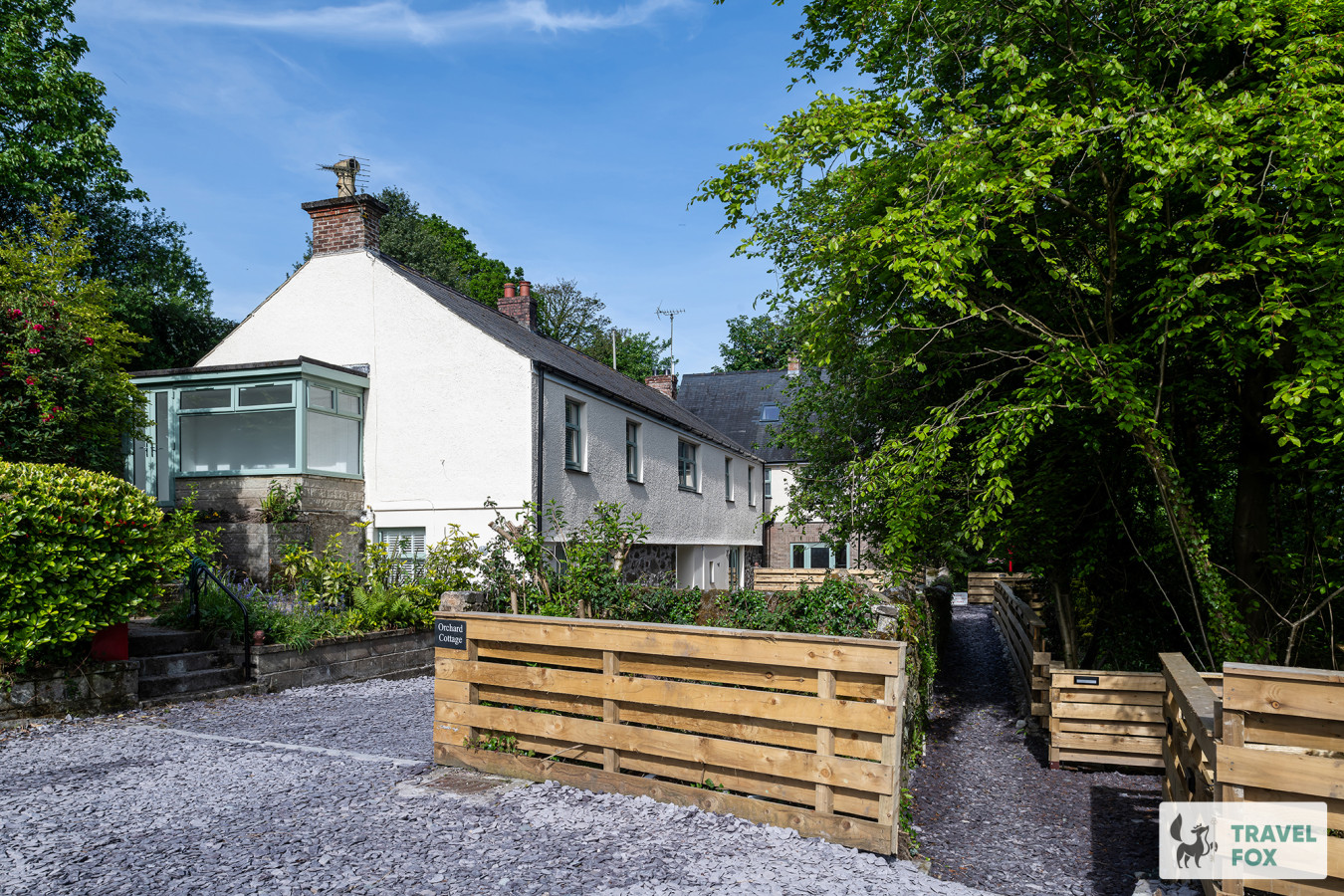
Caernarfon
Orchard Cottage and Hot Tubs
- Sleeps 25
- 8 bedrooms
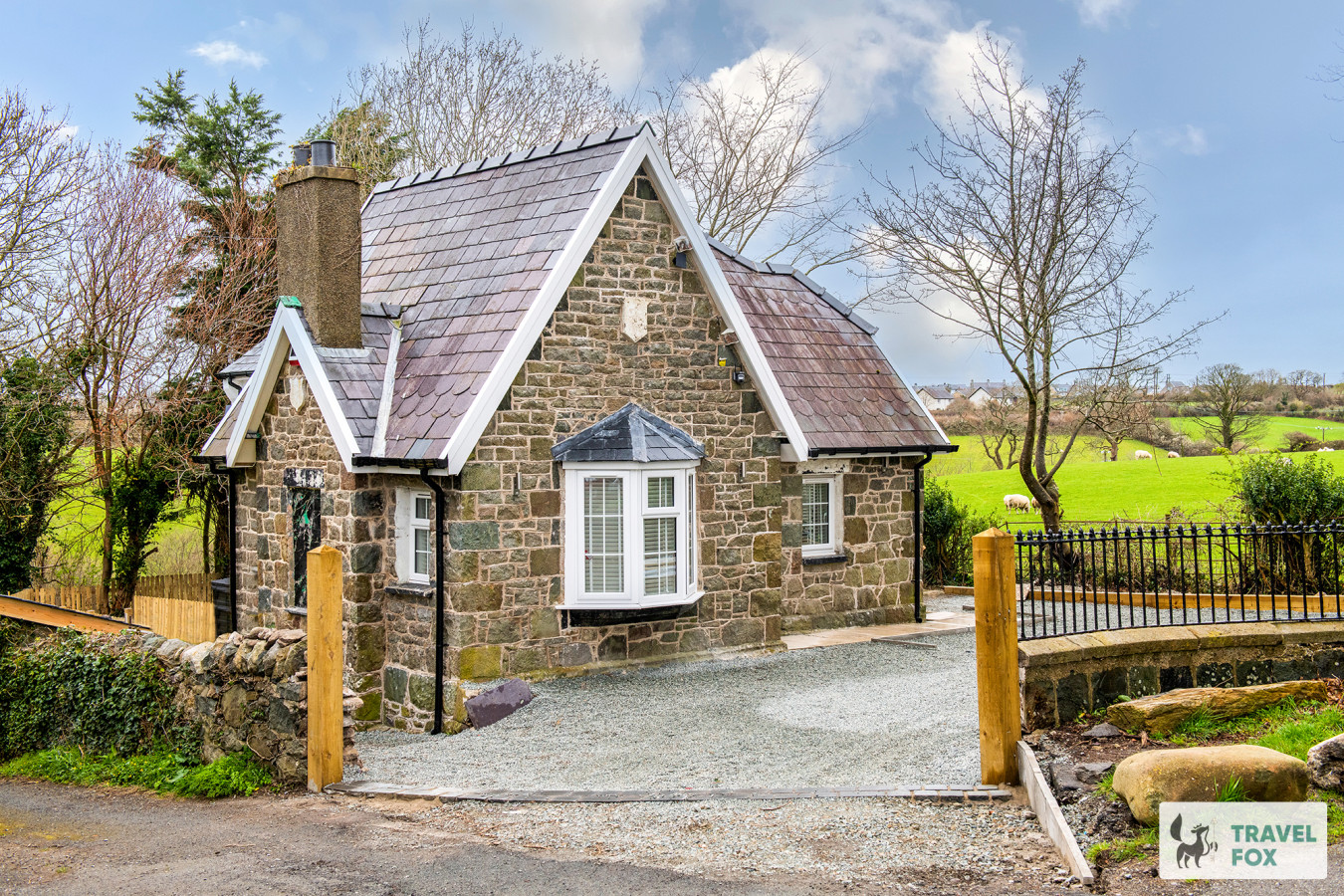
Caernarfon
Katie's Cottage & Hot Tub - Snowdon 20mins drive
- Sleeps 9
- 3 bedrooms
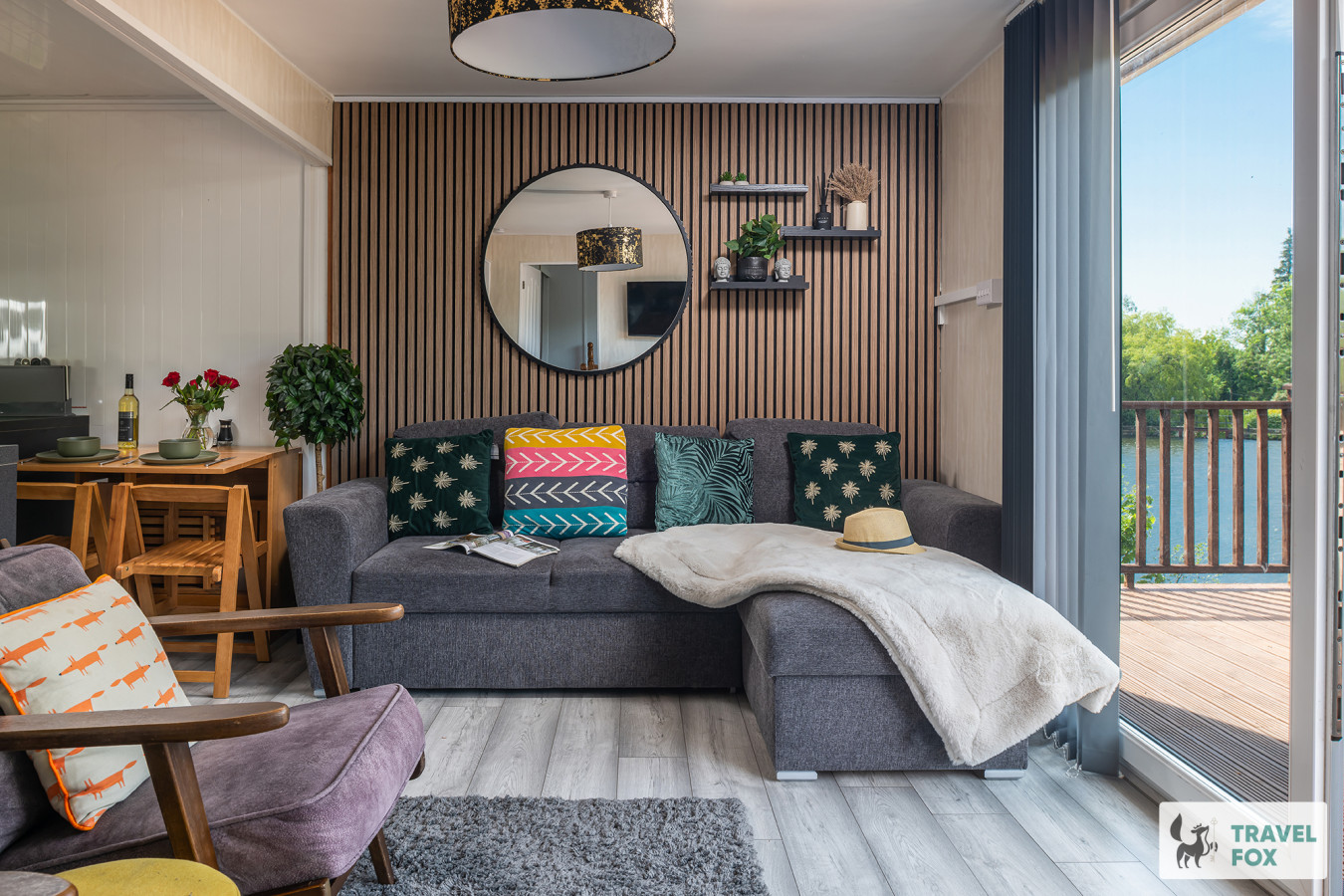
Waunfawr
Lakeside Lodge
- Sleeps 6
- 2 bedrooms
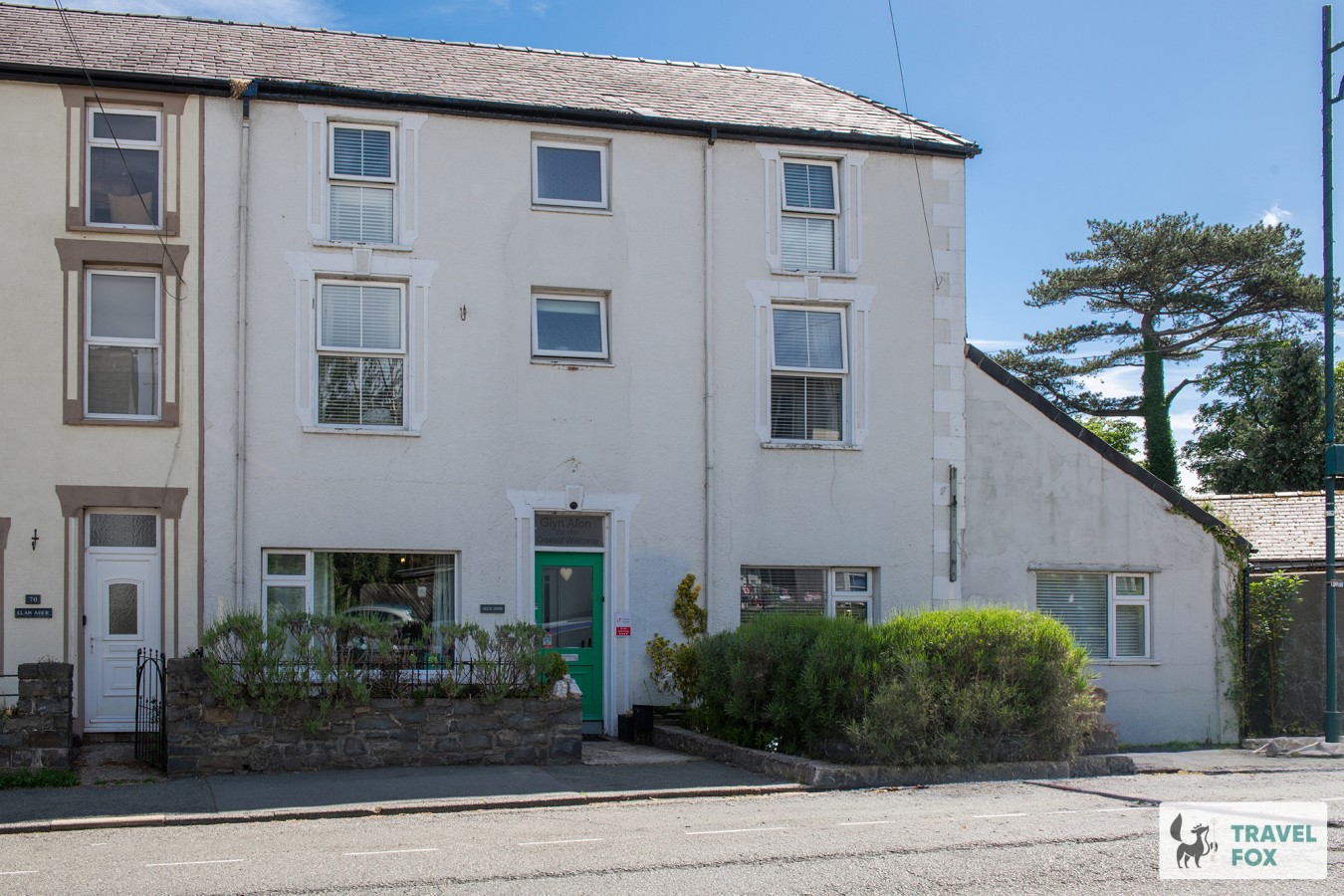
Llanberis
Glyn Afon: At the foot of Mount Snowdon!
- Sleeps 16
- 9 bedrooms
Aberdaron
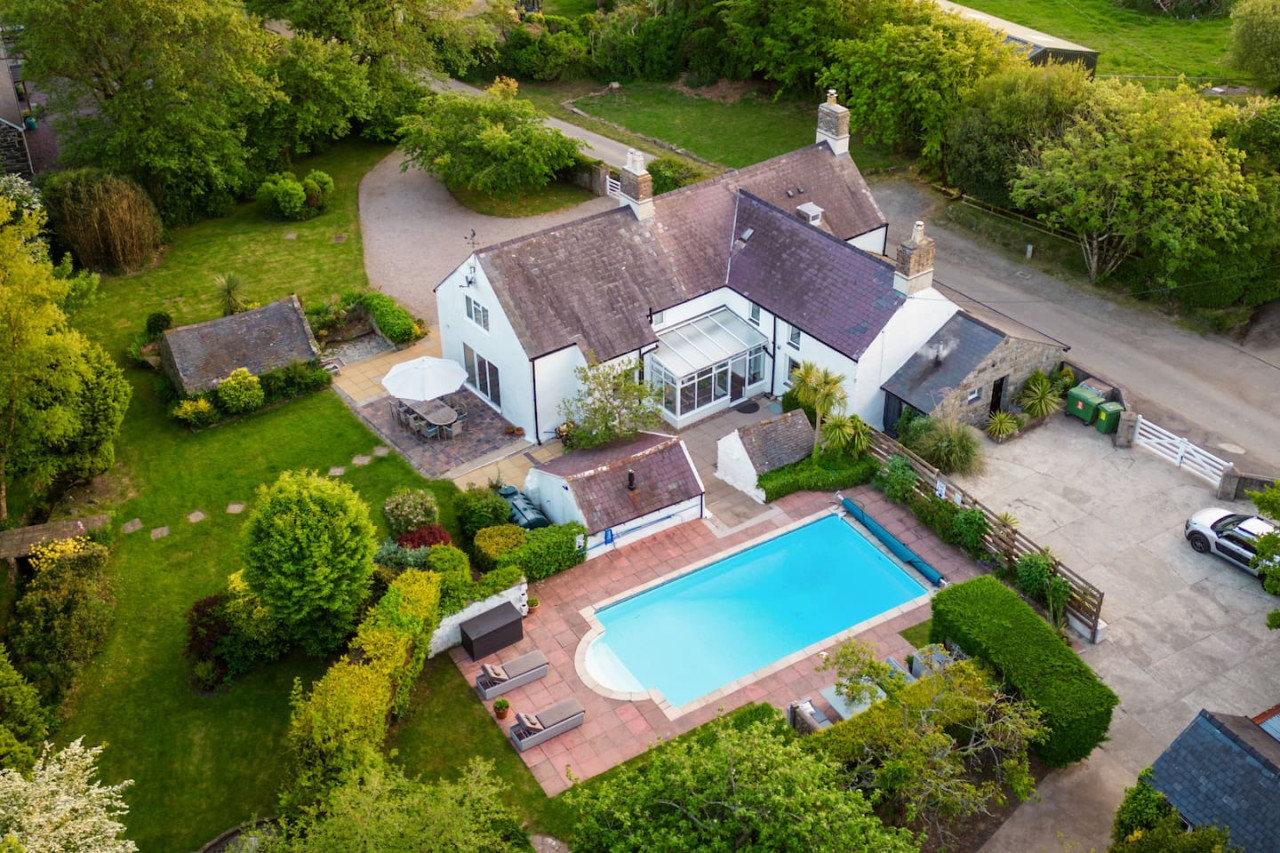
Plas Newydd with Swimming Pool
- Sleeps 16
- 7 bedrooms
For homeowners
Own a holiday home near Beddgelert?
We manage holiday lets across Gwynedd from 12% commission, charged after cleaning costs, with no lock-in. A co-founder visits before you decide.
Holiday let management in Gwynedd →
A guide with a point of view
Written from research. Edited for real journeys.
Use the Official site links for live practical details, then use this guide for context, ideas and room to explore.
Photography credits & licences
Third-party photographs are credited to their named creators and reused under the linked Creative Commons licence or public-domain dedication. Travel Fox stores an optimised local copy; the file-specific changes and any browser-applied display crop are disclosed below. Reused photographs link both to the Wikimedia Commons source record and to the declared source image; Travel Fox's own photographs carry no such record and are marked as ours. These image licences do not cover Travel Fox text, branding or page design.
- File:Beddgelert , St Mary's Church - geograph.org.uk - 1710940.jpg — photograph by Ken Bagnall; Ken Bagnall. Source record on Wikimedia Commons. Declared source image. Licence: CC BY-SA 2.0. File changes: Downloaded from Wikimedia Commons, resized to a maximum 1920px edge and encoded as an optimised JPEG. Display changes: Displayed with responsive CSS cropping.
Sources
Every place on this page is checked against a published source. Each entry links the record we used and names who publishes it.
- Glaslyn Ices — glaslynices.co.uk operator, sector body or destination organisation
- St Mary's Church — churchinwales.org.uk other published source
- Gelert's Grave — cadwpublic-api.azurewebsites.net other published source
- Aberglaslyn Pass and Fisherman's Path — nationaltrust.org.uk national body or asset manager
- Dinas Emrys — nationaltrust.org.uk national body or asset manager
- Sygun Copper Mine — syguncoppermine.co.uk operator, sector body or destination organisation
- Beddgelert Station and Welsh Highland Railway — festrail.co.uk other published source
- Glaslyn Ospreys — visitwales.com operator, sector body or destination organisation
- Prince Llewelyn Hotel — princellewelyn.co.uk operator, sector body or destination organisation