

Sandstone, stories and canal country
Kinver
A wooded ridge and remarkable rock houses rise above a village shaped by old roads, ironworking and the Staffordshire and Worcestershire Canal.
- Best for
- Rock houses, ridge walks and layered local history
- Give it
- Editorial estimate: a half day, or longer with a family attraction
- Don't miss
- The restored homes at Holy Austin Rock
Photo: Colin Park · CC BY-SA 2.0 · cropped
The Fox verdict
A village whose strangest homes feel unexpectedly recent
Kinver pairs a handsome, period-mixed High Street with heathland, canal walking and England's last inhabited troglodyte cave dwellings.
The essential visit climbs Kinver Edge for the restored rock houses, hillfort and long views, then drops to a village where a medieval church, historic pubs and the canal make an easy second chapter. Families can add the miniature railway or the farm shop's maze, while walkers can follow the ridge or towpath.
Where to go
Places in Kinver
Every place below is checked against a published source, listed with what it is and how long to give it.
Local signatures
3 placesKinver Edge and the Rock Houses
Restored sandstone homes at Holy Austin Rock sit below a wooded and heathland ridge crowned by an Iron Age hillfort.
- Visit length
- Editorial estimate: around 2 hours
- Locality
- on Kinver Edge above the village
The Manor House of Whittington
A former manor house with oak beams and stone archways, later converted to an inn and now serving lunchtime classics and grill dishes.
- Visit length
- Editorial estimate: around 90 minutes
- Locality
- Whittington, southeast of Kinver
Kinver Miniature Railway
Steam and diesel train rides operate on a half-mile miniature railway track.
- Visit length
- Editorial estimate: around 75 minutes
- Locality
- Legion Drive, off Kinver High Street
- Access
- The railway is a few minutes' drive from Kinver.
Food & drink
3 placesThe Vine Inn
An 1863 canalside pub with a multi-level restaurant, six handpumps and a large garden overlooking the water.
- Visit length
- Editorial estimate: around 75 minutes
- Locality
- beside the Staffordshire and Worcestershire Canal
The White Harte
A Grade II-listed traditional pub known to exist in 1605, with pub classics, a pool table, dartboard and dogs welcome throughout.
- Visit length
- Editorial estimate: around 75 minutes
- Locality
- 111 High Street
The Cross Inn
A traditional Black Country Ales community pub with changing beers, real cider, a log burner and a large outdoor area.
- Visit length
- Editorial estimate: around 60 minutes
- Locality
- 1 Church Hill
History & heritage
1 place
St Peter's Church
A mainly early 14th-century church incorporating Norman fragments, with a late 14th-century tracery font and stained-glass lantern.
- Visit length
- Editorial estimate: around 40 minutes
- Locality
- Kinver
Things to do
1 placeKinver Edge Farm Shop and Maize Maze
A farm shop and cafe selling home-grown produce, jams and honey, with a ten-acre maize maze and pumpkin patch on site.
- Visit length
- Editorial estimate: around 90 minutes
- Locality
- Sandy Lane
No places match this filter. Choose All places to reset the list.
Three ways to explore Kinver
Signature outings
Domestic life in the rock
Look beyond the novelty of cave dwellings to the ranges, mantelpieces and carved windows of homes occupied until 1963.
Norman fragments, medieval form
Trace the older fabric inside St Peter's, then find the elaborate late 14th-century font beneath its stained-glass lantern.
A pint by the canal
Take a table at The Vine, where the garden overlooks the canal and local Kinver and Enville ales appear among the handpumps.
The village story
Kinver Village Guide
Pubs, parish history, ironworking and family life carved directly into a Staffordshire ridge.
Inns, borders and the old High Street
The White Harte on Kinver's High Street has been pouring pints since at least 1605, which is the earliest date anyone can pin on it with confidence, though locals will tell you it's older again and call it the oldest inn in the village centre. It sits at 111 High Street, Grade II listed, a seventeenth-century remodelling of something that may go back further still, with nineteenth-century alterations layered on top. There's a pool table, a dartboard, and dogs welcome throughout the whole building, not just the bar. The menu runs to light bites, pub classics and puddings, alongside draught lagers, craft beers, ciders, wine and cocktails, and reviewers describe the staff as attentive and the food reasonably priced. The car park gets a rougher press — enough reviewers mention a dispute over it that it counts as a running local grievance.
Kinver sits in the far southwest corner of Staffordshire, on the meandering River Stour, close enough to Shropshire, Worcestershire and the West Midlands that the village borders all three. A sandstone ridge, Kinver Edge, rises wooded and heathy above the rooftops, and the Staffordshire and Worcestershire Canal runs through the area below it. The High Street is a genuine mixture of periods rather than a themed one — timber-framed medieval and Tudor houses standing next to Georgian and Victorian fronts, some of the timber later hidden behind brick. The main beams in the building at 19–20 High Street were felled in 1562 or 1563. There's a late-sixteenth-century house at number 112. Fifty-four buildings in the village are listed, mostly houses, cottages and farm buildings.
In Whittington, about 1.3 miles from Kinver as the crow flies, the Manor House of Whittington occupies a genuinely old building — a sixteenth-century, Grade II*-listed former manor house with oak beams and stone archways throughout, built in 1310 by Sir William de Whittington for his family, who share a name with Dick Whittington but not, as far as anyone has established, any actual relation; the real Dick Whittington was from Gloucestershire. It became an inn in the eighteenth century and now does lunchtime classics, grill dishes and meat-free options, including a Hunter's Chicken and a Royal Chicken Tikka Masala, usually alongside one cask ale, typically Wainwright. Dogs are welcome in the bar and beer garden, and treats are kept behind the bar for anyone calling in on a walk. There's live music and a quiz night.
The pub is also said to be haunted, which for a building this age is close to compulsory. Lady Jane Grey is reported to have stayed there as a girl, before her nine-day reign and execution in 1554, and is said to sweep down the staircase into the bar before vanishing. Other reported ghosts include a monk hiding in a priest hole, a headless lady in the upper rooms, and — despite the absent family connection — Dick Whittington himself. Charles II is also said to have stayed at the inn after fleeing the Battle of Worcester in 1651, having crossed Whittington Heath to get there.
Beer, food and deep parish roots
There are three more pubs worth knowing about. The Vine Inn sits on the canal, with homemade pizzas and tapas, a carvery, and fresh fish, and a large beer garden looking out over the water; it dates from 1863 and is now a multi-level restaurant and pub. Six handpumps usually include two Kinver Brewery beers, Edge and Noble, two from Enville Brewery, and two guest ales, and dogs get a doggy box for a small charge. The Cross Inn, on Church Hill, is a traditional community pub with changing beers, real cider and weekend food — hot pork sandwiches, pork cobs and pies — plus a log burner and a large outdoor area with benches; it has a 4.6 rating on Google. And the Plough & Harrow on the High Street, known locally as "Steps," is a Bathams tied house with two Bathams ales always on, walls covered in old advertising hoardings and breweriana, and a front bar popular with cyclists and walkers.
For food beyond the pubs, Kinver Edge Farm Shop and Café on Sandy Lane grows its own leeks, onions, lettuce and potatoes, sells its own jams and honeys, and runs a ten-acre maize maze and pumpkin patch.
St Peter's Church is mainly early fourteenth century, built around Norman fragments from an earlier church, with substantial extensions added in the mid-fifteenth century. It was restored in 1884–85 by George Gilbert Scott and his son John Oldrid Scott, who finished the job after his father's death, and the north aisle was rebuilt again in 1976 to a design by a local architect, John Greaves Smith. Inside there's a late-fourteenth-century font with elaborate tracery and a stained-glass lantern suspended above it. Local tradition holds that a Mercian king, Wulfhere, dedicated an earlier church on the site to his sons after their conversion to Christianity. The church is recorded as already standing at the time of Domesday.
Domesday itself records the village as Chenevare, worth five pounds to the lord in both 1086 and 1066 — the value hadn't moved in twenty years. It had seventeen villagers, seven smallholders, three slaves and a priest, sixteen ploughlands worked by eleven plough teams, and two mills valued together at a pound. Twenty-eight households in total, which put Kinver in the upper half of settlements recorded in the survey.
From Cynibre to the rock houses
The name is older than that. A charter of 736 records it as Cynibre, thought to combine a Celtic word for hound with a word for hill — probably a reference to Kinver Edge itself. The lord of the manor laid out the High Street as burgage plots for a planned new town in the late thirteenth century, and the village did well as a stop on the old Irish Road between Bristol and Chester. Woollen cloth was made here, coarse and fine, using fulling mills on the Stour, until trade moved on in the late 1600s.
What replaced it was iron. Richard Foley leased Hyde Mill in 1627 and turned it into a slitting mill, cutting iron bars into rods for the nail-makers of the Black Country. By the late eighteenth century Kinver had five slitting mills, reportedly more than any other parish in the country. The story attached to Foley — that he disguised himself as a wandering fiddler in Sweden to steal the secret of slitting-mill technology — was originally told about the Brindley family, who owned Hyde Mill before him, and got reattached to Foley somewhere along the way. The canal arrived in 1771, carrying timber, coal and bell-metal wares, and tying the local iron trade into the wider national network. During the Civil War, a cavalry skirmish took place on Kinver Heath between Royalist forces and a Parliamentary commander known, with admirable directness, as Tinker Fox.
But the thing Kinver is actually known for is up on the ridge. In 1617, the parish register recorded the burial of "Margaret of the fox earth" on the 8th of June — the earliest documented reference to anyone living in the dwellings at Kinver Edge, in what became known as Nanny's Cave, or locally as Meg-o'-Fox-Hole. She may have been a hermit, a reputed witch, or both; nothing else about her survives. The next record comes in 1777, when the writer Joseph Heely, caught in a storm, took shelter in the dwellings and found "a clean and decent family" living there, in homes he described as "warm in winter, cool in summer." By 1861 eleven families were recorded living in the caves at Holy Austin Rock. The last residents didn't leave until 1963, making these the last inhabited troglodyte cave dwellings in England — they finally moved out after 1950s council concerns about the lack of plumbing and sewage persuaded them to take council housing instead.
Long before that, the homes had already become a tourist draw. Around the turn of the twentieth century, residents served teas to visitors who came up to look; the café on site continued until 1967. In 1903 the artist Alfred Rushton painted Mr and Mrs Fletcher inside their rock home. The National Trust received 198 acres of the Edge in 1917, a gift in memory of Thomas Grosvenor Lee, a Birmingham solicitor born in Kinver, and now cares for close to 600 acres including the former Kingsford Country Park. Restoration began in 1993 and continued through 1996 and 1997, and the restored homes returned to public view in October that year. You can picture them today — a kettle on the range, curtains at a window cut straight into sandstone — which makes the 1963 departure feel a lot more recent than it sounds.
Ridge walks and family detours
The ridge above the houses carries an Iron Age hillfort, thought to be late Bronze Age in its earliest phase, sitting close to what was once the boundary between two tribal territories — a line roughly followed today by the Staffordshire–Worcestershire county boundary.
For walking, the Staffordshire Way runs north from Kinver Edge to Enville, mostly on field paths with a short stretch of road, and can be muddy underfoot. The canal towpath heads south through Whittington, Cookley and Caunsall to Wolverley — flat walking, about ten miles there and back, with shorter options if ten miles sounds like a lot. The same towpath also reaches Whittington Lock. The National Trust has its own waymarked trail taking in the ridge, the hillfort and the homes, and further out, a 5.7-mile loop near Bobbington threads past Enville Hall and the Sheepwalks, with views back across to Kinver Edge.
Families are well looked after. The Kinver Sports and Community Association has football, cricket and a bowling club, plus a skate park, bike track, outdoor gym and children's play area, with plans in for a new sports centre and three more tennis courts at the local school. The Kinver Miniature Railway runs steam and diesel trains on a half-mile track a short drive away. Further afield, the Severn Valley Railway runs heritage steam services through Worcestershire and Shropshire from Kidderminster, about 4.9 miles from Kinver in a straight line. The Bratch Locks near Wombourne, another canal design from 1772, stand about 6.3 miles from Kinver in a straight line and have two bridges, a toll house and a lock keeper's cottage.
Beer, buses and life in the rock
Kinver Brewery, founded in 2004, won the 2014 Champion Winter Beer of Britain gold medal in the Barley Wine category with Over the Edge. The village has produced a reasonable spread of well-known names for its size: the actress and theatre director Nancy Price, born Lilian Nancy Bache Price; the Wimbledon champion Dorothy Round, who won the singles title in 1934 and 1937; the former Wolves forward Roy Swinbourne; and Robert Plant, who lives nearby. Locally there's talk of the Beast of Kinver, possibly an escaped lynx reported since the 1960s, and a Witch's Tree at the foot of the Edge.
The nearest station is Stourbridge, reached from the village on the 242 bus, which also serves the request stop on the High Street; routes 9A and 580 run as well, the latter to Kidderminster.
The domestic detail of the restored homes stays with you rather than the strangeness of them — a range, a mantelpiece, curtains hung at a window carved into the hillside. Families lived up there within living memory, and people who remember that life are still around to tell the story. The caves at Holy Austin Rock spent longer as somebody's actual home than most houses in most villages ever will.
Stay around Staffordshire
Make a longer stay of it
Travel Fox holiday homes around Staffordshire, linked directly to their property pages.
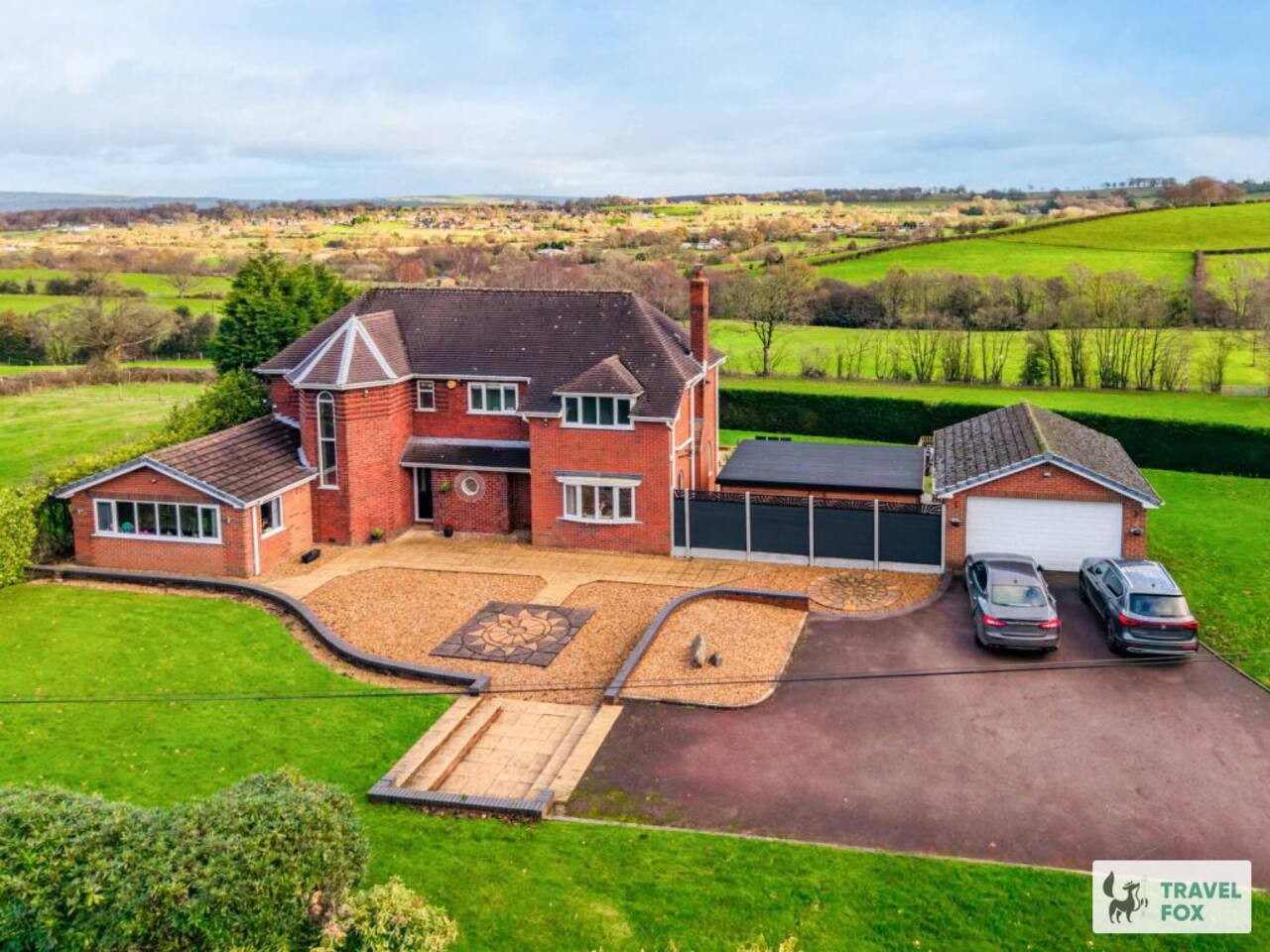
Cheddleton
Greenways House - Parking, Pool Table and Garden!
- Sleeps 10
- 4 bedrooms
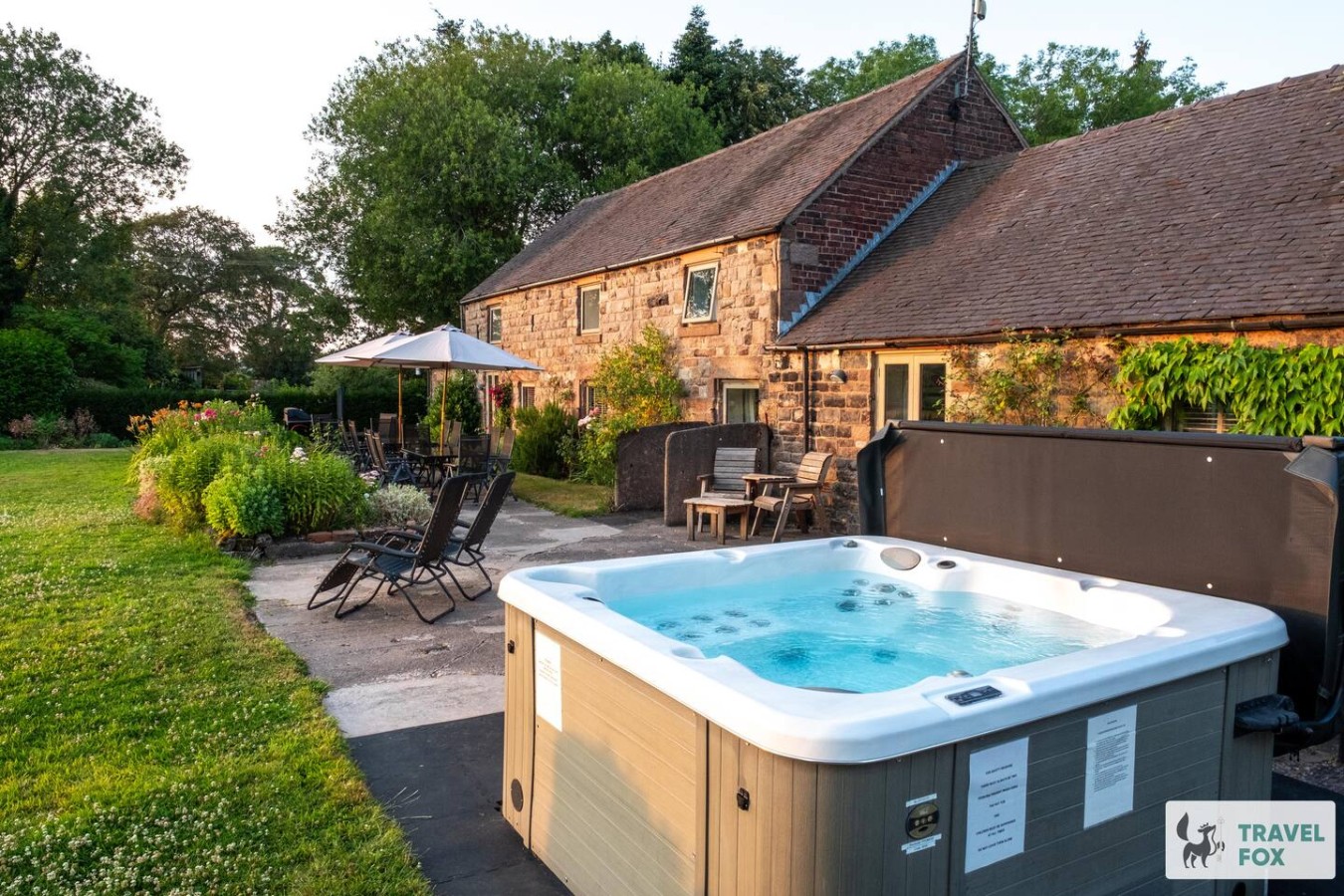
Cheddleton
Lee House Cottage + Annexe
- Sleeps 19
- 8 bedrooms

Leek
Silkwood House | Boutique 4 Bed nr. Peak District
- Sleeps 8
- 4 bedrooms
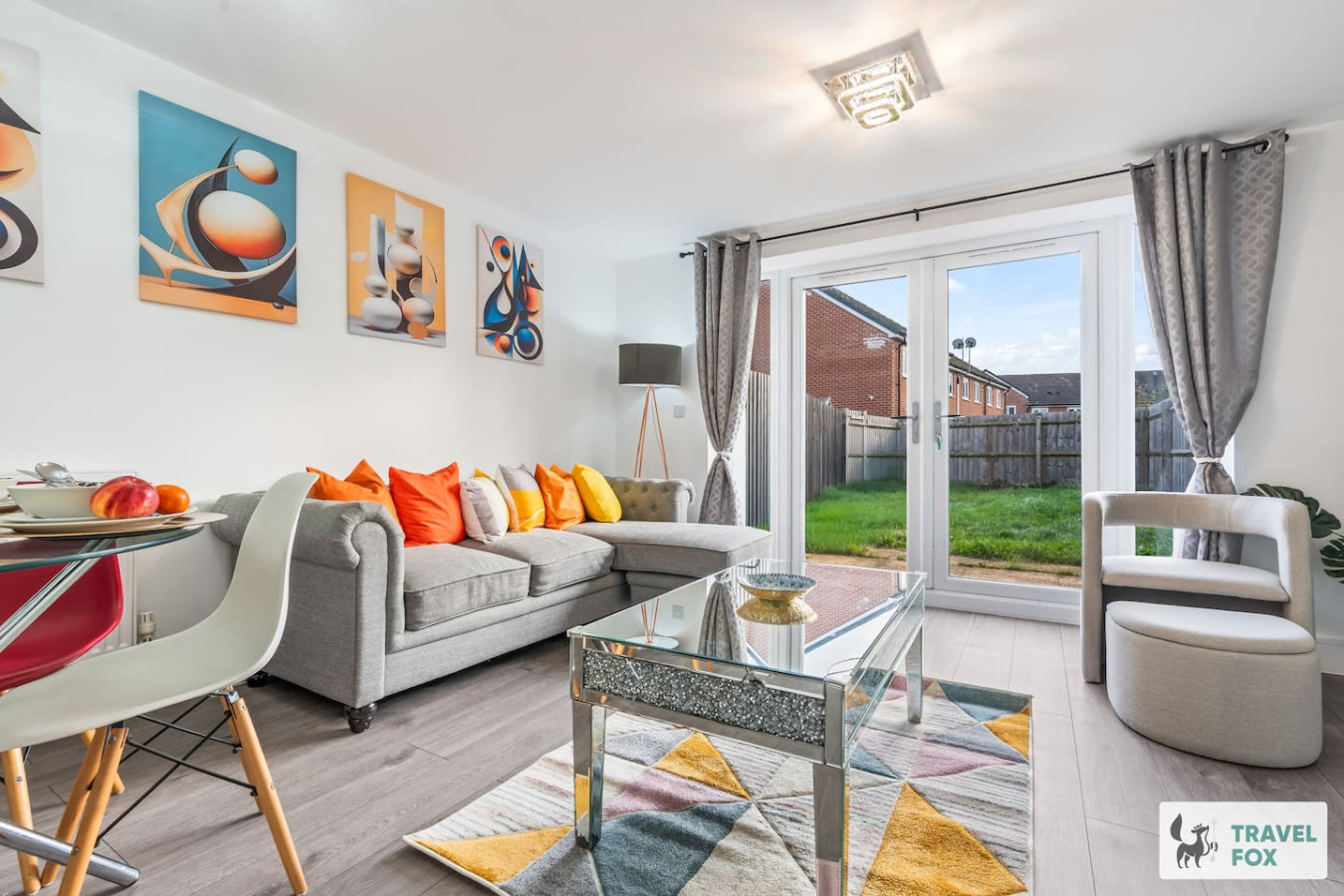
Stoke-on-Trent
Heather's House
- Sleeps 6
- 2 bedrooms
For homeowners
Own a holiday home near Kinver?
We manage holiday lets across Staffordshire from 12% commission, charged after cleaning costs, with no lock-in. A co-founder visits before you decide.
Holiday let management in Staffordshire →
A guide with a point of view
Written from research. Edited for real journeys.
Use the Official site links for live practical details, then use this guide for context, ideas and room to explore.
Photography credits & licences
Third-party photographs are credited to their named creators and reused under the linked Creative Commons licence or public-domain dedication. Travel Fox stores an optimised local copy; the file-specific changes and any browser-applied display crop are disclosed below. Reused photographs link both to the Wikimedia Commons source record and to the declared source image; Travel Fox's own photographs carry no such record and are marked as ours. These image licences do not cover Travel Fox text, branding or page design.
- File:St Peter's Church, Kinver.jpg — photograph by Colin Park; Colin Park. Source record on Wikimedia Commons. Declared source image. Licence: CC BY-SA 2.0. File changes: Downloaded from Wikimedia Commons, resized to a maximum 1920px edge and encoded as an optimised JPEG. Display changes: Displayed with responsive CSS cropping.
Sources
Every place on this page is checked against a published source. Each entry links the record we used and names who publishes it.
- Kinver Edge and the Rock Houses — nationaltrust.org.uk national body or asset manager
- St Peter's Church — stpeterskinver.org operator, sector body or destination organisation
- The Vine Inn — thevine-kinver.co.uk operator, sector body or destination organisation
- The Manor House of Whittington — themanorhouseofwhittington.com operator, sector body or destination organisation
- The White Harte — whitehartepub.co.uk operator, sector body or destination organisation
- The Cross Inn — blackcountryales.co.uk other published source
- Kinver Edge Farm Shop and Maize Maze — kinvermaizemaze.co.uk operator, sector body or destination organisation
- Kinver Miniature Railway — kinver-miniature-railway.co.uk operator, sector body or destination organisation