

Priory echoes and open fields
Lapley
A small medieval village where a remarkable church, winding lanes and an easy path to the canal reveal an unexpectedly weighty past.
- Best for
- Church history and easy countryside walking
- Give it
- A relaxed half-day
- Don't miss
- All Saints and the path from the church to the canal
Photo: Ian S · CC BY-SA 2.0 · cropped
The Fox verdict
A little village with a long memory
Lapley rewards a slow visit built around its Grade I church, medieval street pattern and flat farmland paths.
Start at All Saints for the village's priory story, then follow the Staffordshire Way towards the Shropshire Union Canal. Nearby Wheaton Aston adds towpath time, the canalside Hartley Arms, the Coach and Horses on the village high street, and a recreation ground used by the local cricket club.
Where to go
Places in Lapley
Every place below is checked against a published source, listed with what it is and how long to give it.
Local signatures
3 places
Start here
All Saints Church, Lapley
A Grade I church on the priory site, with Norman fabric, a tower of gargoyles and pinnacles, carved memorials and a disputed Dutch font.
- Visit length
- Editorial estimate: Allow around 45 minutes
- Locality
- Lapley village
- Access
- No visiting hours are provided; contact the church about entry.
Staffordshire Way at Lapley
A route across flat, open farmland, leaving from outside the church and following a farm track towards Lapley Wood Farm and the canal.
- Visit length
- Editorial estimate: Allow around 2 hours for a local out-and-back stretch
- Locality
- from outside All Saints
- Access
- The route crosses open farmland and includes a farm-track section.
Lapley and Wheaton Aston Recreation Ground
The shared recreation ground and home of Wheaton Aston Cricket Club, with a pavilion, changing facilities, scorebox and artificial net.
- Visit length
- Editorial estimate: Allow around 60 minutes
- Locality
- Lapley Road, Wheaton Aston
Food & drink
2 placesThe Coach and Horses
A historic village high-street pub in Wheaton Aston, a short distance from the Shropshire Union Canal.
- Visit length
- Editorial estimate: Allow around 75 minutes
- Locality
- Wheaton Aston
The Hartley Arms
A historic Wheaton Aston pub by the Shropshire Union Canal and its waterside moorings.
- Visit length
- Editorial estimate: Allow around 75 minutes
- Locality
- Wheaton Aston
Walks & outdoors
1 placeShropshire Union Canal at Wheaton Aston
A rural towpath destination on the shorter route between Lapley and Wheaton Aston, with waterside moorings near the village's two historic pubs.
- Visit length
- Editorial estimate: Allow around 75 minutes
- Locality
- Wheaton Aston
No places match this filter. Choose All places to reset the list.
Three ways to explore Lapley
Signature outings
Priory church details
Look for Norman fabric, gargoyles and pinnacles before considering the competing dates attached to the church's carved Dutch font.
Canal-side calm
The council's Wheaton Aston and Lapley walk uses easy farmland tracks and lanes; one lane can flood in winter.
A historic village pub
The Coach and Horses is a historic pub on Wheaton Aston High Street; the Hartley Arms is the canalside pub.
The village story
Lapley Village Guide
A compact Staffordshire village where church stonework, field paths and a remembered priory give the landscape unusual depth.
A Norman Church and Medieval Green
All Saints keeps a font that spent part of its life doing agricultural work. The story locals tell is that it was found discarded on a farm in the nineteenth century and carried back into the church: an octagonal bowl lined with lead, carved with scenes from the life of Christ, which they date to the eleventh century and to Dutch hands. The specialists who catalogue this sort of thing for a living prefer a nineteenth-century date instead. Nobody has settled it. Either way, it sits under a tower with gargoyles and pinnacles, in a Grade I church built on the ruins of a priory whose buildings once adjoined its north wall.
The village wraps around a large green, with lanes that wind rather than run straight, and the whole centre is a conservation area on the strength of being a genuinely well-preserved medieval layout rather than a reconstructed one. The land around it is flat, open South Staffordshire farmland, the kind that makes for easy walking rather than dramatic views.
Parish Life and Local Amenities
Lapley's place in the wider parish connects it with Stretton and Wheaton Aston, while the green and winding lanes keep its own centre compact.
Wheaton Aston, the largest of the three villages, has a village hall, sports clubs and children's activities.
Paths, Canal and Family Sport
The Staffordshire Way runs straight through the village. Pick it up outside the church, cross a field, follow the farm track down to Lapley Wood Farm, and the path drops you at the Shropshire Union Canal, with a further stage on to Seisdon. A shorter route, partly along the towpath, links Lapley to Wheaton Aston about 1.5 miles west in a straight line. There, the Coach and Horses is on the High Street and the Hartley Arms is beside the canal.
For families there's a recreation ground shared with Wheaton Aston, home to the cricket club, which added junior sessions in 2024 for children as young as five.
Getting There and the Priory Story
Penkridge has the nearest railway station, about 3.0 miles east of Lapley in a straight line, so arrange onward transport. The A5 passes south of the village; Stafford lies about 7.1 miles north-north-east in a straight line.
The priory that gave the village its weight in history was founded around 1061 by Ælfgar, Lord of Mercia, in memory of his son Burgheard, who died at Reims on the way home from a pilgrimage to Rome. The gift went to the abbey at Reims, and Lapley served as its English outpost for over three hundred and fifty years, until Henry V suppressed every "alien priory" in the country in 1415, mid-preparation for Agincourt. The fortified priory house, garrisoned by seventy Parliamentary soldiers and taken by Colonel Heveningham in December 1643, was pulled down by Parliamentary order in 1645. In 1086 Domesday valued the whole manor, with its eighteen villagers, nine smallholders and five slaves, at two pounds ten shillings.
Small Village, Lasting Importance
A walker on the Staffordshire Way once described passing through as a place that was "a small village but was once important." It still is small. You can stand on the green and believe both halves of that sentence at once.
Stay around Staffordshire
Make a longer stay of it
Travel Fox holiday homes around Staffordshire, linked directly to their property pages.
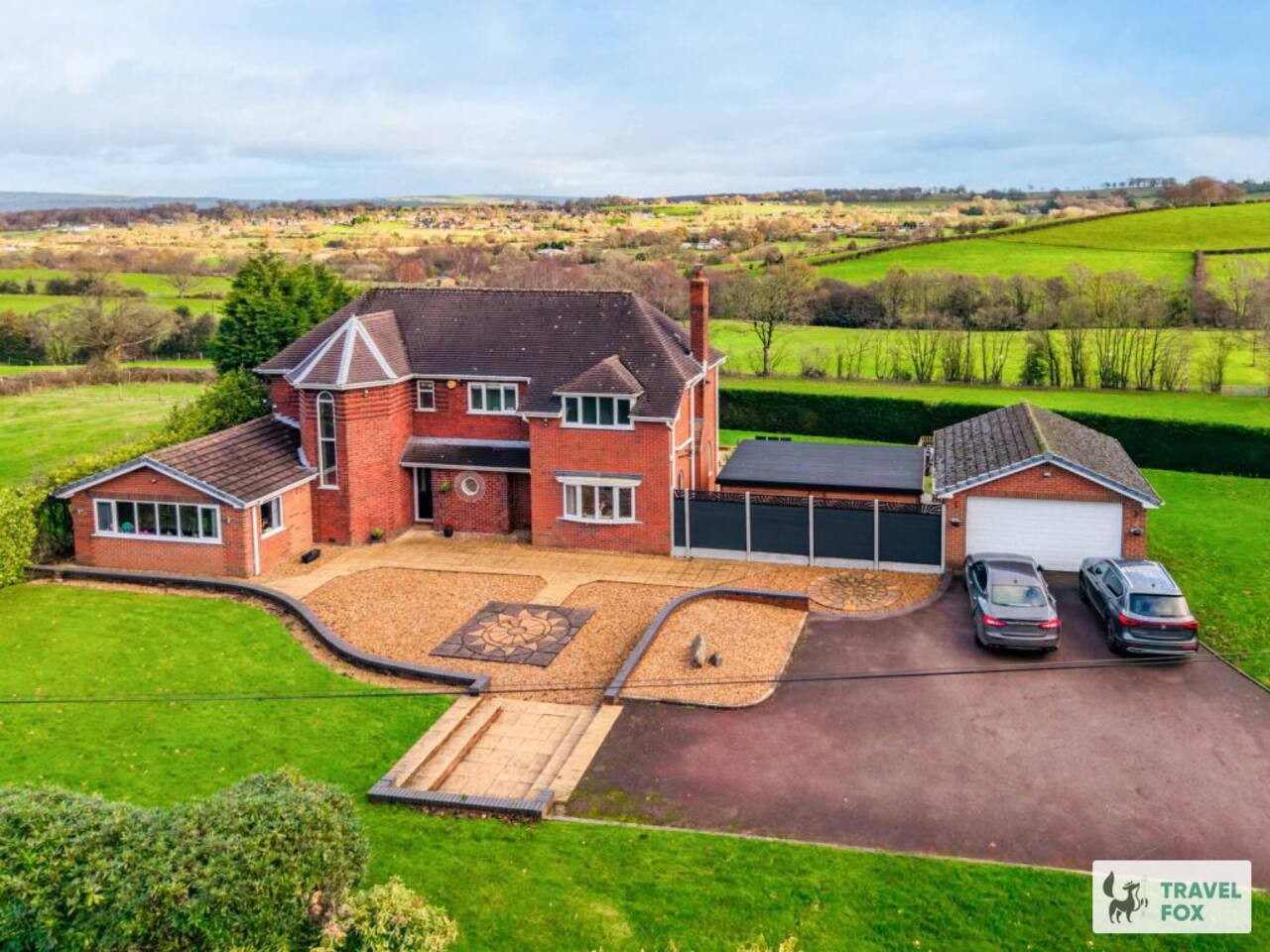
Cheddleton
Greenways House - Parking, Pool Table and Garden!
- Sleeps 10
- 4 bedrooms
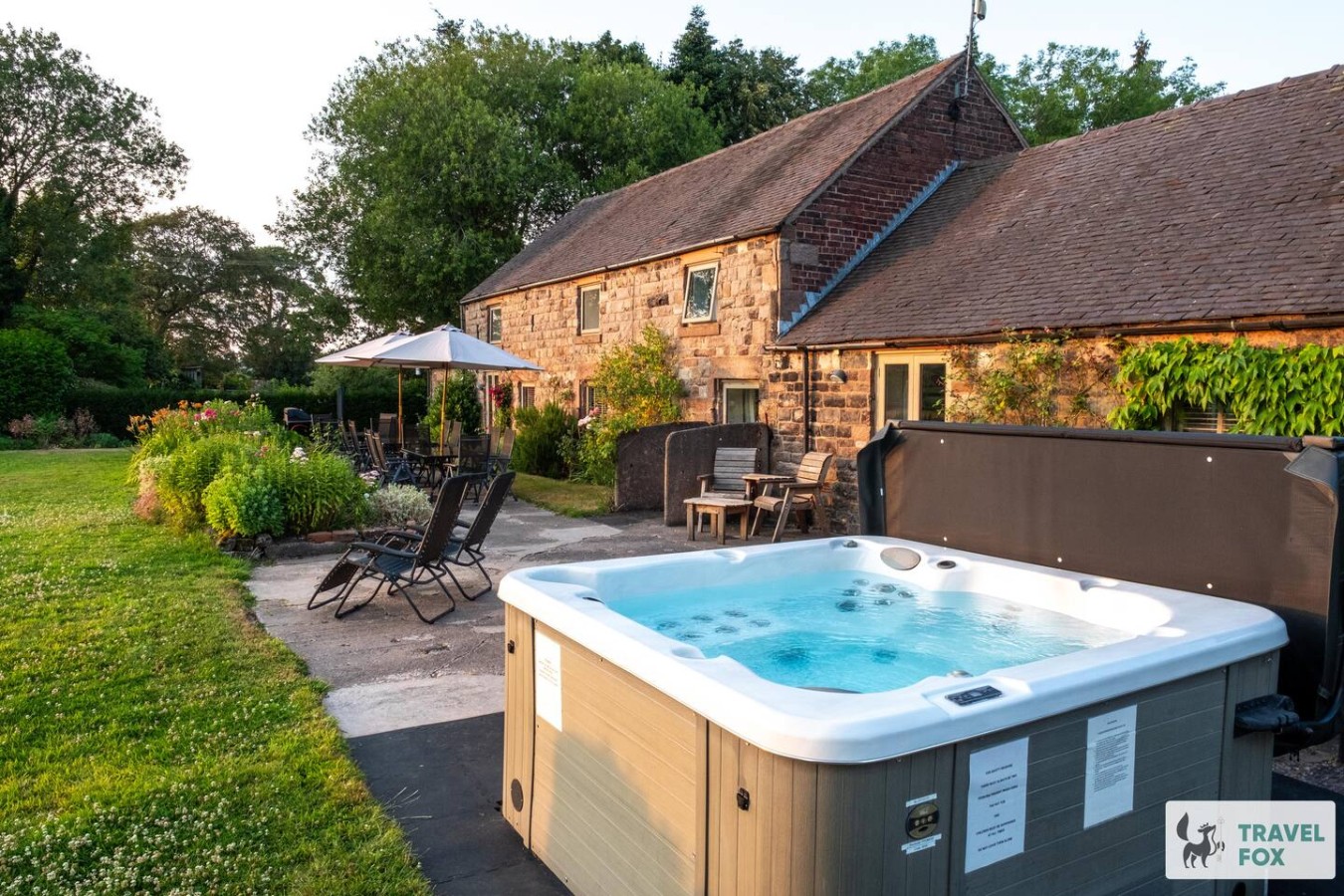
Cheddleton
Lee House Cottage + Annexe
- Sleeps 19
- 8 bedrooms

Leek
Silkwood House | Boutique 4 Bed nr. Peak District
- Sleeps 8
- 4 bedrooms
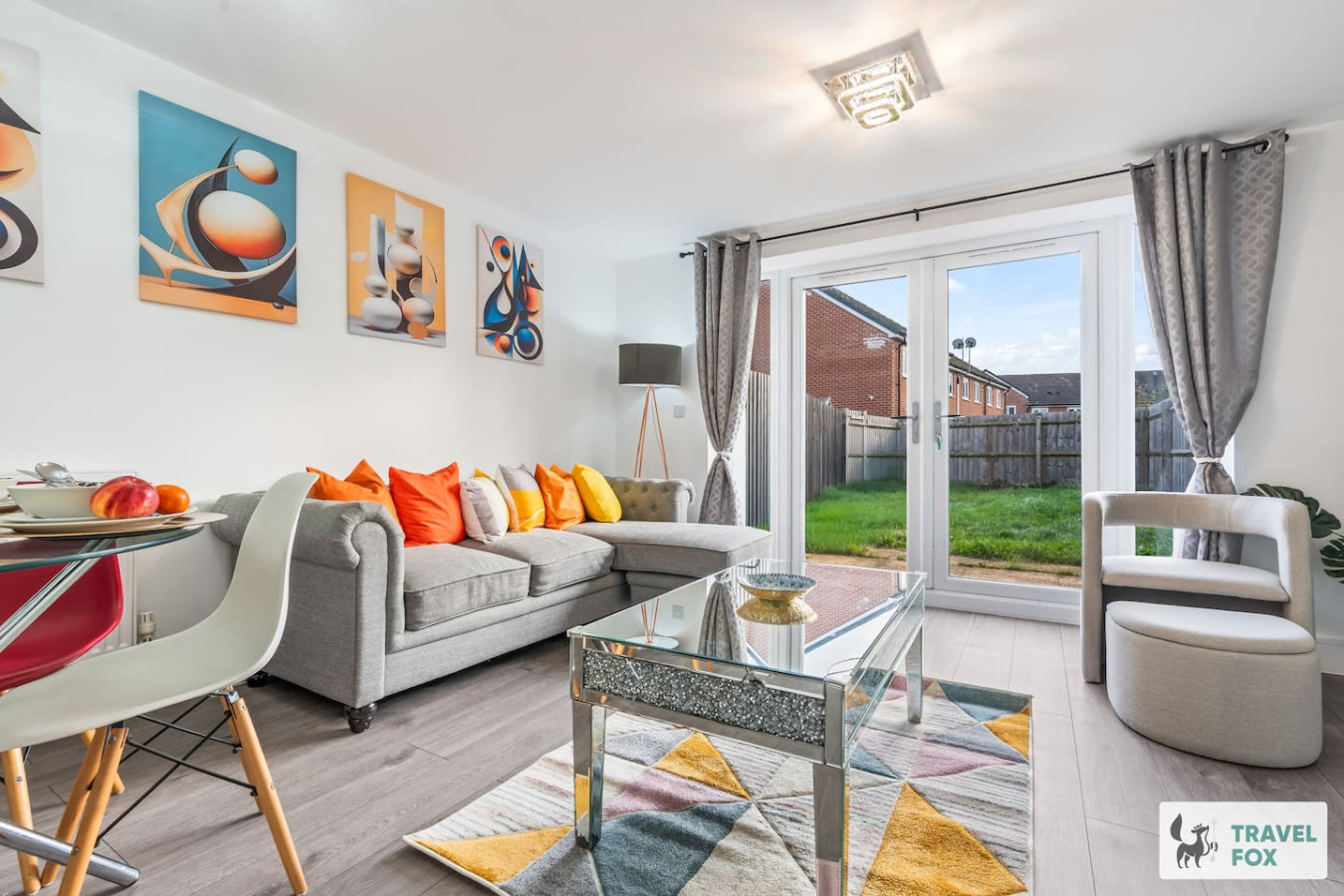
Stoke-on-Trent
Heather's House
- Sleeps 6
- 2 bedrooms
For homeowners
Own a holiday home near Lapley?
We manage holiday lets across Staffordshire from 12% commission, charged after cleaning costs, with no lock-in. A co-founder visits before you decide.
Holiday let management in Staffordshire →
A guide with a point of view
Written from research. Edited for real journeys.
Use the Official site links for live practical details, then use this guide for context, ideas and room to explore.
Photography credits & licences
Third-party photographs are credited to their named creators and reused under the linked Creative Commons licence or public-domain dedication. Travel Fox stores an optimised local copy; the file-specific changes and any browser-applied display crop are disclosed below. Reused photographs link both to the Wikimedia Commons source record and to the declared source image; Travel Fox's own photographs carry no such record and are marked as ours. These image licences do not cover Travel Fox text, branding or page design.
- File:All Saints Church, Lapley - geograph.org.uk - 4899253.jpg — photograph by Ian S; All Saints Church, Lapley by Ian S. Source record on Wikimedia Commons. Declared source image. Licence: CC BY-SA 2.0. File changes: Downloaded from Wikimedia Commons, resized to a maximum 1920px edge and encoded as an optimised JPEG. Display changes: Displayed with responsive CSS cropping.
Sources
Every place on this page is checked against a published source. Each entry links the record we used and names who publishes it.
- All Saints Church, Lapley — historicengland.org.uk statutory register or public authority record not machine-readable; publisher restricts automated access
- Staffordshire Way at Lapley — staffordshire.gov.uk statutory register or public authority
- Shropshire Union Canal at Wheaton Aston — canalrivertrust.org.uk national body or asset manager
- The Coach and Horses — sstaffs.gov.uk statutory register or public authority
- The Hartley Arms — sstaffs.gov.uk statutory register or public authority
- Lapley and Wheaton Aston Recreation Ground — register-of-charities.charitycommission.gov.uk statutory register or public authority